A 30-year-old woman, gravida 2, para 1, at 31 weeks' gestation is admitted to the hospital because her water broke one hour ago. Pregnancy has been complicated by iron deficiency anemia and hypothyroidism treated with iron supplements and L-thyroxine, respectively. The patient followed-up with her gynecologist on a regular basis throughout the pregnancy. Pregnancy and delivery of her first child were uncomplicated. Pulse is 90/min, respirations are 17/min, and blood pressure is 130/80 mm Hg. The abdomen is nontender. She has had 8 contractions within the last hour. Pelvic examination shows cervical dilation of 3 cm. The fetal heart rate is 140/min with no decelerations. In addition to administration of dexamethasone and terbutaline, which of the following is the most appropriate next step in the management of this patient?
Q42
A 39-year-old woman, gravida 4, para 4, comes to the physician because of a 5-month history of painful, heavy menses. Menses previously occurred at regular 28-day intervals and lasted 3 days with normal flow. They now last 7–8 days and the flow is heavy with the passage of clots. Pelvic examination shows a tender, uniformly enlarged, flaccid uterus consistent in size with an 8-week gestation. A urine pregnancy test is negative. Which of the following is the most likely cause of this patient's findings?
Q43
A 46-year-old woman presents to the clinic complaining that she “wets herself.” She states that over the past year she has noticed increased urinary leakage. At first it occurred only during her job, which involves restocking shelves with heavy appliances. Now she reports that she has to wear pads daily because leakage of urine will occur with simply coughing or sneezing. She denies fever, chills, dysuria, hematuria, or flank pain. She has no significant medical or surgical history, and takes no medications. Her last menstrual period was 8 months ago. She has 3 healthy daughters that were born by vaginal delivery. Which of the following tests, if performed, would most likely identify the patient’s diagnosis?
Q44
A 68-year-old woman comes to the physician for the evaluation of loss of urine for the last year. The patient states that she loses control over her bladder when walking or standing up. She reports frequent, small-volume urine losses with no urge to urinate prior to the leakage. She tried to strengthen her pelvic muscles with supervised Kegel exercises and using a continence pessary but her symptoms did not improve. The patient is sexually active with her husband. She has type 2 diabetes mellitus controlled with metformin. She does not smoke or drink alcohol. Vital signs are within normal limits. Her hemoglobin A1c is 6.3% and fingerstick blood glucose concentration is 110 mg/dL. Which of the following is the most appropriate next step in the management of this patient?
Q45
A 37-year-old woman presents with an inability to void in the hours after giving birth to her first child via vaginal delivery. Her delivery involved the use of epidural anesthesia as well as pelvic trauma from the use of forceps. She is currently experiencing urinary leakage and complains of increased lower abdominal pressure. Which of the following is the most appropriate treatment for this patient’s condition?
Q46
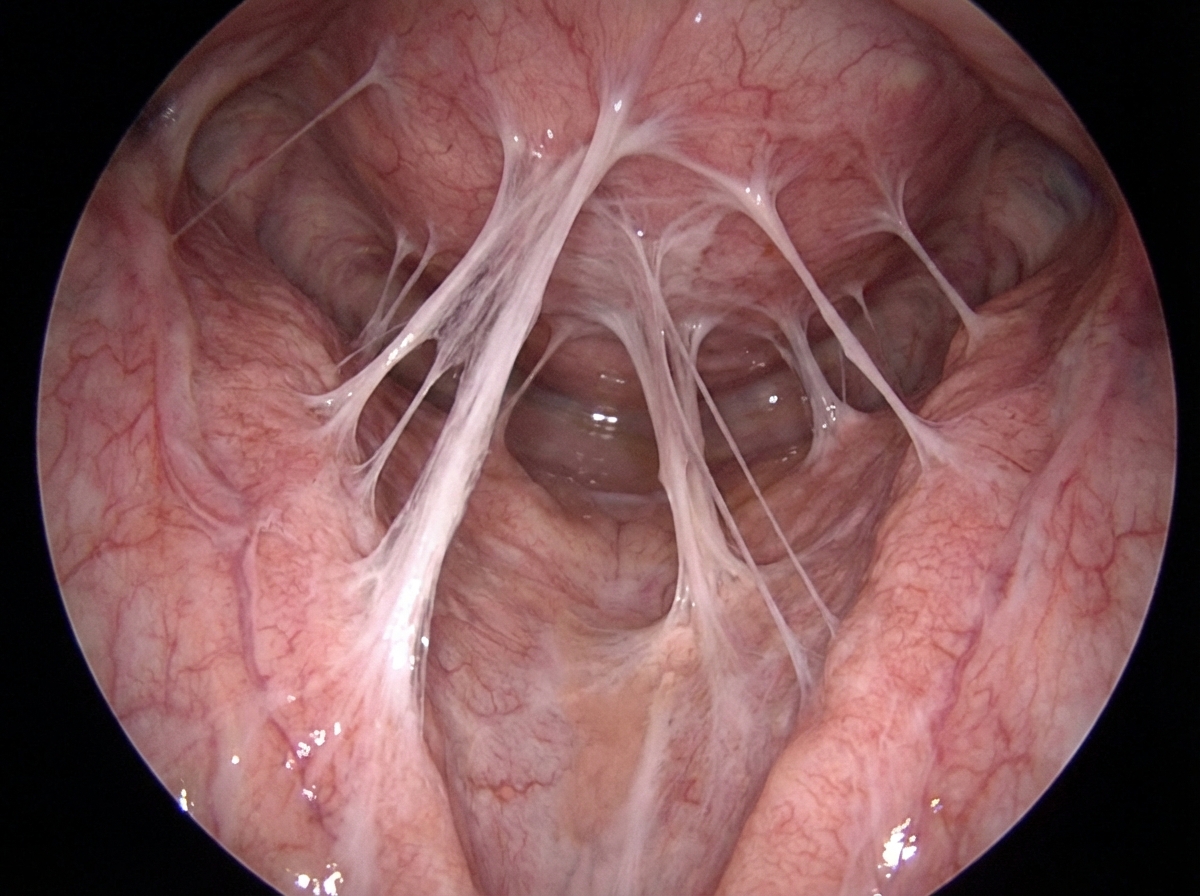
A 28-year-old woman and her husband are admitted to the office due to difficulties conceiving a child for the past year. Her menarche was at the age of 15 years, and her periods have been regular since then. Her medical history is positive for an abortion with curettage 5 years ago. A spermogram on the partner is performed, and it shows motile sperm cells. An ultrasound is performed on the patient and it is unremarkable. The laboratory results show that the FSH, LH, TSH, and prolactin levels are within normal ranges. A hysteroscopy is additionally performed and multiple adhesions are found in the uterus (refer to the image). Which of the following is the most likely composition of the scar tissue present in the uterus?
Q47
A previously healthy 29-year-old Taiwanese woman comes to the emergency department with vaginal bleeding and pelvic pressure for several hours. Over the past 2 weeks, she had intermittent nausea and vomiting. A home urine pregnancy test was positive 10 weeks ago. She has had no prenatal care. Her pulse is 80/min and blood pressure is 150/98 mm Hg. Physical examination shows warm and moist skin. Lungs are clear to auscultation bilaterally. Her abdomen is soft and non-distended. Bimanual examination shows a uterus palpated at the level of the umbilicus. Her serum beta human chorionic gonadotropin concentration is 110,000 mIU/mL. Urine dipstick is positive for protein and ketones. Transvaginal ultrasound shows a central intrauterine mass with hypoechoic spaces; there is no detectable fetal heart rate. An x-ray of the chest shows no abnormalities. Which of the following is the most appropriate next step in management?
Q48
A 17-year-old woman presents to an OBGYN clinic for evaluation of primary amenorrhea. She is a well-developed well-nourished woman who looks at her stated age. She has reached Tanner stage IV breast and pubic hair development. The external genitalia is normal in appearance. She has an older sister who underwent menarche at 12 years of age. A limited pelvic exam reveals a shortened vaginal canal with no cervix. No uterus is visualized during an ultrasound exam, but both ovaries are noted. What is the likely pathophysiology underlying this condition?
Q49
A 22-year-old woman comes to the physician for a routine health maintenance examination. She has no history of serious illness. Pelvic examination shows a pink, 2 x 2-cm, fluctuant swelling at the right posterior vaginal introitus. The swelling is most likely derived from which of the following structures?
Q50
A 27-year-old woman G2P1 at 34 weeks estimated gestational age presents with bouts of sweating, weakness, and dizziness lasting a few minutes after lying down on the bed. She says symptoms resolve if she rolls on her side. She reports that these episodes have occurred several times over the last 3 weeks. On lying down, her blood pressure is 90/50 mm Hg and her pulse is 50/min. When she rolls on her side, her blood pressure slowly increases to 120/65 mm Hg, and her pulse increases to 72/min. Which of the following best describes the mechanism which underlies this patient’s most likely condition?
Labor Complications US Medical PG Practice Questions and MCQs
Question 41: A 30-year-old woman, gravida 2, para 1, at 31 weeks' gestation is admitted to the hospital because her water broke one hour ago. Pregnancy has been complicated by iron deficiency anemia and hypothyroidism treated with iron supplements and L-thyroxine, respectively. The patient followed-up with her gynecologist on a regular basis throughout the pregnancy. Pregnancy and delivery of her first child were uncomplicated. Pulse is 90/min, respirations are 17/min, and blood pressure is 130/80 mm Hg. The abdomen is nontender. She has had 8 contractions within the last hour. Pelvic examination shows cervical dilation of 3 cm. The fetal heart rate is 140/min with no decelerations. In addition to administration of dexamethasone and terbutaline, which of the following is the most appropriate next step in the management of this patient?
A. Administer prophylactic azithromycin
B. Emergency cesarean delivery
C. Administration of anti-RhD immunoglobulin
D. Cervical cerclage
E. Administration of magnesium sulfate (Correct Answer)
Explanation: ***Administration of magnesium sulfate***
- This patient is experiencing **preterm premature rupture of membranes (PPROM)** at 31 weeks and is in **preterm labor** (contractions with cervical changes).
- **Magnesium sulfate** is administered for **fetal neuroprotection** in cases of anticipated preterm birth before 32 weeks' gestation, reducing the risk of cerebral palsy.
*Administer prophylactic azithromycin*
- **Prophylactic antibiotics** are indicated in PPROM to prolong latency and prevent infection, but **broad-spectrum antibiotics** (e.g., ampicillin and erythromycin) are typically used, not solely azithromycin.
- While azithromycin might be part of an antibiotic regimen for PPROM, it is not the *most appropriate next single step* given the immediate need for neuroprotection and labor inhibition.
*Emergency cesarean delivery*
- An emergency cesarean delivery is not indicated at this time as the **fetal heart rate is reassuring** (140/min with no decelerations) and there are no signs of fetal distress or maternal compromise.
- The primary goal is to **delay delivery** to allow for fetal lung maturity and neuroprotection, rather than immediate delivery.
*Administration of anti-RhD immunoglobulin*
- **Anti-RhD immunoglobulin** is administered to Rh-negative mothers to prevent alloimmunization, typically at 28 weeks' gestation and postpartum.
- While administration may be due at this stage for an Rh-negative patient, it is not the **most critical next step** in the *acute management* of preterm labor and PPROM.
*Cervical cerclage*
- **Cervical cerclage** is a procedure to reinforce the cervix and is performed to prevent preterm birth in patients with **cervical insufficiency**, usually in the late first or early second trimester.
- It is **contraindicated** once membranes have ruptured and the patient is in active labor due to the risk of infection and uterine rupture.
Question 42: A 39-year-old woman, gravida 4, para 4, comes to the physician because of a 5-month history of painful, heavy menses. Menses previously occurred at regular 28-day intervals and lasted 3 days with normal flow. They now last 7–8 days and the flow is heavy with the passage of clots. Pelvic examination shows a tender, uniformly enlarged, flaccid uterus consistent in size with an 8-week gestation. A urine pregnancy test is negative. Which of the following is the most likely cause of this patient's findings?
A. Malignant transformation of endometrial tissue
B. Pedunculated endometrial mass
C. Endometrial tissue within the uterine wall (Correct Answer)
D. Endometrial tissue within the ovaries
E. Benign tumor of the myometrium
Explanation: ***Endometrial tissue within the uterine wall***
- This describes **adenomyosis**, a condition where **endometrial glands and stroma** are found within the myometrium. It commonly presents with **dysmenorrhea** (painful menses), **menorrhagia** (heavy flow), and a **uniformly enlarged, soft, tender uterus**, especially in multiparous women.
- The patient's presentation of painful, heavy menses, prolonged bleeding, passage of clots, and a tender, uniformly enlarged uterus strongly points to adenomyosis.
*Malignant transformation of endometrial tissue*
- This refers to **endometrial carcinoma**, which typically presents with **postmenopausal bleeding** or irregular uterine bleeding, but less commonly with severe dysmenorrhea and a diffusely enlarged, tender uterus in premenopausal women.
- While it can cause heavy bleeding, the **uniform enlargement** and **tenderness** of the uterus are less characteristic of endometrial cancer.
*Pedunculated endometrial mass*
- This likely refers to an **endometrial polyp**, which can cause **heavy or irregular bleeding** but typically does not result in a **uniformly enlarged** and tender uterus.
- Polyps are usually visualized via imaging (e.g., sonohysterography or hysteroscopy) and are not associated with diffuse uterine enlargement.
*Endometrial tissue within the ovaries*
- This describes **ovarian endometriosis** (endometrioma or "chocolate cyst"), which commonly causes **chronic pelvic pain**, **dyspareunia**, and **infertility**.
- While it can cause dysmenorrhea, it does not typically lead to a **uniformly enlarged, flaccid, and tender uterus**, as the pathology is primarily ovarian, not diffuse within the uterus.
*Benign tumor of the myometrium*
- This refers to a **leiomyoma** (fibroid), which can cause **heavy bleeding** and an **enlarged uterus**. However, fibroids typically present as **firm, irregular, or nodular masses**, and are less commonly associated with the diffuse tenderness seen in this patient.
- While some fibroids can grow large and cause pain, the **tender, uniformly enlarged, flaccid uterus** is more indicative of adenomyosis than fibroids.
Question 43: A 46-year-old woman presents to the clinic complaining that she “wets herself.” She states that over the past year she has noticed increased urinary leakage. At first it occurred only during her job, which involves restocking shelves with heavy appliances. Now she reports that she has to wear pads daily because leakage of urine will occur with simply coughing or sneezing. She denies fever, chills, dysuria, hematuria, or flank pain. She has no significant medical or surgical history, and takes no medications. Her last menstrual period was 8 months ago. She has 3 healthy daughters that were born by vaginal delivery. Which of the following tests, if performed, would most likely identify the patient’s diagnosis?
A. Methylene blue dye
B. Post-void residual volume
C. Urodynamic testing
D. Estrogen level
E. Q-tip test (Correct Answer)
Explanation: ***Q-tip test***
- The patient's symptoms (leakage with coughing/sneezing, lifting heavy objects, vaginal deliveries, recent cessation of menses) are classic for **stress urinary incontinence**, often due to **urethral hypermobility**.
- The **Q-tip test** assesses urethral hypermobility by measuring the angle of deflection of a sterile cotton swab inserted into the urethra during a Valsalva maneuver. An angle >30 degrees from the horizontal indicates hypermobility.
*Methylene blue dye*
- **Methylene blue dye** is primarily used to identify **vesicovaginal or ureterovaginal fistulas**, where dye would be seen leaking into the vagina.
- The patient's symptoms do not suggest a fistula, but rather a problem with sphincter control during increased abdominal pressure.
*Post-void residual volume*
- **Post-void residual volume (PVR)** measures the amount of urine left in the bladder after urination, primarily used to diagnose **overflow incontinence** or **urinary retention**.
- The patient's symptoms are inconsistent with overflow incontinence, which typically involves frequent dribbling or incomplete emptying rather than leakage specifically with physical exertion.
*Urodynamic testing*
- **Urodynamic testing** is a more comprehensive and invasive evaluation that includes cystometry, pressure-flow studies, and electromyography, often used to differentiate types of incontinence when the diagnosis is unclear.
- While it can diagnose stress incontinence, less invasive tests like the Q-tip test are typically preferred as a first step for **urethral hypermobility** before proceeding to complex urodynamic studies.
*Estrogen level*
- An **estrogen level** might be relevant if **atrophic vaginitis** or **urethritis** due to estrogen deficiency were suspected, which can contribute to urgency or mixed incontinence.
- While the patient is peri-menopausal, her primary symptoms (leakage with exertion) are more indicative of structural weakness (stress incontinence) rather than estrogen-related tissue atrophy or inflammation.
Question 44: A 68-year-old woman comes to the physician for the evaluation of loss of urine for the last year. The patient states that she loses control over her bladder when walking or standing up. She reports frequent, small-volume urine losses with no urge to urinate prior to the leakage. She tried to strengthen her pelvic muscles with supervised Kegel exercises and using a continence pessary but her symptoms did not improve. The patient is sexually active with her husband. She has type 2 diabetes mellitus controlled with metformin. She does not smoke or drink alcohol. Vital signs are within normal limits. Her hemoglobin A1c is 6.3% and fingerstick blood glucose concentration is 110 mg/dL. Which of the following is the most appropriate next step in the management of this patient?
A. Tighter glycemic control
B. Urethral sling (Correct Answer)
C. Topical vaginal estrogen
D. Biofeedback
E. Urethropexy
Explanation: ***Urethral sling***
- The patient exhibits symptoms consistent with **stress urinary incontinence**, characterized by urine leakage with increased intra-abdominal pressure (e.g., walking, standing), especially since conservative measures have failed.
- A **urethral sling** is a highly effective surgical treatment for stress urinary incontinence, providing support to the urethra and bladder neck.
*Tighter glycemic control*
- While uncontrolled diabetes can contribute to **polyuria** and **diabetic neuropathy** affecting bladder function, this patient's diabetes is well-controlled (HbA1c 6.3%).
- Tighter glycemic control is unlikely to resolve symptoms of stress urinary incontinence when the primary issue is anatomical support.
*Topical vaginal estrogen*
- **Topical vaginal estrogen** is effective for genitourinary syndrome of menopause, which can cause **vaginal atrophy** and **urge incontinence** symptoms.
- It is not the primary treatment for stress urinary incontinence, especially after the failure of conservative measures.
*Biofeedback*
- **Biofeedback** is often used in conjunction with **pelvic floor muscle training** (Kegel exercises) to improve patient awareness and control of these muscles.
- The patient has already tried supervised Kegel exercises without improvement, suggesting that biofeedback alone is unlikely to be sufficient.
*Urethropexy*
- **Urethropexy** is a surgical procedure that repositions and supports the urethra, similar in principle to a urethral sling.
- While it is a surgical option for stress incontinence, **urethral slings** (midurethral slings) are generally preferred due to their high efficacy and minimally invasive nature compared to traditional urethropexy procedures.
Question 45: A 37-year-old woman presents with an inability to void in the hours after giving birth to her first child via vaginal delivery. Her delivery involved the use of epidural anesthesia as well as pelvic trauma from the use of forceps. She is currently experiencing urinary leakage and complains of increased lower abdominal pressure. Which of the following is the most appropriate treatment for this patient’s condition?
A. Pessary insertion
B. Pelvic floor muscle strengthening
C. Antimuscarinic drugs
D. Midurethral sling
E. Urethral catheterization (Correct Answer)
Explanation: ***Urethral catheterization***
- The patient is experiencing **postpartum urinary retention** (inability to void) and **overflow incontinence** (urinary leakage due to bladder overdistension), alongside increased lower abdominal pressure, all indicative of an overfilled bladder.
- **Urethral catheterization** is the most appropriate immediate treatment to relieve bladder distension, prevent kidney damage, and allow bladder recovery.
*Pessary insertion*
- **Pessaries** are used for pelvic organ prolapse or stress urinary incontinence, not for acute postpartum urinary retention.
- They provide structural support but do not address the inability to void in an overdistended bladder.
*Pelvic floor muscle strengthening*
- **Pelvic floor exercises** are beneficial for stress incontinence or mild degrees of prolapse.
- They are contraindicated in acute urinary retention as they may worsen the inability to void if the issue is a failure of bladder contractility or urethral relaxation.
*Antimuscarinic drugs*
- **Antimuscarinics** relax the detrusor muscle and are used to treat overactive bladder symptoms (e.g., urgency, frequency).
- They would worsen bladder emptying in a patient with urinary retention.
*Midurethral sling*
- A **midurethral sling** is a surgical procedure for stress urinary incontinence.
- It is an invasive treatment for a chronic condition and is not appropriate for acute postpartum urinary retention.
Question 46: A 28-year-old woman and her husband are admitted to the office due to difficulties conceiving a child for the past year. Her menarche was at the age of 15 years, and her periods have been regular since then. Her medical history is positive for an abortion with curettage 5 years ago. A spermogram on the partner is performed, and it shows motile sperm cells. An ultrasound is performed on the patient and it is unremarkable. The laboratory results show that the FSH, LH, TSH, and prolactin levels are within normal ranges. A hysteroscopy is additionally performed and multiple adhesions are found in the uterus (refer to the image). Which of the following is the most likely composition of the scar tissue present in the uterus?
A. Type 3 collagen
B. Type 4 collagen
C. Type 2 collagen
D. Type 1 collagen (Correct Answer)
E. Elastin
Explanation: ***Type 1 collagen***
- This patient presents with **Asherman's syndrome**, characterized by intrauterine adhesions, often following uterine surgery like **curettage**. These adhesions are primarily composed of **Type 1 collagen**, which is the most abundant type of collagen in the human body and a major component of scar tissue.
- **Type 1 collagen** provides tensile strength and is crucial for wound healing and forming scar tissue in most connective tissues, including the uterus.
*Type 3 collagen*
- **Type 3 collagen** is found in distensible tissues like blood vessels, the uterus, and skin, and is important during the **early stages of wound healing**.
- While present in the uterus and initially involved in wound repair, **mature scar tissue** predominantly consists of **Type 1 collagen**.
*Type 4 collagen*
- **Type 4 collagen** is a major component of the **basal lamina**, a specialized extracellular matrix that underlies epithelial and endothelial cells.
- It does not form fibrillar structures and is not the primary component of robust scar tissue found in Asherman's syndrome.
*Type 2 collagen*
- **Type 2 collagen** is the main collagen type found in **hyaline cartilage** and elastic cartilage, providing resistance to pressure.
- It is not found in significant amounts in uterine tissue or scar tissue formed within the uterus.
*Elastin*
- **Elastin** is a protein that provides **elasticity** to tissues like blood vessels, skin, and lungs, allowing them to stretch and recoil.
- While present in the uterus for its contractile properties, it is not the primary constituent of **fibrotic scar tissue** forming adhesions.
Question 47: A previously healthy 29-year-old Taiwanese woman comes to the emergency department with vaginal bleeding and pelvic pressure for several hours. Over the past 2 weeks, she had intermittent nausea and vomiting. A home urine pregnancy test was positive 10 weeks ago. She has had no prenatal care. Her pulse is 80/min and blood pressure is 150/98 mm Hg. Physical examination shows warm and moist skin. Lungs are clear to auscultation bilaterally. Her abdomen is soft and non-distended. Bimanual examination shows a uterus palpated at the level of the umbilicus. Her serum beta human chorionic gonadotropin concentration is 110,000 mIU/mL. Urine dipstick is positive for protein and ketones. Transvaginal ultrasound shows a central intrauterine mass with hypoechoic spaces; there is no detectable fetal heart rate. An x-ray of the chest shows no abnormalities. Which of the following is the most appropriate next step in management?
A. Serial beta-hCG measurement
B. Bed rest and doxylamine therapy
C. Methotrexate therapy
D. Suction curettage (Correct Answer)
E. Insulin therapy
Explanation: ***Suction curettage***
- The patient's symptoms (vaginal bleeding, pelvic pressure, nausea/vomiting), signs (hypertension, large for gestational age uterus at the umbilicus corresponding to 20 weeks gestation, proteinuria), and laboratory findings (markedly elevated beta-hCG of 110,000 mIU/mL) are highly suggestive of a **hydatidiform mole**.
- A **transvaginal ultrasound** showing a central intrauterine mass with **hypoechoic spaces** (often described as a 'snowstorm' or 'grape-like' appearance) and no fetal heart rate confirms the diagnosis of a **molar pregnancy**. The most appropriate and urgent management is **suction curettage** to remove the abnormal pregnancy tissue, which also serves a diagnostic purpose.
*Serial beta-hCG measurement*
- While **serial beta-hCG** measurements are crucial for monitoring after treatment of a molar pregnancy to detect persistent trophoblastic disease, they are not the initial management step for an active molar pregnancy with acute symptoms.
- This step would delay the necessary removal of the abnormal tissue and risk complications such as hemorrhage or progression to **gestational trophoblastic neoplasia (GTN)**.
*Bed rest and doxylamine therapy*
- **Bed rest and doxylamine** are treatments for benign conditions like **hyperemesis gravidarum** or threatened abortion, which do not align with the severe symptoms, physical findings, and ultrasound characteristics of this patient's condition.
- This approach would be completely inadequate and inappropriate for a molar pregnancy.
*Methotrexate therapy*
- **Methotrexate** is a chemotherapy agent used to treat **persistent gestational trophoblastic neoplasia (GTN)** or **choriocarcinoma** following molar pregnancy evacuation, or in cases of ectopic pregnancy.
- It is not the primary treatment for the initial removal of a molar pregnancy itself, which requires surgical evacuation.
*Insulin therapy*
- **Insulin therapy** is used to manage **gestational diabetes mellitus (GDM)** or pre-existing diabetes in pregnancy.
- There is no clinical or laboratory evidence (e.g., elevated glucose) to suggest diabetes in this patient, and it is unrelated to the primary diagnosis of molar pregnancy.
Question 48: A 17-year-old woman presents to an OBGYN clinic for evaluation of primary amenorrhea. She is a well-developed well-nourished woman who looks at her stated age. She has reached Tanner stage IV breast and pubic hair development. The external genitalia is normal in appearance. She has an older sister who underwent menarche at 12 years of age. A limited pelvic exam reveals a shortened vaginal canal with no cervix. No uterus is visualized during an ultrasound exam, but both ovaries are noted. What is the likely pathophysiology underlying this condition?
A. Genotype 45 XO
B. Failure of the ovaries to produce estrogen
C. Genotype 47 XXY
D. Failure of the paramesonephric duct to form (Correct Answer)
E. Failure of the mesonephric duct to degenerate
Explanation: ***Failure of the paramesonephric duct to form***
- This clinical presentation is classic for **Mayer-Rokitansky-Küster-Hauser (MRKH) syndrome**, characterized by **vaginal agenesis**, **absent uterus** and cervix, with normal ovarian function and development of secondary sexual characteristics.
- MRKH syndrome results from the **failure of the paramesonephric (Müllerian) ducts** to develop, which normally form the Fallopian tubes, uterus, cervix, and upper two-thirds of the vagina.
*Genotype 45 XO*
- A 45 XO genotype indicates **Turner syndrome**, which presents with **gonadal dysgenesis** leading to absent or streak ovaries and no secondary sexual characteristics (e.g., breast development).
- Patients with Turner syndrome often have short stature, webbed neck, and coarctation of the aorta, none of which are descriptive of this patient.
*Failure of the ovaries to produce estrogen*
- **Ovarian failure** would lead to a lack of **estrogen production**, resulting in absent or delayed development of **secondary sexual characteristics** (e.g., Tanner stage I or II breast development), which contradicts the patient's Tanner stage IV development.
- While it causes primary amenorrhea, it would not explain the anatomical abnormalities of an absent uterus and shortened vaginal canal.
*Genotype 47 XXY*
- A 47 XXY genotype corresponds to **Klinefelter syndrome**, a condition that affects males, leading to **hypogonadism**, gynecomastia, and infertility.
- This genetic abnormality is irrelevant to a 17-year-old woman presenting with primary amenorrhea and normal female external genitalia.
*Failure of the mesonephric duct to degenerate*
- The **mesonephric (Wolffian) ducts** are important for male reproductive system development and typically **degenerate in females** in the absence of testosterone.
- Persistence or failure to degenerate of these ducts in females would lead to remnants like Gartner's duct cysts, but not to uterine or vaginal agenesis.
Question 49: A 22-year-old woman comes to the physician for a routine health maintenance examination. She has no history of serious illness. Pelvic examination shows a pink, 2 x 2-cm, fluctuant swelling at the right posterior vaginal introitus. The swelling is most likely derived from which of the following structures?
A. Mesonephric duct remnants
B. Vulvar epithelium
C. Sebaceous glands
D. Greater vestibular glands (Correct Answer)
E. Paraurethral glands
Explanation: **Greater vestibular glands**
- The location described (right posterior vaginal introitus) and the presentation (fluctuant swelling) are classic for a **Bartholin's cyst**, which arises from an obstruction of the **greater vestibular glands** (Bartholin's glands).
- These glands are located in the superficial perineal pouch, lateral to the vaginal orifice, and their ducts open posterior to the labia minora.
*Mesonephric duct remnants*
- Remnants of the **mesonephric (Wolffian) duct** can form **Gartner's duct cysts**, which are typically found along the lateral walls of the vagina, not specifically at the introitus.
- These are usually found higher up in the vagina, along the **anterolateral vaginal wall**, rather than posteriorly near the opening.
*Vulvar epithelium*
- Cysts derived from **vulvar epithelium** (epidermal inclusion cysts) are generally firm, not fluctuant, and result from trauma or occlusion of sebaceous ducts on the labia.
- While they can occur on the vulva, their morphology and specific location tend to differ from the described fluctuant swelling at the introitus.
*Sebaceous glands*
- **Sebaceous cysts** or steatocystomas are usually firm, non-tender, and occur in hair-bearing areas, often on the labia majora.
- They are typically non-fluctuant and result from blocked sebaceous ducts.
*Paraurethral glands*
- **Paraurethral (Skene's) glands** are located on either side of the urethra and drain into it; obstruction leads to **Skene's gland cysts** or abscesses.
- These would be found anteriorly near the urethral meatus, not posteriorly at the vaginal introitus.
Question 50: A 27-year-old woman G2P1 at 34 weeks estimated gestational age presents with bouts of sweating, weakness, and dizziness lasting a few minutes after lying down on the bed. She says symptoms resolve if she rolls on her side. She reports that these episodes have occurred several times over the last 3 weeks. On lying down, her blood pressure is 90/50 mm Hg and her pulse is 50/min. When she rolls on her side, her blood pressure slowly increases to 120/65 mm Hg, and her pulse increases to 72/min. Which of the following best describes the mechanism which underlies this patient’s most likely condition?
A. Peripheral vasodilation
B. Increase in plasma volume
C. Progesterone surge
D. Renin-angiotensin system activation
E. Aortocaval compression (Correct Answer)
Explanation: ***Aortocaval compression***
- This condition, also known as **supine hypotensive syndrome**, occurs when the gravid uterus **compresses the inferior vena cava (IVC)** and potentially the aorta, reducing **venous return** to the heart.
- The symptoms (sweating, weakness, dizziness, hypotension, bradycardia) and their resolution upon changing position are classic signs of reduced cardiac output due to IVC compression.
*Peripheral vasodilation*
- While **peripheral vasodilation** does occur in pregnancy due to hormonal changes, it generally contributes to a **mild decrease in systemic vascular resistance** and is not the primary mechanism behind acute, position-dependent hypotensive episodes.
- It would not explain the sudden, severe symptoms that resolve promptly with a change in position, nor the associated bradycardia which is more indicative of a **vasovagal response** to decreased cardiac filling.
*Increase in plasma volume*
- Pregnancy is associated with a significant **increase in plasma volume** (up to 50%), which is a physiological adaptation to support the uteroplacental unit.
- An increase in plasma volume would generally help **maintain blood pressure** and prevent hypotension, rather than causing the specific symptoms described in this patient.
*Progesterone surge*
- **Progesterone levels do increase significantly** during pregnancy and contribute to **smooth muscle relaxation**, which can lead to vasodilation.
- However, a progesterone surge itself does not directly cause acute, position-dependent hypotensive episodes; its vasodilatory effects are more chronic and physiological.
*Renin-angiotensin system activation*
- The **renin-angiotensin system (RAS) is typically activated** and upregulated during pregnancy, contributing to fluid balance and blood pressure regulation.
- Activation of the RAS would generally lead to **vasoconstriction and increased blood pressure**, not the hypotensive episodes observed in this patient.