A 45-year-old woman presents with gradual abdominal distension that has progressively increased over the past 3 months. The physical examination showed shifting dullness. A paracentesis showed malignant cells. An ultrasound shows an adnexal mass. Which is the most likely cause of this condition?
Q62
A 31-year-old Asian woman presents with painless vaginal bleeding late in the first trimester of her pregnancy. She has had no prenatal care up to this point. Serum HCG levels are elevated much more than expected. An abdominal ultrasound reveals findings consistent with a complete molar pregnancy, as shown in figure A. Which of the following is the most likely karyotype associated with this condition?
Q63
A 34-year-old woman comes to the physician for a routine health maintenance examination. She has gastroesophageal reflux disease. She recently moved to a new city. Her father was diagnosed with colon cancer at age 46. Her father's brother died because of small bowel cancer. Her paternal grandfather died because of stomach cancer. She takes a vitamin supplement. Current medications include esomeprazole and a multivitamin. She smoked one pack of cigarettes daily for 6 years but quit 2 years ago. She drinks one to two alcoholic beverages on weekends. She appears healthy. Vital signs are within normal limits. Physical examination shows no abnormalities. Colonoscopy is unremarkable. Germline testing via DNA sequencing in this patient shows mutations in DNA repair genes MLH1 and MSH2. Which of the following will this patient most likely require at some point in her life?
Q64
A 37-year-old G1P000 presents to her obstetrician for her first prenatal visit. She states that her last menstrual period (LMP) was 11 weeks ago, though she is unsure of the exact date as her periods are sometimes irregular. She and her husband had 5 months of timed, unprotected intercourse before she had a positive home pregnancy test 2 weeks ago. She has been feeling generally well but notes some morning nausea and vomiting. She also mentions that for the last 6 months or so, she has felt increasing pelvic pressure and worsening urinary frequency but has not sought medical care for these symptoms. The patient has a history of obesity and hypertension but is not on any medications. Her mother had a hysterectomy at age 64 for fibroids, and her sister had a twin pregnancy after assisted reproduction. At this visit, the patient’s temperature is 98.3° F (36.8° C), blood pressure is 142/85 mmHg, pulse is 82/min, and respirations are 14/min. She has gained 4 pounds since the last time she weighed herself 4 months ago. On exam, the patient’s fundus is palpated at the umbilicus, her cervix is closed and firm, and there are no adnexal masses. Her lab results are shown below:
ß-hCG: 81,324 mIU/mL
Thyroid stimulating hormone (TSH): 1.2 µIU/L
Which of the following is the most likely diagnosis?
Q65
A 39-year-old female presents to her gynecologist complaining of a breast lump. Two weeks ago, while performing a breast self-examination she noticed a small firm nodule in her left breast. She is otherwise healthy and takes no medications. Her family history is notable for a history of breast cancer in her mother and maternal aunt. On physical examination, there is a firm immobile nodular mass in the superolateral quadrant of her left breast. A mammogram of her left breast is shown. Genetic analysis reveals a mutation on chromosome 17. This patient is at increased risk for which of the following conditions?
Q66
A 27-year-old woman presents to her obstetrician for a regular follow-up appointment. The patient is 32 weeks pregnant. She has been followed throughout her pregnancy and has been compliant with care. The patient has a past medical history of a seizure disorder which is managed with valproic acid as well as anaphylaxis when given IV contrast, penicillin, or soy. During the patient's pregnancy she has discontinued her valproic acid and is currently taking prenatal vitamins, folic acid, iron, and fish oil. At this visit, results are notable for mild anemia, as well as positive findings for an organism on darkfield microscopy. The patient is up to date on her vaccinations and her blood glucose is 117 mg/dL at this visit. Her blood pressure is 145/99 mmHg currently. Which of the following is the most appropriate management for this patient?
Q67
A 41-year-old nulliparous woman, at 15 weeks' gestation comes to the emergency department because of an 8-hour history of light vaginal bleeding. She had a spontaneous abortion at 11 weeks' gestation 9 months ago. Vital signs are within normal limits. Abdominal examination is unremarkable. On pelvic examination, there is old blood in the vaginal vault and at the closed cervical os. There are bilateral adnexal masses. Serum β-hCG concentration is 122,000 mIU/ml. Results from dilation and curettage show hydropic chorionic villi and proliferation of cytotrophoblasts and syncytiotrophoblasts. There are no embryonic parts. Vaginal ultrasound shows that both ovaries are enlarged and have multiple thin-walled, septated cysts with clear content. Which of the following is the most likely cause of the ovarian findings?
Q68
A 38-year-old woman, gravida 2, para 1, at 32 weeks' gestation comes to the physician for a prenatal visit. Pregnancy and delivery of her first child were uncomplicated. She has type 1 diabetes mellitus treated with insulin. Her temperature is 37.2°C (99°F), pulse is 92/min, respirations are 16/min, and blood pressure is 110/86 mm Hg. Examination shows minimal bilateral edema below the knees. The uterus is consistent in size with a 29-week gestation. The remainder of the examination shows no abnormalities. Transabdominal ultrasound shows an intrauterine pregnancy in longitudinal lie, normal fetal cardiac activity, an amniotic fluid index of 5 cm and calcifications of the placenta. This patient's child is at greatest risk of developing which of the following conditions?
Q69
A 16-year-old female presents to her pediatrician’s office because she has not yet started menstruating. On review of systems, she states that she has been increasingly tired, constipated, and cold over the last 6 months. She also endorses a long history of migraines with aura that have increased in frequency over the last year. She complains that these symptoms have affected her performance on the track team. She states that she is not sexually active. Her mother and sister both underwent menarche at age 15. The patient is 5 feet, 4 inches tall and weighs 100 pounds (BMI 17.2 kg/m^2). Temperature is 98.4°F (36.9°C), blood pressure is 98/59 mmHg, pulse is 98/min, and respirations are 14/min. On exam, the patient appears pale and has thinning hair. She has Tanner stage IV breasts and Tanner stage III pubic hair. Which of the following would be most useful in determining this patient’s diagnosis?
Q70
A 43-year-old woman comes to the physician because of a 3-month history of increased flow and duration of her menses. Menses previously occurred at regular 28-day intervals and lasted 5 days with normal flow. They now last 8–9 days and the flow is heavy with the passage of clots. During this period, she has also had lower abdominal pain that begins 2–3 days prior to onset of her menses and lasts for 2 days after the end of her menses. She has three children. Her mother died of endometrial cancer at the age of 61 years. Her temperature is 37°C (98.6°F), pulse is 86/min, and blood pressure is 110/70 mm Hg. Pelvic examination shows a uniformly enlarged, boggy uterus consistent in size with an 8-week gestation that is tender on palpation. A urine pregnancy test is negative. Which of the following is the most likely cause of this patient's findings?
High-risk pregnancies US Medical PG Practice Questions and MCQs
Question 61: A 45-year-old woman presents with gradual abdominal distension that has progressively increased over the past 3 months. The physical examination showed shifting dullness. A paracentesis showed malignant cells. An ultrasound shows an adnexal mass. Which is the most likely cause of this condition?
A. Mucinous cystadenocarcinoma (Correct Answer)
B. Granulosa cell tumor
C. Endometrioma
D. Choriocarcinoma
E. Benign cystic teratoma
Explanation: ***Mucinous cystadenocarcinoma***
- This diagnosis aligns with the **gradual progressive abdominal distension**, **shifting dullness** from ascites, **malignant cells on paracentesis**, and an **adnexal mass** on ultrasound.
- Mucinous ovarian tumors, including cystadenocarcinomas, are known to grow to very large sizes and can produce significant amounts of **mucinous fluid**, leading to abdominal distension and ascites.
*Granulosa cell tumor*
- While a granulosa cell tumor is an ovarian malignancy and can present as an adnexal mass, it typically secretes **estrogen**, leading to symptoms like **abnormal uterine bleeding** or precocious puberty, which are not mentioned here.
- Although it can cause ascites, the clinical picture is more suggestive of a tumor type known for producing large amounts of fluid and extensive spread.
*Endometrioma*
- An endometrioma is a **benign ovarian cyst** filled with old blood from endometrial tissue, often causing **pelvic pain** and **dysmenorrhea**.
- It is not a malignant condition and would not produce malignant cells on paracentesis or present with such rapid, extensive abdominal distension indicating malignancy.
*Choriocarcinoma*
- Ovarian choriocarcinoma is a rare and aggressive **germ cell tumor** that typically produces high levels of **beta-human chorionic gonadotropin (hCG)**.
- While it can cause an adnexal mass and metastasize, the primary presentation would often involve hormonal symptoms related to hCG and not necessarily such extensive abdominal distension with malignant ascites as the initial prominent symptom.
*Benign cystic teratoma*
- A benign cystic teratoma (dermoid cyst) is a **non-malignant** germ cell tumor of the ovary, often containing various tissue types like hair, teeth, or bone.
- It is a benign condition and would not result in **malignant cells** in ascites or present with the rapid, progressive abdominal distension indicative of an aggressive malignancy.
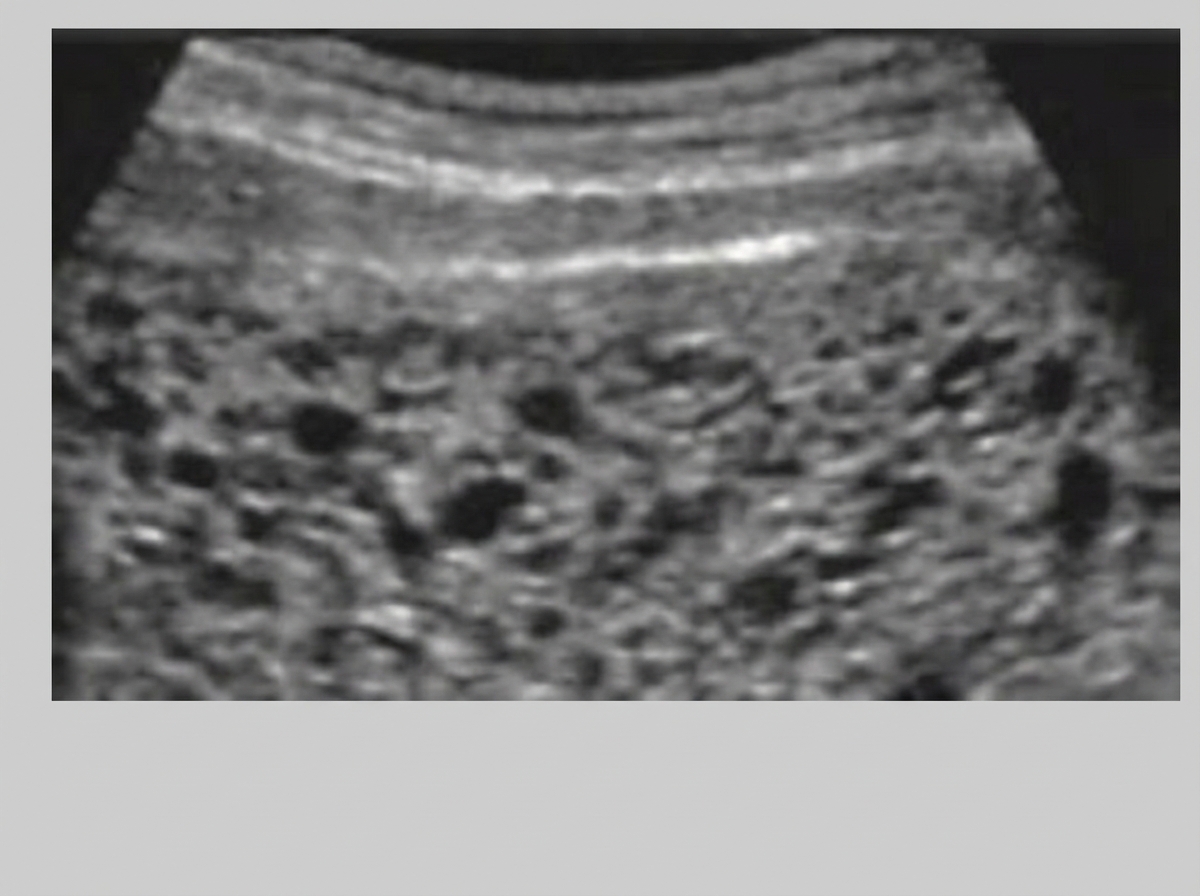
Question 62: A 31-year-old Asian woman presents with painless vaginal bleeding late in the first trimester of her pregnancy. She has had no prenatal care up to this point. Serum HCG levels are elevated much more than expected. An abdominal ultrasound reveals findings consistent with a complete molar pregnancy, as shown in figure A. Which of the following is the most likely karyotype associated with this condition?
A. 69XXX
B. 45XO
C. 47XYY
D. 69XYY
E. 46XX (Correct Answer)
Explanation: ***46XX***
- **Complete hydatidiform mole** is most commonly associated with a **46,XX androgenetic karyotype** (~80% of cases) — all chromosomes are of **paternal origin**
- Results from fertilization of an **empty enucleated ovum** by a **single haploid sperm (23,X)** that undergoes **duplication**, yielding 46,XX with no maternal chromosomal contribution
- The remaining ~20% of complete moles are **46,XY**, arising from **dispermy** (fertilization of an empty egg by two different haploid sperm)
- Classic features: markedly elevated **β-hCG**, absence of fetal tissue, and the **"snowstorm" pattern** on ultrasound (echogenic heterogeneous intrauterine mass with multiple small anechoic cysts representing hydropic villi)
*69XXX*
- **69,XXX is a triploid karyotype** associated with **partial (incomplete) hydatidiform mole**, NOT complete molar pregnancy
- Partial moles result from fertilization of a **normal haploid egg (23,X)** by **two haploid sperm** (dispermy), producing 69,XXX, 69,XXY, or 69,XYY
- Unlike complete moles, partial moles contain **some fetal/embryonic tissue**, have less HCG elevation, and carry lower malignant potential
*45XO*
- Karyotype of **Turner syndrome** — monosomy X with absence of one sex chromosome
- Clinically presents with **streak gonads, primary amenorrhea, short stature, webbed neck, and shield chest** — entirely unrelated to molar pregnancy
*47XYY*
- **Jacob's syndrome** — sex chromosome aneuploidy with an extra Y chromosome in males
- Affected individuals are typically phenotypically normal; not associated with molar pregnancy or gestational trophoblastic disease
*69XYY*
- Like 69,XXX, this is a **triploid karyotype** characteristic of **partial hydatidiform mole**, not complete molar pregnancy
- All triploid karyotypes (69,XXX; 69,XXY; 69,XYY) arise from dispermy and are associated with partial — not complete — moles
Question 63: A 34-year-old woman comes to the physician for a routine health maintenance examination. She has gastroesophageal reflux disease. She recently moved to a new city. Her father was diagnosed with colon cancer at age 46. Her father's brother died because of small bowel cancer. Her paternal grandfather died because of stomach cancer. She takes a vitamin supplement. Current medications include esomeprazole and a multivitamin. She smoked one pack of cigarettes daily for 6 years but quit 2 years ago. She drinks one to two alcoholic beverages on weekends. She appears healthy. Vital signs are within normal limits. Physical examination shows no abnormalities. Colonoscopy is unremarkable. Germline testing via DNA sequencing in this patient shows mutations in DNA repair genes MLH1 and MSH2. Which of the following will this patient most likely require at some point in her life?
A. Celecoxib or sulindac therapy
B. Bilateral prophylactic mastectomy
C. Surgical removal of a desmoid tumor
D. Prophylactic proctocolectomy with ileoanal anastomosis
E. Hysterectomy and bilateral salpingo-oophorectomy (Correct Answer)
Explanation: ***Hysterectomy and bilateral salpingo-oophorectomy***
- The patient's family history of multiple cancers (colon, small bowel, stomach) at a young age, along with positive germline mutations in **MLH1** and **MSH2**, is highly indicative of **Lynch syndrome (hereditary nonpolyposis colorectal cancer)**.
- Women with Lynch syndrome have a significantly increased risk of developing **endometrial cancer** (up to 60%) and **ovarian cancer** (up to 12%), making prophylactic hysterectomy and bilateral salpingo-oophorectomy a recommended risk-reducing surgery after childbearing is complete.
*Celecoxib or sulindac therapy*
- **NSAIDs** like celecoxib and sulindac are sometimes used for chemoprevention in patients with **Familial Adenomatous Polyposis (FAP)** to reduce polyp burden, but their role in Lynch syndrome is less established and not the primary prophylactic measure for gynecologic cancers.
- While Lynch syndrome does increase colorectal cancer risk, the immediate and most concerning risk for women with cancer predisposition in MLH1 and MSH2 genes is gynecologic.
*Surgical removal of a desmoid tumor*
- **Desmoid tumors** are characteristic extracolonic manifestations of **Familial Adenomatous Polyposis (FAP)**, not Lynch syndrome.
- The mutations in MLH1 and MSH2 are associated with Lynch syndrome, which has a different spectrum of extracolonic malignancies.
*Prophylactic proctocolectomy with ileoanal anastomosis*
- This procedure is primarily recommended for patients with **Familial Adenomatous Polyposis (FAP)** due to the near 100% lifetime risk of colorectal cancer development from numerous polyps.
- While Lynch syndrome also carries a high risk of colorectal cancer, the typical approach involves intensive surveillance (colonoscopy every 1-2 years) rather than universal prophylactic colectomy, unless specific high-risk features or advanced lesions are found.
Question 64: A 37-year-old G1P000 presents to her obstetrician for her first prenatal visit. She states that her last menstrual period (LMP) was 11 weeks ago, though she is unsure of the exact date as her periods are sometimes irregular. She and her husband had 5 months of timed, unprotected intercourse before she had a positive home pregnancy test 2 weeks ago. She has been feeling generally well but notes some morning nausea and vomiting. She also mentions that for the last 6 months or so, she has felt increasing pelvic pressure and worsening urinary frequency but has not sought medical care for these symptoms. The patient has a history of obesity and hypertension but is not on any medications. Her mother had a hysterectomy at age 64 for fibroids, and her sister had a twin pregnancy after assisted reproduction. At this visit, the patient’s temperature is 98.3° F (36.8° C), blood pressure is 142/85 mmHg, pulse is 82/min, and respirations are 14/min. She has gained 4 pounds since the last time she weighed herself 4 months ago. On exam, the patient’s fundus is palpated at the umbilicus, her cervix is closed and firm, and there are no adnexal masses. Her lab results are shown below:
ß-hCG: 81,324 mIU/mL
Thyroid stimulating hormone (TSH): 1.2 µIU/L
Which of the following is the most likely diagnosis?
A. Molar pregnancy
B. Multiple gestation pregnancy
C. Dating error due to unreliable LMP
D. Leiomyomata (Correct Answer)
E. Anteverted uterus
Explanation: ***Leiomyomata***
- The patient's presentation with **pelvic pressure**, worsening **urinary frequency**, a **fundal height at the umbilicus (approximately 20-week size)** at only 11 weeks of gestation by LMP, and a **family history of fibroids** (mother had a hysterectomy for fibroids) strongly suggests the presence of **leiomyomata (fibroids)**.
- Fibroids can cause significant **uterine enlargement** leading to a fundal height greater than expected for gestational age, and their growth can be exacerbated by the hormonal changes of pregnancy, intensifying symptoms like pressure and urinary frequency.
*Molar pregnancy*
- While a **very high beta-hCG level** can be associated with molar pregnancy, the fundal height is more commonly **larger than expected for gestational age**, and patients often present with **hyperemesis gravidarum**, **preeclampsia in the first trimester**, or **vaginal bleeding with grapelike vesicles**.
- The patient's blood pressure is elevated (142/85 mmHg) but not yet in the preeclampsia range, and there is no mention of unusual vaginal bleeding.
*Multiple gestation pregnancy*
- A multifetal pregnancy can also lead to a **larger-than-expected fundal height** and an **elevated beta-hCG level**.
- However, it typically wouldn't account for the *long-standing* symptoms of **pelvic pressure and urinary frequency** that the patient experienced *prior to conception or early in this pregnancy*, which point towards a pre-existing uterine enlargement.
*Dating error due to unreliable LMP*
- Although the patient's LMP is unreliable due to irregular periods, a **dating error** alone would not explain the **fundal height discrepancy (fundus at umbilicus at 11 weeks LMP which is closer to a 20-week size)**, nor the **pelvic pressure and urinary frequency symptoms that pre-date the pregnancy**.
- An ultrasound would be crucial to confirm gestational age if dating was the only concern.
*Anteverted uterus*
- An **anteverted uterus** is a common and normal uterine position and does not typically cause a **fundal height discrepancy** or symptoms of **pelvic pressure and urinary frequency** unless it is significantly enlarged by another condition, such as fibroids.
- It would not explain the clinical findings observed in this patient.
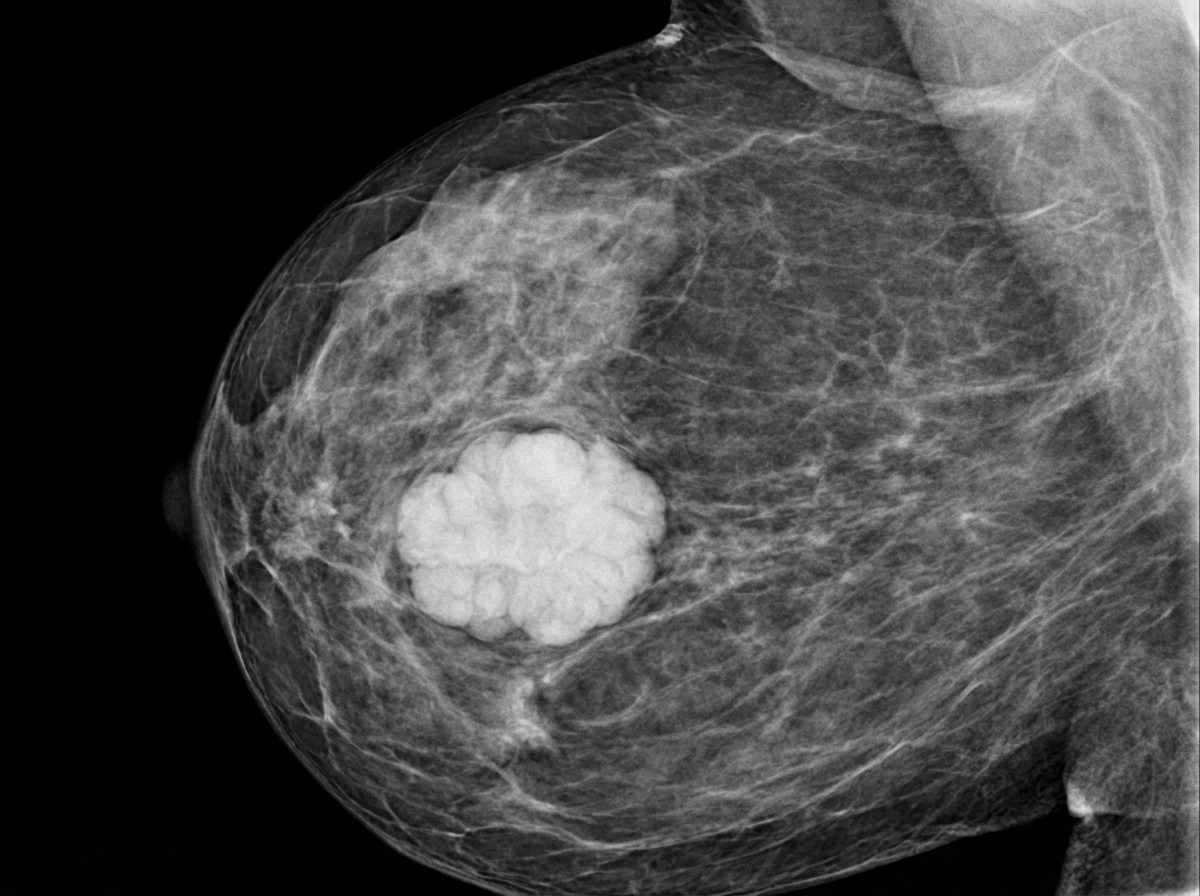
Question 65: A 39-year-old female presents to her gynecologist complaining of a breast lump. Two weeks ago, while performing a breast self-examination she noticed a small firm nodule in her left breast. She is otherwise healthy and takes no medications. Her family history is notable for a history of breast cancer in her mother and maternal aunt. On physical examination, there is a firm immobile nodular mass in the superolateral quadrant of her left breast. A mammogram of her left breast is shown. Genetic analysis reveals a mutation on chromosome 17. This patient is at increased risk for which of the following conditions?
A. Invasive lobular carcinoma
B. Ductal carcinoma in situ (DCIS)
C. Inflammatory breast cancer
D. Invasive ductal carcinoma
E. Medullary carcinoma (Correct Answer)
Explanation: ***Medullary carcinoma***
- This patient's presentation with a **firm, immobile breast mass** and a **strong family history of breast cancer**, along with a **mutation on chromosome 17 (BRCA1 gene)**, strongly suggests an increased risk for **medullary carcinoma**. Medullary carcinoma is more common in BRCA1 mutation carriers.
- While medullary carcinoma is a subtype of invasive ductal carcinoma, its specific association with BRCA1 and distinct histologic features (e.g., syncytial growth pattern, prominent lymphoid infiltrate) make it the most precise answer in this context.
*Invasive lobular carcinoma*
- This type of carcinoma is characterized by **loss of E-cadherin** expression, leading to a single-file growth pattern.
- While it is an invasive breast cancer, it is **not specifically linked to BRCA1 mutations** as strongly as medullary carcinoma.
*Ductal carcinoma in situ (DCIS)*
- **DCIS is a non-invasive breast cancer** where abnormal cells are confined to the breast ducts and have not spread to surrounding tissue.
- The patient's presentation with a palpable, firm mass suggests an **invasive lesion**, making DCIS less likely as the primary concern for future risk.
*Inflammatory breast cancer*
- This is a rare and aggressive form of breast cancer characterized by **skin erythema, edema, and a "peau d'orange" appearance**, often without a palpable lump.
- The patient's physical examination findings of a **firm, immobile nodular mass** do not align with the typical presentation of inflammatory breast cancer.
*Invasive ductal carcinoma*
- While **invasive ductal carcinoma (IDC)** is the most common type of breast cancer and a possible diagnosis for the current lump, the question asks about **increased risk** given the specific genetic mutation.
- Of the various types of IDC, **medullary carcinoma** has a particularly strong association with **BRCA1 mutations**, making it a more specific and accurate answer for future risk in this scenario.
Question 66: A 27-year-old woman presents to her obstetrician for a regular follow-up appointment. The patient is 32 weeks pregnant. She has been followed throughout her pregnancy and has been compliant with care. The patient has a past medical history of a seizure disorder which is managed with valproic acid as well as anaphylaxis when given IV contrast, penicillin, or soy. During the patient's pregnancy she has discontinued her valproic acid and is currently taking prenatal vitamins, folic acid, iron, and fish oil. At this visit, results are notable for mild anemia, as well as positive findings for an organism on darkfield microscopy. The patient is up to date on her vaccinations and her blood glucose is 117 mg/dL at this visit. Her blood pressure is 145/99 mmHg currently. Which of the following is the most appropriate management for this patient?
A. Doxycycline
B. Azithromycin and ceftriaxone
C. Insulin, exercise, folic acid, and iron
D. Ceftriaxone
E. Penicillin (Correct Answer)
Explanation: ***Penicillin***
- The positive findings for an organism on **darkfield microscopy** in a pregnant patient strongly suggest **syphilis**, caused by *Treponema pallidum*.
- **Penicillin** is the only proven effective treatment for syphilis during pregnancy, as it is the only antibiotic that reliably crosses the placenta to treat the fetus and prevent **congenital syphilis**, despite the patient's penicillin allergy history, which often necessitates desensitization.
*Doxycycline*
- **Doxycycline** is contraindicated in pregnancy due to its potential to cause **dental staining** and **bone abnormalities** in the fetus.
- While effective for syphilis in non-pregnant individuals, it is not used as a first-line treatment during pregnancy.
*Azithromycin and ceftriaxone*
- This combination is typically used for suspected **gonorrhea** and **chlamydia coinfection**, not syphilis.
- While ceftriaxone could be considered in certain syphilis cases, azithromycin is not a primary treatment for syphilis, and penicillin remains superior in pregnancy.
*Insulin, exercise, folic acid, and iron*
- This option addresses the patient's elevated blood glucose (117 mg/dL, which is suspicious for **gestational diabetes** or impaired glucose tolerance) and anemia, along with routine prenatal supplements, but does not address the **syphilis infection**.
- While these are important aspects of prenatal care, they do not manage the acute infectious process identified by darkfield microscopy.
*Ceftriaxone*
- **Ceftriaxone** is primarily used to treat **gonorrhea** and is an alternative for syphilis in non-pregnant patients with penicillin allergy.
- However, in pregnancy, penicillin is still preferred for syphilis due to its efficacy in preventing **congenital syphilis**, making desensitization necessary even with an allergy.
Question 67: A 41-year-old nulliparous woman, at 15 weeks' gestation comes to the emergency department because of an 8-hour history of light vaginal bleeding. She had a spontaneous abortion at 11 weeks' gestation 9 months ago. Vital signs are within normal limits. Abdominal examination is unremarkable. On pelvic examination, there is old blood in the vaginal vault and at the closed cervical os. There are bilateral adnexal masses. Serum β-hCG concentration is 122,000 mIU/ml. Results from dilation and curettage show hydropic chorionic villi and proliferation of cytotrophoblasts and syncytiotrophoblasts. There are no embryonic parts. Vaginal ultrasound shows that both ovaries are enlarged and have multiple thin-walled, septated cysts with clear content. Which of the following is the most likely cause of the ovarian findings?
A. Dermoid cyst
B. Follicular cyst
C. Corpus luteum cysts
D. Serous cystadenomas
E. Theca lutein cysts (Correct Answer)
Explanation: ***Theca lutein cysts***
- The patient's **high β-hCG level** (122,000 mIU/ml) from the molar pregnancy excessively stimulates the **theca interna cells** of the ovary, leading to the formation of theca lutein cysts.
- These cysts are often **bilateral**, **multiloculated**, and regress spontaneously after the β-hCG levels normalize following the evacuation of the molar pregnancy.
*Dermoid cyst*
- **Dermoid cysts** (mature cystic teratomas) are germ cell tumors containing various tissues like hair, teeth, or bone, and are not directly caused by high β-hCG levels.
- They typically appear as **complex masses with solid and cystic components** on ultrasound, differing from the thin-walled, septated cysts described.
*Follicular cyst*
- **Follicular cysts** develop from an unruptured ovarian follicle and are generally small, unilateral, and thin-walled.
- They are not associated with excessive β-hCG stimulation and rarely present as bilateral, enlarged, multicystic ovaries.
*Corpus luteum cysts*
- **Corpus luteum cysts** arise after ovulation from the luteinized follicle and produce progesterone, supporting early pregnancy.
- While they can be large, they are usually **unilateral** and not typically caused by the extreme β-hCG elevation seen in molar pregnancies, which specifically stimulates theca cells.
*Serous cystadenomas*
- **Serous cystadenomas** are common epithelial ovarian tumors that can be benign or malignant and are not hormonally induced by β-hCG.
- They typically present as **unilocular or multilocular cysts** but are not directly linked to high β-hCG levels or molar pregnancies.
Question 68: A 38-year-old woman, gravida 2, para 1, at 32 weeks' gestation comes to the physician for a prenatal visit. Pregnancy and delivery of her first child were uncomplicated. She has type 1 diabetes mellitus treated with insulin. Her temperature is 37.2°C (99°F), pulse is 92/min, respirations are 16/min, and blood pressure is 110/86 mm Hg. Examination shows minimal bilateral edema below the knees. The uterus is consistent in size with a 29-week gestation. The remainder of the examination shows no abnormalities. Transabdominal ultrasound shows an intrauterine pregnancy in longitudinal lie, normal fetal cardiac activity, an amniotic fluid index of 5 cm and calcifications of the placenta. This patient's child is at greatest risk of developing which of the following conditions?
A. Renal dysplasia
B. Meningomyelocele
C. Fetal malposition
D. Anencephaly
E. Pulmonary hypoplasia (Correct Answer)
Explanation: ***Pulmonary hypoplasia***
- The patient has **gestational diabetes (Type 1 DM)**, an **amniotic fluid index (AFI) of 5 cm** (indicating **oligohydramnios**), and **placental calcifications**.
- **Oligohydramnios** severely restricts fetal lung development, leading to **pulmonary hypoplasia**, as the mechanical forces of the amniotic fluid are crucial for lung growth.
*Renal dysplasia*
- While renal anomalies can cause **oligohydramnios**, **renal dysplasia** itself is not the most direct risk to the fetus in this scenario given the mother's diabetes and the presence of oligohydramnios.
- The question asks for the greatest risk to the child, and hypoplastic lungs from **oligohydramnios** pose a more immediate and severe threat.
*Meningomyelocele*
- **Meningomyelocele** is a **neural tube defect** and is not directly indicated by the patient's presentation of **oligohydramnios** or type 1 diabetes as the primary risk factor.
- While diabetes can increase the risk of *some* congenital anomalies, **meningomyelocele** is not specifically linked to the presented combination of **oligohydramnios** and placental calcifications.
*Fetal malposition*
- **Fetal malposition** can occur in cases of **oligohydramnios** due to reduced fluid for fetal movement, but it is a less severe and less life-threatening condition compared to **pulmonary hypoplasia**.
- The greatest risk refers to a condition with significant morbidity or mortality.
*Anencephaly*
- **Anencephaly** is a severe **neural tube defect** that is often associated with elevated maternal serum **alpha-fetoprotein** and polyhydramnios, not with oligohydramnios.
- It is not the most likely condition given the specific findings of **oligohydramnios** and placental calcifications in a diabetic mother.
Question 69: A 16-year-old female presents to her pediatrician’s office because she has not yet started menstruating. On review of systems, she states that she has been increasingly tired, constipated, and cold over the last 6 months. She also endorses a long history of migraines with aura that have increased in frequency over the last year. She complains that these symptoms have affected her performance on the track team. She states that she is not sexually active. Her mother and sister both underwent menarche at age 15. The patient is 5 feet, 4 inches tall and weighs 100 pounds (BMI 17.2 kg/m^2). Temperature is 98.4°F (36.9°C), blood pressure is 98/59 mmHg, pulse is 98/min, and respirations are 14/min. On exam, the patient appears pale and has thinning hair. She has Tanner stage IV breasts and Tanner stage III pubic hair. Which of the following would be most useful in determining this patient’s diagnosis?
A. TSH level (Correct Answer)
B. GnRH level
C. FSH and estrogen levels
D. Prolactin level
E. Pelvic exam
Explanation: ***TSH level***
- The patient presents with classic symptoms of **hypothyroidism**, including fatigue, constipation, cold intolerance, and potentially **menstrual irregularities** (primary amenorrhea).
- An elevated **TSH** would confirm primary hypothyroidism, which can cause delayed puberty and amenorrhea by affecting the **hypothalamic-pituitary-gonadal axis**.
*GnRH level*
- **GnRH levels** are pulsatile and difficult to measure accurately; they are not a standard diagnostic test for primary amenorrhea.
- Evaluation of the **hypothalamic-pituitary axis** typically involves assessing downstream hormones like LH and FSH.
*FSH and estrogen levels*
- While important for evaluating primary amenorrhea, **FSH and estrogen levels** would primarily help differentiate between ovarian (**hypergonadotropic hypogonadism**) and central (**hypogonadotropic hypogonadism**) causes.
- However, given the systemic symptoms suggestive of hypothyroidism, evaluating TSH is a more immediate and likely diagnostic step.
*Prolactin level*
- An elevated **prolactin level** could cause amenorrhea by suppressing GnRH, but the patient's other symptoms (fatigue, constipation, cold intolerance) are not typical of hyperprolactinemia.
- While useful in some cases of amenorrhea, it's less likely to be the primary cause of this patient's constellation of symptoms.
*Pelvic exam*
- A **pelvic exam** would assess for anatomical abnormalities of the reproductive tract, such as imperforate hymen or vaginal agenesis, which can cause primary amenorrhea.
- However, the patient's systemic symptoms strongly suggest an endocrine disorder rather than an anatomical issue.
Question 70: A 43-year-old woman comes to the physician because of a 3-month history of increased flow and duration of her menses. Menses previously occurred at regular 28-day intervals and lasted 5 days with normal flow. They now last 8–9 days and the flow is heavy with the passage of clots. During this period, she has also had lower abdominal pain that begins 2–3 days prior to onset of her menses and lasts for 2 days after the end of her menses. She has three children. Her mother died of endometrial cancer at the age of 61 years. Her temperature is 37°C (98.6°F), pulse is 86/min, and blood pressure is 110/70 mm Hg. Pelvic examination shows a uniformly enlarged, boggy uterus consistent in size with an 8-week gestation that is tender on palpation. A urine pregnancy test is negative. Which of the following is the most likely cause of this patient's findings?
A. Benign tumor of the myometrium
B. Endometrial tissue within the uterine wall (Correct Answer)
C. Pedunculated endometrial mass
D. Inflammation of the endometrium
E. Abnormal thickening of endometrial tissue
Explanation: ***Endometrial tissue within the uterine wall***
- This description is characteristic of **adenomyosis**, where **endometrial glands and stroma** are present within the **myometrium**.
- Symptoms like **dysmenorrhea**, **menorrhagia**, and a **uniformly enlarged, boggy, and tender uterus** are classic presentations of adenomyosis.
*Benign tumor of the myometrium*
- This refers to **leiomyomas (fibroids)**, which can cause **menorrhagia** and an **enlarged uterus**.
- However, leiomyomas typically result in an **irregularly enlarged uterus** and are less commonly associated with the diffuse tenderness described.
*Pedunculated endometrial mass*
- This typically refers to an **endometrial polyp**, which can cause **abnormal uterine bleeding** and sometimes intermenstrual bleeding.
- However, polyps do not usually cause a **uniformly enlarged, boggy, and tender uterus**.
*Inflammation of the endometrium*
- This describes **endometritis**, which is often associated with infection and can cause **pelvic pain**, fever, and abnormal bleeding.
- Endometritis would not typically present with a **uniformly enlarged, boggy uterus** in the absence of acute infection signs like fever or foul-smelling discharge.
*Abnormal thickening of endometrial tissue*
- This refers to **endometrial hyperplasia**, which is a proliferation of endometrial glands that can cause **abnormal uterine bleeding**.
- While it can cause heavy bleeding, it does not typically lead to a **tender, uniformly enlarged, and boggy uterus** on palpation in the same manner as adenomyosis.