A 25-year-old woman comes to the physician because she has noted darkening of the skin around her neck since wearing a chain she recently bought at a thrift shop. The darkening occurred gradually over the past 2 months and is accompanied by thickening of the affected skin. She has peptic ulcer disease. Menses occur at irregular 35- to 60-day intervals and last for 9 days with heavy flow. Menarche was at the age of 14 years and her last menstrual period was 3 weeks ago. She is sexually active with her husband and they do not use contraception. The patient's only medication is cimetidine. She is 163 cm (5 ft 4 in) tall and weighs 91 kg (200 lb); BMI is 34 kg/m2. Vital signs are within normal limits. Physical examination shows velvety, hyperpigmented plaques in the axillae, the inframammary fold, and around the neck. The remainder of the examination shows no abnormalities. Further evaluation of this patient is most likely to show which of the following findings?
Q42
A 24-year-old woman at 36 weeks pregnant presents to the emergency department with a headache and abdominal pain. The woman has no known past medical history and has inconsistently followed up with an obstetrician for prenatal care. Her temperature is 98.5°F (36.9°C), blood pressure is 163/101 mmHg, pulse is 90/min, respirations are 16/min, and oxygen saturation is 97% on room air. Prior to performing the physical exam, the patient experiences a seizure, which resolves after 60 seconds. Which of the following is the best management for this patient?
Q43
A 45-year-old woman visits your office with concerns about recent changes in her menstrual cycle. She noticed that her menses last longer and are heavier, to the point of needing almost twice the number of sanitary pads than 6 months ago. She denies any abdominal or pelvic discomfort. She started menstruating at 9 years of age. She had a negative Pap smear and HPV test 5 years ago. The physical examination is unremarkable with no masses on abdominal palpation and the pelvic examination is negative for vaginal lesions or tenderness. The bimanual examination reveals a mobile, non-tender, retroverted uterus with no masses in the adnexa. A transvaginal ultrasound performed 4 days after her last menses revealed an endometrial thickness of 4 mm. Which of the following is the most likely cause of this patient’s condition?
Q44
A 36-year-old primigravida woman visits her gynecologist during the 28th week of her pregnancy. Physical examination reveals pitting edema around her ankles and elevated systolic blood pressure. 24-hour urine collection yields 4 grams of protein. If left untreated, the patient is most at increased risk for which of the following:
Q45
A 31-year-old G1P0000 presents to her obstetrician for her first prenatal visit after having a positive home pregnancy test one week ago. She states that her last menstrual period was 8 weeks ago. The patient has a past medical history of type I diabetes mellitus since childhood and is on insulin. Her hemoglobin A1c two weeks ago was 13.7%. At that time, she was also found to have microalbuminuria on routine urinalysis, and her primary care provider prescribed lisinopril but the patient has not yet started taking it. The patient’s brother is autistic, but family history is otherwise unremarkable. At this visit, her temperature is 98.6°F (37.0°C), blood pressure is 124/81 mmHg, pulse is 75/min, and respirations are 14/min. Exam is unremarkable. This fetus is at increased risk for which of the following?
Q46
A 36-year-old G1P0 Caucasian woman in her 12th week of pregnancy presents to her obstetrician with vaginal bleeding. She also reports 3 episodes of non-bloody, non-bilious emesis. She failed to show up for her last 2 pre-natal visits due to work. Her past medical history is notable for obesity and type I diabetes mellitus. Her family history is notable for ovarian cancer in her mother and endometrial cancer in her maternal grandmother. On examination, her uterus is at 16 weeks in size and she has mild tenderness to palpation on her right suprapubic region. A transvaginal ultrasound in this patient would most likely reveal which of the following?
Q47
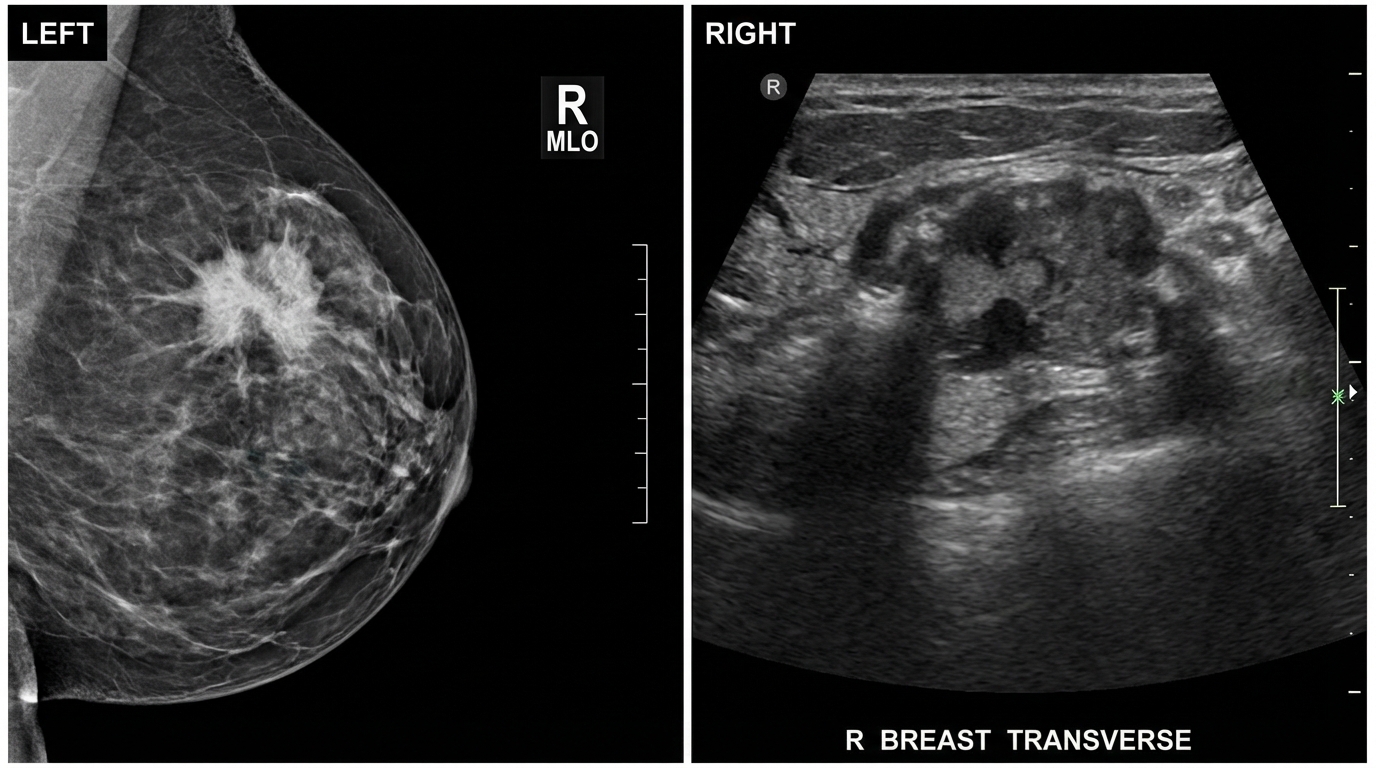
A 52-year-old G0P0 presents to her gynecologist for an annual exam. The patient notes that she recently felt a lump in her right breast, and it has persisted for several months. She has not noticed any abnormal breast discharge or skin changes, and the lump is not particularly tender. The patient also reports feeling especially sweaty in the last three months and occasionally having sudden heat waves. As a result, she has been increasing her use of antiperspirant in the axilla. The patient has no medical problems, has a BMI of 18.4 kg/m^2, and takes no medications. She underwent menarche at age 16 and had a levonorgestrel intrauterine device inserted three years ago due to heavy menstrual bleeding. The patient has now been amenorrheic for two years. She has a family history of breast cancer in her cousin at age 61 and hypertension in her father, who is 91. At this office visit, a 3x3 cm lump is palpated in the upper outer quadrant of the right breast. It is firm and not freely mobile. Ultrasound and mammogram are shown in Figures A and B. Which of the following is a risk factor for this patient’s condition?
Q48
A 26-year-old primigravid woman at 25 weeks' gestation comes to the physician for a prenatal visit. She has no history of serious illness and her only medication is a daily prenatal vitamin. A 1-hour 50-g glucose challenge shows a glucose concentration of 167 mg/dL (N < 135). A 100-g oral glucose tolerance test shows glucose concentrations of 213 mg/dL (N < 180) and 165 mg/dL (N < 140) at 1 and 3 hours, respectively. If she does not receive adequate treatment for her condition, which of the following complications is her infant at greatest risk of developing?
Q49
A 23-year-old primigravid woman comes to the physician at 28 weeks' gestation for a prenatal visit. Over the past 2 months, she has developed a hoarse voice and facial hair. Her medications include iron and a multivitamin. The last fetal ultrasonography, performed at 21 weeks' gestation, was unremarkable. Vital signs are within normal limits. Examination shows facial acne and hirsutism. Pelvic examination shows clitoromegaly. The uterus is consistent in size with a 28-week gestation. There are bilateral adnexal masses present on palpation. Ultrasonography shows a single live intrauterine pregnancy consistent with a 28-week gestation and bilateral 6-cm solid, multinodular ovarian masses. Serum androgen levels are increased. Which of the following is the most appropriate next step in management?
Q50
A 25-year-old G1P0 at 20 weeks of gestation woman arrives at a prenatal appointment complaining of pelvic pressure. She has had an uncomplicated pregnancy thus far. She takes prenatal vitamins and eats a well-balanced diet. Her medical history is significant for major depressive disorder that has been well-controlled on citalopram. Her mother had gestational diabetes with each of her 3 pregnancies. On physical exam, the cervix is soft and closed with minimal effacement. There is white vaginal discharge within the vagina and vaginal vault without malodor. Vaginal pH is 4.3. A transvaginal ultrasound measures the length of the cervix as 20 mm. Which of the following is most likely to prevent preterm birth in this patient?
High-risk pregnancies US Medical PG Practice Questions and MCQs
Question 41: A 25-year-old woman comes to the physician because she has noted darkening of the skin around her neck since wearing a chain she recently bought at a thrift shop. The darkening occurred gradually over the past 2 months and is accompanied by thickening of the affected skin. She has peptic ulcer disease. Menses occur at irregular 35- to 60-day intervals and last for 9 days with heavy flow. Menarche was at the age of 14 years and her last menstrual period was 3 weeks ago. She is sexually active with her husband and they do not use contraception. The patient's only medication is cimetidine. She is 163 cm (5 ft 4 in) tall and weighs 91 kg (200 lb); BMI is 34 kg/m2. Vital signs are within normal limits. Physical examination shows velvety, hyperpigmented plaques in the axillae, the inframammary fold, and around the neck. The remainder of the examination shows no abnormalities. Further evaluation of this patient is most likely to show which of the following findings?
A. Polycystic ovaries on ultrasonography of the pelvis (Correct Answer)
B. Diffusely enlarged thyroid gland on ultrasonography of the neck
C. Atrophic adrenal glands on CT scan of the abdomen
D. Malignant glandular cells on gastric biopsy
E. Elevated serum 17-hydroxyprogesterone levels
Explanation: ***Polycystic ovaries on ultrasonography of the pelvis***
- The patient's presentation with **obesity**, **acanthosis nigricans** (velvety, hyperpigmented plaques), and **irregular menses** (oligomenorrhea/amenorrhea) are classic signs of **polycystic ovary syndrome (PCOS)**.
- PCOS is a common endocrine disorder characterized by **hormonal imbalances**, including elevated androgens, which can lead to these symptoms and the presence of polycystic ovaries on ultrasound.
*Diffusely enlarged thyroid gland on ultrasonography of the neck*
- While thyroid dysfunction can cause menstrual irregularities and weight changes, there are no other symptoms or signs suggestive of a thyroid disorder, such as **goiter** or specific thyroid-related metabolic symptoms.
- The prominent skin findings and menstrual irregularity point strongly away from a primary thyroid issue.
*Atrophic adrenal glands on CT scan of the abdomen*
- **Adrenal atrophy** is typically seen in conditions like **Addison's disease**, which would present with symptoms such as **fatigue, weakness, weight loss, hypotension**, and **hyperpigmentation** (due to increased ACTH), but not typically acanthosis nigricans.
- The patient's other symptoms (obesity, irregular menses, acanthosis nigricans) are inconsistent with primary adrenal insufficiency.
*Malignant glandular cells on gastric biopsy*
- While **acanthosis nigricans** can, in rare cases, be a **paraneoplastic syndrome** associated with underlying malignancy (especially gastric adenocarcinoma), this is more common in an older population and typically associated with rapid onset and more widespread skin involvement.
- The patient's age and the combination of her other symptoms (obesity, irregular menses) make **PCOS** a much more likely explanation for the acanthosis nigricans.
*Elevated serum 17-hydroxyprogesterone levels*
- Elevated **17-hydroxyprogesterone** levels strongly suggest **congenital adrenal hyperplasia (CAH)**, particularly non-classical forms, which can present with hirsutism and menstrual irregularities similar to PCOS due to androgen excess.
- However, the patient's symptoms are more completely explained by **PCOS**, and CAH would typically lead to earlier manifestations and possibly other signs of virilization.
Question 42: A 24-year-old woman at 36 weeks pregnant presents to the emergency department with a headache and abdominal pain. The woman has no known past medical history and has inconsistently followed up with an obstetrician for prenatal care. Her temperature is 98.5°F (36.9°C), blood pressure is 163/101 mmHg, pulse is 90/min, respirations are 16/min, and oxygen saturation is 97% on room air. Prior to performing the physical exam, the patient experiences a seizure, which resolves after 60 seconds. Which of the following is the best management for this patient?
A. Diazepam, magnesium, and continuous monitoring
B. Magnesium and continuous monitoring
C. Nifedipine and cesarean section
D. Magnesium and cesarean section (Correct Answer)
E. Magnesium and labetalol
Explanation: **Magnesium and cesarean section**
- The patient's presentation with **headache**, **abdominal pain**, and **hypertension** followed by a **seizure** is classic for **eclampsia**, a severe complication of pre-eclampsia.
- **Magnesium sulfate** is the first-line treatment for seizure control and prevention in eclampsia, while **delivery (cesarean section)** is the definitive treatment since it removes the source of the disease (the placenta).
*Diazepam, magnesium, and continuous monitoring*
- While **magnesium** is correct for seizure management, **diazepam** is typically reserved as a second-line agent if magnesium is ineffective or contraindicated.
- The definitive management of eclampsia is delivery; continuous monitoring alone is insufficient without plans for delivery.
*Magnesium and continuous monitoring*
- **Magnesium** is indeed the critical first step for seizure management in eclampsia.
- However, continuous monitoring without addressing the underlying cause via **delivery** is not sufficient definitive management for eclampsia.
*Nifedipine and cesarean section*
- **Nifedipine** is an antihypertensive and can be used to manage severe hypertension in pregnancy, but it is not the primary treatment for active seizures or seizure prevention in eclampsia.
- While a **cesarean section** is appropriate for delivery, **magnesium** is crucial for immediate seizure control.
*Magnesium and labetalol*
- **Magnesium** is appropriate for seizure management.
- **Labetalol** is an antihypertensive agent used for severe hypertension in pregnancy, but it does not treat the seizure or the underlying eclampsia definitively; delivery is still required.
Question 43: A 45-year-old woman visits your office with concerns about recent changes in her menstrual cycle. She noticed that her menses last longer and are heavier, to the point of needing almost twice the number of sanitary pads than 6 months ago. She denies any abdominal or pelvic discomfort. She started menstruating at 9 years of age. She had a negative Pap smear and HPV test 5 years ago. The physical examination is unremarkable with no masses on abdominal palpation and the pelvic examination is negative for vaginal lesions or tenderness. The bimanual examination reveals a mobile, non-tender, retroverted uterus with no masses in the adnexa. A transvaginal ultrasound performed 4 days after her last menses revealed an endometrial thickness of 4 mm. Which of the following is the most likely cause of this patient’s condition?
A. Uterine adenomyosis
B. Uterine leiomyoma (Correct Answer)
C. Endometrial hyperplasia
D. Endometrial carcinoma
E. Endometrial polyp
Explanation: ***Uterine leiomyoma***
- Leiomyomas (fibroids) are common in women in their 30s and 40s and can cause **menorrhagia** (heavy and prolonged bleeding) due to increased endometrial surface area, impaired myometrial contractility, and increased angiogenesis.
- The patient's age, symptoms of heavy and prolonged menstrual bleeding without significant pain, and the finding of a **mobile, non-tender uterus** on bimanual exam are consistent with leiomyomas, even if not explicitly palpated as distinct masses.
*Uterine adenomyosis*
- Characterized by **dysmenorrhea (painful periods)** and **menorrhagia**, often presenting with a **uniformly enlarged, globular, and tender uterus**.
- The patient's lack of abdominal/pelvic discomfort and the description of a mobile, non-tender uterus make adenomyosis less likely.
*Endometrial hyperplasia*
- This condition is more common in **perimenopausal** and postmenopausal women and often presents with **irregular or heavy uterine bleeding** due to unopposed estrogen exposure.
- While heavy bleeding is present, the **endometrial thickness of 4 mm** after menses is within the normal range for premenopausal women and does not suggest hyperplasia.
*Endometrial carcinoma*
- Typically presents with **abnormal uterine bleeding**, more commonly in **postmenopausal women**, and is associated with risk factors like obesity, nulliparity, and diabetes.
- While bleeding is present, the patient's age and the normal endometrial thickness make carcinoma less likely, though it would warrant further investigation especially with persistent symptoms.
*Endometrial polyp*
- Can cause **intermenstrual bleeding**, **menorrhagia**, or postmenopausal bleeding, and can be detected by ultrasound or hysteroscopy.
- While they can cause heavy bleeding, polyps often cause **intermenstrual spotting** or irregular bleeding, and the symptoms described are more consistently heavy and prolonged periods rather than irregular spotting.
Question 44: A 36-year-old primigravida woman visits her gynecologist during the 28th week of her pregnancy. Physical examination reveals pitting edema around her ankles and elevated systolic blood pressure. 24-hour urine collection yields 4 grams of protein. If left untreated, the patient is most at increased risk for which of the following:
A. Thrombocytosis
B. Gestational diabetes
C. Hemolysis (Correct Answer)
D. Placenta accreta
E. Eclampsia
Explanation: **Hemolysis**
- The patient's presentation with **new-onset hypertension** (elevated systolic blood pressure), **proteinuria** (>300 mg/24 hours or 4 grams in this case), and **edema** strongly suggests **preeclampsia**.
- If left untreated, preeclampsia can progress to **HELLP syndrome** (**H**emolysis, **E**levated **L**iver enzymes, **L**ow **P**latelets), where **hemolysis** is a primary component.
*Thrombocytosis*
- **Preeclampsia** and its severe forms, like HELLP syndrome, are associated with **thrombocytopenia** (low platelets), not thrombocytosis (elevated platelets).
- **Thrombocytosis** is generally not a complication of severe preeclampsia or eclampsia.
*Gestational diabetes*
- While **gestational diabetes** is a common pregnancy complication, it is characterized by **glucose intolerance** and is not directly linked to the patient's symptoms of hypertension and proteinuria.
- The primary risk from gestational diabetes is for macrosomia, neonatal hypoglycemia, and increased future risk of type 2 diabetes, not the direct complications of severe preeclampsia.
*Placenta accreta*
- **Placenta accreta** is a condition where the placenta abnormally adheres to the uterine wall, typically presenting with **heavy bleeding during delivery**.
- It is not a direct complication of untreated preeclampsia, although both can increase maternal morbidity.
*Eclampsia*
- **Eclampsia** is defined by the occurrence of **new-onset grand mal seizures** in a woman with preeclampsia, without a history of epilepsy.
- While eclampsia is a severe complication of untreated preeclampsia, **hemolysis** (as part of HELLP syndrome) is also a critical and direct potential consequence that can occur with severe preeclampsia, even before seizures manifest.
Question 45: A 31-year-old G1P0000 presents to her obstetrician for her first prenatal visit after having a positive home pregnancy test one week ago. She states that her last menstrual period was 8 weeks ago. The patient has a past medical history of type I diabetes mellitus since childhood and is on insulin. Her hemoglobin A1c two weeks ago was 13.7%. At that time, she was also found to have microalbuminuria on routine urinalysis, and her primary care provider prescribed lisinopril but the patient has not yet started taking it. The patient’s brother is autistic, but family history is otherwise unremarkable. At this visit, her temperature is 98.6°F (37.0°C), blood pressure is 124/81 mmHg, pulse is 75/min, and respirations are 14/min. Exam is unremarkable. This fetus is at increased risk for which of the following?
A. Post-term delivery
B. Oligohydramnios
C. Neural tube defect (Correct Answer)
D. Aneuploidy
E. Neonatal hyperglycemia
Explanation: ***Neural tube defect***
- The patient's **poorly controlled type 1 diabetes mellitus** is evidenced by her **HbA1c of 13.7%**. Uncontrolled maternal hyperglycemia during organogenesis significantly increases the risk for fetal malformations, including neural tube defects due to impaired folate metabolism.
- This risk is highest when hyperglycemia occurs during the first 8 weeks of gestation, a period crucial for neural tube closure, which aligns with this patient's presentation at 8 weeks' gestation.
*Post-term delivery*
- **Uncontrolled maternal diabetes** is typically associated with **macrosomia and polyhydramnios**, which can lead to complications such as **shoulder dystocia, premature rupture of membranes (PROM)**, and often precipitates **earlier induction of labor** rather than post-term delivery.
- While exact delivery timing can vary, the direct causal link between uncontrolled diabetes and post-term delivery is not primary; rather, such pregnancies are often managed with earlier interventions.
*Oligohydramnios*
- Poorly controlled maternal diabetes, particularly type 1, is generally associated with **polyhydramnios** due to fetal polyuria caused by hyperglycemia, not oligohydramnios.
- **Oligohydramnios** can be associated with severe **placental insufficiency**, prolonged rupture of membranes, or fetal renal agenesis, none of which are directly indicated by uncontrolled maternal diabetes alone.
*Aneuploidy*
- The primary risk factor for **aneuploidy** (e.g., Down syndrome) is **advanced maternal age**, which is not present in this 31-year-old patient.
- **Maternal diabetes** itself is not a direct risk factor for aneuploidy; genetic factors related to nondisjunction are the main cause.
*Neonatal hyperglycemia*
- Maternal hyperglycemia leads to fetal hyperglycemia, causing **fetal hyperinsulinemia**. After birth, the neonate's elevated insulin levels, in the absence of maternal glucose supply, result in **neonatal hypoglycemia**, not hyperglycemia.
- **Neonatal hyperglycemia** is rare and usually associated with specific genetic defects or administration of excessive glucose postnatally, not maternal diabetes.
Question 46: A 36-year-old G1P0 Caucasian woman in her 12th week of pregnancy presents to her obstetrician with vaginal bleeding. She also reports 3 episodes of non-bloody, non-bilious emesis. She failed to show up for her last 2 pre-natal visits due to work. Her past medical history is notable for obesity and type I diabetes mellitus. Her family history is notable for ovarian cancer in her mother and endometrial cancer in her maternal grandmother. On examination, her uterus is at 16 weeks in size and she has mild tenderness to palpation on her right suprapubic region. A transvaginal ultrasound in this patient would most likely reveal which of the following?
A. Non-viable fetus
B. Large intramural masses
C. Intrauterine cystic mass (Correct Answer)
D. Unilateral ovarian cyst
E. Fetal parts
Explanation: ***Intrauterine cystic mass***
- The patient's history of **vaginal bleeding**, significant **nausea and vomiting**, and a **fundal height larger than expected for gestational age** (16 weeks size at 12 weeks gestation) are classic signs of a **hydatidiform mole**.
- A transvaginal ultrasound in such a case characteristically reveals a "snowstorm" or "grape-like cluster" appearance, which corresponds to an **intrauterine cystic mass** composed of edematous chorionic villi.
*Non-viable fetus*
- While a non-viable fetus can cause vaginal bleeding and a missed abortion, it typically presents with a uterus size that is **smaller than expected** or appropriate for gestational age, not larger.
- The presence of severe emesis and uterine size greater than dates points away from a simple non-viable fetus.
*Large intramural masses*
- **Uterine fibroids (leiomyomas)** could cause an enlarged uterus and bleeding, but they are typically solid masses on ultrasound, not cystic.
- Fibroids are less likely to cause the severe emesis seen, and the "grape-like cluster" appearance is not characteristic of fibroids.
*Unilateral ovarian cyst*
- An ovarian cyst might cause some pain and potentially contribute to hormonal imbalances, but it would **not typically explain an intrauterine cystic mass or uterine size discrepancy** as described.
- While ovarian cysts can occur in pregnancy, they do not present with the constellation of symptoms (uterine size > dates, severe emesis, cystic intrauterine mass) associated with a molar pregnancy.
*Fetal parts*
- In a complete hydatidiform mole, there are typically **no fetal parts** present, as it results from abnormal fertilization without a viable embryo.
- Even in a partial mole, where fetal parts might be present, the dominant ultrasound finding would still be the characteristic cystic changes of the placenta.
Question 47: A 52-year-old G0P0 presents to her gynecologist for an annual exam. The patient notes that she recently felt a lump in her right breast, and it has persisted for several months. She has not noticed any abnormal breast discharge or skin changes, and the lump is not particularly tender. The patient also reports feeling especially sweaty in the last three months and occasionally having sudden heat waves. As a result, she has been increasing her use of antiperspirant in the axilla. The patient has no medical problems, has a BMI of 18.4 kg/m^2, and takes no medications. She underwent menarche at age 16 and had a levonorgestrel intrauterine device inserted three years ago due to heavy menstrual bleeding. The patient has now been amenorrheic for two years. She has a family history of breast cancer in her cousin at age 61 and hypertension in her father, who is 91. At this office visit, a 3x3 cm lump is palpated in the upper outer quadrant of the right breast. It is firm and not freely mobile. Ultrasound and mammogram are shown in Figures A and B. Which of the following is a risk factor for this patient’s condition?
A. Use of levonorgestrel intrauterine device
B. Low body weight
C. Late age at menarche
D. Fatty breast tissue
E. Nulliparity (Correct Answer)
Explanation: ***Nulliparity***
- **Nulliparity** (never having given birth) increases lifetime exposure to **estrogen and progesterone**, which are key drivers of breast cell proliferation, thus increasing breast cancer risk.
- The patient's G0P0 status indicates nulliparity, which is a significant risk factor for **hormone-sensitive cancers** like breast cancer.
*Use of levonorgestrel intrauterine device*
- **Levonorgestrel IUDs** are associated with *reduced* rates of endometrial cancer and *do not* increase the risk of breast cancer.
- The hormone is primarily *local* in its effect on the uterus, with minimal systemic absorption to significantly impact breast tissue.
*Low body weight*
- **Low body weight** (BMI < 18.5 kg/m^2) can sometimes be *protective* against postmenopausal breast cancer due to lower peripheral estrogen conversion.
- **Obesity**, particularly in postmenopausal women, is typically a risk factor for breast cancer due to increased **peripheral estrogen production** in adipose tissue.
*Late age at menarche*
- **Late menarche** (age ≥ 12-13 years) actually *reduces* the lifetime exposure to endogenous estrogens, thereby *decreasing* the risk of breast cancer.
- The patient had menarche at age 16, which is considered a **late age**, and would generally be protective rather than a risk factor.
*Fatty breast tissue*
- **Dense breast tissue**, rather than fatty breast tissue, is a significant risk factor for breast cancer, as it can both obscure mammographic detection and inherently increase risk.
- The term "fatty breast tissue" itself isn't a direct risk factor; rather, the *proportion* of fibrous and glandular tissue (density) is what's relevant.
Question 48: A 26-year-old primigravid woman at 25 weeks' gestation comes to the physician for a prenatal visit. She has no history of serious illness and her only medication is a daily prenatal vitamin. A 1-hour 50-g glucose challenge shows a glucose concentration of 167 mg/dL (N < 135). A 100-g oral glucose tolerance test shows glucose concentrations of 213 mg/dL (N < 180) and 165 mg/dL (N < 140) at 1 and 3 hours, respectively. If she does not receive adequate treatment for her condition, which of the following complications is her infant at greatest risk of developing?
A. Elevated calcium levels
B. Decreased hematocrit
C. Decreased amniotic fluid production
D. Islet cell hyperplasia (Correct Answer)
E. Omphalocele
Explanation: ***Islet cell hyperplasia***
- The patient's glucose tolerance test results indicate **gestational diabetes mellitus (GDM)**, which leads to increased fetal glucose exposure.
- In response to chronic hyperglycemia, the fetal beta cells undergo **hyperplasia** and hypertrophy to increase insulin production, predisposing the infant to **hypoglycemia** after birth.
*Elevated calcium levels*
- **Hypocalcemia** is a more common electrolyte disturbance in infants of diabetic mothers due to prematurity, asphyxia, or parathyroid hormone suppression.
- **Hypercalcemia** is not typically associated with gestational diabetes.
*Decreased hematocrit*
- Infants of diabetic mothers are at increased risk for **polycythemia** (elevated hematocrit) due to increased erythropoietin production in response to fetal hypoxia.
- **Decreased hematocrit** (anemia) is less common and usually related to other causes.
*Decreased amniotic fluid production*
- Uncontrolled gestational diabetes often leads to **polyhydramnios** (excess amniotic fluid) due to fetal hyperglycemia-induced polyuria.
- **Oligohydramnios** (decreased amniotic fluid) is not a typical complication of GDM.
*Omphalocele*
- **Omphalocele** is a **ventral wall defect** associated with chromosomal abnormalities or other genetic syndromes, not primarily with gestational diabetes.
- While GDM can increase the risk of various birth defects, omphalocele is not one of the more commonly cited or direct consequences.
Question 49: A 23-year-old primigravid woman comes to the physician at 28 weeks' gestation for a prenatal visit. Over the past 2 months, she has developed a hoarse voice and facial hair. Her medications include iron and a multivitamin. The last fetal ultrasonography, performed at 21 weeks' gestation, was unremarkable. Vital signs are within normal limits. Examination shows facial acne and hirsutism. Pelvic examination shows clitoromegaly. The uterus is consistent in size with a 28-week gestation. There are bilateral adnexal masses present on palpation. Ultrasonography shows a single live intrauterine pregnancy consistent with a 28-week gestation and bilateral 6-cm solid, multinodular ovarian masses. Serum androgen levels are increased. Which of the following is the most appropriate next step in management?
A. Measurement of serum inhibin levels (Correct Answer)
B. Diagnostic laparoscopy
C. Oophorectomy
D. Fine needle aspiration cytology
E. Monitoring
Explanation: **Measurement of serum inhibin levels**
* **Sertoli-Leydig cell tumors** are a common cause of **virilization** in pregnancy and are often associated with elevated **androgen levels**.
* **Inhibin A** and **inhibin B** are tumor markers that can be elevated in Sertoli-Leydig cell tumors.
*Diagnostic laparoscopy*
* While a definitive diagnosis might require surgery, performing a **diagnostic laparoscopy** is not the immediate next step.
* More **non-invasive investigations**, such as tumor marker measurements, should be conducted first to narrow down the differential diagnosis.
*Oophorectomy*
* **Oophorectomy** is a surgical procedure to remove the ovaries and is a definitive treatment for ovarian tumors.
* It is not the initial step in management and is usually reserved after more diagnostic information is obtained, especially given the ongoing pregnancy.
*Fine needle aspiration cytology*
* **Fine needle aspiration (FNA) cytology** is generally **contraindicated** for ovarian masses, especially in pregnancy, due to the risk of **tumor seeding** and potential rupture.
* Such a procedure could also lead to complications for the pregnancy itself.
*Monitoring*
* The patient is exhibiting clear signs of **virilization** and has **bilateral solid ovarian masses**, which strongly suggest a **tumor** producing androgens.
* **Monitoring** without further investigation would delay diagnosis and potential treatment, putting both the mother and fetus at risk.
Question 50: A 25-year-old G1P0 at 20 weeks of gestation woman arrives at a prenatal appointment complaining of pelvic pressure. She has had an uncomplicated pregnancy thus far. She takes prenatal vitamins and eats a well-balanced diet. Her medical history is significant for major depressive disorder that has been well-controlled on citalopram. Her mother had gestational diabetes with each of her 3 pregnancies. On physical exam, the cervix is soft and closed with minimal effacement. There is white vaginal discharge within the vagina and vaginal vault without malodor. Vaginal pH is 4.3. A transvaginal ultrasound measures the length of the cervix as 20 mm. Which of the following is most likely to prevent preterm birth in this patient?
A. Pessary
B. Vaginal progesterone (Correct Answer)
C. Metformin
D. Metronidazole
E. Prednisone
Explanation: ***Vaginal progesterone***
- This patient has a **short cervical length** (20 mm at 20 weeks gestation), and **vaginal progesterone** has been shown to reduce the risk of **spontaneous preterm birth** in women with a singleton pregnancy and a short cervix.
- While she has subjective pelvic pressure, the physical exam shows a closed cervix, making her a candidate for prophylactic intervention rather than immediate treatment for active labor.
*Pessary*
- A **cervical pessary** can be used to prevent **preterm birth** in women with a short cervix, but evidence suggests **vaginal progesterone** is often preferred as a first-line intervention in singleton pregnancies due to ease of use and good evidence base.
- While it's an option, it's generally considered secondary to progesterone in this specific scenario.
*Metformin*
- **Metformin** is used to treat **gestational diabetes** or **type 2 diabetes** and is not indicated for the prevention of preterm birth.
- While her mother had gestational diabetes, this patient has not been diagnosed with it, nor is prevention of preterm birth an indication for metformin use.
*Metronidazole*
- **Metronidazole** is an antibiotic used to treat **bacterial vaginosis** or **trichomoniasis**.
- While she has vaginal discharge, the pH of 4.3 and lack of malodor do not suggest bacterial vaginosis or trichomoniasis, and metronidazole does not prevent preterm birth.
*Prednisone*
- **Prednisone** is a corticosteroid used to manage inflammatory conditions or to promote **fetal lung maturity** in cases of threatened preterm labor.
- It is not used to prevent preterm birth and would not be indicated for this patient whose cervix is closed and appears to be experiencing benign pelvic pressure rather than active labor.