A 32-year-old G1P0 woman presents to the emergency department at 34 weeks gestation. She complains of vague upper abdominal pain and nausea which has persisted for 2 weeks, as well as persistent headache over the past several days. Her temperature is 99.0°F (37.2°C), blood pressure is 164/89 mmHg, pulse is 88/min, respirations are 19/min, and oxygen saturation is 98% on room air.
Hemoglobin: 10 g/dL
Hematocrit: 30%
Leukocyte count: 7,800/mm^3 with normal differential
Platelet count: 25,000/mm^3
Serum:
Na+: 139 mEq/L
Cl-: 100 mEq/L
K+: 4.3 mEq/L
HCO3-: 25 mEq/L
BUN: 20 mg/dL
Glucose: 99 mg/dL
Creatinine: 1.1 mg/dL
Ca2+: 10.2 mg/dL
AST: 199 U/L
ALT: 254 U/L
Urine:
Color: Yellow
Protein: Positive
Blood: Positive
The patient begins seizing. Which of the following is the most appropriate definitive treatment for this patient?
Q22
A 22-year-old female presents at 24 weeks gestation with a chief complaint of burning upon urination. On physical exam, you note a gravid uterus that extends above the umbilicus. A urine analysis and culture is sent demonstrating over 100,000 colony forming units of E. coli. Of note this patient had a similar UTI 7 weeks ago that was resolved with appropriate medication. Which of the following is the most appropriate management of this patient?
Q23
A 30-year-old primigravida schedules an appointment with her obstetrician for a regular check-up. She says that everything is fine, although she reports that her baby has stopped moving as much as previously. She is 22 weeks gestation. She denies any pain or vaginal bleeding. The obstetrician performs an ultrasound and also orders routine blood and urine tests. On ultrasound, there is no fetal cardiac activity or movement. The patient is asked to wait for 1 hour, after which the scan is to be repeated. The second scan shows the same findings. Which of the following is the most likely diagnosis?
Q24
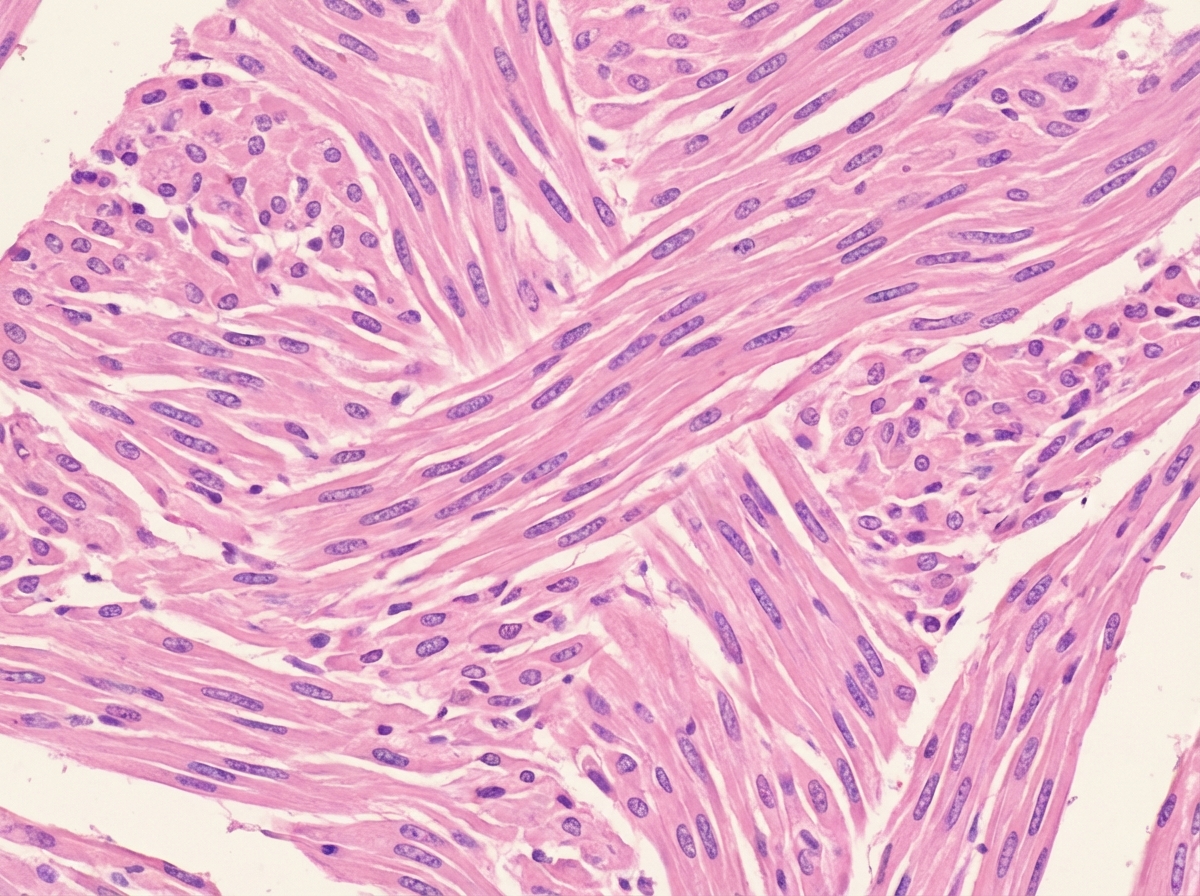
A 37-year-old nulliparous woman comes to the physician because of a 6-month history of heavy, prolonged bleeding with menstruation, dyspareunia, and cyclical abdominal pain. Menses previously occurred at regular 28-day intervals and lasted 4 days with normal flow. Pelvic examination shows an asymmetrically enlarged, nodular uterus consistent in size with a 10-week gestation. A urine pregnancy test is negative. A photomicrograph of a section of an endometrial biopsy specimen is shown. Which of the following is the most likely diagnosis?
Q25
A 19-year-old woman comes to the physician because of pelvic pain and vaginal discharge that began 2 days ago. She has no history of serious medical illness and takes no medications. Her temperature is 39°C (102.2°F). Pelvic examination shows pain with movement of the cervix and mucopurulent cervical discharge. A Gram stain of the discharge does not show any organisms. A Giemsa stain shows intracytoplasmic inclusions. The patient's current condition puts her at increased risk for which of the following complications?
Q26
A 33-year-old G1P0 at 32 weeks gestation presents to her OB/GYN for a prenatal check-up. Her medical history is significant for type II pregestational diabetes mellitus, which has been well-controlled with diet and insulin so far throughout her pregnancy. Which of the following is the recommended future follow-up for this patient?
Q27
A 26-year-old woman with a history of asthma presents to the emergency room with persistent gnawing left lower quadrant abdominal pain. She first noticed the pain several hours ago and gets mild relief with ibuprofen. She has not traveled recently, tried any new foods or medications, or been exposed to sick contacts. She is sexually active with her boyfriend and admits that she has had multiple partners in the last year. Her temperature is 99.5°F (37.5°C), blood pressure 77/45 mmHg, pulse is 121/min, and respirations are 14/min. On exam, she appears uncomfortable and diaphoretic. She has left lower quadrant tenderness to palpation, and her genitourinary exam is normal. Her urinalysis is negative and her pregnancy test is positive. Which of the following would be the appropriate next step in management?
Q28
A 28-year-old woman comes to a fertility clinic because she has been trying to conceive for over a year without success. She has never been pregnant, but her husband has 2 children from a previous marriage. She broke a collarbone during a skiing accident but has otherwise been healthy with no chronic conditions. On physical exam, she is found to have minimal pubic hair and suprapubic masses. Speculum examination reveals a small vagina with no cervical canal visible. The most likely cause of this patient's infertility has which of the following modes of inheritance?
Q29
A 26-year-old G6P1050 presents for evaluation of infertility. She and her husband have been trying to have a child for the past three years. Over that time period, the patient suffered five miscarriages. Her past medical history is significant for anemia, bipolar disorder, and a blood clot in her right lower extremity that occurred during her first pregnancy. The patient reports she has been feeling fatigued and has gained at least 10 pounds within the last two months. She often cries when she thinks about the miscarriages and has trouble falling asleep at night. She admits that while she had quit smoking during the pregnancy of her first child, and one month after the birth she started smoking again. She currently smokes about a half a pack of cigarettes a day. A review of systems is also positive for diffuse joint discomfort. The patient's current medications include minocycline for acne, and prenatal vitamins. A physical exam is unremarkable. Her temperature is 99°F (37.2°C), pulse is 72/minute, blood pressure is 118/78 mmHg, and oxygen saturation is 98% O2 on room air. Routine labs are drawn, as shown below:
Leukocyte count: 6,500/mm^3
Platelet count: 210,000/mm^3
Hemoglobin: 11.0 g/dL
Prothrombin time: 12 seconds
Activated partial thromboplastin time: 43 seconds
International normalized ratio: 1.1
Which of the following is associated with this patient’s infertility?
Q30
A 34-year-old G3P2 is admitted to the hospital at 32 weeks gestation with vaginal bleeding, which started 4 hours ago when she was taking a nap. She reports no pain or uterine contractions. The course of the current pregnancy has been uncomplicated. The two previous pregnancies resulted in cesarean sections. She did not undergo a scheduled ultrasound examination at 20 weeks gestation . Her vital signs are as follows: blood pressure, 110/60 mm Hg; heart rate, 77/min; respiratory rate, 14/min; and temperature, 36.6℃ (97.9℉). The fetal heart rate is 147/min. On examination, abdominal palpation is significant for normal uterine tone and no tenderness. The perineum is moderately bloody. The patient continues to pass a small amount of blood. Which of the following investigations would be most likely to confirm the diagnosis?
High-risk pregnancies US Medical PG Practice Questions and MCQs
Question 21: A 32-year-old G1P0 woman presents to the emergency department at 34 weeks gestation. She complains of vague upper abdominal pain and nausea which has persisted for 2 weeks, as well as persistent headache over the past several days. Her temperature is 99.0°F (37.2°C), blood pressure is 164/89 mmHg, pulse is 88/min, respirations are 19/min, and oxygen saturation is 98% on room air.
Hemoglobin: 10 g/dL
Hematocrit: 30%
Leukocyte count: 7,800/mm^3 with normal differential
Platelet count: 25,000/mm^3
Serum:
Na+: 139 mEq/L
Cl-: 100 mEq/L
K+: 4.3 mEq/L
HCO3-: 25 mEq/L
BUN: 20 mg/dL
Glucose: 99 mg/dL
Creatinine: 1.1 mg/dL
Ca2+: 10.2 mg/dL
AST: 199 U/L
ALT: 254 U/L
Urine:
Color: Yellow
Protein: Positive
Blood: Positive
The patient begins seizing. Which of the following is the most appropriate definitive treatment for this patient?
A. Cesarean section (Correct Answer)
B. Betamethasone
C. Lorazepam
D. Platelet transfusion
E. Magnesium
Explanation: ***Cesarean section***
- This patient presents with **preeclampsia with severe features** (hypertension, elevated liver enzymes, thrombocytopenia, proteinuria) and has now developed **eclampsia** (seizures).
- **Delivery of the fetus** and placenta is the only definitive cure for preeclampsia/eclampsia, and in this critical state, a cesarean section is often the fastest and safest method to achieve this.
*Betamethasone*
- **Betamethasone** is administered to promote **fetal lung maturity** in cases where preterm delivery is anticipated.
- While relevant for a 34-week gestation, it is a supportive measure, not the definitive treatment for the mother's life-threatening eclamptic seizure.
*Lorazepam*
- **Lorazepam** is a benzodiazepine used to **acutely terminate seizures**.
- While it can be used for acute seizure control, it does not address the underlying pathology of eclampsia, which is resolved by delivery.
*Platelet transfusion*
- **Platelet transfusion** might be considered if the platelet count is critically low (typically <20,000/mm³ or <50,000/mm³ with active bleeding or prior to surgery) to reduce the risk of **hemorrhage**.
- While this patient has severe thrombocytopenia (25,000/mm³), the definitive treatment is delivery, not treating a single laboratory abnormality in isolation.
*Magnesium*
- **Magnesium sulfate** is the first-line medication for the **prevention and treatment of eclamptic seizures**.
- While crucial for seizure management, it is a supportive therapy for the mother's condition, not the definitive cure for preeclampsia/eclampsia, which requires delivery.
Question 22: A 22-year-old female presents at 24 weeks gestation with a chief complaint of burning upon urination. On physical exam, you note a gravid uterus that extends above the umbilicus. A urine analysis and culture is sent demonstrating over 100,000 colony forming units of E. coli. Of note this patient had a similar UTI 7 weeks ago that was resolved with appropriate medication. Which of the following is the most appropriate management of this patient?
A. Nitrofurantoin
B. TMP-SMX
C. Nitrofurantoin and continue with nitrofurantoin prophylaxis for the rest of the pregnancy (Correct Answer)
D. Cephalexin and IV antibiotic prophylaxis for the rest of the pregnancy
E. Cephalexin
Explanation: ***Nitrofurantoin and continue with nitrofurantoin prophylaxis for the rest of the pregnancy***
- This patient has a **recurrent UTI** during pregnancy, indicated by a history of a previous UTI and the current infection at 24 weeks.
- **Nitrofurantoin** is a safe and effective treatment for UTIs in the second and third trimesters, and **prophylaxis** is recommended for recurrent UTIs in pregnancy to prevent complications like pyelonephritis and preterm birth.
*Nitrofurantoin*
- While **nitrofurantoin** is an appropriate treatment for the current UTI, it does not address the need for **prophylaxis** in a patient with recurrent infections during pregnancy.
- Treating the current infection without prophylaxis significantly increases the risk of future UTIs, which can lead to adverse pregnancy outcomes.
*TMP-SMX*
- **Trimethoprim-sulfamethoxazole (TMP-SMX)** is generally avoided in the **third trimester** due to the risk of **kernicterus** in the neonate.
- Although possibly acceptable earlier, given the risk-benefit and safer alternatives, it's not the preferred choice in late second or third trimester without specific indications.
*Cephalexin and IV antibiotic prophylaxis for the rest of the pregnancy*
- **Cephalexin** is a safe and effective oral antibiotic for UTIs in pregnancy, but **IV antibiotic prophylaxis** for the remainder of the pregnancy is generally excessive and not standard practice for recurrent uncomplicated UTIs.
- Prophylaxis is typically given orally, and IV antibiotics are reserved for severe infections or pyelonephritis.
*Cephalexin*
- **Cephalexin** is a suitable treatment for the acute UTI, but similar to nitrofurantoin without prophylaxis, it fails to address the **recurrent nature** of the patient's infections.
- For patients with recurrent UTIs in pregnancy, prophylaxis is crucial to prevent further episodes and potential complications.
Question 23: A 30-year-old primigravida schedules an appointment with her obstetrician for a regular check-up. She says that everything is fine, although she reports that her baby has stopped moving as much as previously. She is 22 weeks gestation. She denies any pain or vaginal bleeding. The obstetrician performs an ultrasound and also orders routine blood and urine tests. On ultrasound, there is no fetal cardiac activity or movement. The patient is asked to wait for 1 hour, after which the scan is to be repeated. The second scan shows the same findings. Which of the following is the most likely diagnosis?
A. Missed abortion
B. Ectopic pregnancy
C. Complete abortion
D. Fetal demise (Correct Answer)
E. Incomplete abortion
Explanation: ***Fetal demise***
- The absence of fetal cardiac activity and movement on repeated ultrasound scans at 22 weeks' gestation, after previously reporting fetal movement, is consistent with **fetal demise**.
- **Fetal demise** refers to the death of a fetus in utero at or after 20 weeks of gestation, or when the fetus weighs 350 grams or more.
*Missed abortion*
- **Missed abortion** (or missed miscarriage) is typically defined as a non-viable intrauterine pregnancy with a retained fetus or embryo without cardiac activity before 20 weeks of gestation.
- The patient is 22 weeks gestation, which places the condition beyond the general definition of a missed abortion.
*Ectopic pregnancy*
- In an **ectopic pregnancy**, the fertilized egg implants outside the uterus, most commonly in the fallopian tube, and would not have reached 22 weeks with reported fetal movement.
- An ectopic pregnancy would present with earlier symptoms like **abdominal pain** and **vaginal bleeding**, and an ultrasound would show an empty uterus or evidence of extrauterine pregnancy.
*Complete abortion*
- A **complete abortion** involves the complete expulsion of all products of conception from the uterus.
- This would be characterized by **heavy vaginal bleeding** and the passage of tissue, which the patient denies.
*Incomplete abortion*
- An **incomplete abortion** occurs when some, but not all, products of conception have been expelled from the uterus.
- Similar to complete abortion, an incomplete abortion would typically involve **vaginal bleeding** and retained tissue, accompanied by **cramping**, which are absent in this case.
Question 24: A 37-year-old nulliparous woman comes to the physician because of a 6-month history of heavy, prolonged bleeding with menstruation, dyspareunia, and cyclical abdominal pain. Menses previously occurred at regular 28-day intervals and lasted 4 days with normal flow. Pelvic examination shows an asymmetrically enlarged, nodular uterus consistent in size with a 10-week gestation. A urine pregnancy test is negative. A photomicrograph of a section of an endometrial biopsy specimen is shown. Which of the following is the most likely diagnosis?
A. Endometriosis
B. Leiomyoma (Correct Answer)
C. Endometrial carcinoma
D. Adenomyosis
E. Endometrial hyperplasia
Explanation: ***Leiomyoma***
- The image shows **smooth muscle cells arranged in swirling fascicles**, characteristic of a benign leiomyoma (fibroid). This is consistent with the clinical presentation of heavy, prolonged bleeding, dyspareunia, cyclical abdominal pain, and an asymmetrically enlarged, nodular uterus.
- Leiomyomas are common benign tumors of the myometrium that cause symptoms due to their bulk and effect on uterine contractility and vascularity.
*Endometriosis*
- Endometriosis involves the presence of **ectopic endometrial glands and stroma outside the uterus**, which would not be represented by the muscular histological pattern seen.
- While it can cause pelvic pain and dyspareunia, it does not typically lead to an asymmetrically enlarged, nodular uterus (unless it's an endometrioma mistaken for a uterine mass).
*Endometrial carcinoma*
- Endometrial carcinoma is a **malignancy of the endometrial glands**, characterized by atypical glandular proliferation, which is not depicted in the image.
- While it can cause abnormal uterine bleeding, the histological features here are clearly benign smooth muscle, not malignant glandular tissue.
*Adenomyosis*
- Adenomyosis is characterized by the **presence of endometrial glands and stroma within the myometrium**, leading to diffuse uterine enlargement, often symmetrical, and a "boggy" uterus on examination.
- The image exhibits densely packed smooth muscle bundles without evidence of endometrial glands within the muscle wall, which distinguishes it from adenomyosis.
*Endometrial hyperplasia*
- Endometrial hyperplasia is an **overgrowth of the endometrial lining**, characterized by an increased proliferation of endometrial glands relative to the stroma.
- The image provided shows myometrial tissue with architectural changes, not an endometrial biopsy demonstrating hyperplastic endometrial glands.
Question 25: A 19-year-old woman comes to the physician because of pelvic pain and vaginal discharge that began 2 days ago. She has no history of serious medical illness and takes no medications. Her temperature is 39°C (102.2°F). Pelvic examination shows pain with movement of the cervix and mucopurulent cervical discharge. A Gram stain of the discharge does not show any organisms. A Giemsa stain shows intracytoplasmic inclusions. The patient's current condition puts her at increased risk for which of the following complications?
A. Purulent arthritis
B. Ectopic pregnancy (Correct Answer)
C. Cervical cancer
D. Aortic root dilatation
E. Endometriosis
Explanation: ***Ectopic pregnancy***
- The patient's symptoms (pelvic pain, vaginal discharge, cervical motion tenderness, fever) and intracytoplasmic inclusions on Giemsa stain are highly suggestive of **Chlamydia trachomatis infection** leading to **pelvic inflammatory disease (PID)**.
- PID can cause **scarring of the fallopian tubes**, significantly increasing the risk of an **ectopic pregnancy** due to impaired ovum transport.
*Purulent arthritis*
- While certain sexually transmitted infections, like **Neisseria gonorrhoeae**, can cause disseminated gonococcal infection leading to septi arthritis, chlamydial PID typically does not directly cause purulent arthritis.
- Reactive arthritis can occur after Chlamydia infection, but it is a sterile arthritis, not purulent.
*Cervical cancer*
- **Cervical cancer** is primarily caused by persistent infection with certain high-risk types of **human papillomavirus (HPV)**.
- While Chlamydia infection can be a cofactor for HPV, it is not the direct cause of cervical cancer itself, and the acute presentation here is not indicative of malignancy.
*Aortic root dilatation*
- **Aortic root dilatation** can be associated with certain sexually transmitted infections, particularly **syphilis** (tertiary syphilis causing aortitis).
- This patient's presentation is characteristic of Chlamydia infection and PID, which does not typically lead to aortic root dilatation.
*Endometriosis*
- **Endometriosis** is a condition where endometrial-like tissue grows outside the uterus, causing chronic pelvic pain and infertility.
- It is a **hormone-dependent chronic inflammatory condition**, not an acute infectious process, and its presentation differs from the described symptoms.
Question 26: A 33-year-old G1P0 at 32 weeks gestation presents to her OB/GYN for a prenatal check-up. Her medical history is significant for type II pregestational diabetes mellitus, which has been well-controlled with diet and insulin so far throughout her pregnancy. Which of the following is the recommended future follow-up for this patient?
A. Twice weekly nonstress test now until delivery (Correct Answer)
B. Ultrasound for fetal growth every week starting now until delivery
C. Monthly biophysical profile now until delivery
D. Monitor fetal kick counts starting now until 40 weeks gestation
E. Monthly nonstress test starting at 34 weeks gestation until delivery
Explanation: ***Twice weekly nonstress test now until delivery***
- For pregnant patients with **pregestational diabetes**, fetal surveillance with **twice-weekly nonstress tests (NSTs)** is recommended starting at 32 weeks gestation.
- This intensive monitoring helps detect potential **fetal compromise** due to risks associated with maternal diabetes, such as **placental insufficiency** or **macrosomia**.
*Ultrasound for fetal growth every week starting now until delivery*
- While **serial ultrasounds** for fetal growth are often performed in diabetic pregnancies, weekly ultrasounds are typically **not recommended** due to practical limitations and lack of clear evidence for improved outcomes.
- Fetal growth monitoring in diabetic pregnancies is more commonly performed every **2-4 weeks**, or as clinically indicated by other surveillance methods.
*Monthly biophysical profile now until delivery*
- A **biophysical profile (BPP)** is a comprehensive assessment of fetal well-being, but a **monthly frequency** is generally insufficient for high-risk conditions like pregestational diabetes, especially starting at 32 weeks.
- Furthermore, for patients with well-controlled diabetes, **NSTs** are often the initial and primary method of surveillance, with BPPs reserved for reassuring NSTs or specific clinical indications.
*Monitor fetal kick counts starting now until 40 weeks gestation*
- While **fetal kick counts** are a valuable tool for daily assessment of fetal well-being, they are often used as a **screening method** to prompt further evaluation, rather than the sole or primary method of formal antenatal surveillance in a high-risk pregnancy.
- They do not replace more objective and comprehensive tests like **NSTs** for a patient with pregestational diabetes.
*Monthly nonstress test starting at 34 weeks gestation until delivery*
- A **monthly nonstress test** is **insufficient** for a patient with pregestational diabetes, as the risk of fetal compromise is higher and requires more frequent monitoring.
- Additionally, waiting until **34 weeks gestation** to start surveillance is generally too late; current guidelines recommend initiation at **32 weeks gestation** in such cases.
Question 27: A 26-year-old woman with a history of asthma presents to the emergency room with persistent gnawing left lower quadrant abdominal pain. She first noticed the pain several hours ago and gets mild relief with ibuprofen. She has not traveled recently, tried any new foods or medications, or been exposed to sick contacts. She is sexually active with her boyfriend and admits that she has had multiple partners in the last year. Her temperature is 99.5°F (37.5°C), blood pressure 77/45 mmHg, pulse is 121/min, and respirations are 14/min. On exam, she appears uncomfortable and diaphoretic. She has left lower quadrant tenderness to palpation, and her genitourinary exam is normal. Her urinalysis is negative and her pregnancy test is positive. Which of the following would be the appropriate next step in management?
A. CT scan of the abdomen and pelvis
B. Abdominal plain films
C. Administer levonorgestrel
D. Exploratory laparoscopy
E. Transvaginal ultrasound (Correct Answer)
Explanation: ***Transvaginal ultrasound***
- The patient presents with **hypotension**, **tachycardia**, and **abdominal pain** with a **positive pregnancy test**, highly suspicious for a **ruptured ectopic pregnancy**.
- A **transvaginal ultrasound** is the most appropriate initial diagnostic step to visualize the uterus and adnexa for an intrauterine pregnancy or an adnexal mass characteristic of ectopic pregnancy and assess for free fluid in the pelvis.
The patient is unstable and needs immediate intervention.
*CT scan of the abdomen and pelvis*
- While a CT scan can identify intra-abdominal pathology, it is **not the first-line imaging modality** for suspected ectopic pregnancy due to radiation exposure and less detailed visualization of early gestational structures compared to ultrasound.
- The patient's **hemodynamic instability** also necessitates a quicker diagnostic tool like ultrasound, as CT may delay definitive management.
*Abdominal plain films*
- **Abdominal plain films** have very limited utility in diagnosing gynecological emergencies or ectopic pregnancies.
- They are primarily used for evaluating bowel obstruction or free air and would not provide the necessary information about gestational location or ovarian pathology.
*Administer levonorgestrel*
- **Levonorgestrel (plan B)** is an emergency contraceptive and is not relevant for managing a confirmed pregnancy, especially one with a suspected complication like an ectopic rupture.
- Administering it would be inappropriate and potentially harmful given the patient's acute presentation.
*Exploratory laparoscopy*
- **Exploratory laparoscopy** is a surgical procedure that might be performed *after* a diagnosis of ruptured ectopic pregnancy is made via ultrasound.
- It is a **therapeutic intervention**, not a diagnostic study to be performed initially before confirming the diagnosis, especially given the patient's unstable vital signs which would make immediate surgery risky without prior confirmation.
Question 28: A 28-year-old woman comes to a fertility clinic because she has been trying to conceive for over a year without success. She has never been pregnant, but her husband has 2 children from a previous marriage. She broke a collarbone during a skiing accident but has otherwise been healthy with no chronic conditions. On physical exam, she is found to have minimal pubic hair and suprapubic masses. Speculum examination reveals a small vagina with no cervical canal visible. The most likely cause of this patient's infertility has which of the following modes of inheritance?
A. Extra chromosome
B. Missing chromosome
C. X-linked recessive (Correct Answer)
D. Multiple genetic loci
E. Autosomal recessive
Explanation: ***X-linked recessive***
- This patient's presentation with **primary amenorrhea**, **minimal pubic hair**, and **suprapubic masses** (likely gonads) along with a **small vagina and absence of a cervical canal** is highly suggestive of **Androgen Insensitivity Syndrome (AIS)**.
- AIS is caused by a defect in the **androgen receptor gene**, which is located on the **X chromosome** and follows an X-linked recessive pattern of inheritance.
*Extra chromosome*
- An extra chromosome, such as in **Klinefelter syndrome (XXY)** or **Down syndrome (trisomy 21)**, typically manifests with different phenotypic features and reproductive issues; Klinefelter syndrome affects males with hypogonadism, while Down syndrome is associated with varied intellectual disabilities and congenital anomalies.
- While chromosomal abnormalities can cause infertility, the specific constellation of symptoms (development of external female genitalia despite a 46,XY karyotype, rudimentary internal female organs) points away from common aneuploidies.
*Missing chromosome*
- A missing chromosome, particularly **Turner syndrome (45,XO)**, presents with features like **gonadal dysgenesis (streak gonads)**, **short stature**, **webbed neck**, and **coarctation of the aorta**.
- While Turner syndrome causes primary amenorrhea and lack of secondary sexual characteristics, the presence of suprapubic masses (undescended testes) and the development towards a female phenotype despite a male genotype are not characteristic of Turner syndrome.
*Multiple genetic loci*
- Infertility can be multifactorial or polygenic, involving multiple genetic loci, but this typically results in a milder, more varied presentation, or contributes to complex conditions.
- Conditions like **androgen insensitivity syndrome** are predominantly caused by a single gene defect rather than interactions between multiple genes.
*Autosomal recessive*
- Autosomal recessive conditions usually involve a defect in a gene located on one of the **autosomes**, requiring two copies of the defective gene for the condition to manifest.
- While some forms of infertility can be autosomal recessive, the specific clinical picture of **Androgen Insensitivity Syndrome (AIS)** is distinctly X-linked due to the androgen receptor gene's location.
Question 29: A 26-year-old G6P1050 presents for evaluation of infertility. She and her husband have been trying to have a child for the past three years. Over that time period, the patient suffered five miscarriages. Her past medical history is significant for anemia, bipolar disorder, and a blood clot in her right lower extremity that occurred during her first pregnancy. The patient reports she has been feeling fatigued and has gained at least 10 pounds within the last two months. She often cries when she thinks about the miscarriages and has trouble falling asleep at night. She admits that while she had quit smoking during the pregnancy of her first child, and one month after the birth she started smoking again. She currently smokes about a half a pack of cigarettes a day. A review of systems is also positive for diffuse joint discomfort. The patient's current medications include minocycline for acne, and prenatal vitamins. A physical exam is unremarkable. Her temperature is 99°F (37.2°C), pulse is 72/minute, blood pressure is 118/78 mmHg, and oxygen saturation is 98% O2 on room air. Routine labs are drawn, as shown below:
Leukocyte count: 6,500/mm^3
Platelet count: 210,000/mm^3
Hemoglobin: 11.0 g/dL
Prothrombin time: 12 seconds
Activated partial thromboplastin time: 43 seconds
International normalized ratio: 1.1
Which of the following is associated with this patient’s infertility?
A. Vasoconstriction with reduced placental blood flow
B. Positive antihistone antibodies
C. Elevated TSH levels
D. Positive VDRL
E. Autosomal dominant mutation in factor V (Correct Answer)
Explanation: ***Autosomal dominant mutation in factor V***
- The patient's history of **recurrent miscarriages**, a **past blood clot** during pregnancy, and prolonged activated partial thromboplastin time (**aPTT**) suggests a **hypercoagulable state**, often seen in **Factor V Leiden mutation**.
- **Factor V Leiden** is an **autosomal dominant** disorder that leads to resistance to activated protein C, increasing the risk of thrombotic events and thus affecting placental blood flow and fetal viability.
*Vasoconstriction with reduced placental blood flow*
- While **smoking** causes vasoconstriction and can reduce placental blood flow, it typically leads to **intrauterine growth restriction (IUGR)**, **preterm birth**, or **placental abruption**, rather than a pattern of recurrent miscarriages.
- The patient's other symptoms, particularly the history of thrombosis and prolonged aPTT, point to a more systemic coagulation disorder rather than just smoking-induced vasoconstriction.
*Positive antihistone antibodies*
- **Antihistone antibodies** are characteristic of **drug-induced lupus**, which is associated with medications like minocycline, but lupus commonly causes a **false-positive VDRL** and a prolonged aPTT, not typically recurrent miscarriages due to thrombosis.
- While drug-induced lupus can lead to various complications, recurrent miscarriages are less directly linked to antihistone antibodies compared to the thrombotic risk associated with antiphospholipid syndrome or Factor V Leiden.
*Elevated TSH levels*
- **Elevated TSH levels** are indicative of **hypothyroidism**, which can cause infertility and recurrent miscarriages.
- However, hypothyroidism is not associated with a **history of blood clots** or a **high aPTT**, which are prominent features in this patient's presentation.
*Positive VDRL*
- **Positive VDRL** (Venereal Disease Research Laboratory) suggests **syphilis** or other conditions that can cause a biological false positive, such as **antiphospholipid syndrome** or lupus.
- While antiphospholipid syndrome is a cause of recurrent miscarriages and clots, the prolonged aPTT in this case (rather than a shortened one or normal aPTT with lupus anticoagulant) and the absence of specific antiphospholipid antibodies make it a less likely primary diagnosis here.
Question 30: A 34-year-old G3P2 is admitted to the hospital at 32 weeks gestation with vaginal bleeding, which started 4 hours ago when she was taking a nap. She reports no pain or uterine contractions. The course of the current pregnancy has been uncomplicated. The two previous pregnancies resulted in cesarean sections. She did not undergo a scheduled ultrasound examination at 20 weeks gestation . Her vital signs are as follows: blood pressure, 110/60 mm Hg; heart rate, 77/min; respiratory rate, 14/min; and temperature, 36.6℃ (97.9℉). The fetal heart rate is 147/min. On examination, abdominal palpation is significant for normal uterine tone and no tenderness. The perineum is moderately bloody. The patient continues to pass a small amount of blood. Which of the following investigations would be most likely to confirm the diagnosis?
A. Amniocentesis and fetal lung maturity testing
B. Digital cervical examination
C. Transabdominal ultrasound
D. Transvaginal ultrasound (Correct Answer)
E. Coagulation studies
Explanation: ***Transvaginal ultrasound***
- A **transvaginal ultrasound** is the most accurate method to diagnose **placenta previa**, especially in cases of suspected **low-lying placenta**.
- It allows for clear visualization of the **cervix** and the relationship of the **placenta** to the **internal os**.
*Amniocentesis and fetal lung maturity testing*
- **Amniocentesis** is used to assess **fetal lung maturity** and would only be considered if a preterm delivery is imminent and there is uncertainty about lung development, which is not the primary diagnostic step for vaginal bleeding.
- While knowing fetal lung maturity might be relevant for management, it does not confirm the cause of the **vaginal bleeding**.
*Digital cervical examination*
- A **manual cervical examination** is contraindicated in cases of suspected **placenta previa** due to the risk of **provoking severe hemorrhage**.
- Placing fingers into the **cervix** could disrupt the potentially low-lying **placenta**, leading to significant bleeding.
*Transabdominal ultrasound*
- While a **transabdominal ultrasound** can identify **placenta previa**, its accuracy is often limited by factors such as **maternal obesity** or **uterine position**.
- Small movements or artifacts can obscure the precise relationship between the **placenta** and the **internal cervical os**.
*Coagulation studies*
- **Coagulation studies** assess for **bleeding disorders** or **coagulopathies**, which are not directly related to the initial diagnosis of the cause of the bleeding in this scenario.
- These studies would be more relevant if there were signs of **disseminated intravascular coagulation (DIC)** or a known **coagulopathy**, which is not indicated here.