A 27-year-old woman, gravida 2, para 1, at 26 weeks' gestation comes to the emergency department because of vaginal bleeding and epistaxis for the past 2 days. She missed her last prenatal visit 2 weeks ago. Physical examination shows blood in the posterior pharynx and a uterus consistent in size with 23 weeks' gestation. Her hemoglobin concentration is 7.2 g/dL. Ultrasonography shows an intrauterine pregnancy with a small retroplacental hematoma and absent fetal cardiac activity. Further evaluation is most likely to show which of the following findings?
Q162
A 38-year-old woman, gravida 2, para 1, at 35 weeks' gestation comes to the emergency department because of an episode of vaginal bleeding that morning. The bleeding has subsided. She has had no prenatal care. Her previous child was delivered with a caesarean section because of a breech presentation. Her temperature is 37.1°C (98.8°F), pulse is 88/min, respirations are 14/min, and blood pressure is 125/85 mm Hg. The abdomen is nontender and the size of the uterus is consistent with a 35-week gestation. No contractions are felt. The fetal heart rate is 145/min. Her hemoglobin concentration is 12 g/dL, leukocyte count is 13,000/mm3, and platelet count is 350,000/mm3. Transvaginal ultrasound shows that the placenta covers the internal os. Which of the following is the most appropriate next step in management?
Q163
A 42-year-old G1P0 woman presents to an obstetrician for her first prenatal visit. She has been pregnant for about 10 weeks and is concerned about how pregnancy will affect her health. Specifically, she is afraid that her complicated medical history will be adversely affected by her pregnancy. Her past medical history is significant for mild polycythemia, obesity hypoventilation syndrome, easy bleeding, multiple sclerosis, and aortic regurgitation. Which of these disorders is most likely to increase in severity during the course of the pregnancy?
Q164
A 31-year-old G3P2 who is at 24 weeks gestation presents for a regular check-up. She has no complaints, no concurrent diseases, and her previous pregnancies were vaginal deliveries with birth weights of 3100 g and 4180 g. The patient weighs 78 kg (172 lb) and is 164 cm (5 ft 5 in) in height. She has gained 10 kg (22 lb) during the current pregnancy. Her vital signs and physical examination are normal. The plasma glucose level is 190 mg/dL after a 75-g oral glucose load. Which of the listed factors contributes to the pathogenesis of the patient’s condition?
Q165
An otherwise healthy 25-year-old primigravid woman at 31 weeks' gestation comes to the physician with a 2-day history of epigastric pain and nausea that is worse at night. Three years ago, she was diagnosed with a peptic ulcer and was treated with a proton pump inhibitor and antibiotics. Medications include folic acid and a multivitamin. Her pulse is 92/min and blood pressure is 139/90 mm Hg. Pelvic examination shows a uterus consistent in size with a 31-week gestation. Laboratory studies show:
Hemoglobin 8.2 g/dL
Platelet count 87,000/mm3
Serum
Total bilirubin 1.4 mg/dL
Aspartate aminotransferase 75 U/L
Lactate dehydrogenase 720 U/L
Urine
pH 6.1
Protein 2+
WBC negative
Bacteria occasional
Nitrites negative
Which of the following best explains this patient's symptoms?
Q166
A 28-year-old woman, gravida 2, para 1, at 30 weeks' gestation comes to the physician because of headache for the past 5 days. Her pregnancy has been uncomplicated to date. Pregnancy and vaginal delivery of her first child were uncomplicated. The patient does not smoke or drink alcohol. She does not use illicit drugs. Medications include folic acid and a multivitamin. Her temperature is 37°C (98.6°F), pulse is 82/min, and blood pressure is 150/92 mm Hg. Physical examination reveals 2+ pitting edema in the lower extremities. Laboratory studies show:
Hemoglobin 11.8 g/dL
Platelet count 290,000/mm3
Urine
pH 6.3
Protein 2+
WBC negative
Bacteria occasional
Nitrites negative
The patient is at increased risk of developing which of the following complications?
Q167
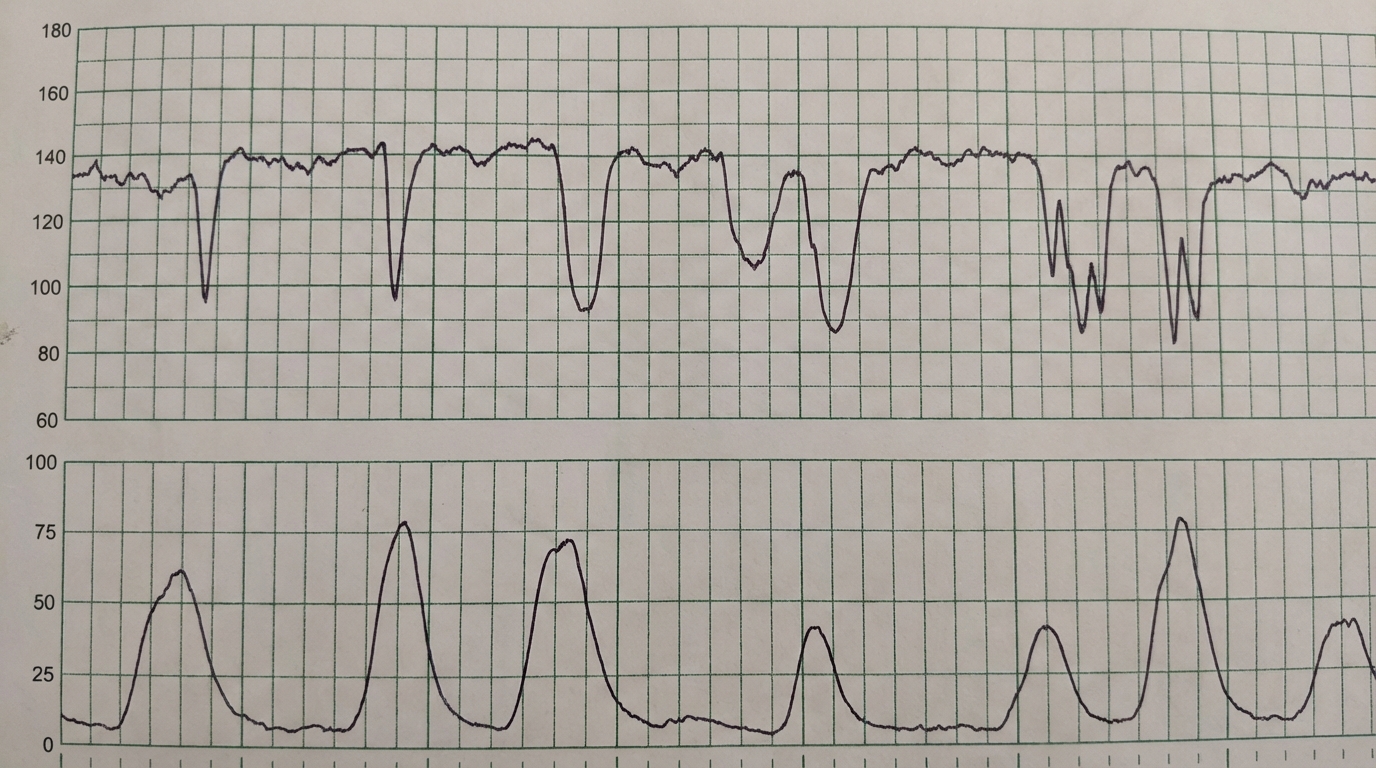
A 37-year-old primigravid woman at 36 weeks' gestation is admitted to the hospital 30 minutes after the onset of labor. On arrival, contractions occur every 8–10 minutes. During the last 2 days she has noted decreased fetal movements. The pregnancy had been complicated by gestational hypertension. Current medications include labetalol and a pregnancy multivitamin. Her temperature is 36.8°C (98.2°F), pulse is 94/min, and blood pressure is 154/96 mm Hg. On pelvic examination, the cervix is 40% effaced and 2 cm dilated; the vertex is at -2 station. The uterus is consistent in size with a 30-week gestation. Ultrasonography shows the fetus in vertex position and a decreased amount of amniotic fluid. A fetal heart tracing is shown. Which of the following is the most likely diagnosis?
Q168
A 25-year-old woman comes to the emergency department one hour after the sudden onset of diffuse abdominal pain and nausea. She has no history of serious illness. Menses occur at regular 27-day intervals and last 4 to 6 days with moderate flow. Her last menstrual period was 6 weeks ago. She is sexually active with two sexual partners and uses oral contraceptive pills inconsistently. She appears pale and diaphoretic. Her temperature is 37.7°C (99.9°F), pulse is 120/min, respirations are 20/min, and blood pressure is 85/70 mm Hg. Abdominal examination shows diffuse abdominal tenderness. Pelvic examination shows a normal appearing vagina, cervix, and uterus, with right adnexal tenderness. Her hemoglobin concentration is 13 g/dL, leukocyte count is 10,000/mm3, and platelet count is 350,000/mm3. Results of a pregnancy test are pending. Which of the following is the most appropriate next step in management?
Q169
A 27-year-old G2P0A2 woman comes to the office complaining of light vaginal spotting. She received a suction curettage 2 weeks ago for an empty gestational sac. Pathology reports showed hyperplastic and hydropic trophoblastic villi, but no fetal tissue. The patient denies fever, abdominal pain, dysuria, dyspareunia, or abnormal vaginal discharge. She has no chronic medical conditions. Her periods are normally regular and last 3-4 days. One year ago, she had an ectopic pregnancy that was treated with methotrexate. She has a history of chlamydia and gonorrhea that was treated 5 years ago with azithromycin and ceftriaxone. Her temperature is 98°F (36.7°C), blood pressure is 125/71 mmHg, and pulse is 82/min. On examination, hair is present on the upper lip, chin, and forearms. A pelvic examination reveals a non-tender, 6-week-sized uterus and bilateral adnexal masses. There is scant dark blood in the vaginal vault on speculum exam. A quantitative beta-hCG is 101,005 mIU/mL. Two weeks ago, her beta-hCG was 63,200 mIU/mL. A pelvic ultrasound shows bilaterally enlarged ovaries with multiple thin-walled cysts between 2-3 cm in size. Which of the following is the most likely cause of the patient’s adnexal masses?
Q170
A 36-year-old woman comes to the physician because she has not had her menstrual period for the past 4 months. During this period, she has had frequent headaches, difficulty sleeping, and increased sweating. She has not had any weight changes. Over the past year, menses occurred at irregular 30- to 45-day intervals with light flow. The patient underwent two successful cesarean sections at the ages of 28 and 32. She has two healthy children. She is sexually active with her husband and does not use condoms. Her vital signs are within normal limits. Physical examination shows no abnormalities. Laboratory studies show:
Estradiol 8 pg/mL (mid-follicular phase: N=27–123 pg/mL)
Follicle-stimulating hormone 200 mIU/mL
Luteinizing hormone 180 mIU/mL
Prolactin 16 ng/mL
Which of the following is the most likely diagnosis?
High-risk pregnancies US Medical PG Practice Questions and MCQs
Question 161: A 27-year-old woman, gravida 2, para 1, at 26 weeks' gestation comes to the emergency department because of vaginal bleeding and epistaxis for the past 2 days. She missed her last prenatal visit 2 weeks ago. Physical examination shows blood in the posterior pharynx and a uterus consistent in size with 23 weeks' gestation. Her hemoglobin concentration is 7.2 g/dL. Ultrasonography shows an intrauterine pregnancy with a small retroplacental hematoma and absent fetal cardiac activity. Further evaluation is most likely to show which of the following findings?
A. Decreased fibrinogen concentration (Correct Answer)
B. Increased antithrombin concentration
C. Increased factor V concentration
D. Increased platelet count
E. Decreased prothrombin time
Explanation: ***Decreased fibrinogen concentration***
- The patient's presentation with **vaginal bleeding**, **epistaxis**, a **small retroplacental hematoma**, and **absent fetal cardiac activity** strongly suggests **abruptio placentae** complicated by **disseminated intravascular coagulation (DIC)**.
- In DIC, widespread activation of the **coagulation cascade** leads to consumption of clotting factors, including **fibrinogen**, resulting in **decreased plasma levels**.
*Increased antithrombin concentration*
- **Antithrombin** is a natural anticoagulant that inhibits activated clotting factors; its concentration is typically **decreased** in DIC due to its consumption in an attempt to control widespread coagulation.
- An increase in antithrombin would generally **reduce** clot formation, which is contrary to the hypercoagulable state seen initially in DIC.
*Increased factor V concentration*
- **Factor V** is a procoagulant factor that is **consumed** during DIC, leading to **decreased** rather than increased concentrations.
- Increased factor V would promote clotting, which is overridden by the massive consumption of factors and platelets in DIC.
*Increased platelet count*
- **Platelets** are actively consumed in the widespread microthrombi formation characteristic of DIC, leading to **thrombocytopenia** (decreased platelet count), not an increase.
- An increased platelet count would be protective against bleeding, which is not the case here.
*Decreased prothrombin time*
- **Prothrombin time (PT)** measures the extrinsic and common coagulation pathways; in DIC, the consumption of coagulation factors, including **prothrombin**, leads to a **prolonged (increased)** PT, not a decreased one.
- A decreased PT would indicate a hypercoagulable state with enhanced clotting factor activity, which is eventually exhausted in DIC.
Question 162: A 38-year-old woman, gravida 2, para 1, at 35 weeks' gestation comes to the emergency department because of an episode of vaginal bleeding that morning. The bleeding has subsided. She has had no prenatal care. Her previous child was delivered with a caesarean section because of a breech presentation. Her temperature is 37.1°C (98.8°F), pulse is 88/min, respirations are 14/min, and blood pressure is 125/85 mm Hg. The abdomen is nontender and the size of the uterus is consistent with a 35-week gestation. No contractions are felt. The fetal heart rate is 145/min. Her hemoglobin concentration is 12 g/dL, leukocyte count is 13,000/mm3, and platelet count is 350,000/mm3. Transvaginal ultrasound shows that the placenta covers the internal os. Which of the following is the most appropriate next step in management?
A. Schedule elective cesarean delivery (Correct Answer)
B. Observation only
C. Perform bimanual pelvic examination
D. Perform emergency cesarean delivery
E. Administer oxytocin to induce labor
Explanation: ***Schedule elective cesarean delivery***
- The ultrasound finding of the **placenta covering the internal os** confirms **placenta previa**. Given the patient is at **35 weeks' gestation** and has experienced **vaginal bleeding**, an elective cesarean delivery is the safest management to avoid further bleeding episodes and ensure maternal and fetal well-being.
- An elective cesarean delivery is typically scheduled between **36 and 37 weeks' gestation** for placenta previa to minimize the risk of spontaneous labor and potentially catastrophic hemorrhage.
*Observation only*
- This is inappropriate given the diagnosis of **placenta previa** and the history of **vaginal bleeding**. Observation alone carries a significant risk of recurrent, potentially severe hemorrhage.
- While the bleeding has subsided, the underlying condition remains and warrants active management to prevent future complications.
*Perform bimanual pelvic examination*
- A **bimanual pelvic examination** is **contraindicated** in cases of suspected or confirmed **placenta previa**.
- Performing such an examination can **disrupt the placenta** and precipitate a massive, life-threatening hemorrhage.
*Perform emergency cesarean delivery*
- An emergency cesarean delivery is indicated if the patient presents with **severe, active bleeding** or signs of **fetal distress**.
- In this case, the bleeding has subsided, the patient is hemodynamically stable, and the fetal heart rate is normal, so an immediate emergency delivery is not warranted.
*Administer oxytocin to induce labor*
- **Induction of labor with oxytocin** is **contraindicated** in **placenta previa**.
- Stimulating contractions would lead to **cervical dilation**, causing further placental separation and severe hemorrhage, putting both mother and fetus at extreme risk.
Question 163: A 42-year-old G1P0 woman presents to an obstetrician for her first prenatal visit. She has been pregnant for about 10 weeks and is concerned about how pregnancy will affect her health. Specifically, she is afraid that her complicated medical history will be adversely affected by her pregnancy. Her past medical history is significant for mild polycythemia, obesity hypoventilation syndrome, easy bleeding, multiple sclerosis, and aortic regurgitation. Which of these disorders is most likely to increase in severity during the course of the pregnancy?
A. Easy bleeding
B. Hypoventilation (Correct Answer)
C. Multiple sclerosis
D. Polycythemia
E. Heart murmur
Explanation: ***Hypoventilation***
- Pregnancy leads to increased **oxygen consumption** and **carbon dioxide production**, requiring increased ventilation.
- In a patient with **obesity hypoventilation syndrome**, the already compromised respiratory drive and mechanics can worsen, leading to increased **hypercapnia** and **hypoxia**.
*Easy bleeding*
- Pregnancy is a **hypercoagulable state**, which typically reduces the risk of bleeding.
- While certain pregnancy complications (e.g., placental abruption) can cause bleeding, the overall physiological changes tend to **decrease primary bleeding tendencies**.
*Multiple sclerosis*
- Pregnancy typically has an **immunomodulatory effect** that can lead to a decrease in the frequency of MS relapses, especially in the third trimester.
- Relapses may increase postpartum, but during pregnancy itself, the condition often **stabilizes or improves**.
*Polycythemia*
- Pregnancy increases **plasma volume** significantly, which can lead to a relative **hemodilution**.
- This physiological change would likely **ameliorate mild polycythemia** rather than worsen it.
*Heart murmur*
- The murmur is due to **aortic regurgitation**, and while pregnancy increases **cardiac output** and **blood volume**, severe aortic regurgitation can worsen.
- However, the overall physiological changes of pregnancy result in **increased minute ventilation**, making hypoventilation a more direct and universally worsened problem with existing **obesity hypoventilation syndrome**.
Question 164: A 31-year-old G3P2 who is at 24 weeks gestation presents for a regular check-up. She has no complaints, no concurrent diseases, and her previous pregnancies were vaginal deliveries with birth weights of 3100 g and 4180 g. The patient weighs 78 kg (172 lb) and is 164 cm (5 ft 5 in) in height. She has gained 10 kg (22 lb) during the current pregnancy. Her vital signs and physical examination are normal. The plasma glucose level is 190 mg/dL after a 75-g oral glucose load. Which of the listed factors contributes to the pathogenesis of the patient’s condition?
A. Decrease in insulin gene expression
B. Insulin antagonism of human placental lactogen (Correct Answer)
C. Production of autoantibodies against pancreatic beta cells
D. Decrease in insulin sensitivity of maternal tissues caused by alpha-fetoprotein
E. Point mutations in the gene coding for insulin
Explanation: ***Insulin antagonism of human placental lactogen***
- The patient's elevated plasma glucose indicates **gestational diabetes mellitus (GDM)**, a condition characterized by **insulin resistance** that emerges during pregnancy.
- **Human placental lactogen (hPL)**, secreted by the placenta, is a key hormone that **antagonizes maternal insulin**, contributing significantly to the insulin resistance seen in GDM.
*Decrease in insulin gene expression*
- A decrease in insulin gene expression would lead to **reduced insulin production**, which is not the primary mechanism of insulin resistance in GDM.
- While pancreatic beta cells compensate by increasing insulin secretion in GDM, the underlying problem is the **tissue's reduced response** to insulin.
*Production of autoantibodies against pancreatic beta cells*
- This mechanism is characteristic of **Type 1 diabetes**, where the immune system destroys insulin-producing beta cells, leading to absolute insulin deficiency.
- GDM is primarily a condition of **insulin resistance**, not autoimmune destruction of beta cells.
*Decrease in insulin sensitivity of maternal tissues caused by alpha-fetoprotein*
- **Alpha-fetoprotein (AFP)** is primarily involved in fetal development and is not known to directly cause a decrease in maternal insulin sensitivity.
- The main placental hormones contributing to insulin resistance are **hPL**, progesterone, and cortisol, not AFP.
*Point mutations in the gene coding for insulin*
- **Point mutations** in the insulin gene are rare and would typically manifest as forms of monogenic diabetes or insulin-related disorders, not characteristic GDM.
- GDM is generally a polygenic or multifactorial condition influenced by pregnancy hormones and pre-existing insulin resistance.
Question 165: An otherwise healthy 25-year-old primigravid woman at 31 weeks' gestation comes to the physician with a 2-day history of epigastric pain and nausea that is worse at night. Three years ago, she was diagnosed with a peptic ulcer and was treated with a proton pump inhibitor and antibiotics. Medications include folic acid and a multivitamin. Her pulse is 92/min and blood pressure is 139/90 mm Hg. Pelvic examination shows a uterus consistent in size with a 31-week gestation. Laboratory studies show:
Hemoglobin 8.2 g/dL
Platelet count 87,000/mm3
Serum
Total bilirubin 1.4 mg/dL
Aspartate aminotransferase 75 U/L
Lactate dehydrogenase 720 U/L
Urine
pH 6.1
Protein 2+
WBC negative
Bacteria occasional
Nitrites negative
Which of the following best explains this patient's symptoms?
A. Inflammation of the gallbladder
B. Stretching of Glisson capsule (Correct Answer)
C. Bacterial invasion of the renal parenchyma
D. Break in gastric mucosal continuity
E. Acute inflammation of the pancreas
Explanation: ***Stretching of Glisson capsule***
- The patient's symptoms (epigastric pain, nausea, hypertension) and lab findings (**hemolysis, elevated liver enzymes, low platelets**) are classic for **HELLP syndrome** (Hemolysis, Elevated Liver enzymes, Low Platelets), a severe form of preeclampsia.
- The **epigastric pain** in HELLP syndrome is often due to **liver distention** and stretching of the **Glisson capsule**, which encases the liver.
*Inflammation of the gallbladder*
- While cholecystitis can cause epigastric pain and nausea, it typically presents with **fever**, **leukocytosis**, and **ultrasound findings** of gallstones or gallbladder inflammation, which are not detailed here.
- It would not explain the **hemolysis**, **thrombocytopenia**, **elevated liver enzymes**, or **hypertension** seen in this patient.
*Bacterial invasion of the renal parenchyma*
- This describes **pyelonephritis**, which typically presents with fever, flank pain, dysuria, and significant white blood cells in the urine. While there's a trace of bacteria in the urine, no other signs point to severe renal infection.
- Pyelonephritis would not lead to the described **hematologic abnormalities** or elevated liver enzymes.
*Break in gastric mucosal continuity*
- This refers to a **peptic ulcer**. Although the patient has a history of peptic ulcer, her current lab findings (especially **thrombocytopenia**, **hemolysis**, and **elevated liver enzymes**) are inconsistent with an isolated ulcer exacerbation.
- The epigastric pain in HELLP syndrome is distinct from typical ulcer pain.
*Acute inflammation of the pancreas*
- **Pancreatitis** can cause epigastric pain and nausea, often radiating to the back, and is associated with elevated lipase and amylase.
- However, the patient's comprehensive lab profile, especially the **hemolysis**, **thrombocytopenia**, and **hypertension**, strongly points away from pancreatitis as the primary diagnosis.
Question 166: A 28-year-old woman, gravida 2, para 1, at 30 weeks' gestation comes to the physician because of headache for the past 5 days. Her pregnancy has been uncomplicated to date. Pregnancy and vaginal delivery of her first child were uncomplicated. The patient does not smoke or drink alcohol. She does not use illicit drugs. Medications include folic acid and a multivitamin. Her temperature is 37°C (98.6°F), pulse is 82/min, and blood pressure is 150/92 mm Hg. Physical examination reveals 2+ pitting edema in the lower extremities. Laboratory studies show:
Hemoglobin 11.8 g/dL
Platelet count 290,000/mm3
Urine
pH 6.3
Protein 2+
WBC negative
Bacteria occasional
Nitrites negative
The patient is at increased risk of developing which of the following complications?
A. Abruptio placentae (Correct Answer)
B. Polyhydramnios
C. Uterine rupture
D. Spontaneous abortion
E. Placenta previa
Explanation: ***Abruptio placentae***
- The patient presents with **preeclampsia** (new-onset hypertension after 20 weeks gestation, proteinuria, and edema), which is a significant risk factor for **placental abruption**.
- Preeclampsia can lead to **vasoconstriction** and **decidual hemorrhage**, causing premature separation of the placenta from the uterine wall.
*Polyhydramnios*
- **Polyhydramnios** is an excess of amniotic fluid, typically associated with **fetal anomalies** (e.g., esophageal atresia, anencephaly) or **maternal diabetes**, none of which are indicated here.
- While it can complicate pregnancy, it is not directly linked to preeclampsia as a primary complication.
*Uterine rupture*
- **Uterine rupture** is a rare but catastrophic event, most commonly associated with a **prior Cesarean section**, extensive uterine surgery, or **traumatic injury**.
- This patient had an uncomplicated vaginal delivery previously, and there are no signs suggesting a heightened risk for uterine rupture.
*Spontaneous abortion*
- **Spontaneous abortion** occurs before 20 weeks of gestation. This patient is at **30 weeks' gestation**, making spontaneous abortion highly unlikely.
- The term for pregnancy loss after 20 weeks is stillbirth, which is also not the most immediate or direct complication linked to preeclampsia for the mother.
*Placenta previa*
- **Placenta previa** occurs when the placenta covers the cervical os, a condition diagnosed by **ultrasound** and presenting with **painless vaginal bleeding**.
- Preeclampsia does not directly cause placenta previa; these are distinct obstetric complications with different etiologies.
Question 167: A 37-year-old primigravid woman at 36 weeks' gestation is admitted to the hospital 30 minutes after the onset of labor. On arrival, contractions occur every 8–10 minutes. During the last 2 days she has noted decreased fetal movements. The pregnancy had been complicated by gestational hypertension. Current medications include labetalol and a pregnancy multivitamin. Her temperature is 36.8°C (98.2°F), pulse is 94/min, and blood pressure is 154/96 mm Hg. On pelvic examination, the cervix is 40% effaced and 2 cm dilated; the vertex is at -2 station. The uterus is consistent in size with a 30-week gestation. Ultrasonography shows the fetus in vertex position and a decreased amount of amniotic fluid. A fetal heart tracing is shown. Which of the following is the most likely diagnosis?
A. Chorioamnionitis
B. Placental insufficiency (Correct Answer)
C. Physiologic fetal heart rate pattern
D. Umbilical cord prolapse
E. Umbilical cord compression
Explanation: ***Placental insufficiency***
- The patient's history of **gestational hypertension**, **decreased fetal movements**, and a **fundal height** decreased by 6 weeks suggests probable **intrauterine growth restriction (IUGR)**.
- The fetal heart tracing showing **late decelerations** is a classic sign of **uteroplacental insufficiency**, where there is insufficient blood flow and oxygen exchange from the placenta to the fetus.
*Chorioamnionitis*
- This condition is characterized by **maternal fever**, **maternal and fetal tachycardia**, **leukocytosis**, and potentially **purulent amniotic fluid**.
- The patient's temperature is normal, and there are no other signs indicative of intrauterine infection.
*Physiologic fetal heart rate pattern*
- A physiologic fetal heart rate pattern would exhibit a **moderate variability**, accelerations, and the absence of decelerations or only **early decelerations** which are generally benign.
- The presence of **late decelerations** indicates **fetal distress**, making this pattern abnormal and non-physiologic.
*Umbilical cord prolapse*
- **Umbilical cord prolapse** is an obstetric emergency where the cord descends in front of or alongside the presenting fetal part and can be felt on vaginal examination or seen visibly.
- There is no mention of a prolapsed cord on pelvic examination, and the **fetal heart tracing** with late decelerations is more consistent with **placental insufficiency** than acute cord compression from prolapse, which typically causes **severe variable decelerations**.
*Umbilical cord compression*
- **Umbilical cord compression** causes **variable decelerations** on the fetal heart rate tracing due to transient obstruction of blood flow.
- While there is **oligohydramnios**, which can predispose to cord compression, the primary finding of **late decelerations** points more directly to **placental insufficiency** rather than cord compression as the immediate cause of distress.
Question 168: A 25-year-old woman comes to the emergency department one hour after the sudden onset of diffuse abdominal pain and nausea. She has no history of serious illness. Menses occur at regular 27-day intervals and last 4 to 6 days with moderate flow. Her last menstrual period was 6 weeks ago. She is sexually active with two sexual partners and uses oral contraceptive pills inconsistently. She appears pale and diaphoretic. Her temperature is 37.7°C (99.9°F), pulse is 120/min, respirations are 20/min, and blood pressure is 85/70 mm Hg. Abdominal examination shows diffuse abdominal tenderness. Pelvic examination shows a normal appearing vagina, cervix, and uterus, with right adnexal tenderness. Her hemoglobin concentration is 13 g/dL, leukocyte count is 10,000/mm3, and platelet count is 350,000/mm3. Results of a pregnancy test are pending. Which of the following is the most appropriate next step in management?
A. Perform exploratory laparoscopy
B. Perform pelvic ultrasound
C. Perform CT scan of the abdomen and pelvis with contrast
D. Administer intravenous normal saline fluids (Correct Answer)
E. Transfuse O negative packed red blood cells
Explanation: ***Administer intravenous normal saline fluids***
- The patient presents with classic signs of **hypovolemic shock**: sudden onset of severe abdominal pain, nausea, pallor, diaphoresis, tachycardia (120/min), and hypotension (85/70 mm Hg).
- Immediate administration of **intravenous fluids** is crucial to restore blood volume and stabilize her hemodynamics before further diagnostic or surgical interventions.
*Perform exploratory laparoscopy*
- While exploratory laparoscopy may ultimately be necessary if an **ectopic pregnancy rupture** is suspected, it is not the *immediate* next step before attempting hemodynamic stabilization.
- Performing surgery on a patient in **unresuscitatable shock** significantly increases morbidity and mortality.
*Perform pelvic ultrasound*
- A pelvic ultrasound is a valuable diagnostic tool, especially if an **ectopic pregnancy** is suspected given her missed period, sexual activity, and inconsistent contraception.
- However, in a patient with signs of **hemodynamic instability**, performing an ultrasound before fluid resuscitation wastes critical time and could worsen her condition.
*Perform CT scan of the abdomen and pelvis with contrast*
- A CT scan can provide detailed imaging of the abdomen and pelvis but is **less appropriate** than a pelvic ultrasound for initial evaluation of suspected gynecological causes of acute abdominal pain in a young woman.
- Furthermore, administering contrast to a patient in **shock** could exacerbate her condition and delay immediate life-saving interventions.
*Transfuse O negative packed red blood cells*
- Although the patient's symptoms strongly suggest **internal hemorrhage** (e.g., ruptured ectopic pregnancy), her initial hemoglobin (13 g/dL) is within the normal range.
- While blood products may eventually be needed, initial management of hypovolemic shock prioritizes **crystalloid fluid resuscitation** until blood products can be prepared and cross-matched, unless massive transfusion protocol is activated for severe, ongoing hemorrhage.
Question 169: A 27-year-old G2P0A2 woman comes to the office complaining of light vaginal spotting. She received a suction curettage 2 weeks ago for an empty gestational sac. Pathology reports showed hyperplastic and hydropic trophoblastic villi, but no fetal tissue. The patient denies fever, abdominal pain, dysuria, dyspareunia, or abnormal vaginal discharge. She has no chronic medical conditions. Her periods are normally regular and last 3-4 days. One year ago, she had an ectopic pregnancy that was treated with methotrexate. She has a history of chlamydia and gonorrhea that was treated 5 years ago with azithromycin and ceftriaxone. Her temperature is 98°F (36.7°C), blood pressure is 125/71 mmHg, and pulse is 82/min. On examination, hair is present on the upper lip, chin, and forearms. A pelvic examination reveals a non-tender, 6-week-sized uterus and bilateral adnexal masses. There is scant dark blood in the vaginal vault on speculum exam. A quantitative beta-hCG is 101,005 mIU/mL. Two weeks ago, her beta-hCG was 63,200 mIU/mL. A pelvic ultrasound shows bilaterally enlarged ovaries with multiple thin-walled cysts between 2-3 cm in size. Which of the following is the most likely cause of the patient’s adnexal masses?
A. Endometrioma
B. Ectopic pregnancy
C. Corpus luteal cysts
D. Theca lutein cysts (Correct Answer)
E. Dermoid cysts
Explanation: ***Theca lutein cysts***
- The patient's **elevated and rising beta-hCG** levels, along with the history of a **hydatidiform mole** (implied by hyperplastic/hydropic trophoblastic villi without fetal tissue), are characteristic of theca lutein cysts.
- These cysts develop due to **excessive stimulation of the ovaries by high levels of hCG**, leading to bilateral, multicystic enlargement.
*Endometrioma*
- While endometriomas can present as adnexal masses, they are typically associated with **pelvic pain, dysmenorrhea, or dyspareunia**, which this patient denies.
- Their formation is not directly linked to **hCG levels or gestational trophoblastic disease**.
*Ectopic pregnancy*
- This patient's prior ectopic pregnancy is a risk factor, but her current presentation with **bilateral adnexal masses** and a **6-week sized uterus** (after a curettage for a molar pregnancy) makes an hCG-driven ovarian response more likely.
- An ectopic pregnancy typically presents with **falling or suboptimally rising hCG** and a visible ectopic gestation, which is not described.
*Corpus luteal cysts*
- Corpus luteal cysts are common during early pregnancy and are typically **unilateral**, resolving spontaneously as hCG levels decline.
- This patient's **bilateral, multicystic ovaries** and persistently **high/rising hCG after a molar pregnancy** differentiate from corpus luteum formation.
*Dermoid cysts*
- Dermoid cysts (mature cystic teratomas) are **benign ovarian tumors** that can be bilateral, but their growth is not influenced by **hCG levels**.
- They typically have a **heterogeneous appearance on ultrasound** containing various tissue types, which differs from the thin-walled, fluid-filled cysts seen here.
Question 170: A 36-year-old woman comes to the physician because she has not had her menstrual period for the past 4 months. During this period, she has had frequent headaches, difficulty sleeping, and increased sweating. She has not had any weight changes. Over the past year, menses occurred at irregular 30- to 45-day intervals with light flow. The patient underwent two successful cesarean sections at the ages of 28 and 32. She has two healthy children. She is sexually active with her husband and does not use condoms. Her vital signs are within normal limits. Physical examination shows no abnormalities. Laboratory studies show:
Estradiol 8 pg/mL (mid-follicular phase: N=27–123 pg/mL)
Follicle-stimulating hormone 200 mIU/mL
Luteinizing hormone 180 mIU/mL
Prolactin 16 ng/mL
Which of the following is the most likely diagnosis?
A. Pregnancy
B. Primary hypothyroidism
C. Premature ovarian failure (Correct Answer)
D. Major depressive disorder
E. Polycystic ovary syndrome
Explanation: ***Premature ovarian failure***
- The patient's age combined with **amenorrhea**, vasomotor symptoms (**hot flashes/sweating**, difficulty sleeping), and significantly **elevated FSH and LH** with **low estradiol** are classic findings for premature ovarian failure.
- While headaches can be a symptom, the hormonal profile is the most definitive indicator of **gonadal dysgenesis** or premature menopause.
*Pregnancy*
- Pregnancy is unlikely given the **low estradiol** and **high FSH/LH** levels; a positive pregnancy test (beta-hCG) would be expected.
- The patient's symptoms of hot flashes and night sweats are not typical of early pregnancy.
*Primary hypothyroidism*
- Primary hypothyroidism would present with symptoms like **fatigue**, **weight gain**, **cold intolerance**, and potentially **elevated TSH** with low free T4. These are not observed, and it doesn't explain the specific hormonal imbalances.
- While hypothyroidism can cause menstrual irregularities, it typically leads to **bradycardia** and does not cause such marked elevations in FSH and LH.
*Major depressive disorder*
- While **sleep disturbances** and **headaches** can occur in major depressive disorder, it does not explain the patient's amenorrhea or the specific hormonal abnormalities (low estradiol, high FSH/LH).
- The patient lacks other core symptoms of depression like persistent sadness, anhedonia, or significant changes in appetite/weight.
*Polycystic ovary syndrome*
- PCOS typically presents with **irregular menses**, **anovulation**, and **hyperandrogenism** (hirsutism, acne), but hormonal studies usually show elevated androgens and often a **normal or elevated LH:FSH ratio**, not extremely high FSH and LH with low estradiol.
- The underlying pathophysiology of PCOS involves **insulin resistance** and abnormal follicular development different from ovarian failure.