A 36-year-old African American G1P0010 presents to her gynecologist for an annual visit. She has a medical history of hypertension, for which she takes hydrochlorothiazide. The patient’s mother had breast cancer at age 68, and her sister has endometriosis. At this visit, the patient’s temperature is 98.6°F (37.0°C), blood pressure is 138/74 mmHg, pulse is 80/min, and respirations are 13/min. Her BMI is 32.4 kg/m^2. Pelvic exam reveals a nontender, 16-week sized uterus with an irregular contour. A transvaginal ultrasound is performed and demonstrates a submucosal leiomyoma. This patient is at most increased risk of which of the following complications?
Q152
A 28-year-old primigravid woman comes to the emergency department because of a 12-hour history of lower abdominal pain and vaginal bleeding. She also had nausea and fatigue for the past 3 weeks. Her last menstrual period was 8 weeks ago. Prior to that, her menses occurred regularly at 30-day intervals and lasted for 4 days. There is no history of medical illness, and she takes no medications. Her temperature is 37°C (98.6°F), pulse is 95/min, and blood pressure is 100/70 mm Hg. Pelvic examination is painful and shows a uterus consistent in size with a 13-week gestation. A urine pregnancy test is positive. β-HCG level is 106,000 mIU/mL (N < 5 mIU/mL). Transvaginal ultrasonography shows unclear, amorphous fetal parts and a large placenta with multiple cystic spaces. Which of the following is the most likely cause of this patient's condition?
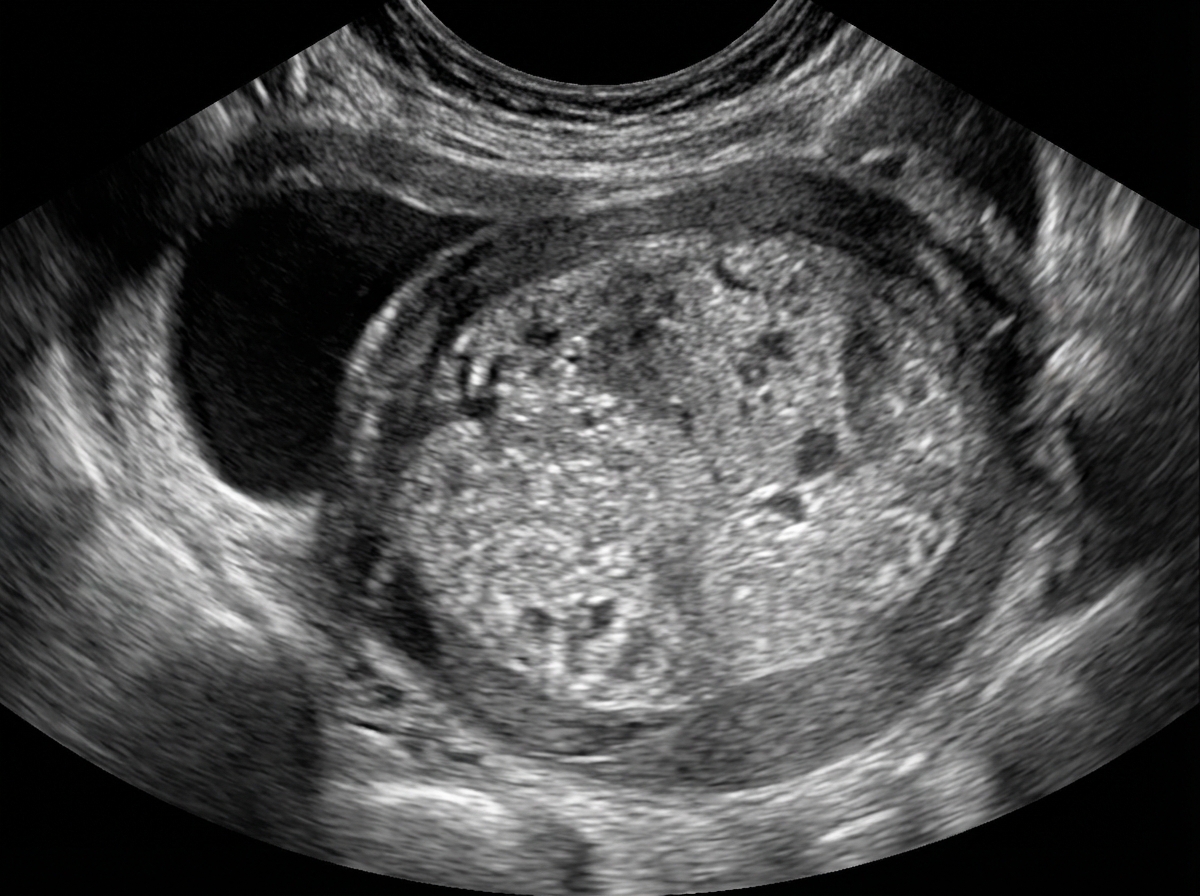
Q153
A 44-year-old G2P2 African American woman presents to her gynecologist for dysmenorrhea. She reports that for the past few months, she has been having severe pain during her menses. She also endorses menstrual bleeding that has been heavier than usual. The patient reports that her cycles are regular and occur every 30 days, and she denies both dyspareunia and spotting between her periods. Her last menstrual period was two weeks ago. In terms of her obstetric history, the patient had two uncomplicated pregnancies, and she had no difficulty becoming pregnant. She has never had an abnormal pap smear. Her past medical history is otherwise significant for hyperlipidemia and asthma. On physical exam, the patient’s uterus is tender, soft, and enlarged to the size of a pregnant uterus at 10 weeks of gestation. She is non-tender during vaginal exam, without cervical motion tenderness or adnexal masses. Her BMI is 24 kg/m2. A urine pregnancy test is negative.
Which of the following is the most likely diagnosis for this patient?
Q154
A 36-year-old primigravid woman comes to the physician for a prenatal visit at 14 weeks' gestation. She has had episodic headaches over the past month. At home, blood pressure measurements have ranged from 134/82 mm Hg to 148/94 mm Hg. Today, her blood pressure is 146/91 mm Hg. Pelvic examination shows a uterus consistent in size with a 13-week gestation. Serum creatinine is 0.8 mg/dL, serum ALT is 17 U/L, and platelet count is 320,000/mm3. Urinalysis shows no abnormalities. Which of the following is the most likely diagnosis?
Q155
A 52-year-old woman comes to the physician because of vaginal itchiness and urinary frequency for the past 1 year. She stopped having vaginal intercourse with her husband because it became painful and occasionally resulted in vaginal spotting. Her last menstrual cycle was 14 months ago. She has vitiligo. Her only medication is a topical tacrolimus ointment. Her temperature is 37.1°C (98.8°F), pulse is 85/min, and blood pressure is 135/82 mm Hg. Examination shows multiple white maculae on her forearms, abdomen, and feet. Pelvic examination shows scarce pubic hair, vulvar pallor, and narrowing of the vaginal introitus. Which of the following most likely contributes to this patient's current symptoms?
Q156
A 62-year-old woman makes an appointment with her primary care physician because she recently started experiencing post-menopausal bleeding. She states that she suffered from anorexia as a young adult and has been thin throughout her life. She says that this nutritional deficit is likely what caused her to not experience menarche until age 15. She used oral contraceptive pills for many years, has never been pregnant, and experienced menopause at age 50. A biopsy of tissue inside the uterus reveals foci of both benign and malignant glandular cells. Which of the following was a risk factor for the development of the most likely cause of her symptoms?
Q157
A 52-year-old woman presents to her gynecologist's office with complaints of frequent hot flashes and significant sweating episodes, which affect her sleep at night. She complains that she has to change her clothes in the middle of the night because of the sweating events. She also complains of irritability, which is affecting her relationships with her husband and daughter. She reports vaginal itchiness and pain with intercourse. Her last menstrual period was eight months ago. She was diagnosed with breast cancer 15 years ago, which was promptly detected and cured successfully via mastectomy. The patient is currently interested in therapies to help control her symptoms. Which of the following options is the most appropriate HORMONAL therapy in this patient for her genitourinary symptoms?
Q158
A 32-year-old G2P1 female at 30 weeks gestation presents to the emergency department with complaints of vaginal bleeding and severe abdominal pain. She states that she began feeling poorly yesterday with a stomach-ache, nausea, and vomiting. She first noted a small amount of spotting this morning that progressed to much larger amounts of vaginal bleeding with worsened abdominal pain a few hours later, prompting her to come to the emergency department. Her previous pregnancy was without complications, and the fetus was delivered at 40 weeks by Cesarean section. Fetal heart monitoring shows fetal distress with late decelerations. Which of the following is a risk factor for this patient's presenting condition?
Q159
A 16-year-old girl is brought to the physician because she has not attained menarche. There is no personal or family history of serious illness. She is 165 cm (5 ft 5 in) tall and weighs 60 kg (132 lb); BMI is 22 kg/m2. Breast development is Tanner stage 4, and pubic hair development is Tanner stage 1. Pelvic examination shows a blind vaginal pouch. This patient is most likely to have which of the following karyotypes?
Q160
A 17-year-old girl is brought to the physician because of amenorrhea for 4 months. Menses previously occurred at regular 28-day intervals and last for 3 to 4 days. There is no family history of serious illness. She receives good grades in school and is on the high school track team. She is sexually active with one male partner and uses condoms consistently. She appears thin. Examination shows bilateral parotid gland enlargement. There is fine hair over the trunk. Serum studies show:
Thyroid-stimulating hormone 3.7 μU/mL
Prolactin 16 ng/mL
Estradiol 23 pg/mL (N > 40)
Follicle-stimulating hormone 1.6 mIU/mL
Luteinizing hormone 2.8 mIU/mL
A urine pregnancy test is negative. Which of the following is the most likely cause of these findings?
High-risk pregnancies US Medical PG Practice Questions and MCQs
Question 151: A 36-year-old African American G1P0010 presents to her gynecologist for an annual visit. She has a medical history of hypertension, for which she takes hydrochlorothiazide. The patient’s mother had breast cancer at age 68, and her sister has endometriosis. At this visit, the patient’s temperature is 98.6°F (37.0°C), blood pressure is 138/74 mmHg, pulse is 80/min, and respirations are 13/min. Her BMI is 32.4 kg/m^2. Pelvic exam reveals a nontender, 16-week sized uterus with an irregular contour. A transvaginal ultrasound is performed and demonstrates a submucosal leiomyoma. This patient is at most increased risk of which of the following complications?
A. Endometrial cancer
B. Miscarriage
C. Infertility
D. Uterine prolapse
E. Iron deficiency anemia (Correct Answer)
Explanation: ***Iron deficiency anemia***
- Submucosal leiomyomas (fibroids) can cause significantly **heavy and prolonged menstrual bleeding**, known as menometrorrhagia, leading to chronic blood loss.
- This chronic blood loss depletes iron stores in the body, resulting in **iron deficiency anemia**.
*Endometrial cancer*
- While obesity is a risk factor for endometrial cancer, **leiomyomas themselves are not directly premalignant** or associated with an increased risk of endometrial carcinoma.
- The patient's irregular uterus is consistent with fibroids, not necessarily endometrial hyperplasia or cancer.
*Miscarriage*
- **Large or submucosal fibroids** can increase the risk of miscarriage by disrupting endometrial blood supply or distorting the uterine cavity.
- However, the most immediate and common complication of fibroids, particularly submucosal ones, is heavy bleeding leading to anemia.
*Infertility*
- Submucosal leiomyomas can interfere with **implantation** or **sperm transport**, thus contributing to infertility.
- However, for a G1P0010 patient, the most *likely* immediate complication associated with significant bleeding from a submucosal fibroid is anemia, before issues with future conception are explicitly addressed.
*Uterine prolapse*
- Uterine prolapse is typically due to **weakening of pelvic floor support structures**, often associated with parity, age, and conditions increasing intra-abdominal pressure.
- While a large uterus from fibroids could theoretically contribute, it is not the primary or most common complication of fibroids; heavy bleeding is much more direct and frequent.
Question 152: A 28-year-old primigravid woman comes to the emergency department because of a 12-hour history of lower abdominal pain and vaginal bleeding. She also had nausea and fatigue for the past 3 weeks. Her last menstrual period was 8 weeks ago. Prior to that, her menses occurred regularly at 30-day intervals and lasted for 4 days. There is no history of medical illness, and she takes no medications. Her temperature is 37°C (98.6°F), pulse is 95/min, and blood pressure is 100/70 mm Hg. Pelvic examination is painful and shows a uterus consistent in size with a 13-week gestation. A urine pregnancy test is positive. β-HCG level is 106,000 mIU/mL (N < 5 mIU/mL). Transvaginal ultrasonography shows unclear, amorphous fetal parts and a large placenta with multiple cystic spaces. Which of the following is the most likely cause of this patient's condition?
A. Placenta implantation into myometrium
B. Trophoblastic proliferation with chorionic villi distention (Correct Answer)
C. Embryonic death with cervical dilation
D. Malpositioned placenta overlying the cervix
E. Malignant transformation of trophoblastic tissue
Explanation: ***Trophoblastic proliferation with chorionic villi distention***
- This description fits a **hydatidiform mole** (molar pregnancy), characterized by abnormal **trophoblastic proliferation** and **swollen, cystic chorionic villi**.
- The ultrasound findings of unclear, amorphous fetal parts and a large placenta with multiple cystic spaces ("snowstorm appearance") are classic for a **partial hydatidiform mole**, consistent with the highly elevated **β-hCG level**.
*Placenta implantation into myometrium*
- This describes **placenta accreta**, where the placenta abnormally adheres to or invades the **myometrium**.
- It is typically diagnosed in the third trimester due to bleeding and is not associated with early, high β-hCG levels or the ultrasound features seen here.
*Embryonic death with cervical dilation*
- This suggests an **incomplete or inevitable abortion**. While it can cause pain and bleeding, the specific ultrasound findings of a **large placenta with multiple cystic spaces** and very high β-hCG are not typical.
- In embryonic death, β-hCG levels would typically fall or plateau, not be excessively high.
*Malpositioned placenta overlying the cervix*
- This refers to **placenta previa**, where the placenta covers the internal cervical os. It primarily causes **painless vaginal bleeding** in the second or third trimester.
- The ultrasound findings and the extremely elevated β-hCG in the first trimester are inconsistent with placenta previa.
*Malignant transformation of trophoblastic tissue*
- While a hydatidiform mole can progress to **gestational trophoblastic neoplasia** (GTN), including choriocarcinoma, this option describes a subsequent complication rather than the initial presentation of the mole itself.
- GTN would typically be diagnosed after evacuation of a mole, or if β-hCG levels persist or rise post-evacuation. The initial diagnosis here is the mole.
Question 153: A 44-year-old G2P2 African American woman presents to her gynecologist for dysmenorrhea. She reports that for the past few months, she has been having severe pain during her menses. She also endorses menstrual bleeding that has been heavier than usual. The patient reports that her cycles are regular and occur every 30 days, and she denies both dyspareunia and spotting between her periods. Her last menstrual period was two weeks ago. In terms of her obstetric history, the patient had two uncomplicated pregnancies, and she had no difficulty becoming pregnant. She has never had an abnormal pap smear. Her past medical history is otherwise significant for hyperlipidemia and asthma. On physical exam, the patient’s uterus is tender, soft, and enlarged to the size of a pregnant uterus at 10 weeks of gestation. She is non-tender during vaginal exam, without cervical motion tenderness or adnexal masses. Her BMI is 24 kg/m2. A urine pregnancy test is negative.
Which of the following is the most likely diagnosis for this patient?
A. Presence of endometrial glands and stroma outside the uterus
B. Benign smooth muscle tumor of the uterus
C. Hyperplastic overgrowths of endometrial glands and stroma
D. Malignant invasion of endometrial cells into uterine myometrium
E. Presence of endometrial glands and stroma in uterine myometrium (Correct Answer)
Explanation: ***Presence of endometrial glands and stroma in uterine myometrium***
- The patient's symptoms of **severe dysmenorrhea**, **menorrhagia** (heavy bleeding), and a **tender, soft, and diffusely enlarged uterus** in a multiparous woman are classic signs of **adenomyosis**.
- **Adenomyosis** is pathologically defined by the presence of **ectopic endometrial tissue (glands and stroma) within the myometrium**, leading to endometrial tissue hypertrophy in response to hormonal stimulation.
*Presence of endometrial glands and stroma outside the uterus*
- This describes **endometriosis**, which typically presents with **dyspareunia**, **chronic pelvic pain**, and **infertility**, which are not the primary complaints here.
- While endometriosis can cause dysmenorrhea and menorrhagia, the **diffusely enlarged, soft, and tender uterus** on physical exam strongly points away from endometriosis as the sole diagnosis.
*Benign smooth muscle tumor of the uterus*
- This refers to **leiomyomas (fibroids)**, which also cause **menorrhagia** and an **enlarged uterus**. However, fibroids typically manifest as a **firm, irregularly enlarged uterus** with palpable nodules, distinguishing them from the diffusely enlarged and soft uterus described.
- While fibroids can cause dysmenorrhea, the **tenderness** and **diffuse enlargement** are more characteristic of adenomyosis.
*Hyperplastic overgrowths of endometrial glands and stroma*
- This describes **endometrial polyps**, which typically cause **intermenstrual bleeding** or **post-coital spotting**, not severe dysmenorrhea and a diffusely enlarged, soft uterus.
- Polyps are usually smaller and do not cause uterine enlargement to the extent described.
*Malignant invasion of endometrial cells into uterine myometrium*
- This describes **endometrial cancer** with myometrial invasion, which would typically present with **postmenopausal bleeding** or **irregular uterine bleeding**.
- While it can cause an enlarged uterus, it's less likely to present with the diffuse tenderness and softness observed, especially in a premenopausal woman with regular cycles and no history of abnormal Pap smears.
Question 154: A 36-year-old primigravid woman comes to the physician for a prenatal visit at 14 weeks' gestation. She has had episodic headaches over the past month. At home, blood pressure measurements have ranged from 134/82 mm Hg to 148/94 mm Hg. Today, her blood pressure is 146/91 mm Hg. Pelvic examination shows a uterus consistent in size with a 13-week gestation. Serum creatinine is 0.8 mg/dL, serum ALT is 17 U/L, and platelet count is 320,000/mm3. Urinalysis shows no abnormalities. Which of the following is the most likely diagnosis?
A. Eclampsia
B. Preeclampsia
C. Gestational hypertension
D. Isolated systolic hypertension
E. Chronic hypertension (Correct Answer)
Explanation: ***Chronic hypertension***
- The patient's elevated blood pressure (146/91 mm Hg) is present **before 20 weeks' gestation**, which is the defining characteristic of chronic hypertension in pregnancy.
- Her home blood pressure readings ranging from 134/82 mm Hg to 148/94 mm Hg over the past month further support a pre-existing hypertensive state.
*Eclampsia*
- Eclampsia is characterized by **new-onset grand mal seizures** in a woman with preeclampsia, which is not present in this case.
- It typically occurs **after 20 weeks' gestation** and also involves specific lab abnormalities, which are absent here.
*Preeclampsia*
- Preeclampsia involves **new-onset hypertension** (systolic ≥140 or diastolic ≥90) occurring **after 20 weeks' gestation**, often accompanied by proteinuria or other signs of end-organ damage.
- The patient's elevated blood pressure at **14 weeks' gestation** rules out preeclampsia as the initial diagnosis.
*Gestational hypertension*
- Gestational hypertension is characterized by **new-onset hypertension** (systolic ≥140 or diastolic ≥90) occurring for the **first time after 20 weeks' gestation** without proteinuria or features of preeclampsia.
- The patient's 14-week gestation and episodic headaches prior to this visit indicate that the hypertension likely predates the 20-week mark.
*Isolated systolic hypertension*
- Isolated systolic hypertension is defined as a **systolic blood pressure of 140 mm Hg or higher** and a **diastolic blood pressure less than 90 mm Hg**.
- The patient's diastolic blood pressure of 91 mm Hg (and 94 mm Hg at home) falls within the hypertensive range, ruling out isolated systolic hypertension.
Question 155: A 52-year-old woman comes to the physician because of vaginal itchiness and urinary frequency for the past 1 year. She stopped having vaginal intercourse with her husband because it became painful and occasionally resulted in vaginal spotting. Her last menstrual cycle was 14 months ago. She has vitiligo. Her only medication is a topical tacrolimus ointment. Her temperature is 37.1°C (98.8°F), pulse is 85/min, and blood pressure is 135/82 mm Hg. Examination shows multiple white maculae on her forearms, abdomen, and feet. Pelvic examination shows scarce pubic hair, vulvar pallor, and narrowing of the vaginal introitus. Which of the following most likely contributes to this patient's current symptoms?
A. Decrease of pH
B. Thinning of the mucosa (Correct Answer)
C. Sclerosis of the dermis
D. Dysplasia of the epithelium
E. Inflammation of the vestibular glands
Explanation: ***Thinning of the mucosa***
- The patient's symptoms of vaginal itchiness, painful intercourse, vaginal spotting, and vulvar pallor, along with her postmenopausal status, are consistent with **genitourinary syndrome of menopause (GSM)**, previously known as vulvovaginal atrophy.
- GSM is characterized by a **thinning of the vaginal and vulvar mucosa** due to decreased estrogen levels, leading to dryness, fragility, and susceptibility to irritation and injury.
*Decrease of pH*
- A decrease in vaginal pH indicates a more acidic environment, which is generally protective against certain infections and is typically seen in pre-menopausal women.
- In postmenopausal women with **atrophic vaginitis**, the pH tends to **increase** (become more alkaline) due to a decrease in lactobacilli, not decrease.
*Sclerosis of the dermis*
- Sclerosis of the dermis is characteristic of conditions like **Lichen Sclerosus**, which can cause vulvar itching and pallor, but it's typically associated with a **parchment-like skin appearance** and potential architectural changes like fusion of labia and introital narrowing.
- While overlap in symptoms can exist, the presentation here, especially with painful intercourse and spotting, points more directly to estrogen deficiency and mucosal thinning.
*Dysplasia of the epithelium*
- Dysplasia refers to abnormal cell growth, which is a precancerous condition, seen in conditions like **vulvar intraepithelial neoplasia (VIN)**.
- While VIN can cause itching, it is not typically associated with the widespread symptoms of dryness, dyspareunia, and urinary frequency without other concerning features like pigmented or raised lesions.
*Inflammation of the vestibular glands*
- Inflammation of the vestibular glands (Bartholin's or Skene's glands) primarily causes localized pain, swelling, and sometimes abscess formation at the entrance of the vagina.
- This would not typically present with generalized vaginal itchiness, widespread vulvar pallor, dyspareunia, and urinary frequency as the primary symptoms.
Question 156: A 62-year-old woman makes an appointment with her primary care physician because she recently started experiencing post-menopausal bleeding. She states that she suffered from anorexia as a young adult and has been thin throughout her life. She says that this nutritional deficit is likely what caused her to not experience menarche until age 15. She used oral contraceptive pills for many years, has never been pregnant, and experienced menopause at age 50. A biopsy of tissue inside the uterus reveals foci of both benign and malignant glandular cells. Which of the following was a risk factor for the development of the most likely cause of her symptoms?
A. Menopause at age 50
B. Never becoming pregnant (Correct Answer)
C. Using oral contraceptive pills
D. Menarche at age 15
E. Being underweight
Explanation: ***Never becoming pregnant***
- **Nulliparity** is a significant risk factor for **endometrial cancer** as it implies longer exposure to unopposed estrogen, which stimulates endometrial proliferation.
- The diagnosis of malignant glandular cells in the context of post-menopausal bleeding strongly suggests **endometrial carcinoma**, where nulliparity contributes to increased estrogen exposure over time.
*Menopause at age 50*
- **Later age of menopause** (e.g., after 52) is a risk factor for endometrial cancer, as it prolongs the duration of estrogen exposure.
- Menopause at age 50 is considered within the **average range**, thus not typically an independent risk factor for endometrial cancer.
*Using oral contraceptive pills*
- **Combined oral contraceptive pills** (estrogen and progestin) actually **reduce the risk** of endometrial cancer.
- The progestin component in OCPs counteracts the proliferative effects of estrogen on the endometrium, offering protection.
*Menarche at age 15*
- **Early menarche** (before age 12) is a risk factor for endometrial cancer due to a longer lifetime exposure to estrogen.
- Menarche at age 15 is considered **later than average**, which would typically be a protective factor against endometrial cancer, as it shortens the duration of estrogen exposure.
*Being underweight*
- **Obesity** is a major risk factor for endometrial cancer because adipose tissue converts androgens to estrogens, leading to higher levels of circulating estrogen.
- Being underweight or having a history of anorexia does not increase the risk of endometrial cancer; in fact, it may be associated with **lower estrogen levels**, which could be protective.
Question 157: A 52-year-old woman presents to her gynecologist's office with complaints of frequent hot flashes and significant sweating episodes, which affect her sleep at night. She complains that she has to change her clothes in the middle of the night because of the sweating events. She also complains of irritability, which is affecting her relationships with her husband and daughter. She reports vaginal itchiness and pain with intercourse. Her last menstrual period was eight months ago. She was diagnosed with breast cancer 15 years ago, which was promptly detected and cured successfully via mastectomy. The patient is currently interested in therapies to help control her symptoms. Which of the following options is the most appropriate HORMONAL therapy in this patient for her genitourinary symptoms?
A. Low-dose vaginal estrogen (Correct Answer)
B. Conjugated estrogen and medroxyprogesterone acetate orally
C. Conjugated estrogen orally
D. Transdermal estradiol-17B patch
E. This patient is not a candidate for hormone replacement therapy.
Explanation: **Low-dose vaginal estrogen**
- **Low-dose vaginal estrogen** is considered safe and effective for treating **genitourinary symptoms** of menopause, even in patients with a history of **breast cancer**, because systemic absorption is minimal.
- It directly addresses **vaginal dryness, itching, and pain with intercourse** without significantly increasing systemic estrogen levels.
*Conjugated estrogen and medroxyprogesterone acetate orally*
- **Combined oral hormone therapy** with estrogen and progestin is generally contraindicated in patients with a history of **breast cancer** due to an increased risk of recurrence.
- This therapy provides **systemic estrogen exposure**, which is a concern for estrogen-sensitive cancers.
*Conjugated estrogen orally*
- **Oral estrogen monotherapy** would significantly increase **systemic estrogen levels**, making it unsafe for a patient with a history of **breast cancer**.
- This option would exacerbate the risk of **breast cancer recurrence** and is not recommended.
*Transdermal estradiol-17B patch*
- While **transdermal estrogen** has a lower systemic thrombotic risk than oral estrogen, it still provides **systemic estrogen exposure**.
- This makes it a relative contraindication in patients with a history of **estrogen receptor-positive breast cancer**.
*This patient is not a candidate for hormone replacement therapy.*
- This statement is incorrect because **low-dose vaginal estrogen** is a viable and safe hormonal therapy option for her *genitourinary symptoms*, despite her history of breast cancer.
- The distinction is crucial between **systemic hormone therapy** (which is largely contraindicated) and targeted **local hormone therapy** (which may be acceptable).
Question 158: A 32-year-old G2P1 female at 30 weeks gestation presents to the emergency department with complaints of vaginal bleeding and severe abdominal pain. She states that she began feeling poorly yesterday with a stomach-ache, nausea, and vomiting. She first noted a small amount of spotting this morning that progressed to much larger amounts of vaginal bleeding with worsened abdominal pain a few hours later, prompting her to come to the emergency department. Her previous pregnancy was without complications, and the fetus was delivered at 40 weeks by Cesarean section. Fetal heart monitoring shows fetal distress with late decelerations. Which of the following is a risk factor for this patient's presenting condition?
A. Singleton pregnancy
B. Hyperlipidemia
C. Patient age
D. Hypertension (Correct Answer)
E. Prior Cesarean section
Explanation: ***Hypertension***
- The presenting symptoms of **vaginal bleeding**, **severe abdominal pain**, and **fetal distress** in a pregnant woman are highly suggestive of **placental abruption**.
- **Chronic hypertension** is a well-established and significant risk factor for placental abruption, increasing the risk by two to three times.
*Singleton pregnancy*
- This is typical for most pregnancies and does not increase the risk of placental abruption.
- **Multiple gestations** (twins, triplets) are actually associated with an increased risk of placental abruption, not singleton pregnancies.
*Hyperlipidemia*
- **Hyperlipidemia** is generally not considered a direct risk factor for placental abruption.
- While it can be associated with other cardiovascular issues, its link to placental abruption is not significant in the way hypertension is.
*Patient age*
- At 32 years old, the patient is not at an extremely advanced maternal age, which typically refers to 35 years or older.
- While **advanced maternal age** can be a slight risk factor for some pregnancy complications, it is not as strong a risk factor for placental abruption as hypertension in this context.
*Prior Cesarean section*
- A **prior Cesarean section** is a risk factor for conditions like **placenta previa** and **placenta accreta**, where the placenta implants abnormally.
- It is not a primary risk factor for **placental abruption**, which involves premature separation of a normally implanted placenta.
Question 159: A 16-year-old girl is brought to the physician because she has not attained menarche. There is no personal or family history of serious illness. She is 165 cm (5 ft 5 in) tall and weighs 60 kg (132 lb); BMI is 22 kg/m2. Breast development is Tanner stage 4, and pubic hair development is Tanner stage 1. Pelvic examination shows a blind vaginal pouch. This patient is most likely to have which of the following karyotypes?
A. 47,XYY
B. 46,XY (Correct Answer)
C. 47,XXY
D. 46,XX
E. 45,XO
Explanation: ***46,XY***
- This karyotype, in the presence of **androgen insensitivity syndrome (AIS)**, explains the presentation: a genetic male (XY) who phenotypically appears female due to **androgen receptor defects**, leading to lack of masculinization and female external genitalia.
- The **blind vaginal pouch** and **absent uterus/cervix** (implied by lack of menarche despite breast development) are characteristic of AIS, as is the normal range of height and weight, and presence of breast development due to peripheral aromatization of androgens.
*47,XYY*
- This karyotype is associated with **XYY syndrome**, typically affecting males and not causing primary amenorrhea or female phenotypic development.
- Individuals with XYY syndrome are usually tall and may experience learning difficulties or behavioral issues, but they have normal male sexual development.
*47,XXY*
- This karyotype is characteristic of **Klinefelter syndrome**, affecting males and typically presenting with **hypogonadism**, small testes, gynecomastia, and often infertility.
- It does not cause a female phenotype, primary amenorrhea, or a blind vaginal pouch.
*46,XX*
- This is the normal female karyotype; if this patient had 46,XX, the most likely cause of primary amenorrhea would be **Müllerian agenesis (Mayer-Rokitansky-Küster-Hauser syndrome)**.
- However, in Müllerian agenesis, despite underdeveloped or absent vagina, uterus, and cervix, **normal ovarian function** would lead to typical pubic hair development (Tanner stage 4-5) and secondary sexual characteristics congruent with age, which contrasts with the Tanner stage 1 pubic hair here.
*45,XO*
- This karyotype denotes **Turner syndrome**, which presents with primary amenorrhea, but also with characteristic features such as **short stature**, streak gonads, and often specific dysmorphic features (e.g., webbed neck, shield chest).
- The patient's normal height and significant breast development (Tanner stage 4) make Turner syndrome unlikely, as ovarian failure in Turner syndrome typically prevents substantial breast development without hormone therapy.
Question 160: A 17-year-old girl is brought to the physician because of amenorrhea for 4 months. Menses previously occurred at regular 28-day intervals and last for 3 to 4 days. There is no family history of serious illness. She receives good grades in school and is on the high school track team. She is sexually active with one male partner and uses condoms consistently. She appears thin. Examination shows bilateral parotid gland enlargement. There is fine hair over the trunk. Serum studies show:
Thyroid-stimulating hormone 3.7 μU/mL
Prolactin 16 ng/mL
Estradiol 23 pg/mL (N > 40)
Follicle-stimulating hormone 1.6 mIU/mL
Luteinizing hormone 2.8 mIU/mL
A urine pregnancy test is negative. Which of the following is the most likely cause of these findings?
A. Nutritional deficiency (Correct Answer)
B. Defective androgen receptors
C. Gonadal dysgenesis
D. Exogenous steroid use
E. Abnormal neuronal cell migration
Explanation: ***Nutritional deficiency***
- The patient's **amenorrhea**, **thin appearance**, **parotid gland enlargement**, and **fine hair (lanugo)** are classic signs of an eating disorder like **anorexia nervosa** or **bulimia**, often leading to significant nutritional deficiency.
- The **low estradiol (23 pg/mL)**, **low FSH (1.6 mIU/mL)**, and **low LH (2.8 mIU/mL)** indicate **hypothalamic hypogonadism**, which is commonly seen in energy deficit states due to inadequate nutritional intake.
*Defective androgen receptors*
- This condition, such as **androgen insensitivity syndrome**, affects individuals with a **46,XY karyotype** who present as phenotypic females with primary amenorrhea.
- These patients typically have **normal or elevated testosterone levels** and often have **breast development** (due to peripheral aromatization of androgens) but lack a uterus, which is not suggested by the clinical picture.
*Gonadal dysgenesis*
- **Gonadal dysgenesis** (e.g., in **Turner syndrome**, 45,X0) involves non-functional gonads, leading to **primary amenorrhea** and **elevated FSH and LH levels** due to lack of negative feedback from gonadal hormones.
- The patient's presentation with secondary amenorrhea and low FSH/LH contradicts this diagnosis.
*Exogenous steroid use*
- **Anabolic steroid use** in females can lead to features like **amenorrhea**, **hirsutism**, **acne**, **clitoromegaly**, and **voice deepening**.
- While amenorrhea is present, the other classic virilizing signs of exogenous steroid use are absent, and the patient's low weight and parotid enlargement are inconsistent with typical steroid abuse.
*Abnormal neuronal cell migration*
- This describes conditions like **Kallmann syndrome**, characterized by **congenital hypogonadotropic hypogonadism** (low FSH/LH) due to defective migration of **GnRH-producing neurons** and often associated with **anosmia (loss of smell)**.
- While hormonal levels (low FSH, LH, estradiol) are consistent with hypogonadotropic hypogonadism, there is no mention of anosmia, and the presence of parotid enlargement and lanugo points more strongly to an eating disorder.