A 20-year-old woman presents to the emergency department with painful abdominal cramping. She states she has missed her menstrual period for 5 months, which her primary care physician attributes to her obesity. She has a history of a seizure disorder treated with valproic acid; however, she has not had a seizure in over 10 years and is no longer taking medications for her condition. She has also been diagnosed with pseudoseizures for which she takes fluoxetine and clonazepam. Her temperature is 98.0°F (36.7°C), blood pressure is 174/104 mmHg, pulse is 88/min, respirations are 19/min, and oxygen saturation is 98% on room air. Neurologic exam is unremarkable. Abdominal exam is notable for a morbidly obese and distended abdomen that is nontender. Laboratory studies are ordered as seen below.
Serum:
hCG: 100,000 mIU/mL
Urine:
Color: Amber
hCG: Positive
Protein: Positive
During the patient's evaluation, she experiences 1 episode of tonic-clonic motions which persist for 5 minutes. Which of the following treatments is most appropriate for this patient?
Q132
A 30-year-old woman, gravida 2, para 1, at 12 weeks' gestation comes to the physician for a prenatal visit. She feels well. Pregnancy and vaginal delivery of her first child were uncomplicated. Five years ago, she was diagnosed with hypertension but reports that she has been noncompliant with her hypertension regimen. The patient does not smoke or drink alcohol. She does not use illicit drugs. Medications include methyldopa, folic acid, and a multivitamin. Her temperature is 37°C (98.6°F), pulse is 80/min, and blood pressure is 145/90 mm Hg. Physical examination shows no abnormalities. Laboratory studies, including serum glucose level, and thyroid-stimulating hormone concentration, are within normal limits. The patient is at increased risk of developing which of the following complications?
Q133
A 22-year-old primigravida is admitted to the obstetrics ward with leg swelling at 35 weeks gestation. She denies any other symptoms. Her pregnancy has been uneventful and she was compliant with the recommended prenatal care. Her vital signs were as follows: blood pressure, 168/95 mm Hg; heart rate, 86/min; respiratory rate, 16/min; and temperature, 36.7℃ (98℉). The fetal heart rate was 141/min. The physical examination was significant for 2+ pitting edema of the lower extremity. A dipstick test shows 1+ proteinuria. On reassessment 15 minutes later without administration of an antihypertensive, her blood pressure was 141/88 mm Hg, and the fetal heart rate was 147/min. A decision was made to observe the patient and continue the work-up without initiating antihypertensive therapy. Which of the following clinical features would make the suspected diagnosis into a more severe form?
Q134
A 32-year-old G6P1 woman presents to the obstetrician for a prenatal visit. She is 8 weeks pregnant. She has had 4 spontaneous abortions in the past, all during the first trimester. She tells you she is worried about having another miscarriage. She has been keeping to a strictly organic diet and takes a daily prenatal vitamin. She used to smoke a pack a day since she was 16 but quit after her first miscarriage. On a previous visit following fetal loss, the patient tested positive for VDRL and negative for FTA-ABS. Labs are drawn, as shown below:
Leukocyte count: 7,800/mm^3
Platelet count: 230,000/mm^3
Hemoglobin: 12.6 g/dL
Prothrombin time: 13 seconds
Activated partial thromboplastin time: 48 seconds
International normalized ratio: 1.2
Which of the following is the best next step in management?
Q135
A 26-year-old pregnant woman (gravida 2, para 1) presents on her 25th week of pregnancy. Currently, she has no complaints. Her previous pregnancy was unremarkable. No abnormalities were detected on the previous ultrasound (US) examination at week 13 of pregnancy. She had normal results on the triple test. She is human immunodeficiency virus (HIV), hepatitis B virus (HBV), and hepatitis C virus (HCV)-negative. Her blood type is III(B) Rh+, and her partner has blood type I(0) Rh-. She and her husband are both of Sardinian descent, do not consume alcohol, and do not smoke. Her cousin had a child who died soon after the birth, but she doesn't know the reason. She does not report a history of any genetic conditions in her family, although notes that her grandfather “was always yellowish-pale, fatigued easily, and had problems with his gallbladder”. Below are her and her partner’s complete blood count and electrophoresis results.
Complete blood count
Patient Her husband
Erythrocytes 3.3 million/mm3 4.2 million/mm3
Hb 11.9 g/dL 13.3 g/dL
MCV 71 fL 77 fL
Reticulocyte count 0.005 0.008
Leukocyte count 7,500/mm3 6,300/mm3
Platelet count 190,000/mm3 256,000/mm3
Electrophoresis
HbA1 95% 98%
HbA2 3% 2%
HbS 0% 0%
HbH 2% 0%
The patient undergoes ultrasound examination which reveals ascites, liver enlargement, and pleural effusion in the fetus. Further evaluation with Doppler ultrasound shows elevated peak systolic velocity of the fetal middle cerebral artery. Which of the following procedures can be performed for both diagnostic and therapeutic purposes in this case?
Q136
A 34-year-old G3P2 presents at 33 weeks gestation with vaginal bleeding that started last night while she was asleep. She denies uterine contractions or abdominal pain. She had a cesarean delivery in her previous pregnancy. She also reports a 10 pack-year smoking history. The vital signs are as follows: blood pressure, 130/80 mm Hg; heart rate, 84/min; respiratory rate, 12/min; and temperature, 36.8℃ (98.2℉). The physical examination is negative for abdominal tenderness or palpable uterine contractions. The perineum is mildly bloody. On speculum examination, no vaginal or cervical lesions are seen. A small amount of blood continues to pass through the cervix. Which of the following findings would you expect on ultrasound examination?
Q137
A 29-year-old woman, gravida 2, para 1, at 30 weeks' gestation comes to the emergency department because of severe right-sided back pain for the last hour. The pain is colicky and radiates to the right groin. The patient also reports nausea and pain with urination. Pregnancy has been uncomplicated and the patient reports that she has been following up with her gynecologist on a regular basis. There is no personal or family history of serious illness. She does not smoke or drink alcohol. Medications include folic acid and a multivitamin. Temperature is 37°C (98.6°F), pulse is 90/min, and blood pressure is 130/80 mm Hg. Examination of the back shows costovertebral angle tenderness on the right side. Laboratory studies show:
Urine
Protein negative
RBC casts negative
RBC 5–7/hpf
WBC casts negative
WBC 1–2/hpf
Which of the following is the most likely diagnosis?
Q138
A 16-year-old girl is brought to the physician because menarche has not yet occurred. She has no history of serious illness and takes no medications. She is 162 cm (5 ft 3 in) tall and weighs 80 kg (176 lb); BMI is 31.2 kg/m2. Breast and pubic hair development is Tanner stage 4. She also has oily skin, acne, and hyperpigmentation of the intertriginous areas of her neck and axillae. The remainder of the examination, including pelvic examination, shows no abnormalities. Which of the following is the most likely explanation for this patient's amenorrhea?
Q139
A 23-year-old primigravida pregnant patient is in her 3rd trimester with twins. She complains of itching and skin lesions. The examination shows pruritic erythematous papules and plaques on the abdomen but not on the face, palms, or soles. A picture of her abdomen is shown in the image. Her past medical history is insignificant. Her vital signs are all within normal limits. What is the next best step in management?
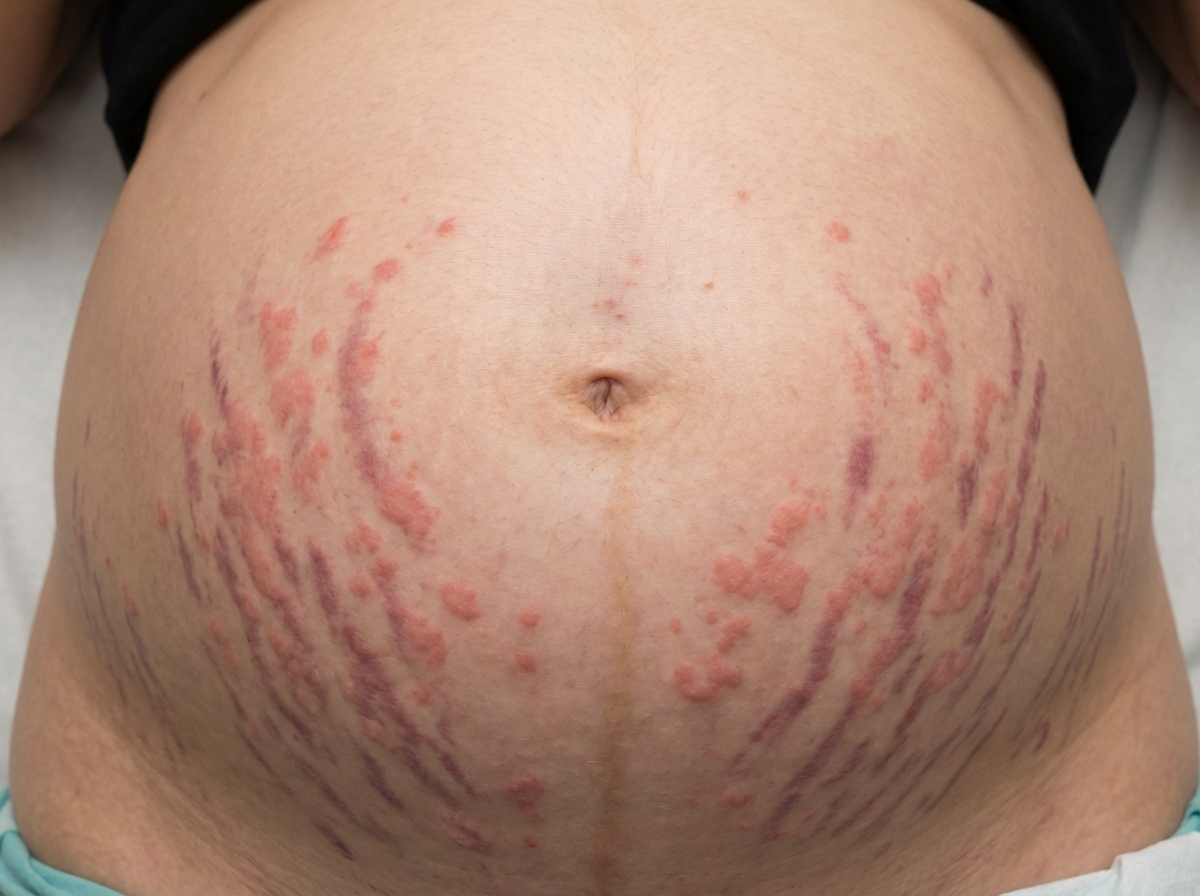
Q140
A 63-year-old woman, gravida 0, para 0 comes to the physician because of a 3-month history of abdominal distension, constipation, and weight loss. She has a history of endometriosis. Pelvic examination shows a nontender, irregular, left adnexal mass. Her serum level of CA-125 is elevated. Serum concentrations of human chorionic gonadotropin and alpha-fetoprotein are within the reference ranges. Microscopic examination of the mass is most likely to show which of the following findings?
High-risk pregnancies US Medical PG Practice Questions and MCQs
Question 131: A 20-year-old woman presents to the emergency department with painful abdominal cramping. She states she has missed her menstrual period for 5 months, which her primary care physician attributes to her obesity. She has a history of a seizure disorder treated with valproic acid; however, she has not had a seizure in over 10 years and is no longer taking medications for her condition. She has also been diagnosed with pseudoseizures for which she takes fluoxetine and clonazepam. Her temperature is 98.0°F (36.7°C), blood pressure is 174/104 mmHg, pulse is 88/min, respirations are 19/min, and oxygen saturation is 98% on room air. Neurologic exam is unremarkable. Abdominal exam is notable for a morbidly obese and distended abdomen that is nontender. Laboratory studies are ordered as seen below.
Serum:
hCG: 100,000 mIU/mL
Urine:
Color: Amber
hCG: Positive
Protein: Positive
During the patient's evaluation, she experiences 1 episode of tonic-clonic motions which persist for 5 minutes. Which of the following treatments is most appropriate for this patient?
A. Phenobarbital
B. Magnesium (Correct Answer)
C. Phenytoin
D. Propofol
E. Lorazepam
Explanation: ***Magnesium***
- The patient's presentation with **painful abdominal cramping**, **elevated blood pressure (174/104 mmHg)**, **proteinuria**, a **positive hCG** (100,000 mIU/mL), and a **new-onset tonic-clonic seizure** strongly indicates **eclampsia**.
- **Magnesium sulfate** is the first-line treatment for seizure prophylaxis and management in patients with preeclampsia and eclampsia.
*Phenobarbital*
- While effective for seizure control, **phenobarbital** is a less preferred agent for eclampsia compared to magnesium sulfate.
- Its use in eclampsia is typically reserved for cases refractory to magnesium sulfate.
*Phenytoin*
- **Phenytoin** is not recommended as a first-line agent for eclamptic seizures, as magnesium sulfate has demonstrated superior efficacy.
- It carries a risk of adverse effects such as **cardiac arrhythmias** and **hypotension**, especially with rapid administration.
*Propofol*
- **Propofol** is an anesthetic and sedative used for continuous seizure control, often in status epilepticus, but is not the primary treatment for eclampsia.
- Its use can lead to significant **respiratory depression** and **hypotension**, requiring close monitoring and intubation.
*Lorazepam*
- Although **lorazepam** is a benzodiazepine used to acutely stop seizures, it is not the preferred agent for eclampsia.
- Benzodiazepines may cause **sedation** and **respiratory depression**, and their efficacy in eclampsia is inferior to magnesium sulfate.
Question 132: A 30-year-old woman, gravida 2, para 1, at 12 weeks' gestation comes to the physician for a prenatal visit. She feels well. Pregnancy and vaginal delivery of her first child were uncomplicated. Five years ago, she was diagnosed with hypertension but reports that she has been noncompliant with her hypertension regimen. The patient does not smoke or drink alcohol. She does not use illicit drugs. Medications include methyldopa, folic acid, and a multivitamin. Her temperature is 37°C (98.6°F), pulse is 80/min, and blood pressure is 145/90 mm Hg. Physical examination shows no abnormalities. Laboratory studies, including serum glucose level, and thyroid-stimulating hormone concentration, are within normal limits. The patient is at increased risk of developing which of the following complications?
A. Placenta previa
B. Abruptio placentae (Correct Answer)
C. Spontaneous abortion
D. Polyhydramnios
E. Uterine rupture
Explanation: ***Abruptio placentae***
- The patient's history of **chronic hypertension** (145/90 mmHg) and her noncompliance with antihypertensive medication significantly increase her risk for **abruptio placentae**. Hypertension is a major risk factor for this condition.
- Abruptio placentae involves the **premature separation of the placenta** from the uterine wall, which can lead to severe maternal hemorrhage, fetal distress, and preterm birth.
*Placenta previa*
- **Placenta previa** is characterized by the placenta covering the cervical os and is primarily associated with risk factors like **previous C-section**, multiple gestations, or advanced maternal age.
- While a serious complication, it is **not directly linked to chronic hypertension** in the same manner as abruptio placentae.
*Spontaneous abortion*
- **Spontaneous abortion** typically occurs in the **first trimester** and is often due to chromosomal abnormalities, endocrine disorders, or uterine anomalies.
- While hypertension could theoretically contribute to some pregnancy complications, it is **not a primary risk factor** for spontaneous abortion at 12 weeks gestation.
*Polyhydramnios*
- **Polyhydramnios** is an excessive accumulation of amniotic fluid, often associated with **maternal diabetes**, fetal anomalies (e.g., GI obstruction, anencephaly), or multiple gestations.
- Maternal hypertension is **not a direct risk factor** for polyhydramnios.
*Uterine rupture*
- **Uterine rupture** is a rare but catastrophic event, most commonly associated with a **previous uterine scar** (e.g., from a prior C-section or myomectomy).
- The patient's history of a prior vaginal delivery and absence of uterine surgery means she is **not at increased risk** for uterine rupture at this stage.
Question 133: A 22-year-old primigravida is admitted to the obstetrics ward with leg swelling at 35 weeks gestation. She denies any other symptoms. Her pregnancy has been uneventful and she was compliant with the recommended prenatal care. Her vital signs were as follows: blood pressure, 168/95 mm Hg; heart rate, 86/min; respiratory rate, 16/min; and temperature, 36.7℃ (98℉). The fetal heart rate was 141/min. The physical examination was significant for 2+ pitting edema of the lower extremity. A dipstick test shows 1+ proteinuria. On reassessment 15 minutes later without administration of an antihypertensive, her blood pressure was 141/88 mm Hg, and the fetal heart rate was 147/min. A decision was made to observe the patient and continue the work-up without initiating antihypertensive therapy. Which of the following clinical features would make the suspected diagnosis into a more severe form?
A. Serum creatinine 0.98 mg/dL
B. 24-hour urinary protein of 5 g/L (Correct Answer)
C. Hematocrit of 0.55
D. Platelet count 133,000/μL
E. Blood pressure of 165/90 mm Hg reassessed 4 hours later
Explanation: ***24-hour urinary protein of 5 g/L***
- A 24-hour urine protein collection exceeding **5 g/L (or 5000 mg)** is a criterion for **severe preeclampsia**, indicating significant renal involvement.
- This level of proteinuria suggests extensive **glomerular damage** and impaired renal function beyond what is seen in mild preeclampsia.
*Serum creatinine 0.98 mg/dL*
- A serum **creatinine of 0.98 mg/dL** is within the normal range for this patient and does not indicate renal insufficiency or severe preeclampsia.
- Renal dysfunction in severe preeclampsia is typically defined by a **creatinine >1.1 mg/dL** or a doubling of baseline creatinine.
*Hematocrit of 0.55*
- A **hematocrit of 0.55 (55%)** might indicate hemoconcentration, but not necessarily severe preeclampsia. **Hemoconcentration** is common in preeclampsia due to plasma volume contraction but is not a primary diagnostic criterion for severity.
- Severe preeclampsia is often associated with **microangiopathic hemolytic anemia**, which would typically manifest as a *decreasing* hematocrit due to red blood cell destruction.
*Platelet count 133,000/μL*
- A **platelet count of 133,000/μL** is within the normal range or slightly below, but it is not indicative of severe **thrombocytopenia**.
- **Severe thrombocytopenia** in preeclampsia is defined as a platelet count **<100,000/μL**.
*Blood pressure of 165/90 mm Hg reassessed 4 hours later*
- This blood pressure reading, while elevated, does not meet the criteria for severe preeclampsia on its own, as **severe hypertension** is defined as **systolic BP ≥160 mm Hg or diastolic BP ≥110 mm Hg on two occasions at least 4 hours apart** while the patient is on bed rest.
- The initial reading improved, and this single elevated reading after 4 hours requires another confirming reading to classify as severe hypertension.
Question 134: A 32-year-old G6P1 woman presents to the obstetrician for a prenatal visit. She is 8 weeks pregnant. She has had 4 spontaneous abortions in the past, all during the first trimester. She tells you she is worried about having another miscarriage. She has been keeping to a strictly organic diet and takes a daily prenatal vitamin. She used to smoke a pack a day since she was 16 but quit after her first miscarriage. On a previous visit following fetal loss, the patient tested positive for VDRL and negative for FTA-ABS. Labs are drawn, as shown below:
Leukocyte count: 7,800/mm^3
Platelet count: 230,000/mm^3
Hemoglobin: 12.6 g/dL
Prothrombin time: 13 seconds
Activated partial thromboplastin time: 48 seconds
International normalized ratio: 1.2
Which of the following is the best next step in management?
A. Corticosteroids
B. Low molecular weight heparin (Correct Answer)
C. Vitamin K
D. Warfarin
E. Intramuscular benzathine penicillin G
Explanation: ***Low molecular weight heparin***
- The patient's history of **recurrent first-trimester miscarriages**, prolonged **aPTT**, and an isolated **positive VDRL with negative FTA-ABS** strongly suggest **antiphospholipid syndrome (APS)**.
- **Low molecular weight heparin (LMWH)**, often combined with low-dose aspirin, is the standard treatment for pregnant women with APS to prevent further pregnancy loss.
*Corticosteroids*
- Corticosteroids are primarily used in pregnancies at risk of **preterm birth** to accelerate fetal lung maturity, which is not the immediate concern here.
- They are not indicated as a primary treatment for recurrent miscarriages due to antiphospholipid syndrome.
*Vitamin K*
- **Vitamin K** is essential for the synthesis of clotting factors and is used to reverse the effects of **warfarin** or in cases of **vitamin K deficiency**.
- It is not indicated for the management of antiphospholipid syndrome or recurrent miscarriages.
*Warfarin*
- **Warfarin** is a potent anticoagulant but is **teratogenic** and absolutely **contraindicated in pregnancy** due to its association with fetal malformations (warfarin embryopathy).
- While effective for long-term anticoagulation, it cannot be used during pregnancy.
*Intramuscular benzathine penicillin G*
- **Intramuscular benzathine penicillin G** is the treatment for **syphilis**, which is indicated by a **positive VDRL confirmed by a positive FTA-ABS**.
- This patient has a **positive VDRL but a negative FTA-ABS**, suggesting a **false-positive VDRL**, which can occur in antiphospholipid syndrome rather than active syphilis.
Question 135: A 26-year-old pregnant woman (gravida 2, para 1) presents on her 25th week of pregnancy. Currently, she has no complaints. Her previous pregnancy was unremarkable. No abnormalities were detected on the previous ultrasound (US) examination at week 13 of pregnancy. She had normal results on the triple test. She is human immunodeficiency virus (HIV), hepatitis B virus (HBV), and hepatitis C virus (HCV)-negative. Her blood type is III(B) Rh+, and her partner has blood type I(0) Rh-. She and her husband are both of Sardinian descent, do not consume alcohol, and do not smoke. Her cousin had a child who died soon after the birth, but she doesn't know the reason. She does not report a history of any genetic conditions in her family, although notes that her grandfather “was always yellowish-pale, fatigued easily, and had problems with his gallbladder”. Below are her and her partner’s complete blood count and electrophoresis results.
Complete blood count
Patient Her husband
Erythrocytes 3.3 million/mm3 4.2 million/mm3
Hb 11.9 g/dL 13.3 g/dL
MCV 71 fL 77 fL
Reticulocyte count 0.005 0.008
Leukocyte count 7,500/mm3 6,300/mm3
Platelet count 190,000/mm3 256,000/mm3
Electrophoresis
HbA1 95% 98%
HbA2 3% 2%
HbS 0% 0%
HbH 2% 0%
The patient undergoes ultrasound examination which reveals ascites, liver enlargement, and pleural effusion in the fetus. Further evaluation with Doppler ultrasound shows elevated peak systolic velocity of the fetal middle cerebral artery. Which of the following procedures can be performed for both diagnostic and therapeutic purposes in this case?
A. Fetoscopy
B. Cordocentesis (Correct Answer)
C. Percutaneous fetal thoracentesis
D. Chorionic villus sampling
E. Amniocentesis
Explanation: ***Cordocentesis***
- **Cordocentesis** involves obtaining a fetal blood sample from the umbilical cord, which is crucial for diagnosing fetal anemia and can also be used for **intrauterine blood transfusions** if severe anemia is detected.
- The ultrasound findings of **ascites**, **liver enlargement**, **pleural effusion** (suggesting **hydrops fetalis**), and elevated peak systolic velocity of the fetal middle cerebral artery are highly indicative of severe fetal anemia, making cordocentesis a diagnostic and therapeutic option.
*Fetoscopy*
- **Fetoscopy** currently has limited diagnostic and therapeutic applications in cases of fetal anemia and is primarily used for direct visualization and certain surgical procedures like **laser coagulation** in twin-twin transfusion syndrome, which is not the primary issue here.
- While it offers direct visualization, it is more invasive and carries higher risks compared to cordocentesis for the specific diagnosis and management of fetal anemia.
*Percutaneous fetal thoracentesis*
- **Percutaneous fetal thoracentesis** is used to drain fetal pleural effusions, which is a symptom of hydrops fetalis, but it does not address the underlying cause of fetal anemia itself.
- It is a therapeutic procedure for a specific complication, not a diagnostic tool for anemia or a therapy for the anemia itself.
*Chorionic villus sampling*
- **Chorionic villus sampling (CVS)** is typically performed earlier in pregnancy (10-13 weeks) for **chromosomal analysis** and genetic disorders.
- It provides genetic information but cannot assess the current state of fetal anemia or provide therapeutic intervention like blood transfusion.
*Amniocentesis*
- **Amniocentesis** is primarily used for **genetic testing** and evaluating fetal lung maturity, usually performed after 15 weeks.
- It involves sampling amniotic fluid and does not directly provide a fetal blood sample for diagnosing or treating anemia.
Question 136: A 34-year-old G3P2 presents at 33 weeks gestation with vaginal bleeding that started last night while she was asleep. She denies uterine contractions or abdominal pain. She had a cesarean delivery in her previous pregnancy. She also reports a 10 pack-year smoking history. The vital signs are as follows: blood pressure, 130/80 mm Hg; heart rate, 84/min; respiratory rate, 12/min; and temperature, 36.8℃ (98.2℉). The physical examination is negative for abdominal tenderness or palpable uterine contractions. The perineum is mildly bloody. On speculum examination, no vaginal or cervical lesions are seen. A small amount of blood continues to pass through the cervix. Which of the following findings would you expect on ultrasound examination?
A. Partial covering of the internal cervical os by the placental edge (Correct Answer)
B. Cysts on the placental surface
C. Retroplacental blood accumulation
D. Placental calcification
E. Loss of the clear retroplacental space
Explanation: ***Partial covering of the internal cervical os by the placental edge***
- This presentation, with painless vaginal bleeding in the third trimester in a patient with a **history of prior C-section** (a major risk factor) and **smoking history**, is highly suggestive of **placenta previa**.
- **Placenta previa** is diagnosed when the placenta implants either completely or partially over the **internal cervical os**, which an ultrasound would confirm.
*Cysts on the placental surface*
- **Placental cysts** are usually benign findings and are not typically associated with active painless vaginal bleeding in the third trimester.
- They tend to be **asymptomatic** and are rarely the cause of significant obstetric complications.
*Retroplacental blood accumulation*
- **Retroplacental blood accumulation** is characteristic of **placental abruption**, which typically presents with painful vaginal bleeding, uterine tenderness, and contractions, none of which are present here.
*Placental calcification*
- **Placental calcification** is a common, normal finding as pregnancy progresses and the placenta matures; it is not a cause of third-trimester vaginal bleeding.
- It indicates **placental aging** and is generally not associated with adverse outcomes unless severe and accompanied by other issues.
*Loss of the clear retroplacental space*
- **Loss of the clear retroplacental space** is an ultrasound sign indicative of **placenta accreta spectrum**, where the placenta abnormally adheres to the uterine wall.
- While a prior C-section is a risk factor for accreta, the primary presenting symptom leading to diagnosis is usually **hemorrhage during placental delivery**, not painless third-trimester bleeding, and it would need further specific imaging features to confirm.
Question 137: A 29-year-old woman, gravida 2, para 1, at 30 weeks' gestation comes to the emergency department because of severe right-sided back pain for the last hour. The pain is colicky and radiates to the right groin. The patient also reports nausea and pain with urination. Pregnancy has been uncomplicated and the patient reports that she has been following up with her gynecologist on a regular basis. There is no personal or family history of serious illness. She does not smoke or drink alcohol. Medications include folic acid and a multivitamin. Temperature is 37°C (98.6°F), pulse is 90/min, and blood pressure is 130/80 mm Hg. Examination of the back shows costovertebral angle tenderness on the right side. Laboratory studies show:
Urine
Protein negative
RBC casts negative
RBC 5–7/hpf
WBC casts negative
WBC 1–2/hpf
Which of the following is the most likely diagnosis?
A. Pelvic inflammatory disease
B. Nephrolithiasis (Correct Answer)
C. Pyelonephritis
D. Cholecystitis
E. Appendicitis
Explanation: ***Nephrolithiasis***
- The patient presents with **colicky flank pain radiating to the groin**, which is classic for a **renal stone** obstructing the ureter.
- The presence of **hematuria** (RBCs 5-7/hpf) and **costovertebral angle (CVA) tenderness** further supports the diagnosis of nephrolithiasis.
*Pelvic inflammatory disease*
- This condition is typically associated with **lower abdominal pain**, vaginal discharge, and often a history of sexually transmitted infections, none of which are present here.
- The pain associated with PID is usually not colicky or radiating to the groin with CVA tenderness.
*Pyelonephritis*
- Pyelonephritis usually presents with **fever**, chills, significant bacteriuria, and often **WBC casts** in the urine, which are absent in this case.
- While CVA tenderness can be present, the colicky nature of the pain and absence of systemic signs of infection make pyelonephritis less likely.
*Cholecystitis*
- This condition typically causes **right upper quadrant abdominal pain** that may radiate to the back or right shoulder, often exacerbated by fatty meals.
- The pain is usually not colicky and primarily involves the flank and groin, and there would not be CVA tenderness.
*Appendicitis*
- Appendicitis presents with **periumbilical pain migrating to the right lower quadrant**, often accompanied by nausea, vomiting, and fever.
- While nausea is present, the location and radiating nature of the pain, along with CVA tenderness, point away from appendicitis.
Question 138: A 16-year-old girl is brought to the physician because menarche has not yet occurred. She has no history of serious illness and takes no medications. She is 162 cm (5 ft 3 in) tall and weighs 80 kg (176 lb); BMI is 31.2 kg/m2. Breast and pubic hair development is Tanner stage 4. She also has oily skin, acne, and hyperpigmentation of the intertriginous areas of her neck and axillae. The remainder of the examination, including pelvic examination, shows no abnormalities. Which of the following is the most likely explanation for this patient's amenorrhea?
A. Elevated LH:FSH ratio (Correct Answer)
B. Elevated serum cortisol levels
C. Müllerian agenesis
D. XO chromosomal abnormality
E. Elevated β-hCG levels
Explanation: ***Elevated LH:FSH ratio***
- This patient's presentation with **primary amenorrhea**, **obesity**, **acne**, **hirsutism** (implied by oily skin and acne in a female at this age), and **acanthosis nigricans** (hyperpigmentation of intertriginous areas) is highly suggestive of **Polycystic Ovary Syndrome (PCOS)**.
- In PCOS, **insulin resistance** leads to increased ovarian androgen production, disrupting the hypothalamic-pituitary-ovarian axis and often resulting in an **elevated LH:FSH ratio**.
*Elevated serum cortisol levels*
- Elevated cortisol levels are characteristic of **Cushing's syndrome**, which can cause amenorrhea, obesity, and skin changes, but typically presents with other classic features like a **buffalo hump**, **moon facies**, **striae**, and **muscle weakness**, which are not mentioned here.
- **Hyperpigmentation** in Cushing's syndrome is usually due to **ACTH excess** (Cushing's disease or ectopic ACTH production), but the overall clinical picture aligns better with PCOS.
*Müllerian agenesis*
- **Müllerian agenesis** (e.g., Mayer-Rokitansky-Kuster-Hauser syndrome) causes **primary amenorrhea** and a normal female karyotype, but patients typically have **normal secondary sexual characteristics** and **no other systemic endocrine abnormalities** like obesity, acne, or acanthosis nigricans.
- A pelvic examination would reveal an **absent or rudimentary uterus and vagina**, which was noted as "no abnormalities" in this case, making this diagnosis less likely.
*XO chromosomal abnormality*
- An **XO chromosomal abnormality** refers to **Turner syndrome**, which causes **primary amenorrhea** due to **gonadal dysgenesis**.
- Girls with Turner syndrome typically present with **short stature**, **webbed neck**, **coarctation of the aorta**, and **lack of breast development** (Tanner stage 1), which contradicts the patient's normal height and Tanner stage 4 breast development.
*Elevated β-hCG levels*
- **Elevated β-hCG levels** indicate **pregnancy**. While pregnancy causes amenorrhea, the patient's age combined with the described **acne, obesity, and hyperpigmentation**, and the lack of any sexual activity history or symptoms of pregnancy, makes this highly unlikely as the underlying cause for her overall presentation.
- The focus on the absence of menarche (primary amenorrhea) also steers away from pregnancy as the initial explanation.
Question 139: A 23-year-old primigravida pregnant patient is in her 3rd trimester with twins. She complains of itching and skin lesions. The examination shows pruritic erythematous papules and plaques on the abdomen but not on the face, palms, or soles. A picture of her abdomen is shown in the image. Her past medical history is insignificant. Her vital signs are all within normal limits. What is the next best step in management?
A. Biopsy the lesions to ensure proper diagnosis
B. Begin weekly antepartum testing to ensure fetal well-being
C. Reassure her and provide symptomatic relief with topical steroids (Correct Answer)
D. Begin treatment with systemic oral corticosteroids
E. Start treatment with an antihistamine
Explanation: ***Reassure her and provide symptomatic relief with topical steroids***
- This patient presents with **pruritic urticarial papules and plaques of pregnancy (PUPPP)**, characterized by **pruritic erythematous papules and plaques** typically appearing in the third trimester. It often starts on the abdomen, usually within the **striae distensae**, and spares the periumbilical region, face, palms, and soles.
- PUPPP is **benign for both the mother and fetus** and usually resolves spontaneously postpartum. Treatment focuses on **symptomatic relief** with topical corticosteroids and oral antihistamines, with severe cases requiring oral corticosteroids.
*Biopsy the lesions to ensure proper diagnosis*
- While a **biopsy** can help confirm the diagnosis, it is generally **not the first step** in managing a patient with classic PUPPP due to its characteristic clinical presentation.
- In most cases, the diagnosis of PUPPP can be made **clinically** without the need for invasive procedures.
*Begin weekly antepartum testing to ensure fetal well-being*
- PUPPP is a **benign condition** and does **not affect fetal well-being** or increase obstetrical risks.
- Therefore, initiating **weekly antepartum testing** specifically for PUPPP is **unnecessary** and not recommended.
*Begin treatment with systemic oral corticosteroids*
- **Systemic oral corticosteroids** are typically reserved for **severe cases** of PUPPP that do **not respond** to topical treatments.
- Given that this is the initial presentation, **topical steroids** are the appropriate first line for symptomatic relief.
*Start treatment with an antihistamine*
- While antihistamines can be used for **symptomatic relief** of pruritus in PUPPP, they are often used **in conjunction with topical steroids**.
- **Topical corticosteroids** are considered the **first-line therapy** for alleviating the rash and itching.
Question 140: A 63-year-old woman, gravida 0, para 0 comes to the physician because of a 3-month history of abdominal distension, constipation, and weight loss. She has a history of endometriosis. Pelvic examination shows a nontender, irregular, left adnexal mass. Her serum level of CA-125 is elevated. Serum concentrations of human chorionic gonadotropin and alpha-fetoprotein are within the reference ranges. Microscopic examination of the mass is most likely to show which of the following findings?
A. Large undifferentiated germ cells with clear cytoplasm
B. Spindle-shaped stromal cells along with signet ring cells
C. Small, round cells that form Call-Exner bodies
D. Atypical epithelial cells along with psammoma bodies (Correct Answer)
E. Flattened, cuboidal cells along with Schiller-Duval bodies
Explanation: ***Atypical epithelial cells along with psammoma bodies***
- This constellation of symptoms (abdominal distension, weight loss, constipation, adnexal mass), along with **elevated CA-125** and a history of **endometriosis** in a postmenopausal woman, is highly suggestive of **epithelial ovarian cancer**, particularly **serous cystadenocarcinoma**.
- **Psammoma bodies** (concentric calcifications) are characteristic findings in **serous papillary carcinomas**, including those originating from the ovary.
*Large undifferentiated germ cells with clear cytoplasm*
- This describes **dysgerminoma**, a **germ cell tumor** of the ovary.
- While dysgerminomas can cause adnexal masses and abdominal symptoms, they typically present in **younger women** and often lead to elevated **LDH** levels, not primary CA-125 elevation.
*Spindle-shaped stromal cells along with signet ring cells*
- **Signet ring cells** are characteristic of **Krukenberg tumors**, which are metastatic carcinomas (most commonly from the GI tract) to the ovary.
- While metastasis is possible, the primary symptoms and elevated CA-125 point more directly toward a primary epithelial ovarian cancer.
*Small, round cells that form Call-Exner bodies*
- This describes **granulosa cell tumors**, which are **sex cord-stromal tumors** of the ovary.
- These tumors can produce hormones (e.g., estrogen), leading to symptoms like abnormal uterine bleeding, and may have elevated **inhibin** levels, rather than primarily CA-125.
*Flattened, cuboidal cells along with Schiller-Duval bodies*
- This describes **yolk sac tumors** (endodermal sinus tumors), another type of **germ cell tumor**.
- These tumors typically occur in **younger individuals** and are associated with a significant elevation of **alpha-fetoprotein**, which is explicitly stated as being within reference range in this patient.