The surgical equipment used during a craniectomy is sterilized using pressurized steam at 121°C for 15 minutes. Reuse of these instruments can cause transmission of which of the following pathogens?
Q32
A 2-year-old boy presents to the pediatrician for evaluation of an elevated temperature, sore throat, runny nose, and lacrimation for the past week, and a rash which he developed yesterday. The rash began on the patient’s face and spread down to the trunk, hands, and feet. The patient’s mother gave him ibuprofen to control the fever. The child has not received mumps, measles, and rubella vaccinations because he was ill when the vaccine was scheduled and was later lost to follow-up. The vital signs include blood pressure 90/50 mm Hg, heart rate 110/min, respiratory rate 22/min, and temperature 37.8°C (100.0℉). On physical examination, the child was drowsy. His face, trunk, and extremities were covered with a maculopapular erythematous rash. Two irregularly-shaped red dots were also noted on the mucosa of the lower lip. The remainder of the physical examination was within normal limits. What is the probable causative agent for this child’s condition?
Q33
Researchers are investigating a new strain of a virus that has been infecting children over the past season and causing dermatitis. They have isolated the virus and have run a number of tests to determine its structure and characteristics. They have found that this new virus has an outer coating that is high in phospholipids. Protein targeting assays and immunofluorescence images have shown that the outer layer contains numerous surface proteins. On microscopy, these surface proteins are also expressed around the nucleus of cells derived from the infected tissue of the children. This virus’s structure most closely resembles which of the following?
Q34
A 45-year-old man presents to the emergency room with cough, dyspnea, and fever over the past 2 days. He also has substernal chest pain that worsens with inspiration. He recently recovered from a mild upper respiratory infection. His past medical history is notable for gout, hypertension, major depressive disorder, obesity, diabetes mellitus, and non-alcoholic fatty liver disease. He takes allopurinol, lisinopril, buproprion, and metformin. He works as a policeman and has a 25-pack-year smoking history. His temperature is 100.8°F (38.2°C), blood pressure is 150/75 mmHg, pulse is 108/min, and respirations are 22/min. On examination, he appears to be in mild distress but is cooperative and appropriately interactive. When the patient leans forward, a friction rub can be heard at the left lower sternal border. A basic metabolic panel is within normal limits. This patient’s condition is most likely caused by which of the following types of pathogens?
Q35
A 3-year-old boy presents with his mother to the family medicine clinic for an itchy rash on the face that started 3 days ago. The mother states that her son had a fever with a runny nose a little more than a week ago. There has been no sore throat or cough according to the mother. No significant medical conditions are noted. No medications are on record. The boy is up-to-date on all immunizations. His heart rate is 102/min, respiratory rate is 24/min, temperature is 36.5°C (97.7°F), and blood pressure is 92/65 mm Hg. The boy appears well-nourished and alert. Auscultation of the heart is without murmurs. Lungs are clear to auscultation bilaterally. An erythematous malar rash extending from the left lateral nasal region to the left medial zygomatic region is present. There is no lymphadenopathy present. A full skin examination reveals an erythematous, reticulated rash on the lower extremities (see image). Which of the following etiologic agents is responsible for the patient's signs and symptoms?
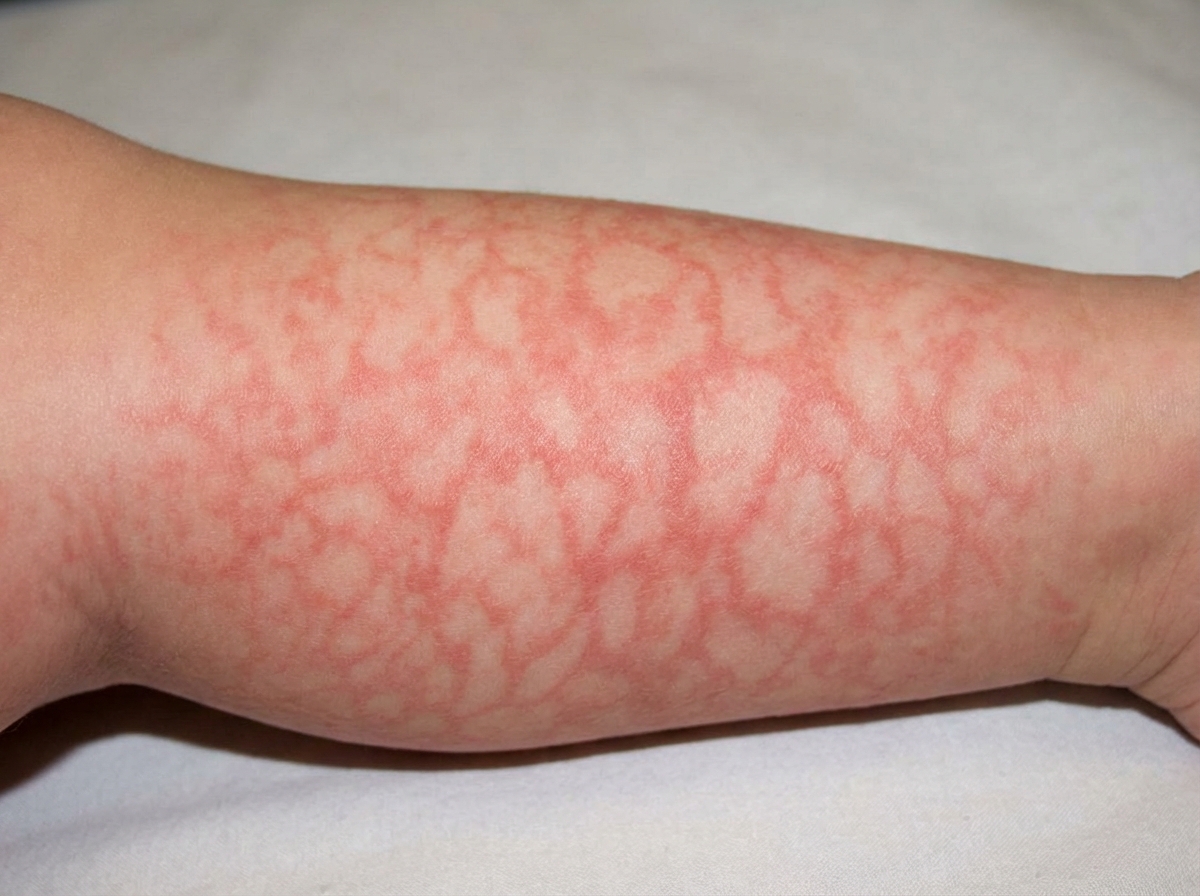
Q36
A 12-year-old girl presents to her physician for the evaluation of episodic shortness of breath and cough. These episodes occur more frequently in spring. Her mother has a history of similar complaints. The physical examination reveals bilateral wheezes on chest auscultation. The initial response to pollen consists of the production of IgM; however, over time, antigen-specific IgE becomes predominant. This change from an IgM to an IgE response is caused by which of the following processes?
Q37
A 19-year-old male college student presents to the clinic in the month of January with a 2-day history of watery diarrhea. The patient also complains of weakness, nausea, vomiting and abdominal cramps. He has no significant past medical history. He does not take any medication. He drinks socially on the weekends but does not smoke cigarettes. He recently returned from a cruise with his fraternity brothers. Blood pressure is 110/70 mm Hg, heart rate is 104/min, respiratory rate is 12/min and temperature is 37.7°C (99.9°F). On physical examination his buccal mucosa is dry. The physician suggests oral rehydration therapy. Which of the following is the most likely causative agent?
Q38
An investigator studying viral replication isolates the genetic material of an unidentified virus strain. After exposing a cell culture to the isolated, purified viral genetic material, the cells begin to produce viral polymerase and subsequently replicate the viral genome. Infection with the investigated strain is most likely to cause which of the following conditions?
Q39
A 3-year-old boy is brought to the pediatrician by his parents with a presentation of severe diarrhea, vomiting, and fever for the past 2 days. The child is enrolled at a daycare where several other children have had similar symptoms in the past week. On physical exam, the child is noted to have dry mucous membranes. His temperature is 102°F (39°C). Questions regarding previous medical history reveal that the child’s parents pursued vaccine exemption to opt out of most routine vaccinations for their child. The RNA virus that is most likely causing this child’s condition has which of the following structural features?
Q40
A virology student is asked to identify a sample of virus. When subjected to a nonionic detergent, which disrupts lipid membranes, the virus was shown to lose infectivity. The student then purified the genetic material from the virus and subjected it to treatment with RNase, an enzyme that cleaves the phosphodiester linkages in the RNA backbone. A minute amount of the sample was then injected into a human cell line and was found to produce viral particles a few days later. Which of the following viruses was in the unknown sample?
Viruses US Medical PG Practice Questions and MCQs
Question 31: The surgical equipment used during a craniectomy is sterilized using pressurized steam at 121°C for 15 minutes. Reuse of these instruments can cause transmission of which of the following pathogens?
A. Non-enveloped viruses
B. Sporulating bacteria
C. Prions (Correct Answer)
D. Enveloped viruses
E. Yeasts
Explanation: ***Prions***
- Prions are **abnormally folded proteins** that are highly resistant to standard sterilization methods like steam autoclaving at 121°C, making them a risk for transmission through reused surgical instruments.
- They cause transmissible spongiform encephalopathies (TSEs) like **Creutzfeldt-Jakob disease**, where even trace amounts can be highly infectious.
*Non-enveloped viruses*
- Non-enveloped viruses are generally **more resistant to heat and disinfectants** than enveloped viruses but are typically inactivated by recommended steam sterilization protocols.
- Standard autoclaving conditions are effective in destroying most non-enveloped viruses.
*Sporulating bacteria*
- **Bacterial spores**, such as those from *Clostridium* or *Bacillus*, are known for their high resistance to heat and chemicals, but are usually **inactivated by steam sterilization at 121°C** for 15 minutes.
- This method is specifically designed to kill bacterial spores effectively.
*Enveloped viruses*
- Enveloped viruses are the **least resistant to heat and chemical disinfectants** due to their lipid envelope.
- They are readily **inactivated by standard steam sterilization** at 121°C.
*Yeasts*
- **Yeasts** are eukaryotic microorganisms that are typically **susceptible to heat sterilization**.
- They are effectively killed by typical steam autoclaving conditions used for surgical instruments.
Question 32: A 2-year-old boy presents to the pediatrician for evaluation of an elevated temperature, sore throat, runny nose, and lacrimation for the past week, and a rash which he developed yesterday. The rash began on the patient’s face and spread down to the trunk, hands, and feet. The patient’s mother gave him ibuprofen to control the fever. The child has not received mumps, measles, and rubella vaccinations because he was ill when the vaccine was scheduled and was later lost to follow-up. The vital signs include blood pressure 90/50 mm Hg, heart rate 110/min, respiratory rate 22/min, and temperature 37.8°C (100.0℉). On physical examination, the child was drowsy. His face, trunk, and extremities were covered with a maculopapular erythematous rash. Two irregularly-shaped red dots were also noted on the mucosa of the lower lip. The remainder of the physical examination was within normal limits. What is the probable causative agent for this child’s condition?
A. Group A Streptococcus
B. Rubulavirus
C. Influenzavirus
D. Morbillivirus (Correct Answer)
E. Herpesvirus
Explanation: ***Morbillivirus***
- The constellation of symptoms—**elevated temperature**, **sore throat**, **runny nose**, **lacrimation**, a **maculopapular erythematous rash** that began on the face and spread downward, and especially the **irregularly-shaped red dots on the mucosa of the lower lip** (likely **Koplik spots**)—are classic for **measles**, caused by Morbillivirus.
- The patient's **unvaccinated status** against MMR further supports measles as the most probable diagnosis, as it is a highly contagious disease prevented by vaccination.
*Group A Streptococcus*
- This bacterium causes **scarlet fever**, characterized by a **sandpaper-like rash** and **strawberry tongue**, not a maculopapular rash spreading from face to extremities with Koplik spots.
- While it can cause pharyngitis and fever, the specific rash progression and oral lesions rule out Group A Streptococcus.
*Rubulavirus*
- Rubulavirus causes **mumps**, which primarily presents with **parotitis** (swelling of parotid glands), fever, and headache.
- It does not typically cause a generalized maculopapular rash or Koplik spots, making it an unlikely cause for the described symptoms.
*Influenzavirus*
- Influenzavirus causes **influenza**, characterized by sudden onset of high fever, cough, myalgia, and headache.
- While it can cause fever and respiratory symptoms, it does not typically present with a widespread maculopapular rash or Koplik spots.
*Herpesvirus*
- Herpesviruses cause a variety of conditions, including **chickenpox** (Varicella-zoster virus), which presents with **vesicular lesions** that crust over, and **roseola infantum** (HHV-6/7), which primarily causes a high fever followed by a non-pruritic rash appearing *after* the fever subsides.
- Neither of these typically presents with Koplik spots or the specific maculopapular rash progression described.
Question 33: Researchers are investigating a new strain of a virus that has been infecting children over the past season and causing dermatitis. They have isolated the virus and have run a number of tests to determine its structure and characteristics. They have found that this new virus has an outer coating that is high in phospholipids. Protein targeting assays and immunofluorescence images have shown that the outer layer contains numerous surface proteins. On microscopy, these surface proteins are also expressed around the nucleus of cells derived from the infected tissue of the children. This virus’s structure most closely resembles which of the following?
A. Adenovirus
B. Papillomavirus
C. Herpesvirus (Correct Answer)
D. Poxvirus
E. Hepadnavirus
Explanation: ***Herpesvirus***
- The presence of an **outer coating high in phospholipids** indicates an **enveloped virus**. Herpesviruses are large, enveloped DNA viruses.
- The detection of surface proteins expressed around the **nucleus** is a key finding that suggests the virus **buds from the nuclear membrane**, a characteristic feature of **herpesviruses**.
- Many herpesviruses cause dermatitis, including **HSV-1, HSV-2, VZV**, and **HHV-6**.
*Adenovirus*
- Adenoviruses are **non-enveloped viruses**, meaning they lack a lipid outer coating, which contradicts the phospholipid-rich coating described.
- Their replication and assembly occur exclusively in the **nucleus**, but they do not acquire an envelope by budding from the nuclear membrane.
*Papillomavirus*
- Papillomaviruses are also **non-enveloped viruses** with an **icosahedral capsid**, lacking the phospholipid envelope described.
- They replicate and assemble in the nucleus but do not possess the phospholipid-rich outer coating.
*Poxvirus*
- While poxviruses are **enveloped**, they acquire their envelope from the **Golgi apparatus** or **plasma membrane**, not the nuclear membrane.
- They are also distinct from other DNA viruses in that they replicate entirely in the **cytoplasm**, not the nucleus, which does not explain the perinuclear protein expression.
*Hepadnavirus*
- Hepadnaviruses (e.g., **Hepatitis B virus**) are enveloped DNA viruses, but their envelope is acquired by budding through the **endoplasmic reticulum** and **Golgi apparatus**, not the nuclear membrane.
- The perinuclear localization of surface proteins in immunofluorescence is not a characteristic feature of hepadnaviruses.
Question 34: A 45-year-old man presents to the emergency room with cough, dyspnea, and fever over the past 2 days. He also has substernal chest pain that worsens with inspiration. He recently recovered from a mild upper respiratory infection. His past medical history is notable for gout, hypertension, major depressive disorder, obesity, diabetes mellitus, and non-alcoholic fatty liver disease. He takes allopurinol, lisinopril, buproprion, and metformin. He works as a policeman and has a 25-pack-year smoking history. His temperature is 100.8°F (38.2°C), blood pressure is 150/75 mmHg, pulse is 108/min, and respirations are 22/min. On examination, he appears to be in mild distress but is cooperative and appropriately interactive. When the patient leans forward, a friction rub can be heard at the left lower sternal border. A basic metabolic panel is within normal limits. This patient’s condition is most likely caused by which of the following types of pathogens?
A. Picornavirus (Correct Answer)
B. Paramyxovirus
C. Flavivirus
D. Togavirus
E. Coronavirus
Explanation: ***Correct: Picornavirus***
- **Coxsackievirus B** and other enteroviruses (Picornaviruses) are the **most common viral causes of acute pericarditis**, making this the best answer for USMLE.
- The classic presentation includes a **preceding upper respiratory infection** followed by **pleuritic chest pain**, **fever**, and a **pericardial friction rub** - exactly as described in this case.
- Coxsackievirus B can also cause myocarditis and is the prototypical viral pathogen associated with both pericarditis and myocarditis in medical education.
*Incorrect: Coronavirus*
- While coronaviruses (including SARS-CoV-2) can cause pericarditis, this is **not the classic or most common viral cause** taught in USMLE content.
- Coronaviruses are more commonly associated with respiratory symptoms, and pericarditis as a complication is less typical than with Picornaviruses.
*Incorrect: Paramyxovirus*
- Paramyxoviruses (e.g., **measles**, **mumps**, RSV) primarily cause respiratory infections but are **less commonly associated with pericarditis** compared to Picornaviruses.
- Mumps can rarely cause pericarditis but typically presents with parotitis, which is absent in this case.
*Incorrect: Flavivirus*
- Flaviviruses (e.g., **West Nile virus**, **dengue virus**) are **arthropod-borne** viruses and not associated with typical URI prodrome.
- Their presentations typically include **fever**, **rash**, and potential neurological complications, not the classic pericarditis presentation described here.
*Incorrect: Togavirus*
- Togaviruses (e.g., **rubella**, **chikungunya**) typically cause **rash** and **arthralgias** rather than pericarditis.
- These are not commonly associated with the URI-to-pericarditis progression seen in this patient.
Question 35: A 3-year-old boy presents with his mother to the family medicine clinic for an itchy rash on the face that started 3 days ago. The mother states that her son had a fever with a runny nose a little more than a week ago. There has been no sore throat or cough according to the mother. No significant medical conditions are noted. No medications are on record. The boy is up-to-date on all immunizations. His heart rate is 102/min, respiratory rate is 24/min, temperature is 36.5°C (97.7°F), and blood pressure is 92/65 mm Hg. The boy appears well-nourished and alert. Auscultation of the heart is without murmurs. Lungs are clear to auscultation bilaterally. An erythematous malar rash extending from the left lateral nasal region to the left medial zygomatic region is present. There is no lymphadenopathy present. A full skin examination reveals an erythematous, reticulated rash on the lower extremities (see image). Which of the following etiologic agents is responsible for the patient's signs and symptoms?
A. Parvovirus B19 (Correct Answer)
B. Adenovirus
C. Streptococcus pyogenes
D. Rubella virus
E. Human herpesvirus 6 (HHV-6)
Explanation: ***Parvovirus B19***
- The presentation of a **malar rash** ("slapped cheek" appearance) followed by a **reticulated rash** on the extremities after a prodromal febrile illness is classic for **erythema infectiosum**, also known as fifth disease, caused by Parvovirus B19.
- The rash typically starts on the face and spreads to the body, often with a lacy or reticulated pattern, and the child is generally well-appearing.
*Adenovirus*
- Adenovirus can cause a variety of symptoms including **respiratory illness**, **conjunctivitis**, and sometimes a rash, but it typically does not present with the characteristic "slapped cheek" and reticulated rash described.
- The fever and runny nose are common initial symptoms but are not specific enough to point towards adenovirus without other differentiating features like conjunctivitis or pharyngitis.
*Streptococcus pyogenes*
- *Streptococcus pyogenes* causes conditions like **scarlet fever**, which presents with a rash (scarlatiniform rash) often described as sandpaper-like, and a **sore throat**, which is explicitly stated as absent in this case.
- The rash of scarlet fever usually affects the trunk and extremities but typically spares the face, differentiating it from the described facial rash.
*Rubella virus*
- **Rubella (German measles)** typically presents with a fine, pink, macular rash that starts on the face and spreads downwards, often with associated **postauricular and occipital lymphadenopathy**, which is absent in this patient.
- While there is a febrile prodrome, the characteristic "slapped cheek" followed by a reticulated rash is not typical of rubella.
*Human herpesvirus 6 (HHV-6)*
- HHV-6 causes **roseola infantum (exanthem subitum)**, characterized by a **high fever** that resolves abruptly followed by the appearance of a **rose-pink maculopapular rash** on the trunk and neck, sparing the face.
- The rash pattern and the initial symptoms (high fever followed by rash after fever breaks) are distinct from the patient's presentation.
Question 36: A 12-year-old girl presents to her physician for the evaluation of episodic shortness of breath and cough. These episodes occur more frequently in spring. Her mother has a history of similar complaints. The physical examination reveals bilateral wheezes on chest auscultation. The initial response to pollen consists of the production of IgM; however, over time, antigen-specific IgE becomes predominant. This change from an IgM to an IgE response is caused by which of the following processes?
A. Junctional diversity
B. Allelic exclusion
C. Somatic hypermutation
D. Isotype switching (Correct Answer)
E. Affinity maturation
Explanation: ***Isotype switching***
- **Isotype switching** (or class switch recombination) is the process by which a B cell changes the class of antibody it produces from IgM to other classes like IgE, IgG, or IgA, while maintaining the same antigen specificity.
- This process is essential for diversifying the effector functions of antibodies, allowing **IgE** to mediate allergic reactions like the one described.
*Junctional diversity*
- **Junctional diversity** refers to the addition or subtraction of nucleotides at the junctions between V, D, and J gene segments during V(D)J recombination, thereby increasing antibody diversity.
- While it contributes to antigen-binding diversity, it does not explain the change in the **antibody class** (e.g., from IgM to IgE).
*Allelic exclusion*
- **Allelic exclusion** is a mechanism that ensures each B cell produces only one functional heavy chain and one functional light chain of a specific antibody.
- This process prevents the production of multiple antibody specificities by a single B cell, but it does not account for the change in **antibody class**.
*Somatic hypermutation*
- **Somatic hypermutation** introduces point mutations into the variable regions of antibody genes after antigen encounter, leading to changes in antigen-binding affinity.
- This process is crucial for **affinity maturation** but does not directly cause the switch from IgM to IgE production.
*Affinity maturation*
- **Affinity maturation** is the process by which the affinity of antibodies for their specific antigen increases over time due to repeated exposure to the antigen, driven by somatic hypermutation and selection.
- While important for a strong immune response, it describes the refinement of antibody binding, not the change in the **antibody class** itself.
Question 37: A 19-year-old male college student presents to the clinic in the month of January with a 2-day history of watery diarrhea. The patient also complains of weakness, nausea, vomiting and abdominal cramps. He has no significant past medical history. He does not take any medication. He drinks socially on the weekends but does not smoke cigarettes. He recently returned from a cruise with his fraternity brothers. Blood pressure is 110/70 mm Hg, heart rate is 104/min, respiratory rate is 12/min and temperature is 37.7°C (99.9°F). On physical examination his buccal mucosa is dry. The physician suggests oral rehydration therapy. Which of the following is the most likely causative agent?
A. Helicobacter pylori
B. Norovirus (Correct Answer)
C. Staphylococcus aureus
D. Rotavirus
E. Enterotoxigenic Escherichia coli
Explanation: ***Norovirus***
- The constellation of **vomiting**, **watery diarrhea**, **abdominal cramps**, and a **recent cruise travel history** in a young adult is highly suggestive of norovirus. Norovirus outbreaks are common in semi-closed communities like cruise ships.
- Its high infectivity and rapid onset (1-2 days) align with the patient's symptoms and timeline.
*Helicobacter pylori*
- This bacterium is primarily associated with **peptic ulcers**, **gastritis**, and gastric cancer, not acute gastroenteritis with watery diarrhea and vomiting.
- Symptoms would typically be chronic abdominal pain, bloating, and possibly GI bleeding.
*Staphylococcus aureus*
- Causes **food poisoning** with a very rapid onset (1-6 hours) of severe nausea, vomiting, and abdominal cramps due to preformed toxins.
- While vomiting is present, the 2-day history is longer than typical for *S. aureus* toxin-mediated illness, and watery diarrhea is less prominent.
*Rotavirus*
- Primarily affects **infants and young children**, causing severe watery diarrhea, vomiting, and fever.
- While it can occur in adults, it's less common and the cruise ship setting points more towards norovirus in this age group.
*Enterotoxigenic Escherichia coli*
- This is a common cause of **traveler's diarrhea**, characterized by watery diarrhea and abdominal cramps, often acquired through contaminated food or water.
- While possible, the strong association with cruise ships and the prominent vomiting make norovirus a more characteristic diagnosis.
Question 38: An investigator studying viral replication isolates the genetic material of an unidentified virus strain. After exposing a cell culture to the isolated, purified viral genetic material, the cells begin to produce viral polymerase and subsequently replicate the viral genome. Infection with the investigated strain is most likely to cause which of the following conditions?
A. Rotavirus infection
B. Poliomyelitis (Correct Answer)
C. Hepatitis B
D. Rabies
E. Influenza
Explanation: ***Poliomyelitis***
- The isolation of **purified viral genetic material** directly leading to viral protein production (polymerase) and genome replication indicates the virus has an **RNA genome that can directly serve as mRNA**.
- **Poliovirus** is a **positive-sense single-stranded RNA (+ssRNA) virus**, meaning its genome can immediately be translated by host ribosomes upon entry, acting like mRNA.
*Rotavirus infection*
- Rotavirus is a **double-stranded RNA (dsRNA) virus** and requires its own **RNA-dependent RNA polymerase** to synthesize mRNA before protein production and genome replication can occur.
- Its purified genetic material alone would not directly lead to viral protein synthesis in the absence of viral enzymes.
*Hepatitis B*
- Hepatitis B virus (HBV) is a **DNA virus** and replicates through an **RNA intermediate** via **reverse transcriptase**.
- Its genetic material cannot directly initiate the production of viral polymerase or genome replication without complex cellular machinery and viral enzymes.
*Rabies*
- Rabies virus is a **negative-sense single-stranded RNA (-ssRNA) virus**, which means its genome cannot be directly translated into protein.
- It requires its own **RNA-dependent RNA polymerase** to first synthesize complementary positive-sense mRNA strands.
*Influenza*
- Influenza virus is also a **negative-sense single-stranded RNA (-ssRNA) virus**.
- Like rabies, it carries its own **RNA-dependent RNA polymerase** to transcribe its genome into mRNA before protein synthesis can begin.
Question 39: A 3-year-old boy is brought to the pediatrician by his parents with a presentation of severe diarrhea, vomiting, and fever for the past 2 days. The child is enrolled at a daycare where several other children have had similar symptoms in the past week. On physical exam, the child is noted to have dry mucous membranes. His temperature is 102°F (39°C). Questions regarding previous medical history reveal that the child’s parents pursued vaccine exemption to opt out of most routine vaccinations for their child. The RNA virus that is most likely causing this child’s condition has which of the following structural features?
A. Single-stranded, icosahedral, non-enveloped
B. Double-stranded, icosahedral, non-enveloped (Correct Answer)
C. Single-stranded, helical, enveloped
D. Single-stranded, icosahedral, enveloped
E. Double-stranded, helical, non-enveloped
Explanation: ***Double-stranded, icosahedral, non-enveloped***
- The clinical presentation of severe diarrhea, vomiting, and fever in a young child, especially in a daycare setting with a history of vaccine exemption, is highly suggestive of **Rotavirus infection**.
- **Rotavirus** is a member of the Reoviridae family and is characterized by its **double-stranded RNA (dsRNA) genome**, **icosahedral capsid**, and **lack of an envelope**.
*Single-stranded, icosahedral, non-enveloped*
- This describes viruses like **Picornaviruses** (e.g., Poliovirus, Rhinovirus) or **Caliciviruses** (e.g., Norovirus), which can cause gastrointestinal symptoms but lack the dsRNA genome of Rotavirus.
- While Norovirus can cause outbreaks of gastroenteritis, the structural features provided do not align with the most likely pathogen given the severity and typical age group for Rotavirus.
*Single-stranded, helical, enveloped*
- This describes viruses such as **Paramyxoviruses** (e.g., Measles, Mumps) or **Orthomyxoviruses** (e.g., Influenza), which typically cause respiratory or systemic infections, not primarily severe gastroenteritis in this manner.
- The presence of an **envelope** and **helical symmetry** rule out Rotavirus.
*Single-stranded, icosahedral, enveloped*
- This describes viruses such as **Togaviruses** (e.g., Rubella) or **Flaviviruses** (e.g., Dengue), which cause a variety of systemic diseases but are not common causes of severe diarrheal illness in this demographic.
- The combination of **enveloped** and an **icosahedral capsid** does not match Rotavirus structure.
*Double-stranded, helical, non-enveloped*
- While some viruses have **double-stranded RNA**, none of the medically significant viruses are known to be **helical** and **non-enveloped** simultaneously.
- **Helical symmetry** is usually associated with enveloped viruses in RNA viruses; therefore, this combination is not characteristic of common human viral pathogens causing gastroenteritis.
Question 40: A virology student is asked to identify a sample of virus. When subjected to a nonionic detergent, which disrupts lipid membranes, the virus was shown to lose infectivity. The student then purified the genetic material from the virus and subjected it to treatment with RNase, an enzyme that cleaves the phosphodiester linkages in the RNA backbone. A minute amount of the sample was then injected into a human cell line and was found to produce viral particles a few days later. Which of the following viruses was in the unknown sample?
A. Togavirus
B. Hepevirus
C. Calicivirus
D. Adenovirus
E. Herpesvirus (Correct Answer)
Explanation: ***Herpesvirus***
- The loss of infectivity with nonionic detergents indicates the presence of a **lipid envelope**, a characteristic of herpesviruses.
- The genetic material survived **RNase treatment**, indicating it is **DNA** (not RNA), which is consistent with herpesviruses being DNA viruses.
- Under experimental conditions with **direct intracellular injection**, purified herpesvirus DNA can initiate viral replication by utilizing host cell transcription machinery, ultimately producing viral particles.
*Togavirus*
- Togaviruses are **enveloped RNA viruses**; they would lose infectivity with detergent treatment.
- However, their **RNA genome** would have been destroyed by RNase treatment, preventing any subsequent viral particle production.
*Hepevirus*
- Hepeviruses are **non-enveloped RNA viruses**; they would **not** lose infectivity with nonionic detergent, which contradicts the experimental observation.
- Additionally, their **RNA genome** would be destroyed by RNase, preventing viral replication.
*Calicivirus*
- Caliciviruses are **non-enveloped RNA viruses**, so they would not be inactivated by nonionic detergents.
- Their **RNA genome** would be susceptible to degradation by RNase, precluding viral production.
*Adenovirus*
- Adenoviruses are **non-enveloped DNA viruses**, meaning they would **not lose infectivity** when treated with nonionic detergent, which contradicts the first experimental result.
- Although they have a DNA genome that would survive RNase treatment, the lack of envelope rules them out.