
Pneumococcal disease — MCQs

A 2-year-old boy is brought in by his parents to his pediatrician. The boy was born by spontaneous vaginal delivery at 39 weeks and 5 days after a normal pregnancy. The boy has received all age-appropriate vaccinations as of his last visit at 18 months of age. Of note, the boy has confirmed sickle cell disease and the only medication he takes is penicillin prophylaxis. The parents state that they plan on enrolling their son in a daycare, which requires documentation of up-to-date vaccinations. The pediatrician states that their son needs an additional vaccination at this visit, which is a polysaccharide vaccine that is not conjugated to protein. Which of the following matches this description?
A 72-year-old man is admitted to the hospital with productive cough and fever. A chest radiograph is obtained and shows lobar consolidation. The patient is diagnosed with pneumonia. He has a history of penicillin allergy. The attending physician orders IV levofloxacin as empiric therapy. On morning rounds the next day, the team discovers that the patient was administered ceftriaxone instead of levofloxacin. The patient has already received a full dose of ceftriaxone and had no signs of allergic reaction, and his pneumonia appears to be improving clinically. What is the most appropriate next step?
A patient is hospitalized for pneumonia. Gram-positive cocci in clusters are seen on sputum gram stain. Which of the following clinical scenarios is most commonly associated with this form of pneumonia?
A 2-month-old girl is brought to the physician by her father for a routine well-child examination. She is given a vaccine that contains polyribosylribitol phosphate conjugated to a toxoid carrier. The vaccine is most likely to provide immunity against which of the following pathogens?
A 71-year-old woman presents with high-grade fever and chills, difficulty breathing, and a productive cough with rust-colored sputum. She complains of a sharp left-sided chest pain. Physical examination reveals increased fremitus, dullness to percussion, and bronchial breath sounds on the lower left side. A chest X-ray shows left lower lobe consolidation. The offending organism that was cultured from the sputum was catalase-negative and had a positive Quellung reaction. The organism will show which gram stain results?
While testing various strains of Streptococcus pneumoniae, a researcher discovers that a certain strain of this bacteria is unable to cause disease in mice when deposited in their lungs. What physiological test would most likely deviate from normal in this strain of bacteria as opposed to a typical strain?
A 13-year-old boy is brought by his mother to the emergency department because he has had fever, chills, and severe coughing for the last two days. While they originally tried to manage his condition at home, he has become increasingly fatigued and hard to arouse. He has a history of recurrent lung infections and occasionally has multiple foul smelling stools. On presentation, his temperature is 102.2 °F (39 °C), blood pressure is 106/71 mmHg, pulse is 112/min, and respirations are 20/min. Physical exam reveals scattered rhonchi over both lung fields, rales at the base of the right lung base and corresponding dullness to percussion. The most likely organism responsible for this patient's symptoms has which of the following characteristics?
A 1-year-old immigrant girl has not received any recommended vaccines since birth. She attends daycare and remains healthy despite her daily association with several other children for the past 3 months at a home day-care facility. Which of the following phenomena explains why she has not contracted any vaccine-preventable diseases such as measles, diphtheria, or pertussis?
A 47-year-old patient returns to his primary care physician after starting aspirin two weeks ago for primary prevention of coronary artery disease. He complains that he wakes up short of breath in the middle of the night and has had coughing "attacks" three times. After discontinuing aspirin, what medication is most appropriate for prevention of similar symptoms in this patient?
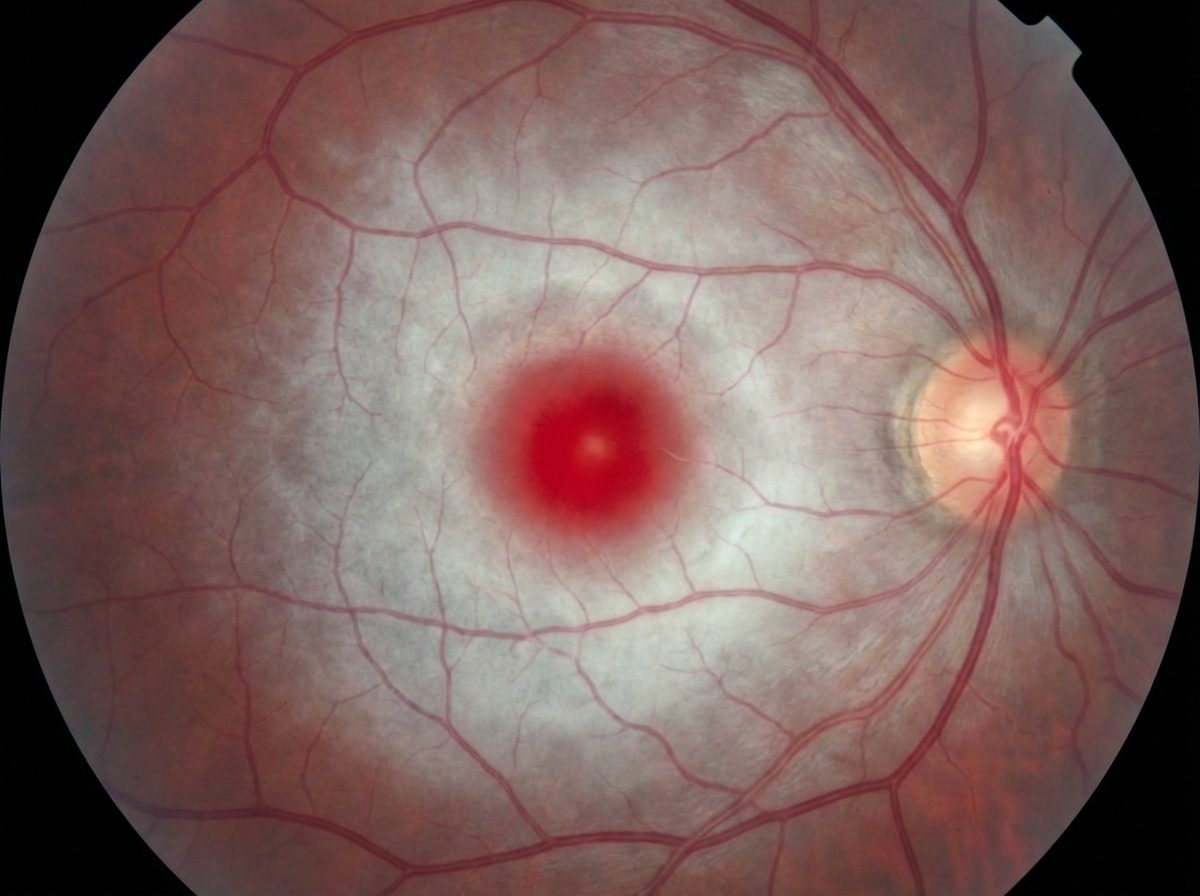
A 7-month-old boy is brought by his parents to the pediatrician’s office. His mother says the child has been weakening progressively and is not as active as he used to be when he was born. His condition seems to be getting worse, especially over the last month. He was born at 41 weeks through normal vaginal delivery. There were no complications observed during the prenatal period. He was progressing well over the 1st few months and achieving the appropriate milestones. On examination, his abdomen appears soft with no liver enlargement. The patient appears to be dehydrated and lethargic. The results of a fundoscopic examination are shown in the picture. A blood test for which of the following enzymes is the next best assay to evaluate this patient's health?
Want unlimited practice?
Get full access to all questions, explanations, and performance tracking.
Scan to download app