
Trypanosomes — MCQs

A 23-year-old woman presents with progressively worsening headache, photophobia, and intermittent fever that have lasted for 6 days. She says her headache is mostly frontal and radiates down her neck. She denies any recent history of blood transfusions, recent travel, or contact with animals. Her past medical history is unremarkable. She is sexually active with a single partner for the past 3 years. Her temperature is 38.5°C (101.3°F). On physical examination, she appears pale and diaphoretic. A fine erythematous rash is noted on the neck and forearms. A lumbar puncture is performed and CSF analysis reveals: Opening pressure: 300 mm H2O Erythrocytes: None Leukocytes: 72/mm3 Neutrophils: 10% Lymphocytes: 75% Mononuclear: 15% Protein: 100 mg/dL Glucose: 70 mg/dL Which of the following is the most likely diagnosis in this patient?
A 21-year-old woman is diagnosed with a rare subtype of anti-NMDA encephalitis. During the diagnostic workup, she was found to have an ovarian teratoma. Her physician is curious about the association between anti-NMDA encephalitis and ovarian teratomas. A causal relationship between this subtype of anti-NMDA encephalitis and ovarian teratomas is suspected. The physician aims to identify patients with anti-NMDA encephalitis and subsequently evaluate them for the presence of ovarian teratomas. Which type of study design would be the most appropriate?
A 13-year-old boy is brought to a physician with severe fevers and headaches for 3 days. The pain is constant and mainly behind the eyes. He has myalgias, nausea, vomiting, and a rash for one day. Last week, during an academic winter break, he traveled on a tour with his family to several countries, including Brazil, Panama, and Peru. They spent many evenings outdoors without any protection against insect bites. There is no history of contact with pets, serious illness, or use of medications. The temperature is 40.0℃ (104.0℉); the pulse is 110/min; the respiratory rate is 18/min, and the blood pressure is 110/60 mm Hg. A maculopapular rash is seen over the trunk and extremities. Several tender lymph nodes are palpated in the neck on both sides. A peripheral blood smear shows no organisms. Which of the following is most likely responsible for this patient’s presentation?
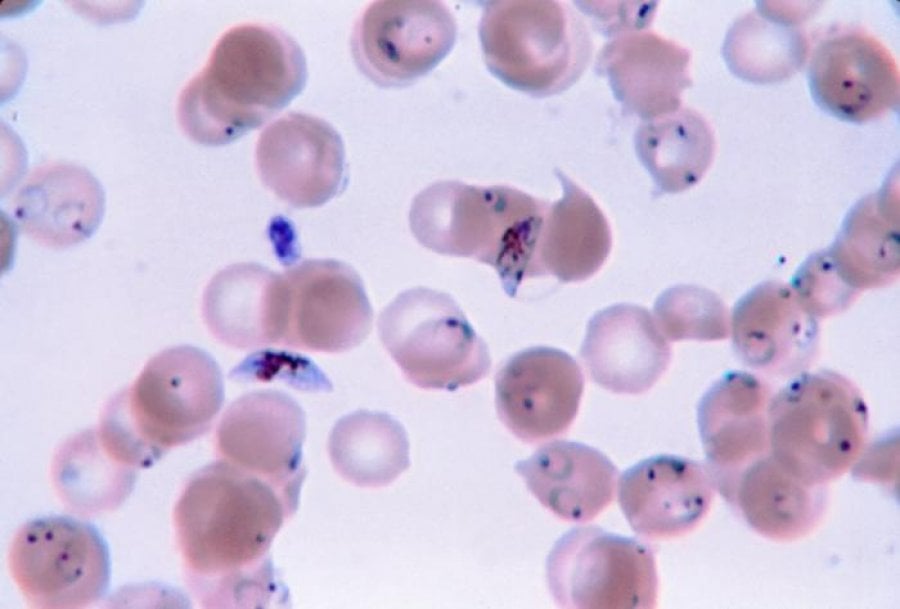
A 46-year-old man comes to the physician because of a 1-week history of headache, muscle pain, and recurrent fever spikes that occur without a noticeable rhythm. Two weeks ago, he returned from a 5-week-long world trip during which he climbed several mountains in India, Africa, and Appalachia. Chemoprophylaxis with chloroquine was initiated one week prior to the trip. Physical examination shows jaundice. The spleen is palpated 2 cm below the left costal margin. His hemoglobin concentration is 10 g/dL. A photomicrograph of a peripheral blood smear is shown. Which of the following agents is the most likely cause of this patient's findings?
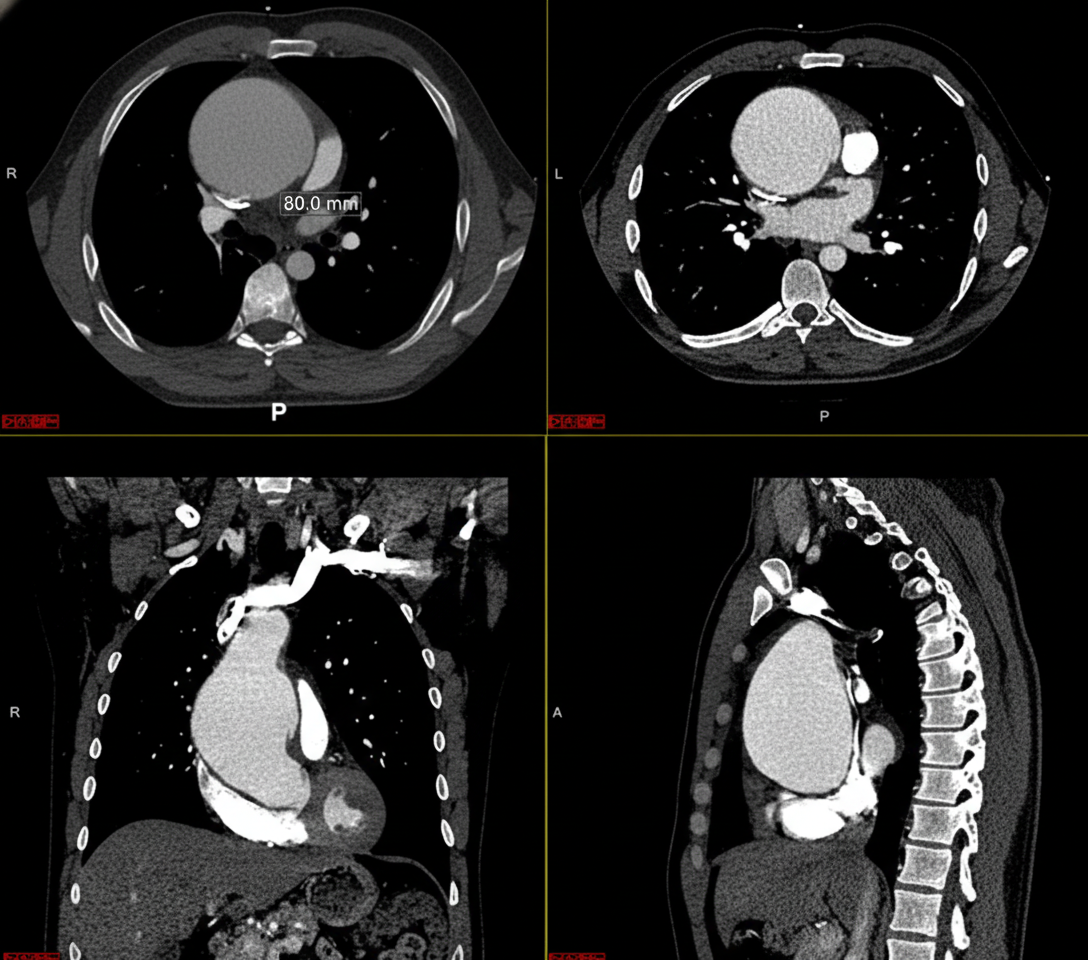
A previously healthy 32-year-old man comes to the physician because of a 1-week history of upper back pain, dyspnea, and a sensation of pressure in his chest. He has had no shortness of breath, palpitations, fevers, or chills. He emigrated from Ecuador when he was 5 years old. He does not smoke or drink alcohol. He takes no medications. He is 194 cm (6 ft 4 in) tall and weighs 70.3 kg (155 lb); BMI is 19 kg/m2. His temperature is 37.2°C (99.0°F), pulse is 73/min, respirations are 15/min, and blood pressure is 152/86 mm Hg in the right arm and 130/72 mm Hg in the left arm. Pulmonary examination shows faint inspiratory wheezing bilaterally. A CT scan of the chest with contrast is shown. Which of the following is the most likely underlying cause of this patient's condition?
A 30-year-old forest landscape specialist is brought to the emergency department with hematemesis and confusion. One week ago she was diagnosed with influenza when she had fevers, severe headaches, myalgias, hip and shoulder pain, and a maculopapular rash. After a day of relative remission, she developed abdominal pain, vomiting, and diarrhea. A single episode of hematemesis occurred prior to admission. Two weeks ago she visited rainforests and caves in western Africa where she had direct contact with animals, including apes. She has no history of serious illnesses or use of medications. She is restless. Her temperature is 38.0℃ (100.4℉); the pulse is 95/min, the respiratory rate is 20/min; and supine and upright blood pressure is 130/70 mm Hg and 100/65 mm Hg, respectively. Conjunctival suffusion is noted. Ecchymoses are observed on the lower extremities. She is bleeding from one of her intravenous lines. The peripheral blood smear is negative for organisms. Filovirus genomes were detected during a reverse transcription-polymerase chain reaction. The laboratory studies show the following: Laboratory test Hemoglobin 10 g/dL Leukocyte count 1,000/mm3 Segmented neutrophils 65% Lymphocytes 20% Platelet count 50,000/mm3 Partial thromboplastin time (activated) 60 seconds Prothrombin time 25 seconds Fibrin split products positive Serum Alanine aminotransferase (ALT) 85 U/L Aspartate aminotransferase (AST) 120 U/L γ-Glutamyltransferase (GGT) 83 U/L Creatinine 2 mg/dL Which of the following is the most appropriate immediate step in management?
A 28-year-old male presents to his primary care physician with complaints of intermittent abdominal pain and alternating bouts of constipation and diarrhea. His medical chart is not significant for any past medical problems or prior surgeries. He is not prescribed any current medications. Which of the following questions would be the most useful next question in eliciting further history from this patient?
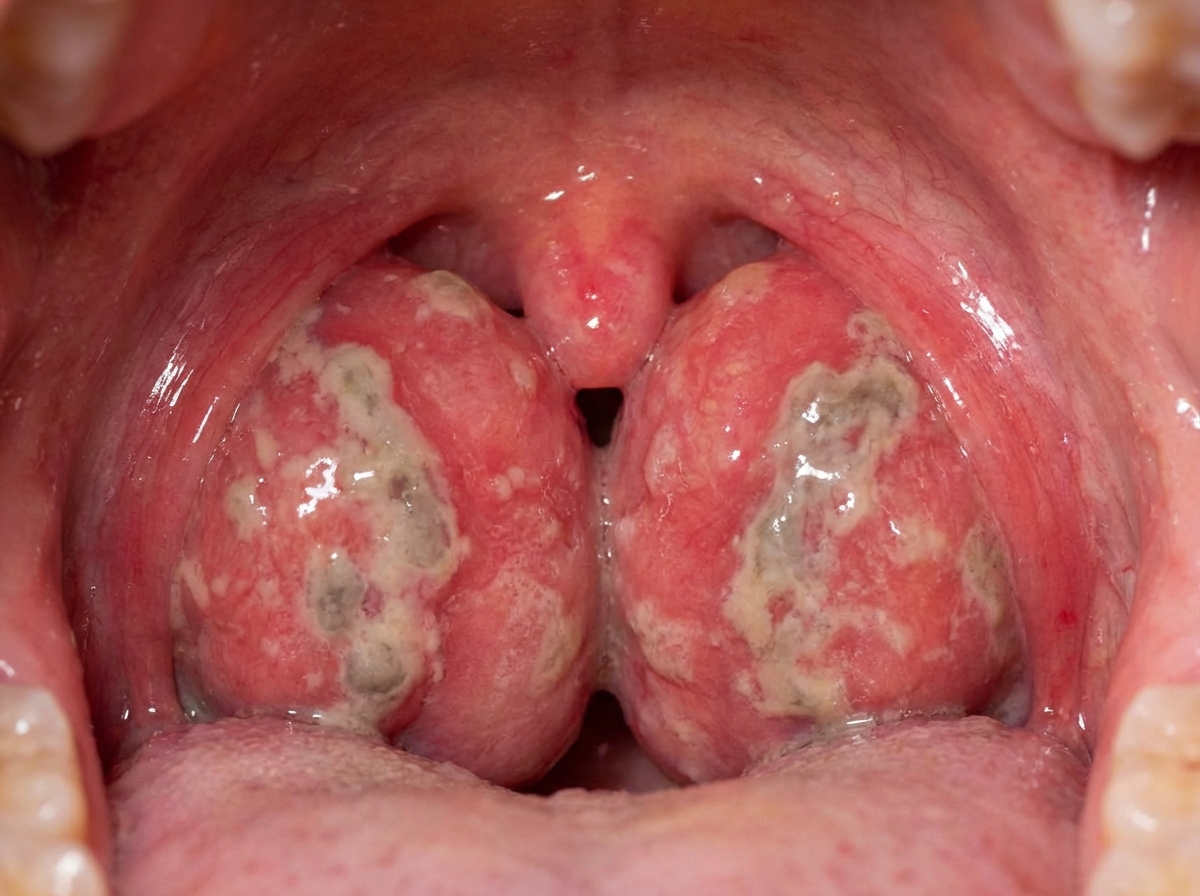
A 19-year-old woman presents to the family medical center with a 2-week history of a sore throat. She says that she has felt increasingly tired during the day and has a difficult time staying awake during her classes at the university. She appears well-nourished with a low energy level. Her vital signs include the following: the heart rate is 82/min, the respiratory rate is 14/min, the temperature is 37.8°C (100.0°F), and the blood pressure is 112/82 mm Hg. Inspection of the pharynx is depicted in the picture. Palpation of the neck reveals posterior cervical lymphadenopathy. The membrane does not bleed upon scraping. What is the most specific finding for detecting the syndrome described in the vignette?
A 32-year-old woman presents to your office with abdominal pain and bloating over the last month. She also complains of intermittent, copious, non-bloody diarrhea over the same time. Last month, she had a cough that has since improved but has not completely resolved. She has no sick contacts and has not left the country recently. She denies any myalgias, itching, or rashes. Physical and laboratory evaluations are unremarkable. Examination of her stool reveals the causative organism. This organism is most likely transmitted to the human host through which of the following routes?
A 24-year-old man presents with a painless genital ulcer for the past 2 weeks. He reports that he recently has been having unprotected sex with multiple partners. Past medical history is unremarkable. On physical examination, a single ulcer is present on the dorsal shaft of the penis which is circumscribed, indurated, and partially healed. There is moderate inguinal lymphadenopathy but no buboes. Which of the following tests would confirm the most likely diagnosis in this patient?
Want unlimited practice?
Get full access to all questions, explanations, and performance tracking.
Scan to download app