
Malaria parasites and life cycle — MCQs

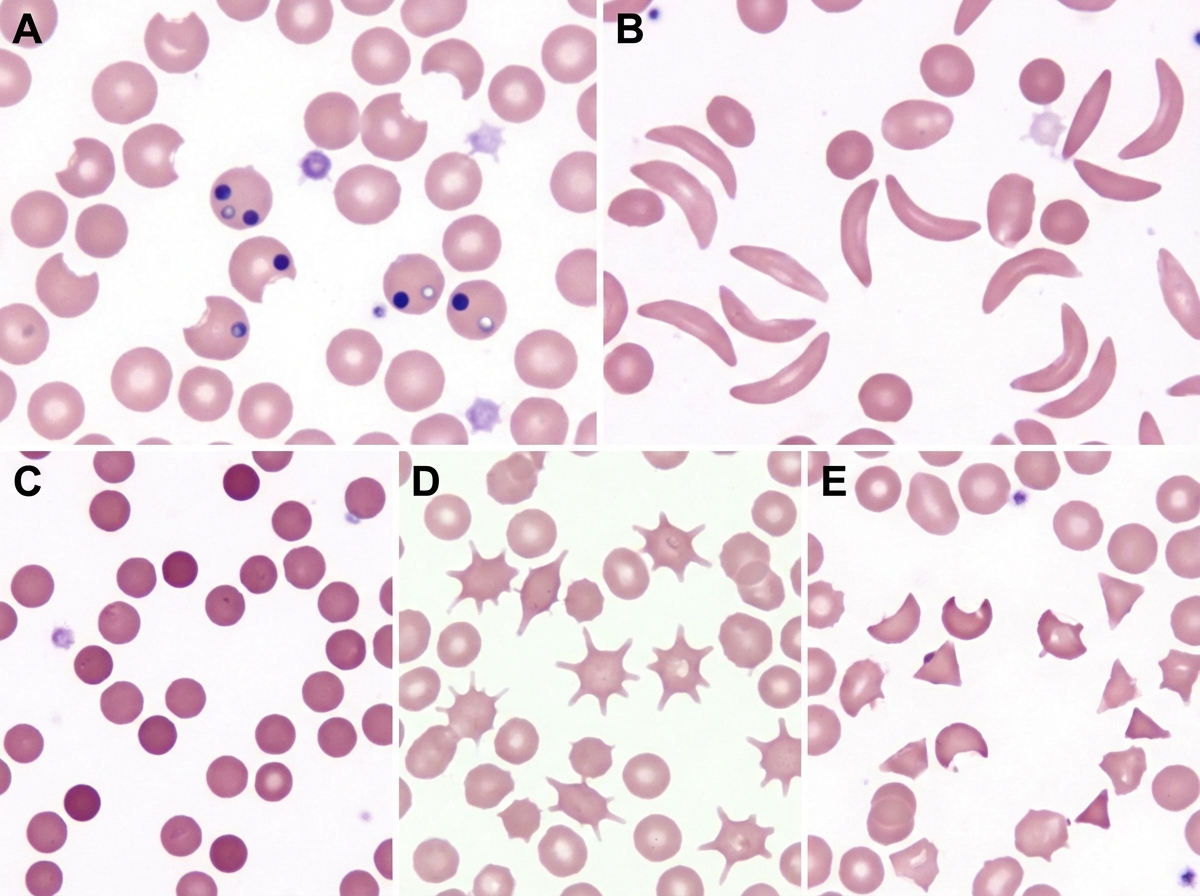
A 68-year-old man of Mediterranean descent comes to the clinic with complaints of fatigue for the past month. He reports that it is increasingly difficult for him to complete his after-dinner walks as he would get breathless and tired around 10 minutes. He endorses dizziness and an upper respiratory infection last week for which he “took a lot of aspirin.” Past medical history is significant for malaria 10 years ago (for which he was adequately treated with anti-malarial medications) and aortic stenosis status post prosthetic valve replacement 5 months ago. When asked if he has had similar episodes before, he claims, “Never! I’ve been as healthy as a horse until my heart surgery.” Physical examination is significant for mild scleral icterus bilaterally and a faint systolic murmur. Which of the following images represents a potential peripheral smear in this patient?
An investigator is studying the outcomes of a malaria outbreak in an endemic region of Africa. 500 men and 500 women with known malaria exposure are selected to participate in the study. Participants with G6PD deficiency are excluded from the study. The clinical records of the study subjects are reviewed and their peripheral blood smears are evaluated for the presence of Plasmodium trophozoites. Results show that 9% of the exposed population does not have clinical or laboratory evidence of malaria infection. Which of the following best explains the absence of infection seen in this subset of participants?
A 31-year-old male traveler in Thailand experiences fever, headache, and excessive sweating every 48 hours. Peripheral blood smear shows trophozoites and schizonts indicative of Plasmodia infection. The patient is given chloroquine and primaquine. Primaquine targets which of the following Plasmodia forms:
An 8-year-old boy is brought to the physician because of a 1-day history of severe left hand pain. He has had similar painful episodes in the past that required hospitalization. Physical examination shows pale conjunctivae. There is tenderness on palpation of the wrist and the small joints of the left hand. Peripheral blood smear shows crescent-shaped erythrocytes. He is started on a pharmacologic agent that is known to cause macrocytosis. This drug causes an arrest in which of the following cell cycle phases?
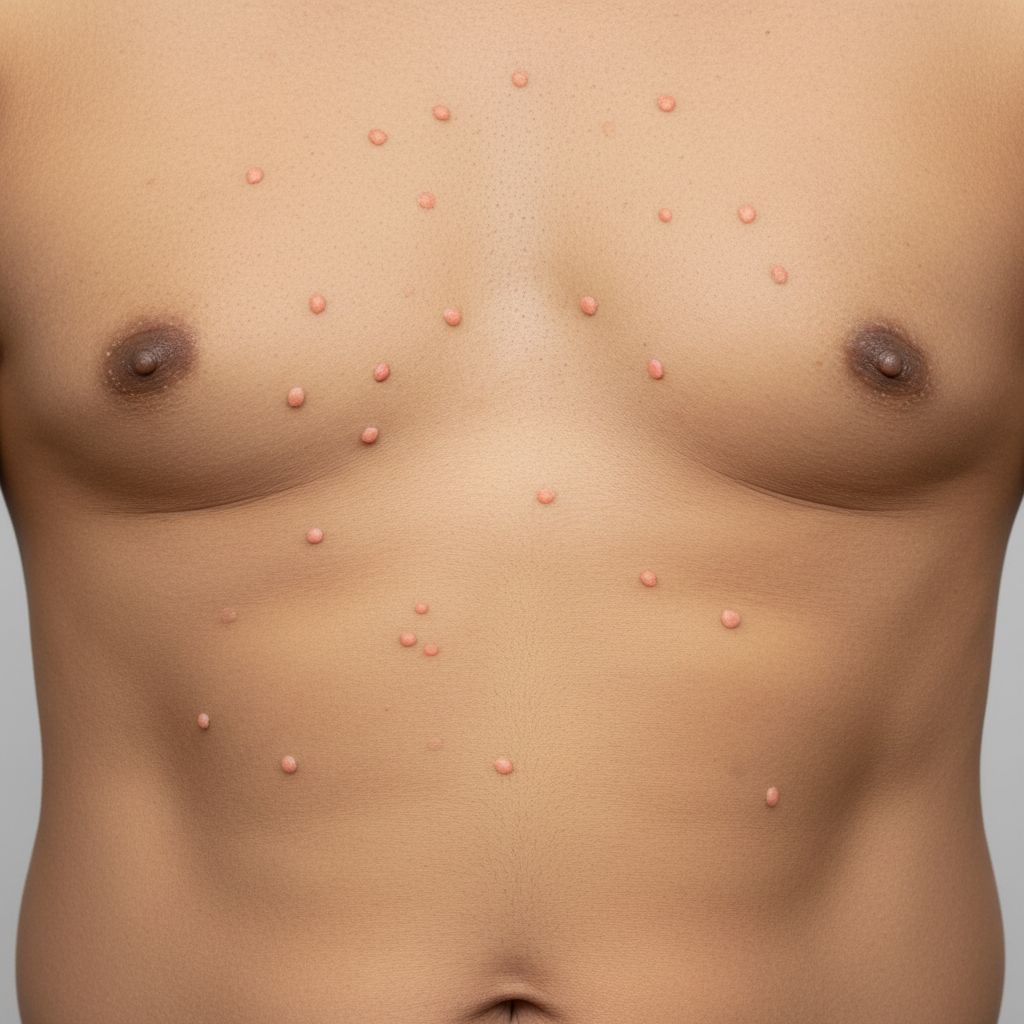
A 42-year-old man comes to his physician with a history of fever, non-bloody diarrhea, and headache for 10 days. He also complains of anorexia and abdominal pain. He returned from a trip to India 3 weeks ago. His temperature is 40.0°C (104.0°F), pulse is 65/min, respirations are 15/min, and blood pressure is 135/80 mm Hg. He has developed a blanchable rash on his chest and trunk. A photograph of the rash is shown. Examination of the heart, lungs, and abdomen show no abnormalities. Laboratory studies show: Hemoglobin 15 g/dL Mean corpuscular volume 95 μm3 White blood cell count 3400/mm3 Percent segmented neutrophils 40% Which of the following is the most likely diagnosis?
A 32-year-old man is brought to the emergency department with fever, dyspnea, and impaired consciousness. His wife reports that he has also had an episode of dark urine today. Two weeks ago, he returned from a trip to the Republic of Congo. His temperature is 39.4°C (103°F), pulse is 114/min, and blood pressure is 82/51 mm Hg. Physical examination shows scleral icterus. Decreased breath sounds and expiratory crackles are heard on auscultation of the lungs bilaterally. His hemoglobin concentration is 6.3 g/dL. A blood smear shows red blood cells with normal morphology and ring-shaped inclusions. Further laboratory testing shows normal rates of NADPH production. Which of the following is the most appropriate pharmacotherapy for this patient?
A 7-year-old boy is brought to the emergency department by his parents with a 2-day history of severe fatigue. His parents say that he has no past medical history, but caught an illness that was going around his school 1 week ago. While ill, he had several days of abdominal pain and bloody diarrhea. His family history is significant for several family members who required blood transfusions, and he lives in an old house. Physical exam reveals conjunctival pallor and mild jaundice. Which of the following would most likely be seen on peripheral blood smear in this patient?
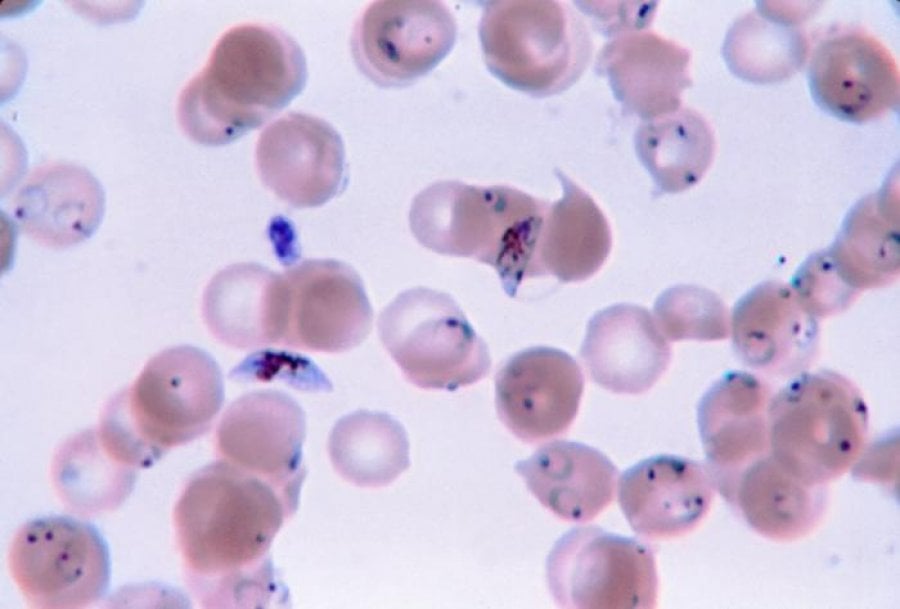
A 46-year-old man comes to the physician because of a 1-week history of headache, muscle pain, and recurrent fever spikes that occur without a noticeable rhythm. Two weeks ago, he returned from a 5-week-long world trip during which he climbed several mountains in India, Africa, and Appalachia. Chemoprophylaxis with chloroquine was initiated one week prior to the trip. Physical examination shows jaundice. The spleen is palpated 2 cm below the left costal margin. His hemoglobin concentration is 10 g/dL. A photomicrograph of a peripheral blood smear is shown. Which of the following agents is the most likely cause of this patient's findings?
A 37-year-old man makes an appointment with his primary care physician because he has been feeling tired and is no longer able to play on a recreational soccer team. He also says his coworkers have commented that he appears pale though he has not noticed any changes himself. He says that he has been generally healthy and that the only notable event that happened in the last year is that he went backpacking all over the world. Based on clinical suspicion, a series of blood tests are performed with partial results presented below: Hemoglobin: 9.8 g/dL Platelet count: 174,000/mm^3 Mean corpuscular volume: 72 µm^3 (normal: 80-100 µm^3) Iron: 22 µg/dL (normal: 50-170 µg/dL) Ferritin: 8 ng/mL (normal: 15-200 ng/mL) Lactate dehydrogenase: 57 U/L (normal: 45-90 U/L) Urine hemoglobin: absent Infection with which of the following types of organisms could lead to this pattern of findings?
A 4-year-old girl presents with recurrent abdominal pain and a low-grade fever for the past 2 months. The patient’s mother says that she has lost her appetite which has caused some recent weight loss. She adds that the patient frequently plays outdoors with their pet dog. The patient is afebrile and vital signs are within normal limits. On physical examination, conjunctival pallor is present. Abdominal examination reveals a diffusely tender abdomen and significant hepatomegaly. There is also a solid mass palpable in the right upper quadrant measuring about 3 x 4 cm. Laboratory findings are significant for the following: Hemoglobin (Hb%) 9.9 g/dL Total count (WBC) 26,300/µL Differential count Neutrophils 36% Lymphocytes 16% Eosinophils 46% Platelets 200,000/mm3 Erythrocyte sedimentation rate 56 mm/h C-reactive protein 2 mg/L Serum globulins 5 g/dL Laparoscopic resection of the mass is performed, and a tissue sample is sent for histopathology. Which of the following is the organism most likely responsible for this patient’s condition?
Want unlimited practice?
Get full access to all questions, explanations, and performance tracking.
Scan to download app