
Global health impact of parasitic infections — MCQs

A 4-year-old girl presents with recurrent abdominal pain and a low-grade fever for the past 2 months. The patient’s mother says that she has lost her appetite which has caused some recent weight loss. She adds that the patient frequently plays outdoors with their pet dog. The patient is afebrile and vital signs are within normal limits. On physical examination, conjunctival pallor is present. Abdominal examination reveals a diffusely tender abdomen and significant hepatomegaly. There is also a solid mass palpable in the right upper quadrant measuring about 3 x 4 cm. Laboratory findings are significant for the following: Hemoglobin (Hb%) 9.9 g/dL Total count (WBC) 26,300/µL Differential count Neutrophils 36% Lymphocytes 16% Eosinophils 46% Platelets 200,000/mm3 Erythrocyte sedimentation rate 56 mm/h C-reactive protein 2 mg/L Serum globulins 5 g/dL Laparoscopic resection of the mass is performed, and a tissue sample is sent for histopathology. Which of the following is the organism most likely responsible for this patient’s condition?
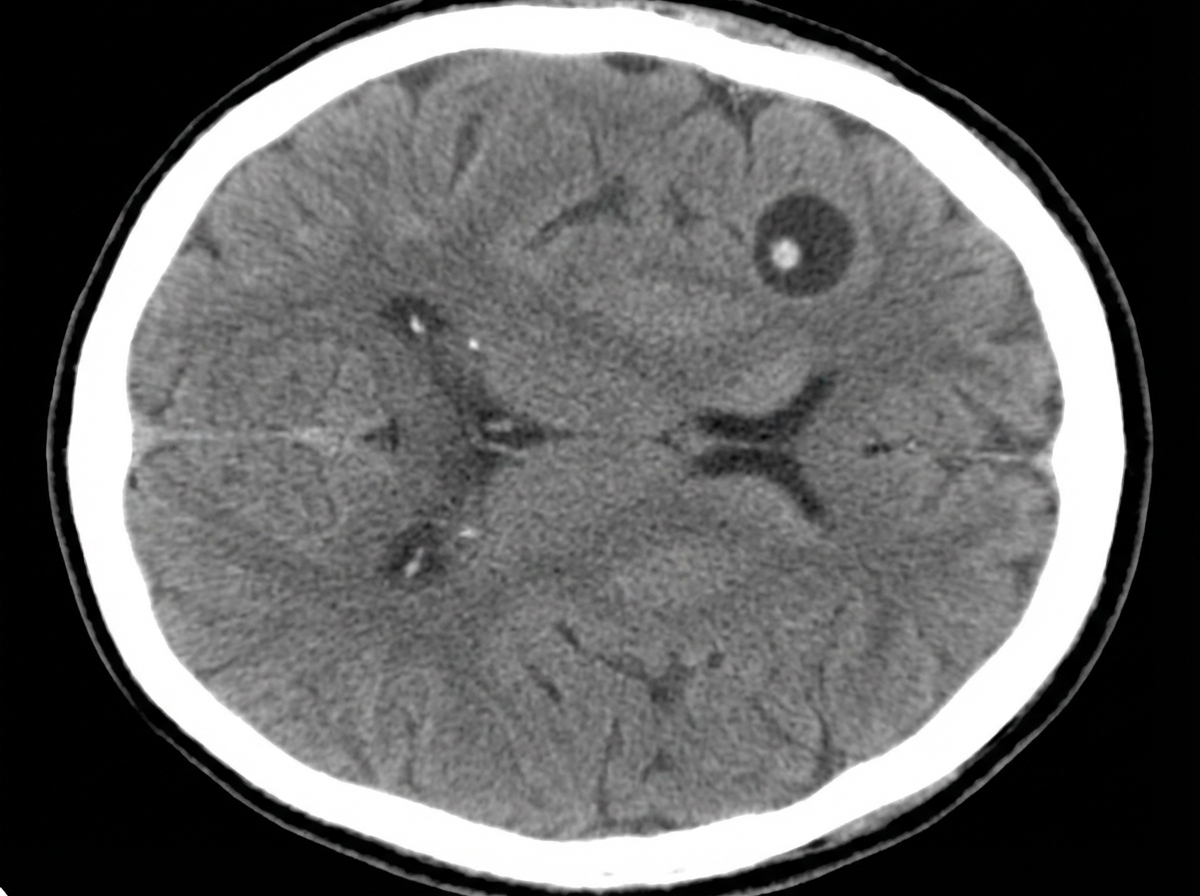
A 53-year-old woman with hypertension is brought to the emergency department 30 minutes after having a generalized, tonic-clonic seizure. She has had recurrent headaches and dizziness in the last 3 months. One year ago, she had diarrhea after a trip to Ecuador that resolved without treatment. She has not received any medical care in the last five years. She has smoked 1 pack of cigarettes daily for 20 years. Her temperature is 36°C (96.8°F) and blood pressure is 159/77mm Hg. Physical examination shows dysarthria and hyperreflexia. She is confused and oriented only to name and place. Four brain lesions are found in a CT scan of the brain; one of the lesions is shown. Which of the following is most likely to have prevented this patient's condition?
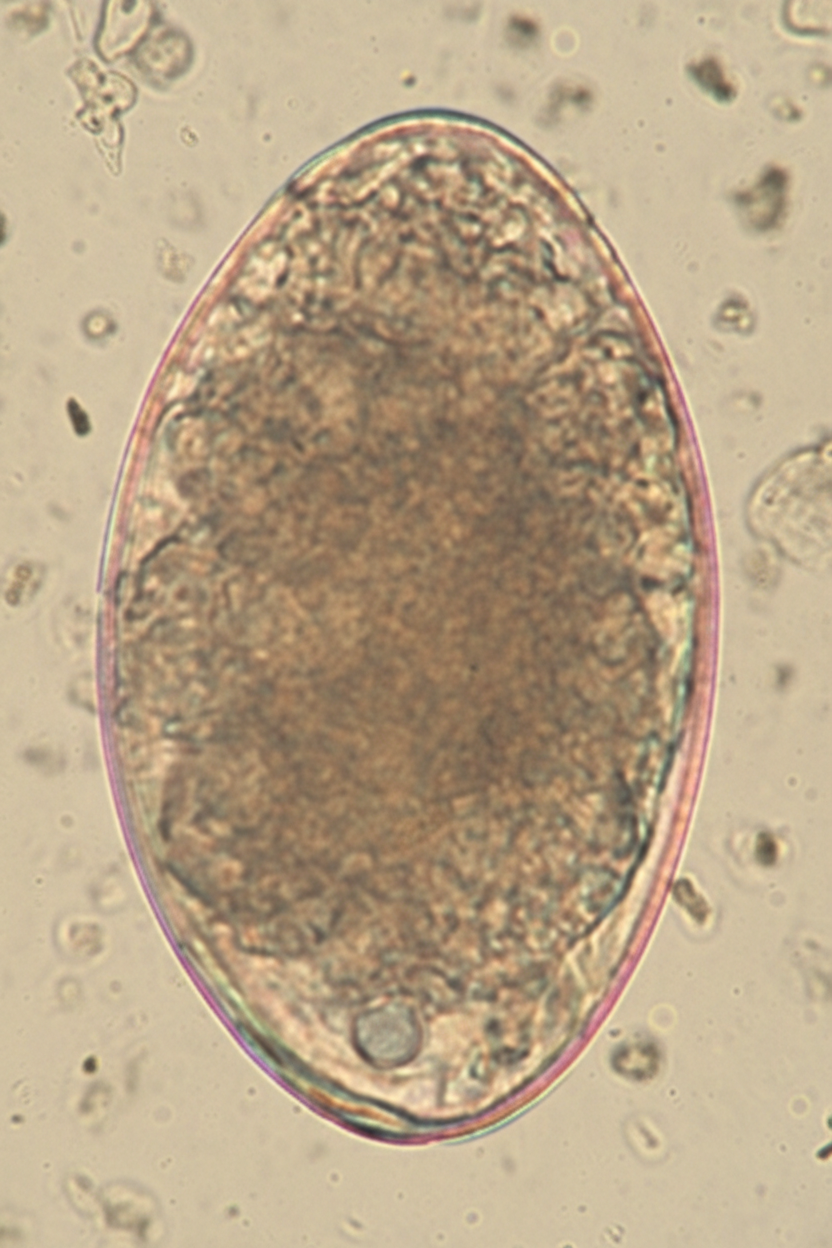
A 7-year-old girl is brought to the physician by her mother because of a 4-week history of irritability, diarrhea, and a 2.2-kg (5-lb) weight loss that was preceded by a dry cough. The family returned from a vacation to Indonesia 2 months ago. Her vital signs are within normal limits. Abdominal examination shows mild tenderness with no guarding or rebound and increased bowel sounds. Her leukocyte count is 9,200/mm3 with 20% eosinophils. A photomicrograph of a wet stool mount is shown. Which of the following is the most appropriate pharmacotherapy?
An 11-year-old African American boy is brought to your office by his parents with a 1-day history of severe left hip pain. It is too painful for him to walk without support. He took ibuprofen, which brought no relief. He has had no chills or sweats. Similar painful episodes in the past required multiple hospitalizations. He returned from a trip to Kenya with his family 2 months ago. His vaccinations are up-to-date. His temperature is 38°C (100.4° F), pulse is 100/min, blood pressure is 120/80 mm Hg. Physical examination shows pale conjunctivae. The abdomen is soft with no organomegaly. Passive movement of the hip causes severe pain. There is tenderness on palpation, but no swelling, warmth, or erythema of the hip. His laboratory studies show a hematocrit of 25% and leukocyte count of 14 000/mm3. A peripheral blood smear would most likely show which of the following?
Three days after starting a new drug for malaria prophylaxis, a 19-year-old college student comes to the physician because of dark-colored urine and fatigue. He has not had any fever, dysuria, or abdominal pain. He has no history of serious illness. Physical examination shows scleral icterus. Laboratory studies show a hemoglobin of 9.7 g/dL and serum lactate dehydrogenase of 234 U/L. Peripheral blood smear shows poikilocytes with bite-shaped irregularities. Which of the following drugs has the patient most likely been taking?
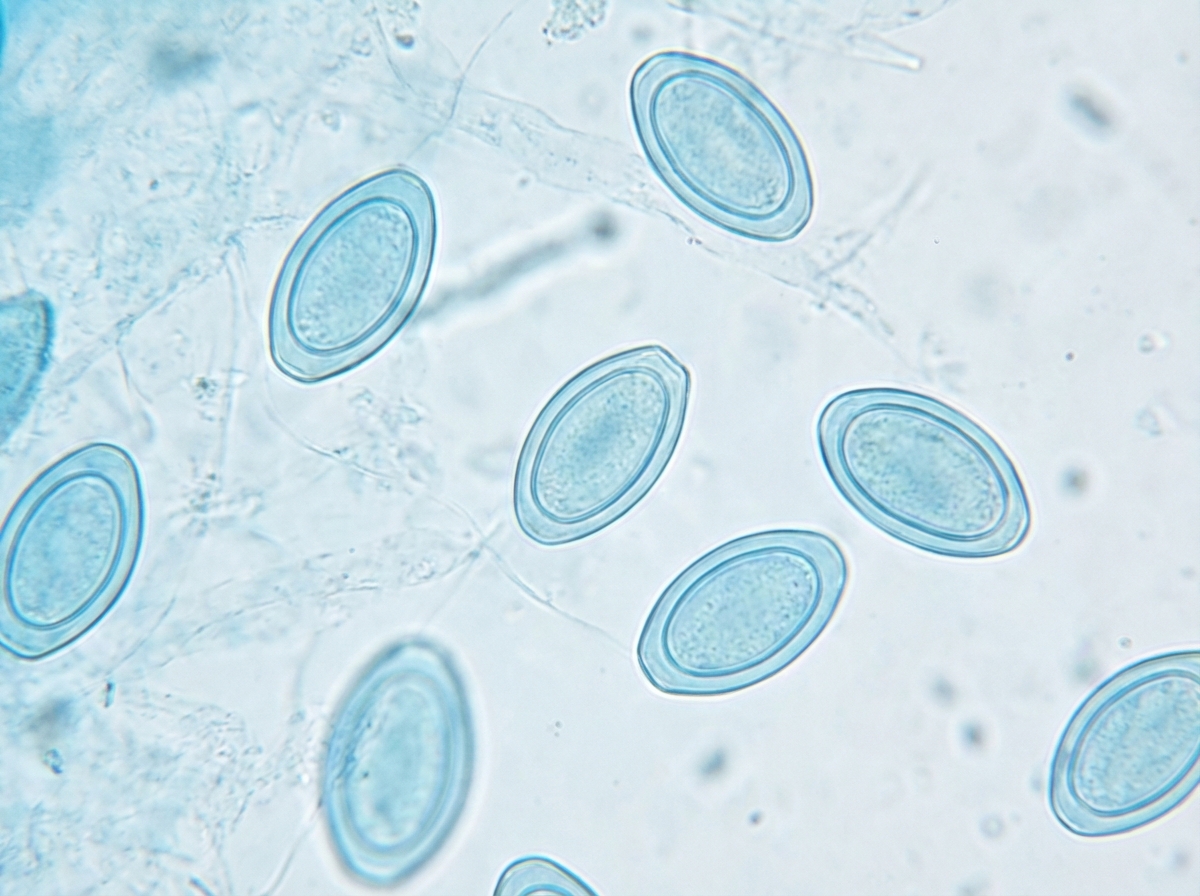
A 2-year-old girl is brought to the doctor by her mother with persistent scratching of her perianal region. The patient’s mother says that symptoms started 3 days ago and have progressively worsened until she is nearly continuously scratching even in public places. She says that the scratching is worse at night and disturbs her sleep. An anal swab and staining with lactophenol cotton blue reveal findings in the image (see image). Which of the following is the organism most likely responsible for this patient’s condition?
A 30-year-old man presents to the physician after he discovered a raised, red, string-shaped lesion beneath the skin on his right foot. The lesion seems to move from one location to another over the dorsum of his foot from day to day. He says that the lesion is extremely itchy and has not responded to over the counter topical treatment. He and his wife recently returned from a honeymoon in southern Thailand, where they frequented the tropical beaches. The physician diagnoses him with a parasitic infection and prescribes albendazole for the patient. With which of the following organisms is the patient most likely infected?
A 31-year-old male traveler in Thailand experiences fever, headache, and excessive sweating every 48 hours. Peripheral blood smear shows trophozoites and schizonts indicative of Plasmodia infection. The patient is given chloroquine and primaquine. Primaquine targets which of the following Plasmodia forms:
A 31-year-old woman presents to your office with one week of recurrent fevers. The highest temperature she recorded was 101°F (38.3°C). She recently returned from a trip to Nigeria to visit family and recalls a painful bite on her right forearm at that time. Her medical history is significant for two malarial infections as a child. She is not taking any medications. On physical examination, her temperature is 102.2°F (39°C), blood pressure is 122/80 mmHg, pulse is 80/min, respirations are 18/min, and pulse oximetry is 99% on room air. She has bilateral cervical lymphadenopathy and a visible, enlarged, mobile posterior cervical node. Cardiopulmonary and abdominal examinations are unremarkable. She has an erythematous induration on her right forearm. The most likely cause of this patient's symptoms can be treated with which of the following medications?
A 38-year-old man comes to the physician because of a 2-week history of abdominal pain and an itchy rash on his buttocks. He also has fever, nausea, and diarrhea with mucoid stools. One week ago, the patient returned from Indonesia, where he went for vacation. Physical examination shows erythematous, serpiginous lesions located in the perianal region and the posterior thighs. His leukocyte count is 9,000/mm3 with 25% eosinophils. Further evaluation is most likely to show which of the following findings?
Want unlimited practice?
Get full access to all questions, explanations, and performance tracking.
Scan to download app