
Ectoparasites and vector-borne diseases — MCQs

A 34-year-old man comes to the physician because of progressive swelling of the left lower leg for 4 months. One year ago, he had an episode of intermittent fever and tender lymphadenopathy that occurred shortly after he returned from a trip to India and resolved spontaneously. Physical examination shows 4+ nonpitting edema of the left lower leg. His leukocyte count is 8,000/mm3 with 25% eosinophils. A blood smear obtained at night confirms the diagnosis. Treatment with diethylcarbamazine is initiated. Which of the following is the most likely route of transmission of the causal pathogen?
A 45-year-old man presents to the physician with complaints of fever with rigors, headache, malaise, muscle pains, nausea, vomiting, and decreased appetite for the past 3 days. He informs the physician that he had been backpacking on the Appalachian Trail in the woods of Georgia in the month of June, 2 weeks ago, and had been bitten by a tick there. His temperature is 39.0°C (102.3°F), pulse is 94/min, respirations are 18/min, and blood pressure is 126/82 mm Hg. His physical exam does not reveal any significant abnormality except for mild splenomegaly. Laboratory studies show: Total white blood cell count 3,700/mm3 (3.7 x 10⁹/L) Differential count Neutrophils 85% Lymphocytes 12% Monocytes 2% Eosinophils 1% Basophils 0% Platelet count 88,000/mm3 (95 x 109/L) Serum alanine aminotransferase 140 IU/L Serum aspartate aminotransferase 80 IU/L Microscopic examination of a peripheral blood smear stained with Wright-Giemsa stain shows the presence of morulae in the cytoplasm of leukocytes. In addition to drugs for symptomatic relief, what is the most appropriate initial step in the treatment of this patient?
A 33-year-old man presents to the emergency department with a fever and fatigue. He states that he has not felt well since he returned from a hiking trip in Alabama. He is generally healthy and has no other medical conditions. His temperature is 101°F (38.3°C), blood pressure is 127/85 mmHg, pulse is 108/min, respirations are 14/min, and oxygen saturation is 99% on room air. Physical exam including a full dermatologic inspection is unremarkable. Laboratory studies are ordered as seen below. Hemoglobin: 13 g/dL Hematocrit: 39% Leukocyte count: 2,200/mm^3 with normal differential Platelet count: 77,000/mm^3 Serum: Na+: 139 mEq/L Cl-: 100 mEq/L K+: 4.3 mEq/L HCO3-: 24 mEq/L BUN: 19 mg/dL Glucose: 98 mg/dL Creatinine: 1.3 mg/dL Ca2+: 10.2 mg/dL AST: 92 U/L ALT: 100 U/L Which of the following is the most likely diagnosis?
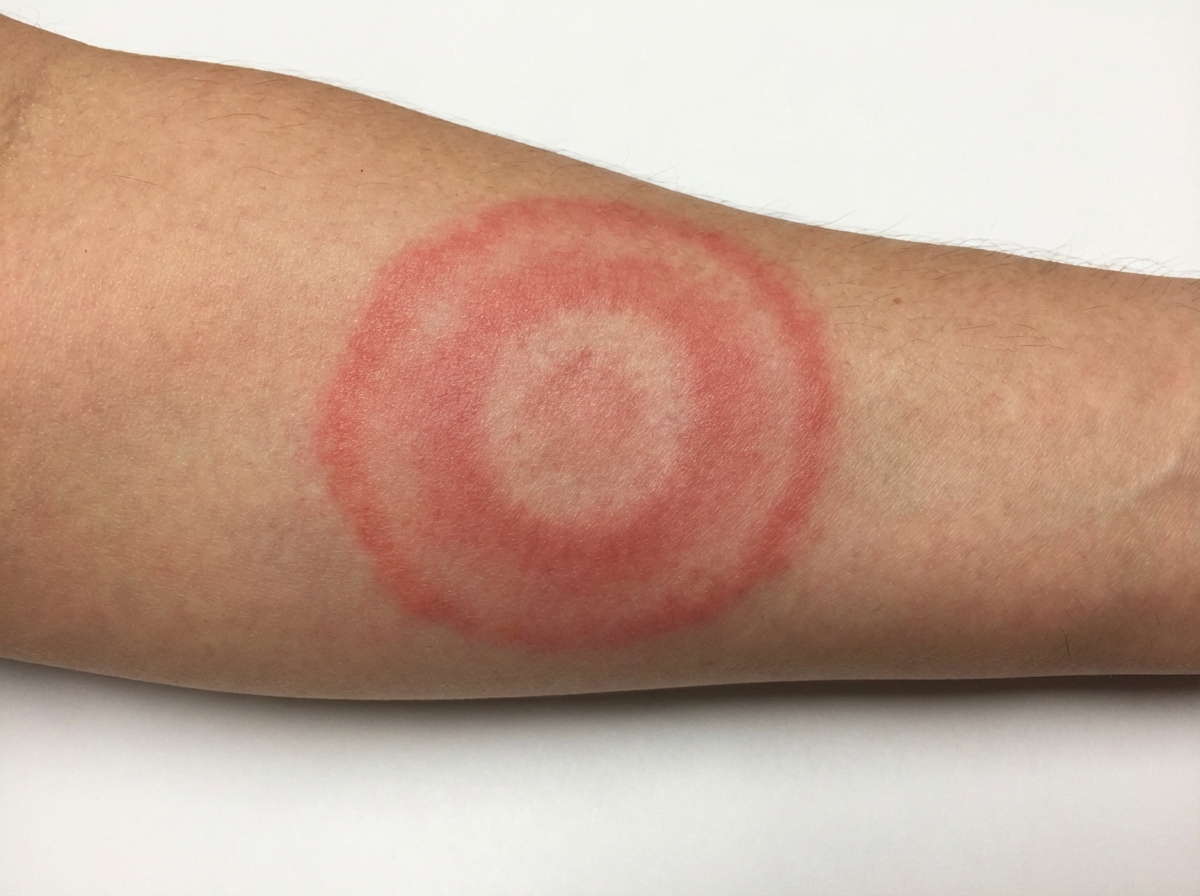
A 45-year-old woman presents to the emergency department with a headache, fevers with chills, rigors, and generalized joint pain for the past week. She also complains of a progressive rash on her left arm. She says that a few days ago she noticed a small, slightly raised lesion resembling an insect bite mark, which had a burning sensation. The medical and surgical histories are unremarkable. She recalls walking in the woods 2 weeks prior to the onset of symptoms, but does not recall finding a tick on her body. On examination, the temperature is 40.2°C (104.4°F). A circular red rash measuring 10 cm x 5 cm in diameter is noted on the left arm, as shown in the accompanying image. The remainder of her physical examination is unremarkable. The tick causing her disease is also responsible for the transmission of which of the following pathogens?
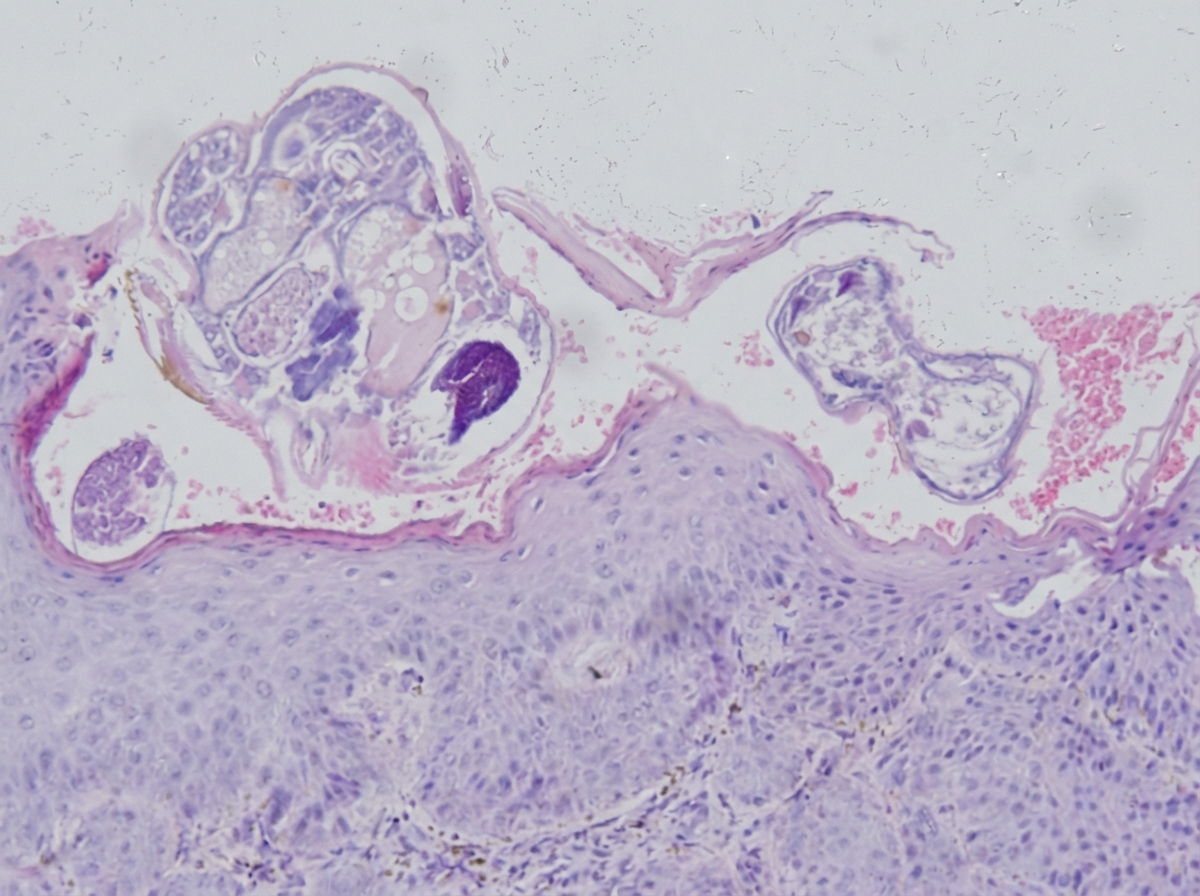
A 37-year-old woman with a history of systemic lupus erythematosus, on prednisone and methotrexate, presents to the dermatology clinic with three weeks of a diffuse, itchy rash. Physical exam is remarkable for small red papules in her bilateral axillae and groin and thin reddish-brown lines in her interdigital spaces. The following skin biopsy is obtained. Which of the following is the most appropriate treatment?
A 32-year-old woman presents to your office with abdominal pain and bloating over the last month. She also complains of intermittent, copious, non-bloody diarrhea over the same time. Last month, she had a cough that has since improved but has not completely resolved. She has no sick contacts and has not left the country recently. She denies any myalgias, itching, or rashes. Physical and laboratory evaluations are unremarkable. Examination of her stool reveals the causative organism. This organism is most likely transmitted to the human host through which of the following routes?
A 42-year-old man presents to a free dermatology clinic, complaining of itchy skin over the past several days. He has no insurance and lives in a homeless shelter. The patient has no significant medical history. Physical evaluation reveals 2 mm erythematous papules and vesicles on his back and groin, with linear excoriation marks. Careful observation of his hands reveals serpiginous, grayish, threadlike elevations in the superficial epidermis, ranging from 3–9 mm in length in the webbing between several digits. What should be the suggested treatment in this case?
A 20-year-old man comes to the physician because of a 3-day history of fever, myalgia, and swelling in his left groin after a recent camping trip in northern California. He appears acutely ill. Physical examination shows tender, left-sided inguinal lymphadenopathy and an enlarged, tender lymph node in the right axilla that is draining bloody necrotic material. Microscopic examination of a lymph node aspirate shows gram-negative coccobacilli with bipolar staining and a safety-pin appearance. This patient's condition is most likely caused by an organism with which of the following reservoirs?
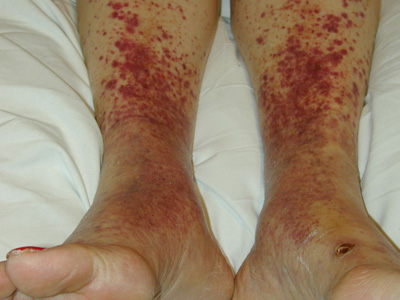
A 26-year-old male with no significant past medical history goes camping with several friends in Virginia. Several days after returning, he begins to experience fevers, headaches, myalgias, and malaise. He also notices a rash on his wrists and ankles (Figure A). Which of following should be initiated for treatment of his condition?
A 24-year-old female comes to the physician because of flu-like symptoms and a new rash for 2 days. She denies contacts with sick individuals or recent travel abroad, but recently went camping in Vermont. Vital signs are within normal limits. Examination of the lateral right thigh shows a circular red ring with central clearing. Which of the following is the natural reservoir of the pathogen responsible for this patient's symptoms?
Want unlimited practice?
Get full access to all questions, explanations, and performance tracking.
Scan to download app