A 9-year-old girl is brought to the pediatrician by her mother who reports that the girl has been complaining of genital itching over the past few days. She states she has noticed her daughter scratching her buttocks and anus for the past week; however, now she is scratching her groin quite profusely as well. The mother notices that symptoms seem to be worse at night. The girl is otherwise healthy, is up to date on her vaccinations, and feels well. She was recently treated with amoxicillin for a middle ear infection. The child also had a recent bout of diarrhea that was profuse and watery that seems to be improving. Her temperature is 98.5°F (36.9°C), blood pressure is 111/70 mmHg, pulse is 83/min, respirations are 16/min, and oxygen saturation is 98% on room air. Physical exam is notable for excoriations over the girl's anus and near her vagina. Which of the following is the most likely infectious etiology?
Q12
A 30-year-old man is admitted to the hospital with a presumed pneumonia and started on antibiotics. Two days later, the patient shows no improvement. Blood cultures reveal yeast with pseudophyphae. Which of the following cell types is most likely deficient or dysfunctional in this patient?
Q13
A 3-month-old boy is brought to the physician by his parents because of a 2-day history of poor feeding and lethargy. He was born at term and has had three episodes of bilateral otitis media since birth. Umbilical cord separation occurred at the age of 8 weeks. He is at the 30th percentile for height and 20th percentile for weight. His temperature is 39°C (102.2°F) and blood pressure is 58/36 mm Hg. Physical examination shows white oral patches and confluent scaly erythematous skin lesions in the groin. Laboratory studies show a leukocyte count of 41,300/mm3 (92% segmented neutrophils and 8% lymphocytes) and a platelet count of 224,000/mm3. Blood cultures at 20°C (68°F) grow catalase-positive yeast cells that form pseudohyphae. Which of the following is the most likely underlying cause of this patient's symptoms?
Q14
A 30-year-old man presents to the physician after he discovered a raised, red, string-shaped lesion beneath the skin on his right foot. The lesion seems to move from one location to another over the dorsum of his foot from day to day. He says that the lesion is extremely itchy and has not responded to over the counter topical treatment. He and his wife recently returned from a honeymoon in southern Thailand, where they frequented the tropical beaches. The physician diagnoses him with a parasitic infection and prescribes albendazole for the patient. With which of the following organisms is the patient most likely infected?
Q15
A 50-year-old HIV-positive male presents to the ER with a two-day history of fever and hemoptysis. Chest radiograph shows a fibrocavitary lesion in the right middle lobe. Biopsy of the afflicted area demonstrates septate hyphae that branch at acute angles. Which of the following is the most likely causal organism?
Q16
A 31-year-old female undergoing treatment for leukemia is found to have a frontal lobe abscess accompanied by paranasal swelling. She additionally complains of headache, facial pain, and nasal discharge. Biopsy of the infected tissue would most likely reveal which of the following?
Q17
A 68-year-old man presents to his physician for symptoms of chronic weight loss, abdominal bloating, and loose stools. He notes that he has also been bothered by a chronic cough. The patient’s laboratory work-up includes a WBC differential, which is remarkable for an eosinophil count of 9%. Stool samples are obtained, with ova and parasite examination revealing roundworm larvae in the stool and no eggs. Which of the following parasitic worms is the cause of this patient’s condition?
Q18
A 3-year-old boy is brought to his pediatrician by his mother for a productive cough. His symptoms began approximately 3 days prior to presentation and have not improved. His mother also reports that he developed diarrhea recently and denies any sick contacts or recent travel. He has received all of his vaccinations. Medical history is significant for pneumonia and a lung abscess of staphylococcal origin, and osteomyelitis caused by Serratia marcescens. Physical examination demonstrates growth failure and dermatitis. Laboratory testing is remarkable for hypergammaglobulinemia and a non-hemolytic and normocytic anemia. Work-up of his productive cough reveals that it is pneumonia caused by Aspergillus fumigatus. Which of the following is most likely the immune system defect that will be found in this patient?
Q19
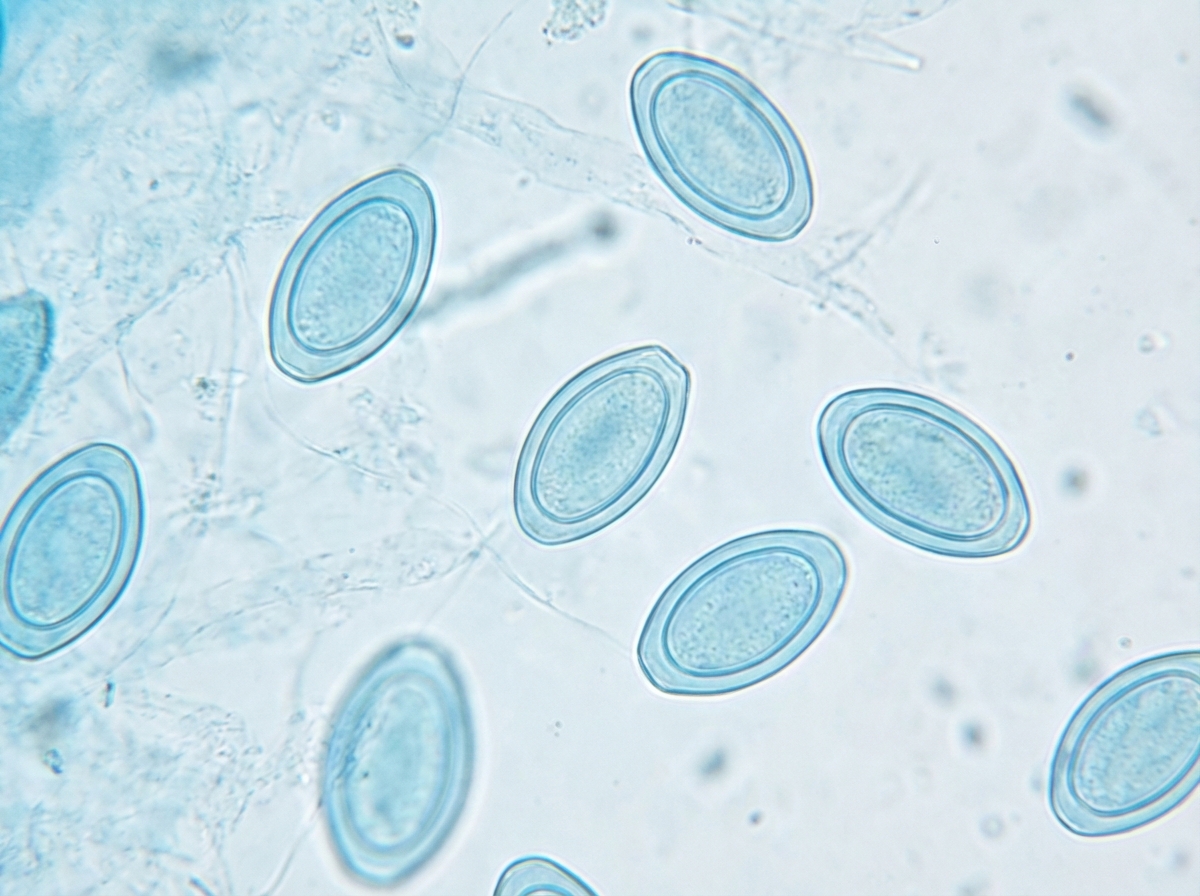
A 2-year-old girl is brought to the doctor by her mother with persistent scratching of her perianal region. The patient’s mother says that symptoms started 3 days ago and have progressively worsened until she is nearly continuously scratching even in public places. She says that the scratching is worse at night and disturbs her sleep. An anal swab and staining with lactophenol cotton blue reveal findings in the image (see image). Which of the following is the organism most likely responsible for this patient’s condition?
Q20
A 52-year-old man presents with a 5-week history of multiple cutaneous ulcers on his left forearm and neck, which he first noticed after returning from a 2-month stay in rural Peru. He does not recall any trauma or arthropod bites. The lesions began as non-pruritic erythematous papules that became enlarged, ulcerated, and crusted. There is no history of fever or abdominal pain. He has been sexually active with a single partner since their marriage at 24 years of age. The physical examination reveals erythematous, crusted plaques with central ulceration and a raised border. There is no fluctuance, drainage, or sporotrichoid spread. A punch biopsy was performed, which revealed an ulcerated lesion with a mixed inflammatory infiltrate. Amastigotes within dermal macrophages are seen on Giemsa staining. What is the most likely diagnosis?
Parasites/Fungi US Medical PG Practice Questions and MCQs
Question 11: A 9-year-old girl is brought to the pediatrician by her mother who reports that the girl has been complaining of genital itching over the past few days. She states she has noticed her daughter scratching her buttocks and anus for the past week; however, now she is scratching her groin quite profusely as well. The mother notices that symptoms seem to be worse at night. The girl is otherwise healthy, is up to date on her vaccinations, and feels well. She was recently treated with amoxicillin for a middle ear infection. The child also had a recent bout of diarrhea that was profuse and watery that seems to be improving. Her temperature is 98.5°F (36.9°C), blood pressure is 111/70 mmHg, pulse is 83/min, respirations are 16/min, and oxygen saturation is 98% on room air. Physical exam is notable for excoriations over the girl's anus and near her vagina. Which of the following is the most likely infectious etiology?
A. Herpes simplex virus
B. Gardnerella vaginalis
C. Giardia lamblia
D. Enterobius vermicularis (Correct Answer)
E. Candida albicans
Explanation: ***Enterobius vermicularis***
- This presentation is classic for **pinworm infection**, caused by *Enterobius vermicularis*, given the **perianal itching** (especially at night) and finding **excoriations** due to scratching.
- The eggs are laid by female worms in the perianal folds, particularly at night, leading to intense **pruritus ani**.
*Herpes simplex virus*
- HSV typically causes **painful vesicular or ulcerative lesions** in the genital area, often with associated lymphadenopathy.
- While it can cause itching, it's usually accompanied by specific lesion morphology not described here, and the nocturnal worsening is not characteristic.
*Gardnerella vaginalis*
- This bacterium is associated with **bacterial vaginosis**, which presents with a **fishy-smelling vaginal discharge** and itching.
- Bacterial vaginosis is uncommon in prepubertal girls and the symptoms described don't align with the typical discharge characteristics.
*Giardia lamblia*
- *Giardia lamblia* infection primarily causes **gastrointestinal symptoms** such as **diarrhea, abdominal cramps**, and **malabsorption**.
- While the child had recent diarrhea, *Giardia* does not directly cause perianal or genital itching with nocturnal worsening as the dominant symptom.
*Candida albicans*
- **Candidal infections** in the genital area (yeast infections) cause intense **itching, redness, and a thick, cottage cheese-like discharge**.
- While itching can be severe, the nocturnal worsening of perianal itching specifically points away from *Candida* and towards pinworms.
Question 12: A 30-year-old man is admitted to the hospital with a presumed pneumonia and started on antibiotics. Two days later, the patient shows no improvement. Blood cultures reveal yeast with pseudophyphae. Which of the following cell types is most likely deficient or dysfunctional in this patient?
A. Eosinophils
B. Macrophages
C. Neutrophils (Correct Answer)
D. T-cells
E. B-cells
Explanation: ***Neutrophils***
- The presence of **yeast with pseudohyphae** in blood cultures, particularly *Candida*, indicates a fungal infection.
- **Neutrophils** are crucial for the host defense against *Candida* and other fungal pathogens, so their deficiency or dysfunction would predispose to candidemia.
- Neutropenia or neutrophil dysfunction (e.g., chronic granulomatous disease) significantly increases risk of invasive candidiasis.
*Eosinophils*
- **Eosinophils** are primarily involved in defense against **parasitic infections** and in allergic reactions.
- They play a minimal role in the immune response to systemic fungal infections like candidemia.
*Macrophages*
- **Macrophages** are phagocytic cells that contribute to antifungal immunity, particularly in tissue surveillance and chronic infection control.
- However, **neutrophils** are the primary and most critical defense against acute *Candida* bloodstream infections.
- Macrophage deficiency alone does not typically predispose to candidemia as severely as neutrophil deficiency.
*T-cells*
- **T-cells** are important for cell-mediated immunity, particularly against **intracellular pathogens** and viral infections.
- While they play a role in modulating antifungal responses, their deficiency typically leads to infections with *Pneumocystis jirovecii* or severe mucocutaneous candidiasis, rather than disseminated candidemia.
*B-cells*
- **B-cells** are responsible for **humoral immunity** through antibody production, which is primarily effective against extracellular bacteria and toxins.
- They are not the primary line of defense against fungal infections such as candidemia.
Question 13: A 3-month-old boy is brought to the physician by his parents because of a 2-day history of poor feeding and lethargy. He was born at term and has had three episodes of bilateral otitis media since birth. Umbilical cord separation occurred at the age of 8 weeks. He is at the 30th percentile for height and 20th percentile for weight. His temperature is 39°C (102.2°F) and blood pressure is 58/36 mm Hg. Physical examination shows white oral patches and confluent scaly erythematous skin lesions in the groin. Laboratory studies show a leukocyte count of 41,300/mm3 (92% segmented neutrophils and 8% lymphocytes) and a platelet count of 224,000/mm3. Blood cultures at 20°C (68°F) grow catalase-positive yeast cells that form pseudohyphae. Which of the following is the most likely underlying cause of this patient's symptoms?
A. Defective tyrosine kinase
B. Defective IL-2R gamma chain
C. Defective beta-2 integrin (Correct Answer)
D. Defective actin cytoskeleton
E. Defective microtubules
Explanation: ***Defective beta-2 integrin***
- This clinical presentation, including recurrent bacterial infections (otitis media), delayed umbilical cord separation, fungal infections (oral candidiasis, skin lesions, and *Candida* fungemia), persistent leukocytosis with neutrophilia, and poor wound healing, is classic for **Leukocyte Adhesion Deficiency type 1 (LAD-1)**. LAD-1 is caused by defective **beta-2 integrin (CD18)**, which impairs neutrophil adhesion and extravasation into tissues.
- The inability of neutrophils to properly adhere and migrate to sites of infection leads to recurrent severe bacterial and fungal infections, especially of the skin and mucous membranes, alongside the characteristic finding of **leukocytosis with neutrophilia** in the peripheral blood despite ongoing severe infection.
*Defective tyrosine kinase*
- This defect is associated with **X-linked agammaglobulinemia (Bruton's agammaglobulinemia)**, which causes a lack of mature B cells and severely reduced immunoglobulin levels. Patients typically present with recurrent bacterial infections but do not typically have the severe fungal infections, delayed cord separation, or neutrophilia seen here.
- The primary defect is in B-cell development, leading to infections by encapsulated bacteria, and usually **normal T-cell immunity**, unlike the broad immune dysfunction suggested by the fungal and bacterial infections in this case.
*Defective IL-2R gamma chain*
- A defective **IL-2R gamma chain** is characteristic of **X-linked severe combined immunodeficiency (SCID)**. This leads to a severe defect in T-cell and NK-cell development, causing profound susceptibility to opportunistic infections, including viral, fungal, and bacterial.
- While SCID patients experience severe infections, they typically demonstrate **lymphopenia** (low lymphocyte count), not the marked neutrophilic leukocytosis seen in this patient. Additionally, delayed umbilical cord separation is not a characteristic feature of SCID.
*Defective actin cytoskeleton*
- Defects in the **actin cytoskeleton** of leukocytes can lead to various immunodeficiencies, such as **Wiskott-Aldrich syndrome**. This syndrome is characterized by recurrent infections, eczema, and thrombocytopenia, which are not primarily exhibited in this patient's presentation.
- While patients with Wiskott-Aldrich syndrome are susceptible to infections, the specific combination of severe neutrophilic leukocytosis, delayed cord separation, and extensive fungal infections points away from a primary actin cytoskeleton defect.
*Defective microtubules*
- Defects in **microtubules** can be seen in conditions like **Chédiak-Higashi syndrome**, which involves impaired lysosomal trafficking and function in phagocytes. This leads to recurrent pyogenic infections, partial albinism, and neurological abnormalities.
- While infections are a feature, Chédiak-Higashi syndrome typically presents with **giant granules** in leukocytes and **albinism**, which are not mentioned in this patient's presentation, and the specific findings of delayed cord separation and impressive neutrophilia are not typical.
Question 14: A 30-year-old man presents to the physician after he discovered a raised, red, string-shaped lesion beneath the skin on his right foot. The lesion seems to move from one location to another over the dorsum of his foot from day to day. He says that the lesion is extremely itchy and has not responded to over the counter topical treatment. He and his wife recently returned from a honeymoon in southern Thailand, where they frequented the tropical beaches. The physician diagnoses him with a parasitic infection and prescribes albendazole for the patient. With which of the following organisms is the patient most likely infected?
A. Ancylostoma braziliense (Correct Answer)
B. Dracunculus medinensis
C. Necator americanus
D. Strongyloides stercoralis
E. Wuchereria bancrofti
Explanation: ***Ancylostoma braziliense***
- This clinical presentation of a **pruritic, migratory, serpiginous rash** on the foot after exposure to contaminated sand (tropical beach in Thailand) is classic for **cutaneous larva migrans**, caused by hookworm larvae, predominantly *Ancylostoma braziliense*.
- The larvae penetrate the skin but cannot complete their life cycle in humans, instead migrating subcutaneously, causing the characteristic **"creeping eruption"**.
*Dracunculus medinensis*
- This parasite causes **dracunculiasis**, where the adult female worm migrates to the skin, creating a painful blister, often on the lower limbs, from which it emerges.
- It is acquired by ingesting **copepods** (water fleas) containing larvae, not by direct contact with contaminated sand, and the lesion typically ulcerates rather than migrating repeatedly.
*Necator americanus*
- This is a human hookworm that causes **iron deficiency anemia** and can lead to **cutaneous larva currens** from larval penetration, which is a rapidly advancing linear lesion, but it typically progresses to systemic infection where the worms reside in the small intestine.
- While it can cause an itchy rash at the site of penetration (ground itch), it does not cause the **chronic, migratory, serpiginous eruption** characteristic of cutaneous larva migrans.
*Strongyloides stercoralis*
- This parasite can cause **larva currens** (a rapidly moving linear skin eruption) and systemic complications, particularly in immunocompromised individuals.
- While it can cause skin lesions, the typical description is of a much faster-moving lesion that usually spreads from the anus and is less serpiginous and persistent in one area compared to the classic presentation of cutaneous larva migrans.
*Wuchereria bancrofti*
- This nematode causes **lymphatic filariasis** (elephantiasis), characterized by lymphedema, hydrocele, and chyluria, and is transmitted by **mosquito bites**.
- It does not cause cutaneous migratory lesions on the foot; its pathology relates to chronic lymphatic obstruction by adult worms.
Question 15: A 50-year-old HIV-positive male presents to the ER with a two-day history of fever and hemoptysis. Chest radiograph shows a fibrocavitary lesion in the right middle lobe. Biopsy of the afflicted area demonstrates septate hyphae that branch at acute angles. Which of the following is the most likely causal organism?
A. Mycobacterium tuberculosis
B. Pneumocystis jirovecii
C. Aspergillus fumigatus (Correct Answer)
D. Candida albicans
E. Mucor species
Explanation: ***Aspergillus fumigatus***
- The combination of **fever**, **hemoptysis**, a **fibrocavitary lesion** in an **HIV-positive** patient, and the presence of **septate hyphae branching at acute angles** on biopsy are classic findings for invasive **aspergillosis**.
- **Aspergillus** specifically targets individuals with compromised immune systems, and the pathological description of the hyphae is highly characteristic of this fungus.
*Mycobacterium tuberculosis*
- While **Mycobacterium tuberculosis** can cause **fever**, **hemoptysis**, and **cavitary lesions** in HIV-positive patients, the microscopic description of **septate hyphae branching at acute angles** is not consistent with bacterial infection.
- Tuberculosis is characterized by **acid-fast bacilli** and granulomatous inflammation, not fungal hyphae.
*Mucor species*
- **Mucor** (along with Rhizopus) causes **mucormycosis**, an invasive fungal infection that can affect immunocompromised patients and present with pulmonary involvement and cavitary lesions.
- However, mucormycosis is characterized by **non-septate (aseptate) hyphae branching at right (90-degree) angles**, not septate hyphae at acute angles, making it distinguishable from Aspergillus.
*Pneumocystis jirovecii*
- **Pneumocystis jirovecii** is a common cause of pneumonia in HIV-positive patients, typically presenting as **diffuse interstitial infiltrates** rather than cavitary lesions.
- Microscopic examination would reveal **cysts** and **trophozoites**, not septate hyphae, making it inconsistent with the biopsy findings.
*Candida albicans*
- While **Candida albicans** can cause infections in immunocompromised individuals, it typically presents as **oral thrush**, esophagitis, or disseminated candidiasis.
- Pulmonary involvement is less common and usually manifests as **pneumonitis** rather than cavitary lesions, and its hyphae are typically **pseudohyphae** or budding yeasts, not septate hyphae branching at acute angles.
Question 16: A 31-year-old female undergoing treatment for leukemia is found to have a frontal lobe abscess accompanied by paranasal swelling. She additionally complains of headache, facial pain, and nasal discharge. Biopsy of the infected tissue would most likely reveal which of the following?
A. Yeast with pseudohyphae
B. Septate hyphae
C. Irregular non-septate hyphae (Correct Answer)
D. Spherules containing endospores
E. Budding yeast with a narrow base
Explanation: ***Irregular non-septate hyphae***
- The clinical presentation of a **leukemic patient** with a **frontal lobe abscess** and **paranasal swelling**, along with headache, facial pain, and nasal discharge, strongly suggests **mucormycosis**.
- Mucormycosis is characterized by **broad, ribbon-like, irregular non-septate hyphae** with **right-angle branching** on tissue biopsy, making this the most likely finding.
*Yeast with pseudohyphae*
- This morphology is characteristic of **Candida species**, which can cause opportunistic infections but typically manifest as candidemia, esophagitis, or vulvovaginitis in immunocompromised patients, not usually a frontal lobe abscess with paranasal involvement.
- While Candida can cause severe systemic infections, the specific combination of a frontal lobe abscess and paranasal swelling points away from Candida as the primary cause in this context.
*Septate hyphae*
- **Septate hyphae** are typical of **Aspergillus species**, which can cause invasive aspergillosis, including sinopulmonary infections and CNS involvement in immunocompromised hosts.
- However, Aspergillus hyphae are typically **narrow (3-6 µm)** with **acute-angle (45-degree) branching**, differentiating them from the broad, irregular hyphae seen in mucormycosis.
*Spherules containing endospores*
- This morphology is characteristic of **Coccidioides immitis**, the causative agent of coccidioidomycosis.
- Coccidioidomycosis is geographically restricted to endemic areas (e.g., southwestern US) and typically presents with pulmonary symptoms, disseminated disease, or meningitis, which does not fit the described paranasal and frontal lobe presentation.
*Budding yeast with a narrow base*
- This morphology is characteristic of **Cryptococcus neoformans**, an encapsulated yeast that commonly causes **meningitis** and **pneumonia** in immunocompromised individuals.
- While Cryptococcus can cause CNS infections, the presence of paranasal swelling and the specific description of a frontal lobe abscess make mucormycosis a more fitting diagnosis.
Question 17: A 68-year-old man presents to his physician for symptoms of chronic weight loss, abdominal bloating, and loose stools. He notes that he has also been bothered by a chronic cough. The patient’s laboratory work-up includes a WBC differential, which is remarkable for an eosinophil count of 9%. Stool samples are obtained, with ova and parasite examination revealing roundworm larvae in the stool and no eggs. Which of the following parasitic worms is the cause of this patient’s condition?
A. Taenia saginata
B. Taenia solium
C. Strongyloides stercoralis (Correct Answer)
D. Necator americanus
E. Ascaris lumbricoides
Explanation: ***Strongyloides stercoralis***
- The presence of **larvae (rhabditiform)** in the stool, **pulmonary symptoms** (chronic cough), **gastrointestinal symptoms** (weight loss, bloating, loose stools), and **eosinophilia** are classic findings for *Strongyloides stercoralis* infection.
- Unlike most other intestinal nematodes, *Strongyloides* can establish an **autoinfection cycle**, meaning larvae can reinfect the host, leading to persistent and potentially severe infections even in immunocompetent individuals, without the need for external re-exposure or eggs in stool.
*Taenia saginata*
- This is a **tapeworm (cestode)** that causes taeniasis and is acquired by consuming undercooked beef.
- Diagnosis is typically made by finding **proglottids** or **eggs** in the stool, not larvae, and pulmonary symptoms are not characteristic.
*Taenia solium*
- This is another **tapeworm (cestode)**, acquired by consuming undercooked pork; it can cause taeniasis (intestinal infection) and cysticercosis (tissue infection).
- Similar to *T. saginata*, diagnosis involves finding **proglottids** or **eggs** in stool for intestinal infection, and it does not typically present with lung involvement or larvae in stool.
*Necator americanus*
- This is a **hookworm** that causes iron-deficiency anemia due to blood loss in the intestines.
- While it can cause some pulmonary symptoms as larvae migrate through the lungs, and gastrointestinal symptoms, the diagnostic hallmark is finding **eggs** in the stool, not larvae.
*Ascaris lumbricoides*
- This is the **giant roundworm**; infections are common and often asymptomatic, but heavy worm burdens can cause intestinal obstruction or malnutrition.
- While **pulmonary symptoms (Loeffler's syndrome)** can occur during larval migration, and eosinophilia is present, the diagnosis is confirmed by finding characteristic **mammillated eggs** in the stool, not larvae.
Question 18: A 3-year-old boy is brought to his pediatrician by his mother for a productive cough. His symptoms began approximately 3 days prior to presentation and have not improved. His mother also reports that he developed diarrhea recently and denies any sick contacts or recent travel. He has received all of his vaccinations. Medical history is significant for pneumonia and a lung abscess of staphylococcal origin, and osteomyelitis caused by Serratia marcescens. Physical examination demonstrates growth failure and dermatitis. Laboratory testing is remarkable for hypergammaglobulinemia and a non-hemolytic and normocytic anemia. Work-up of his productive cough reveals that it is pneumonia caused by Aspergillus fumigatus. Which of the following is most likely the immune system defect that will be found in this patient?
A. Lysosomal trafficking regulator gene defect
B. NADPH oxidase defect (Correct Answer)
C. LFA-1 integrin defect
D. ATM gene defect
E. WASP gene mutation
Explanation: ***NADPH oxidase defect***
- The recurrent infections with **catalase-positive organisms** like *S. aureus*, *Serratia marcescens*, and *Aspergillus fumigatus*, along with **granuloma formation** and **dermatitis**, are classic features of **Chronic Granulomatous Disease (CGD)**.
- CGD results from a defect in **NADPH oxidase**, impairing the generation of **reactive oxygen species** crucial for intracellular killing by phagocytes.
*Lysosomal trafficking regulator gene defect*
- This defect is associated with **Chédiak-Higashi syndrome**, characterized by **oculocutaneous albinism**, **neuropathy**, and **recurrent pyogenic infections**.
- While it involves phagocyte dysfunction, the specific constellation of infections and findings (e.g., severe fungal infection, dermatitis, robust granuloma formation) points away from Chédiak-Higashi.
*LFA-1 integrin defect*
- An LFA-1 integrin defect causes **Leukocyte Adhesion Deficiency (LAD)**, primarily characterized by **recurrent bacterial infections**, **impaired wound healing**, and **delayed umbilical cord separation**.
- While patients have recurrent infections, the typical infections are bacterial, and fungal infections like *Aspergillus* are not as characteristic, nor is the dermatological presentation described.
*ATM gene defect*
- A defect in the **ATM (ataxia-telangiectasia mutated) gene** causes **Ataxia-Telangiectasia**, which presents with **ataxia**, **telangiectasias**, **immunodeficiency** (primarily T-cell dysfunction), and an increased risk of malignancy.
- The patient's symptoms, such as recurrent severe staphylococcal and fungal infections, pneumonia, and osteomyelitis, are not typical of this condition.
*WASP gene mutation*
- A mutation in the **WASP (Wiskott-Aldrich Syndrome Protein) gene** causes **Wiskott-Aldrich Syndrome (WAS)**, characterized by the triad of **thrombocytopenia** (with microplatelets), **eczema**, and **recurrent infections**.
- While it includes recurrent infections and dermatitis, the specific type of severe bacterial and fungal infections, along with the history of pneumonia and lung abscess, and the absence of microplatelet thrombocytopenia, makes WAS less likely than CGD.
Question 19: A 2-year-old girl is brought to the doctor by her mother with persistent scratching of her perianal region. The patient’s mother says that symptoms started 3 days ago and have progressively worsened until she is nearly continuously scratching even in public places. She says that the scratching is worse at night and disturbs her sleep. An anal swab and staining with lactophenol cotton blue reveal findings in the image (see image). Which of the following is the organism most likely responsible for this patient’s condition?
A. Wuchereria bancrofti
B. Enterobius vermicularis (Correct Answer)
C. Ancylostoma duodenale
D. Taenia saginata
E. Ascaris lumbricoides
Explanation: ***Enterobius vermicularis***
* The classic symptom of **E. vermicularis** (pinworm) infection is **perianal pruritus**, especially at night, caused by the female worms migrating to the perianal region to lay eggs.
* The image likely shows **pinworm eggs**, which are small, oval, and have one flattened side, visible with **lactophenol cotton blue staining** from an anal swab.
*Wuchereria bancrofti*
* **W. bancrofti** causes **lymphatic filariasis**, leading to **lymphedema** and **elephantiasis**, and is transmitted by mosquitoes.
* It does not cause perianal scratching and its microfilariae are found in blood, not perianal swabs.
*Ancylostoma duodenale*
* **A. duodenale** (hookworm) causes **iron-deficiency anemia** and **gastrointestinal symptoms** due to blood loss from the intestines.
* Hookworm eggs are typically recovered from **stool samples** and do not cause perianal itching as a primary symptom.
*Taenia saginata*
* **T. saginata** (beef tapeworm) infection is often **asymptomatic** or causes mild **abdominal discomfort** and **weight loss**.
* Diagnosis is made by finding **proglottids** or eggs in stool; perianal itching is not a characteristic feature.
*Ascaris lumbricoides*
* **A. lumbricoides** (roundworm) causes **pulmonary symptoms** during larval migration and **intestinal obstruction** or malnutrition in heavy infections.
* Its eggs are found in **stool samples**, and it does not typically cause perianal pruritus.
Question 20: A 52-year-old man presents with a 5-week history of multiple cutaneous ulcers on his left forearm and neck, which he first noticed after returning from a 2-month stay in rural Peru. He does not recall any trauma or arthropod bites. The lesions began as non-pruritic erythematous papules that became enlarged, ulcerated, and crusted. There is no history of fever or abdominal pain. He has been sexually active with a single partner since their marriage at 24 years of age. The physical examination reveals erythematous, crusted plaques with central ulceration and a raised border. There is no fluctuance, drainage, or sporotrichoid spread. A punch biopsy was performed, which revealed an ulcerated lesion with a mixed inflammatory infiltrate. Amastigotes within dermal macrophages are seen on Giemsa staining. What is the most likely diagnosis?
A. Syphilis
B. Histoplasmosis
C. Cutaneous tuberculosis
D. Cutaneous leishmaniasis (Correct Answer)
E. Ecthyma
Explanation: ***Cutaneous leishmaniasis***
- The presence of **amastigotes within dermal macrophages** on **Giemsa staining** is pathognomonic for **leishmaniasis**.
- The patient's travel history to **rural Peru**, along with the characteristic cutaneous lesions (erythematous papules progressing to enlarged, ulcerated, and crusted plaques), is highly suggestive of **cutaneous leishmaniasis**.
*Syphilis*
- **Syphilis** lesions can be ulcerative but are typically associated with **treponemes** (visible with darkfield microscopy or immunohistochemistry), not amastigotes.
- The patient's sexual history with a single partner since marriage at 24 makes primary or secondary syphilis less likely in the absence of other risk factors.
*Histoplasmosis*
- **Histoplasmosis** is a fungal infection that can cause cutaneous lesions, especially in immunocompromised individuals.
- Histopathology would reveal **yeast forms** and not amastigotes within macrophages.
*Cutaneous tuberculosis*
- **Cutaneous tuberculosis** can present with various skin lesions, including ulcers and plaques, but histopathology would show **granulomas** with **caseous necrosis** and **acid-fast bacilli**, not amastigotes.
- The absence of typical **tuberculosis** symptoms (e.g., fever, night sweats, weight loss) also makes this less likely.
*Ecthyma*
- **Ecthyma** is a skin infection often caused by **Streptococcus pyogenes** or **Staphylococcus aureus**, characterized by **punched-out ulcers** with adherent crusts.
- While it presents with ulcers, the biopsy finding of **amastigotes within macrophages** rules out bacterial ecthyma.