
Cryptococcus neoformans/gattii — MCQs

You are taking care of a patient with renal failure secondary to anti-fungal therapy. The patient is a 66-year-old male being treated for cryptococcal meningitis. This drug has a variety of known side effects including acute febrile reactions to infusions, anemia, hypokalemia and hypomagnesemia. What is the mechanism of action of this drug?
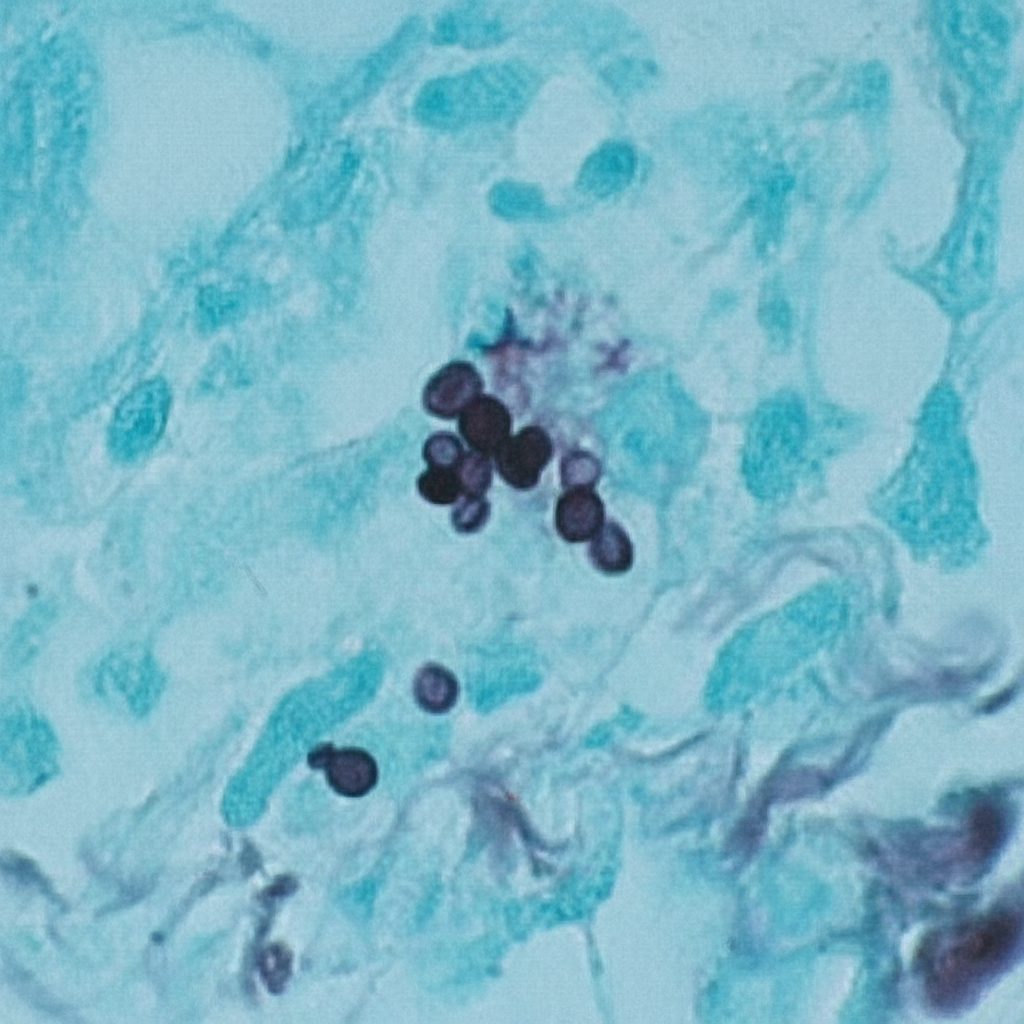
A 44-year-old man comes to the physician because of a 3-week history of productive cough, fever, and lethargy. He also has several skin lesions over his body. His symptoms began 3 weeks after he returned from a camping trip in Kentucky. Three years ago, he underwent kidney transplantation for polycystic kidney disease. Current medications include sirolimus and prednisone. His temperature is 38°C (100.4°F). Diffuse crackles are heard over the lung fields. There are 4 white, verrucous skin patches over his chest and upper limbs. A photomicrograph of a skin biopsy specimen from one of the lesions is shown. Which of the following is the most likely diagnosis?
A 25-year-old man with no significant past medical history is brought in by ambulance after a witnessed seizure at home. On physical exam, temperature is 102.3 deg F (39.1 deg C), blood pressure is 90/62 mmHg, pulse is 118/min, and respirations are 25/min. He is unable to touch his chin to his chest and spontaneously flexes his hips with passive neck flexion. Appropriate empiric treatment is begun. CT head is unremarkable, and a lumbar puncture sample is obtained. Gram stain of the cerebrospinal fluid (CSF) reveals gram-positive diplococci. Which of the following would you expect to see on CSF studies?
A previously healthy 17-year-old boy is brought to the emergency department because of fever, nausea, and myalgia for the past day. His temperature is 39.5°C (103.1°F), pulse is 112/min, and blood pressure is 77/55 mm Hg. Physical examination shows scattered petechiae over the anterior chest and abdomen. Blood culture grows an organism on Thayer-Martin agar. Which of the following virulence factors of the causal organism is most likely responsible for the high mortality rate associated with it?
A 26-year-old female with AIDS (CD4 count: 47) presents to the emergency department in severe pain. She states that over the past week she has been fatigued and has had a progressively worse headache and fever. These symptoms have failed to remit leading her to seek care in the ED. A lumbar puncture is performed which demonstrates an opening pressure of 285 mm H2O, increased lymphocytes, elevated protein, and decreased glucose. The emergency physician subsequently initiates treatment with IV amphotericin B and PO flucytosine. What additional treatment in the acute setting may be warranted in this patient?
A 34-year-old woman presents with confusion, drowsiness, and headache. The patient’s husband says her symptoms began 2 days ago and have progressively worsened with an acute deterioration of her mental status 2 hours ago. The patient describes the headaches as severe, localized to the frontal and periorbital regions, and worse in the morning. Review of symptoms is significant for a mild, low-grade fever, fatigue, and nausea for the past week. Past medical history is significant for HIV infection for which she is not currently receiving therapy. Her CD4+ T cell count last month was 250/mm3. The blood pressure is 140/85 mm Hg, the pulse rate is 90/min, and the temperature is 37.7°C (100.0°F). On physical examination, the patient is conscious but drowsy. Papilledema is present. No pain is elicited with extension of the leg at the knee joint. The remainder of the physical examination is negative. Laboratory findings, including panculture, are ordered. A noncontrast CT scan of the head is negative and is followed by a lumbar puncture. CSF analysis is significant for: Opening pressure 250 mm H2O (70-180 mm H2O) Glucose 30 mg/dL (40-70 mg/dL) Protein 100 mg/dL (<40 mg/dL) Cell count 20/mm3 (0-5/mm3) Which of the following additional findings would most likely be found in this patient?
A 48-year-old man with HIV comes to the physician because of skin lesions over his face and neck for 2 weeks. They are not itchy or painful. He does not have fever or a sore throat. He was treated for candidal esophagitis 3 months ago. He is sexually active with his wife, who knows of his condition, and uses condoms consistently. He is currently receiving triple antiretroviral therapy with lamivudine, abacavir, and efavirenz. He is 175 cm (5 ft 9 in) tall and weighs 58 kg (128 lb); BMI is 18.8 kg/m2. Examination shows multiple skin colored papules over his face and neck with a dimpled center. Cervical lymphadenopathy is present. The remainder of the examination is unremarkable. His hemoglobin concentration is 12.1 g/dL, leukocyte count is 4,900/mm3, and platelet count is 143,000/mm3; serum studies and urinalysis show no abnormalities. CD4+ T-lymphocyte count is 312/mm3 (normal ≥ 500). Which of the following is the most likely cause of this patient's findings?
A 47-year-old woman comes to the physician because of a 3-day history of fever, fatigue, loss of appetite, cough, and chest pain. Physical examination shows diffuse inspiratory crackles over the left lung field. An x-ray of the chest shows hilar lymphadenopathy and well-defined nodules with central calcifications. Urine studies show the presence of a polysaccharide antigen. A biopsy specimen of the lung shows cells with basophilic, crescent-shaped nuclei and pericellular halos located within macrophages. This patient's history is most likely to show which of the following?
A 46-year-old woman presents to her primary care physician with complaints of increasing left upper quadrant discomfort. She has a known history of type 1 Gaucher disease. On physical examination, her spleen is palpable 8 cm below the costal margin. Routine laboratory work reveals severe pancytopenia. After consultation with the patient on the risks of her condition, the patient decides to undergo a splenectomy. Which of the following is more likely to occur as a consequence of splenectomy in this patient?
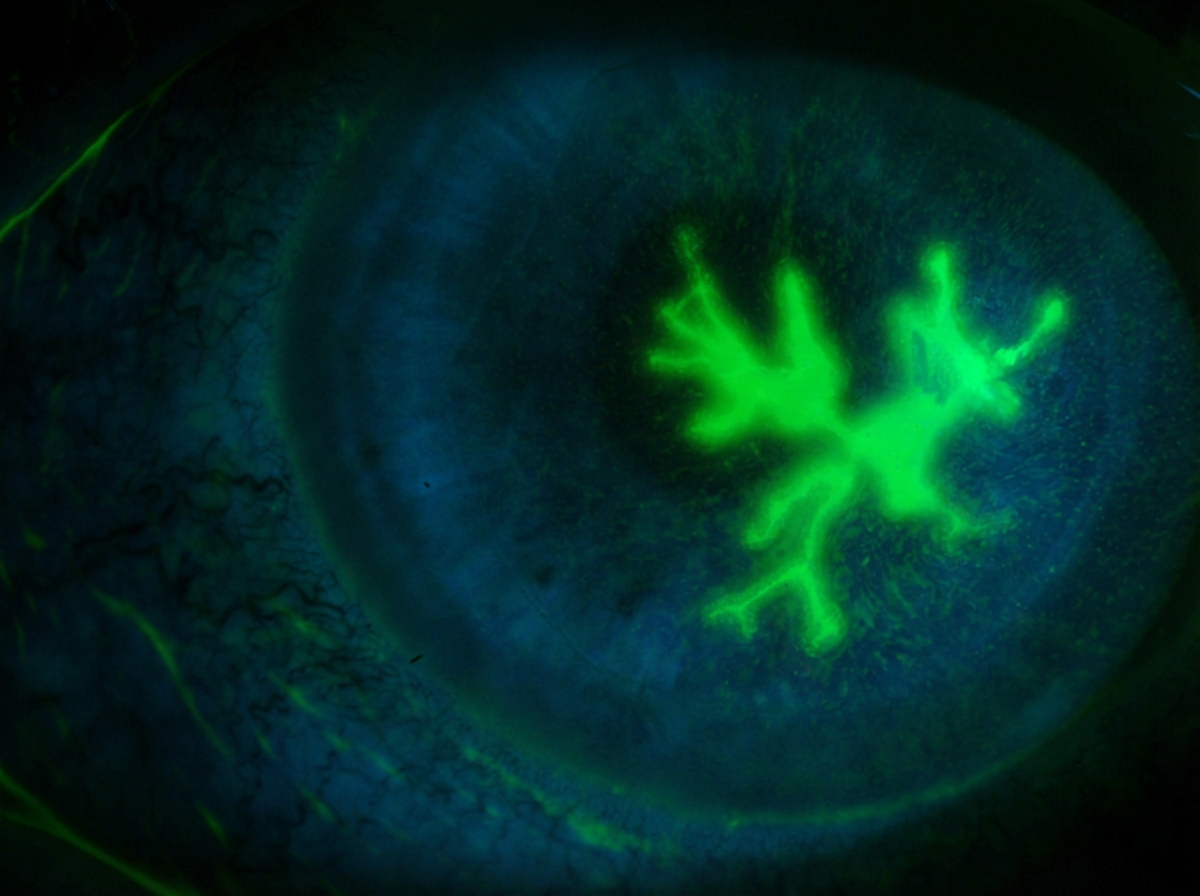
A 36-year-old woman with HIV comes to the physician because of a 3-day history of pain and watery discharge in her left eye. She also has blurry vision and noticed that she is more sensitive to light. Her right eye is asymptomatic. She had an episode of shingles 7 years ago. She was diagnosed with HIV 5 years ago. She admits that she takes her medication inconsistently. She wears contact lenses. Current medications include abacavir, lamivudine, efavirenz, and a nutritional supplement. Her temperature is 37°C (98.6°F), pulse is 89/min, and blood pressure is 110/70 mm Hg. Examination shows conjunctival injection of the left eye. Visual acuity is 20/20 in the right eye and 20/80 in the left eye. Extraocular movements are normal. Her CD4+ T-lymphocyte count is 90/mm3. A photograph of the left eye after fluorescein administration is shown. Which of the following is the most likely diagnosis?
Want unlimited practice?
Get full access to all questions, explanations, and performance tracking.
Scan to download app