
Human herpesvirus 8 (Kaposi sarcoma virus) — MCQs

A 76-year-old woman is brought to the physician because of lesions on her left arm. She first noticed them 3 months ago and they have grown larger since that time. She has not had any pain or pruritus in the area. She has a history of invasive ductal carcinoma of the left breast, which was treated with mastectomy and radiation therapy 27 years ago. Since that time, she has had lymphedema of the left arm. Physical examination shows extensive edema of the left arm. There are four coalescing, firm, purple-blue nodules on the left lateral axillary region and swelling of the surrounding skin. Which of the following is the most likely diagnosis?
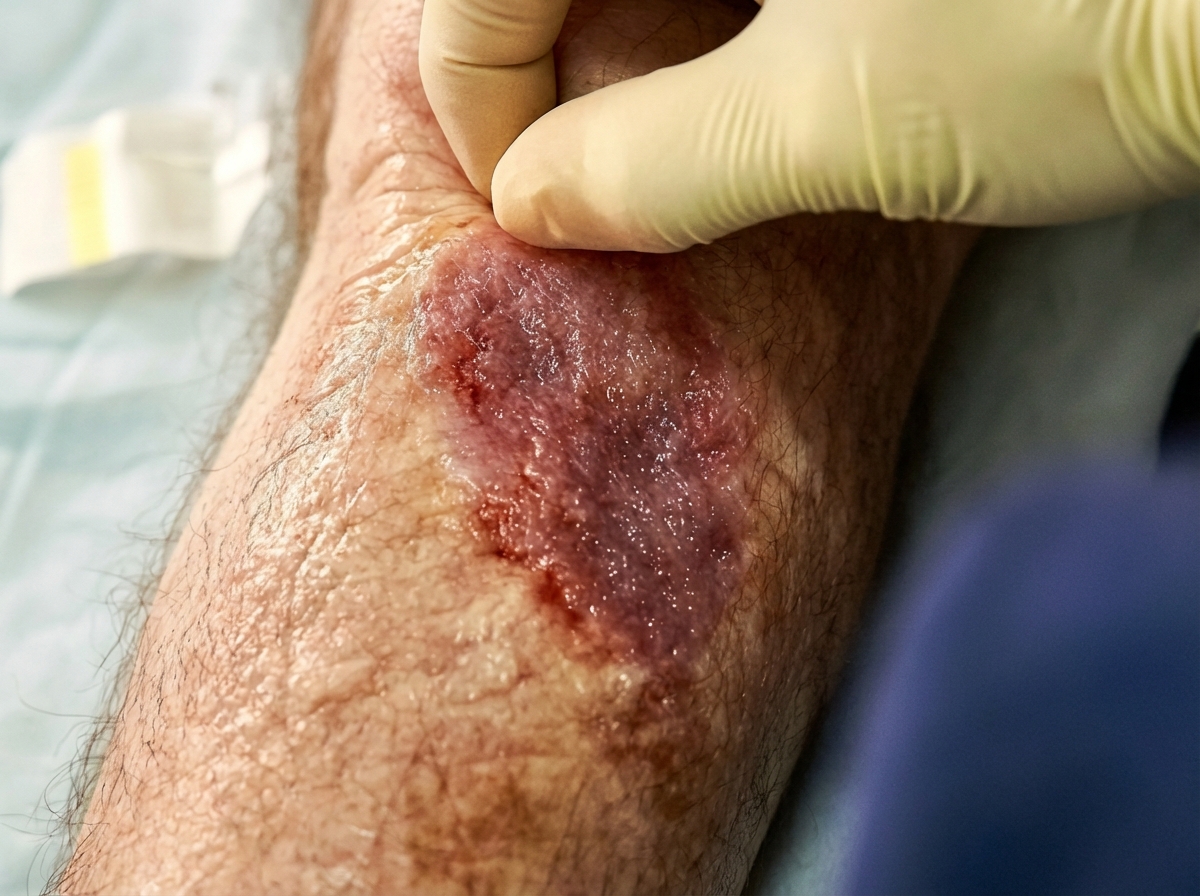
A 57-year-old man presents with a large wound on his right lower leg that has been present for 6 months as shown in the picture. He has had chronically swollen legs for over 10 years. His mother and brother had similar problems with their legs. He had a documented deep vein thrombosis (DVT) in the affected leg 5 years earlier, but has no other past medical history. He has a blood pressure of 126/84 and heart rate of 62/min. Which of the following is the most likely diagnosis?
A scientist is researching the long term effects of the hepatitis viruses on hepatic tissue. She finds that certain strains are oncogenic and increase the risk of hepatocellular carcinoma. However, they appear to do so via different mechanisms. Which of the following answer choices correctly pairs the hepatitis virus with the correct oncogenic process?
Researchers are investigating a new strain of a virus that has been infecting children over the past season and causing dermatitis. They have isolated the virus and have run a number of tests to determine its structure and characteristics. They have found that this new virus has an outer coating that is high in phospholipids. Protein targeting assays and immunofluorescence images have shown that the outer layer contains numerous surface proteins. On microscopy, these surface proteins are also expressed around the nucleus of cells derived from the infected tissue of the children. This virus’s structure most closely resembles which of the following?
A 45-year-old man comes to the emergency department because of chills and numerous skin lesions for 1 week. He has also had watery diarrhea, nausea, and abdominal pain for the past 2 weeks. The skin lesions are nonpruritic and painless. He was diagnosed with HIV infection approximately 20 years ago. He has not taken any medications for over 5 years. He sleeps in homeless shelters and parks. Vital signs are within normal limits. Examination shows several bright red, friable nodules on his face, trunk, extremities. The liver is palpated 3 cm below the right costal margin. His CD4+ T-lymphocyte count is 180/mm3 (N ≥ 500). A rapid plasma reagin test is negative. Abdominal ultrasonography shows hepatomegaly and a single intrahepatic 1.0 x 1.2-cm hypodense lesion. Biopsy of a skin lesion shows vascular proliferation and abundant neutrophils. Which of the following is the most likely causal organism?
An investigator studying patients with symptoms of arthritis detects a nonenveloped virus with a single-stranded DNA genome in the serum of a pregnant patient. Fetal infection with this pathogen is most likely to cause which of the following manifestations?
A 27-year-old woman comes to the physician for a routine health maintenance examination. She feels well. She had a chlamydia infection at the age of 22 years that was treated. Her only medication is an oral contraceptive. She has smoked one pack of cigarettes daily for 6 years. She has recently been sexually active with 3 male partners and uses condoms inconsistently. Her last Pap test was 4 years ago and results were normal. Physical examination shows no abnormalities. A Pap test shows atypical squamous cells of undetermined significance. Which of the following is the most appropriate next step in management?
A pathologist receives a patient sample for analysis. Cells in the sample are first labeled with fluorescent antibodies and then passed across a laser beam in a single file of particles. The light scatter and fluorescent intensity of the particles are plotted on a graph; this information is used to characterize the sample. This laboratory method would be most useful to establish the diagnosis of a patient with which of the following?
A 63-year-old man presents to his primary care physician because he has been having headaches and hearing loss. In addition, he says that he has been having difficulty opening his jaw to eat and recurrent middle ear infections. Physical exam reveals enlarged neck lymph nodes and a mass in the nasopharynx. Biopsy of the mass reveals undifferentiated squamous epithelial cells. The organism that is most likely associated with this patient's disease is also associated with which of the following disorders?
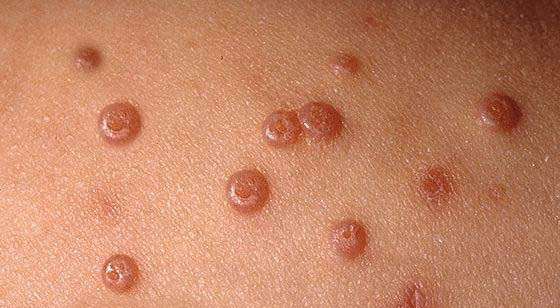
A 24-year-old man presents to the clinic with the complaint of a new rash. The lesions are not bothersome, but he is worried as he has never seen anything like this on his body. Upon further questioning the patient states has been generally healthy except for a one time "horrible" flu-like episode two months ago in June. He has since gotten better. On physical exam the following rash is observed (Figure 1). What is the cause of this patient's rash?
Want unlimited practice?
Get full access to all questions, explanations, and performance tracking.
Scan to download app