
HPV vaccination and screening — MCQs

A 38-year-old woman makes an appointment with her family physician for a routine check-up after being away due to travel for 1 year. She recently had a screening Pap smear, which was negative for malignancy. Her past medical history is significant for a Pap smear 2 years ago that reported a low-grade squamous intraepithelial lesion (LSIL). A subsequent colposcopy diagnosed high-grade cervical intraepithelial neoplasia (CIN2). The patient is surprised by the differences in her diagnostic tests. You explain to her the basis for the difference and reassure her. With this in mind, which of the following HPV serotypes is most likely to be present in the patient?
A 58-year-old woman presents to the physician for a routine gynecological visit. She denies any acute issues and remarks that she has not been sexually active for the past year. Her last Pap test was negative for any abnormal cytology. A pelvic examination and Pap test is performed at the current visit with no remarkable findings. Which of the following approaches to cervical cancer screening is most appropriate for this patient?
A 27-year-old female presents to her OB/GYN for a check-up. During her visit, a pelvic exam and Pap smear are performed. The patient does not have any past medical issues and has had routine gynecologic care with normal pap smears every 3 years since age 21. The results of the Pap smear demonstrate atypical squamous cells of undetermined significance (ASCUS). Which of the following is the next best step in the management of this patient?
A 29-year-old woman presents to her gynecologist for a routine check-up. She is sexually active with multiple partners and intermittently uses condoms for contraception. She denies vaginal discharge, burning, itching, or rashes in her inguinal region. Pelvic examination is normal. Results from a routine pap smear are shown. The cellular changes seen are attributable to which of the following factors?
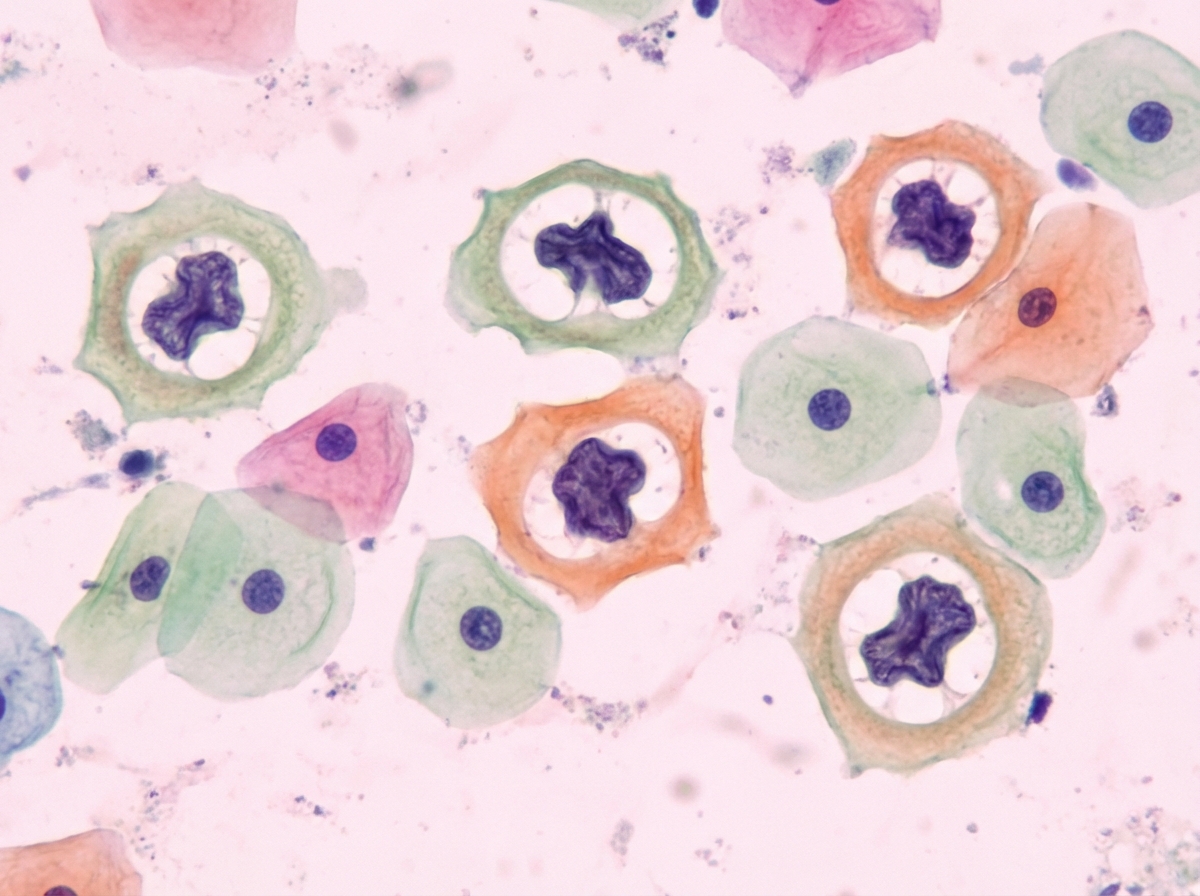
A 19-year-old woman presents for a sports physical. She says she feels healthy and has no concerns. Past medical history is significant for depression and seasonal allergies. Current medications are fluoxetine and oral estrogen/progesterone contraceptive pills. Family history is significant for a sister with polycystic ovarian syndrome (PCOS). The patient denies current or past use of alcohol, recreational drugs, or smoking. She reports that she has been on oral birth control pills since age 14 and uses condoms inconsistently. No history of STDs. She is sexually active with her current boyfriend, who was treated for chlamydia 2 years ago. She received and completed the HPV vaccination series starting at age 11. Her vital signs include: temperature 36.8°C (98.2°F), pulse 97/min, respiratory rate 16/min, blood pressure 120/75 mm Hg. Physical examination is unremarkable. Which of the following are the recommended guidelines for cervical cancer screening for this patient at this time?
A 12-year-old girl presents to her primary care physician for a well-child visit. She has a history of asthma and uses her inhaler 1-2 times per week when she exercises. She does not smoke and is not currently sexually active; however, she does have a boyfriend. She lives with her mother in an apartment and is doing well in school. Her temperature is 97.6°F (36.4°C), blood pressure is 124/75 mmHg, pulse is 80/min, respirations are 12/min, and oxygen saturation is 98% on room air. Physical exam is notable for a healthy young girl with no findings. Which of the following is most appropriate for this patient at this time?
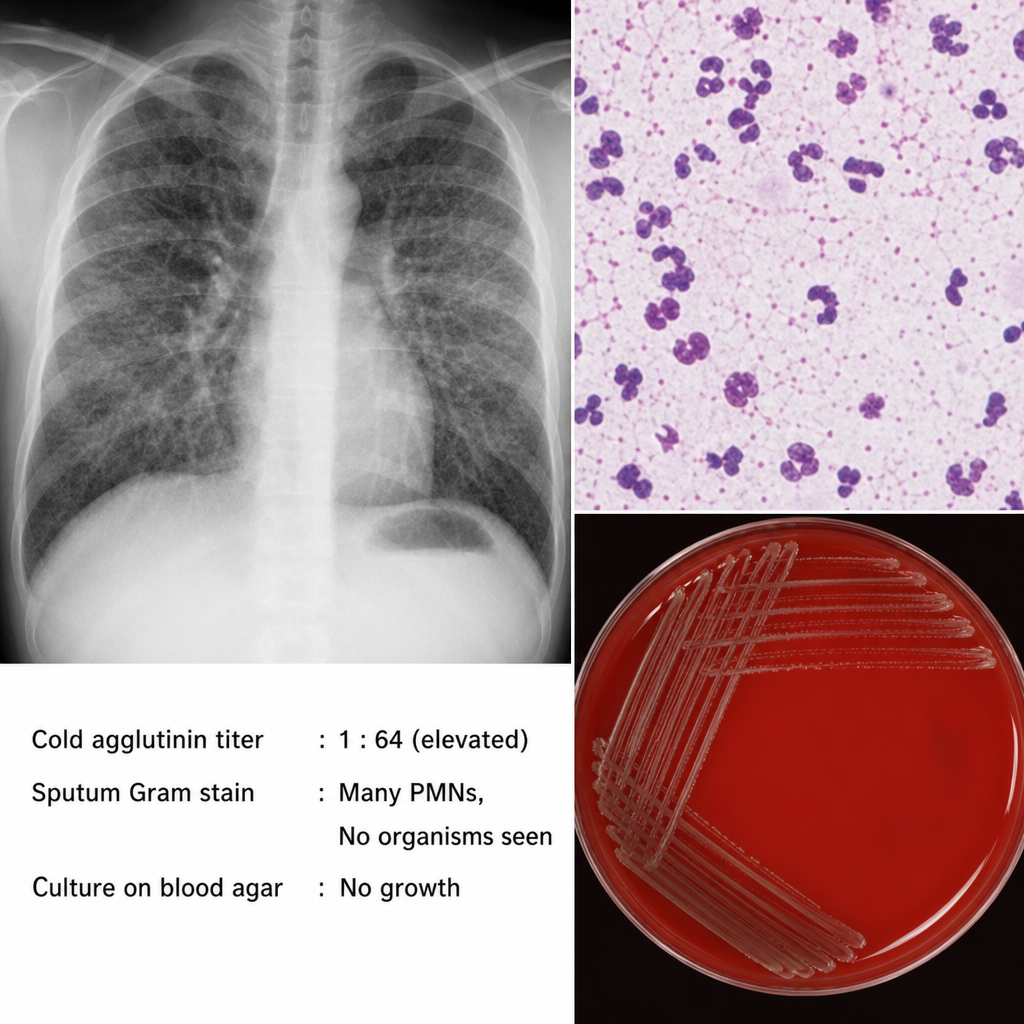
A 19-year-old college student presents with a 10-day history of low-grade fever, malaise, and a non-productive cough that has worsened despite a 5-day course of amoxicillin prescribed by his primary care physician. He lives in a dormitory. Chest radiograph shows diffuse interstitial infiltrates disproportionate to his relatively mild clinical appearance. A cold agglutinin titer is elevated. Sputum Gram stain shows many polymorphonuclear cells but no organisms. Cultures on standard blood agar show no growth after 48 hours. Which of the following features of the causative organism most directly explains the failure of amoxicillin therapy and the absence of organisms on Gram stain?
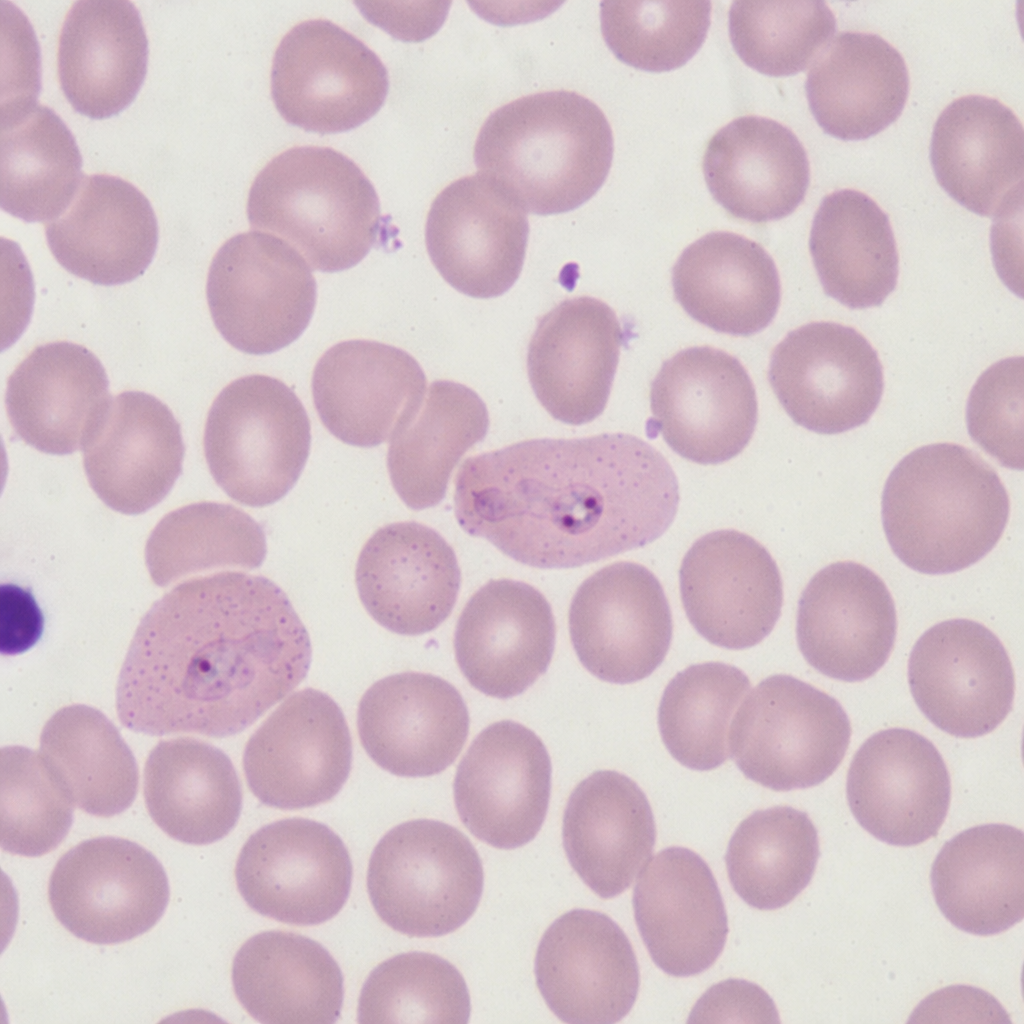
A blood smear from a 28-year-old traveler returning from South Asia shows enlarged erythrocytes with irregular, ameboid-appearing trophozoites and fine pink stippling of the red cell cytoplasm. The patient has a fever every 48 hours and hemoglobin of 11.8 g/dL. Which of the following morphological features on this smear most specifically distinguishes the causative organism from other species in the same genus?
A 16-year-old male is brought to the clinic by his mother for the complaints of fever, nonproductive cough, fatigue, lack of appetite, and sore throat for the past 2 months. Several other students at his high school have had similar symptoms. Physical exam shows a whitish membrane in his oropharynx, bilateral enlarged cervical lymphadenopathy, and mild splenomegaly. Which of the following tests is most likely to diagnose his condition?
A 55-year-old Caucasian male presents for a routine colonoscopy. A polyp is found in the patient's transverse colon and is found to be cancerous on histological evaluation. Upon examination, it is found that these cancerous cells have decreased MHC class I expression on their surface. Which immune system cell is most capable of killing these tumor cells?
Want unlimited practice?
Get full access to all questions, explanations, and performance tracking.
Scan to download app