
Urogenital microbiome — MCQs

A 28-year-old woman comes to the physician because of a 4-day history of lower abdominal pain and pain with urination. Five months ago, she was treated for gonococcal urethritis. She recently moved in with her newlywed husband. She is sexually active with her husband and they do not use condoms. Her only medication is an oral contraceptive. Her temperature is 37.5°C (99.7°F) and blood pressure is 120/74 mm Hg. There is tenderness to palpation over the pelvic region. Pelvic examination shows a normal-appearing vulva and vagina. Laboratory studies show: Leukocyte count 8,400/mm3 Urine pH 6.7 Protein trace WBC 60/hpf Nitrites positive Bacteria positive Which of the following is the most likely causal organism?
A 28-year-old woman presents with a malodorous vaginal discharge and itchiness that have lasted for 15 days. She reports that the smell of the discharge is worse after intercourse and is accompanied by a whitish-gray fluid. She has no significant past medical or gynecological history. She is in a stable monogamous relationship and has never been pregnant. She is diagnosed with bacterial vaginosis and prescribed an antimicrobial agent. Which of the following diagnostic features is consistent with this patient’s condition?
A 24-year-old woman calls her gynecologist complaining of vaginal odor and vaginal discharge. She had an intrauterine device placed last year and does not use condoms with her boyfriend. She has a past medical history of constipation and depression. She recently was successfully treated for a urinary tract infection with a 2-day course of antibiotics. Physical exam demonstrates an off-white vaginal discharge and a strong odor. Pelvic exam demonstrates an absence of cervical motion tenderness and no adnexal tenderness. Which of the following is the most likely diagnosis?
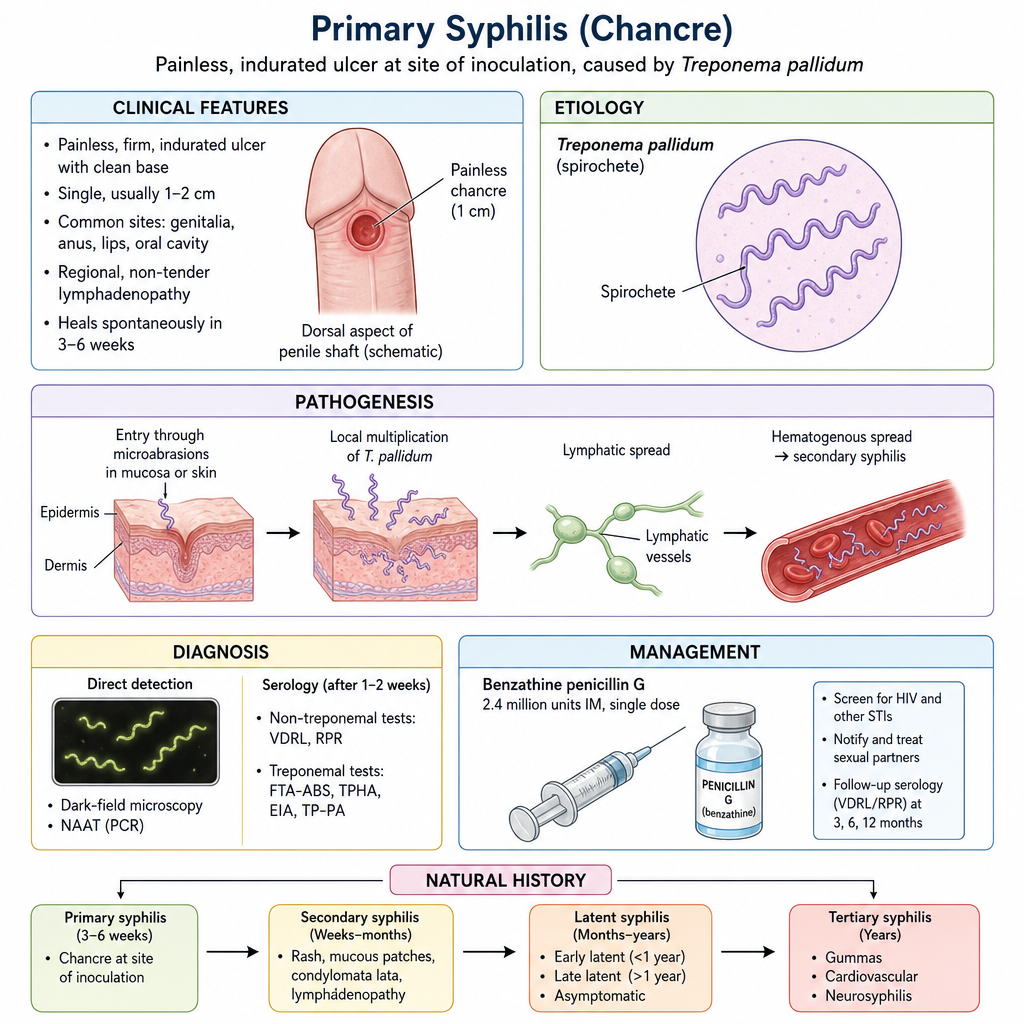
A 25-year-old man presents with an ulcer on his penis. He says that he noticed the ulcer a week ago while taking a shower and it has not improved. He denies any pain, penile discharge, rash, dysuria, fever, or pain on urination. His past medical history is nonsignificant. Sexual history reveals that the patient has had 6 male partners over the past year and uses condoms infrequently. On physical examination, there is a 1-cm ulcer on the dorsal aspect of the penile shaft (see image below). The edge and base of the ulcer are indurated but there is no bleeding or drainage. Two enlarged non-tender inguinal lymph nodes are palpable on the right. There is no evidence of scrotal masses or urethral discharge. A rapid HIV test is negative. Which of the following microorganisms is most likely responsible for this patient’s condition?
A 19-year-old female presents with a malodorous vaginal discharge. She notes that the odor is more prominent after sexual intercourse. She is sexually active with one partner and uses barrier contraception. Her past medical history is significant only for community-acquired pneumonia treated with antibiotics 2 months ago. The vital signs were as follows: blood pressure, 110/70 mm Hg; heart rate, 68/min; respiratory rate, 12/min; and temperature, 36.6℃ (97.9℉). The physical examination was normal. On gynecologic examination, the vaginal walls and cervix appeared normal. There was a gray, thin, homogeneous discharge with bubbles. The pH of the discharge was approximately 6.0. Which of the following findings would be expected on further investigation of this patient?
A 52-year-old woman comes to the physician because of vaginal itchiness and urinary frequency for the past 1 year. She stopped having vaginal intercourse with her husband because it became painful and occasionally resulted in vaginal spotting. Her last menstrual cycle was 14 months ago. She has vitiligo. Her only medication is a topical tacrolimus ointment. Her temperature is 37.1°C (98.8°F), pulse is 85/min, and blood pressure is 135/82 mm Hg. Examination shows multiple white maculae on her forearms, abdomen, and feet. Pelvic examination shows scarce pubic hair, vulvar pallor, and narrowing of the vaginal introitus. Which of the following most likely contributes to this patient's current symptoms?
A previously healthy 26-year-old woman comes to the physician because of a 2-day history of pain with urination. She has been sexually active with two partners over the past year. She uses condoms for contraception. Vital signs are within normal limits. Physical examination shows suprapubic tenderness. Urinalysis shows neutrophils and a positive nitrite test. Urine culture grows gram-negative, oxidase-negative rods that form greenish colonies on eosin-methylene blue agar. Which of the following virulence factors of the causal organism increases the risk of infection in this patient?
A 28-year-old male presents to his primary care physician with complaints of intermittent abdominal pain and alternating bouts of constipation and diarrhea. His medical chart is not significant for any past medical problems or prior surgeries. He is not prescribed any current medications. Which of the following questions would be the most useful next question in eliciting further history from this patient?
A 21-year-old man presents to the emergency room complaining of pain upon urination and a watery discharge from his penis. It started a few days ago and has been getting progressively worse. His temperature is 98.0°F (36.7°C), blood pressure is 122/74 mmHg, pulse is 83/min, respirations are 14/min, and oxygen saturation is 98% on room air. Physical exam is notable for a tender urethra with a discharge. Gram stain of the discharge is negative for bacteria but shows many neutrophils. Which of the following is the most likely infectious etiology of this patient's symptoms?
A 27-year-old woman comes to the physician for a 1-week-history of painful urination and urinary frequency. She has no history of serious illness and takes no medications. She is sexually active with her boyfriend. Her temperature is 36.7°C (98.1°F). There is no costovertebral angle tenderness. Urine dipstick shows leukocyte esterase. A Gram stain does not show any organisms. Which of the following is the most likely causal pathogen?
Want unlimited practice?
Get full access to all questions, explanations, and performance tracking.
Scan to download app