
Oral microbiome — MCQs

A 14-year-old male is brought to the Emergency Department by his mother. She is worried because his face has become puffy and his urine has turned a tea-color. Patient history reveals the child recently suffered from a sore throat. The physician suspects a bacterial infection. Which of the following describes the likely bacteria responsible?
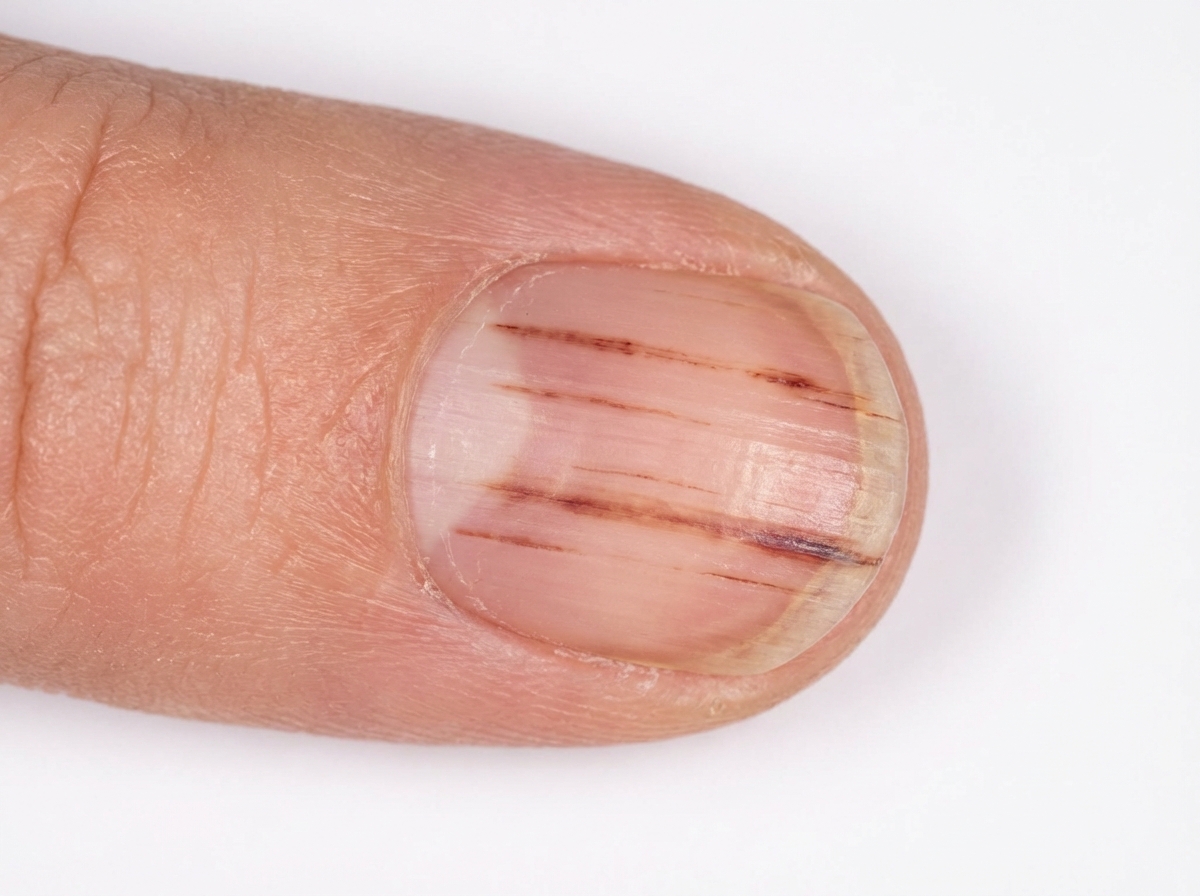
A 63-year-old man comes to the physician for evaluation of fever and a nonproductive cough for the past 2 weeks. During this period, he has also had fatigue, myalgia, and difficulty breathing. Five weeks ago, he underwent an aortic prosthetic valve replacement due to high-grade aortic stenosis. The patient has a history of hypertension, asthma, and type 2 diabetes mellitus. A colonoscopy 2 years ago was normal. The patient has smoked one pack of cigarettes daily for the past 40 years. He has never used illicit drugs. Current medications include aspirin, warfarin, lisinopril, metformin, inhaled albuterol, and a multivitamin. The patient appears lethargic. Temperature is 38.6°C (101.5°F), pulse is 105/min, and blood pressure is 140/60 mm Hg. Rales are heard on auscultation of the lungs. A grade 2/6, diastolic blowing murmur is heard over the left sternal border and radiates to the right sternal border. A photograph of his right index finger is shown. Laboratory studies show a leukocyte count of 13,800/mm3 and an erythrocyte sedimentation rate of 48 mm/h. Which of the following is the most likely causal organism?
An investigator is studying the growth of an organism in different media. The organism is inoculated on a petri dish that contains heated sheep blood, vancomycin, nystatin, trimethoprim, and colistin. The resulting growth medium is incubated at 37°C. Numerous small, white colonies are seen after incubation for 48 hours. This organism is most likely to cause which of the following conditions?
A 48-year-old homeless man presents to a free clinic complaining of several weeks of bleeding gums. He states that he has not seen dental or medical care for several years and that the bleeding has been painless. He normally sleeps on the street or occasionally stays at a shelter and typically eats 1-2 fast food meals per day. On exam, his temperature is 98.4°F (36.9°C), blood pressure is 122/76 mmHg, pulse is 64/min, and respirations are 12/min. He has poor dentition and significant periodontal disease with notable areas of bleeding gingiva. The patient is found to have coarse hair and on further questioning, the patient endorses the recent loss of 2 of his teeth and several weeks of fatigue. Which of the following processes is most immediately affected by his condition?
A previously healthy 17-year-old boy is brought to the emergency department because of fever, nausea, and myalgia for the past day. His temperature is 39.5°C (103.1°F), pulse is 112/min, and blood pressure is 77/55 mm Hg. Physical examination shows scattered petechiae over the anterior chest and abdomen. Blood culture grows an organism on Thayer-Martin agar. Which of the following virulence factors of the causal organism is most likely responsible for the high mortality rate associated with it?
An investigator is studying bacterial toxins in a nonpathogenic bacterial monoculture that has been inoculated with specific bacteriophages. These phages were previously cultured in a toxin-producing bacterial culture. After inoculation, a new toxin is isolated from the culture. Genetic sequencing shows that the bacteria have incorporated viral genetic information, including the gene for this toxin, into their genome. The described process is most likely responsible for acquired pathogenicity in which of the following bacteria?
A 42-year-old woman presents to a medical office with complaints of fatigue, weight loss, and low-grade fever for 1 week. She noticed bleeding spots on her feet this morning. The past medical history is significant for a recent dental appointment. She is a non-smoker and does not drink alcohol. She does not currently take any medications. On examination, the vital signs include temperature 37.8°C (100.0°F), blood pressure 138/90 mm Hg, respirations 21/min, and pulse 87/min. Cardiac auscultation reveals a pansystolic murmur in the mitral area with radiation to the left axilla. Laboratory studies show hemoglobin levels of 17.2 g/dL, erythrocyte sedimentation rate (ESR) of 25 mm/h, and a white blood cell (WBC) count of 12,000 cells/mm3. An echocardiogram reveals valvular vegetations on the mitral valve with mild regurgitation. Blood samples are sent for bacterial culture. Empiric antibiotic therapy is initiated with ceftriaxone and vancomycin. The blood cultures most likely will yield the growth of which of the following organisms?
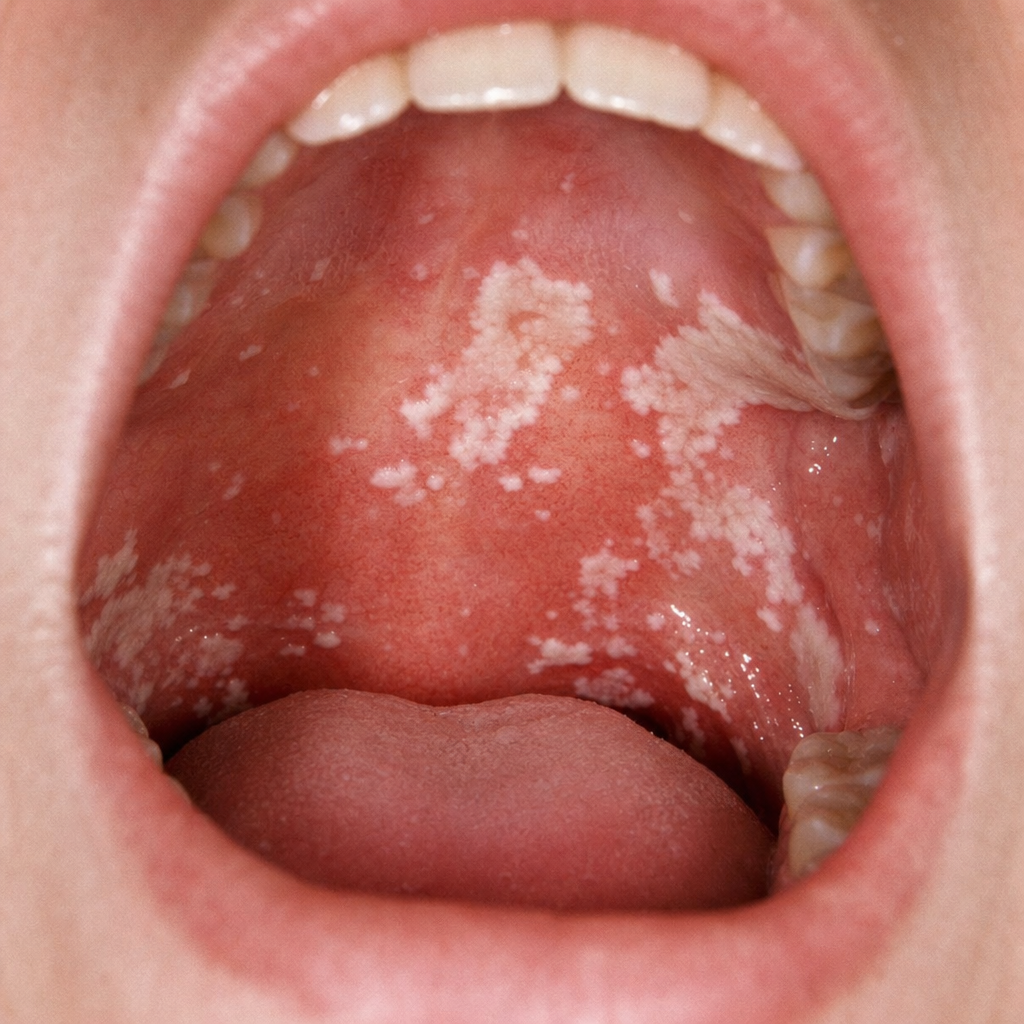
A 7-year-old boy is brought to a pediatric clinic by his mother because he had difficulty swallowing for 4 days. He was diagnosed with asthma 3 months ago and has been using an inhaler as directed by the pediatrician. The child does not have a fever or a cough and is not short of breath. He denies pain during swallowing. His vital signs include: temperature 35.8℃ (96.5℉), respiratory rate 14/min, blood pressure 90/40 mm Hg, and pulse 80/min. The oral examination reveals a slightly raised white lesion over his tongue (as shown in the provided photograph) and oropharynx. What is the most likely diagnosis?
A 59-year-old woman comes to the physician because of left leg swelling that started after a transcontinental flight. A duplex ultrasound of the left leg shows a noncompressible popliteal vein. A drug is prescribed that inhibits the coagulation cascade. Two weeks later, laboratory studies show: Platelet count 210,000/mm3 Partial thromboplastin time 28 seconds (normal: 25-35) Prothrombin time 12 seconds (normal: 11-13) Thrombin time 15 seconds (control: 15 seconds) Which of the following drugs was most likely prescribed?
A 45-year-old man comes to the physician because of a 1-month history of fever and poor appetite. Five weeks ago, he underwent molar extraction for dental caries. His temperature is 38°C (100.4°F). Cardiac examination shows a grade 2/6 holosystolic murmur heard best at the apex. A blood culture shows gram-positive, catalase-negative cocci. Transesophageal echocardiography shows a small vegetation on the mitral valve with mild regurgitation. The causal organism most likely has which of the following characteristics?
Want unlimited practice?
Get full access to all questions, explanations, and performance tracking.
Scan to download app