
Methods for studying the microbiome — MCQs

A medical technician is trying to isolate a pathogen from the sputum sample of a patient. The sample is heat fixed to a slide then covered with carbol fuchsin stain and heated again. After washing off the stain with clean water, the slide is covered with 1% sulfuric acid for decolorization. The sample is rinsed again and stained with methylene blue. Microscopic examination shows numerous red, branching filamentous organisms. Which of the following is the most likely isolated pathogen?
An investigator is studying the growth of an organism in different media. The organism is inoculated on a petri dish that contains heated sheep blood, vancomycin, nystatin, trimethoprim, and colistin. The resulting growth medium is incubated at 37°C. Numerous small, white colonies are seen after incubation for 48 hours. This organism is most likely to cause which of the following conditions?
A 62-year-old woman with type 2 diabetes mellitus is brought to the emergency department by her husband because of fever, chills, and purulent drainage from a foot ulcer for 2 days. Her hemoglobin A1c was 15.4% 16 weeks ago. Physical examination shows a 2-cm ulcer on the plantar surface of the left foot with foul-smelling, purulent drainage and surrounding erythema. Culture of the abscess fluid grows several bacteria species, including gram-negative, anaerobic, non-spore-forming bacilli that are resistant to bile and aminoglycoside antibiotics. Which of the following is the most likely source of this genus of bacteria?
A scientist is studying the mechanisms by which bacteria become resistant to antibiotics. She begins by obtaining a culture of vancomycin-resistant Enterococcus faecalis and conducts replicate plating experiments. In these experiments, colonies are inoculated onto a membrane and smeared on 2 separate plates, 1 containing vancomycin and the other with no antibiotics. She finds that all of the bacterial colonies are vancomycin resistant because they grow on both plates. She then maintains the bacteria in liquid culture without vancomycin while she performs her other studies. Fifteen generations of bacteria later, she conducts replicate plating experiments again and finds that 20% of the colonies are now sensitive to vancomycin. Which of the following mechanisms is the most likely explanation for why these colonies have become vancomycin sensitive?
A 10-year-old girl is brought to the emergency department because of a 2-day history of bloody diarrhea and abdominal pain. Four days ago, she visited a petting zoo with her family. Her temperature is 39.4°C (102.9°F). Abdominal examination shows tenderness to palpation of the right lower quadrant. Stool cultures at 42°C grow colonies that turn black after adding phenylenediamine. Which of the following best describes the most likely causal organism?
A 31-year-old woman comes to the emergency department because of a 4-day history of fever and diarrhea. She has abdominal cramps and frequent bowel movements of small quantities of stool with blood and mucus. She has had multiple similar episodes over the past 8 months. Her temperature is 38.1°C (100.6°F), pulse is 75/min, and blood pressure is 130/80 mm Hg. Bowel sounds are normal. The abdomen is soft. There is tenderness to palpation in the left lower quadrant with guarding and no rebound. She receives appropriate treatment and recovers. Two weeks later, colonoscopy shows polypoid growths flanked by linear ulcers. A colonic biopsy specimen shows mucosal edema with distorted crypts and inflammatory cells in the lamina propria. Which of the following is the most appropriate recommendation for this patient?
An investigator is processing a blood sample from a human subject. A reagent is added to the sample and the solution is heated to break the hydrogen bonds between complementary base pairs. This solution is then cooled to allow artificial DNA primers in the solution to attach to the separated strands of the sample DNA molecules. An enzyme derived from the thermophilic bacterium Thermus aquaticus is added and the solution is reheated. These steps are repeated multiple times until the aim of the test is achieved. The investigator most likely used which of the following laboratory procedures on the test sample?
You are interested in studying the etiology of heart failure reduced ejection fraction (HFrEF) and attempt to construct an appropriate design study. Specifically, you wish to look for potential causality between dietary glucose consumption and HFrEF. Which of the following study designs would allow you to assess for and determine this causality?
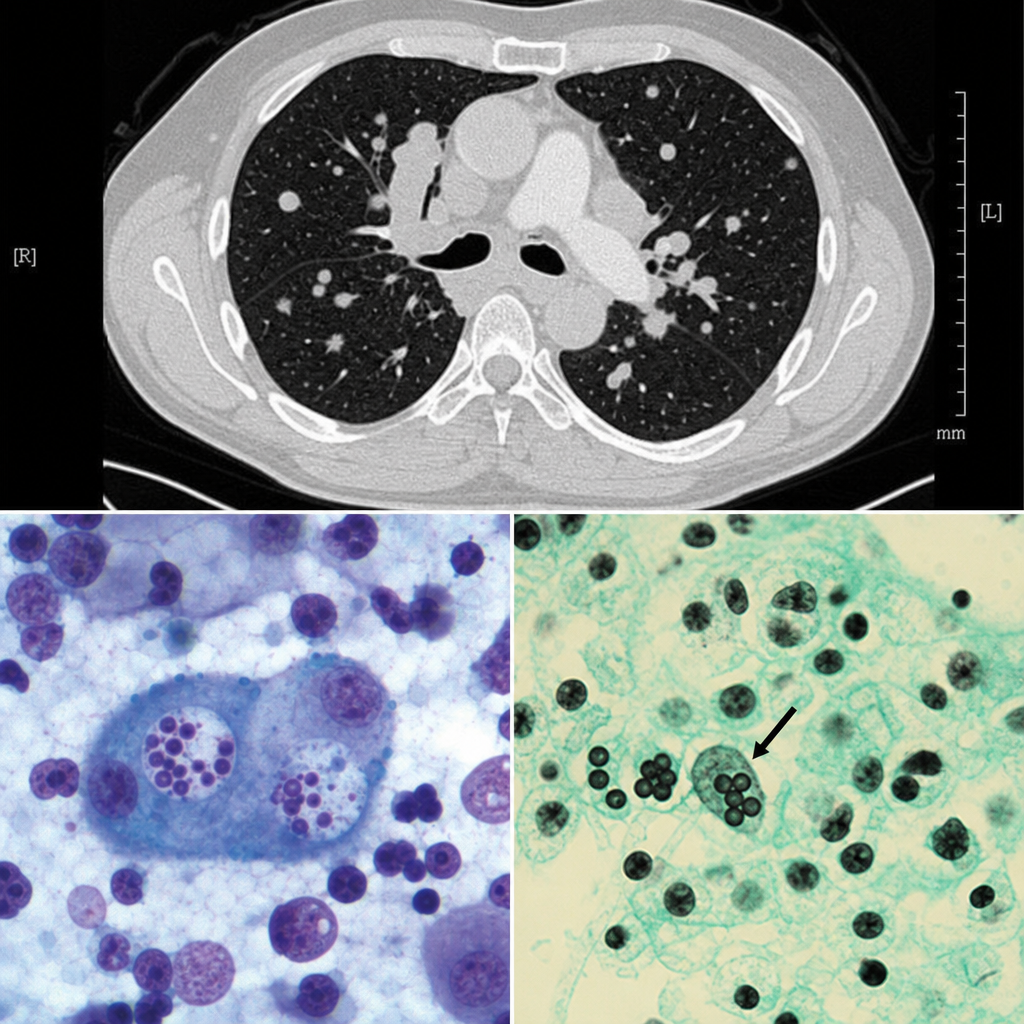
A 38-year-old man from the Mississippi River Valley presents with a 3-week history of fever, night sweats, and weight loss. He works as a cave explorer. Chest CT shows mediastinal lymphadenopathy and multiple pulmonary nodules. Bronchoalveolar lavage is performed and a silver stain of the specimen reveals small (2–4 µm) oval yeast forms within the cytoplasm of alveolar macrophages. Cultures at 25°C grow a mold with tuberculate macroconidia. Which of the following correctly describes the tissue form of this organism and its mechanism of immune evasion?
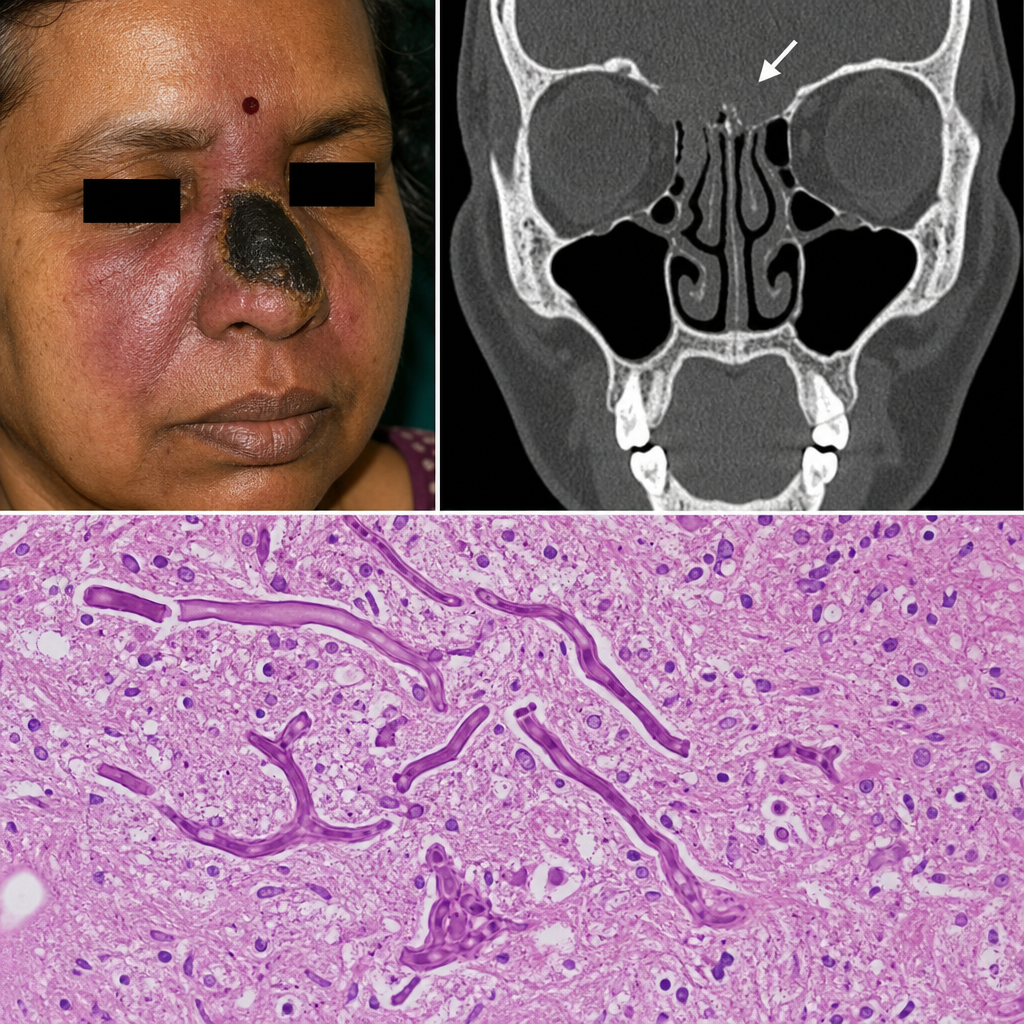
A 58-year-old woman with a history of poorly controlled type 2 diabetes is admitted with a 5-day history of fever, facial pain, and a black necrotic eschar over her right nasal bridge. CT imaging reveals bony erosion of the cribriform plate. A biopsy specimen is sent to the pathology laboratory. Which of the following best describes the expected histopathological findings?
Want unlimited practice?
Get full access to all questions, explanations, and performance tracking.
Scan to download app