
Prevention bundles and checklists — MCQs

The surgical equipment used during a craniectomy is sterilized using pressurized steam at 121°C for 15 minutes. Reuse of these instruments can cause transmission of which of the following pathogens?
A previously healthy 35-year-old woman is brought into the emergency department after being found unresponsive by her husband. Her husband finds an empty bottle of diazepam tablets in her pocket. She is stuporous. At the hospital, her blood pressure is 90/40 mm Hg, the pulse is 58/min, and the respirations are 6/min. The examination of the pupils shows normal size and reactivity to light. Deep tendon reflexes are 1+ bilaterally. Babinski sign is absent. All 4 extremities are hypotonic. The patient is intubated and taken to the critical care unit for mechanical ventilation and treatment. Regarding the prevention of pneumonia in this patient, which of the following strategies is most likely to achieve this goal?
A researcher is trying to determine whether a newly discovered substance X can be useful in promoting wound healing after surgery. She conducts this study by enrolling the next 100 patients that will be undergoing this surgery and separating them into 2 groups. She decides which patient will be in which group by using a random number generator. Subsequently, she prepares 1 set of syringes with the novel substance X and 1 set of syringes with a saline control. Both of these sets of syringes are unlabeled and the substances inside cannot be distinguished. She gives the surgeon performing the surgery 1 of the syringes and does not inform him nor the patient which syringe was used. After the study is complete, she analyzes all the data that was collected and performs statistical analysis. This study most likely provides which level of evidence for use of substance X?
A 27-year-old man presents to the emergency department for altered mental status. The patient was found napping in a local market and brought to the hospital. The patient has a past medical history of polysubstance abuse and is homeless. His temperature is 104°F (40.0°C), blood pressure is 100/52 mmHg, pulse is 133/min, respirations are 25/min, and oxygen saturation is 99% on room air. Physical exam is notable for an altered man. Cardiopulmonary exam reveals a murmur over the left lower sternal border. A bedside ultrasound reveals a vegetation on the tricuspid valve. The patient is ultimately started on IV fluids, norepinephrine, vasopressin, vancomycin, and piperacillin-tazobactam. A central line is immediately placed in the internal jugular vein and the femoral vein secondary to poor IV access. Cardiothoracic surgery subsequently intervenes to remove the vegetation. While recovering in the ICU, days 3-5 are notable for an improvement in the patient’s symptoms. Two additional peripheral IVs are placed while in the ICU on day 5, and the femoral line is removed. On day 6, the patient's fever and hemodynamic status worsen. Though he is currently responding and not complaining of any symptoms including headache, photophobia, neck stiffness, or pain, he states he is feeling weak. Jolt accentuation of headache is negative and his abdominal exam is benign. A chest radiograph, urinalysis, and echocardiogram are unremarkable though the patient’s blood cultures are positive when drawn. Which of the following is the best next step in management?
A 79-year-old man with a history of prostate cancer is brought to the emergency department because of lower abdominal pain for 1 hour. He has not urinated for 24 hours. Abdominal examination shows a palpable bladder that is tender to palpation. A pelvic ultrasound performed by the emergency department resident confirms the diagnosis of acute urinary retention. An attempt to perform transurethral catheterization is unsuccessful. A urology consultation is ordered and the urologist plans to attempt suprapubic catheterization. As the urologist is called to see a different emergency patient, she asks the emergency department resident to obtain informed consent for the procedure. The resident recalls a lecture about the different modes of catheterization, but he has never seen or performed a suprapubic catheterization himself. Which of the following statements by the emergency department resident is the most appropriate?
Three days after undergoing coronary bypass surgery, a 67-year-old man becomes unresponsive and hypotensive. He is intubated, mechanically ventilated, and a central line is inserted. Vasopressin and noradrenaline infusions are begun. A Foley catheter is placed. Six days later, he has high unrelenting fevers. He is currently receiving noradrenaline via an infusion pump. His temperature is 39.6°C (102.3°F), pulse is 113/min, and blood pressure is 90/50 mm Hg. Examination shows a sternal wound with surrounding erythema; there is no discharge from the wound. Crackles are heard at both lung bases. Cardiac examination shows an S3 gallop. Abdominal examination shows no abnormalities. A Foley catheter is present. His hemoglobin concentration is 10.8 g/dL, leukocyte count is 21,700/mm3, and platelet count is 165,000/mm3. Samples for blood culture are drawn simultaneously from the central line and peripheral IV line. Blood cultures from the central line show coagulase-negative cocci in clusters on the 8th postoperative day, and those from the peripheral venous line show coagulase-negative cocci in clusters on the 10th postoperative day. Which of the following is the most likely diagnosis in this patient?
A 67-year-old man is brought to the emergency department because of severe dyspnea and orthopnea for 6 hours. He has a history of congestive heart disease and an ejection fraction of 40%. The medical history is otherwise unremarkable. He appears confused. At the hospital, his blood pressure is 165/110 mm Hg, the pulse is 135/min, the respirations are 48/min, and the temperature is 36.2°C (97.2°F). Crackles are heard at both lung bases. There is pitting edema from the midtibia to the ankle bilaterally. The patient is intubated and admitted to the critical care unit for mechanical ventilation and treatment. Intravenous morphine, diuretics, and nitroglycerine are initiated. Which of the following is the most effective method to prevent nosocomial infection in this patient?
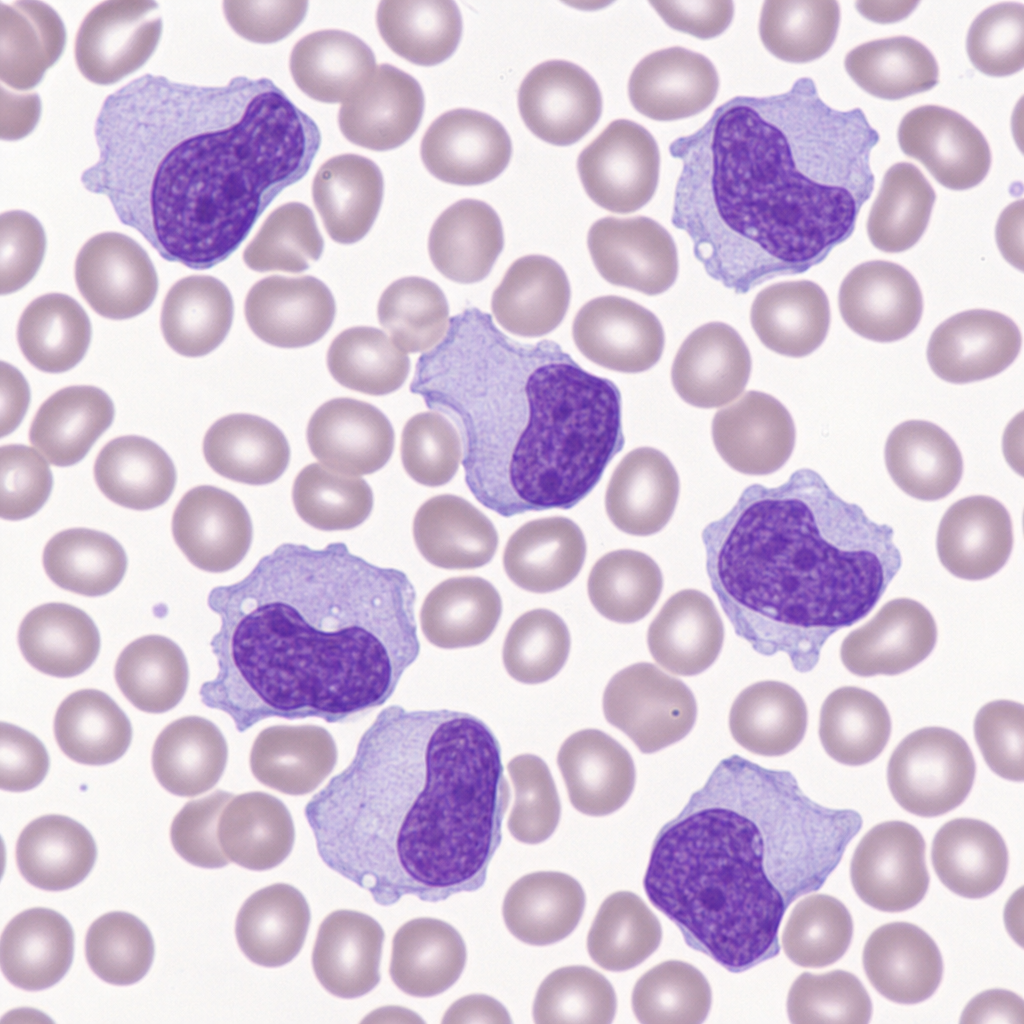
A 19-year-old college student presents with a 5-day history of fever, sore throat, and cervical lymphadenopathy. A heterophile antibody test is positive. A peripheral blood smear reveals large lymphocytes with abundant pale cytoplasm and irregular, folded nuclei that appear to indent around adjacent red blood cells. Which of the following surface markers would be found on the cells predominantly expanded in this patient's peripheral blood?
A surgical ICU has implemented multiple interventions over 18 months: chlorhexidine bathing, antibiotic stewardship, contact precautions for MRSA, and environmental cleaning protocols. Despite these efforts, MRSA surgical site infection rates remain unchanged at 8 per 1000 surgical procedures. Universal MRSA screening shows 15% of admitted patients are colonized. Evaluate the most effective evidence-based strategy to reduce MRSA SSI rates further.
A 70-year-old man with prosthetic aortic valve develops fever and bacteremia 3 weeks after valve replacement. Blood cultures grow Enterococcus faecium resistant to ampicillin and vancomycin (VRE). Susceptibilities show sensitivity to linezolid and daptomycin. TEE shows a small vegetation on the prosthetic valve. Creatinine is 1.8 mg/dL (baseline 1.0). Evaluate the optimal treatment strategy considering the infection location and drug characteristics.
Want unlimited practice?
Get full access to all questions, explanations, and performance tracking.
Scan to download app