A 26-year-old man comes to the physician for a follow-up examination. He was diagnosed with HIV infection 2 weeks ago. His CD4+ T-lymphocyte count is 162/mm3 (N ≥ 500). An interferon-gamma release assay is negative. Prophylactic treatment against which of the following pathogens is most appropriate at this time?
Q2
A 40-year-old man with AIDS comes to the physician because of a 3-week history of intermittent fever, abdominal pain, and diarrhea. He has also had a nonproductive cough and a 3.6-kg (8-lb) weight loss in this period. He was treated for pneumocystis pneumonia 2 years ago. He has had skin lesions on his chest for 6 months. Five weeks ago, he went on a week-long hiking trip in Oregon. Current medications include efavirenz, tenofovir, and emtricitabine. He says he has had trouble adhering to his medication. His temperature is 38.3°C (100.9°F), pulse is 96/min, and blood pressure is 110/70 mm Hg. Examination shows oral thrush on his palate and a white, non-scrapable plaque on the left side of the tongue. There is axillary and inguinal lymphadenopathy. There are multiple violaceous plaques on the chest. Crackles are heard on auscultation of the chest. Abdominal examination shows mild, diffuse tenderness throughout the lower quadrants. The liver is palpated 2 to 3 cm below the right costal margin, and the spleen is palpated 1 to 2 cm below the left costal margin. Laboratory studies show:
Hemoglobin 12.2 g/dL
Leukocyte count 4,800/mm3
CD4+ T-lymphocytes 44/mm3 (Normal ≥ 500 mm3)
Platelet count 258,000/mm3
Serum
Na+ 137 mEq/L
Cl- 102 mEq/L
K+ 4.9 mEq/L
Alkaline phosphatase 202 U/L
One set of blood culture grows acid-fast organisms. A PPD skin test shows 4 mm of induration. Which of the following is the most appropriate pharmacotherapy for this patient's condition?
Q3
A 35-year-old man comes to the emergency department with fever, chills, dyspnea, and a productive cough. His symptoms began suddenly 2 days ago. He was diagnosed with HIV 4 years ago and has been on triple antiretroviral therapy since then. He smokes one pack of cigarettes daily. He is 181 cm (5 ft 11 in) tall and weighs 70 kg (154 lb); BMI is 21.4 kg/m2. He lives in Illinois and works as a carpenter. His temperature is 38.8°C (101.8°F), pulse is 110/min, respirations are 24/min, and blood pressure is 105/74 mm Hg. Pulse oximetry on room air shows an oxygen saturation of 92%. Examinations reveals crackles over the right lower lung base. The remainder of the examination shows no abnormalities. Laboratory studies show:
Hemoglobin 11.5 g/dL
Leukocyte count 12,800/mm3
Segmented neutrophils 80%
Eosinophils 1%
Lymphocytes 17%
Monocytes 2%
CD4+ T-lymphocytes 520/mm3(N ≥ 500)
Platelet count 258,000/mm3
Serum
Na+ 137 mEq/L
Cl- 102 mEq/L
K+ 5.0 mEq/L
HCO3- 22 mEq/L
Glucose 92 mg/dL
An x-ray of the chest shows a right lower-lobe infiltrate of the lung. Which of the following is the most likely causal organism?
Q4
A 33-year-old man with HIV comes to the physician because of a nonproductive cough and shortness of breath for 3 weeks. He feels tired after walking up a flight of stairs and after long conversations on the phone. He appears chronically ill. His temperature is 38.5°C (101.3°F), and pulse is 110/min. Pulse oximetry on room air shows an oxygen saturation of 95%. Upon walking, his oxygen saturation decreases to 85%. Cardiopulmonary examination is normal. Laboratory studies show a CD4+ T-lymphocyte count of 176/mm3 (N > 500). Results of urine Legionella antigen testing are negative. A CT scan of the chest shows diffuse, bilateral ground-glass opacities. Microscopic examination of fluid obtained from bronchoalveolar lavage will most likely show which of the following findings?
Q5
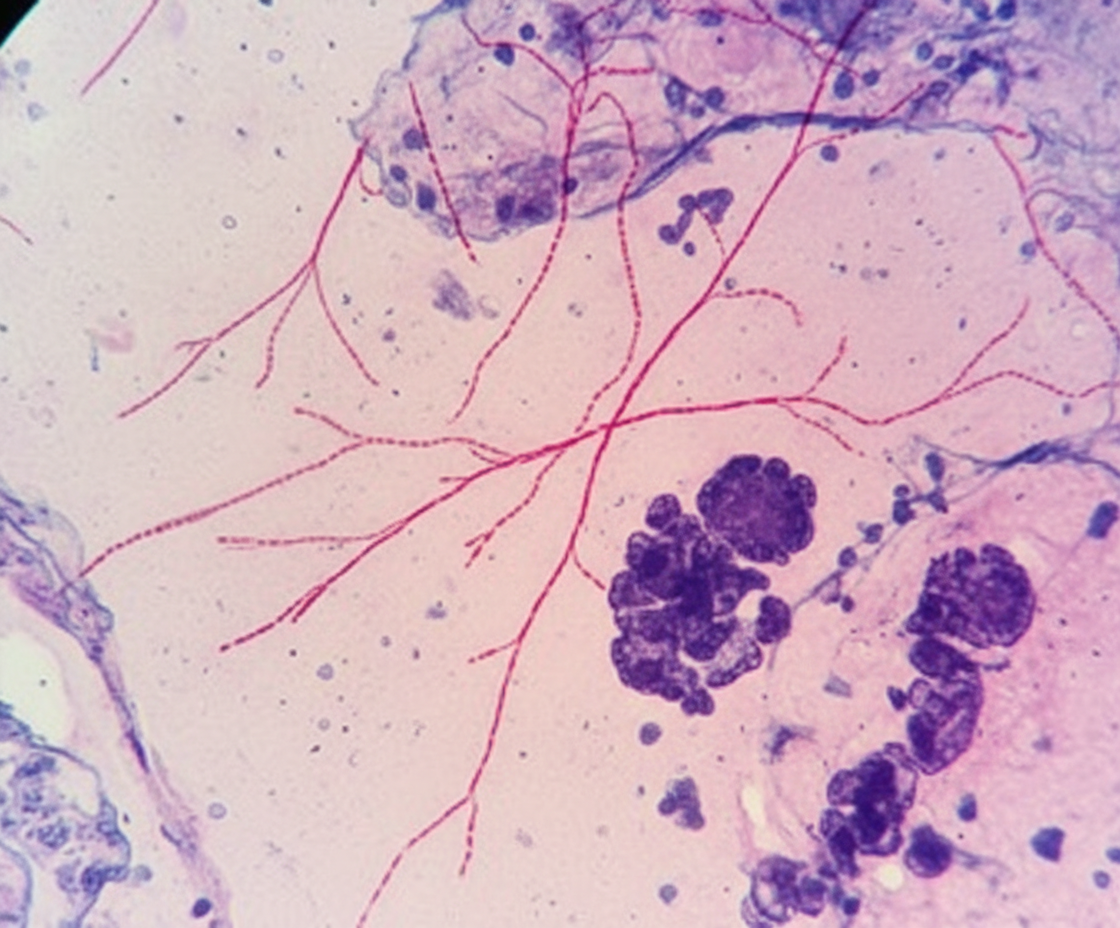
A 68-year-old man comes to the physician because of a 1-month history of fatigue, low-grade fevers, and cough productive of blood-tinged sputum. He has type 2 diabetes mellitus and chronic kidney disease and underwent kidney transplantation 8 months ago. His temperature is 38.9°C (102.1°F) and pulse is 98/min. Examination shows rhonchi in the right lower lung field. An x-ray of the chest shows a right-sided lobar consolidation. A photomicrograph of specialized acid-fast stained tissue from a blood culture is shown. Which of the following is the strongest predisposing factor for this patient's condition?
Q6
A 34-year-old woman presents with confusion, drowsiness, and headache. The patient’s husband says her symptoms began 2 days ago and have progressively worsened with an acute deterioration of her mental status 2 hours ago. The patient describes the headaches as severe, localized to the frontal and periorbital regions, and worse in the morning. Review of symptoms is significant for a mild, low-grade fever, fatigue, and nausea for the past week. Past medical history is significant for HIV infection for which she is not currently receiving therapy. Her CD4+ T cell count last month was 250/mm3. The blood pressure is 140/85 mm Hg, the pulse rate is 90/min, and the temperature is 37.7°C (100.0°F). On physical examination, the patient is conscious but drowsy. Papilledema is present. No pain is elicited with extension of the leg at the knee joint. The remainder of the physical examination is negative. Laboratory findings, including panculture, are ordered. A noncontrast CT scan of the head is negative and is followed by a lumbar puncture. CSF analysis is significant for:
Opening pressure 250 mm H2O (70-180 mm H2O)
Glucose 30 mg/dL (40-70 mg/dL)
Protein 100 mg/dL (<40 mg/dL)
Cell count 20/mm3 (0-5/mm3)
Which of the following additional findings would most likely be found in this patient?
Q7
A 41-year-old HIV-positive male presents to the ER with a 4-day history of headaches and nuchal rigidity. A lumbar puncture shows an increase in CSF protein and a decrease in CSF glucose. When stained with India ink, light microscopy of the patient’s CSF reveals encapsulated yeast with narrow-based buds. Assuming a single pathogenic organism is responsible for this patient’s symptoms, which of the following diagnostic test results would also be expected in this patient?
Q8
A 32-year-old HIV positive male presents to the office complaining of difficulty swallowing and bad breath for the past couple of months. Upon further questioning, he says, "it feels like there’s something in my throat". He says that the difficulty is sometimes severe enough that he has to skip meals. He added that it mainly occurs with solid foods. He is concerned about his bad breath since he has regular meetings with his clients. Although he is on antiretroviral medications, he admits that he is noncompliant. On examination, the patient is cachectic with pale conjunctiva. On lab evaluation, the patient’s CD4+ count is 70/mm3. What is the most likely cause of his symptoms?
Q9
A 33-year-old HIV-positive male is seen in clinic for follow-up care. When asked if he has been adhering to his HIV medications, the patient exclaims that he has been depressed, thus causing him to not take his medication for six months. His CD4+ count is now 33 cells/mm3. What medication(s) should he take in addition to his anti-retroviral therapy?
Q10
For which of the following patients would you recommend prophylaxis against mycobacterium avium-intracellulare?
Opportunistic infections in HIV/AIDS US Medical PG Practice Questions and MCQs
Question 1: A 26-year-old man comes to the physician for a follow-up examination. He was diagnosed with HIV infection 2 weeks ago. His CD4+ T-lymphocyte count is 162/mm3 (N ≥ 500). An interferon-gamma release assay is negative. Prophylactic treatment against which of the following pathogens is most appropriate at this time?
A. Cytomegalovirus
B. Toxoplasma gondii
C. Mycobacterium tuberculosis
D. Aspergillus fumigatus
E. Pneumocystis jirovecii (Correct Answer)
Explanation: ***Pneumocystis jirovecii***
- This patient's **CD4+ T-lymphocyte count of 162/mm3** is below the threshold of 200/mm3, indicating a significant risk for **Pneumocystis pneumonia (PCP)**, an opportunistic infection in HIV.
- Prophylaxis with **trimethoprim-sulfamethoxazole (TMP-SMX)** is highly effective and recommended for HIV patients with CD4 counts less than 200/mm3.
*Cytomegalovirus*
- **CMV prophylaxis** is generally not recommended for all HIV patients, even with low CD4 counts, unless there is evidence of active disease or extremely low CD4 counts (e.g., <50/mm3) with high viral loads.
- While CMV can cause end-organ disease in advanced HIV, routine primary prophylaxis is not standard for this CD4 level.
*Toxoplasma gondii*
- **Toxoplasma prophylaxis** is indicated for HIV patients with **CD4 counts less than 100/mm3** who are also seropositive for *Toxoplasma gondii*.
- The patient's CD4 count is 162/mm3, and there's no mention of *Toxoplasma* serostatus, making it less appropriate than PCP prophylaxis.
*Mycobacterium tuberculosis*
- The patient's **interferon-gamma release assay (IGRA) is negative**, which suggests no **latent tuberculosis infection (LTBI)**, thus making primary prophylaxis unnecessary at this time.
- While HIV patients are at high risk for TB, prophylaxis is typically given for LTBI or as secondary prophylaxis for those who have completed treatment for active TB.
*Aspergillus fumigatus*
- **Aspergillus infections** are typically seen in patients with severe **neutropenia** or those receiving high-dose corticosteroids, not primarily in HIV patients based solely on CD4 count.
- Routine prophylaxis for Aspergillus is not recommended for HIV patients, even with low CD4 counts, unless there is a specific risk factor.
Question 2: A 40-year-old man with AIDS comes to the physician because of a 3-week history of intermittent fever, abdominal pain, and diarrhea. He has also had a nonproductive cough and a 3.6-kg (8-lb) weight loss in this period. He was treated for pneumocystis pneumonia 2 years ago. He has had skin lesions on his chest for 6 months. Five weeks ago, he went on a week-long hiking trip in Oregon. Current medications include efavirenz, tenofovir, and emtricitabine. He says he has had trouble adhering to his medication. His temperature is 38.3°C (100.9°F), pulse is 96/min, and blood pressure is 110/70 mm Hg. Examination shows oral thrush on his palate and a white, non-scrapable plaque on the left side of the tongue. There is axillary and inguinal lymphadenopathy. There are multiple violaceous plaques on the chest. Crackles are heard on auscultation of the chest. Abdominal examination shows mild, diffuse tenderness throughout the lower quadrants. The liver is palpated 2 to 3 cm below the right costal margin, and the spleen is palpated 1 to 2 cm below the left costal margin. Laboratory studies show:
Hemoglobin 12.2 g/dL
Leukocyte count 4,800/mm3
CD4+ T-lymphocytes 44/mm3 (Normal ≥ 500 mm3)
Platelet count 258,000/mm3
Serum
Na+ 137 mEq/L
Cl- 102 mEq/L
K+ 4.9 mEq/L
Alkaline phosphatase 202 U/L
One set of blood culture grows acid-fast organisms. A PPD skin test shows 4 mm of induration. Which of the following is the most appropriate pharmacotherapy for this patient's condition?
A. Rifampin and isoniazid
B. Voriconazole
C. Erythromycin
D. Amphotericin B and itraconazole
E. Azithromycin and ethambutol (Correct Answer)
Explanation: ***Azithromycin and ethambutol***
- This patient presents with disseminated **Mycobacterium avium complex (MAC)** infection, evidenced by systemic symptoms (fever, weight loss, abdominal pain, diarrhea), **hepatosplenomegaly**, elevated alkaline phosphatase, and the isolation of **acid-fast organisms** from blood cultures in an HIV-positive patient with a **CD4 count of 44 cells/mm³**. Azithromycin (or clarithromycin) in combination with ethambutol is the recommended treatment for disseminated MAC.
- The diagnosis is further supported by the patient's history of non-adherence to ART, leading to a severely immunocompromised state, and the fact that MAC is a common opportunistic infection in patients with **AIDS and CD4 counts below 50 cells/mm³**.
*Rifampin and isoniazid*
- This combination is part of the standard regimen for **Mycobacterium tuberculosis** infection. While the patient has acid-fast organisms, his low **CD4 count** and disseminated symptoms are more characteristic of MAC than typical pulmonary tuberculosis, especially given the rapid dissemination.
- The PPD induration of 4mm is not diagnostic of active tuberculosis in an immunocompromised patient; a PPD response can be blunted in severe immunodeficiency.
*Voriconazole*
- **Voriconazole** is an antifungal medication primarily used to treat serious fungal infections, such as invasive aspergillosis, candidiasis, and scedosporiosis.
- The patient's presentation with acid-fast organisms from blood culture indicates a bacterial infection, not a fungal infection, making voriconazole inappropriate.
*Erythromycin*
- **Erythromycin** is a macrolide antibiotic, but it is not the preferred or effective treatment for disseminated MAC. While macrolides like azithromycin and clarithromycin are used, erythromycin has generally fallen out of favor for mycobacterial infections due to its inferior efficacy and higher gastrointestinal side effects compared to newer macrolides.
- It is typically used for common bacterial respiratory tract infections, skin infections, and sexually transmitted infections, but not for opportunistic mycobacterial infections in immunocompromised patients.
*Amphotericin B and itraconazole*
- **Amphotericin B** and **itraconazole** are antifungals used for systemic fungal infections (e.g., blastomycosis, histoplasmosis, cryptococcosis, aspergillosis).
- The isolation of **acid-fast organisms** from blood culture confirms a mycobacterial infection, not a fungal one, hence these antifungals would not be effective.
Question 3: A 35-year-old man comes to the emergency department with fever, chills, dyspnea, and a productive cough. His symptoms began suddenly 2 days ago. He was diagnosed with HIV 4 years ago and has been on triple antiretroviral therapy since then. He smokes one pack of cigarettes daily. He is 181 cm (5 ft 11 in) tall and weighs 70 kg (154 lb); BMI is 21.4 kg/m2. He lives in Illinois and works as a carpenter. His temperature is 38.8°C (101.8°F), pulse is 110/min, respirations are 24/min, and blood pressure is 105/74 mm Hg. Pulse oximetry on room air shows an oxygen saturation of 92%. Examinations reveals crackles over the right lower lung base. The remainder of the examination shows no abnormalities. Laboratory studies show:
Hemoglobin 11.5 g/dL
Leukocyte count 12,800/mm3
Segmented neutrophils 80%
Eosinophils 1%
Lymphocytes 17%
Monocytes 2%
CD4+ T-lymphocytes 520/mm3(N ≥ 500)
Platelet count 258,000/mm3
Serum
Na+ 137 mEq/L
Cl- 102 mEq/L
K+ 5.0 mEq/L
HCO3- 22 mEq/L
Glucose 92 mg/dL
An x-ray of the chest shows a right lower-lobe infiltrate of the lung. Which of the following is the most likely causal organism?
A. Streptococcus pneumoniae (Correct Answer)
B. Legionella pneumophila
C. Pneumocystis jirovecii
D. Staphylococcus aureus
E. Cryptococcus neoformans
Explanation: ***Streptococcus pneumoniae***
- This patient presents with **fever, chills, productive cough, dyspnea, leukocytosis with neutrophilia, and a lobar infiltrate on chest X-ray**, which are classic signs of **community-acquired bacterial pneumonia**.
- Although the patient is **HIV-positive**, his CD4+ count is >500/mm3 and he is on antiretroviral therapy, indicating relatively preserved immune function, making *S. pneumoniae* the most common cause of pneumonia even in HIV-infected individuals with controlled disease.
*Legionella pneumophila*
- While *Legionella* can cause pneumonia with fever and dyspnea, it is often associated with **gastrointestinal symptoms** (e.g., diarrhea) and **hyponatremia**, which are not present here.
- Exposure to contaminated water sources is a common risk factor, and the lobar infiltrate is less typical than diffuse or patchy infiltrates.
*Pneumocystis jirovecii*
- *Pneumocystis pneumonia (PJP)* is typically seen in **HIV patients with severely suppressed immune systems (CD4+ count <200/mm3)**.
- The patient's CD4+ count (520/mm3) is above this threshold, and PJP usually presents with diffuse interstitial infiltrates rather than a lobar infiltrate.
*Staphylococcus aureus*
- *S. aureus* pneumonia often occurs in the context of recent **influenza infection, intravenous drug use, or hospitalization**, or can present rapidly with **necrotizing pneumonia** or **empyema**.
- While possible, the absence of these specific risk factors or severe features makes it less likely than *S. pneumoniae* in this specific presentation.
*Cryptococcus neoformans*
- *Cryptococcus neoformans* is an opportunistic fungus that typically causes **pulmonary or central nervous system infections**, especially in severely immunocompromised patients (CD4+ count usually <100/mm3).
- Pulmonary cryptococcosis often manifests as **nodules or cavitary lesions**, or can be asymptomatic, which differs from the acute lobar pneumonia presented.
Question 4: A 33-year-old man with HIV comes to the physician because of a nonproductive cough and shortness of breath for 3 weeks. He feels tired after walking up a flight of stairs and after long conversations on the phone. He appears chronically ill. His temperature is 38.5°C (101.3°F), and pulse is 110/min. Pulse oximetry on room air shows an oxygen saturation of 95%. Upon walking, his oxygen saturation decreases to 85%. Cardiopulmonary examination is normal. Laboratory studies show a CD4+ T-lymphocyte count of 176/mm3 (N > 500). Results of urine Legionella antigen testing are negative. A CT scan of the chest shows diffuse, bilateral ground-glass opacities. Microscopic examination of fluid obtained from bronchoalveolar lavage will most likely show which of the following findings?
A. Silver-staining, disc-shaped cysts (Correct Answer)
B. Silver-staining, gram-negative bacilli
C. Septate, acute-angle branching hyphae
D. Gram-positive, catalase-positive cocci
E. Intracellular, acid-fast bacteria
Explanation: **Silver-staining, disc-shaped cysts**
- The patient's presentation with **nonproductive cough**, **shortness of breath**, fever, and **exertional hypoxemia** (desaturation upon walking) in the context of **HIV with a low CD4+ count (176/mm3)** is highly suggestive of **Pneumocystis pneumonia (PCP)**.
- **Pneumocystis jirovecii** (formerly *Pneumocystis carinii*) is the causative agent and is characterized by **disc-shaped cysts that stain with silver stains** (e.g., GMS stain) in bronchoalveolar lavage (BAL) fluid.
*Silver-staining, gram-negative bacilli*
- This description is characteristic of **Legionella pneumophila**, which can cause pneumonia, but the **urine Legionella antigen test was negative**, making this diagnosis less likely.
- While Legionella is a gram-negative bacillus and can be stained with silver, the overall clinical picture and negative antigen test point away from it.
*Septate, acute-branching hyphae*
- This morphology is characteristic of **Aspergillus species**, which can cause invasive aspergillosis, particularly in immunocompromised patients.
- However, aspergillosis typically presents with different radiological findings (e.g., nodules, cavitations, halo sign, or air crescent sign), and the clinical picture in this case is more typical of PCP.
*Gram-positive, catalase-positive cocci*
- This description is typical for **Staphylococcus aureus**, which can cause bacterial pneumonia.
- While *S. aureus* can cause pneumonia in immunocompromised patients, the diffuse **ground-glass opacities** and exertional hypoxemia, coupled with a low CD4 count, are not typical for staphylococcal pneumonia.
*Intracellular, acid-fast bacteria*
- This morphology is characteristic of **Mycobacterium species**, such as **Mycobacterium tuberculosis** or **Mycobacterium avium complex (MAC)**.
- While TB and MAC infections are common in HIV patients with low CD4 counts, they usually present with different radiological patterns (e.g., cavitations, lymphadenopathy for TB; disseminated disease for MAC) and the sudden onset of profound exertional hypoxemia is less typical.
Question 5: A 68-year-old man comes to the physician because of a 1-month history of fatigue, low-grade fevers, and cough productive of blood-tinged sputum. He has type 2 diabetes mellitus and chronic kidney disease and underwent kidney transplantation 8 months ago. His temperature is 38.9°C (102.1°F) and pulse is 98/min. Examination shows rhonchi in the right lower lung field. An x-ray of the chest shows a right-sided lobar consolidation. A photomicrograph of specialized acid-fast stained tissue from a blood culture is shown. Which of the following is the strongest predisposing factor for this patient's condition?
A. Sharing of unsterile IV needles
B. Poor oral hygiene
C. Exposure to contaminated air-conditioning unit
D. Exposure to contaminated soil (Correct Answer)
E. Crowded living situation
Explanation: ***Exposure to contaminated soil***
- The photomicrograph shows **acid-fast stain** demonstrating **filamentous, branching gram-positive rods**, consistent with **Nocardia species**.
- **Nocardiosis** is acquired through **inhalation of Nocardia spores from contaminated soil or dust**, which is the primary environmental source and route of transmission.
- While this patient's **immunocompromised status** (post-kidney transplant on immunosuppressive therapy) is the critical host factor that predisposes him to infection, **soil exposure** is the specific environmental predisposing factor among the options listed.
- Nocardia is an opportunistic pathogen that primarily affects immunocompromised individuals, causing pulmonary infection that can disseminate.
*Sharing of unsterile IV needles*
- Sharing unsterile IV needles is a common route for transmitting **bloodborne pathogens** (e.g., HIV, hepatitis B/C) or causing bacterial endocarditis and soft tissue infections.
- This is not the typical route of acquisition for **pulmonary nocardiosis**, which is acquired via inhalation.
*Poor oral hygiene*
- Poor oral hygiene predisposes to dental caries, periodontal disease, and aspiration of oral flora causing pneumonia or lung abscess.
- **Actinomyces** (not acid-fast) is associated with poor oral hygiene and can be confused with Nocardia morphologically, but Actinomyces is not acid-fast positive.
- This is not a risk factor for acquiring **Nocardia** infection.
*Exposure to contaminated air-conditioning unit*
- Contaminated air-conditioning units and water systems are associated with **Legionella pneumophila**, causing Legionnaires' disease.
- Legionella is not acid-fast and does not show the branching filamentous morphology seen with Nocardia.
*Crowded living situation*
- Crowded living situations increase risk of person-to-person transmission of respiratory pathogens such as **Mycobacterium tuberculosis**, influenza, and other droplet-spread infections.
- **Nocardia** is acquired from environmental sources (soil, dust), not through person-to-person transmission.
Question 6: A 34-year-old woman presents with confusion, drowsiness, and headache. The patient’s husband says her symptoms began 2 days ago and have progressively worsened with an acute deterioration of her mental status 2 hours ago. The patient describes the headaches as severe, localized to the frontal and periorbital regions, and worse in the morning. Review of symptoms is significant for a mild, low-grade fever, fatigue, and nausea for the past week. Past medical history is significant for HIV infection for which she is not currently receiving therapy. Her CD4+ T cell count last month was 250/mm3. The blood pressure is 140/85 mm Hg, the pulse rate is 90/min, and the temperature is 37.7°C (100.0°F). On physical examination, the patient is conscious but drowsy. Papilledema is present. No pain is elicited with extension of the leg at the knee joint. The remainder of the physical examination is negative. Laboratory findings, including panculture, are ordered. A noncontrast CT scan of the head is negative and is followed by a lumbar puncture. CSF analysis is significant for:
Opening pressure 250 mm H2O (70-180 mm H2O)
Glucose 30 mg/dL (40-70 mg/dL)
Protein 100 mg/dL (<40 mg/dL)
Cell count 20/mm3 (0-5/mm3)
Which of the following additional findings would most likely be found in this patient?
A. Gram-positive diplococci are present on microscopy
B. CSF shows a positive acid-fast bacillus stain
C. Multiple ring-enhancing lesions are seen on a CT scan
D. CSF shows gram negative diplococci
E. CSF India ink stain shows encapsulated yeast cells (Correct Answer)
Explanation: ***CSF India ink stain shows encapsulated yeast cells***
- The patient's presentation with **subacute meningitis symptoms** (headache, confusion, low-grade fever) in the setting of **untreated HIV infection** with a low CD4+ count (250/mm3) strongly suggests an opportunistic infection.
- The CSF findings of **elevated opening pressure**, **low glucose**, **high protein**, and **moderate pleocytosis** are classic for **cryptococcal meningitis**, for which the India ink stain is diagnostic for encapsulated yeast cells.
*Gram-positive diplococci are present on microscopy*
- This finding suggests **bacterial meningitis**, specifically caused by organisms like *Streptococcus pneumoniae*.
- While bacterial meningitis presents acutely with severe symptoms, the **subacute course** and moderate pleocytosis are less typical, and the patient's immune status points towards an opportunistic infection.
*CSF shows a positive acid-fast bacillus stain*
- A positive **acid-fast bacillus (AFB) stain** in CSF would indicate **tuberculous meningitis**.
- While tuberculous meningitis can present subacutely with similar CSF findings in HIV patients, it typically involves a more significant lymphocytic pleocytosis and a more pronounced chronic course than suggested by the acute worsening.
*Multiple ring-enhancing lesions are seen on a CT scan*
- **Multiple ring-enhancing lesions** on CT or MRI are characteristic of **Toxoplasma encephalopathy** or **CNS lymphoma** in HIV-positive patients.
- While these are common HIV-related CNS complications, the patient's primary presentation points to **meningitis** (inflammation of meninges with CSF abnormalities) rather than focal brain lesions without meningeal involvement.
*CSF shows gram negative diplococci*
- **Gram-negative diplococci** in CSF suggest **meningococcal meningitis** (*Neisseria meningitidis*).
- This typically presents as an **acute, severe bacterial meningitis** with rapid deterioration, usually in immunocompetent individuals or specific outbreaks, which doesn't align with the subacute onset and specific CSF profile for cryptococcus.
Question 7: A 41-year-old HIV-positive male presents to the ER with a 4-day history of headaches and nuchal rigidity. A lumbar puncture shows an increase in CSF protein and a decrease in CSF glucose. When stained with India ink, light microscopy of the patient’s CSF reveals encapsulated yeast with narrow-based buds. Assuming a single pathogenic organism is responsible for this patient’s symptoms, which of the following diagnostic test results would also be expected in this patient?
A. Ring-enhancing lesions on CT imaging
B. Latex agglutination of CSF (Correct Answer)
C. Cotton-wool spots on funduscopic exam
D. Acid-fast oocysts in stool
E. Frontotemporal atrophy on MRI
Explanation: **Latex agglutination of CSF**
- The presence of **encapsulated yeast with narrow-based buds** in the cerebrospinal fluid (CSF) on **India ink stain** is pathognomonic for **Cryptococcus neoformans**, the causative agent of **cryptococcal meningitis**.
- **Latex agglutination** is a rapid and highly sensitive test that detects the **cryptococcal capsular polysaccharide antigen** in CSF, making it an expected diagnostic finding.
*Ring-enhancing lesions on CT imaging*
- **Ring-enhancing lesions** are typically associated with **Toxoplasma gondii encephalitis** (toxoplasmosis) in HIV-positive patients, which would also present with focal neurological deficits.
- While cryptococcal meningitis can sometimes cause cryptococcomas that may enhance, these are less common and not the primary diagnostic feature.
*Cotton-wool spots on funduscopic exam*
- **Cotton-wool spots** are associated with **HIV retinopathy** or sometimes **cytomegalovirus (CMV) retinitis**, presenting as fluffy white lesions on the retina.
- These findings are indicative of microinfarctions in the retinal nerve fiber layer due to various causes, but not directly linked to fungal meningitis.
*Acid-fast oocysts in stool*
- **Acid-fast oocysts in stool** are characteristic of infections such as **cryptosporidiosis** or **isosporiasis**, which cause chronic diarrhea in immunocompromised individuals.
- These are gastrointestinal pathogens and would not directly lead to the neurological symptoms and CSF findings described in the patient.
*Frontotemporal atrophy on MRI*
- **Frontotemporal atrophy** is a feature of **neurocognitive disorders** such as **frontotemporal dementia** or **HIV-associated dementia (HAD)**, a chronic neurocognitive decline.
- While HAD can occur in HIV-positive individuals, it does not explain the acute presentation of headaches, nuchal rigidity, and specific CSF findings suggestive of an acute infectious process like meningitis.
Question 8: A 32-year-old HIV positive male presents to the office complaining of difficulty swallowing and bad breath for the past couple of months. Upon further questioning, he says, "it feels like there’s something in my throat". He says that the difficulty is sometimes severe enough that he has to skip meals. He added that it mainly occurs with solid foods. He is concerned about his bad breath since he has regular meetings with his clients. Although he is on antiretroviral medications, he admits that he is noncompliant. On examination, the patient is cachectic with pale conjunctiva. On lab evaluation, the patient’s CD4+ count is 70/mm3. What is the most likely cause of his symptoms?
A. Candida albicans (Correct Answer)
B. Human papilloma virus
C. Cytomegalovirus
D. HHV-8
E. Irritation due to medication therapy
Explanation: ***Candida albicans***
- The patient's presentation with **dysphagia** (difficulty swallowing), **bad breath**, and sensation of something in the throat, combined with **HIV positive status** and a very **low CD4+ count (70/mm³)**, is highly suggestive of **esophageal candidiasis**.
- **Esophageal candidiasis** is a common **opportunistic infection** in immunocompromised individuals, particularly those with advanced HIV (typically CD4+ <100/mm³), and presents with difficulty swallowing (especially solids), halitosis, sensation of food impaction, and can lead to malnutrition and cachexia.
*Human papilloma virus*
- While **HPV infections** can occur in HIV-positive individuals and cause squamous lesions, they typically manifest as warts or papillomas and are less likely to be the primary cause of such severe, obstructive dysphagia without other characteristic findings.
- HPV-related lesions in the esophagus are relatively rare and usually do not present with the specific "something in my throat" sensation or the degree of malnourishment seen in this patient due to diffuse candidal inflammation.
*Cytomegalovirus*
- **Cytomegalovirus (CMV) esophagitis** is a serious opportunistic infection in HIV patients with very low CD4+ counts (typically <50/mm³), and it can cause dysphagia.
- However, CMV esophagitis typically presents with **painful swallowing (odynophagia)** and **linear or deep ulcers** on endoscopy rather than the diffuse inflammation and white plaques characteristic of candidiasis. The patient's presentation of difficulty (not pain) with solids and the "something in the throat" sensation is more typical of candidiasis.
*HHV-8*
- **Human Herpesvirus 8 (HHV-8)** is primarily associated with **Kaposi's sarcoma (KS)**, which can affect the gastrointestinal tract, including the esophagus.
- While KS lesions in the esophagus can cause dysphagia, they are typically described as **purplish, raised lesions**, and the patient's symptoms of bad breath and a feeling of "something in my throat" are not the most common presentation for esophageal Kaposi's sarcoma.
*Irritation due to medication therapy*
- Although some medications, including certain antiretrovirals, can cause **pill esophagitis** or irritation, the patient's symptoms are chronic ("past couple of months"), severe enough to cause **cachexia**, and his **noncompliance** would make medication-induced irritation less likely to be the sole cause of such severe and prolonged symptoms.
- The patient's **compromised immune status** (low CD4+ count) strongly points towards an opportunistic infection rather than merely drug-induced irritation.
Question 9: A 33-year-old HIV-positive male is seen in clinic for follow-up care. When asked if he has been adhering to his HIV medications, the patient exclaims that he has been depressed, thus causing him to not take his medication for six months. His CD4+ count is now 33 cells/mm3. What medication(s) should he take in addition to his anti-retroviral therapy?
A. Azithromycin and fluconazole
B. Azithromycin, dapsone, and fluconazole
C. Dapsone
D. Fluconazole
E. Azithromycin and trimethoprim-sulfamethoxazole (Correct Answer)
Explanation: ***Azithromycin and trimethoprim-sulfamethoxazole***
- With a **CD4+ count of 33 cells/mm3**, this patient is at high risk for **Pneumocystis jirovecii pneumonia (PJP)** and **Toxoplasma gondii encephalitis**, for which **trimethoprim-sulfamethoxazole (TMP-SMX)** is the prophylaxis of choice.
- He is also at very high risk for **Mycobacterium avium complex (MAC) infection**, for which **azithromycin** is the recommended preventative treatment when the CD4 count is below 50 cells/mm3.
*Azithromycin and fluconazole*
- While **azithromycin** is indicated for MAC prophylaxis, **fluconazole** is typically used for **cryptococcal meningitis** or **candidiasis**, which are not the primary, immediate prophylactic concerns at this specific CD4 count unless there's evidence of these infections.
- The most critical opportunistic infections to prevent at a CD4 count of 33 cells/mm3 are PJP, Toxoplasmosis, and MAC.
*Azithromycin, dapsone, and fluconazole*
- **Dapsone** can be used as an alternative for **PJP prophylaxis** if TMP-SMX is contraindicated, but it is not the first-line choice and does not cover toxoplasmosis as effectively as TMP-SMX alone.
- **Fluconazole** again is not a primary prophylactic agent at this CD4 count in the absence of specific indications.
*Dapsone*
- **Dapsone** is an alternative for **PJP prophylaxis** and can also prevent **Toxoplasma gondii encephalitis** when combined with pyrimethamine, but it is not the first-line recommendation.
- It does not provide coverage against **MAC infection**, which is a significant risk at this CD4 count.
*Fluconazole*
- **Fluconazole** is primarily used for **fungal infections** like **candidiasis** or **cryptococcosis**.
- It does not prevent **PJP, Toxoplasmosis, or MAC**, which are the most critical prophylactic concerns for a patient with a CD4 count of 33 cells/mm3.
Question 10: For which of the following patients would you recommend prophylaxis against mycobacterium avium-intracellulare?
A. 30-year old HIV positive male with CD4 count of 20 cells/microliter and a viral load of < 50 copies/mL (Correct Answer)
B. 22-year old HIV positive female with CD4 count of 750 cells/microliter and a viral load of 500,000 copies/mL
C. 45-year old HIV positive female with CD4 count of 250 cells/microliter and a viral load of 100,000 copies/mL
D. 50-year old HIV positive female with CD4 count of 150 cells/microliter and a viral load of < 50 copies/mL
E. 36-year old HIV positive male with CD4 count of 75 cells/microliter and an undetectable viral load
Explanation: ***30-year old HIV positive male with CD4 count of 20 cells/microliter and a viral load of < 50 copies/mL***
- Prophylaxis against **Mycobacterium avium complex (MAC)** is recommended for HIV-positive individuals with a **CD4 count below 50 cells/µL** to prevent disseminated MAC infection.
- While an undetectable viral load suggests effective antiretroviral therapy (ART) in general, the extremely low CD4 count indicates severe immunosuppression, making prophylaxis crucial.
*36-year old HIV positive male with CD4 count of 75 cells/microliter and an undetectable viral load*
- The **CD4 count of 75 cells/µL** is above the threshold of 50 cells/µL for MAC prophylaxis, even though it's still low.
- An **undetectable viral load** indicates successful ART, which generally helps improve immune function over time, albeit slowly in this CD4 range.
*22-year old HIV positive female with CD4 count of 750 cells/microliter and a viral load of 500,000 copies/mL*
- A **CD4 count of 750 cells/µL** is well above the threshold for MAC prophylaxis, indicating relatively preserved immune function.
- Although the **viral load is very high**, suggesting uncontrolled HIV replication, the immune system is currently strong enough to ward off MAC.
*45-year old HIV positive female with CD4 count of 250 cells/microliter and a viral load of 100,000 copies/mL*
- A **CD4 count of 250 cells/µL** is above the threshold for MAC prophylaxis, which is 50 cells/µL.
- While the **high viral load** implies an increased risk for opportunistic infections over time, other specific prophylaxes (e.g., PCP if <200) would be considered earlier.
*50-year old HIV positive female with CD4 count of 150 cells/microliter and a viral load of < 50 copies/mL*
- A **CD4 count of 150 cells/µL** is above the threshold for MAC prophylaxis (50 cells/µL).
- An **undetectable viral load** is a positive sign of ART efficacy, but this patient would still require prophylaxis for **Pneumocystis jirovecii pneumonia (PCP)**, as her CD4 count is below 200 cells/µL.
Want unlimited practice?
Get full access to all questions, explanations, and performance tracking.