
HIV cure research — MCQs

A 49-year-old homeless man comes to the emergency department because of fatigue, cough, and worsening shortness of breath for 2 weeks. He was diagnosed with HIV-infection 25 years ago but has never had any symptoms. He has always refused to take antiretroviral medication. Pulmonary examination shows diffuse crackles over bilateral lower lung fields. An x-ray of the chest shows diffuse, symmetrical interstitial infiltrates. His serum level of beta-d-glucan is elevated. Further testing shows a heterozygous mutation that prevents entry of HIV into macrophages. Which of the following proteins is most likely affected by the mutation in this patient?
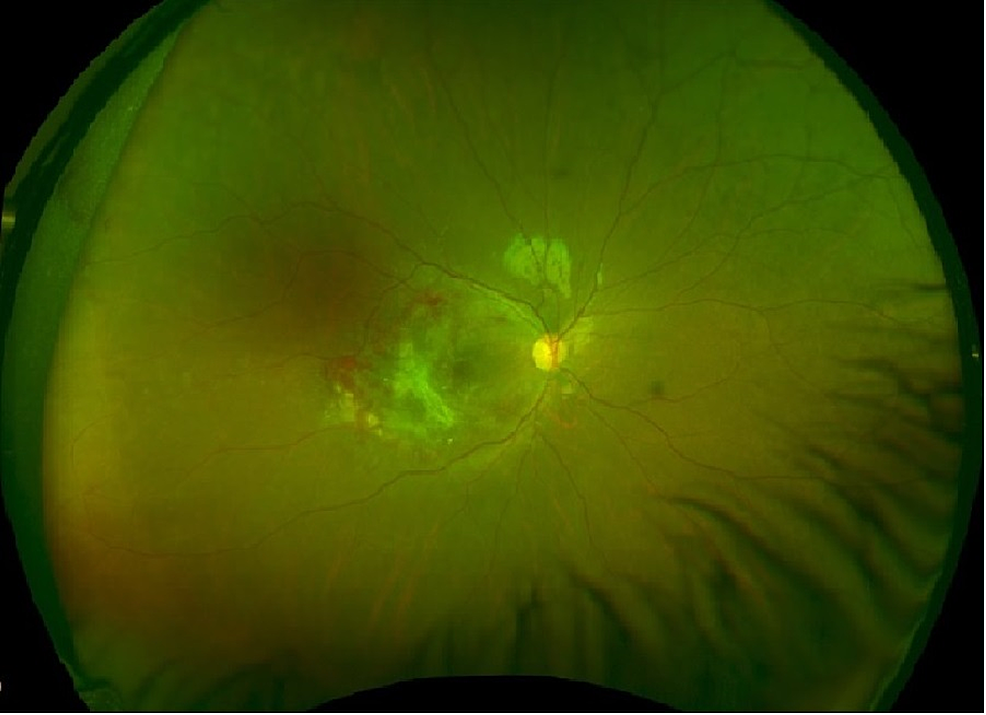
A 40-year-old man presents with problems with his vision. He says he has been experiencing blurred vision and floaters in his left eye for the past few days. He denies any ocular pain, fever, or headaches. Past medical history is significant for HIV infection a few years ago, for which he is noncompliant with his antiretroviral medications and his most recent CD4 count was 100 cells/mm3. His temperature is 36.5°C (97.7°F), the blood pressure is 110/89 mm Hg, the pulse rate is 70/min, and the respiratory rate is 14/min. Ocular exam reveals a decreased vision in the left eye, and a funduscopic examination is shown in the image. The patient is admitted and immediately started on intravenous ganciclovir. A few days after admission he is still complaining of blurry vision and floaters, so he is switched to a different medication. Inhibition of which of the following processes best describes the mechanism of action of the newly added medication?
A 27-year-old man presents with a 2-week history of fever, malaise, and occasional diarrhea. On physical examination, the physician notes enlarged inguinal lymph nodes. An HIV screening test is positive. Laboratory studies show a CD4+ count of 650/mm3. This patient is most likely currently in which of the following stages of HIV infection?
A 49-year-old woman presents to her primary care doctor in late December with malaise. She reports worsening fatigue, myalgias, headache, and malaise that started 1 day ago. She works as a lunch lady at an elementary school. Her past medical history is notable for a distal radius fracture after a fall 2 years ago, but she is otherwise healthy and takes no medications. She does not smoke or drink alcohol. She is married and has 3 adult children who are healthy. Her temperature is 102.9°F (39.4°C), blood pressure is 101/61 mmHg, pulse is 112/min, and respirations are 21/min. On exam, she appears lethargic and uncomfortable but is able to answer questions appropriately. Breath sounds are normal bilaterally. She is started on intravenous fluids and a pharmacologic agent for treatment. Which of the following is the most likely mechanism of action of the drug being used to treat this patient?
A 26-year-old female medical student presents to occupational health after sustaining a needlestick injury. She reports that she was drawing blood from an HIV-positive patient when she stuck herself percutaneously while capping the needle. She immediately washed the puncture wound with betadine. The medical student has a negative HIV serology from the beginning of medical school two years ago. She is monogamous with one male partner and denies any intravenous drug use. The source patient was recently diagnosed with HIV, and has a CD4 count of 550 cells/µL. His most recent viral load is 1,800,000 copies/mL, and he was started on HAART three days ago. Which of the following is the best next step to manage the female medical student’s exposure?
A 29-year-old woman tests positive for HIV during pregnancy screening. She is concerned about transmission to her baby. Which of the following interventions most significantly reduces the risk of vertical transmission?
A 24-year-old male presents to the emergency room with a cough and shortness of breath for the past 3 weeks. You diagnose Pneumocystis jiroveci pneumonia (PCP). An assay of the patient's serum reveals the presence of viral protein p24. Which of the following viral genes codes for this protein?
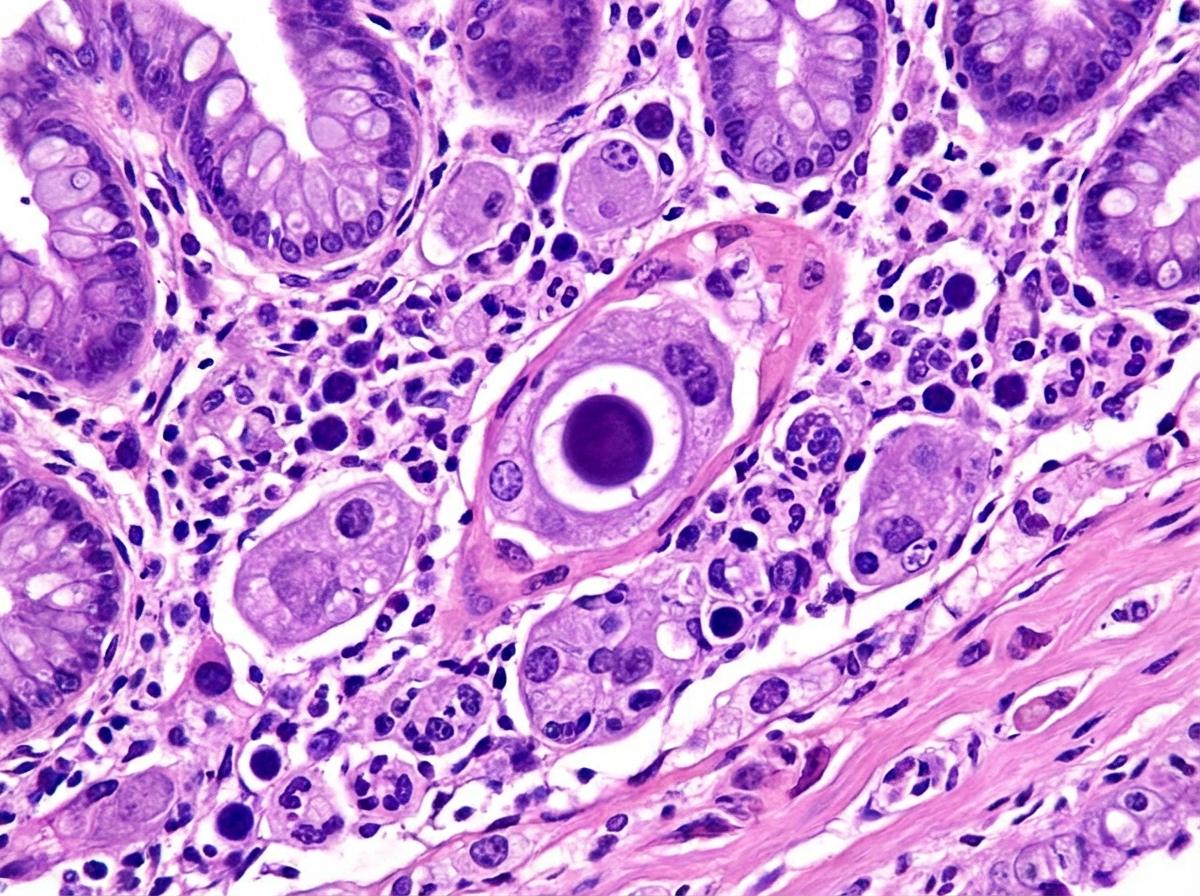
A 45-year-old man comes to the physician because of a 3-week history of progressive diarrhea and a 2.2-kg (5-lb) weight loss. During the past week, he has had six small bloody stools daily. He is employed as a sales manager and regularly flies to South America. He has HIV, gastroesophageal reflux disease, and hypertension. Current medications include chlorthalidone, omeprazole, emtricitabine, tenofovir, and efavirenz. He reports taking efavirenz irregularly. He is 175 cm (5 ft 9 in) tall and weighs 64 kg (143 lb); BMI is 22 kg/m2. His temperature is 38.1°C (100.6°F), pulse is 91/min, and blood pressure is 116/69 mm Hg. The abdomen is scaphoid. Bowel sounds are normal. His CD4+ T-lymphocyte count is 44/mm3 (N ≥ 500), leukocyte count is 6,000/mm3, and erythrocyte sedimentation rate is 12 mm/h. Colonoscopy shows areas of inflammation scattered throughout the colon with friability, granularity, and shallow linear ulcerations. The intervening mucosa between areas of inflammation appears normal. A biopsy specimen is shown. Which of the following is the most likely cause of this patient's symptoms?
A 52-year-old woman with HIV infection is brought to the emergency department 20 minutes after she had a generalized tonic-clonic seizure. She appears lethargic and confused. Laboratory studies show a CD4+ count of 89 cells/μL (N > 500). A CT scan of the head with contrast shows multiple ring-enhancing lesions in the basal ganglia and subcortical white matter. An India ink preparation of cerebrospinal fluid is negative. Which of the following is the most likely diagnosis?
An investigator studying the immunologic profile of various cells notices that the blood of a test subject agglutinates upon addition of a serum containing antibodies against P blood group antigens. Infection with which of the following pathogens would most likely be prevented by these antibodies?
Want unlimited practice?
Get full access to all questions, explanations, and performance tracking.
Scan to download app