
HCV diagnostic testing — MCQs

A scientist in Chicago is studying a new blood test to detect Ab to EBV with increased sensitivity and specificity. So far, her best attempt at creating such an exam reached 82% sensitivity and 88% specificity. She is hoping to increase these numbers by at least 2 percent for each value. After several years of work, she believes that she has actually managed to reach a sensitivity and specificity much greater than what she had originally hoped for. She travels to China to begin testing her newest blood test. She finds 2,000 patients who are willing to participate in her study. Of the 2,000 patients, 1,200 of them are known to be infected with EBV. The scientist tests these 1,200 patients' blood and finds that only 120 of them tested negative with her new exam. Of the patients who are known to be EBV-free, only 20 of them tested positive. Given these results, which of the following correlates with the exam's specificity?
A 60-year-old rock musician presents to the office because he has been feeling increasingly tired for the past 6 months. He has a history of intravenous drug use and alcohol abuse. He states that he feels quite tired, but he otherwise has no complaints. Physical examination is noncontributory. His laboratory values are normal other than moderately elevated liver enzymes. Which of the following additional tests should you order first?
A 35-year-old male anesthesiologist presents to the occupational health clinic after a needlestick exposure while obtaining an arterial line in a patient with cirrhosis. In addition to a standard bloodborne pathogen laboratory panel sent for all needlestick exposures at his hospital, additional hepatitis panels are ordered upon the patient's request. The patient's results are shown below: HIV 4th generation Ag/Ab: Negative/Negative Hepatitis B surface antigen (HBsAg): Negative Hepatitis C antibody: Negative Anti-hepatitis B surface antibody (HBsAb): Positive Anti-hepatitis B core IgM antibody (HBc IgM): Negative Anti-hepatitis B core IgG antibody (HBc IgG): Positive What is the most likely explanation of the results above?
A 60-year-old man comes to the physician’s office with jaundice. Liver ultrasound reveals a shrunken liver and biopsy reveals cirrhosis. Hepatitis serologies are below: Anti-HAV: negative HBsAg: negative HBsAb: positive HBeAg: negative Anti-HBe: negative Anti-HBc: negative Anti-HCV: positive The hepatitis C viral load is 1,000,000 copies/mL. The patient is started on an antiviral regimen including sofosbuvir. What is the mechanism of action of this drug?
A 26-year-old woman who is a medical student is undergoing evaluation after sticking herself with a needle while drawing blood from a patient. The patient’s medical history is unknown. A blood sample from the medical student is drawn and processed, and the results are presented below: Anti-HAV IgM negative Anti-HAV IgG positive HBsAg negative HBeAg negative Anti-HBs negative Anti-HBc IgG negative Anti-HBc IgM negative Anti-HBe negative Anti-HCV negative What is true about the student’s laboratory findings?
A 35-year-old man with no known past medical history presents to his physician because he is applying for a job as a healthcare worker, which requires screening for the hepatitis B virus (HBV). The patient states that he is in good health and denies any symptoms. His vital signs and physical exam are unremarkable. Labs are drawn, and the patient's HBV serology shows the following: HBsAg: positive anti-HBsAg antibody: negative anti-HBcAg IgM: negative anti-HBcAg IgG: positive HBeAg: negative anti-HBeAg antibody: positive Which of the following best describes this patient's results?
An investigator is studying the rate of multiplication of hepatitis C virus in hepatocytes. The viral genomic material is isolated, enzymatically cleaved into smaller fragments and then separated on a formaldehyde agarose gel membrane. Targeted probes are then applied to the gel and visualized under x-ray. Which of the following is the most likely structure being identified by this test?
A 57-year-old man comes to the physician because of generalized malaise, yellowish discoloration of the eyes, and pruritus on the back of his hands that worsens when exposed to sunlight for the past several months. He has not seen a physician in 15 years. Physical examination shows scleral icterus and mild jaundice. There is a purpuric rash with several small vesicles and hyperpigmented lesions on the dorsum of both hands. The causal pathogen of this patient's underlying condition was most likely acquired in which of the following ways?
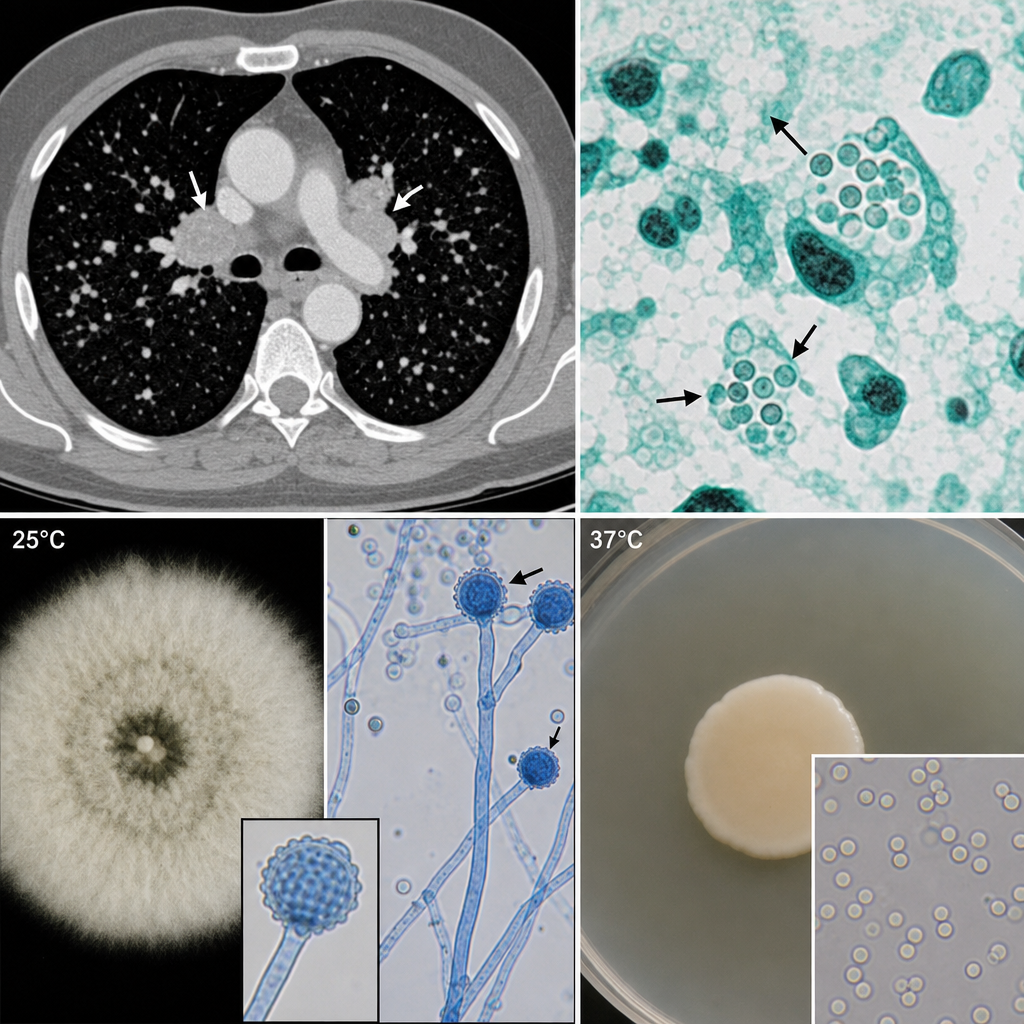
A 45-year-old immunocompetent woman from rural Ohio presents with a 3-week history of low-grade fever, night sweats, and a non-productive cough. She recently helped clean out an old barn near a dried river bed. Chest CT reveals mediastinal lymphadenopathy and multiple small pulmonary nodules. A bronchoalveolar lavage specimen is sent for fungal culture. At 25°C, the organism grows as a mold with tuberculate macroconidia. At 37°C, the same isolate grows as small yeast cells (2–4 µm) found inside macrophages on cytology. A colleague suggests the presentation is more consistent with Blastomyces dermatitidis based on the geographic exposure. Which of the following findings would most definitively argue against the colleague's proposed organism and confirm the correct diagnosis?
A group of researchers conducted various studies on hepatitis C incidence and prevalence. They noticed that there is a high prevalence of hepatitis C in third-world countries, where it has a significant impact on the quality of life of the infected individual. The research group made several attempts to produce a vaccine that prevents hepatitis C infection but all attempts failed. Which of the following would most likely be the reason for the failure to produce a vaccine?
Want unlimited practice?
Get full access to all questions, explanations, and performance tracking.
Scan to download app