
HBV/HCV co-infection — MCQs

A 60-year-old rock musician presents to the office because he has been feeling increasingly tired for the past 6 months. He has a history of intravenous drug use and alcohol abuse. He states that he feels quite tired, but he otherwise has no complaints. Physical examination is noncontributory. His laboratory values are normal other than moderately elevated liver enzymes. Which of the following additional tests should you order first?
A 60-year-old man comes to the physician’s office with jaundice. Liver ultrasound reveals a shrunken liver and biopsy reveals cirrhosis. Hepatitis serologies are below: Anti-HAV: negative HBsAg: negative HBsAb: positive HBeAg: negative Anti-HBe: negative Anti-HBc: negative Anti-HCV: positive The hepatitis C viral load is 1,000,000 copies/mL. The patient is started on an antiviral regimen including sofosbuvir. What is the mechanism of action of this drug?
A 32-year-old woman comes to the physician because of a 3-month history of fatigue and myalgia. Over the past month, she has had intermittent episodes of nausea. She has a history of intravenous drug use, but she has not used illicit drugs for the past five years. She has smoked one pack of cigarettes daily for 14 years and drinks one alcoholic beverage daily. She takes no medications. Her last visit to a physician was 4 years ago. Her temperature is 37°C (98.6°F), pulse is 90/min, respirations are 20/min, and blood pressure is 110/70 mm Hg. Physical examination shows jaundice and hepatosplenomegaly. There are also blisters and erosions on the dorsum of both hands. The remainder of the examination shows no abnormalities. Laboratory studies show: Hemoglobin 12 g/dL Leukocyte count 8,300/mm3 Platelet count 250,000/mm3 Serum Glucose 170 mg/dL Albumin 3.0 g/dL Total bilirubin 2.2 mg/dL Alkaline phosphatase 80 U/L AST 92 U/L ALT 76 U/L Hepatitis B surface antigen negative Hepatitis B surface antibody positive Hepatitis B core antibody positive Hepatitis C antibody positive Which of the following is the most appropriate next step in diagnosis?
An epidemiologist is evaluating the efficacy of Noxbinle in preventing HCC deaths at the population level. A clinical trial shows that over 5 years, the mortality rate from HCC was 25% in the control group and 15% in patients treated with Noxbinle 100 mg daily. Based on this data, how many patients need to be treated with Noxbinle 100 mg to prevent, on average, one death from HCC?
A 45-year-old diabetic man presents to your office for routine follow-up. One year ago, the patient’s hemoglobin A1C was 7.2% and the patient was encouraged to modify his diet and increase exercise. Six months ago, the patient’s HA1C was 7.3%, and you initiated metformin. Today, the patient has no complaints. For which of the following co-morbidities would it be acceptable to continue metformin?
A 57-year-old man comes to the physician because of generalized malaise, yellowish discoloration of the eyes, and pruritus on the back of his hands that worsens when exposed to sunlight for the past several months. He has not seen a physician in 15 years. Physical examination shows scleral icterus and mild jaundice. There is a purpuric rash with several small vesicles and hyperpigmented lesions on the dorsum of both hands. The causal pathogen of this patient's underlying condition was most likely acquired in which of the following ways?
A 35-year-old man with no known past medical history presents to his physician because he is applying for a job as a healthcare worker, which requires screening for the hepatitis B virus (HBV). The patient states that he is in good health and denies any symptoms. His vital signs and physical exam are unremarkable. Labs are drawn, and the patient's HBV serology shows the following: HBsAg: positive anti-HBsAg antibody: negative anti-HBcAg IgM: negative anti-HBcAg IgG: positive HBeAg: negative anti-HBeAg antibody: positive Which of the following best describes this patient's results?
A 30-year-old woman presents to the clinic because of fever, joint pain, and a rash on her lower extremities. She admits to intravenous drug use. Physical examination reveals palpable petechiae and purpura on her lower extremities. Laboratory results reveal a negative antinuclear antibody, positive rheumatoid factor, and positive serum cryoglobulins. Which of the following underlying conditions in this patient is responsible for these findings?
Two viruses, X and Y, infect the same cell and begin to reproduce within the cell. As a result of the co-infection, some viruses are produced where the genome of Y is surrounded by the nucleocapsid of X and vice versa with the genome of X and nucleocapsid of Y. When the virus containing genome X surrounded by the nucleocapsid of Y infects another cell, what is the most likely outcome?
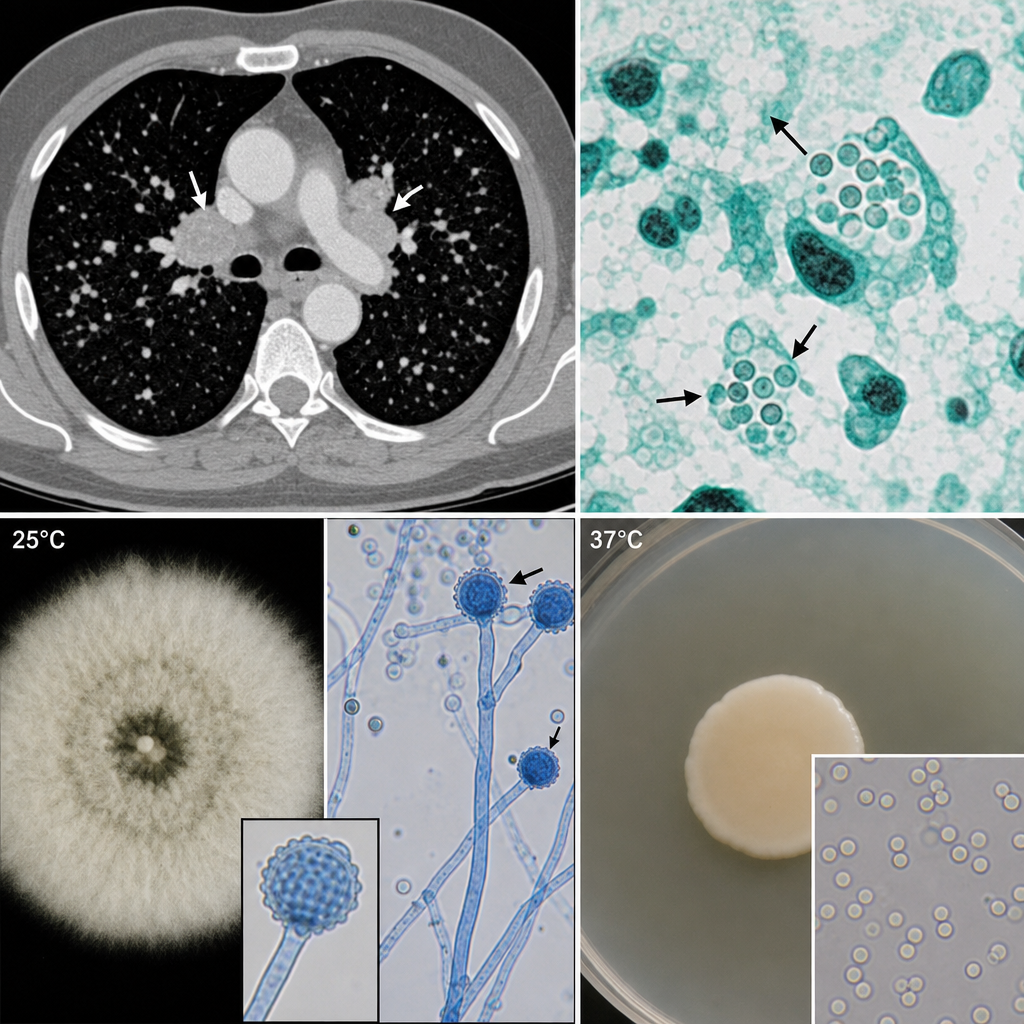
A 45-year-old immunocompetent woman from rural Ohio presents with a 3-week history of low-grade fever, night sweats, and a non-productive cough. She recently helped clean out an old barn near a dried river bed. Chest CT reveals mediastinal lymphadenopathy and multiple small pulmonary nodules. A bronchoalveolar lavage specimen is sent for fungal culture. At 25°C, the organism grows as a mold with tuberculate macroconidia. At 37°C, the same isolate grows as small yeast cells (2–4 µm) found inside macrophages on cytology. A colleague suggests the presentation is more consistent with Blastomyces dermatitidis based on the geographic exposure. Which of the following findings would most definitively argue against the colleague's proposed organism and confirm the correct diagnosis?
Want unlimited practice?
Get full access to all questions, explanations, and performance tracking.
Scan to download app