
HBV treatment indications and options — MCQs

A 29-year-old man comes to the physician for a routine health maintenance examination. He feels well. He works as a nurse at a local hospital in the city. Three days ago, he had a needlestick injury from a patient whose serology is positive for hepatitis B. He completed the 3-dose regimen of the hepatitis B vaccine 2 years ago. His other immunizations are up-to-date. He appears healthy. Physical examination shows no abnormalities. He is concerned about his risk of being infected with hepatitis B following his needlestick injury. Serum studies show negative results for hepatitis B surface antigen, hepatitis B surface antibody, and hepatitis C antibody. Which of the following is the most appropriate next step in management?
A 30-year-old man presents to clinic. He was born in southeast Asia and immigrated to the US three years ago. He has a history of chronic hepatitis C which he contracted from intravenous drug use. He reports that he has been receiving treatment for his hepatitis C, but unfortunately has started using heroin again. The patient was seen in the clinic last week and had blood work done. His results are as follows: HBsAg - negative; HBsAb - negative; HBcAb - negative. In addition to encouraging the patient to seek treatment for his heroin addiction, what else should be done at this health visit for general health maintenance?
A 59-year-old woman comes to the physician for a routine health maintenance examination. She feels well. She has systemic lupus erythematosus and hypertension. She does not drink alcohol. Her current medications include lisinopril and hydroxychloroquine. She appears malnourished. Her vital signs are within normal limits. Examination shows a soft, nontender abdomen. There is no ascites or hepatosplenomegaly. Serum studies show: Total bilirubin 1.2 mg/dL Alkaline phosphatase 60 U/L Alanine aminotransferase 456 U/L Aspartate aminotransferase 145 U/L Hepatitis A IgM antibody negative Hepatitis A IgG antibody positive Hepatitis B surface antigen positive Hepatitis B surface antibody negative Hepatitis B envelope antigen positive Hepatitis B envelope antibody negative Hepatitis B core antigen IgM antibody negative Hepatitis B core antigen IgG antibody positive Hepatitis C antibody negative Which of the following is the most appropriate treatment for this patient?
A 32-year-old woman comes to the physician because of a 3-month history of fatigue and myalgia. Over the past month, she has had intermittent episodes of nausea. She has a history of intravenous drug use, but she has not used illicit drugs for the past five years. She has smoked one pack of cigarettes daily for 14 years and drinks one alcoholic beverage daily. She takes no medications. Her last visit to a physician was 4 years ago. Her temperature is 37°C (98.6°F), pulse is 90/min, respirations are 20/min, and blood pressure is 110/70 mm Hg. Physical examination shows jaundice and hepatosplenomegaly. There are also blisters and erosions on the dorsum of both hands. The remainder of the examination shows no abnormalities. Laboratory studies show: Hemoglobin 12 g/dL Leukocyte count 8,300/mm3 Platelet count 250,000/mm3 Serum Glucose 170 mg/dL Albumin 3.0 g/dL Total bilirubin 2.2 mg/dL Alkaline phosphatase 80 U/L AST 92 U/L ALT 76 U/L Hepatitis B surface antigen negative Hepatitis B surface antibody positive Hepatitis B core antibody positive Hepatitis C antibody positive Which of the following is the most appropriate next step in diagnosis?
A 35-year-old man with no known past medical history presents to his physician because he is applying for a job as a healthcare worker, which requires screening for the hepatitis B virus (HBV). The patient states that he is in good health and denies any symptoms. His vital signs and physical exam are unremarkable. Labs are drawn, and the patient's HBV serology shows the following: HBsAg: positive anti-HBsAg antibody: negative anti-HBcAg IgM: negative anti-HBcAg IgG: positive HBeAg: negative anti-HBeAg antibody: positive Which of the following best describes this patient's results?
A 52-year-old woman comes to the physician because of abdominal discomfort, anorexia, and mild fatigue. She has systemic lupus erythematosus and takes hydroxychloroquine. She does not drink alcohol or use illicit drugs. Physical examination shows no abnormalities. Laboratory studies show: Alanine aminotransferase 455 U/L Aspartate aminotransferase 205 U/L Hepatitis B surface antigen positive Hepatitis B surface antibody negative Hepatitis B envelope antigen positive Hepatitis B core antigen IgG antibody positive Which of the following is the most appropriate pharmacotherapy for this patient?
A 52-year-old man presents to his physician after his routine screening revealed that he has elevated liver enzymes. He complains of occasional headaches during the past year, but otherwise feels well. The patient reports that he was involved in a serious car accident in the 1980s. He does not smoke or drink alcohol. He has no history of illicit intravenous drug use. He does not currently take any medications and has no known allergies. His father had a history of alcoholism and died of liver cancer. The patient appears thin. His temperature is 37.8°C (100°F), pulse is 100/min, and blood pressure is 110/70 mm Hg. The physical examination reveals no abnormalities. The laboratory test results show the following: Complete blood count Hemoglobin 14 g/dL Leukocyte count 10,000/mm3 Platelet count 146,000/mm3 Comprehensive metabolic profile Glucose 150 mg/dL Albumin 3.2 g/dL Total bilirubin 1.5 mg/dL Alkaline phosphatase 75 IU/L AST 95 IU/L ALT 73 IU/L Other lab tests HIV negative Hepatitis B surface antigen negative Hepatitis C antibody positive HCV RNA positive HCV genotype 1 A liver biopsy is performed and shows mononuclear infiltrates localized to portal tracts that reveal periportal hepatocyte necrosis. Which of the following is the most appropriate next step in management?
A 42-year-old male with a history significant for IV drug use comes to the emergency department complaining of persistent fatigue and malaise for the past three weeks. On physical exam, you observe a lethargic male with icteric sclera and hepatomegaly. AST and ALT are elevated at 600 and 750, respectively. HCV RNA is positive. Albumin is 3.8 g/dL and PT is 12. A liver biopsy shows significant inflammation with bridging fibrosis. What is the current first-line treatment?
A 33-year-old female comes to her primary care physician with complaints of fatigue and nausea. She has also noticed that her skin tone is darker than it used to be. On exam, the physician notes that the woman appears to be jaundiced and obtains liver enzymes which demonstrate an elevated AST and ALT. Further testing subsequently confirms the diagnosis of hepatitis B (HBV). The woman is extremely concerned about transmitting this disease to her loved ones and ask how HBV is transmitted. By which of the following routes can HBV be spread? (I) blood, (II) sexual contact, (III) maternal-fetal, and/or (IV) breast milk?
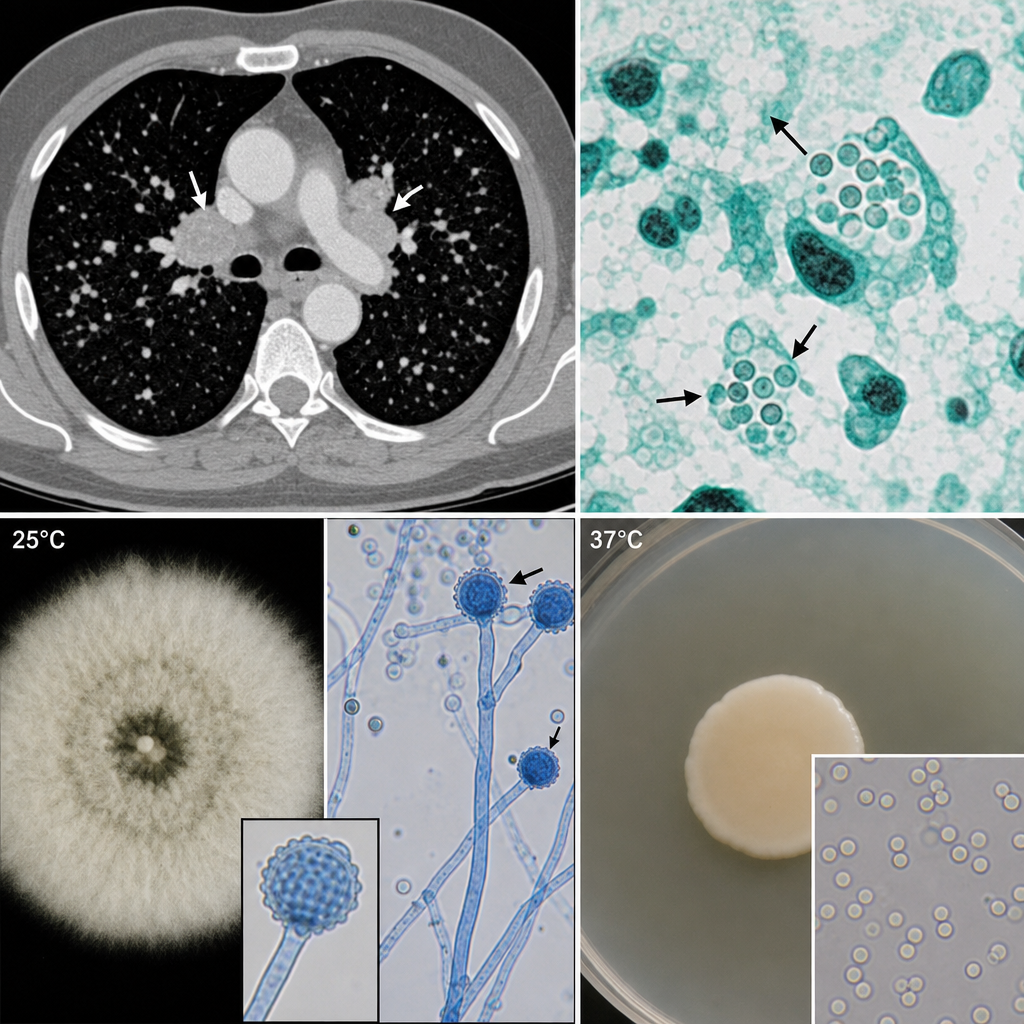
A 45-year-old immunocompetent woman from rural Ohio presents with a 3-week history of low-grade fever, night sweats, and a non-productive cough. She recently helped clean out an old barn near a dried river bed. Chest CT reveals mediastinal lymphadenopathy and multiple small pulmonary nodules. A bronchoalveolar lavage specimen is sent for fungal culture. At 25°C, the organism grows as a mold with tuberculate macroconidia. At 37°C, the same isolate grows as small yeast cells (2–4 µm) found inside macrophages on cytology. A colleague suggests the presentation is more consistent with Blastomyces dermatitidis based on the geographic exposure. Which of the following findings would most definitively argue against the colleague's proposed organism and confirm the correct diagnosis?
Want unlimited practice?
Get full access to all questions, explanations, and performance tracking.
Scan to download app