
Biofilm-associated antimicrobial resistance — MCQs

A 37-year-old woman with a history of anorectal abscesses complains of pain in the perianal region. Physical examination reveals mild swelling, tenderness, and erythema of the perianal skin. She is prescribed oral ampicillin and asked to return for follow-up. Two days later, the patient presents with a high-grade fever, syncope, and increased swelling. Which of the following would be the most common mechanism of resistance leading to the failure of antibiotic therapy in this patient?
A 42-year-old woman with a history of multiple sclerosis and recurrent urinary tract infections comes to the emergency department because of flank pain and fever. Her temperature is 38.8°C (101.8°F). Examination shows left-sided costovertebral angle tenderness. She is admitted to the hospital and started on intravenous vancomycin. Three days later, her symptoms have not improved. Urine culture shows growth of Enterococcus faecalis. Which of the following best describes the most likely mechanism of antibiotic resistance in this patient?
A team of intensivists working in a private intensive care unit (ICU) observe that the clinical efficacy of vancomycin is low, and proven nosocomial infections have increased progressively over the past year. A clinical microbiologist is invited to conduct a bacteriological audit of the ICU. He analyzes the microbiological reports of all patients treated with vancomycin over the last 2 years and takes relevant samples from the ICU for culture and antibiotic sensitivity analysis. The audit concludes that there is an increased incidence of vancomycin-resistant Enterococcus fecalis infections. Which of the following mechanisms best explains the changes that took place in the bacteria?
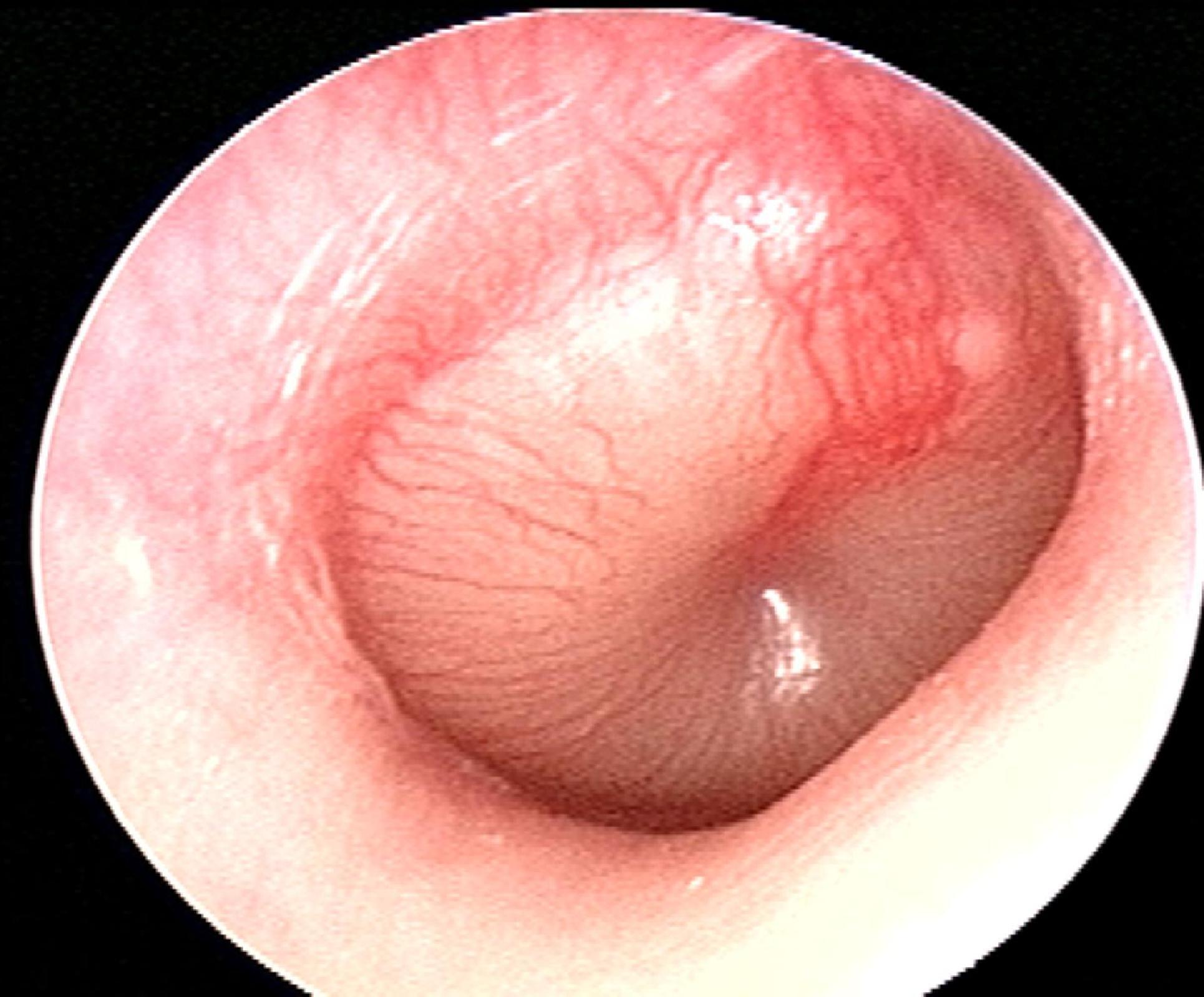
A 7-year-old boy is brought to the clinic by his parents due to right ear pain. For the past few days, the patient's parents say he has had a low-grade fever, a runny nose, and has been frequently pulling on his right ear. Past medical history is significant for a similar episode one month ago for which he has prescribed a 10-day course of amoxicillin. He is up-to-date on all vaccinations and is doing well at school. His temperature is 38.5°C (101.3°F), blood pressure is 106/75 mm Hg, pulse is 101/min, and respiratory rate is 20/min. Findings on otoscopic examination are shown in the image. The patient is treated with amoxicillin with clavulanic acid. Which of the following best describes the benefit of adding clavulanic acid to amoxicillin?
A 65-year-old man presents with low-grade fever and malaise for the last 4 months. He also says he has lost 9 kg (20 lb) during this period and suffers from extreme fatigue. Past medical history is significant for a mitral valve replacement 5 years ago. His temperature is 38.1°C (100.6°F), respirations are 22/min, pulse is 102/min, and blood pressure is 138/78 mm Hg. On physical examination, there is a new onset 2/6 holosystolic murmur loudest in the apical area of the precordium. Which of the following organisms is the most likely cause of this patient’s condition?
A 47-year-old woman comes to the physician because of a 6-week history of fatigue and low-grade fever. She has no history of serious illness except for a bicuspid aortic valve, diagnosed 10 years ago. She does not use illicit drugs. Her temperature is 37.7°C (99.9°F). Physical examination shows petechiae under the fingernails and multiple tender, red nodules on the fingers. A new grade 2/6 diastolic murmur is heard at the right second intercostal space. Which of the following is the most likely causal organism?
A 65-year-old woman undergoes an abdominal hysterectomy. She develops pain and discharge at the incision site on the fourth postoperative day. The past medical history is significant for diabetes of 12 years duration, which is well-controlled on insulin. Pus from the incision site is sent for culture on MacConkey agar, which shows white-colorless colonies. On blood agar, the colonies were green. Biochemical tests reveal an oxidase-positive organism. Which of the following is the most likely pathogen?
A 63-year-old female recovering from a total shoulder arthroplasty completed 6 days ago presents complaining of joint pain in her repaired shoulder. Temperature is 39 degrees Celsius. Physical examination demonstrates erythema and significant tenderness around the incision site. Wound cultures reveal Gram-positive cocci that are resistant to nafcillin. Which of the following organisms is the most likely cause of this patient's condition?
A 20-year-old woman presents for a follow-up visit with her physician. She has a history of cystic fibrosis and is currently under treatment. She has recently been struggling with recurrent bouts of cough and foul-smelling, mucopurulent sputum over the past year. Each episode lasts for about a week or so and then subsides. She does not have a fever or chills during these episodes. She has been hospitalized several times for pneumonia as a child and continues to struggle with diarrhea. Physically she appears to be underweight and in distress. Auscultation reveals reduced breath sounds on the lower lung fields with prominent rhonchi. Which of the following infectious agents is most likely associated with the recurrent symptoms this patient is experiencing?
A 45-year-old male presents to his primary care physician complaining of drainage from his left great toe. He has had an ulcer on his left great toe for over eight months. He noticed increasing drainage from the ulcer over the past week. His past medical history is notable for diabetes mellitus on insulin complicated by peripheral neuropathy and retinopathy. His most recent hemoglobin A1c was 9.4%. He has a 25 pack-year smoking history. He has multiple sexual partners and does not use condoms. His temperature is 100.8°F (38.2°C), blood pressure is 150/70 mmHg, pulse is 100/min, and respirations are 18/min. Physical examination reveals a 1 cm ulcer on the plantar aspect of the left great toe surrounded by an edematous and erythematous ring. Exposed bone can be palpated with a probe. There are multiple small cuts and bruises on both feet. A bone biopsy reveals abundant gram-negative rods that do not ferment lactose. The pathogen most likely responsible for this patient’s current condition is also strongly associated with which of the following conditions?
Want unlimited practice?
Get full access to all questions, explanations, and performance tracking.
Scan to download app