
Zoonotic bacterial infections — MCQs

A 50-year-old woman returns from a family trip to the Caribbean with three days of fever, watery diarrhea, and vomiting. She states that she tried to avoid uncooked food and unpeeled fruits on her vacation. Of note, her grandson had caught a cold from daycare prior to the trip, and she had been in close contact with the infant throughout the trip. She denies rhinorrhea or coughing. On exam, her temperature is 99.1°F (37.3°C), blood pressure is 110/68 mmHg, pulse is 113/min, and respirations are 12/min. Her stool culture is negative for bacteria. Which of the following describes the most likely cause?
A 65-year-old man presents to the emergency department with a complaint of intense pain in his right foot for the past month, along with fever and chills. He denies any traumatic injury to his foot in recent memory. He has a medical history of poorly-controlled type II diabetes and is a former smoker with extensive peripheral vascular disease. On physical exam, the area of his right foot around the hallux is swollen, erythematous, tender to light palpation, and reveals exposed bone. Labs are notable for elevated C-reactive protein and erythrocyte sedimentation rate. The physician obtains a biopsy for culture. What is the most likely causative organism for this patient’s condition?
An investigator is studying the growth of an organism in different media. The organism is inoculated on a petri dish that contains heated sheep blood, vancomycin, nystatin, trimethoprim, and colistin. The resulting growth medium is incubated at 37°C. Numerous small, white colonies are seen after incubation for 48 hours. This organism is most likely to cause which of the following conditions?
A 21-year-old man comes to the physician's office due to a 3-week history of fatigue and a rash, along with the recent development of joint pain that has moved from his knee to his elbows. The patient reports going camping last month but denies having been bitten by a tick. His past medical history is significant for asthma treated with an albuterol inhaler. His pulse is 54/min and blood pressure is 110/72. Physical examination reveals multiple circular red rings with central clearings on the right arm and chest. There is a normal range of motion in all joints and 5/5 strength bilaterally in the upper and lower extremities. Without proper treatment, the patient is at highest risk for which of the following complications?
A 50-year-old farmer presents to a physician with painless, black, severely swollen pustules on the left hand. Examination reveals extensive swelling around the wound. Microscopy reveals gram-positive bacilli with a bamboo stick appearance. Culture shows large, gray, non-hemolytic colonies with irregular borders. Which of the following is the most likely diagnosis?
Blood cultures are sent to the laboratory and empiric treatment with intravenous vancomycin is started. Blood cultures grow gram-negative bacilli identified as Cardiobacterium hominis. Which of the following is the most appropriate next step in management?
A child is brought into the emergency room by her mother. Her mother states that the 7-year-old child was playing with their dog, who is up to date on his vaccinations. When the dog started playing more aggressively, the child suffered a bite on the hand with two puncture wounds from the dog's canines. The child is up-to-date on her vaccinations and has no medical history. Her vitals are within normal limits. If this bite becomes infected, what is the most likely organism to be the cause of infection?
A 24-year-old newly immigrated mother arrives to the clinic to discuss breastfeeding options for her newborn child. Her medical history is unclear as she has recently arrived from Sub-Saharan Africa. You tell her that unfortunately she will not be able to breastfeed until further testing is performed. Which of the following infections is an absolute contraindication to breastfeeding?
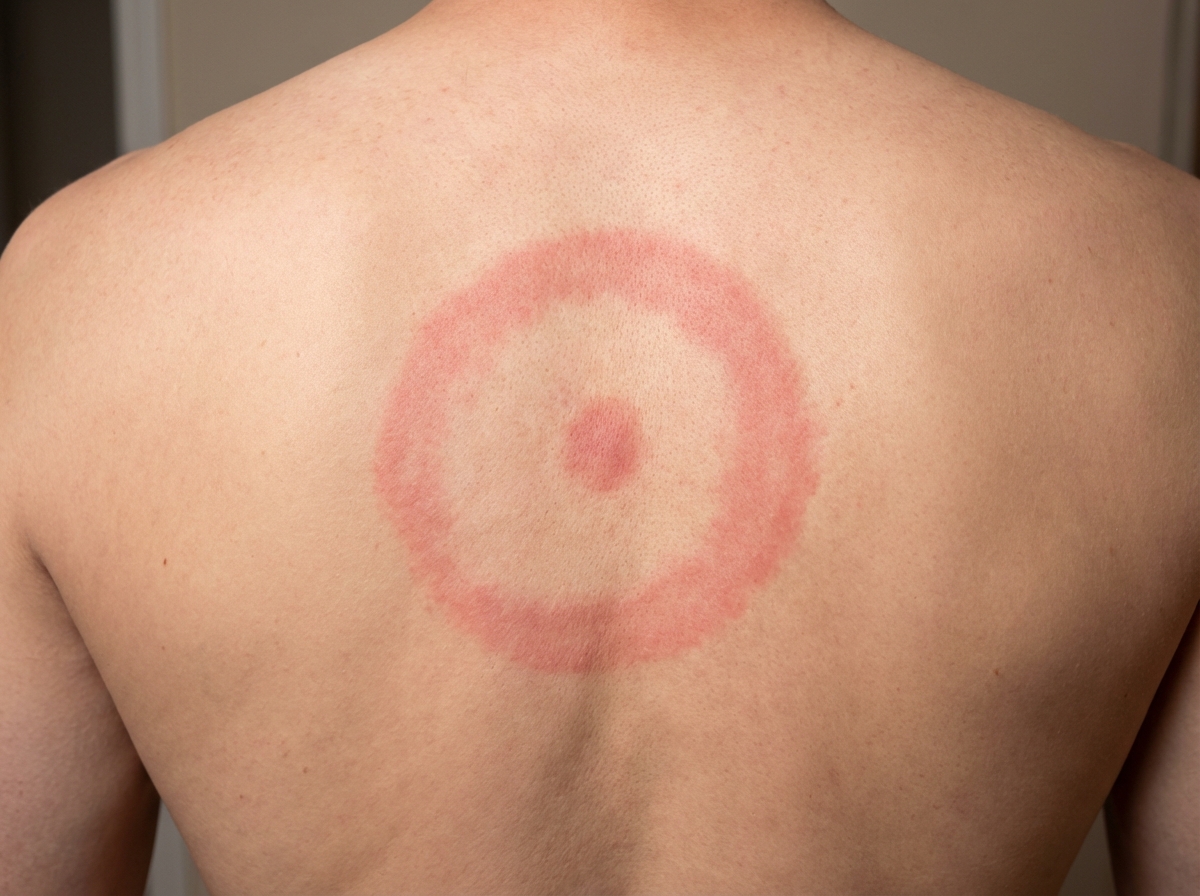
A 29-year-old woman presents with a skin rash that has spread on her arm over the last few days. She also complains of fever, headache, joint pain, and stiffness of the neck associated with the onset of the rash. On physical examination, there is an annular, red rash with a clear area in the center similar to a bull’s-eye (see image). The patient says she went on a camping trip to Connecticut last month but does not remember being bitten by an insect. Which of the following could result if this condition remains untreated in this patient?
A 3-year-old boy is brought to the physician for the evaluation of recurrent skin lesions. The episodes of lesions started at the age of 3 months. He has also had several episodes of respiratory tract infections, enlarged lymph nodes, and recurrent fevers since birth. The boy attends daycare. The patient's immunizations are up-to-date. He is at the 5th percentile for length and 10th percentile for weight. He appears ill. Temperature is 38°C (100.4°F). Examination shows several raised, erythematous lesions of different sizes over the face, neck, groin, and extremities; some are purulent. Bilateral cervical and axillary lymphadenopathy are present. What is the most likely underlying mechanism of this patient's symptoms?
Want unlimited practice?
Get full access to all questions, explanations, and performance tracking.
Scan to download app