
Waterborne bacterial pathogens — MCQs

A 31-year-old man comes to the physician because of a 2-day history of abdominal pain and diarrhea. He reports that his stools are streaked with blood and mucus. He returned from a vacation in the Philippines 3 weeks ago. His vital signs are within normal limits. Abdominal examination shows hyperactive bowel sounds. A photomicrograph of a trichrome-stained wet mount of a stool specimen is shown. Which of the following organisms is the most likely cause of this patient's symptoms?
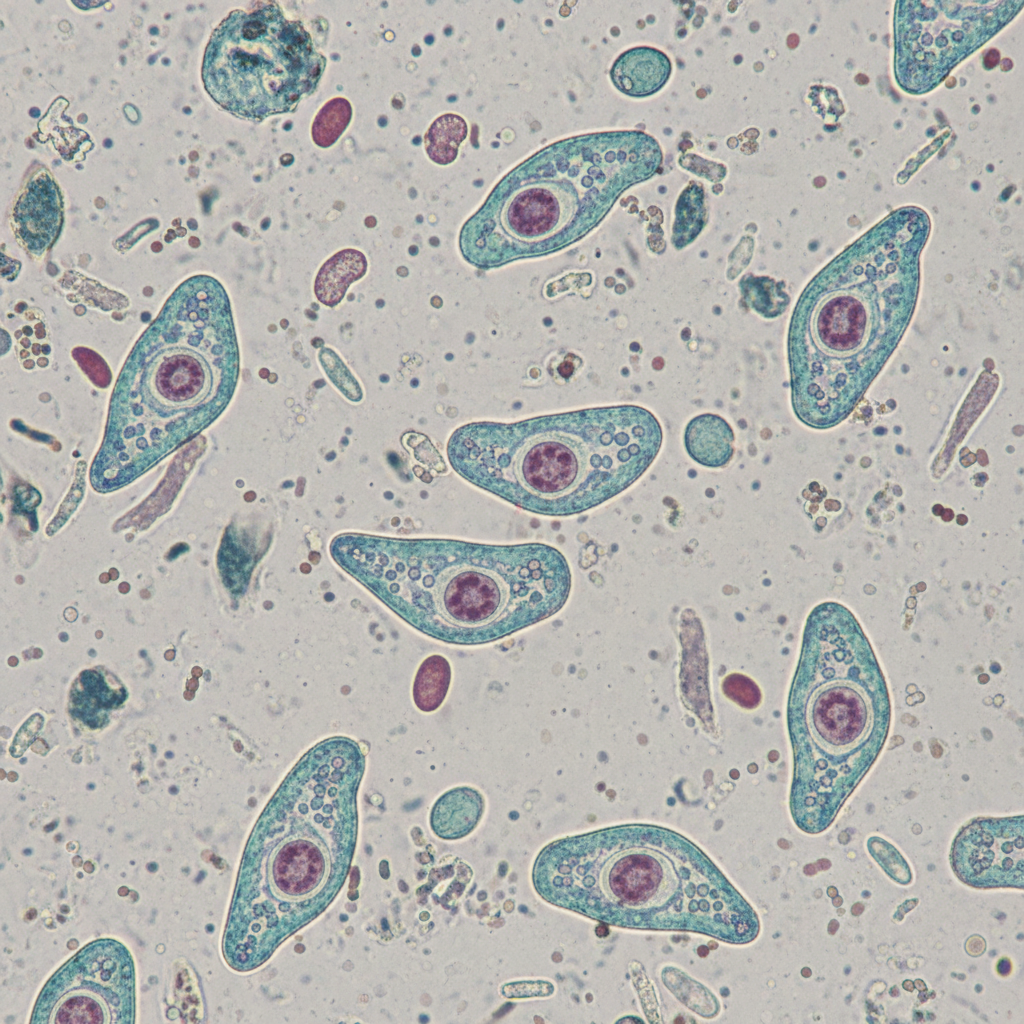
A 10-year-old girl is brought to the emergency department because of a 2-day history of bloody diarrhea and abdominal pain. Four days ago, she visited a petting zoo with her family. Her temperature is 39.4°C (102.9°F). Abdominal examination shows tenderness to palpation of the right lower quadrant. Stool cultures at 42°C grow colonies that turn black after adding phenylenediamine. Which of the following best describes the most likely causal organism?
A 14-year-old boy presents with abdominal pain and diarrhea after returning from an East Asian vacation. Stool sample reveals the presence of red and white blood cells. Stool culture shows growth of immobile, non-lactose fermenting gram-negative rods. The attending physician explains to the medical students that the bacteria function by invading intestinal M-cells. The bacterium responsible for this patient's infection is:
A 46-year-old woman presents to the emergency department complaining of bloody diarrhea, fatigue, and confusion. A few days earlier she went to a fast-food restaurant for a college reunion party. Her friends are experiencing similar symptoms. Laboratory tests show anemia, thrombocytopenia, and uremia. Lactate dehydrogenase (LDH) is raised while haptoglobin is decreased. Peripheral blood smears show fragmented red blood cells (RBCs). Coombs tests are negative. Which of the following is the responsible organism?
A 62-year-old man is brought to the emergency department with fatigue, dry cough, and shortness of breath for 3 days. He reports a slight fever and has also had 3 episodes of watery diarrhea earlier that morning. Last week, he attended a business meeting at a hotel and notes some of his coworkers have also become sick. He has a history of hypertension and hyperlipidemia. He takes atorvastatin, hydrochlorothiazide, and lisinopril. He appears in mild distress. His temperature is 102.1°F (38.9°C), pulse is 56/min, respirations are 16/min, and blood pressure is 150/85 mm Hg. Diffuse crackles are heard in the thorax. Examination shows a soft and nontender abdomen. Laboratory studies show: Hemoglobin 13.5 g/dL Leukocyte count 15,000/mm3 Platelet count 130,000/mm3 Serum Na+ 129 mEq/L Cl- 100 mEq/L K+ 4.6 mEq/L HCO3- 22 mEq/L Urea nitrogen 14 mg/dL Creatinine 1.3 mg/dL An x-ray of the chest shows infiltrates in both lungs. Which of the following is the most appropriate next step in diagnosis?
A 21-year-old woman presents with the complaints of nausea, vomiting, and diarrhea for 5 days. She adds that she has fever and abdominal cramping as well. She had recently attended a large family picnic and describes eating many varieties of cold noodle salads. Her past medical history is insignificant. Her temperature is 37.5°C (99.6°F), respiratory rate is 15/min, pulse is 67/min, and blood pressure is 92/68 mm Hg. Physical examination is non-contributory. Given the clinical information provided and most likely diagnosis, which of the following would be the next best step in the management of this patient?
A 38-year-old man complains of a persistent high fever with chills, malaise, and diffuse abdominal pain for over a week. He recently returned from a trip to India. The fever began slowly and climbed its way up to 40.0°C (104.0°F) over the last 4 days. A physical exam reveals a white-coated tongue, enlarged spleen, and rose spots on the abdomen. A bone marrow aspirate was sent for culture which revealed motile gram-negative rods. Which of the following is true about the organism and the pathophysiology of this condition?
A previously healthy 29-year-old man comes to the emergency department for a 2-day history of abdominal pain, vomiting, and watery diarrhea. Bowel movements occur every 3 hours and are non-bloody. He recently returned from a backpacking trip in Central America. He does not take any medications. Stool culture shows gram-negative, rod-shaped bacteria that ferment lactose. Which of the following toxins is most likely to be involved in the pathogenesis of this patient's symptoms?
A group of scientists studied the effects of cytokines on effector cells, including leukocytes. They observed that interleukin-12 (IL-12) is secreted by antigen-presenting cells (APCs) in response to bacterial lipopolysaccharide. When a CD4+ T cell is exposed to this interleukin, which of the following responses will it have?
A 32-year-old woman comes to the emergency department with a 2-day history of abdominal pain and diarrhea. She has had about 8 voluminous stools per day, some of which were bloody. She visited an international food festival three days ago. She takes no medications. Her temperature is 39.5°C (103.1°F), pulse is 90/min, and blood pressure is 110/65 mm Hg. Examination shows a tender abdomen, increased bowel sounds, and dry mucous membranes. Microscopic examination of the stool shows polymorphonuclear leukocytes. Stool culture results are pending. Which of the following most likely caused the patient's symptoms?
Want unlimited practice?
Get full access to all questions, explanations, and performance tracking.
Scan to download app