Which of the following patient presentations would be expected in an infant with defective LFA-1 integrin (CD18) protein on phagocytes, in addition to recurrent bacterial infections?
Q42
A 6-year-old girl is brought to the physician for intermittent fevers and painful swelling of the left ankle for 2 weeks. She has no history of trauma to the ankle. She has a history of sickle cell disease. Current medications include hydroxyurea and acetaminophen for pain. Her temperature is 38.4°C (101.2°F) and pulse is 112/min. Examination shows a tender, swollen, and erythematous left ankle with point tenderness over the medial malleolus. A bone biopsy culture confirms the diagnosis. Which of the following is the most likely causal organism?
Q43
A 14-year-old girl presents with fever, headache, and muscle aches that have lasted for 2 days. She also complains of malaise and pain in her joints. She says she just returned from a camping trip in Delaware. Her past medical history is not significant. The patient denies any recent sick contacts. Her temperature is 38.3°C (101.0°F), pulse is 87/min, respirations are 17/min, and blood pressure is 120/78 mm Hg. On physical examination, there is a 3-inch-diameter, red, erythematous, round rash with central clearing on the right leg (see image). Antibodies against Proteus vulgaris OX-19 are absent. Which of the following is the most likely cause of this patient’s symptoms?
Q44
A young infant is brought to an immunologist because of recurrent infections, which have not resolved despite appropriate medical treatment. On reviewing her medical history, the immunologist notes that the child has had frequent disseminated mycobacterial infections. He suspects a possible immunodeficiency. What is the most likely cause of this patient's immunodeficiency?
Q45
An 18-year-old male in his first year of college presents to the emergency room with a fever and a severe headache. He reports having unprotected sex with several partners over the past few weeks. Upon examination, the male demonstrates nuchal rigidity and photophobia. His past medical history is notable for a lack of vaccinations beginning from infancy due to his parents' belief that vaccinations may cause autism. The bacteria causing these symptoms would most likely demonstrate which of the following?
Q46
A 15-year-old boy is brought to the emergency department by ambulance after his mother found him having muscle spasms and stiffness in his room. His mother stated he scraped his foot on a rusty razor on the bathroom floor 2 days prior. On presentation, his temperature is 102.0°F (38.9°C), blood pressure is 108/73 mmHg, pulse is 122/min, and respirations are 18/min. On physical exam, he is found to have severe muscle spasms and rigid abdominal muscles. In addition, he has a dirty appearing wound on his right foot. The patient's mother does not recall any further vaccinations since age 12. Finally, he is found to have difficulty opening his mouth so he is intubated. Which of the following treatment(s) should be provided to this patient?
Q47
A 27-year-old woman visits your office with a 3-day complaint of fever, malaise, myalgias, and headaches associated with vulvar itching, vulvar soreness, dysuria, and urethral discharge. The pain when urinating is so severe that she has attempted to avoid the use of the toilet. She just returned from a spring break in the tropics and explains that she had multiple unprotected sexual encounters with men and women. Upon physical examination, the temperature was 38.7°C (101.6°F) and the heart rate was 90/min. The pelvic examination revealed vulvar ulcers, vulvar excoriations, erythema, vaginal mucosa edema, and ulcerative cervicitis. Which of the following will best aid you in the identification of the specific organism causing the above symptoms?
Q48
An 11-year-old boy is brought to his pediatrician by his mother after he has complained of worsening left thumb pain for the last two weeks. The mother reports that the patient was previously healthy. Approximately 2 weeks ago, the family cat bit the patient’s thumb. The area around the bite wound then became red, hot, and slightly swollen and never healed. Earlier this week, the patient also started developing fevers that were recorded at home to be as high as 103.6°F. On exam, the patient's temperature is 102.2°F (39.0°C), blood pressure is 112/72 mmHg, pulse is 92/min, and respirations are 14/min. The patient’s left thumb is tender to touch over the proximal phalanx and the interphalangeal joint, but there is no obvious erythema or swelling. A radiograph performed in clinic is concerning for osteomyelitis at the proximal phalanx. Which of the following is the most likely cause of this patient’s condition?
Q49
A 14-year-old male is brought to the Emergency Department by his mother. She is worried because his face has become puffy and his urine has turned a tea-color. Patient history reveals the child recently suffered from a sore throat. The physician suspects a bacterial infection. Which of the following describes the likely bacteria responsible?
Q50
A 24-year old G1P0 mother with no prenatal screening arrives to the hospital in labor and has an uneventful delivery. The infant is full term and has no significant findings on physical exam. Shortly after birth, an erythromycin ophthalmic ointment is applied to the newborn in order to provide prophylaxis against infection. Which of the following is the most common mechanism of resistance to the ointment applied to this newborn?
Bacteria US Medical PG Practice Questions and MCQs
Question 41: Which of the following patient presentations would be expected in an infant with defective LFA-1 integrin (CD18) protein on phagocytes, in addition to recurrent bacterial infections?
A. Cardiac defects, hypoparathyroidism, palatal defects, and learning disabilities
B. Chronic diarrhea, oral candidiasis, severe infections since birth, absent thymic shadow
C. Progressive neurological impairment and cutaneous telangiectasia
D. Skin infections with absent pus formation, delayed umbilicus separation (Correct Answer)
E. Eczema and thrombocytopenia
Explanation: ***Skin infections with absent pus formation, delayed umbilicus separation***
- A defect in **LFA-1 integrin (CD18)** prevents phagocytes from adhering to endothelial cells and migrating to sites of infection, leading to **absent pus formation** despite severe infections.
- **Delayed umbilical cord separation** (typically >30 days) is a classic sign due to impaired neutrophil recruitment at the site of cord detachment.
*Cardiac defects, hypoparathyroidism, palatal defects, and learning disabilities*
- This constellation of symptoms is characteristic of **DiGeorge syndrome**, which involves a defect in T-cell development due to thymic aplasia/hypoplasia.
- These specific defects are not directly caused by LFA-1 integrin deficiency.
*Chronic diarrhea, oral candidiasis, severe infections since birth, absent thymic shadow*
- These symptoms are highly suggestive of **Severe Combined Immunodeficiency (SCID)**, which involves a profound defect in both B and T cell immunity.
- SCID presents with a broader spectrum of opportunistic infections and developmental issues not directly related to integrin function.
*Progressive neurological impairment and cutaneous telangiectasia*
- These are hallmark features of **Ataxia-Telangiectasia**, a genetic disorder affecting DNA repair and leading to immune deficiencies and cerebellar degeneration.
- This condition primarily involves T-cell dysfunction and increased cancer risk, not LFA-1 integrin deficiency.
*Eczema and thrombocytopenia*
- The combination of **eczema** (dermatitis) and **thrombocytopenia** (low platelet count), along with recurrent infections, is characteristic of **Wiskott-Aldrich syndrome**.
- This syndrome is caused by a defect in the WASP protein, affecting immune cell function and platelet formation, distinct from LFA-1 integrin deficiency.
Question 42: A 6-year-old girl is brought to the physician for intermittent fevers and painful swelling of the left ankle for 2 weeks. She has no history of trauma to the ankle. She has a history of sickle cell disease. Current medications include hydroxyurea and acetaminophen for pain. Her temperature is 38.4°C (101.2°F) and pulse is 112/min. Examination shows a tender, swollen, and erythematous left ankle with point tenderness over the medial malleolus. A bone biopsy culture confirms the diagnosis. Which of the following is the most likely causal organism?
A. Coccidioides immitis
B. Pseudomonas aeruginosa
C. Escherichia coli
D. Streptococcus pneumoniae
E. Salmonella enterica (Correct Answer)
Explanation: ***Salmonella enterica***
- Patients with **sickle cell disease** are particularly susceptible to **osteomyelitis** caused by *Salmonella* species due to impaired splenic function and increased gut permeability.
- The presentation of **fever**, **painful swelling**, and **point tenderness over a bone** in a patient with a history of sickle cell disease strongly points towards *Salmonella* osteomyelitis.
*Coccidioides immitis*
- This fungus is a cause of **coccidioidomycosis**, common in **southwestern US desert regions**, but osteomyelitis is a less common manifestation and typically affects immunocompromised individuals more severely.
- While it can cause osteomyelitis, it is not the most likely organism in a child with sickle cell disease presenting with acute osteomyelitis.
*Pseudomonas aeruginosa*
- **Pseudomonas osteomyelitis** is more commonly associated with puncture wounds (e.g., foot puncture through a shoe), intravenous drug use, or nosocomial infections.
- While it can occur, it is less common as a primary cause of osteomyelitis in a child with sickle cell disease without these specific risk factors.
*Escherichia coli*
- *E. coli* can cause osteomyelitis, often in cases of **urinary tract infections** or **intra-abdominal infections** that spread hematogenously, or in settings of open fractures or surgical contamination.
- It is not as classically associated with sickle cell disease-related osteomyelitis as *Salmonella*.
*Streptococcus pneumoniae*
- *S. pneumoniae* can cause osteomyelitis, especially in **young children** and individuals with **impaired immunity**, but it is generally less common than *Staphylococcus aureus* or *Salmonella* in sickle cell patients.
- While sickle cell patients are prone to **pneumococcal infections**, *Salmonella* is a more specific and well-known cause of osteomyelitis in this population.
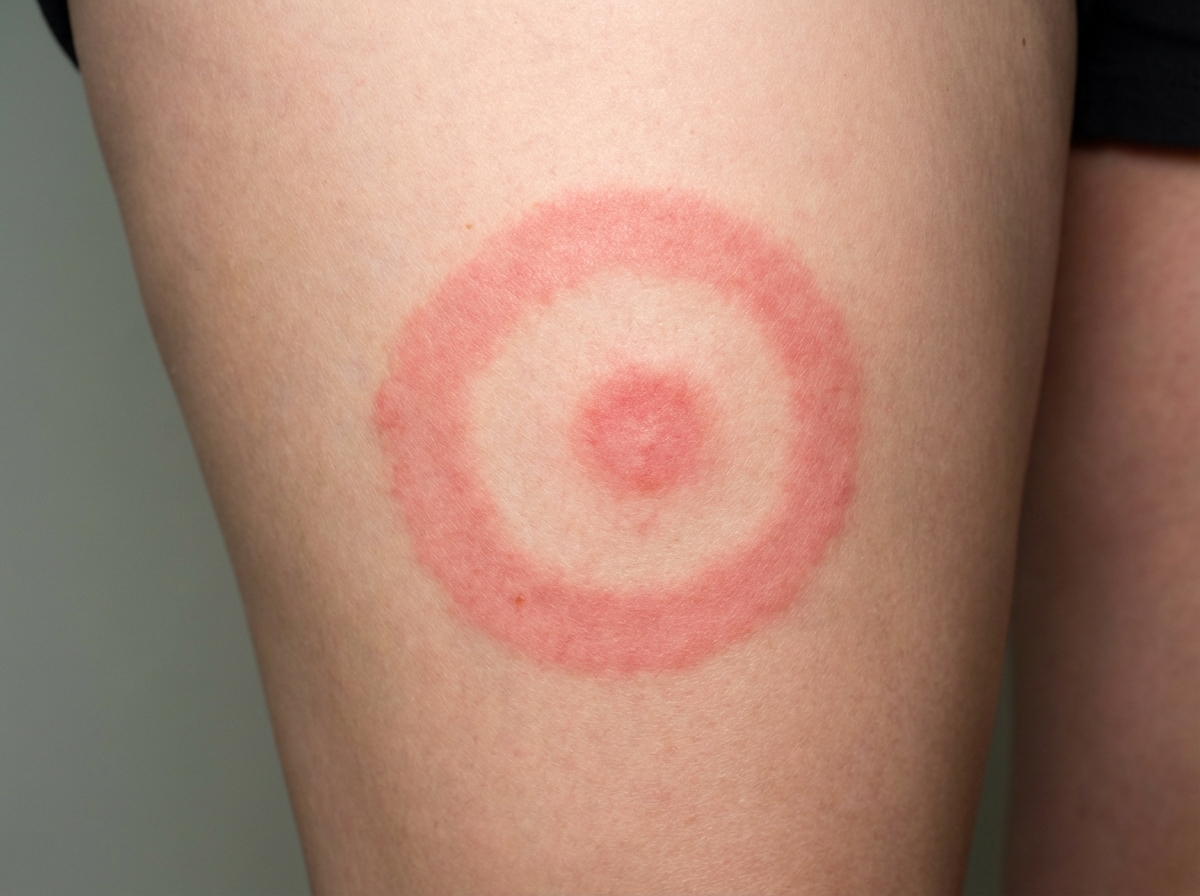
Question 43: A 14-year-old girl presents with fever, headache, and muscle aches that have lasted for 2 days. She also complains of malaise and pain in her joints. She says she just returned from a camping trip in Delaware. Her past medical history is not significant. The patient denies any recent sick contacts. Her temperature is 38.3°C (101.0°F), pulse is 87/min, respirations are 17/min, and blood pressure is 120/78 mm Hg. On physical examination, there is a 3-inch-diameter, red, erythematous, round rash with central clearing on the right leg (see image). Antibodies against Proteus vulgaris OX-19 are absent. Which of the following is the most likely cause of this patient’s symptoms?
A. Chlamydia trachomatis
B. Dermatophytosis
C. Rickettsia rickettsii
D. Measles virus
E. Borrelia burgdorferi (Correct Answer)
Explanation: ***Borrelia burgdorferi***
- The patient's symptoms (fever, headache, muscle aches, joint pain, malaise) coinciding with a recent camping trip in an endemic area for Lyme disease (Delaware), along with the characteristic **erythema migrans rash** (red, erythematous, round rash with central clearing), are highly suggestive of Lyme disease, caused by *Borrelia burgdorferi*.
- This **bull's-eye rash** is pathognomonic for Lyme disease and often appears within days to weeks of a tick bite.
*Chlamydia trachomatis*
- This bacterium primarily causes sexually transmitted infections (STIs) and can cause **conjunctivitis, urethritis, cervicitis**, or **pelvic inflammatory disease**.
- It does not typically cause a systemic febrile illness with a migratory rash or joint pain in this manner.
*Dermatophytosis*
- Dermatophytosis, or **ringworm**, is a fungal infection of the skin that can present with a red, annular rash.
- However, it is usually **itchy** and **scaly**, lacks the central clearing seen in erythema migrans, and typically does not cause systemic symptoms like fever, headache, and widespread muscle/joint aches.
*Rickettsia rickettsii*
- This is the causative agent of **Rocky Mountain spotted fever (RMSF)**, which also presents with fever, headache, and muscle aches following a tick bite.
- However, the rash of RMSF is typically a **maculopapular rash** that appears on the **wrists and ankles** and then spreads centrally, becoming petechial, and
- **Antibodies against Proteus vulgaris OX-19** (Weil-Felix test), which are used for diagnosis of Rickettsial infections, are absent in this case, ruling out RMSF.
*Measles virus*
- Measles (rubeola) is a highly contagious viral infection characterized by a prodrome of **fever, cough, coryza, and conjunctivitis**, followed by **Koplik spots** in the mouth.
- The rash of measles typically appears as a **maculopapular rash** that starts on the face and spreads downwards, which is distinct from the erythema migrans observed.
Question 44: A young infant is brought to an immunologist because of recurrent infections, which have not resolved despite appropriate medical treatment. On reviewing her medical history, the immunologist notes that the child has had frequent disseminated mycobacterial infections. He suspects a possible immunodeficiency. What is the most likely cause of this patient's immunodeficiency?
A. ATM gene defect
B. LFA-1 integrin defect
C. B-cell maturation defect
D. Interferon-gamma signaling defect (Correct Answer)
E. BTK gene defect
Explanation: ***Interferon-gamma signaling defect***
- **Interferon-gamma (IFN-γ)** is crucial for activating macrophages to kill intracellular pathogens like mycobacteria. A defect in its signaling pathway leads to impaired macrophage function and severe, recurrent mycobacterial infections.
- This condition is often referred to as **Mendelian susceptibility to mycobacterial diseases (MSMD)**.
*ATM gene defect*
- An **ATM gene defect** is associated with **ataxia-telangiectasia**, which primarily presents with cerebellar ataxia, telangiectasias, and immunodeficiency characterized by **recurrent sinopulmonary infections** and an increased risk of lymphomas, not typically disseminated mycobacterial infections.
- The immunodeficiency in ataxia-telangiectasia often involves **T-cell and IgA deficiency**.
*LFA-1 integrin defect*
- A defect in **LFA-1 integrin** causes **leukocyte adhesion deficiency type 1 (LAD-1)**, characterized by recurrent bacterial infections, impaired wound healing, delayed umbilical cord separation, and **leukocytosis**.
- The primary defect is in leukocyte extravasation and adhesion, leading to impaired pus formation, not specifically disseminated mycobacterial disease.
*B-cell maturation defect*
- A **B-cell maturation defect** typically leads to **antibody deficiencies**, resulting in recurrent infections, particularly with **encapsulated bacteria** (e.g., Streptococcus pneumoniae, Haemophilus influenzae).
- It would not primarily manifest as recurrent disseminated mycobacterial infections, as macrophage-mediated immunity is more critical for mycobacteria.
*BTK gene defect*
- A **BTK gene defect** causes **X-linked agammaglobulinemia (XLA)**, characterized by a virtual absence of B cells and severe deficiency of all immunoglobulin classes.
- Patients present with recurrent bacterial infections starting around 6 months of age, once maternal antibodies wane, but **disseminated mycobacterial infections** are not the hallmark.
Question 45: An 18-year-old male in his first year of college presents to the emergency room with a fever and a severe headache. He reports having unprotected sex with several partners over the past few weeks. Upon examination, the male demonstrates nuchal rigidity and photophobia. His past medical history is notable for a lack of vaccinations beginning from infancy due to his parents' belief that vaccinations may cause autism. The bacteria causing these symptoms would most likely demonstrate which of the following?
A. Negative catalase test
B. Gram-negative bacteria (Correct Answer)
C. Urease positive
D. Positive quellung reaction
E. Lactose fermentation
Explanation: ***Gram-negative bacteria***
- The clinical picture of fever, severe headache, **nuchal rigidity**, and photophobia in an unvaccinated 18-year-old college student strongly suggests **bacterial meningitis** caused by *Neisseria meningitidis*.
- *Neisseria meningitidis* is a **Gram-negative diplococcus**, which is the most definitive laboratory characteristic for identifying this organism.
- College dormitory settings and unvaccinated status are major risk factors for **meningococcal meningitis**, and Gram stain is typically the first diagnostic step showing Gram-negative diplococci in CSF.
*Positive quellung reaction*
- The Quellung reaction (capsular swelling) is classically associated with **Streptococcus pneumoniae**, not *Neisseria meningitidis*.
- While *N. meningitidis* does have a polysaccharide capsule, the Quellung test is not the standard identification method for this organism.
- *S. pneumoniae* would be more common in older adults or those with specific risk factors like asplenia.
*Negative catalase test*
- *Neisseria meningitidis* is **catalase-positive**, so a negative catalase test would rule out this organism.
- Catalase-negative organisms include Streptococcus and Enterococcus species, which have different clinical presentations.
*Lactose fermentation*
- *Neisseria meningitidis* is a **non-lactose fermenter** and does not utilize lactose fermentation for energy.
- Lactose fermentation is characteristic of enteric Gram-negative bacteria like *E. coli* and *Klebsiella*, not Neisseria species.
- *N. meningitidis* ferments **maltose and glucose**, which distinguishes it from *N. gonorrhoeae* (glucose only).
*Urease positive*
- *Neisseria meningitidis* is **urease-negative**, so urease positivity would rule out this organism.
- Urease-positive bacteria include *Helicobacter pylori*, *Proteus* species, and *Klebsiella*, none of which typically cause meningitis in this clinical setting.
Question 46: A 15-year-old boy is brought to the emergency department by ambulance after his mother found him having muscle spasms and stiffness in his room. His mother stated he scraped his foot on a rusty razor on the bathroom floor 2 days prior. On presentation, his temperature is 102.0°F (38.9°C), blood pressure is 108/73 mmHg, pulse is 122/min, and respirations are 18/min. On physical exam, he is found to have severe muscle spasms and rigid abdominal muscles. In addition, he has a dirty appearing wound on his right foot. The patient's mother does not recall any further vaccinations since age 12. Finally, he is found to have difficulty opening his mouth so he is intubated. Which of the following treatment(s) should be provided to this patient?
A. Wound debridement and antitoxin
B. Antitoxin
C. Wound debridement
D. Wound debridement and booster vaccine
E. Wound debridement, antitoxin, and booster vaccine (Correct Answer)
Explanation: ***Wound debridement, antitoxin, and booster vaccine***
- The patient presents with classic symptoms of **tetanus** (muscle spasms, stiffness, trismus, fever) following a contaminated wound, and an uncertain vaccination history.
- **Wound debridement** removes the source of toxin production, **antitoxin** (tetanus immune globulin) neutralizes circulating toxin, and a **booster vaccine** provides active immunity against future infections.
*Wound debridement and antitoxin*
- While **wound debridement** and **antitoxin** are critical for acute management, omitting the booster vaccine leaves the patient vulnerable to future tetanus infections.
- A booster dose is essential to stimulate the patient's own immune system and provide **long-term immunity**, especially with a history of unknown vaccination status.
*Antitoxin*
- Administering only **antitoxin** would neutralize circulating toxins but would not address the ongoing production of toxins from the contaminated wound.
- It also wouldn't provide **active immunization** to protect against future exposures.
*Wound debridement*
- **Wound debridement** alone removes the bacterial source but does not neutralize the already circulating **tetanus toxin**, which is responsible for the severe neurological symptoms.
- It also fails to provide immediate passive immunity with antitoxin or active immunization with a booster.
*Wound debridement and booster vaccine*
- This option correctly addresses removing the source and providing active immunity but critically misses the immediate need for **antitoxin** to neutralize existing toxins and alleviate the life-threatening symptoms.
- The **tetanus toxin** acts rapidly, and prompt neutralization is crucial to prevent further neurological damage and improve prognosis.
Question 47: A 27-year-old woman visits your office with a 3-day complaint of fever, malaise, myalgias, and headaches associated with vulvar itching, vulvar soreness, dysuria, and urethral discharge. The pain when urinating is so severe that she has attempted to avoid the use of the toilet. She just returned from a spring break in the tropics and explains that she had multiple unprotected sexual encounters with men and women. Upon physical examination, the temperature was 38.7°C (101.6°F) and the heart rate was 90/min. The pelvic examination revealed vulvar ulcers, vulvar excoriations, erythema, vaginal mucosa edema, and ulcerative cervicitis. Which of the following will best aid you in the identification of the specific organism causing the above symptoms?
A. Location of the lesions
B. Culture in Thayer-Martin agar
C. Direct fluorescence antigen (Correct Answer)
D. Serology
E. Tzanck smear
Explanation: ***Direct fluorescence antigen***
- A **direct fluorescence antigen (DFA)** test can rapidly identify viral antigens from the lesions, specifically for **Herpes Simplex Virus (HSV)**, which is highly suspected given the patient's symptoms (fever, malaise, myalgias, vulvar ulcers, dysuria, and recent unprotected sexual encounters).
- **HSV** is a common cause of genital ulcers, and DFA offers a quick, sensitive, and specific method for detection directly from clinical samples.
*Location of the lesions*
- While the **location of the lesions** (vulvar ulcers) is characteristic of several sexually transmitted infections (STIs), it is not specific enough to identify the *specific organism* without further laboratory testing.
- Conditions like syphilis, chancroid, and HSV all cause genital ulcers, making location alone insufficient for definitive diagnosis.
*Culture in Thayer-Martin agar*
- **Thayer-Martin agar** is selectively used for culturing **Neisseria gonorrhoeae**, which causes gonorrhea.
- Although the patient has urethral discharge and dysuria, the presence of **vulvar ulcers** and systemic symptoms like fever and myalgias point away from uncomplicated gonorrhea.
*Serology*
- **Serology** detects antibodies to pathogens, indicating past or present infection, but is often less useful for identifying the *acute* causative organism in the initial stages of a symptomatic outbreak like this one.
- For instance, HSV serology can distinguish between HSV-1 and HSV-2 exposure but does not confirm active infection in the way direct antigen methods or PCR do.
*Tzanck smear*
- A **Tzanck smear** can reveal characteristic **multinucleated giant cells** and **intranuclear inclusions**, which are indicative of herpesvirus infections (HSV or VZV).
- However, it is less sensitive and specific than a direct fluorescence antigen test or PCR, and results can be variable depending on the quality of the smear and interpretation.
Question 48: An 11-year-old boy is brought to his pediatrician by his mother after he has complained of worsening left thumb pain for the last two weeks. The mother reports that the patient was previously healthy. Approximately 2 weeks ago, the family cat bit the patient’s thumb. The area around the bite wound then became red, hot, and slightly swollen and never healed. Earlier this week, the patient also started developing fevers that were recorded at home to be as high as 103.6°F. On exam, the patient's temperature is 102.2°F (39.0°C), blood pressure is 112/72 mmHg, pulse is 92/min, and respirations are 14/min. The patient’s left thumb is tender to touch over the proximal phalanx and the interphalangeal joint, but there is no obvious erythema or swelling. A radiograph performed in clinic is concerning for osteomyelitis at the proximal phalanx. Which of the following is the most likely cause of this patient’s condition?
A. Bartonella henselae
B. Pseudomonas aeruginosa
C. Eikenella corrodens
D. Pasteurella multocida (Correct Answer)
E. Salmonella spp.
Explanation: ***Pasteurella multocida***
- This patient presents with an **infected cat bite** with signs of **osteomyelitis**, making *Pasteurella multocida* the most likely causative organism.
- *Pasteurella multocida* is a common organism found in the **oral flora of cats and dogs** and is frequently responsible for rapid onset infections following animal bites.
*Bartonella henselae*
- This bacterium is the causative agent of **cat scratch disease**, which typically presents as **lymphadenopathy** days to weeks after a cat scratch or bite.
- While associated with cats, it's less likely to cause acute osteomyelitis directly following a bite in an immunocompetent child compared to *Pasteurella multocida*.
*Pseudomonas aeruginosa*
- This organism is more commonly associated with **puncture wounds through shoes** (especially involving the foot), leading to osteomyelitis, or infections in **immunocompromised individuals**.
- While it can cause wound infections, it's not the most typical pathogen for an acute cat bite infection leading to osteomyelitis.
*Eikenella corrodens*
- *Eikenella corrodens* is part of the **normal human oral flora** and is a common cause of infections associated with **human bites** or "clenched-fist" injuries.
- This scenario involves a cat bite, making *Eikenella corrodens* an unlikely primary pathogen.
*Salmonella spp.*
- *Salmonella* infections typically present as **gastroenteritis** and can sometimes lead to osteomyelitis, especially in individuals with **sickle cell disease**.
- There is no history of preceding gastroenteritis or risk factors for *Salmonella* osteomyelitis in this patient, and it is not a typical pathogen for cat bite infections.
Question 49: A 14-year-old male is brought to the Emergency Department by his mother. She is worried because his face has become puffy and his urine has turned a tea-color. Patient history reveals the child recently suffered from a sore throat. The physician suspects a bacterial infection. Which of the following describes the likely bacteria responsible?
A. Gram negative
B. Bacitracin insensitive
C. Catalase positive
D. Beta-hemolytic (Correct Answer)
E. Coagulase positive
Explanation: ***Beta-hemolytic***
- The patient's symptoms (puffy face, tea-colored urine, recent sore throat) are classic for **post-streptococcal glomerulonephritis (PSGN)**, which is caused by a prior infection with **Group A Streptococcus (GAS)**.
- **GAS** (Streptococcus pyogenes) is known for its **beta-hemolytic** activity, meaning it completely lyses red blood cells on blood agar, creating clear zones around colonies.
*Gram negative*
- **Group A Streptococcus** (Streptococcus pyogenes) are **Gram-positive cocci**, not Gram-negative.
- Gram-negative bacteria have a different cell wall structure and typically cause different types of infections.
*Bacitracin insensitive*
- **Group A Streptococcus** (Streptococcus pyogenes) is typically **bacitracin sensitive**, meaning its growth is inhibited by bacitracin on a blood agar plate.
- This characteristic is used in laboratory settings to differentiate GAS from other beta-hemolytic streptococci.
*Catalase positive*
- **Group A Streptococcus** (Streptococcus pyogenes) is **catalase negative**, meaning it does not produce the enzyme catalase.
- **Staphylococcus species** are catalase-positive, which is a key differential test between *Staphylococcus* and *Streptococcus*.
*Coagulase positive*
- **Group A Streptococcus** (Streptococcus pyogenes) is **coagulase negative**.
- **Staphylococcus aureus** is a notable coagulase-positive bacterium, and coagulase production is a significant virulence factor for this organism, not for GAS.
Question 50: A 24-year old G1P0 mother with no prenatal screening arrives to the hospital in labor and has an uneventful delivery. The infant is full term and has no significant findings on physical exam. Shortly after birth, an erythromycin ophthalmic ointment is applied to the newborn in order to provide prophylaxis against infection. Which of the following is the most common mechanism of resistance to the ointment applied to this newborn?
A. Methylation of 23S rRNA-binding site (Correct Answer)
B. Alteration of cell wall peptidoglycan
C. Increased efflux out of bacterial cells with plasmid-encoded transport pumps
D. Mutation in DNA polymerase
E. Penicillinase in bacteria cleaves the beta-lactam ring
Explanation: ***Methylation of 23S rRNA-binding site***
- Erythromycin is a **macrolide antibiotic** that inhibits bacterial protein synthesis by binding to the **23S ribosomal RNA** component of the 50S ribosomal subunit.
- The most common mechanism of resistance to erythromycin in *Neisseria gonorrhoeae* (the primary target for prophylaxis) involves methylation of this binding site, which **prevents erythromycin from effectively binding** and exerts its action.
*Alteration of amino acid cell wall*
- This mechanism is not typical for resistance to erythromycin or other macrolides, as their primary target is **bacterial ribosomes**, not the cell wall.
- Alterations in the cell wall are more commonly associated with resistance to antibiotics like **beta-lactams** (e.g., penicillin) that target cell wall synthesis.
*Increased efflux out of bacterial cells with plasmid-encoded transport pumps*
- While efflux pumps are a known resistance mechanism for various antibiotics, including macrolides, they are **not the most common or primary mechanism** for erythromycin resistance in *Neisseria gonorrhoeae*.
- **MefA** and **mrsA** efflux pumps can lead to macrolide resistance, but ribosomal modification is more prevalent.
*Mutation in DNA polymerase*
- Mutations in **DNA polymerase** would typically affect DNA replication and repair, leading to resistance to antibiotics that target these processes, such as **fluoroquinolones**.
- Erythromycin does not inhibit DNA polymerase; its mechanism of action is on **protein synthesis**.
*Penicillinase in bacteria cleaves the beta-lactam ring*
- **Penicillinase** is an enzyme that specifically **cleaves the beta-lactam ring** of penicillin and other beta-lactam antibiotics, rendering them inactive.
- Erythromycin is a **macrolide**, not a beta-lactam antibiotic, and is therefore not affected by penicillinase.