
Bacteria — MCQs

On this page
A 75-year-old man presents to his primary care provider with malaise and low-grade fever after he underwent a cystoscopy for recurrent cystitis and pyelonephritis two weeks ago. His past medical history is significant for coronary artery disease and asthma. His current medications include aspirin, metoprolol, atorvastatin, and albuterol inhaler. Temperature is 37.2°C (99.0°F), blood pressure is 110/70 mm Hg, pulse is 92/min and respirations are 14/min. On physical examination, there are painless areas of hemorrhage on his palms and soles. Cardiac auscultation reveals a new pansystolic murmur over the apex. An echocardiogram shows echogenic endocardial vegetation on a leaflet of the mitral valve. Which of the following pathogens is most likely responsible for his condition?
A 46-day-old baby is admitted to the pediatric ward with an elevated temperature, erosive periumbilical lesion, clear discharge from the umbilicus, and failure to thrive. She is the first child of a consanguineous couple born vaginally at 38 weeks gestation in an uncomplicated pregnancy. She was discharged home from the nursery within the first week of life without signs of infection or jaundice. The umbilical cord separated at 1 month of age with an increase in temperature and periumbilical inflammation that her mother treated with an herbal decoction. The vital signs are blood pressure 70/45 mm Hg, heart rate 129/min, respiratory rate 26/min, and temperature, 38.9°C (102.0°F). The baby's weight is between the 10th and 5th percentiles and her length is between the 50th and 75th percentiles for her age. The physical examination shows an erosive lesion with perifocal erythema in the periumbilical region with drainage but no pus. The rest of the examination is within normal limits for the patient’s age. The complete blood count shows the following results: Erythrocytes 3.4 x 10⁶/mm3 Hb 11 g/dL Total leukocyte count Neutrophils Lymphocyte Eosinophils Monocytes Basophils 49.200/mm3 61% 33% 2% 2% 2% Platelet count 229,000/mm3 The umbilical discharge culture shows the growth of Staphylococcus aureus. Flow cytometry is performed for suspected primary immunodeficiency. The patient is shown to be CD18-deficient. Which of the following statements best describes the patient’s condition?
A 24-year-old man presents to the emergency department for bloody stools. The patient states that he has had bloody diarrhea for the past 3 days without improvement. He recently returned from a camping trip where he drank stream water and admits to eating undercooked meats which included beef, chicken, pork, and salmon. The patient's father died at age 40 due to colon cancer, and his mother died of breast cancer at the age of 52. The patient lives alone and drinks socially. The patient has unprotected sex with multiple male partners. His temperature is 98.3°F (36.8°C), blood pressure is 107/58 mmHg, pulse is 127/min, respirations are 12/min, and oxygen saturation is 99% on room air. Laboratory values are ordered as seen below. Hemoglobin: 9.2 g/dL Hematocrit: 29% Leukocyte count: 9,500/mm^3 with normal differential Platelet count: 87,000/mm^3 Lactate dehydrogenase: 327 IU/L Haptoglobin: 5 mg/dL Serum: Na+: 139 mEq/L Cl-: 100 mEq/L K+: 5.9 mEq/L HCO3-: 19 mEq/L BUN: 39 mg/dL Glucose: 99 mg/dL Creatinine: 1.1 mg/dL Ca2+: 10.2 mg/dL Which of the following is the most likely cause of this patient's presentation?
A 39-year-old man comes to the emergency department because of a 2-day history of fever, chills, dyspnea, and a non-bloody productive cough. He was diagnosed with HIV infection 4 years ago and has been on highly active antiretroviral therapy since then. His temperature is 38.8°C (101.8°F). Examination shows crackles over the left lower lung base. His CD4+ T-lymphocyte count is 520/mm3 (N ≥ 500). An x-ray of the chest shows an infiltrate in the left lower lobe. Sputum cultures grow colonies with a narrow zone of green hemolysis without clearing on blood agar. The most likely causal pathogen of this patient's condition produces which of the following virulence factors?
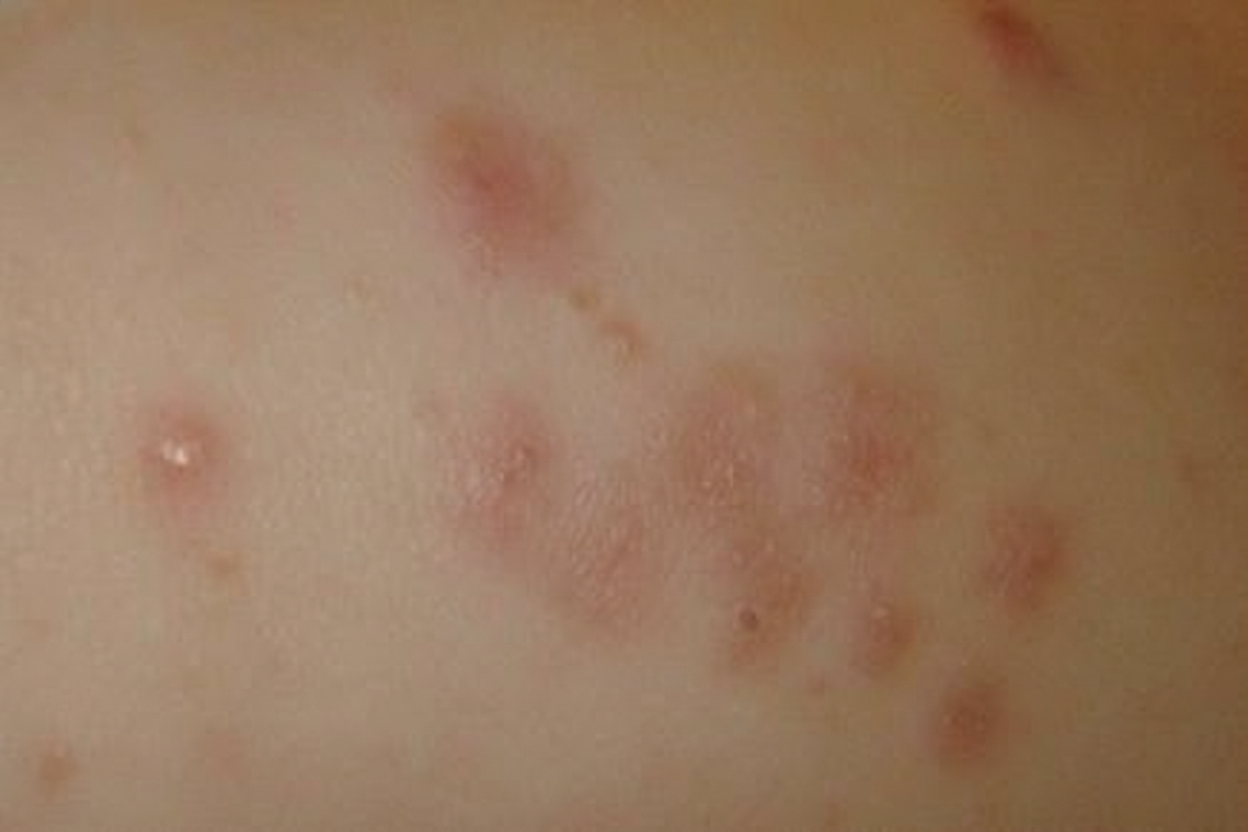
A 36-year-old man comes to the physician because of a 2-day history of malaise and a painful, pruritic rash on his lower back and thighs. His temperature is 37.8°C (100°F). Physical examination shows the findings in the photograph. Skin scrapings from the thigh grow neutral colonies on MacConkey agar. The colony-producing bacteria are oxidase-positive. Which of the following is the greatest risk factor for the patient's condition?
A 49-year-old male complains of abdominal discomfort that worsens following meals. A gastric biopsy reveals a 2 cm gastric ulcer, and immunohistochemical staining demonstrates the presence of a rod-shaped bacterium in the gastric mucosa. Which of the following is used by the infiltrating pathogen to neutralize gastric acidity?
A 35-year-old female presents to the emergency room complaining of diarrhea and dehydration. She has been experiencing severe watery diarrhea for the past 3 days. She reports that she has been unable to leave the bathroom for more than a few minutes at a time. The diarrhea is profuse and watery without visible blood or mucus. She recently returned from a volunteer trip to Yemen where she worked at an orphanage. Her past medical history is notable for psoriasis for which she takes sulfasalazine. The patient drinks socially and does not smoke. Her temperature is 99°F (37.2°C), blood pressure is 100/55 mmHg, pulse is 130/min, and respirations are 20/min. Mucous membranes are dry. Her eyes appear sunken. Capillary refill is 4 seconds. The patient is started on intravenous fluid resuscitation. Which of the following processes is capable of transmitting the genetic material for the toxin responsible for this patient's condition?
A 72-year-old woman comes to the physician because of a 3-day history of redness and swelling of her right leg and fever. She says the leg is very painful and the redness over it has become larger. She appears ill. Her temperature is 39.3°C (102.7°F), pulse is 103/min, and blood pressure is 138/90 mm Hg. Cardiopulmonary examination shows no abnormalities. Examination shows an area of diffuse erythema and swelling over her anterior right lower leg; it is warm and tender to touch. Squeezing of the calf does not elicit tenderness. There is swelling of the right inguinal lymph nodes. Pedal pulses are palpable bilaterally. Which of the following is the strongest predisposing factor for this patient's condition?
A 20-year-old woman presents to student health for a 7-day history of sinus congestion. She has also had fever, sore throat, and infectious gastroenteritis. Upon further questioning, she has had similar problems 2 or 3 times a year for as long as she can remember. These have included sinus infections, ear infections, and lung infections. At the clinic, her temperature is 38.6°C (101.4°F), heart rate is 70/min, blood pressure is 126/78 mm Hg, respiratory rate is 18/min, and oxygen saturation is 98% on room air. Physical examination is notable for mucopurulent discharge from both nares and tenderness to palpation over her bilateral maxillae. Sputum gram stain shows gram-positive diplococci. Which of the following best describes the levels of immunoglobulins that would most likely be found upon testing this patient's serum?
A 6-month-old girl presents with recurring skin infections. Past medical history is significant for 3 episodes of acute otitis media since birth. The patient was born at 39 weeks via an uncomplicated, spontaneous transvaginal delivery, but there was delayed umbilical cord separation. She has met all developmental milestones. On physical examination, the skin around her mouth is inflamed and red. Which of the following is most likely responsible for this child’s clinical presentation?
Practice by Chapter
Bacterial cell structure and physiology
Practice Questions
Bacterial genetics
Practice Questions
Bacterial metabolism
Practice Questions
Bacterial virulence factors
Practice Questions
Exotoxins and endotoxins
Practice Questions
Bacterial culture methods
Practice Questions
Antimicrobial susceptibility testing
Practice Questions
Bacterial identification methods
Practice Questions
Bacterial taxonomy and classification
Practice Questions
Zoonotic bacterial infections
Practice Questions
Foodborne bacterial pathogens
Practice Questions
Waterborne bacterial pathogens
Practice Questions
Emerging bacterial pathogens
Practice Questions
Want unlimited practice?
Get full access to all questions, explanations, and performance tracking.
Scan to download app