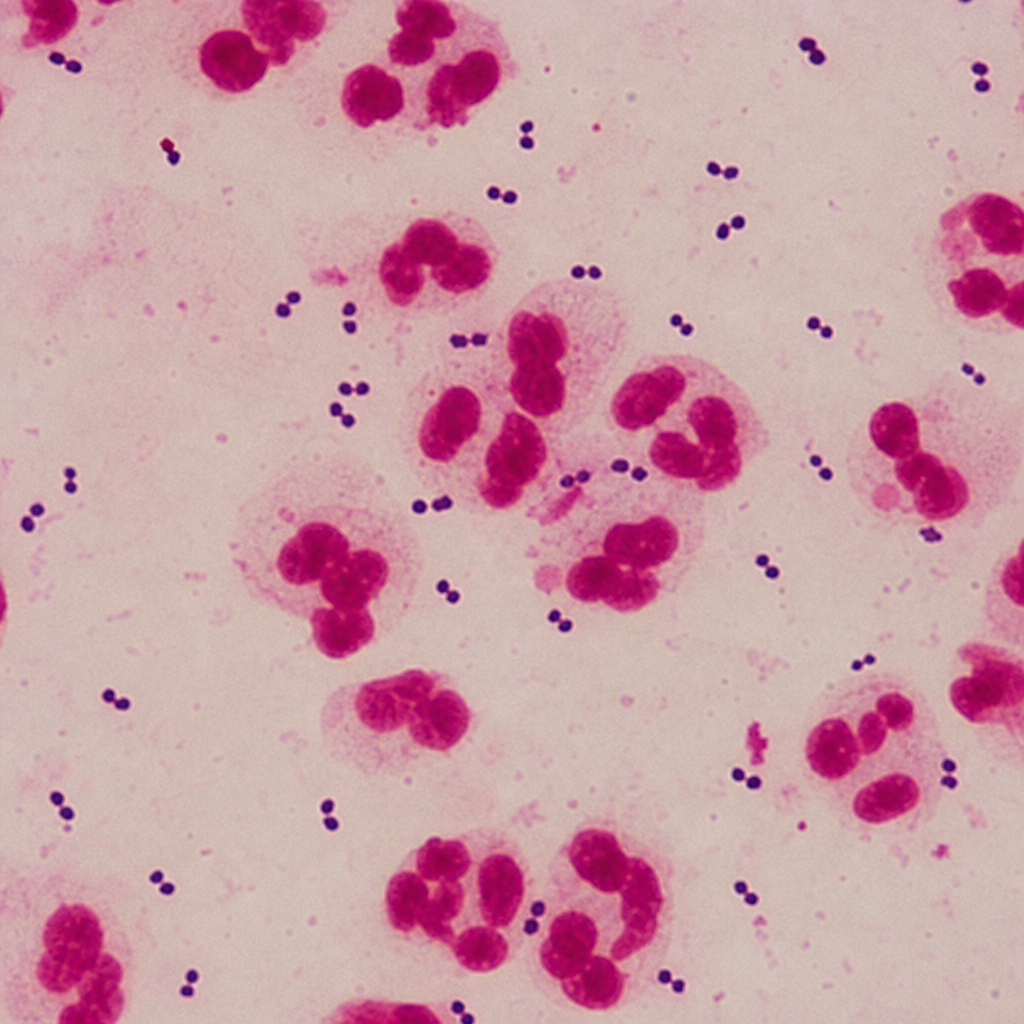
A 45-year-old man is brought to the emergency department after being found down outside of a bar. He does not have any identifying information and is difficult to arouse. On presentation, his temperature is 101.2°F (38.4°C), blood pressure is 109/72 mmHg, pulse is 102/min, and respirations are 18/min. Physical exam reveals an ill-appearing and disheveled man with labored breathing and coughing productive of viscous red sputum. Lung auscultation demonstrates consolidation of the left upper lobe of the patient. Given these findings, cultures are obtained and broad spectrum antibiotics are administered. Which of the following agar types should be used to culture the most likely organism in this case?
A 9-year-old girl comes to the clinic with a chief complaint of a swollen eye and sinus infection for 4 days. She complained of left nasal pain prior to these symptoms. The patient noticed that the swelling and redness of her left eye has progressively worsened. It has been difficult to open her eyelids, and she complains of diplopia and pain during ocular movement. The visual acuity is 20/20 in both eyes. Intraocular pressure measurement shows values of 23 and 14 mm Hg in the right and left eyes, respectively. The test results for the complete blood count, ESR, and CRP are as follows (on admission): CBC results Leukocytes 18,000 cells/mm3 Neutrophils 80% Lymphocytes 14% Eosinophils 1% Basophils 0% Monocytes 5% Hemoglobin 12 g/dL ESR 65 CRP 4.6 The organism causing the above condition is destroyed by which one of the following immunological processes?
A 40-year-old man presents to a community health center for a routine check-up. The medical history is significant for a major depressive disorder that began around the time he arrived in the United States from India, his native country. For the last few months, he has been living in the local homeless shelter and also reports being incarcerated for an extended period of time. The patient has smoked 1 pack of cigarettes daily for the last 20 years. The vital signs include the following: the heart rate is 68/min, the respiratory rate is 18/min, the temperature is 37.1°C (98.8°F), and the blood pressure is 130/88 mm Hg. He appears unkempt and speaks in a monotone. Coarse breath sounds are auscultated in the lung bases bilaterally. Which of the following is recommended for this patient?
A 28-year-old man presents to the office complaining of a sore throat, difficulty swallowing, and difficulty opening his mouth for the past 5 days. He states that he had symptoms like this before and "was given some antibiotics that made him feel better". He is up to date on his immunizations. On examination, his temperature is 39.5°C (103.2°F) and he has bilateral cervical lymphadenopathy. An oropharyngeal exam is difficult, because the patient finds it painful to fully open his mouth. However, you are able to view an erythematous pharynx as well as a large, unilateral lesion superior to the left tonsil. A rapid antigen detection test is negative. Based on this clinical presentation, what is a serious complication of the most likely diagnosis?
Which of the following events is likely to occur in the germinal center?
A previously healthy 24-year-old woman comes to the physician because of a 1-day history of nausea and weakness. She is sexually active with 2 male partners and uses an oral contraceptive; she uses condoms inconsistently. Her last menstrual period was 4 days ago. Her temperature is 38.4°C (101°F). Physical examination shows right costovertebral angle tenderness. Pelvic examination is normal. Which of the following is the most likely cause of this patient's condition?
A 2-day-old boy born to a primigravida with no complications has an ear infection. He is treated with antibiotics and sent home. His parents bring him back 1 month later with an erythematous and swollen umbilical cord still attached to the umbilicus. A complete blood cell count shows the following: Hemoglobin 18.1 g/dL Hematocrit 43.7% Leukocyte count 13,000/mm3 Neutrophils 85% Lymphocytes 10% Monocytes 5% Platelet count 170,000/mm3 The immunoglobulin levels are normal. The absence or deficiency of which of the following most likely led to this patient’s condition?
An 18-year-old college freshman scrapes his knee after falling from his bike. He applies some topical neomycin because he knows that it has antibiotic properties. As he is also in biology class, he decides to research the mechanism of action of neomycin and finds that it interferes with formation of the 30S initiation complex in bacteria. What is the messenger RNA (mRNA) signal recognized by the 30S ribosomal subunit necessary for the initiation of translation?
A 55-year-old man with type 2 diabetes mellitus comes to the physician because of a 4-day history of fever, chills, nausea, and abdominal pain. He does not use illicit drugs. His temperature is 39°C (102.2°F). Physical examination shows right upper quadrant tenderness. Ultrasonography of the abdomen shows a 6-cm solitary, fluid-filled cavity in the right hepatic lobe. CT-guided percutaneous aspiration of the cavity produces yellowish-green fluid. Culture of the aspirated fluid grows gram-negative, lactose-fermenting rods. Which of the following is the most likely cause of the color of the aspirated fluid?
An 87-year-old woman presents with fever, fatigue, and blood in her urine. She says that symptoms onset 3 days ago and have not improved. She describes the fatigue as severe and that her urine also has an odd smell to it. She denies any recent history of chills, abdominal or flank pain, or similar past symptoms. Past medical history is significant for a urinary tract infection (UTI) diagnosed 2 weeks ago for which she just completed a course of oral antibiotics. The vitals signs include pulse rate 87/min and temperature 38.8°C (101.8°F). Physical examination is unremarkable. Urinalysis reveals the presence of acid-fast bacilli. The patient is admitted and an appropriate antibiotic regimen is started. Which of the following would be the best test to screen for latent infection by the microorganism most likely responsible for this patient’s condition?
Explanation: ***MacConkey agar*** - The patient's presentation with **viscous red "currant jelly" sputum**, **upper lobe consolidation**, and history of **alcohol use** is classic for pneumonia caused by ***Klebsiella pneumoniae***. - **MacConkey agar** is a selective and differential medium used to isolate **gram-negative bacteria** such as *Klebsiella pneumoniae*, which appears as mucoid, lactose-fermenting (pink) colonies. - The "currant jelly sputum" is pathognomonic for *Klebsiella* and distinguishes it from other pneumonias. *Blood agar* - While blood agar is a rich, non-selective medium that supports growth of many organisms including *Streptococcus pneumoniae*, it is not the most appropriate choice for this case. - *Streptococcus pneumoniae* typically causes **rust-colored sputum**, not the viscous red sputum described here. - Though *Klebsiella* can grow on blood agar, **MacConkey agar** is more specific for identifying gram-negative organisms like *Klebsiella*. *Charcoal yeast extract agar* - This medium is specifically designed for the isolation of **Legionella species**, which are fastidious gram-negative rods. - *Legionella* pneumonia typically presents with relative bradycardia, hyponatremia, and diarrhea, not the viscous red sputum characteristic of *Klebsiella*. *Löwenstein-Jensen agar* - This specialized medium is used for the isolation of **mycobacteria**, particularly *Mycobacterium tuberculosis*. - TB typically presents with chronic symptoms (weeks to months), night sweats, and hemoptysis, not the acute presentation with viscous red sputum seen here. *Eaton agar* - This specialized medium is used for the isolation of **Mycoplasma pneumoniae**, which causes "walking pneumonia." - *Mycoplasma* pneumonia is typically mild with dry cough and patchy infiltrates, not the severe lobar consolidation and viscous red sputum seen in this case.
Explanation: ***Phagolysosome formation by neutrophils*** - The patient presents with symptoms highly suggestive of **orbital cellulitis**, evidenced by a swollen eye, pain with ocular movement, diplopia, and a history of sinus infection. The laboratory findings, including **leukocytosis (18,000 cells/mm3)** with a high percentage of **neutrophils (80%)**, and elevated **ESR (65)** and **CRP (4.6)**, indicate an active **bacterial infection**. - **Neutrophils** are the primary immune cells responding to bacterial infections. Their main mechanism of destroying bacteria involves **phagocytosis**, where they engulf the pathogen and fuse the phagosome with lysosomes to form a **phagolysosome**, leading to bacterial degradation through oxidative burst and enzymatic digestion. *Perforins and granzymes by natural killer cells* - **Natural killer (NK) cells** primarily target **virus-infected cells** and **tumor cells** by inducing apoptosis through the release of perforins and granzymes. - This mechanism is not the primary way the immune system combats **bacterial infections** like the orbital cellulitis described. *Release of cytotoxic granules by cytotoxic T cells* - **Cytotoxic T lymphocytes (CTLs)**, or CD8+ T cells, are crucial for eliminating **intracellular pathogens (e.g., viruses)** and **cancer cells** by inducing apoptosis. - While important for cell-mediated immunity, CTLs are not the main effector cells against the **extracellular bacteria** commonly causing orbital cellulitis. *Activation of cytosolic caspases* - **Caspases** are a family of proteases that play an essential role in programmed cell death, or **apoptosis**. - While apoptosis is a part of immune regulation, the **direct destruction of extracellular bacterial pathogens** in an active infection is not mediated by the activation of cytosolic caspases within the pathogen or host cells as a primary defense mechanism. *Complement-mediated membrane attack complex formation* - The **membrane attack complex (MAC)** formed by complement proteins C5b-C9 creates pores in bacterial membranes, leading to lysis. - While MAC is effective against some gram-negative bacteria, the encapsulated bacteria commonly causing orbital cellulitis (such as **Streptococcus pneumoniae** and **Staphylococcus aureus**) are relatively **resistant to MAC-mediated lysis** due to their thick peptidoglycan layer or capsules. The primary mechanism of destruction for these pathogens is **neutrophil-mediated phagocytosis** rather than complement-mediated lysis.
Explanation: ***Quantiferon testing*** - This patient has multiple risk factors for **tuberculosis (TB)**, including being born in a **TB-endemic country (India)**, **homelessness**, prior **incarceration**, and a history of **major depressive disorder** (which can lead to poor self-care and increased exposure risk). - **Interferon-gamma release assays (IGRAs)** like Quantiferon testing are preferred over the tuberculin skin test (TST) in individuals who have received the **BCG vaccine** (common in India) since BCG can cause false positives with TSTs. *Tuberculin skin test* - While a TST screens for latent TB, its utility in this patient is limited due to his origin from **India**, where widespread **BCG vaccination** often leads to **false-positive results**. - **IGRAs** are generally preferred in individuals vaccinated with BCG as they are not affected by prior BCG vaccination. *Low-dose computerized tomography (CT) Scan* - **Low-dose CT (LDCT)** is primarily used for **lung cancer screening** in high-risk individuals, typically heavy smokers aged 50-80 years. - This patient is 40 years old, which is outside the recommended age range for routine LDCT screening for lung cancer. *Chest X-ray* - A **chest X-ray** is typically used to evaluate symptoms like cough, dyspnea, or to follow up on abnormal findings, and can identify active pulmonary TB. - However, in this asymptomatic patient, a chest X-ray is not the initial recommended screening test for **latent TB infection**, especially given the lack of specific respiratory symptoms beyond coarse breath sounds. *Pulmonary function test* - **Pulmonary function tests (PFTs)** are used to diagnose and assess the severity of lung diseases like **asthma** or **COPD**. - This patient does not present with symptoms that would necessitate PFTs as a routine screening measure or as the initial diagnostic step for his risk factors.
Explanation: ***Lemierre syndrome*** - The patient's symptoms (sore throat, dysphagia, trismus), fever, unilateral peritonsillar lesion, and cervical lymphadenopathy are highly suggestive of a **peritonsillar abscess**. - **Lemierre syndrome** is a severe complication of oropharyngeal infections, especially peritonsillar abscesses, involving thrombophlebitis of the internal jugular vein and septic emboli. *Infectious mononucleosis* - While mononucleosis can cause severe pharyngitis and lymphadenopathy, it typically presents with **bilateral tonsillar enlargement** and exudates, not a unilateral peritonsillar lesion. - Furthermore, a history of recurrent strep-like symptoms and effective antibiotic response makes streptococcal infection (and its complications) more likely. *Acute rheumatic fever* - This is a non-suppurative complication of untreated **Group A Streptococcus (GAS)** pharyngitis. - The patient's unilateral peritonsillar lesion points to a localized suppurative infection (abscess), making acute rheumatic fever less likely as a direct complication of the *current* presentation. *Whooping cough* - Also known as **pertussis**, this is a respiratory infection characterized by severe, **paroxysmal coughing fits** followed by a characteristic "whoop." - The patient's symptoms of sore throat, difficulty swallowing, and a peritonsillar lesion are inconsistent with whooping cough. *Diphtheria* - Diphtheria causes a severe sore throat and the formation of a **thick, grey pseudomembrane** on the tonsils and pharynx. - While serious, the patient's symptoms and the absence of a pseudomembrane make diphtheria less likely, especially with an updated immunization status.
Explanation: ***Isotype switching*** - **Isotype switching**, also known as class-switch recombination, is a hallmark event in the **germinal center**, allowing B cells to change the heavy chain constant region of their antibodies, thereby altering their effector functions while retaining antigen specificity. - This process is crucial for generating diversity in antibody responses, enabling the production of antibodies like **IgG, IgA, or IgE** from an initial IgM response, depending on the immunological need. *T-cell negative selection* - **Negative selection** of T cells occurs in the **thymus**, where T cells that bind too strongly to self-peptide-MHC complexes are eliminated to prevent autoimmunity. - This process is part of T-cell maturation and is distinct from events that occur in secondary lymphoid organs like the germinal center. *Formation of double-positive T cells* - **Double-positive T cells** (CD4+ CD8+) are an intermediate stage in **T-cell development** that occurs exclusively in the **cortex of the thymus**. - These cells undergo both positive and negative selection to mature into single-positive CD4+ or CD8+ T cells. *Development of early pro-B cells* - The development of **early pro-B cells** is an initial stage of **B-cell lymphopoiesis** that occurs in the **bone marrow**, not in the germinal center. - During this stage, B-cell precursors rearrange their **heavy chain variable region (V(D)J)** genes. *Development of immature B cells* - The development of **immature B cells** also takes place in the **bone marrow**, where they complete heavy and light chain rearrangement and express IgM on their surface. - These immature B cells then migrate to peripheral lymphoid organs to complete their maturation, but this initial development is separate from germinal center reactions.
Explanation: ***Ascending bacteria from the bladder*** - The patient presents with **fever**, **nausea**, **weakness**, and **right costovertebral angle (CVA) tenderness**, which are classic symptoms of **acute pyelonephritis**. - **Pyelonephritis** most commonly results from an **ascending urinary tract infection**, where bacteria (typically *E. coli*) from the bladder travel up the ureters to infect the kidneys. - This accounts for approximately **95% of pyelonephritis cases** in young women. *Noninfectious inflammation of the bladder* - **Noninfectious cystitis** (interstitial cystitis) would not typically present with systemic symptoms like **fever** and **nausea**, or with **CVA tenderness**, which indicates kidney involvement. - Bladder inflammation typically causes dysuria and frequency without systemic signs of infection. *Ascending bacteria from the endocervix* - **Ascending bacteria from the endocervix** can cause **pelvic inflammatory disease (PID)**, which presents with lower abdominal pain, cervical motion tenderness, and vaginal discharge. - While PID can cause fever, the **normal pelvic examination** in this patient rules out this diagnosis, and PID **does not typically cause CVA tenderness**. *Decreased renal calcium reabsorption* - **Decreased renal calcium reabsorption** is associated with **hypercalciuria** and **nephrolithiasis** (kidney stones), which can present with acute flank pain if obstruction occurs. - However, this condition does not explain the **fever** and systemic symptoms characteristic of an acute infectious process. *Decreased urinary pH* - **Decreased urinary pH** (acidic urine) can predispose to certain types of kidney stone formation but is not a direct cause of **pyelonephritis**. - It does not explain the presence of **fever**, **CVA tenderness**, and systemic symptoms indicative of a bacterial kidney infection.
Explanation: ***CD18*** - The clinical presentation of **delayed umbilical cord separation** (classic hallmark), recurrent infections (ear infection), and **leukocytosis with neutrophilia** strongly suggests **leukocyte adhesion deficiency type 1** (LAD-1). - LAD-1 is caused by a defect in the **CD18** subunit (β2 integrin), which combines with CD11a, CD11b, or CD11c to form the **β2 integrin complex** (LFA-1, Mac-1, CR3/CR4) crucial for leukocyte adhesion to endothelium and extravasation into sites of infection. - Without functional CD18, neutrophils cannot migrate to infection sites despite elevated counts in circulation. *Prostaglandin E2* - **Prostaglandin E2** is a lipid mediator involved in inflammation, fever, and pain, but its deficiency would not directly cause a defect in leukocyte adhesion or delayed umbilical cord separation. - It plays a role in vasodilation and preventing platelet aggregation, unrelated to the described immune defect. *Histamine* - **Histamine** is a vasoactive amine released by mast cells and basophils, primarily involved in allergic reactions and gastric acid secretion. - A deficiency in histamine would not lead to delayed umbilical cord separation or impaired leukocyte adhesion. *TNF* - **Tumor Necrosis Factor (TNF)** is a pro-inflammatory cytokine essential for host defense against infection and immune regulation. - While a deficiency could lead to increased susceptibility to certain infections, it does not directly impair leukocyte adhesion or cause delayed umbilical cord separation. *IL-1* - **Interleukin-1 (IL-1)** is a pro-inflammatory cytokine with functions similar to TNF, playing a key role in the acute phase response and immune activation. - A deficiency would impair inflammatory responses but would not specifically cause the adhesion defect and delayed umbilical cord separation seen in this patient.
Explanation: ***Shine-Dalgarno sequence*** - The **Shine-Dalgarno sequence** is a purine-rich sequence in bacterial mRNA that is complementary to a sequence in the 16S rRNA of the 30S ribosomal subunit. - This interaction correctly positions the **30S ribosomal subunit** on the mRNA, allowing it to find the start codon and initiate translation. *UAA, UAG, and UGA codons* - These are **stop codons** that signal the termination of translation rather than its initiation. - They are recognized by release factors, not the 30S ribosomal subunit, during the elongation phase of protein synthesis. *Kozak sequence* - The **Kozak sequence** is a sequence in eukaryotic mRNA that helps the eukaryotic 40S ribosomal subunit identify the start codon (usually AUG). - It plays an analogous role to the Shine-Dalgarno sequence but functions in **eukaryotic translation initiation**, not prokaryotic. *Polyadenosine tail* - The **poly(A) tail** is a long stretch of adenosine ribonucleotides added to the 3' end of eukaryotic mRNA. - It is involved in mRNA stability, export from the nucleus, and translation efficiency in **eukaryotes**, but it is not a direct signal for ribosomal subunit binding for initiation in prokaryotes. *5' methyl-guanosine cap* - The **5' methyl-guanosine cap** is a modified guanosine nucleotide added to the 5' end of eukaryotic mRNA. - It is crucial for mRNA stability, nuclear export, and ribosome binding to initiate translation in **eukaryotes**, not prokaryotes.
Explanation: ***Myeloperoxidase*** - The yellowish-green color of the aspirated fluid, combined with the presence of **gram-negative, lactose-fermenting rods** (suggesting an enteric bacterial infection), indicates a **pyogenic liver abscess**. - **Myeloperoxidase** is an enzyme found in **neutrophils**, which are abundant in pus and contribute to its characteristic yellowish-green hue. *Biliverdin* - **Biliverdin** is a green pigment formed from the breakdown of **heme**, typically associated with jaundice or bile-containing fluids. - While bile might be present if the abscess communicated with the biliary tree, the primary cause of a pus's specific yellowish-green color in a bacterial infection is not biliverdin. *Prodigiosin* - **Prodigiosin** is a distinctive **red pigment** produced by certain bacterial species, most notably *Serratia marcescens*. - This pigment would result in a red or pink discoloration, not the yellowish-green seen in this patient's aspirate. *Staphyloxanthin* - **Staphyloxanthin** is a **golden-yellow pigment** produced by *Staphylococcus aureus*, contributing to its characteristic colony color. - While *S. aureus* can cause abscesses, the culture here grew **gram-negative, lactose-fermenting rods**, making staphyloxanthin an unlikely cause for the color. *Pyoverdine* - **Pyoverdine** is a **fluorescent yellow-green pigment** produced by *Pseudomonas aeruginosa*. - Although it produces a greenish hue, *Pseudomonas aeruginosa* is a **non-lactose-fermenting gram-negative rod**, which contradicts the culture results of lactose-fermenting organisms.
Explanation: ***Interferon-gamma release assays*** - This assay directly screens for a **T-cell mediated immune response** to *Mycobacterium tuberculosis* antigens, indicating either latent or active infection. - Given the presence of **acid-fast bacilli** in urine and a history suggestive of **renal tuberculosis** (UTI-like symptoms despite antibiotic treatment, fever, fatigue), this test is highly appropriate for detecting latent infection with the causative organism. *Culture in Löwenstein-Jensen media* - This is a culture method used to **isolate and grow mycobacteria** from a sample, which would confirm active infection rather than screen for latent disease. - While it could be used for diagnosis, it's not the best test for *screening for latent infection*. *Chest X-ray* - A chest X-ray is used to detect **pulmonary tuberculosis**, which is the most common form of active TB. - It would not screen for **latent tuberculosis infection** itself or specifically for **extrapulmonary forms** like renal tuberculosis, which this patient likely has. *Gram stain of urine sample* - A Gram stain is effective for identifying common **bacterial pathogens** (Gram-positive or Gram-negative) in urine. - **Mycobacteria** are acid-fast and do **not stain well with Gram stain**, making this test unsuitable for their detection or for screening latent TB. *Sputum culture* - **Sputum culture** is used to diagnose **pulmonary tuberculosis** by detecting *Mycobacterium tuberculosis* in respiratory secretions. - The patient's symptoms are localized to the urinary tract with no respiratory complaints, making sputum culture irrelevant for this presentation.
Explanation: ***Refried rice*** - The rapid onset of symptoms after eating foods like refried rice, especially following social gatherings where food may have been left out, is highly suggestive of **_Bacillus cereus_ food poisoning**. - **_Bacillus cereus_** produces toxins (emetic toxin) that cause **vomiting** within 1-6 hours of ingestion, often without diarrhea. *Egg salad* - Egg salad, particularly if improperly refrigerated, is a common source of **_Salmonella_** infection. - However, **_Salmonella_** typically causes **diarrhea, fever, and abdominal cramps**, often with a longer incubation period of 6-72 hours, which is not consistent with this patient's presentation of rapid onset **vomiting** and no diarrhea. *Home-made ice cream* - Home-made ice cream made with raw eggs can be a source of **_Salmonella_ infection**. - Similar to commercially prepared egg salad, **_Salmonella_** presents with symptoms of **diarrhea, fever**, and a longer incubation period, distinguishing it from this case. *Fish* - Poorly preserved fish can lead to **scombroid poisoning** (histamine toxicity), which can cause rapid onset symptoms including flushing, headache, and gastrointestinal disturbances. - While it can cause rapid symptoms, **scombroid poisoning** typically causes a wider range of symptoms including **rash, flushing, and headaches**, which are absent here. *Unfiltered stream water* - Ingestion of unfiltered stream water increases the risk of parasitic infections such as **_Giardia lamblia_** or bacterial infections like **_E. coli_ (traveler's diarrhea)**. - These infections typically cause **diarrhea, abdominal cramps**, and sometimes nausea and vomiting, but their onset is usually delayed (days to weeks), and diarrhea is a prominent symptom, unlike this patient's presentation.
Explanation: ***Polysaccharide conjugate vaccine*** - The patient presents with classic symptoms of **bacterial meningitis** (**fever, stiff neck, headache, lethargy, petechiae**), and CSF analysis showing **neutrophilic pleocytosis** and **decreased glucose** further supports this diagnosis. - Given the patient's age and travel history, **Neisseria meningitidis** is a strong possibility, and being vaccinated with a **polysaccharide conjugate vaccine** against this bacterium would have likely prevented the condition. *Fluconazole therapy* - **Fluconazole** is an **antifungal medication** used to treat fungal infections, such as candidiasis or cryptococcosis. - It would not be effective against **bacterial meningitis**, which is the most likely diagnosis in this case. *Inactivated whole-cell vaccine* - An **inactivated whole-cell vaccine** is a type of vaccine, but the specific type of pathogen targeted (e.g., *Bordetella pertussis* for whooping cough) is not specified and is unlikely to be relevant here. - While various inactivated vaccines exist, a non-specific inactivated whole-cell vaccine would not necessarily target the organism causing **meningitis** in this patient. *Toxoid vaccine* - A **toxoid vaccine** uses an inactivated bacterial toxin to stimulate an immune response, protecting against diseases caused by bacterial toxins (e.g., tetanus, diphtheria). - This patient's symptoms are indicative of a direct bacterial infection causing **meningitis**, not a toxin-mediated disease. *Erythromycin therapy* - **Erythromycin** is a **macrolide antibiotic** used to treat certain bacterial infections, such as respiratory tract infections (e.g., *Mycoplasma pneumoniae*, *Chlamydia pneumoniae*). - While an antibiotic, it is not the most appropriate first-line treatment or preventative measure for **bacterial meningitis**, especially in the context of preventing **Neisseria meningitidis** infection compared to vaccination.
Explanation: ***Occludins*** - **Occludins** are key components of **tight junctions** (zona occludens) in the Sertoli cells of the testes, which form the **blood-testis barrier**. - A disruption or breakdown of these tight junctions can expose germ cells to the immune system, leading to the formation of **antisperm antibodies** and subsequent infertility. *Connexons* - **Connexons** form **gap junctions**, which are crucial for intercellular communication through the direct passage of small molecules between adjacent cells. - While important for various cellular processes, their breakdown is not a direct cause of autoantibody formation against sperm. *Integrins* - **Integrins** are cell surface receptors that mediate **cell-matrix** and **cell-cell adhesion**, playing roles in cell signaling and migration. - Their primary function is not in forming the tight junctions that prevent immune exposure of sperm, so their breakdown would not directly cause antisperm antibodies. *Desmoplakins* - **Desmoplakins** are major proteins of **desmosomes**, which provide strong mechanical adhesion between cells through intermediate filaments. - Desmosomes are important for tissue integrity but do not form the selective barrier that protects sperm from immune surveillance. *E-cadherins* - **E-cadherins** are cell adhesion molecules primarily involved in forming **adherens junctions** and maintaining epithelial cell polarity. - While critical for cell-cell adhesion, they are not the primary constituents of the tight junctions that comprise the blood-testis barrier.
Explanation: ***B cell class switching*** - **IL-4** is a key cytokine in allergic reactions, primarily promoting **B cell class switching** to IgE, which mediates immediate hypersensitivity. - This **IgE** then binds to mast cells and basophils, leading to histamine release upon re-exposure to the allergen and causing symptoms of anaphylaxis. *Neutrophil chemotaxis* - **Neutrophil chemotaxis** is primarily mediated by cytokines like **IL-8** (CXCL8) and C5a, not IL-4. - Neutrophils are more involved in bacterial infections and acute inflammatory responses, not typically central to allergic anaphylaxis. *Macrophage and Th1 cell activation* - **Macrophage** and **Th1 cell activation** are mainly driven by **interferon-gamma (IFN-γ)** and **IL-12**, which promote cell-mediated immunity. - **IL-4** typically inhibits **Th1 responses** and promotes **Th2 responses**, which are characteristic of allergic reactions. *Stimulates IgA production* - **IgA production** is primarily induced by cytokines such as **transforming growth factor-beta (TGF-β)**, **IL-5**, and **IL-6**, often in mucosal immunity. - While IL-4 plays a role in humoral immunity, its main role in allergic reactions is not the stimulation of IgA. *Growth of cytotoxic T cells* - The **growth of cytotoxic T cells (CTLs)** is primarily stimulated by **IL-2** and **IL-15**, which are crucial for antiviral and antitumor immunity. - **IL-4** is not directly involved in the proliferation or differentiation of cytotoxic T cells.
Explanation: ***Total lack of B and T cells*** - **RAG1 and RAG2** genes are essential for **V(D)J recombination**, the process by which B and T cell receptors are diversified. - Without functional RAG genes, **lymphocytes cannot properly mature**, leading to a severe combined immunodeficiency characterized by the absence of B and T cells. *Absence of CD18 in leukocytes* - The absence of **CD18** in leukocytes is characteristic of **Leukocyte Adhesion Deficiency (LAD)**, a disorder affecting neutrophil and lymphocyte adhesion and migration. - This condition is caused by a defect in the **integrin B2 subunit (CD18)**, which is unrelated to RAG genes. *Deficiency in CD40L on activated T cells* - A deficiency in **CD40L (CD154)** on activated T cells is the hallmark of **X-linked Hyper-IgM Syndrome**. - This defect primarily affects B cell class switching and antibody production, with normal numbers of B and T cells initially. *Defect of NADPH oxidase in phagocyte* - A defect in **NADPH oxidase** in phagocytes is responsible for **Chronic Granulomatous Disease (CGD)**. - This leads to impaired phagocytic killing of microorganisms, but does not affect B or T cell development. *The mice should be asymptomatic* - Given the critical role of RAG genes in adaptive immunity, **knock-out mice would suffer from severe immunodeficiency**. - They would be highly susceptible to infections and would likely develop a severe, life-threatening condition, not be asymptomatic.
Explanation: ***Affinity maturation*** - This process involves **somatic hypermutation** in the germinal centers, leading to B cells with receptors having higher affinity for the antigen. - Coupled with **clonal selection**, this ensures that subsequent immune responses are faster and more effective due to the improved binding of antibodies to the pathogen. *T cell positive selection* - This process occurs in the **thymic cortex** and selects T cells capable of recognizing self-MHC molecules. - It is crucial for the development of the T cell repertoire and does not occur in germinal centers during B cell activation. *T cell negative selection* - This process takes place primarily in the **thymic medulla** and eliminates T cells that bind too strongly to self-peptide/MHC complexes, preventing autoimmunity. - It is a central tolerance mechanism and is not related to B cell responses in germinal centers. *Development of early pro-B cells* - The development of pro-B cells, and indeed all early stages of B cell development (pro-B, pre-B, immature B), occurs primarily in the **bone marrow**. - These are early developmental stages, distinct from the antigen-driven processes occurring in secondary lymphoid organs during an infection. *Development of immature B cells* - Immature B cells develop from pre-B cells in the **bone marrow** and then migrate to secondary lymphoid organs to complete maturation. - This step occurs prior to encountering an antigen in the germinal centers and is part of initial B cell development rather than the refinement of the immune response to an infection.
Explanation: ***μ and δ heavy chains*** - **CD40L deficiency** prevents T-cell help for B cells, thus inhibiting **class-switch recombination (CSR)** and the production of IgG, IgA, and IgE. - Despite the inability to class-switch, B cells can still produce **IgM** and **IgD** as these immunoglobulins are generated via alternative splicing of mRNA and do not depend on CD40L signaling or class switching. *α and γ heavy chains* - **Alpha (α) heavy chains** characterize IgA, and **gamma (γ) heavy chains** characterize IgG. - The production of IgA and IgG requires **CD40L-CD40 interaction** for class-switch recombination, which is deficient in this patient. *α and ε heavy chains* - **Alpha (α) heavy chains** characterize IgA, and **epsilon (ε) heavy chains** characterize IgE. - The production of IgA and IgE is dependent on **CD40L-CD40 signaling** for class-switch recombination, which is impaired in CD40L deficiency. *μ and ε heavy chains* - While **mu (μ) heavy chains** are normally expressed, **epsilon (ε) heavy chains** (IgE) require class-switch recombination. - Class switching to IgE requires **CD40L-CD40 interaction** and IL-4, which is defective in this patient. *μ heavy chain only* - While **mu (μ) heavy chains** are indeed expressed, **delta (δ) heavy chains** (IgD) are also normally expressed by naive B cells. - Both IgM and IgD are **co-expressed** on the surface of naive B cells through differential splicing of mRNA, independent of CD40L signaling.
Explanation: ***Vibrio parahaemolyticus infection*** - The patient's symptoms of **bloody diarrhea**, **abdominal discomfort**, **nausea**, **vomiting**, and **fever** occurring 3 days after consuming **raw oysters** are highly suggestive of *Vibrio parahaemolyticus* infection. - This bacterium is a common cause of **seafood-associated gastroenteritis**, particularly linked to exposure to **raw shellfish**. *Bacillus cereus infection* - This typically causes **food poisoning** from **reheated rice** or other starchy foods, presenting with a much shorter incubation period (1-6 hours for emetic toxin, 6-15 hours for diarrheal toxin). - While it causes vomiting and diarrhea, the incubation period and association with raw oysters are not consistent with *B. cereus*. *Rotavirus infection* - Rotavirus primarily affects **infants and young children**, causing **watery diarrhea**, vomiting, and fever. - It is highly contagious and spread **fecal-orally**, but it is not typically associated with seafood consumption in adults. *Norovirus infection* - Norovirus is a common cause of **viral gastroenteritis** and can cause outbreaks, often linked to contaminated food or water, but typically not specifically raw oysters. - While it causes nausea, vomiting, and diarrhea, **bloody diarrhea** is uncommon, and the specific exposure to raw oysters points away from norovirus. *C. difficile colitis* - *Clostridium difficile* infection is characterized by **diarrhea** (often foul-smelling and watery) and **abdominal pain**, but it typically occurs after **antibiotic use** or in healthcare settings. - The patient has no history of recent antibiotic use, and the link to raw oysters is inconsistent with *C. difficile*.
Explanation: ***Yersiniosis*** - The patient's symptoms of **fever**, **sore throat**, **bloody diarrhea**, nausea, and vomiting, combined with a history of exposure to sick dogs (potential carriers of *Yersinia*), strongly suggest **Yersiniosis**. - **Elevated WBC count** with neutrophilia is consistent with a bacterial infection, and *Yersinia enterocolitica* is a known cause of bloody diarrhea, particularly in children and adolescents, often mimicking appendicitis. *Rotavirus infection* - While Rotavirus causes **diarrhea** and vomiting, it is typically **watery diarrhea** and does not usually present with bloody stool or significant neutrophilia. - It is more common in **infants** and young children and symptoms usually resolve within a week. *Norovirus infection* - Norovirus causes acute **gastroenteritis** with vomiting and watery diarrhea, but usually **without blood** in the stool. - The symptoms appear more abruptly and resolve within 1-3 days, and it typically does not present with a significant fever or sore throat. *C. difficile colitis* - This typically occurs after **antibiotic use** and presents with severe **watery diarrhea** (which can occasionally be bloody), abdominal pain, and fever. - The patient has **no history of antibiotic exposure**, making *C. difficile* less likely. *Bacillus cereus infection* - **Bacillus cereus** gastroenteritis is usually associated with **food poisoning**, particularly from reheated rice or other starchy foods. - It presents with either a **vomiting type** (short incubation, severe nausea/vomiting) or a **diarrheal type** (longer incubation, watery diarrhea), neither of which perfectly fit the bloody diarrhea, fever, and sore throat described.
Explanation: ***E. coli 0157:H7*** - This patient's presentation with **bloody diarrhea** and a history of consuming potentially contaminated **stream water** during a camping trip is highly suggestive of enterohemorrhagic *E. coli* O157:H7 infection. - While other pathogens can cause bloody diarrhea, the combination of environmental exposure, moderate fever, and the absence of severe systemic illness points towards this specific *E. coli* strain, known for producing toxins that damage the intestinal lining. *Campylobacter* - While *Campylobacter* can cause **bloody diarrhea** and is associated with consuming contaminated water or undercooked poultry, its incubation period is typically longer (2-5 days) than the 4 days described, and it more frequently causes **abdominal cramping with fever**. - Although it's a possibility, *E. coli* O157:H7 is a stronger fit given the rapid onset of bloody diarrhea after likely water exposure. *Shigella* - *Shigella* causes **dysentery** (bloody, mucoid stools) and is highly contagious, often transmitted person-to-person or through contaminated food/water. - However, *Shigella* infections commonly present with **high fever**, severe abdominal cramps, and tenesmus, which are not prominently described in this patient. *Clostridium difficile* - *Clostridium difficile* infection (CDI) is typically associated with **recent antibiotic use** or hospitalization, which is not mentioned in this patient's history. - While CDI can cause bloody diarrhea, it is more commonly characterized by watery diarrhea, severe abdominal pain, and often a distinctive smell. *Salmonella* - *Salmonella* can cause **gastroenteritis** with watery or sometimes bloody diarrhea, often linked to contaminated food (e.g., poultry, eggs). - However, bloody diarrhea is less common than with *E. coli* O157:H7, and this patient's specific exposure to stream water during camping makes *E. coli* O157:H7 a more direct link.
Explanation: ***Haemophilus influenzae*** - This presentation is **classic for acute epiglottitis**: rapid onset of high fever, severe sore throat, **drooling**, **tripod positioning** (leaning forward), and refusal to open mouth due to airway compromise. - *Haemophilus influenzae* type b (Hib) is the **classic and most well-known cause** of epiglottitis, and remains the correct answer for board examination purposes when this clinical presentation is described. - Although Hib vaccination has dramatically reduced the incidence of epiglottitis, cases can still occur due to **vaccine failure**, **waning immunity**, or infection with **non-typeable strains**. - The **"cherry-red epiglottis"** on direct laryngoscopy (when safely performed in the OR) is pathognomonic, though the physical exam should not be forced in an unstable patient. *Candida albicans* - *Candida albicans* causes **oral thrush** (oropharyngeal candidiasis), typically seen in immunocompromised patients or infants. - Presents as **white, removable plaques** on the oral mucosa and tongue, causing discomfort but not acute airway obstruction. - Does not cause the acute, life-threatening presentation of epiglottitis with respiratory distress and drooling. *Streptococcus pneumoniae* - While *Streptococcus pneumoniae* can cause epiglottitis in the post-vaccination era and is increasingly recognized, it is not the **classic board examination answer** for acute epiglottitis. - More commonly causes **pneumonia**, **otitis media**, **sinusitis**, and **meningitis**. - In clinical practice, it may be seen more frequently than Hib in vaccinated populations, but *H. influenzae* remains the prototypical cause tested on examinations. *Epstein-Barr virus* - **Epstein-Barr virus (EBV)** causes **infectious mononucleosis** with fever, exudative pharyngitis, posterior cervical lymphadenopathy, and splenomegaly. - Symptoms develop over days to weeks, not the **rapid progression** (overnight) seen in this case. - While EBV can cause tonsillar hypertrophy, it does not typically produce the acute airway emergency with drooling and tripod positioning characteristic of epiglottitis. *Streptococcus viridans* - **Viridans group streptococci** are normal oral flora and are associated with **dental caries** and **subacute bacterial endocarditis** following dental procedures or in patients with valvular disease. - They are not significant pathogens in acute epiglottitis or upper airway obstruction in previously healthy children.
Explanation: ***Stool culture on TCBS agar*** - The patient's symptoms (profuse watery diarrhea, vomiting, dehydration, history of travel to India) strongly suggest **cholera**, caused by *Vibrio cholerae*. - **Thiosulfate-citrate-bile salts-sucrose (TCBS) agar** is a highly selective medium specifically used for isolating *Vibrio* species. *Methylene blue wet mount* - This test is primarily used to identify **white blood cells (leukocytes)** in stool, which indicate an inflammatory process, such as in *Shigella* or *Salmonella* infections. - Cholera is a **non-inflammatory** diarrhea, so a methylene blue wet mount would likely be negative for leukocytes and therefore not helpful for diagnosis. *Gram stain of stool sample* - While Gram stain can classify bacteria, it is generally **not useful for diagnosing diarrheal diseases** caused by specific enteric pathogens, as stool contains a vast array of Gram-negative and Gram-positive bacteria. - It would be difficult to identify *Vibrio cholerae* among the normal flora using this method alone. *Dark-field microscopy* - This technique is typically used to visualize **spirochetes**, such as *Treponema pallidum* (syphilis), due to their characteristic motility and morphology. - While *Vibrio cholerae* are motile rods, dark-field microscopy is **not the standard or most sensitive method** for its identification in a stool sample, especially compared to selective cultures. *Rapid diagnostic test for cholera toxin* - While such tests exist and can be useful in epidemic settings for quick screening, they generally have **lower sensitivity and specificity** compared to culture-based methods. - **Culture remains the gold standard** for definitive diagnosis, especially for guiding treatment and epidemiological surveillance.
Explanation: ***TH1 cells and macrophages*** - **TH1 cells** produce **IFN-γ**, which activates macrophages to become more effective at phagocytosing and killing intracellular pathogens like Mycobacterium tuberculosis. - Activated **macrophages** differentiate into epithelioid cells and multinucleated giant cells, which, along with lymphocytes, form the characteristic **granuloma** to contain the infection. *TH2 cells and macrophages* - **TH2 cells** are primarily involved in humoral immunity and allergic responses, producing cytokines like **IL-4, IL-5, and IL-13**, which are not centrally involved in granuloma formation against intracellular bacteria. - While macrophages are crucial for granuloma formation, their activation in the context of tuberculosis relies on **TH1 cytokine signaling**, rather than TH2. *CD8 T cells and NK cells* - **CD8 T cells** (cytotoxic T lymphocytes) primarily kill infected cells, playing a role in limiting viral infections or intracellular bacteria that escape phagosomes, but are not the main drivers of granuloma formation. - **Natural killer (NK) cells** provide immediate defense against viruses and tumor cells, but are not the primary cellular components responsible for the organized structure of a tuberculous granuloma. *TH2 cells and neutrophils* - **TH2 cells** promote anti-parasitic responses and allergic inflammation, which are not the dominant immune pathways in controlling tuberculosis. - **Neutrophils** are crucial in acute inflammation and bacterial clearance, but they are typically not the primary long-term cellular component of a mature **tuberculous granuloma**; rather, macrophages and T cells predominate. *TH1 cells and neutrophils* - While **TH1 cells** are essential for activating macrophages in tuberculosis, **neutrophils** are not the main effectors of granuloma formation. - **Neutrophils** are more prominent in the early stages of infection and in acute inflammatory responses, but the characteristic structure of a chronic tuberculous granuloma relies on activated macrophages and lymphocytes.
Explanation: ***Unwashed fruits and vegetables*** - The patient's symptoms (watery diarrhea, abdominal cramps, recent travel to Peru, and consuming local food/drink) are highly suggestive of **Traveler's Diarrhea (TD)**. This condition is most commonly caused by **enterotoxigenic E. coli (ETEC)**. - **Unwashed fruits and vegetables** are a common vehicle for the transmission of ETEC and other pathogens associated with TD, as they can be contaminated with fecal matter. *Raw oysters* - **Raw oysters** are typically associated with **Vibrio parahaemolyticus** or **norovirus** infections, which can cause gastroenteritis but are not the most common cause of Traveler's Diarrhea from contaminated food in a country like Peru. - While they can cause diarrhea, the clinical picture is classic for Traveler's Diarrhea, where produce is a more frequent culprit. *Soft cheese* - **Soft cheeses**, especially unpasteurized ones, are more commonly associated with bacterial infections like **Listeria monocytogenes**, which can cause severe illness, but usually presents differently than typical Traveler's Diarrhea, often with fever and systemic symptoms. - They are not a primary source for the common pathogens causing acute watery diarrhea in travelers. *Fried rice* - **Fried rice** is a common source of **Bacillus cereus** food poisoning, which typically causes a very rapid onset of vomiting within 1-6 hours (emetic form) or diarrhea within 6-15 hours (diarrheal form) after consumption. - The patient's symptoms started the day after returning, suggesting a longer incubation period than typically seen with *B. cereus* from fried rice. *Ground meat* - **Ground meat**, particularly undercooked, is a common source of **enterohemorrhagic E. coli (EHEC)**, especially O157:H7, and **Salmonella** or **Campylobacter**. - These typically cause more severe diarrhea, often with **bloody stools**, which the patient explicitly denied.
Explanation: ***NADPH oxidase deficiency*** - The recurrent skin abscesses (purulent lesions), respiratory tract infections, lymphadenopathy, and fevers point to chronic granulomatous disease (CGD), which is caused by a deficiency in **NADPH oxidase**. - **NADPH oxidase** is essential for the production of reactive oxygen species (ROS) in phagocytes, which are critical for killing catalase-positive bacteria and fungi. *Defective cytoplasmic tyrosine kinase* - This mechanism is associated with **X-linked agammaglobulinemia (Bruton's agammaglobulinemia)**, which primarily causes recurrent bacterial infections due to a lack of B cells and antibodies. - While recurrent infections occur, the typical presentation involves encapsulated bacteria and lacks the widespread purulent skin lesions and lymphadenopathy seen in CGD. *Impaired signaling to actin cytoskeleton reorganization* - This defect is characteristic of **Wiskott-Aldrich syndrome**, leading to thrombocytopenia, eczema, and recurrent infections, particularly by encapsulated bacteria. - The clinical picture of recurrent widespread skin abscesses and granuloma formation is not typical for Wiskott-Aldrich syndrome. *Defective neutrophil chemotaxis* - This can be seen in conditions like **leukocyte adhesion deficiency (LAD)** or **Chédiak-Higashi syndrome**. - LAD presents with recurrent bacterial infections, impaired wound healing, and delayed umbilical cord separation, while Chédiak-Higashi involves partial oculocutaneous albinism and recurrent pyogenic infections, distinct from this patient's symptoms. *Impaired repair of double-strand DNA breaks* - This defect is associated with conditions like **ataxia-telangiectasia**, which involves cerebellar ataxia, telangiectasias, and immunodeficiency (T-cell and IgA deficiency). - The patient's symptoms of recurrent purulent skin lesions and infections are not characteristic of the DNA repair defects seen in ataxia-telangiectasia.
Explanation: ***P fimbriae*** - The patient presents with classic **acute cystitis** (UTI), commonly caused by **uropathogenic E. coli (UPEC)**, especially in sexually active women ("honeymoon cystitis"). - **Fimbrial adhesins are the most critical virulence factor** for E. coli UTIs, enabling bacteria to adhere to uroepithelial cells and resist being flushed out by urine flow. - Note: **Type 1 fimbriae** (which bind mannose on bladder epithelium) are actually the primary adhesins for **cystitis**, while **P fimbriae** (which bind P blood group antigens) are more specific for **pyelonephritis** (upper UTI). - In this question context, "P fimbriae" represents the broader concept of **fimbrial adhesion** as the key mechanism—making it the best answer among the options provided, as adhesion is essential for colonization and infection. *Exotoxin* - E. coli causing uncomplicated UTIs do not rely on exotoxin production as their primary pathogenic mechanism. - Exotoxins are associated with diseases like diphtheria, botulism, or cholera with different clinical presentations. *Flagella* - **Flagella** provide motility, helping bacteria ascend the urinary tract. - However, motility is secondary to **adhesion**—bacteria must first attach to uroepithelium to establish infection; without fimbriae, they would be washed away regardless of motility. *K capsule* - The **K capsule** (polysaccharide capsule) provides antiphagocytic properties and serum resistance, particularly important in invasive infections like **pyelonephritis** or **bacteremia**. - While it contributes to virulence in severe UTIs, **adhesion is the critical first step** for establishing bladder colonization in cystitis. *LPS endotoxin* - **LPS (lipopolysaccharide)** is a structural component of Gram-negative bacteria that triggers inflammatory responses when released. - LPS causes systemic symptoms (fever, shock) in severe infections or sepsis, but it is not the primary virulence factor responsible for the **localized bladder symptoms** (dysuria, frequency) characteristic of simple cystitis. - The infection establishes via adhesion first; LPS effects are secondary inflammatory consequences.
Explanation: ***Tropheryma whippleii*** - The constellation of **weight loss**, **fever**, **joint pain**, **diarrhea**, and specifically a biopsy showing **PAS-positive, non-acid-fast macrophage inclusions** in the lamina propria is pathognomonic for **Whipple's disease**, caused by *Tropheryma whippleii*. - These macrophages are engorged with undigested bacterial components, which stain magenta with **Periodic acid–Schiff (PAS)** stain due to their bacterial cell wall glycolipids. *Giardia lamblia* - This parasite commonly causes **diarrhea** and malabsorption but does not typically lead to systemic symptoms like fever and arthritis. - Intestinal biopsies would show **trophozoites** or **cysts** in the lumen or attached to the mucosa, not PAS-positive macrophage inclusions. *Campylobacter jejuni* - A common cause of **bacterial gastroenteritis**, presenting with bloody diarrhea, fever, and abdominal pain. - While it can cause **reactive arthritis**, its presence in the intestine does not lead to **PAS-positive macrophage inclusions** in the lamina propria; rather, it causes acute inflammatory changes. *Ascaris lumbricoides* - This is a large intestinal nematode that can cause abdominal pain, malnutrition, and bowel obstruction in heavy infections. - It does not cause systemic symptoms like **fever** and **arthritis**, nor does it result in distinct macrophage inclusions on biopsy. *Mycobacterium avium-intracellulare complex* - While **MAC** can cause intestinal infection, particularly in immunocompromised individuals, leading to malabsorption and diarrhea, its characteristic feature on biopsy would be **acid-fast positive** macrophages. - The question specifically states **non-acid-fast** inclusions, differentiating it from MAC infection.
Explanation: ***Inoculation of a sputum sample into selective agar media needs to be incubated at 35–37°C (95.0–98.6°F) for up to 8 weeks.*** - The patient's symptoms, travel history, imaging findings (ill-defined circular lesion), and social history (chronic alcoholism, poor hygiene) strongly suggest **pulmonary tuberculosis (TB)** with potential cavitation. - **Mycobacterium tuberculosis** is a slow-growing organism; therefore, **culture on selective media** (e.g., Lowenstein-Jensen or Middlebrook media) for an extended period (typically 6-8 weeks) is the gold standard for diagnosis, allowing for identification and drug susceptibility testing. *A positive tuberculin test would be diagnostic of active infection.* - A **positive tuberculin skin test (TST)** or **interferon-gamma release assay (IGRA)** indicates **TB exposure** or **latent TB infection**, not necessarily active disease. - Many individuals with latent TB will have a positive test but no active infection, requiring further diagnostic workup like sputum microscopy and culture to confirm active disease. *DNA polymerase chain reaction (PCR) has poor sensitivity when applied to smear positive specimens.* - **DNA PCR** is a rapid and highly **sensitive** and **specific** test for M. tuberculosis, especially valuable for **smear-positive specimens**. - It can detect very small amounts of mycobacterial DNA, significantly reducing the diagnostic time compared to culture. *Stains of gastric washing and urine have a high diagnostic yield on microscopy.* - While M. tuberculosis can be found in gastric washings, especially in patients who cannot produce sputum, its **diagnostic yield for pulmonary TB by microscopy is not high** compared to sputum. - **Urine microscopy** is rarely used for the diagnosis of pulmonary tuberculosis; it is only relevant in cases of **renal or genitourinary tuberculosis**. *Ziehl-Neelsen staining is more sensitive than fluorescence microscopy with auramine-rhodamine stain.* - **Fluorescence microscopy with auramine-rhodamine stain** is typically **more sensitive** than Ziehl-Neelsen staining for detecting acid-fast bacilli (AFB). - The fluorescent stain allows for lower magnification scanning and better visualization of the bacilli, leading to a higher detection rate.
Explanation: ***Proteus mirabilis*** - The high urine pH (8.2), positive nitrites, and moderate bacteria, along with signs of infection in an elderly catheterized patient, are highly suggestive of a **urea-splitting organism**. - **Proteus mirabilis** is a common cause of catheter-associated UTIs and produces urease, leading to alkaline urine and the formation of struvite stones, consistent with the patient's history of nephrolithiasis. *Enterococcus faecalis* - While *Enterococcus faecalis* can cause UTIs, it typically does not produce urease and therefore would not cause such a **markedly elevated urine pH** (above 7.5). - Although it can cause positive nitrites, the absence of a strong alkali pH makes it less likely than *Proteus mirabilis*. *Klebsiella pneumoniae* - *Klebsiella pneumoniae* can cause UTIs and produce nitrites, but it is not typically a strong **urease producer** to the extent that would cause an alkaline urine pH of 8.2. - It is more commonly associated with nosocomial infections, but the highly alkaline urine points away from it as the most likely cause here. *Staphylococcus saprophyticus* - *Staphylococcus saprophyticus* is a common cause of UTIs in young, sexually active women, but it is **rare in elderly, catheterized patients**. - It is also not typically associated with such a high urine pH as seen in this case. *Escherichia coli* - *Escherichia coli* is the most common cause of UTIs, but it is a **non-urease-producing** bacterium and would typically result in acidic urine, or at least a less alkaline pH than 8.2. - While it would cause positive nitrites and moderate bacteria, the elevated pH makes it less likely than *Proteus mirabilis* in this context.
Explanation: ***Haemophilus ducreyi*** - The presentation of a **single, painful penile ulcer** with a **necrotic base** and **tender inguinal lymphadenopathy** is classic for **chancroid**, - This condition is caused by **Haemophilus ducreyi**, and the patient's recent travel to India, where chancroid is endemic, increases the likelihood of this diagnosis. *Klebsiella granulomatis* - This bacterium causes **granuloma inguinale (donovanosis)**, which typically presents with **painless, beefy-red ulcers** that bleed easily, - The ulcer described in the patient is **painful** and has a **necrotic base**, which is inconsistent with donovanosis. *Herpes simplex virus 2* - **Herpes simplex virus (HSV-2)** typically causes **multiple, painful vesicular lesions** that rupture to form shallow ulcers, often accompanied by systemic symptoms like fever and malaise. - The patient describes a **single, large ulcer** with a necrotic base, which is not characteristic of herpetic lesions. *Treponema pallidum* - **Treponema pallidum** causes **syphilis**, which presents as a **painless chancre** with a clean base and firm, non-tender lymphadenopathy in its primary stage. - The patient's ulcer is explicitly described as **painful** and draining **purulent material**, ruling out a syphilitic chancre. *Chlamydia trachomatis* - Certain serovars of **Chlamydia trachomatis** cause **lymphogranuloma venereum (LGV)**, which initially presents as a transient, **painless papule or ulcer** that often goes unnoticed, followed by significant, painful inguinal lymphadenopathy (buboes). - While LGV involves painful lymphadenopathy, the initial ulcer is typically small and unnoticed, and the described ulcer is large, painful, and has a necrotic base, which is not characteristic of LGV.
Explanation: ***Klebsiella pneumoniae*** - The presence of **mucoid, gray-white colonies** on blood agar and **purple colonies with no metallic green sheen** on EMB agar, along with a history of catheterization, fever, and flank pain strongly suggests *Klebsiella pneumoniae*. - *Klebsiella* is a common cause of **catheter-associated UTIs** and often produces mucoid colonies due to its capsule. *Escherichia coli* - *E. coli* typically produces **metallic green sheen** on EMB agar due to rapid lactose fermentation, which is absent in this case. - While *E. coli* is a common cause of UTIs, the specific culture findings differentiate it from *Klebsiella*. *Pseudomonas aeruginosa* - *Pseudomonas* often produces a **grape-like odor** and distinctive **blue-green pigment** on agar, neither of which is mentioned. - It does not ferment lactose and would thus not produce purple colonies on EMB, but rather appear as colorless or clear colonies. *Proteus mirabilis* - *Proteus mirabilis* is known for its **swarming motility** on agar, which creates a characteristic spreading growth pattern, not merely mucoid colonies. - It also produces **urease**, which can lead to alkaline urine and struvite stones, but the distinguishing colony morphology is not met. *Staphylococcus saprophyticus* - *Staphylococcus saprophyticus* is a **Gram-positive coccus** and would not grow purple colonies on EMB agar, which is selective for Gram-negative bacteria. - It is a common cause of UTIs in young, sexually active women, which does not fit the patient's demographic.
Explanation: ***Denatured bacterial product*** - This describes a **toxoid vaccine**, specifically the **tetanus toxoid vaccine**, which is a denatured form of the bacterial toxin. - The patient's symptoms (trismus, back and neck pain, muscle contractions, **opisthotonus**) are classic for **tetanus**, and his unvaccinated status and recent wound increase his risk. *Chemically-inactivated virus* - This refers to an **inactivated viral vaccine**, which is effective against viral infections, not bacterial toxins. - Tetanus is caused by a bacterial toxin, not a virus, making this vaccine type irrelevant to preventing the described condition. *Viable but weakened microorganism* - This describes a **live-attenuated vaccine**, which typically induces a strong immune response against the live pathogen itself. - Tetanus prevention targets the toxin produced by *Clostridium tetani*, not the microorganism directly via an attenuated form. *Human immunoglobulin against a viral protein* - This describes **passive immunization** using antibodies against a viral protein, usually for viral infections or post-exposure prophylaxis. - While passive immunization with tetanus immune globulin can *treat* tetanus, a vaccine is needed for *prevention*, and the target here is a bacterial toxin, not a viral protein. *Capsular polysaccharides* - This describes a component of **polysaccharide vaccines** used against encapsulated bacteria (e.g., *Streptococcus pneumoniae*, *Haemophilus influenzae type b*). - *Clostridium tetani* is not an encapsulated bacterium, and its pathogenicity stems from its toxin, not its capsule.
Explanation: ***Toxic shock syndrome*** - The patient's presentation with **fever**, **hypotension**, **diffuse erythematous rash** involving palms/soles, **multisystem involvement** (vomiting, diarrhea, dizziness, confusion, elevated CPK), and the history of prolonged **nasal packing** (a common nidus for *Staphylococcus aureus* toxin production) is highly characteristic of **toxic shock syndrome (TSS)**. - **Leukocytosis with neutrophilia** and **thrombocytopenia** are also common laboratory findings in TSS. *Stevens-Johnson syndrome* - Characterized by **mucocutaneous lesions** with epidermal detachment, forming **bullae** and **erosions**, often preceded by fever and flu-like symptoms. - While it can involve mucous membranes, the **diffuse erythematous macular rash without bullae** and the rapid development of **shock** are not typical features. *Measles* - Presents with a **maculopapular rash** that typically starts on the face and spreads downwards, often coalescing. It is preceded by **prodromal symptoms** like cough, coryza, conjunctivitis, and **Koplik spots**. - **Hypotension**, **severe multiorgan dysfunction**, and **nasal packing as a risk factor** are not features of measles. *Disseminated gonococcal infection* - Can cause **fever**, migratory **polyarthralgia**, and a **pustular or vesiculopustular rash** with hemorrhagic lesions, primarily on the extremities. - The described **diffuse erythematous macular rash**, severe hypotension, and history of nasal packing do not fit the typical presentation of disseminated gonococcal infection. *Herpes simplex virus type 2 (HSV-2) meningitis* - Primarily causes **aseptic meningitis** with symptoms like fever, headache, stiff neck, and photophobia. - It does not explain the **diffuse erythematous rash**, **hypotension**, **multisystem involvement**, or the role of **nasal packing** in the patient's presentation.
Explanation: ***Deficient presentation of pathogens to CD4 T-cells*** - The acidic environment of the **phagolysosome** is crucial for optimal **antigen degradation** and processing into peptides that can bind to **MHC class II molecules**. - Without proper acidification, peptide loading onto **MHC class II** is impaired, leading to deficient presentation of extracellular pathogens to **CD4 T-cells**. *Deficient cell extravasation* - **Cell extravasation** involves events like rolling, adhesion, and transendothelial migration, which are primarily regulated by **adhesion molecules** and **chemokines**, not phagolysosomal pH. - A defect in phagolysosomal pH would not directly impede the ability of cells to exit the vasculature. *Deficient presentation of pathogens to CD8 T-cells* - **CD8 T-cell** activation primarily involves the presentation of **intracellular antigens** via **MHC class I molecules**, which typically occurs through degradation in the **cytosol** via proteasomes. - While some cross-presentation pathways exist, the primary mechanism of CD8 T-cell antigen presentation is not dependent on the acidification of phagolysosomes for extracellular pathogens. *Deficient NK cell activation* - **Natural Killer (NK) cells** recognize and kill target cells based on the presence or absence of **MHC class I molecules** and activating ligands, not on the processing of extracellular antigens within phagolysosomes. - Their activation depends on cytokine environments and surface receptor interactions, not directly on phagolysosomal pH. *Deficient expression of B7* - **B7 molecules (CD80/CD86)** are **co-stimulatory molecules** expressed by antigen-presenting cells that are crucial for full T-cell activation. While antigen processing can influence APC activation, a specific defect in phagolysosomal pH would primarily affect the *presentation* of peptides, not the *expression* of co-stimulatory molecules. - The expression of B7 is more broadly regulated by inflammatory signals and toll-like receptor (TLR) engagement, rather than being solely dependent on proper phagolysosomal acidification.
Explanation: ***Cutibacterium acnes*** - The presentation of "oily" skin, erythematous, inflamed skin on the face and back in a 15-year-old boy is highly suggestive of **acne vulgaris**. - **Cutibacterium acnes** (formerly *Propionibacterium acnes*) is a commensal bacterium that thrives in the anaerobic, lipid-rich environment of the pilosebaceous unit, and its proliferation contributes significantly to the inflammatory response seen in acne. *Human papillomavirus (HPV) strains 2 and 4* - HPV strains 2 and 4 are typically associated with **cutaneous warts**, which manifest as benign skin growths and are not characterized by widespread oily, erythematous, and inflamed skin. - The clinical picture of acne, characterized by **comedones, papules, pustules, and sometimes cysts**, is distinct from the lesions caused by HPV. *Bartonella henselae* - This bacterium is the causative agent of **cat-scratch disease**, which typically presents with localized lymphadenopathy following a cat scratch or bite. - While it can manifest with unusual skin lesions (e.g., bacillary angiomatosis in immunocompromised individuals), it does not cause generalized oily, inflammatory acne. *HHV-8* - Human Herpesvirus 8 (HHV-8) is primarily associated with **Kaposi's sarcoma**, a vascular malignancy characterized by reddish-purple skin lesions, most commonly in immunocompromised individuals. - It does not cause acne vulgaris or the described skin changes. *Streptococcus pyogenes* - *Streptococcus pyogenes* is known for causing a variety of skin infections such as **impetigo, cellulitis, and erysipelas**, which are acute bacterial infections. - These infections typically present with rapidly developing, painful, and often pustular or vesicular lesions, distinct from the chronic, oily, inflammatory papules and pustules of acne.
Explanation: ***Trachoma conjunctivitis*** - The constellation of **follicles and papillae on the upper tarsal conjunctiva**, **limbal follicles**, **corneal haziness with neovascularization (pannus)**, and **pre-auricular lymphadenopathy** in a child from an endemic region (Sudan) is classic for **trachoma**. - This chronic form of conjunctivitis is caused by *Chlamydia trachomatis* serovars A, B, and C, leading to progressive scarring that can eventually cause **trichiasis** and blindness. *Neisserial conjunctivitis* - This condition typically presents with **hyperacute onset**, **copious purulent discharge**, and significant eyelid swelling, often within days of birth or infection. - While it can cause corneal involvement, the chronic follicular and papillary changes with limbal follicles and pannus are not characteristic. *Acute herpetic conjunctivitis* - Usually presents with **unilateral follicular conjunctivitis**, often accompanied by **periorbital vesicles** or a history of cold sores. - While it can cause corneal involvement (typically **dendritic ulcers**), the specific follicular changes, presence of papillae, and chronic course leading to pannus seen here are not typical. *Angular conjunctivitis* - Characterized by **redness, excoriation, and maceration** primarily localized to the **outer canthus** (angle) of the eye, often caused by *Moraxella lacunata* or *Staphylococcus aureus*. - It does not present with the diffuse follicular and papillary changes, limbal follicles, or corneal neovascularization described in this patient. *Acute hemorrhagic conjunctivitis* - This is typically an **acute, highly contagious viral conjunctivitis** characterized by **subconjunctival hemorrhages**, rapid onset, and usually resolves spontaneously. - It does not cause chronic follicular changes, limbal follicles, or corneal neovascularization, and the duration in this patient (2 weeks) suggests a more chronic process.
Explanation: ***Corynebacterium diphtheriae*** - The process described, where a bacterium acquires new genetic information (e.g., a toxin gene) from a bacteriophage, is called **lysogenic conversion** or **phage conversion**. *Corynebacterium diphtheriae* is the **classic example** of this mechanism, acquiring its toxigenicity through phage-mediated transfer of the **diphtheria toxin gene (tox gene)** via bacteriophage β. - The diphtheria toxin is an **AB toxin** that ADP-ribosylates and thereby inactivates **elongation factor 2 (EF-2)**, inhibiting host cell protein synthesis and leading to the characteristic symptoms of diphtheria. - This is the **prototypical and most clinically significant example** of lysogenic conversion in medical microbiology. *Staphylococcus aureus* - While *Staphylococcus aureus* can acquire some virulence factors via bacteriophages (e.g., **Panton-Valentine leukocidin**, some enterotoxins), many of its toxins are encoded on **mobile genetic elements** such as plasmids, pathogenicity islands, or chromosomal genes. - However, *S. aureus* is **not the classic example** of lysogenic conversion described in this scenario. *C. diphtheriae* better exemplifies the acquisition of a major toxin exclusively through phage conversion. *Haemophilus influenzae* - *Haemophilus influenzae* primarily causes disease through its **polysaccharide capsule** (especially type b) and is a common cause of respiratory infections and meningitis. - Its major virulence factors are typically chromosomally encoded or acquired through **transformation** (uptake of naked DNA), not through phage conversion for a primary toxin. *Neisseria meningitidis* - *Neisseria meningitidis* causes meningococcal disease, primarily due to its **polysaccharide capsule** and **endotoxin (LPS)**. - While genetic exchange can occur, the acquisition of a major toxin gene by phage conversion as described is not a primary mechanism for its key virulence factors. *Streptococcus pneumoniae* - *Streptococcus pneumoniae* is a leading cause of pneumonia, meningitis, and otitis media, with its main virulence factor being its **polysaccharide capsule**. - It primarily acquires genetic material through **transformation** (competence-mediated uptake of naked DNA), which contributes to antibiotic resistance and capsule types, but lysogenic conversion with toxin acquisition is not typical for its major virulence factors.
Explanation: ***Skin infections with absent pus formation, delayed umbilicus separation*** - A defect in **LFA-1 integrin (CD18)** prevents phagocytes from adhering to endothelial cells and migrating to sites of infection, leading to **absent pus formation** despite severe infections. - **Delayed umbilical cord separation** (typically >30 days) is a classic sign due to impaired neutrophil recruitment at the site of cord detachment. *Cardiac defects, hypoparathyroidism, palatal defects, and learning disabilities* - This constellation of symptoms is characteristic of **DiGeorge syndrome**, which involves a defect in T-cell development due to thymic aplasia/hypoplasia. - These specific defects are not directly caused by LFA-1 integrin deficiency. *Chronic diarrhea, oral candidiasis, severe infections since birth, absent thymic shadow* - These symptoms are highly suggestive of **Severe Combined Immunodeficiency (SCID)**, which involves a profound defect in both B and T cell immunity. - SCID presents with a broader spectrum of opportunistic infections and developmental issues not directly related to integrin function. *Progressive neurological impairment and cutaneous telangiectasia* - These are hallmark features of **Ataxia-Telangiectasia**, a genetic disorder affecting DNA repair and leading to immune deficiencies and cerebellar degeneration. - This condition primarily involves T-cell dysfunction and increased cancer risk, not LFA-1 integrin deficiency. *Eczema and thrombocytopenia* - The combination of **eczema** (dermatitis) and **thrombocytopenia** (low platelet count), along with recurrent infections, is characteristic of **Wiskott-Aldrich syndrome**. - This syndrome is caused by a defect in the WASP protein, affecting immune cell function and platelet formation, distinct from LFA-1 integrin deficiency.
Explanation: ***Salmonella enterica*** - Patients with **sickle cell disease** are particularly susceptible to **osteomyelitis** caused by *Salmonella* species due to impaired splenic function and increased gut permeability. - The presentation of **fever**, **painful swelling**, and **point tenderness over a bone** in a patient with a history of sickle cell disease strongly points towards *Salmonella* osteomyelitis. *Coccidioides immitis* - This fungus is a cause of **coccidioidomycosis**, common in **southwestern US desert regions**, but osteomyelitis is a less common manifestation and typically affects immunocompromised individuals more severely. - While it can cause osteomyelitis, it is not the most likely organism in a child with sickle cell disease presenting with acute osteomyelitis. *Pseudomonas aeruginosa* - **Pseudomonas osteomyelitis** is more commonly associated with puncture wounds (e.g., foot puncture through a shoe), intravenous drug use, or nosocomial infections. - While it can occur, it is less common as a primary cause of osteomyelitis in a child with sickle cell disease without these specific risk factors. *Escherichia coli* - *E. coli* can cause osteomyelitis, often in cases of **urinary tract infections** or **intra-abdominal infections** that spread hematogenously, or in settings of open fractures or surgical contamination. - It is not as classically associated with sickle cell disease-related osteomyelitis as *Salmonella*. *Streptococcus pneumoniae* - *S. pneumoniae* can cause osteomyelitis, especially in **young children** and individuals with **impaired immunity**, but it is generally less common than *Staphylococcus aureus* or *Salmonella* in sickle cell patients. - While sickle cell patients are prone to **pneumococcal infections**, *Salmonella* is a more specific and well-known cause of osteomyelitis in this population.
Explanation: ***Interferon-gamma signaling defect*** - **Interferon-gamma (IFN-γ)** is crucial for activating macrophages to kill intracellular pathogens like mycobacteria. A defect in its signaling pathway leads to impaired macrophage function and severe, recurrent mycobacterial infections. - This condition is often referred to as **Mendelian susceptibility to mycobacterial diseases (MSMD)**. *ATM gene defect* - An **ATM gene defect** is associated with **ataxia-telangiectasia**, which primarily presents with cerebellar ataxia, telangiectasias, and immunodeficiency characterized by **recurrent sinopulmonary infections** and an increased risk of lymphomas, not typically disseminated mycobacterial infections. - The immunodeficiency in ataxia-telangiectasia often involves **T-cell and IgA deficiency**. *LFA-1 integrin defect* - A defect in **LFA-1 integrin** causes **leukocyte adhesion deficiency type 1 (LAD-1)**, characterized by recurrent bacterial infections, impaired wound healing, delayed umbilical cord separation, and **leukocytosis**. - The primary defect is in leukocyte extravasation and adhesion, leading to impaired pus formation, not specifically disseminated mycobacterial disease. *B-cell maturation defect* - A **B-cell maturation defect** typically leads to **antibody deficiencies**, resulting in recurrent infections, particularly with **encapsulated bacteria** (e.g., Streptococcus pneumoniae, Haemophilus influenzae). - It would not primarily manifest as recurrent disseminated mycobacterial infections, as macrophage-mediated immunity is more critical for mycobacteria. *BTK gene defect* - A **BTK gene defect** causes **X-linked agammaglobulinemia (XLA)**, characterized by a virtual absence of B cells and severe deficiency of all immunoglobulin classes. - Patients present with recurrent bacterial infections starting around 6 months of age, once maternal antibodies wane, but **disseminated mycobacterial infections** are not the hallmark.
Explanation: ***Gram-negative bacteria*** - The clinical picture of fever, severe headache, **nuchal rigidity**, and photophobia in an unvaccinated 18-year-old college student strongly suggests **bacterial meningitis** caused by *Neisseria meningitidis*. - *Neisseria meningitidis* is a **Gram-negative diplococcus**, which is the most definitive laboratory characteristic for identifying this organism. - College dormitory settings and unvaccinated status are major risk factors for **meningococcal meningitis**, and Gram stain is typically the first diagnostic step showing Gram-negative diplococci in CSF. *Positive quellung reaction* - The Quellung reaction (capsular swelling) is classically associated with **Streptococcus pneumoniae**, not *Neisseria meningitidis*. - While *N. meningitidis* does have a polysaccharide capsule, the Quellung test is not the standard identification method for this organism. - *S. pneumoniae* would be more common in older adults or those with specific risk factors like asplenia. *Negative catalase test* - *Neisseria meningitidis* is **catalase-positive**, so a negative catalase test would rule out this organism. - Catalase-negative organisms include Streptococcus and Enterococcus species, which have different clinical presentations. *Lactose fermentation* - *Neisseria meningitidis* is a **non-lactose fermenter** and does not utilize lactose fermentation for energy. - Lactose fermentation is characteristic of enteric Gram-negative bacteria like *E. coli* and *Klebsiella*, not Neisseria species. - *N. meningitidis* ferments **maltose and glucose**, which distinguishes it from *N. gonorrhoeae* (glucose only). *Urease positive* - *Neisseria meningitidis* is **urease-negative**, so urease positivity would rule out this organism. - Urease-positive bacteria include *Helicobacter pylori*, *Proteus* species, and *Klebsiella*, none of which typically cause meningitis in this clinical setting.
Explanation: ***Wound debridement, antitoxin, and booster vaccine*** - The patient presents with classic symptoms of **tetanus** (muscle spasms, stiffness, trismus, fever) following a contaminated wound, and an uncertain vaccination history. - **Wound debridement** removes the source of toxin production, **antitoxin** (tetanus immune globulin) neutralizes circulating toxin, and a **booster vaccine** provides active immunity against future infections. *Wound debridement and antitoxin* - While **wound debridement** and **antitoxin** are critical for acute management, omitting the booster vaccine leaves the patient vulnerable to future tetanus infections. - A booster dose is essential to stimulate the patient's own immune system and provide **long-term immunity**, especially with a history of unknown vaccination status. *Antitoxin* - Administering only **antitoxin** would neutralize circulating toxins but would not address the ongoing production of toxins from the contaminated wound. - It also wouldn't provide **active immunization** to protect against future exposures. *Wound debridement* - **Wound debridement** alone removes the bacterial source but does not neutralize the already circulating **tetanus toxin**, which is responsible for the severe neurological symptoms. - It also fails to provide immediate passive immunity with antitoxin or active immunization with a booster. *Wound debridement and booster vaccine* - This option correctly addresses removing the source and providing active immunity but critically misses the immediate need for **antitoxin** to neutralize existing toxins and alleviate the life-threatening symptoms. - The **tetanus toxin** acts rapidly, and prompt neutralization is crucial to prevent further neurological damage and improve prognosis.
Explanation: ***Direct fluorescence antigen*** - A **direct fluorescence antigen (DFA)** test can rapidly identify viral antigens from the lesions, specifically for **Herpes Simplex Virus (HSV)**, which is highly suspected given the patient's symptoms (fever, malaise, myalgias, vulvar ulcers, dysuria, and recent unprotected sexual encounters). - **HSV** is a common cause of genital ulcers, and DFA offers a quick, sensitive, and specific method for detection directly from clinical samples. *Location of the lesions* - While the **location of the lesions** (vulvar ulcers) is characteristic of several sexually transmitted infections (STIs), it is not specific enough to identify the *specific organism* without further laboratory testing. - Conditions like syphilis, chancroid, and HSV all cause genital ulcers, making location alone insufficient for definitive diagnosis. *Culture in Thayer-Martin agar* - **Thayer-Martin agar** is selectively used for culturing **Neisseria gonorrhoeae**, which causes gonorrhea. - Although the patient has urethral discharge and dysuria, the presence of **vulvar ulcers** and systemic symptoms like fever and myalgias point away from uncomplicated gonorrhea. *Serology* - **Serology** detects antibodies to pathogens, indicating past or present infection, but is often less useful for identifying the *acute* causative organism in the initial stages of a symptomatic outbreak like this one. - For instance, HSV serology can distinguish between HSV-1 and HSV-2 exposure but does not confirm active infection in the way direct antigen methods or PCR do. *Tzanck smear* - A **Tzanck smear** can reveal characteristic **multinucleated giant cells** and **intranuclear inclusions**, which are indicative of herpesvirus infections (HSV or VZV). - However, it is less sensitive and specific than a direct fluorescence antigen test or PCR, and results can be variable depending on the quality of the smear and interpretation.
Explanation: ***Pasteurella multocida*** - This patient presents with an **infected cat bite** with signs of **osteomyelitis**, making *Pasteurella multocida* the most likely causative organism. - *Pasteurella multocida* is a common organism found in the **oral flora of cats and dogs** and is frequently responsible for rapid onset infections following animal bites. *Bartonella henselae* - This bacterium is the causative agent of **cat scratch disease**, which typically presents as **lymphadenopathy** days to weeks after a cat scratch or bite. - While associated with cats, it's less likely to cause acute osteomyelitis directly following a bite in an immunocompetent child compared to *Pasteurella multocida*. *Pseudomonas aeruginosa* - This organism is more commonly associated with **puncture wounds through shoes** (especially involving the foot), leading to osteomyelitis, or infections in **immunocompromised individuals**. - While it can cause wound infections, it's not the most typical pathogen for an acute cat bite infection leading to osteomyelitis. *Eikenella corrodens* - *Eikenella corrodens* is part of the **normal human oral flora** and is a common cause of infections associated with **human bites** or "clenched-fist" injuries. - This scenario involves a cat bite, making *Eikenella corrodens* an unlikely primary pathogen. *Salmonella spp.* - *Salmonella* infections typically present as **gastroenteritis** and can sometimes lead to osteomyelitis, especially in individuals with **sickle cell disease**. - There is no history of preceding gastroenteritis or risk factors for *Salmonella* osteomyelitis in this patient, and it is not a typical pathogen for cat bite infections.
Explanation: ***Beta-hemolytic*** - The patient's symptoms (puffy face, tea-colored urine, recent sore throat) are classic for **post-streptococcal glomerulonephritis (PSGN)**, which is caused by a prior infection with **Group A Streptococcus (GAS)**. - **GAS** (Streptococcus pyogenes) is known for its **beta-hemolytic** activity, meaning it completely lyses red blood cells on blood agar, creating clear zones around colonies. *Gram negative* - **Group A Streptococcus** (Streptococcus pyogenes) are **Gram-positive cocci**, not Gram-negative. - Gram-negative bacteria have a different cell wall structure and typically cause different types of infections. *Bacitracin insensitive* - **Group A Streptococcus** (Streptococcus pyogenes) is typically **bacitracin sensitive**, meaning its growth is inhibited by bacitracin on a blood agar plate. - This characteristic is used in laboratory settings to differentiate GAS from other beta-hemolytic streptococci. *Catalase positive* - **Group A Streptococcus** (Streptococcus pyogenes) is **catalase negative**, meaning it does not produce the enzyme catalase. - **Staphylococcus species** are catalase-positive, which is a key differential test between *Staphylococcus* and *Streptococcus*. *Coagulase positive* - **Group A Streptococcus** (Streptococcus pyogenes) is **coagulase negative**. - **Staphylococcus aureus** is a notable coagulase-positive bacterium, and coagulase production is a significant virulence factor for this organism, not for GAS.
Explanation: ***Methylation of 23S rRNA-binding site*** - Erythromycin is a **macrolide antibiotic** that inhibits bacterial protein synthesis by binding to the **23S ribosomal RNA** component of the 50S ribosomal subunit. - The most common mechanism of resistance to erythromycin in *Neisseria gonorrhoeae* (the primary target for prophylaxis) involves methylation of this binding site, which **prevents erythromycin from effectively binding** and exerts its action. *Alteration of amino acid cell wall* - This mechanism is not typical for resistance to erythromycin or other macrolides, as their primary target is **bacterial ribosomes**, not the cell wall. - Alterations in the cell wall are more commonly associated with resistance to antibiotics like **beta-lactams** (e.g., penicillin) that target cell wall synthesis. *Increased efflux out of bacterial cells with plasmid-encoded transport pumps* - While efflux pumps are a known resistance mechanism for various antibiotics, including macrolides, they are **not the most common or primary mechanism** for erythromycin resistance in *Neisseria gonorrhoeae*. - **MefA** and **mrsA** efflux pumps can lead to macrolide resistance, but ribosomal modification is more prevalent. *Mutation in DNA polymerase* - Mutations in **DNA polymerase** would typically affect DNA replication and repair, leading to resistance to antibiotics that target these processes, such as **fluoroquinolones**. - Erythromycin does not inhibit DNA polymerase; its mechanism of action is on **protein synthesis**. *Penicillinase in bacteria cleaves the beta-lactam ring* - **Penicillinase** is an enzyme that specifically **cleaves the beta-lactam ring** of penicillin and other beta-lactam antibiotics, rendering them inactive. - Erythromycin is a **macrolide**, not a beta-lactam antibiotic, and is therefore not affected by penicillinase.
Explanation: ***Oral metronidazole*** - The patient's presentation with **watery diarrhea** and **yellow plaques (pseudomembranes) on sigmoidoscopy** after antibiotic therapy is classic for **Clostridioides difficile infection (CDI)**. - Among the options provided, **oral metronidazole** is the best choice as it achieves therapeutic concentrations in the colonic lumen and has activity against C. difficile. - Current **IDSA guidelines** recommend oral **vancomycin or fidaxomicin** as first-line therapy for CDI; however, metronidazole remains an acceptable alternative, particularly in resource-limited settings or when first-line agents are unavailable. - Metronidazole has good **colonic penetration** when administered orally and is effective against anaerobic bacteria including C. difficile. *Intravenous vancomycin* - While **vancomycin** is highly effective against C. difficile, it **must be administered orally** to treat CDI because IV vancomycin does not achieve adequate concentrations in the gut lumen. - Intravenous vancomycin is excreted primarily by the kidneys and does not reach the colonic mucosa in therapeutic amounts. - IV vancomycin is appropriate for systemic infections like **MRSA bacteremia or endocarditis**, but not for intestinal infections like CDI. *Intravenous gentamicin* - **Gentamicin** is an aminoglycoside antibiotic effective against **gram-negative bacteria** but has **no activity against C. difficile**, which is a gram-positive anaerobic bacillus. - Aminoglycosides carry significant risks of **nephrotoxicity and ototoxicity**, making them inappropriate for this clinical scenario. - Use of gentamicin would not address the underlying CDI and could worsen outcomes. *Oral trimethoprim/sulfamethoxazole* - **Trimethoprim/sulfamethoxazole** is a broad-spectrum antibiotic effective for various infections (UTIs, Pneumocystis, etc.) but has **no significant activity against C. difficile**. - Continued antibiotic use with agents ineffective against C. difficile could further disrupt normal gut flora and potentially **worsen the CDI**. *Oral morphine* - **Morphine** is an opioid analgesic with **no antibacterial properties** and therefore cannot treat bacterial infections like CDI. - Opioids can actually **slow gastrointestinal motility**, which may worsen outcomes in CDI by prolonging exposure to toxins. - While it might provide symptomatic relief of abdominal discomfort, it does not address the underlying infection and is contraindicated in infectious diarrhea.
Explanation: ***Correct: Yersinia enterocolitica*** - The patient's symptoms (fever, bloody diarrhea, right-sided abdominal pain suggestive of **pseudoappendicitis**) combined with the **epidemiological link** to a daycare outbreak are classic for *Yersinia enterocolitica*. - The microbiology results are pathognomonic: Gram-negative, **motile at 25°C but not at 37°C** (temperature-dependent motility is the key distinguishing feature), non-lactose fermenter, and non-H2S producer. - *Yersinia enterocolitica* characteristically causes **mesenteric adenitis** mimicking appendicitis, particularly in children. *Incorrect: Clostridium perfringens* - Causes **food poisoning** (watery diarrhea, cramping) and **gas gangrene** (clostridial myonecrosis). - It is a **Gram-positive, spore-forming anaerobic bacillus**, which contradicts the Gram-negative finding in this case. - Does not typically present with pseudoappendicitis or fever lasting one week. *Incorrect: Enterotoxigenic E. coli (ETEC)* - Primarily causes **watery diarrhea** ("traveler's diarrhea") through heat-labile and heat-stable enterotoxins. - Does not typically cause bloody diarrhea, prolonged fever, or pseudoappendicitis. - While Gram-negative and motile, ETEC is motile at both temperatures and is a **lactose fermenter**, unlike the organism described. *Incorrect: Vibrio cholerae* - Causes **severe watery diarrhea** ("rice-water stools") with rapid dehydration through cholera toxin. - Associated with contaminated water in endemic areas, not daycare outbreaks. - Does not cause bloody diarrhea or pseudoappendicitis. - While Gram-negative and motile, it is motile at 37°C and produces a distinct clinical picture of massive fluid loss. *Incorrect: Rotavirus* - Common cause of **viral gastroenteritis** in children with fever, vomiting, and watery diarrhea. - It is a **virus** (not bacteria), so it would not grow on bacterial culture media and would not have Gram stain characteristics. - Does not cause bloody diarrhea or pseudoappendicitis syndrome.
Explanation: ***Staphylococcus saprophyticus*** - This patient's presentation with acute abdominal pain, dysuria, increased urinary urgency and frequency in a sexually active young female, combined with a **positive leukocyte esterase** on urinalysis and a **positive urease test**, is highly suggestive of **_Staphylococcus saprophyticus_**. - **_Staphylococcus saprophyticus_** is a common cause of **urinary tract infections (UTIs)** in young, sexually active women, and it is known to produce **urease**, which explains the positive urease test. *Escherichia coli* - While _E. coli_ is the most common cause of UTIs, accounting for 80-90% of cases, the **negative nitrite test** in this patient makes _E. coli_ less likely, as _E. coli_ is a **nitrate-reducing bacterium**. - A positive urease test is not characteristic of _E. coli_, as it is typically **urease-negative**. *Proteus mirabilis* - _Proteus mirabilis_ is a **urease-positive** bacterium and can cause UTIs, often associated with struvite stones and an alkaline urine pH. - However, _Proteus mirabilis_ typically produces **nitrite** (being a nitrate-reducer), which is negative in this patient's urinalysis, making it less likely. *Klebsiella pneumoniae* - _Klebsiella pneumoniae_ can cause UTIs and is often **urease-positive** but is more commonly associated with hospital-acquired infections or in patients with indwelling catheters. - Similar to _E. coli_ and _Proteus mirabilis_, _Klebsiella pneumoniae_ is a **nitrate-reducing bacterium** and would typically result in a positive nitrite test. *Serratia marcescens* - _Serratia marcescens_ can cause UTIs, particularly in hospitalized or immunocompromised patients. - It is typically **nitrite-positive** (a nitrate-reducer) and **urease-negative**, which does not align with the patient's urinalysis and positive urease test.
Explanation: ***γδ T cells*** - **γδ T cells** are a distinct subset of T lymphocytes predominantly found in epithelial tissues (e.g., gut, skin, lung) and play a crucial role in **innate immunity** at barrier surfaces. - They are known for their ability to recognize and respond to conserved microbial antigens, including **lipids**, without prior major histocompatibility complex (MHC) presentation, making them key sentinels against pathogens. *Naïve T cells* - **Naïve T cells** are T cells that have not yet encountered their specific antigen and require presentation by MHC molecules for activation. - They circulate in lymphoid organs and blood, but are not typically enriched in epithelial barriers for immediate innate immune responses. *Regulatory T cells* - **Regulatory T cells (Tregs)** are primarily involved in **immune tolerance** and suppressing immune responses to prevent autoimmunity and excessive inflammation. - While important for maintaining gut homeostasis, their main role is not direct pathogen recognition or innate immunity against microbial lipids. *Natural killer T cells* - **Natural killer T (NKT) cells** are a heterogeneous group of T cells that express markers of both T cells and NK cells, and recognize **lipid antigens** presented by **CD1d molecules**. - Although they recognize lipids, NKT cells are typically found in the liver, spleen, and bone marrow, and are less abundant and less specialized for epithelial barrier defense than γδ T cells. *Αβ T cells* - **Αβ T cells** constitute the vast majority of T cells and recognize peptide antigens presented by **MHC class I and II molecules**. - While crucial for adaptive immunity, they do not directly recognize microbial lipids as a primary mechanism and are not specialized for innate immunity in epithelial tissues in the same way γδ T cells are.
Explanation: ***An exotoxin that cleaves SNARE proteins*** - The patient's presentation with **unrelenting muscle spasms**, jaw spasms (**trismus**), extended neck (**opisthotonus**), and a recent **puncture wound** are classic signs of **tetanus**. - **Tetanospasmin**, the neurotoxin produced by *Clostridium tetani*, acts by cleaving **SNARE proteins**, which are essential for the release of **inhibitory neurotransmitters** (glycine and GABA) from spinal interneurons, leading to uncontrolled muscle contraction. *An exotoxin that causes ADP-ribosylation of EF-2* - This mechanism describes **diphtheria toxin**, which is produced by *Corynebacterium diphtheriae* and inhibits protein synthesis in eukaryotic cells. - While *C. diphtheriae* can cause systemic effects, it primarily manifests as **upper respiratory tract infection** with pseudomembrane formation, lymphadenopathy, and myocarditis, not generalized muscle spasms. *An edema factor that functions as adenylate cyclase* - This describes the **edema factor** component of **anthrax toxin**, produced by *Bacillus anthracis*. - Anthrax typically causes cutaneous, inhalational, or gastrointestinal infections, and its symptoms do not include the generalized muscle spasms seen in this patient. *A heat-labile toxin that inhibits ACh release at the NMJ* - This mechanism describes **botulinum toxin**, produced by *Clostridium botulinum*, which causes **flaccid paralysis** by preventing the release of acetylcholine at the neuromuscular junction. - The patient exhibits muscle spasms and rigidity (**spastic paralysis**), which is directly opposite to the effects of botulinum toxin. *A toxin that disables the G-protein coupled receptor* - While various toxins can affect G-protein coupled receptors (e.g., cholera toxin or pertussis toxin), this general description does not specifically match the clinical presentation of tetanus. - Toxins affecting G-protein coupled receptors typically lead to symptoms like **severe diarrhea** (cholera) or **whooping cough** (pertussis) rather than generalized muscle spasms.
Explanation: ***Correct: Causal pathogen is unencapsulated*** - This patient's symptoms (headache, fever, facial pain, tenderness over cheeks, "double sickening" phenomenon) are highly suggestive of **acute bacterial sinusitis**, likely caused by *Haemophilus influenzae*. - Despite being immunized, the disease in a young, vaccinated child suggests an **unencapsulated, non-typeable strain** of *H. influenzae*, which is not covered by the standard **Hib vaccine**. - The Hib vaccine protects against type b (encapsulated) strains, but non-typeable *H. influenzae* (NTHi) lacks a polysaccharide capsule and therefore is not prevented by vaccination. *Incorrect: Causal pathogen produces phospholipase C* - **Phospholipase C** is a virulence factor primarily associated with bacteria like *Pseudomonas aeruginosa* and *Clostridium perfringens*, which cause different types of infections (e.g., necrotizing fasciitis, gas gangrene). - It is not a characteristic virulence factor of *Haemophilus influenzae* and is not relevant to sinusitis. *Incorrect: Host has hyperviscous secretions* - **Hyperviscous secretions** are a hallmark of **cystic fibrosis**, a genetic condition primarily affecting the lungs and pancreas, leading to recurrent respiratory infections. - There is no information in the vignette to suggest cystic fibrosis, and the patient's presentation is more typical of acute sinusitis in an immunocompetent child. *Incorrect: Causal pathogen expresses protein A* - **Protein A** is a virulence factor produced by *Staphylococcus aureus*, which binds to the Fc region of antibodies, preventing opsonization and phagocytosis. - While *S. aureus* can cause sinusitis, the Gram stain showing **small, gram-negative coccobacilli** does not align with *S. aureus*, which are gram-positive cocci in clusters. *Incorrect: Host has impaired splenic opsonization* - **Impaired splenic opsonization** (due to asplenia or functional asplenia) increases susceptibility to infections by **encapsulated bacteria** such as *Streptococcus pneumoniae*, *Haemophilus influenzae* type b (Hib), and *Neisseria meningitidis*. - The patient has received immunizations, implying protection against encapsulated strains covered by vaccines, and the presentation points to a non-typeable, unencapsulated strain rather than a problem with splenic function.
Explanation: ***Azithromycin*** - This patient's symptoms (paroxysmal cough followed by gasping), fever, and **lymphocytosis**, despite being vaccinated, are highly suggestive of **pertussis** (whooping cough). - **Macrolide antibiotics** like azithromycin are the recommended treatment for pertussis, as they can reduce the duration and severity of symptoms and prevent transmission, especially when given early in the disease course. *PCR for Bordetella pertussis* - While a **PCR test** would confirm the diagnosis, the prompt asks for the **best next step in management**, implying treatment rather than diagnosis given the clear clinical picture. - Due to the highly contagious nature of pertussis, treatment should ideally be initiated promptly based on clinical suspicion, especially within the **catarrhal** or early **paroxysmal stage**, without waiting for PCR results. *Chest radiograph* - A chest radiograph is generally **not indicated** for uncomplicated pertussis, as clear breath sounds are noted and it is usually a clinical diagnosis. - It would be more relevant to rule out complications like **pneumonia**, which is not immediately suggested by the given information. *Culture* - **Bacterial culture** for *Bordetella pertussis* from a nasopharyngeal swab is a diagnostic tool, but it is **less sensitive** and **takes longer** to yield results compared to PCR. - Given the urgency for treatment to reduce transmission and symptoms, culture is not the most appropriate *next step in management*. *Penicillin* - Penicillin is **not effective** against *Bordetella pertussis* as *B. pertussis* is **a** Gram-negative bacterium that is inherently resistant to penicillins. - **Macrolide antibiotics** are the drug class of choice for pertussis due to their efficacy against this organism.
Explanation: ***Impaired mucosal immune protection*** - **IgA** is the primary antibody mediating **mucosal immunity**, protecting surfaces like the urogenital tract from pathogens. - Cleavage of IgA by a protease directly compromises its ability to bind to and neutralize pathogens at these mucosal surfaces, facilitating infection. *Membrane attack complex formation is impaired* - The **membrane attack complex (MAC)** is primarily formed by components of the **complement system (C5b-C9)**, which is activated by IgG and IgM, not IgA. - While IgA can activate the alternative pathway of complement, its primary role is not in MAC formation. *Impaired antibody binding to mast cells* - **Mast cells** primarily bind **IgE antibodies** via their Fc receptors, leading to degranulation upon allergen binding. - IgA does not typically bind to mast cells, so IgA protease activity would not directly impact this process. *Opsonization and phagocytosis of pathogen cannot occur* - **Opsonization** leading to phagocytosis is predominantly mediated by **IgG antibodies** and **complement proteins (e.g., C3b)**. - While IgA can contribute to opsonization to some extent, it is not the primary mediator, and its impairment would not completely prevent all opsonization. *Impaired adaptive immune system memory* - **Adaptive immune system memory** is largely mediated by **memory B cells** and **memory T cells**, which produce and respond to various antibody isotypes (IgG, IgA, IgM, IgE). - The cleavage of existing IgA antibodies does not directly impair the generation or function of memory lymphocytes, although it might lead to more frequent infections requiring a new immune response.
Explanation: ***Affinity maturation*** - **Affinity maturation** is the process by which B cells produce antibodies with progressively higher affinity for an antigen over the course of an immune response, allowing for a more specific and potent response upon re-exposure. - This process occurs primarily in the **germinal centers** of lymphoid organs, driven by somatic hypermutation of antibody genes and subsequent selection of B cells exhibiting increased binding affinity. *Avidity* - **Avidity** refers to the overall strength of binding between a multivalent antibody and a multivalent antigen, taking into account the combined strength of multiple binding sites. - While high avidity is a characteristic of effective antibody responses, it describes the strength of binding rather than the *process* of improving specificity and affinity over time. *Immunoglobulin class switching* - **Immunoglobulin class switching** (or isotype switching) is the process by which B cells change the class of antibody they produce (e.g., from IgM to IgG, IgA, or IgE), while retaining the same antigen specificity. - This process diversifies the effector functions of antibodies but does not directly describe the *improvement in antigen binding affinity* or specificity. *T cell negative selection* - **T cell negative selection** is a critical process in the thymus where T cells that react too strongly to self-antigens are eliminated or inactivated to prevent autoimmunity. - This process is fundamental for establishing central tolerance in T cells and is separate from the B cell-mediated improvement in antibody specificity described. *T cell positive selection* - **T cell positive selection** also occurs in the thymus, ensuring that only T cells capable of recognizing self-MHC molecules survive and mature. - This process is essential for T cell function (MHC restriction) but is distinct from the described mechanism of B cell antibody refinement.
Explanation: ***Neutrophils*** - Catalase-producing organisms, such as *Staphylococcus aureus* or *Aspergillus*, are typically cleared by **phagocytic cells**, specifically **neutrophils**, which use the **respiratory burst** to produce reactive oxygen species. - A defect in neutrophil function, particularly in the **NADPH oxidase enzyme complex** responsible for the respiratory burst, leads to **chronic granulomatous disease (CGD)**, characterized by increased susceptibility to infections by these specific pathogens. *Natural killer cells* - **Natural killer (NK) cells** are primarily involved in the anti-viral and anti-tumor immune responses, recognizing and **killing infected or malignant cells**. - They do not play a primary role in clearing bacterial or fungal infections, especially those caused by catalase-producing organisms. *Eosinophils* - **Eosinophils** are primarily involved in defense against **parasitic infections** and in mediating **allergic reactions**. - Their role in clearing common bacterial or fungal infections is limited. *B cells* - **B cells** are responsible for **humoral immunity**, producing **antibodies** that neutralize pathogens and toxins or opsonize them for phagocytosis. - While antibodies can aid in the clearance of many pathogens, a primary deficiency in B cell function (e.g., agammaglobulinemia) would lead to broad susceptibility to encapsulated bacteria, not specifically catalase-positive organisms. *T cells* - **T cells** are central to **cell-mediated immunity**, recognizing and eliminating intracellular pathogens or directly killing infected cells. - Deficiencies in T cell function (e.g., SCID) lead to severe immunodeficiency with susceptibility to opportunistic infections, but do not specifically point to problems with catalase-producing organisms as the hallmark.
Explanation: ***Escherichia coli*** - The presence of **nitrites** in the urine analysis strongly suggests a urinary tract infection caused by a **nitrate-reducing bacterium**, such as *E. coli*. - *E. coli* is the **most common cause of uncomplicated UTIs**, especially in sexually active women, and the symptoms (lower abdominal pain, dysuria, pyuria, bacteriuria) are classic for a UTI. *Enterococcus faecalis* - While *Enterococcus faecalis* can cause UTIs, it is **less common** than *E. coli* in uncomplicated cases and typically **does not produce nitrites** in urine due to lacking nitrate reductase. - It is more commonly associated with UTIs in hospitalized patients or those with urinary tract abnormalities. *Klebsiella pneumoniae* - *Klebsiella pneumoniae* can cause UTIs and is a **nitrite-producing bacterium**, but it is a **less frequent cause** of community-acquired uncomplicated UTIs compared to *E. coli*. - It is more often associated with healthcare-associated infections or UTIs in compromised hosts. *Neisseria gonorrhoeae* - While the patient has a history of gonococcal urethritis, current symptoms are more consistent with a UTI, and *Neisseria gonorrhoeae* is a **rare cause of cystitis** or pyelonephritis. - Gonorrhea primarily causes urethritis, cervicitis, or pelvic inflammatory disease, and **does not typically produce nitrites** from nitrates in urine. *Staphylococcus saprophyticus* - *Staphylococcus saprophyticus* is a common cause of UTIs in young, sexually active women, but it is **nitrite-negative** because it does not possess nitrate reductase. - The positive nitrites in the urine make *E. coli* a more likely culprit in this case.
Explanation: ***Release of tumor necrosis factor (TNF)*** - The patient's presentation with **warm limbs** and **hypotension** despite fluid resuscitation in the setting of severe pneumonia is highly suggestive of **septic shock**. - **Bacterial toxins**, particularly **endotoxins** from gram-negative bacteria or **exotoxins** like superantigens, trigger a massive **inflammatory response** by stimulating immune cells to release pro-inflammatory cytokines such as **TNF-α**, IL-1, and IL-6, leading to systemic vasodilation and capillary leak. *Inactivation of elongation factor (EF) 2* - This is the mechanism of action of **diphtheria toxin** and **exotoxin A** from *Pseudomonas aeruginosa*. - While these toxins can cause severe systemic illness, their primary role is not typically the induction of septic shock characterized by widespread vasodilation and warm extremities. *Inhibition of GABA and glycine* - This mechanism is characteristic of **tetanus toxin**, which prevents the release of inhibitory neurotransmitters and leads to spastic paralysis. - This is not consistent with the patient's presentation of septic shock. *Inhibition of acetylcholine release* - This is the mechanism of action of **botulinum toxin**, which causes flaccid paralysis by blocking acetylcholine release at the neuromuscular junction. - This effect is not associated with the pathogenesis of septic shock. *Degradation of lecithin in cell membranes* - This mechanism is associated with **alpha toxin** of *Clostridium perfringens* (lecithinase), which causes gas gangrene and hemolysis. - While this toxin contributes to tissue damage in certain infections, it is not the primary mechanism behind the systemic inflammatory response and vasodilation seen in septic shock.
Explanation: ***Bacillus cereus*** - The patient's symptoms of rapid-onset nausea and vomiting (1-5 hours after ingestion) without diarrhea or fever, following consumption of a **rice dish**, are highly characteristic of the emetic toxin produced by *Bacillus cereus*. - This **cereulide toxin** is heat-stable and pre-formed in food, leading to quick onset, often associated with improperly stored or reheated rice. *Shigella dysenteriae* - This organism typically causes **bloody diarrhea**, fever, and severe abdominal cramps (bacillary dysentery), not primarily nausea and vomiting without diarrhea. - The incubation period is usually longer (24-72 hours) than the rapid onset seen in this patient. *Staphylococcus aureus* - While *S. aureus* can cause rapid-onset nausea and vomiting due to pre-formed **enterotoxins**, it is more commonly associated with protein-rich foods like deli meats, dairy products, and custards, rather than rice dishes. - The symptoms can be very similar to *Bacillus cereus* emetic type, but the food source points away from *S. aureus* in this specific scenario. *Vibrio parahaemolyticus* - This pathogen is associated with consumption of raw or undercooked **seafood** and typically causes watery diarrhea, abdominal cramps, nausea, vomiting, and fever. - The patient ate a rice dish, not seafood, and his primary symptoms are nausea and vomiting without diarrhea. *Enterohemorrhagic Escherichia coli* - EHEC typically causes severe **abdominal cramps**, **bloody diarrhea** (hemorrhagic colitis), and may lead to hemolytic uremic syndrome (HUS). - Nausea and vomiting can occur but are usually accompanied by bloody diarrhea, which is absent in this patient.
Explanation: ***Is T-independent*** - The scenario describes substances that activate B-cells and induce antibody production **without the need for T-cells**, which is the defining characteristic of a T-independent immune response. - T-independent activation typically involves **polysaccharide antigens** or other repetitive structures that can cross-link multiple B-cell receptors, providing a strong enough signal for activation without T-cell help. *Is T-dependent* - This option is incorrect because the question explicitly states that the substances can trigger antibody production **in the absence of T-cells**. - A T-dependent response requires **CD4+ T-helper cells** to activate B-cells through co-stimulation and cytokine signaling. *Requires MHC class II presentation* - While B-cells can present antigens via **MHC class II** to T-cells in T-dependent responses, T-independent activation of B-cells does not necessarily require antigen presentation on MHC class II molecules. - T-independent antigens often directly activate B-cells through **toll-like receptors (TLRs)** or extensive cross-linking of B-cell receptors. *Requires cognate interaction* - **Cognate interaction** refers to the specific recognition between an antigen-presenting B-cell and a helper T-cell, which is a hallmark of T-dependent responses. - Since the B-cells are producing antibodies in the absence of T-cells, cognate interaction is not required in this specific scenario. *Requires B7-CD28 interaction* - The **B7-CD28 interaction** is a crucial co-stimulatory signal provided by antigen-presenting cells (like B-cells) to T-cells, and from T-cells back to B-cells, in a T-dependent immune response. - As the scenario involves T-cell independent activation, this co-stimulatory pathway between T-cells and B-cells is not essential for antibody production.
Explanation: ***Charcoal yeast agar with iron and cysteine*** - This patient's symptoms (fever, cough, dyspnea, diarrhea) after visiting a spa, combined with **hyponatremia** (Na+ 126 mEq/L), are highly characteristic of **Legionnaires' disease** caused by *Legionella pneumophila*. - *Legionella* is a fastidious organism that requires specialized media for growth, specifically charcoal yeast extract (BCYE) agar supplemented with **L-cysteine** and **iron salts**. *Eaton’s agar* - Eaton's agar is a specialized medium used for the primary isolation of **Mycoplasma pneumoniae**. - *Mycoplasma pneumoniae* typically causes **atypical pneumonia** but does not present with severe gastrointestinal symptoms or hyponatremia as seen in this patient. *Bordet-Gengou agar* - Bordet-Gengou agar, containing potato extract, glycerol, and blood, is the selective medium used for the isolation of **Bordetella pertussis**, the causative agent of whooping cough. - The clinical presentation of **pertussis** involves paroxysmal coughing fits, often with a 'whoop,' and is distinct from the patient's symptoms. *Thayer-Martin agar* - Thayer-Martin agar is a selective medium primarily used for the isolation of **Neisseria gonorrhoeae** and *Neisseria meningitidis*. - These bacteria cause gonorrhea and meningitis, respectively, and are not associated with the respiratory and gastrointestinal symptoms described. *Sorbitol-MacConkey agar* - Sorbitol-MacConkey agar is a differential and selective medium used to detect **enterohemorrhagic Escherichia coli O157:H7** in stool samples, which appears as colorless colonies because it cannot ferment sorbitol. - While the patient has diarrhea, the predominant respiratory symptoms, hyponatremia, and exposure history point away from E. coli O157:H7 as the primary pathogen.
Explanation: ***Variable part of TCR β-chain*** - The clinical presentation suggests **toxic shock syndrome (TSS)**, likely caused by **Staphylococcus aureus** or **Streptococcus pyogenes**, which produce **superantigens** (e.g., toxic shock syndrome toxin-1, streptococcal pyrogenic exotoxins). - Superantigens bind to the **variable beta chain (Vβ) of the T-cell receptor (TCR)** and the **MHC class II molecule** on antigen-presenting cells **outside the antigen-binding groove**, bypassing normal antigen processing. - This leads to **massive, non-specific T-cell activation** (up to 20% of T cells) and **cytokine storm** (IL-2, IFN-γ, TNF-α), resulting in the clinical features of TSS: fever, hypotension, diffuse rash, and multiorgan dysfunction. *Constant part of TCR α-chain* - The **constant region of the TCR α-chain** is involved in structural integrity and signal transduction but does not directly interact with superantigens. - Superantigens specifically target the **variable β chain** for cross-linking with MHC class II, not the constant α-chain. *CD4* - **CD4** is a co-receptor found on helper T cells that binds to **MHC class II molecules** during normal antigen presentation. - While superantigens interact with MHC class II, the primary TCR interaction site is the **Vβ region**, not the CD4 co-receptor itself. - CD4 plays a supportive role in TCR signaling but is not the direct binding target of superantigens. *CD3* - The **CD3 complex** (CD3γ, CD3δ, CD3ε, CD3ζ chains) associates with the TCR to form the complete **TCR-CD3 complex** and is essential for signal transduction upon antigen recognition. - While CD3 is crucial for T-cell activation signaling, it is not the direct binding site for superantigens, which specifically engage the **Vβ region**. *CD1* - **CD1 molecules** are MHC class I-like glycoproteins that present **lipid and glycolipid antigens** (not peptide antigens) to specialized T cells, including NKT cells. - CD1 is unrelated to the mechanism of superantigen binding, which involves **MHC class II** and the **variable beta chain of the TCR**.
Explanation: ***Urinary tract infection*** - The presence of a **magnesium ammonium phosphate stone**, also known as a **struvite stone**, is highly indicative of a urinary tract infection (UTI). These stones are formed in the presence of **urease-producing bacteria** (e.g., *Proteus mirabilis, Klebsiella pneumoniae*) that metabolize urea into ammonia, increasing localized pH and promoting crystal formation. - While the patient has multiple predisposing factors for other types of kidney stones (e.g., gout and hydrochlorothiazide for calcium and uric acid stones), the specific composition of the stone points directly to an underlying infection as the primary predisposing factor. *Uric acid precipitation* - This typically leads to **uric acid stones**, which are common in patients with **gout** and **hyperuricemia**. The stone described is magnesium ammonium phosphate, not uric acid. - Uric acid stones are usually radiolucent and are not directly associated with infection, unlike struvite stones. *Hereditary deficiency in amino acid reabsorption* - This condition, such as **cystinuria**, leads to the formation of **cystine stones**. These stones are hexagonal in shape and are caused by impaired tubular reabsorption of certain amino acids. - The described stone composition is magnesium ammonium phosphate, not cystine. *Use of vitamin C supplements* - Excessive vitamin C (ascorbic acid) intake can be metabolized to **oxalate**, potentially contributing to **calcium oxalate stone** formation, especially in susceptible individuals. - This patient's stone is a struvite stone, not a calcium oxalate stone. *Ethylene glycol ingestion* - Ethylene glycol poisoning is associated with the formation of **calcium oxalate monohydrate crystals** in the urine, which can lead to acute kidney injury and flank pain. - The stone composition here is magnesium ammonium phosphate, indicating a different etiology.
Explanation: ***Disruption of normal bowel flora and infection by spore-forming rods*** - This describes **Clostridioides difficile infection (CDI)**, which is strongly suggested by the patient's recent antibiotic use (levofloxacin, a fluoroquinolone) followed by abdominal pain, diarrhea, fever, and leukocytosis. - Antibiotics disrupt the normal gut microbiome, allowing **C. difficile (spore-forming rods)** to proliferate and produce toxins that cause colitis. *Damage to the gastrointestinal tract by enteropathogenic viruses* - While viral gastroenteritis can cause these symptoms, the **recent history of antibiotic use** makes CDI a much more likely diagnosis. - Viral infections typically resolve spontaneously and are less likely to cause a significant **leukocytosis** and **occult blood in stool** in this context. *Autoimmune inflammation of the rectum* - Conditions like **ulcerative colitis**, an autoimmune disease, can cause similar symptoms but typically have a **chronic or relapsing course** and are not usually triggered by recent antibiotic use. - The acute presentation following antibiotics strongly points away from an autoimmune process. *Decreased blood flow to the gastrointestinal tract* - **Ischemic colitis** can cause abdominal pain and bloody diarrhea, especially in older patients with vascular risk factors (like hypertension). - However, the prominent **fever** and **leukocytosis**, coupled with recent antibiotic use, are more indicative of an infectious process like CDI than ischemia. *Presence of osmotically active, poorly absorbed solutes in the bowel lumen* - This mechanism describes **osmotic diarrhea**, which can be caused by malabsorption (e.g., lactose intolerance) or certain laxatives. - Osmotic diarrhea typically **resolves with fasting** and is not usually associated with fever, significant leukocytosis, or occult blood in the stool, which are present here.
Explanation: ***Urine antigen assay*** - This patient presents with **pneumonia symptoms** (low-grade fever, dry cough, dyspnea, bilateral infiltrates) along with **gastrointestinal symptoms** (watery diarrhea) and **hyponatremia**, after attending a hotel meeting with other sick attendees. These are classic features of **Legionnaires' disease**. - A **urine antigen assay** is a rapid and highly specific test for **Legionella pneumophila serogroup 1**, which causes the majority of Legionnaires' disease cases. *CT Chest* - A CT scan of the chest would provide more detailed imaging of the lung infiltrates but is typically used to characterize findings once pneumonia is diagnosed or to rule out other lung pathologies, not as an initial diagnostic test for the specific pathogen. - While it can reveal characteristic patterns, it doesn't identify the causative organism and is not the most appropriate *next step in diagnosis* for a presumed Legionella infection. *Direct immunofluorescent antibody test* - A **direct immunofluorescent antibody (DFA) test** is used to identify legionella in respiratory secretions. However, collecting a sufficiently good sputum sample can be difficult, especially with a **dry cough**. - Its sensitivity is lower than urine antigen testing for serogroup 1 and requires a respiratory sample, making it less convenient for initial diagnosis. *Stool culture* - While the patient has diarrhea, a **stool culture** would primarily detect typical bacterial enteric pathogens (e.g., Salmonella, Shigella, Campylobacter) and would not identify **Legionella**. - The diarrhea, in this context, is likely an extrapulmonary manifestation of Legionnaires' disease caused by Legionella, not a separate primary enteric infection. *Polymerase chain reaction* - **PCR testing** can detect Legionella DNA in respiratory samples, offering high sensitivity and specificity. - However, it is generally less rapid and widely available than the urine antigen test for initial diagnosis of Legionella pneumophila serogroup 1, which is the most common cause of Legionnaires' disease.
Explanation: ***Tuberculosis*** - The patient's presentation with **night sweats**, **weight loss**, **pleural effusion**, and **patchy infiltrates** is highly suggestive of tuberculosis, especially given his immigration from Indonesia (a region with high TB prevalence) and shipyard work which may expose him to crowded conditions. - **Pericardial thickening and calcifications** are strong indicators of constrictive pericarditis, a known complication of chronic tuberculosis. *Viral myocarditis* - While it can cause heart failure symptoms, it typically presents with a more acute onset of cardiac dysfunction and lacks the chronic systemic symptoms like **prolonged night sweats**, **weight loss**, and **pericardial calcification** seen here. - Patchy infiltrates on chest X-ray and pleural effusion are not primary features of isolated viral myocarditis. *Amyloidosis* - Amyloidosis can cause cardiac involvement leading to heart failure, but it usually presents with symptoms like **restrictive cardiomyopathy**, proteinuria, and organomegaly; however, **night sweats**, **significant weight loss**, and **pericardial calcification** are not typical features. - There is no mention of other common manifestations of amyloidosis such as macroglossia, periorbital purpura, or peripheral neuropathy. *Asbestos* - Asbestos exposure is associated with **pleural plaques**, **asbestosis**, and **mesothelioma**, but it does not typically cause **night sweats**, **weight loss**, or **pericardial calcifications** as described in this case. - While asbestos exposure might explain pleural findings, it doesn't account for the full clinical picture. *Postmyocardial infarction syndrome* - **Dressler's syndrome** (post-MI syndrome) can cause pericarditis and pleuritis after a myocardial infarction, but it typically occurs weeks to months after the event, and this patient's MI was 3 years ago. - Furthermore, Dressler's syndrome does not cause the **chronic night sweats**, **significant weight loss**, or **pericardial calcifications** observed in this patient.
Explanation: ***Streptococcus viridans*** - The patient's history of **dental caries** and **toothache** points to an oral source of infection, and *S. viridans* is a common organism in the oral flora that can cause **cerebral abscesses**, especially after dental procedures or poor dental hygiene. - The presence of a **ring-enhancing lesion** on CT scan, along with fever, headache, altered sensorium, and seizures, is classic for a **cerebral abscess**. *Escherichia coli* - *E. coli* is a common cause of **urinary tract infections** and **intra-abdominal infections**, but it is an uncommon cause of cerebral abscess in immunocompetent individuals. - While it can cause meningitis in neonates and immunocompromised patients, it's not typically linked to dental sources or cerebral abscesses in this demographic. *Actinomyces israelii* - *Actinomyces israelii* can cause **abscesses** (actinomycosis), often in the cervicofacial region, and it is associated with poor oral hygiene. - However, it typically leads to a more **indolent, slowly progressive infection** with characteristic draining sinuses, which is less consistent with the acute presentation and single cerebral abscess described. *Staphylococcus aureus* - *Staphylococcus aureus* is a significant cause of **cerebral abscesses**, particularly in patients with **bacteremia**, trauma, or neurosurgical procedures. - While possible, the strong association with dental caries makes *Streptococcus viridans* a more specific and likely pathogen in this scenario. *Pseudomonas aeruginosa* - *Pseudomonas aeruginosa* typically causes cerebral abscesses in **immunocompromised patients**, those with **nosocomial infections**, or after neurosurgical procedures. - The patient's history does not suggest these risk factors, making *Pseudomonas* less likely.
Explanation: ***Interleukin-5*** - The antibody described (prevents pathogen attachment to mucous membranes, does not fix complement) is characteristic of **IgA**. - **IL-5** plays a crucial role in promoting **IgA secretion** by differentiated B cells and supports B cell growth and differentiation in mucosal immunity. - IL-5 works synergistically with **TGF-β** (the primary cytokine for IgA class switching) to enhance IgA production, particularly in mucosal-associated lymphoid tissue. - Among the options provided, **IL-5 has the strongest association with IgA production**. *Interleukin-4* - **IL-4** is the primary cytokine driving class switching to **IgE** (and IgG4), not IgA. - IL-4 is central to **allergic responses** and type 2 immunity, promoting B cells to produce IgE antibodies against allergens and parasites. - It does not play a significant role in IgA production or mucosal immunity. *Interleukin-6* - **IL-6** is a pleiotropic cytokine involved in acute phase reactions, inflammation, and promoting B cell **differentiation into plasma cells**. - While it supports general B cell maturation and antibody secretion, it is not specifically associated with **IgA production** or class switching. *Interleukin-8* - **IL-8** (CXCL8) is a **chemokine** that primarily recruits and activates neutrophils during inflammation. - It has no direct role in B cell class switching or antibody production. *Interleukin-2* - **IL-2** is essential for T cell proliferation and differentiation, enhancing **cell-mediated immunity**. - While it can indirectly affect B cell responses through T cell help, it is not directly responsible for promoting **IgA production** or class switching.
Explanation: ***Negative nitroblue-tetrazolium test*** - A **negative nitroblue-tetrazolium (NBT) test** indicates an inability of phagocytes to produce a respiratory burst, which is characteristic of **Chronic Granulomatous Disease (CGD)**. - CGD patients suffer from recurrent infections with catalase-positive organisms such as *Staphylococcus aureus*, *Aspergillus*, and *E. coli*, consistent with the patient's history. *Increased IgM, Decreased IgG, IgA, and IgE* - This pattern of immunoglobulin levels is characteristic of **X-linked hyper-IgM syndrome**, where there is a defect in CD40L on T cells. - While it also causes recurrent infections, the typical pathogens differ from those stated in the question, often including *Pneumocystis jirovecii*. *Positive nitroblue-tetrazolium test* - A **positive NBT test** indicates that phagocytes are capable of producing a respiratory burst and forming superoxide, thus ruling out CGD. - This result would be expected in a healthy individual or someone with an immunodeficiency not affecting the phagocytic oxidative burst. *Normal dihydrorhodamine (DHR) flow cytometry test* - A **normal DHR flow cytometry test** indicates that neutrophils can produce reactive oxygen species (ROS) effectively, meaning the respiratory burst is intact. - This result would rule out CGD, as CGD patients have an abnormal (decreased) DHR test. *Increased IgE and IgA, Decreased IgM* - This specific pattern of immunoglobulin abnormalities is not typically associated with a single, well-defined primary immunodeficiency that would present with the described infections. - **Hyper-IgE syndrome (Job's syndrome)**, for example, features very high IgE levels but usually a normal IgM.
Explanation: ***Increased IgM; decreased IgG, IgA, and IgE*** - The described condition is **Hyper-IgM Syndrome** due to a defect in **CD40 ligand**, which prevents B cells from class-switching. - This results in the continued production of **IgM** (which does not require CD40L for its synthesis) and *decreased levels of all other immunoglobulin isotypes* (IgG, IgA, IgE). *Increased IgE and IgA; and decreased IgM* - This profile is not characteristic of Hyper-IgM syndrome; it might be seen in other immunodeficiencies but not one caused by a CD40L defect. - A decrease in IgM production would indicate a defect in early B-cell development or IgM synthesis, which is contrary to the features of Hyper-IgM syndrome where IgM is typically high. *Increased IgE* - While increased IgE can be a feature of certain immunodeficiencies (e.g., Job's syndrome/Hyper-IgE syndrome), it is not the primary or sole immunoglobulin abnormality in **Hyper-IgM Syndrome**. - In Hyper-IgM syndrome, IgE is typically decreased due to the inability to class switch to IgE. *Decreased IgA* - This is true in Hyper-IgM syndrome, but it's only one part of the immunoglobulin profile and not the most comprehensive answer. - Isolated decreased IgA (Selective IgA Deficiency) is a separate primary immunodeficiency with different clinical manifestations and underlying molecular defects. *Decreased Interferon gamma* - Interferon gamma is a cytokine produced by T cells (Th1 cells) and NK cells, important for antiviral and anti-intracellular bacterial immunity. - While T-cell function can be impaired in immunodeficiencies, a defect in CD40L primarily affects B-cell class switching and antibody production, not directly interferon gamma levels.
Explanation: ***They need thymus for their maturation.*** - The induration in a **PPD test** is mediated by **T-helper cells (CD4+)**, which are a type of **T lymphocyte**. - **T lymphocytes** mature in the **thymus**, where they undergo positive and negative selection. *They are rich in myeloperoxidase enzyme.* - Cells rich in **myeloperoxidase enzyme** are primarily **neutrophils**, which are involved in acute inflammation and bacterial killing. - The PPD induration is a **Type IV hypersensitivity reaction**, characterized by a delayed, cell-mediated immune response, not an acute neutrophil-driven one. *They play an important part in allergic reactions.* - Cells primarily involved in allergic reactions (**Type I hypersensitivity**) are **mast cells** and **basophils**, which release mediators like histamine. - The PPD test is a **Type IV, delayed-type hypersensitivity**, involving T-cells and macrophages, not allergic reactions. *They have multiple-lobed nucleus.* - Cells with a **multiple-lobed nucleus** are characteristic of **neutrophils**, as well as other granulocytes like eosinophils and basophils. - **T lymphocytes** typically have a large, round nucleus that fills most of the cytoplasm. *Their half-life is 24–48 hours.* - Cells with a short half-life of 24-48 hours are characteristic of some granulocytes, like **neutrophils**, which have a relatively short lifespan. - **Memory T lymphocytes**, which are crucial for the PPD response, can persist for many years, providing long-term immunity.
Explanation: ***Streptococcus viridans*** - The patient's symptoms (fever, night sweats, weight loss, fatigue, new-onset **holosystolic murmur**, **petechial hemorrhages**, **macular lesions on palms**) are highly suggestive of **subacute infective endocarditis**. - **Viridans streptococci** are the most common cause of **subacute bacterial endocarditis** overall, accounting for 50-60% of cases on previously damaged heart valves or in individuals with predisposing conditions. - While the patient had a bladder polyp removed **8 months ago**, the remote timing (well beyond typical endocarditis prophylaxis windows) and the **6-month duration of symptoms** make viridans the most likely pathogen statistically. *Pseudomonas aeruginosa* - This organism primarily causes endocarditis in **intravenous drug users** or in patients with **prosthetic valves**, which are not present in this case. - The patient denies IVDU, making this organism less likely. *Candida albicans* - **Fungal endocarditis** due to *Candida* is rare and typically occurs in immunocompromised individuals, those with prosthetic valves, or long-term central venous catheter users. - There is no indication of immunocompromise or prosthetic valves in this patient. *Staphylococcus aureus* - **Staphylococcus aureus** causes **acute infective endocarditis**, often presenting with rapid onset and severe symptoms over days to weeks, frequently involving healthy valves and **intravenous drug users**. - The patient's **6-month history** of symptoms points to a subacute, rather than an acute, process, making S. aureus less likely. *Enterococcus faecalis* - **Enterococcus faecalis** is indeed associated with endocarditis following **genitourinary procedures** (including cystoscopy with polypectomy). - However, the **8-month interval** between the GU procedure and symptom onset is quite remote; most procedure-related endocarditis develops within weeks to a few months. - Additionally, while enterococcus causes 5-15% of endocarditis cases, **viridans streptococci remain the most common cause of subacute endocarditis overall**, making it the statistically more likely pathogen in this clinical presentation.
Explanation: - **Th1-induced macrophage activation** is the mechanism behind **acute allograft rejection**, which typically occurs within days to weeks post-transplant and involves **T-lymphocytes** recognizing donor antigens. - The symptoms of localized redness, swelling, and edema around the graft site, without systemic signs of infection or exudate, are highly consistent with a **cellular immune response** directed against the foreign tissue. *Staphylococci-induced neutrophil activation* - **Bacterial infection** usually presents with signs of inflammation like warmth, severe pain, purulent discharge (exudate), and potentially fever and chills. - The patient's lack of fever, chills, and exudate, coupled with only minimal tenderness, makes a **bacterial infection less likely**. *Immune complex-mediated complement activation* - This mechanism is characteristic of **Type III hypersensitivity reactions**, such as **serum sickness** or **Arthus reaction**. - These conditions typically present with vasculitis, glomerulonephritis, or arthritis, which are not described in the patient's localized skin graft rejection. *Opsonization-induced cell destruction* - **Opsonization** primarily involves tagging cells for destruction by **phagocytes** and is mediated by antibodies (IgG) or complement proteins (C3b). - While it can be part of an immune response, it is generally associated with **autoimmune hemolytic anemia** or the removal of infectious agents, not the primary mechanism of acute cellular graft rejection. *Antibody-mediated complement activation* - **Antibody-mediated complement activation** is characteristic of **hyperacute rejection**, which occurs **minutes to hours** after transplantation due to pre-formed antibodies. - It can also be involved in **acute humoral rejection**, but the two-week timeframe and the localized, inflammatory nature of the symptoms without vascular compromise suggest a **cell-mediated response** as the primary mechanism.
Explanation: ***Infection with spiral-shaped bacteria*** - This clinical presentation, including multifocal arthritis following a rash, a mild fever, and a history of working as a forest ranger in Pennsylvania (an **endemic area**), is highly suggestive of **Lyme arthritis**. - Lyme disease is caused by the **spirochete** *Borrelia burgdorferi*, a **spiral-shaped bacterium**, transmitted by tick bites. *Production of autoantibodies against Fc portion of IgG* - This describes the presence of **rheumatoid factor (RF)**, which is characteristic of **rheumatoid arthritis (RA)**. - RA typically presents with chronic, symmetrical polyarthritis, often involving the small joints, and does not commonly begin with an acute rash or affect forest rangers specifically. *Wearing down of articular cartilage* - This mechanism is characteristic of **osteoarthritis (OA)**, which is a degenerative joint disease. - OA typically affects older individuals, is not associated with acute inflammatory episodes, fevers, or the presence of a rash, and the synovial fluid analysis would show fewer inflammatory cells. *Postinfectious activation of innate lymphoid cells of the gut* - This mechanism is associated with **reactive arthritis** or spondyloarthropathies, which are typically triggered by gastrointestinal or genitourinary infections. - While reactive arthritis can cause acute arthritis, the prodromal rash, geographic location, and specific sequence of symptoms point away from a gut-derived trigger. *Infection with round bacteria in clusters* - **Round bacteria in clusters** (Gram-positive cocci in clusters) typically refers to **Staphylococcus aureus**, a common cause of **septic arthritis**. - While septic arthritis can cause acute, painful, swollen joints with high synovial fluid leukocyte counts, the history of a preceding rash and multifocal, migratory joint involvement makes Lyme arthritis more likely; also, a Gram stain for *Staphylococcus* would typically be positive.
Explanation: ***Defective beta-2 integrin*** - This condition, known as **Leukocyte Adhesion Deficiency Type 1 (LAD-1)**, is characterized by **defective neutrophil adhesion** due to mutations in the *CD18* gene, which encodes the beta-2 integrin subunit. This leads to impaired leukocyte extravasation into tissues. - Clinical features include recurrent bacterial infections (like **otitis media**), severe periodontal disease, **impaired wound healing** with delayed umbilical cord separation (>30 days), and **marked peripheral leukocytosis with neutrophilia** (as seen in this patient) because neutrophils cannot exit the bloodstream. *Defective NADPH oxidase* - This describes **Chronic Granulomatous Disease (CGD)**, where phagocytes cannot produce reactive oxygen species. Patients suffer from recurrent bacterial and fungal infections, often by catalase-positive organisms, and **granuloma formation**. - While patients with CGD do have recurrent infections, **delayed umbilical cord separation** and the specific presentation of neutrophilic leukocytosis due to inability to extravasate are not characteristic features of CGD. *Defective IL-2R gamma chain* - Mutations in the **IL-2R gamma chain** lead to **X-linked Severe Combined Immunodeficiency (SCID)**, characterized by a **lack of T cells and NK cells**, making infants highly susceptible to severe opportunistic infections. - This patient presents with neutrophilic leukocytosis and features more indicative of a neutrophil defect rather than a primary T-cell deficiency; SCID typically presents with severe bacterial, viral, fungal, and parasitic infections early in life and often involves failure to thrive. *WAS gene mutation* - A mutation in the *WAS* (Wiskott-Aldrich Syndrome) gene causes **Wiskott-Aldrich Syndrome**, characterized by the triad of **thrombocytopenia** (small platelets), **eczema**, and **recurrent infections**. - This patient has a normal platelet count (200,000/mm3), which rules out Wiskott-Aldrich Syndrome. *Defective lysosomal trafficking regulator gene* - This defect is associated with **Chediak-Higashi syndrome**, which involves impaired phagolysosome formation in phagocytes. Clinical features include **partial albinism**, recurrent pyogenic infections, peripheral neuropathy, and large granules in leukocytes. - Although recurrent infections are present, the patient's symptoms do not include albinism or an abnormal morphology of neutrophils with giant lysosomes. Additionally, **delayed umbilical cord separation** is not a hallmark of Chediak-Higashi syndrome.
Explanation: ***Hapten*** - A **hapten** is a small molecule that can bind to B cell receptors and be recognized by antibodies but **cannot by itself induce an immune response**. - For a hapten to become immunogenic (stimulate antibody production), it must be **covalently linked to a larger carrier molecule**, such as a protein like albumin, which provides the necessary T cell help. *Tolerogen* - A **tolerogen** is an antigen that, under specific circumstances, **induces immune unresponsiveness (tolerance)** rather than an immune response. - This typically involves rendering lymphocytes anergic or causing their deletion, preventing future responses to that specific antigen. *Immunogen* - An **immunogen** is any substance that is capable of **eliciting a humoral or cell-mediated immune response** on its own. - These molecules are typically large and complex enough to be recognized by the immune system and drive antibody production or T cell activation without requiring a carrier molecule. *Carrier* - A **carrier protein** is a large molecule to which a hapten is conjugated to make it **immunogenic**. - In this scenario, albumin serves as the carrier molecule, but fluorescein itself is not the carrier; it is the molecule requiring the carrier for immunogenicity. *Adjuvant* - An **adjuvant** is a substance that **enhances the immune response to an antigen** when administered together, but it is not itself specifically targeted by the immune response. - Adjuvants work by mechanisms such as prolonging antigen presentation, enhancing co-stimulatory signals, or inducing local inflammation, rather than being the immunogenic component itself.
Explanation: ***Rod-shaped*** - The symptoms of **difficulty swallowing (dysphagia)** and **double vision (diplopia)**, following consumption of canned food, are highly indicative of **botulism**, caused by *Clostridium botulinum*. - *Clostridium botulinum* is a **rod-shaped (bacillus)** bacterium, which is a key morphological characteristic. *An obligate aerobe* - *Clostridium botulinum* is actually an **obligate anaerobe**, meaning it thrives in environments without oxygen, such as sealed cans. - An obligate aerobe requires oxygen for growth; therefore, this statement is incorrect. *Gram-negative* - *Clostridium botulinum* is a **Gram-positive bacterium**, specifically a Gram-positive rod. - Gram-negative bacteria have a different cell wall structure and stain pink/red, unlike the purple of Gram-positive bacteria. *Non-spore forming* - *Clostridium botulinum* is a **spore-forming bacterium**, and its spores are famously heat-resistant, allowing them to survive inadequate canning processes. - The formation of spores is crucial for its survival and persistence in various environments. *Cocci-shaped* - **Cocci-shaped** bacteria are spherical, but *Clostridium botulinum* is explicitly **rod-shaped (bacillus)**. - This morphological description does not match the causative agent of botulism.
Explanation: ***Question mark-shaped bacteria on dark-field microscopy*** The patient's symptoms (fever, headache, leg pain, photophobia, and especially **scleral icterus** after returning from Hawaii) are highly suggestive of **leptospirosis**. **Leptospira interrogans** is a spirochete characterized by its **question mark-shape** and can be visualized using **dark-field microscopy** in early stages of infection from blood or CSF, and later in urine. *Epithelial cells covered with gram-variable rods* This description is characteristic of **bacterial vaginosis**, where epithelial cells are covered by **Gardnerella vaginalis** and other bacteria, forming "clue cells." This condition is a genital infection and does not align with the systemic symptoms and exposures described in the patient. *Treponemes on dark-field microscopy* **Treponema pallidum** is the causative agent of **syphilis**, which is also a spirochete and can be identified by dark-field microscopy from chancres. While this is a spirochetal infection, the clinical presentation of fever, leg pain, severe headache, photophobia, and jaundice (scleral icterus) following exposure to tropical waters is characteristic of leptospirosis, not early syphilis. *Granulocytes with morulae in the cytoplasm* **Morulae** (intracellular mulberry-shaped aggregates of bacteria) in the cytoplasm of **granulocytes** are characteristic of **anaplasmosis**, caused by Anaplasma phagocytophilum. While anaplasmosis can cause fever and headache, it is typically a tick-borne illness and does not explain the prominent **icterus** or the Hawaii exposure in this context. *Monocytes with morulae in the cytoplasm* **Morulae** within the cytoplasm of **monocytes** are characteristic of **ehrlichiosis**, caused by Ehrlichia chaffeensis. Like anaplasmosis, ehrlichiosis is a tick-borne disease and does not fit the epidemiological context (surfing in Hawaii) or the specific clinical picture (notably **icterus**) as well as leptospirosis.
Explanation: ***Polyclonal T-cell activation*** - The patient's symptoms (fever, rash, hypotension, multi-organ dysfunction, recent surgery with nasal packing) are highly suggestive of **toxic shock syndrome (TSS)**. - TSS is caused by **superantigens**, primarily from *Staphylococcus aureus*, which directly cross-link MHC class II molecules and T-cell receptors, leading to massive **polyclonal T-cell activation** and cytokine storm. *Bacterial lysis* - While bacteria are the underlying cause of TSS, **bacterial lysis** itself is not the direct mechanism for the systemic symptoms like rash and shock. - Bacterial lysis is more relevant to the release of **endotoxins** (from Gram-negative bacteria) or intracellular components, but TSS is typically associated with Gram-positive *S. aureus* exotoxins. *Mast cell degranulation* - **Mast cell degranulation** is primarily involved in **allergic reactions** and anaphylaxis, leading to histamine release and localized or systemic hypersensitivity. - The clinical presentation of TSS, with its prominent rash, fever, and multi-organ involvement, is distinct from an anaphylactic reaction. *Opioid receptor stimulation* - **Opioid receptor stimulation** by analgesics like oxycodone can cause sedation, respiratory depression, and constipation; however, it does not explain the fever, rash, hypotension, or signs of multi-organ injury (elevated creatinine and liver enzymes). - The patient's presentation is a systemic inflammatory response, not an opioid side effect or overdose. *Circulating endotoxin* - **Circulating endotoxin** (lipopolysaccharide from Gram-negative bacteria) can cause **septic shock** with fever, hypotension, and organ dysfunction, but the rash in endotoxic shock is typically purpuric or petechial, not a diffuse macular rash involving palms and soles. - The classic diffuse macular rash on palms and soles is characteristic of **toxic shock syndrome**, primarily mediated by *Staphylococcus aureus* exotoxins (superantigens), not endotoxins.
Explanation: ***Bartonella henselae*** - The patient's presentation with **bright red, friable nodules** (consistent with **bacillary angiomatosis**) in an HIV-positive individual with a low **CD4+ count** strongly suggests infection with *Bartonella henselae*. - **Hepatomegaly** and **intrahepatic lesions** further support disseminated bartonellosis, and skin biopsy showing vascular proliferation with **abundant neutrophils** is characteristic. *Treponema pallidum* - While *Treponema pallidum* (syphilis) can cause various skin lesions, the **rapid plasma reagin (RPR) test** was negative, making syphilis highly unlikely. - Syphilitic lesions typically do not present as brightly friable nodules with prominent vascular proliferation and neutrophils characteristic of bacillary angiomatosis. *HHV-8 virus* - **HHV-8** is the causative agent of **Kaposi sarcoma**, which also presents with vascular lesions. However, Kaposi sarcoma lesions are typically **violaceous plaques or nodules** and histologically show spindle cells and extravasated red blood cells, not the prominent neutrophils seen here. - The patient's clinical presentation, particularly the friable nature and specific histology, steers away from Kaposi sarcoma. *Mycobacterium avium* - *Mycobacterium avium* complex (MAC) can cause disseminated disease in HIV patients with low CD4 counts, often presenting with fever, weight loss, and gastrointestinal symptoms. - However, MAC infection rarely causes specific nonpruritic, bright red, friable skin nodules like those described, and hepatic lesions would typically be granulomatous, not necessarily angiomatous. *Candida albicans* - While *Candida albicans* can cause various infections in immunocompromised individuals, including esophagitis and mucocutaneous candidiasis, it does not typically present with these specific bright red, friable vascular skin nodules. - Disseminated candidiasis would more likely involve fungemia and widespread organ involvement, often with more subtle or different skin manifestations (e.g., maculopapular rash).
Explanation: ***Clostridium perfringens*** - The rapid onset of severe pain, **foul-smelling discharge**, **crepitus** (due to gas production), **edema**, and **blisters** in a deep wound are classic signs of **gas gangrene**, most commonly caused by *Clostridium perfringens*. - This organism is a **spore-forming anaerobe** commonly found in soil, consistent with the patient's farm work and the nature of the injury (sickle cut leading to a deep wound). *Staphylococcus aureus* - While *Staphylococcus aureus* can cause wound infections, it typically presents with **abscess formation**, **purulent drainage**, and **erythema** without crepitus or the rapid, severe tissue destruction seen here. - It is not associated with the **foul-smelling discharge** or **gas production** characteristic of gas gangrene. *Pseudomonas aeruginosa* - *Pseudomonas aeruginosa* infections often occur in **burns**, puncture wounds (especially through shoes), and in immunocompromised patients, producing a **grape-like odor** and a **blue-green pigment**. - It does not typically cause gas gangrene with crepitus or the rapid tissue necrosis described in the patient. *Rhizopus oryzae* - *Rhizopus oryzae* is a **fungus** that causes **mucormycosis**, primarily affecting immunocompromised individuals, usually presenting as rhinocerebral, pulmonary, or cutaneous infections. - It is not a bacterial cause of acute, rapidly spreading wound infections with gas production like the one described. *Pasteurella multocida* - *Pasteurella multocida* is typically associated with **animal bites** or scratches, causing rapid-onset cellulitis and local infection. - While it can cause soft tissue infection, it does not produce gas or the profound tissue destruction and foul odor seen in gas gangrene.
Explanation: ***I, II, V*** - **Job syndrome** (Hyper-IgE syndrome) is characterized by a triad of **recurrent infections** (recurrent skin and lung infections), **severe eczema**, and **eosinophilia**. - The patient's presentation with hyperimmunoglobulinemia E, eosinophilia, and recurrent infections, coupled with a confirmed **STAT3 mutation**, directly aligns with the key features of this syndrome. *I, II, III* - While **eosinophilia** and **eczema** are characteristic of Job syndrome, **hay fever** (allergic rhinitis) is not a primary diagnostic criterion, although allergic manifestations can occur. - The core clinical presentation focuses on immune dysregulation leading to infections and severe skin involvement, which are more specific than hay fever. *I, II, IV, V* - This option includes **atopic dermatitis** which is essentially synonymous with **eczema**, leading to redundancy. - The combination should focus on distinct major clinical features rather than overlapping terms. *I, III, IV* - This option includes **hay fever** and **atopic dermatitis**, neither of which are as central to the diagnostic criteria as recurrent infections. - The most critical elements for diagnosis are the immune dysfunction leading to severe infections and the hallmark skin condition. *IV, V, VI* - This option lists **atopic dermatitis**, **recurrent skin and lung infections**, and **bronchial asthma**. While these can be seen in Job syndrome, it omits **eosinophilia**, which is a defining laboratory finding. - **Bronchial asthma** is also not a primary diagnostic feature, and the absence of eosinophilia makes this option less accurate.
Explanation: ***Shigella*** - **Shigella** infection commonly presents with sudden onset of high fever, **abdominal cramps**, and **bloody, watery diarrhea**, often with a small volume. - The patient's presentation of 4 days of abdominal pain and increasingly frequent **bloody diarrhea** with **6 episodes per day** is highly characteristic of shigellosis. *Campylobacter* - **Campylobacter** infection often manifests with **bloody diarrhea**, but it typically presents with preceding **fever** and **malaise**, followed by diarrhea that can be bloody. - While it can cause bloody diarrhea, the progression described in the patient (increasingly frequent and bloody) might be more indicative of other bacterial dysenteries. *E. coli 0157:H7* - **E. coli O157:H7** is a common cause of **hemorrhagic colitis**, characterized by **severe abdominal cramps** and **bloody diarrhea** without significant fever. - However, its association with **hemolytic uremic syndrome (HUS)**, especially in children, makes it a concern, and while it *can* cause this presentation, other options are more likely given the pure dysenteric picture. *Salmonella* - **Salmonella** gastroenteritis typically causes **non-bloody diarrhea**, fever, and abdominal cramps. - While some serotypes can cause invasive disease and bloody stool, the classic presentation is usually **watery diarrhea**. *Clostridium difficile* - **Clostridium difficile** infection is usually associated with **recent antibiotic use** or hospitalization, and commonly causes **foul-smelling, watery diarrhea**, which can occasionally be bloody in severe cases. - The patient's history does not mention recent antibiotic use, and the presentation of increasingly frequent and bloody diarrhea makes other pathogens more likely.
Explanation: ***Conjugation*** - The presence of **deoxyribonuclease (DNase)** in the growth medium inhibits **transformation**, ruling out the uptake of naked DNA. The transfer of the kanamycin resistance gene from a plasmid in *E. coli* to *S. aureus* in the presence of DNase strongly points to **cell-to-cell contact** via conjugation. - The resistance gene is found on a **plasmid** in *E. coli* and is transferred to *S. aureus*, resulting in kanamycin resistance without integrating into the *S. aureus* chromosome, which is characteristic of conjugative plasmid transfer. - **Key experimental clue**: DNase destroys free DNA in the medium, so the only way for genetic material to transfer is through **direct cell-to-cell contact**, which is the hallmark of conjugation. *Transformation* - This process involves the uptake of **naked DNA** from the environment by a bacterial cell, which would have been prevented by the presence of **deoxyribonuclease** in the medium. - Transformation typically results in the integration of the foreign DNA into the host cell's **chromosome** or stable maintenance as a plasmid, but DNase would degrade any free DNA before uptake could occur. *Transduction* - **Transduction** involves the transfer of genetic material via a **bacteriophage**. The scenario does not describe the presence of any phage particles, nor is there mention of viral vectors. - The resistance gene originates from a **plasmid** in *E. coli*, and transduction would require a phage capable of infecting both species, which is not mentioned in the experimental design. *Transposition* - **Transposition** is the movement of a segment of DNA from one location to another within the **same cell** (e.g., between a plasmid and chromosome). It does not explain the transfer of genetic material **between** two different bacterial cells. - While a **transposon** might carry the kanamycin resistance gene on the plasmid, transposition itself is not the mechanism for **inter-species transfer** observed in this experiment. *Secretion* - **Secretion** refers to the active release of molecules (proteins, enzymes, toxins) from a cell. It is not a mechanism for the direct transfer of **genetic material** (like a plasmid or gene) from one bacterium to another. - Genetic material is transferred through conjugation, transformation, or transduction, not by secretion pathways.
Explanation: ***Th1 lymphocytes*** - The clinical picture strongly suggests **reactivation of tuberculosis** due to the cavitary lung lesions, constitutional symptoms, and likely immunocompromise from undiagnosed diabetes (HbA1c 8.5%). - **Th1 lymphocytes** are crucial for the cell-mediated immune response against **intracellular pathogens** like *Mycobacterium tuberculosis*, producing **interferon-gamma** which activates macrophages to form granulomas and contain the infection, thus preventing dissemination and contributing to cavitation. *B lymphocytes* - **B lymphocytes** primarily mediate **humoral immunity** by producing antibodies, which are less critical for controlling intracellular bacterial infections like tuberculosis. - While antibodies can play a role in modulating inflammation, they are not the primary cells involved in the **granuloma formation** and containment of *M. tuberculosis* within the lungs. *Treg lymphocytes* - **Treg lymphocytes** (regulatory T cells) primarily function to **suppress immune responses** to prevent autoimmunity and limit tissue damage. - While they can modulate the immune response in tuberculosis, their main role is not in the initial formation of **cavities** or primary defense against the pathogen, but rather in regulating the overall inflammatory process. *Epithelioid cells* - **Epithelioid cells** are **activated macrophages** that form the core of granulomas, but they are not lymphocytes; they are derived from monocytes. - They are a crucial component of the **granulomatous structure** itself, but their differentiation and activation are largely driven by cytokines produced by **Th1 lymphocytes**. *Th2 lymphocytes* - **Th2 lymphocytes** are primarily involved in immunity against **extracellular parasites** and in allergic reactions, mediating humoral responses through cytokines like **IL-4, IL-5, and IL-13**. - An effective immune response against *Mycobacterium tuberculosis* is dominated by a **Th1 cellular response**, and a prominent Th2 response is generally considered detrimental or insufficient in controlling the infection.
Explanation: ***Streptococcus pneumoniae*** - This patient presents with classic symptoms of **community-acquired pneumonia (CAP)**, including fever, chills, productive cough, and specific findings on physical exam (dullness, bronchial breath sounds, egophony) and chest X-ray (**lobar consolidation**). - **_Streptococcus pneumoniae_** is the most common bacterial cause of CAP worldwide, accounting for a significant percentage of cases, especially in adults. *Legionella pneumophila* - While _Legionella_ can cause severe pneumonia, it often presents with **GI symptoms** (diarrhea, nausea) and **neurological symptoms** (confusion) in addition to respiratory symptoms, which are not described here. - Risk factors typically include exposure to **contaminated water sources**, and the pneumonia can be rapidly progressive. *Chlamydia pneumoniae* - _Chlamydia pneumoniae_ typically causes a more **atypical pneumonia**, often with a more insidious onset, prolonged cough, and less severe systemic symptoms. - It usually presents as a **walking pneumonia** with milder findings on chest X-ray, unlike the clear lobar consolidation described. *Mycoplasma pneumoniae* - Like _Chlamydia pneumoniae_, _Mycoplasma pneumoniae_ is a common cause of **atypical pneumonia**, often with a gradual onset, hacking cough, and less pronounced fever. - It rarely causes the classic lobar consolidation seen in this patient and is often referred to as "walking pneumonia." *Haemophilus influenzae* - _Haemophilus influenzae_ is a significant cause of CAP, especially in patients with **underlying lung disease** (like COPD) or other comorbidities. - While certainly a possibility given the patient's smoking history, **_Streptococcus pneumoniae_** remains the overall most common cause of bacterial CAP in otherwise healthy adults.
Explanation: ***T cell-dependent B cell response*** - The patient, suffering from **community-acquired pneumonia** frequently caused by *Streptococcus pneumoniae*, would benefit from the **pneumococcal polysaccharide conjugate vaccine (PCV13)**. - PCV13 contains **polysaccharide antigens conjugated to a protein carrier**, which allows for a **T cell-dependent B cell response**, leading to better immunogenicity, **memory cell formation**, and broader protection, especially in adults. *Natural killer cell response* - **Natural killer (NK) cells** are part of the **innate immune system** and are primarily involved in surveillance against infected or cancerous cells, not primary antibody production for bacterial infections. - While NK cells play a role in overall immunity, they are not the primary mechanism by which **vaccines induce long-term protective immunity** against encapsulated bacteria like *S. pneumoniae*. *Mast cell degranulation response* - **Mast cell degranulation** is primarily associated with **allergic reactions** and defense against parasites, releasing mediators like histamine. - This mechanism is not involved in generating protective immunity against bacterial infections through vaccination; rather, it can be a harmful immune response in certain contexts. *Complement activation response* - **Complement activation** is a crucial part of both innate and adaptive immunity, aiding in pathogen clearance through opsonization, lysis, and inflammation. - While antibodies produced by vaccination can activate complement, the vaccine itself doesn't directly induce immunity via complement; rather, complement acts downstream of the **antibody response**. *T cell-independent B cell response* - The **pneumococcal polysaccharide vaccine (PPSV23)**, made from **unconjugated polysaccharides**, induces a T cell-independent B cell response, which is less robust in adults and does not produce memory cells. - This response is characterized by poorer immunogenicity in young children and elderly individuals, and a lack of **affinity maturation** or **immunological memory** compared to T cell-dependent responses.
Explanation: ***Impaired opsonization*** - Recurrent severe bacterial infections, particularly with **encapsulated organisms** like *Streptococcus pneumoniae*, suggest a defect in the **complement system** or **antibody production**, which are crucial for opsonization. - The pattern of recurrent **pneumonia and meningitis** with *Streptococcus pneumoniae* is highly suggestive of **complement deficiency** (particularly C3 or alternative pathway defects), which impairs opsonization and clearance of encapsulated bacteria. *Absence of IgA antibodies* - Selective IgA deficiency typically presents with recurrent **mucosal infections** (e.g., upper respiratory, gastrointestinal), but usually not severe, disseminated bacterial infections like meningitis. - While IgA is important for mucosal immunity, its absence alone does not explain generalized recurrent **streptococcal pneumonia** and **meningitis** as the primary underlying cause. *Defective superoxide production* - Defective superoxide production, as seen in **chronic granulomatous disease (CGD)**, leads to recurrent infections with **catalase-positive organisms** (e.g., *Staphylococcus aureus*, *Aspergillus*). - The patient's history of recurrent **streptococcal infections** (which are catalase-negative) and lack of **granuloma formation** makes CGD less likely. *Impaired leukocyte adhesion* - Impaired leukocyte adhesion, characteristic of **leukocyte adhesion deficiency (LAD)**, leads to recurrent bacterial infections, **impaired wound healing**, and **delayed umbilical cord separation**. - While recurrent infections are present, the clinical picture does not specifically mention impaired wound healing or delayed cord separation, and the specific organisms involved (streptococcal) are not pathognomonic for LAD. *Accumulation of bradykinin* - Accumulation of bradykinin leads to **hereditary angioedema**, characterized by recurrent episodes of localized **swelling** without urticaria. - This condition does not primarily manifest with recurrent bacterial infections or a diffuse urticarial rash in response to medication, making it an unlikely underlying mechanism for the patient's symptoms.
Explanation: ***Correct: Ehrlichia chaffeensis*** - The presence of **intracytoplasmic morulae** in **monocytes** is a pathognomonic sign for *Ehrlichia chaffeensis* infection, which causes **human monocytic ehrlichiosis**. - The patient's symptoms of **fever, headache, myalgias, thrombocytopenia, leukopenia**, and the history of a **camping trip** in an endemic area (Oklahoma) are highly consistent with ehrlichiosis. *Incorrect: Coxiella burnetii* - This bacterium causes **Q fever**, characterized by fever, headache, and atypical pneumonia, but it does **not cause intracytoplasmic morulae** in monocytes or frequently lead to the degree of leukopenia and thrombocytopenia seen here. - While it can be acquired from environments, the **microscopic findings** rule it out in this specific case. *Incorrect: Rickettsia rickettsii* - This organism causes **Rocky Mountain spotted fever**, which presents with fever, headache, myalgias, and a characteristic **rash** that is usually present on the palms and soles, none of which are mentioned here. - It does not form **intracytoplasmic morulae** in monocytes. *Incorrect: Anaplasma phagocytophilum* - This bacterium causes **human granulocytic anaplasmosis**, which is clinically similar to ehrlichiosis but forms **morulae in granulocytes** (neutrophils), not monocytes. - The peripheral blood smear specifically identifies morulae in **monocytes**, directing towards *Ehrlichia*. *Incorrect: Borrelia burgdorferi* - This spirochete causes **Lyme disease**, characterized by an **expanding erythematous rash (erythema migrans)**, fever, and musculoskeletal symptoms, but it does not cause leukopenia or thrombocytopenia. - It does not produce **morulae** in any blood cells.
Explanation: ***CD19*** - The patient's symptoms of **recurrent bacterial infections** (sinusitis, pharyngitis with *Streptococcus pneumoniae*) and **extremely low serum immunoglobulin levels** despite normal T-cell levels are highly indicative of **X-linked agammaglobulinemia (XLA)**. - XLA is characterized by the absence of **mature B cells**, which are responsible for antibody production. **CD19** is a pan B-cell marker, universally expressed on B cells from their earliest stages in the bone marrow (pro-B cells) through to mature circulating B cells, identifying the cell population that is lacking in this patient. *CD8* - **CD8** is a co-receptor expressed on **cytotoxic T cells**, involved in recognizing antigens presented by MHC class I molecules. - The patient's T-cell levels are reported as **normal**, indicating that both CD4+ and CD8+ T-cell populations are likely present. *CD3* - **CD3** is a complex of proteins expressed on the surface of all **T lymphocytes** (both helper and cytotoxic T cells) as part of the T-cell receptor (TCR) complex. - Since the patient has **normal T-cell levels**, cells expressing CD3 are present and functional. *CD4* - **CD4** is a co-receptor primarily expressed on **helper T cells**, which recognize antigens presented by MHC class II molecules. - Similar to CD8 and CD3, **normal T-cell levels** suggest that CD4+ T cells are present in this patient. *NKG2D* - **NKG2D** is an activating receptor expressed primarily on **NK cells** (natural killer cells), as well as on subsets of CD8+ T cells and gamma-delta T cells. - While NK cells play a role in innate immunity, their absence or dysfunction would not directly explain the specific deficiency of **immunoglobulins** and recurrent bacterial infections seen here, which points to a B-cell defect.
Explanation: ***LFA-1 (integrin); tight adhesion*** - This patient's symptoms (recurrent bacterial infections, lack of pus formation, and delayed umbilical cord separation) are classic for **Leukocyte Adhesion Deficiency type 1 (LAD-1)**. - **LAD-1** is caused by a defect in the **CD18 subunit** of **β2 integrins**, including **LFA-1** and **Mac-1**, which are crucial for the **tight adhesion** of neutrophils to endothelial cells. *E-selectin; transmigration* - **E-selectin** mediates the initial **rolling** of leukocytes along the endothelial surface, not transmigration. - A defect in E-selectin would impair rolling, but the primary defect in LAD-1 is in tight adhesion. *ICAM-1; margination* - **ICAM-1** (Intercellular Adhesion Molecule-1) is an endothelial ligand that binds to integrins on leukocytes, facilitating **tight adhesion** and transmigration, not margination. - **Margination** refers to the movement of leukocytes to the periphery of the blood vessel lumen. *E-selectin; tight adhesion* - **E-selectin** is involved in the initial **rolling** phase of extravasation by binding to sialyl Lewis X on leukocytes. - It does not primarily mediate **tight adhesion**, which is facilitated by integrins binding to ICAM-1. *PECAM-1; transmigration* - **PECAM-1** (Platelet Endothelial Cell Adhesion Molecule-1) is primarily involved in **transmigration** (diapedesis), where leukocytes pass between endothelial cells. - While important for extravasation, the characteristic findings of LAD-1 point to a defect earlier in the pathway, specifically tight adhesion.
Explanation: ***Ziehl-Neelsen stain*** - The patient's symptoms (low-grade fever, chronic cough with white/bloody sputum, night sweats, weight loss) and chest X-ray findings (right upper lobe homogeneous density) are highly suggestive of **active tuberculosis (TB)**, especially given his origin from Thailand (a country with a high TB burden). - The **Ziehl-Neelsen stain** (acid-fast stain) directly visualizes **acid-fast bacilli** (AFB) like *Mycobacterium tuberculosis* in sputum, providing a rapid and definitive diagnosis of active infection. *PPD test* - A **PPD test** (tuberculin skin test) indicates exposure to *Mycobacterium tuberculosis* but cannot differentiate between **latent TB infection** and **active disease**. - A positive PPD can occur in individuals previously exposed or vaccinated with BCG, offering no direct evidence of current active infection. *Silver stain* - **Silver stain** (e.g., Gomori methenamine silver) is used to identify fungal organisms like *Pneumocystis jirovecii* or certain bacteria, such as *Legionella pneumophila*. - It is not the primary stain for diagnosing tuberculosis, which requires detection of acid-fast bacilli. *Gram stain* - **Gram stain** is used to classify bacteria based on their cell wall properties (Gram-positive or Gram-negative). - *Mycobacterium tuberculosis* has a unique **mycolic acid-rich cell wall** that makes it resistant to Gram staining and requires acid-fast staining for visualization. *Interferon-gamma assay* - An **interferon-gamma release assay (IGRA)**, like the Quantiferon-TB Gold test, detects exposure to *Mycobacterium tuberculosis* and is used to diagnose **latent TB infection**. - Similar to the PPD test, it cannot distinguish between latent infection and **active disease**, and a positive result requires further investigation for active TB.
Explanation: ***Pneumococcal septicemia*** - Patients who undergo splenectomy are at significantly increased risk of **overwhelming post-splenectomy infection (OPSI)**, particularly from **encapsulated bacteria** like *Streptococcus pneumoniae*. - The spleen plays a crucial role in filtering encapsulated bacteria and producing opsonizing antibodies, and its removal compromises this immune function. *Thrombocytopenia* - **Thrombocytopenia** is typically a symptom *before* splenectomy in Gaucher disease due to hypersplenism. - After splenectomy, the platelet count often **increases**, not decreases, due to the removal of the organ that sequesters platelets and destroys them. *Leukopenia* - **Leukopenia** (specifically neutropenia) is a pre-existing condition in severe Gaucher disease due to hypersplenism and bone marrow involvement. - Post-splenectomy, the white blood cell count, particularly neutrophils, generally **increases** as the sequestration and destruction in the spleen are eliminated. *Staphylococcal septicemia* - While *Staphylococcus* can cause serious infections, it is **not the primary pathogen** associated with OPSI in asplenic patients. - Encapsulated bacteria like *Streptococcus pneumoniae* are the most common and dangerous cause of post-splenectomy sepsis. *Anemia* - **Anemia** is a common finding in Gaucher disease due to hypersplenism and bone marrow infiltration. - Splenectomy typically **improves** anemia by removing the site of red blood cell destruction and reducing abnormal cytokine production that inhibits erythropoiesis.
Explanation: ***Nucleic acid amplification tests (NAATs)*** - NAATs are the **most sensitive and specific diagnostic tools** for detecting common sexually transmitted infections (STIs) like **gonorrhea** and **chlamydia**, which present with urethral discharge, dysuria, and itching. - They can identify the **genetic material** of the causative organisms directly from urine samples or urethral swabs, making them highly effective even with low bacterial loads. *Urethral biopsy* - A urethral biopsy is an **invasive procedure** generally reserved for investigating conditions like **strictures, tumors, or chronic inflammatory diseases** when other diagnostic methods are inconclusive. - It is not a primary diagnostic tool for acute urethritis suspected to be an STI, as it carries risks and is unnecessary given the availability of less invasive options. *Tzanck smear* - The Tzanck smear is primarily used for diagnosing **herpes simplex virus (HSV) infections** by looking for multinucleated giant cells and intranuclear inclusions. - While HSV can cause genital lesions, it typically does not present as a primary symptom of mucopurulent urethral discharge and dysuria without visible vesicles or ulcers, making it less likely in this scenario. *Leukocyte esterase dipstick test* - A leukocyte esterase dipstick test detects the presence of **white blood cells** in urine, indicating inflammation or infection in the urinary tract. - While it can suggest urethritis, it is **not specific for the causative agent** and merely indicates inflammation, requiring further specific testing to identify the pathogen. *Gram stain* - A Gram stain of urethral discharge can rapidly identify Gram-negative intracellular diplococci suggestive of **gonorrhea** (Neisseria gonorrhoeae). - However, its sensitivity for gonorrhea is lower than NAATs, especially in asymptomatic cases or for detecting other common causes of urethritis like **Chlamydia trachomatis**, which are not visible on Gram stain.
Explanation: **Integrin subunit** ✓ - The patient exhibits features consistent with **Leukocyte Adhesion Deficiency Type 1 (LAD-1)**, characterized by recurrent bacterial infections without pus formation, delayed umbilical cord separation, and **leukocytosis with neutrophil predominance** (due to inability of neutrophils to exit circulation and migrate to tissues). - LAD-1 is caused by a defect in the **CD18 integrin β2 subunit**, which is essential for the function of β2 integrins (e.g., LFA-1, MAC-1, CR3) involved in firm adhesion and transmigration of leukocytes across the endothelium. - The absence of pus despite bacterial infections is explained by the inability of neutrophils to migrate to infection sites. *Selectin* - **Selectins** (E-selectin, P-selectin, L-selectin) mediate the initial **rolling** phase of leukocyte adhesion to the endothelium. - Defects in selectins (specifically fucose metabolism) are associated with **LAD-2 (Leukocyte Adhesion Deficiency Type 2)**, which presents with similar infection susceptibility but typically includes additional features like growth retardation, intellectual disability, and the Bombay blood phenotype. *TNF-alpha* - **TNF-alpha** is a pro-inflammatory cytokine that upregulates adhesion molecules on endothelial cells and activates immune responses. - While TNF-alpha deficiency or blockade can increase infection susceptibility, it does not explain the specific constellation of delayed umbilical cord separation, persistent neutrophilic leukocytosis, and infections without pus formation seen in this patient. *Cellular adhesion molecule* - This is a broad, non-specific term encompassing multiple adhesion molecule families (integrins, selectins, immunoglobulin superfamily members, cadherins). - While integrins are indeed cellular adhesion molecules, **"integrin subunit"** is the specific and precise answer for LAD-1, as the defect involves the β2 integrin subunit (CD18). *vWF* - **Von Willebrand Factor (vWF)** is crucial for platelet adhesion to damaged endothelium and serves as a carrier protein for factor VIII. - Deficiency causes **Von Willebrand disease**, presenting with mucocutaneous bleeding (epistaxis, easy bruising, menorrhagia), not recurrent bacterial infections, delayed wound healing, or the immunologic abnormalities observed in this patient.
Explanation: **Omelette** - The symptoms, including **bloody diarrhea**, fever, and exposure to an international food festival suggest a **bacterial infection**, likely from contaminated eggs (e.g., **Salmonella**). - The presence of **polymorphonuclear leukocytes** in the stool indicates an **invasive bacterial infection**, consistent with salmonellosis. *Home-canned vegetables* - Poorly preserved home-canned vegetables are a classic cause of **botulism**, which presents with **neurological symptoms** (e.g., flaccid paralysis) and is not characterized by bloody diarrhea or fever. - While it can cause gastrointestinal upset, bloody stools are not typical, and the primary concern is neurotoxicity due to **Clostridium botulinum toxin**. *Yogurt dip* - Yogurt is a dairy product, and contamination typically leads to **non-bloody diarrhea** and vomiting, often caused by bacteria like *Staphylococcus aureus* or *Bacillus cereus* producing enterotoxins. - The symptoms would likely be less severe and lack the invasive features (bloody stools, fever, PMNs) seen in this patient. *Reheated rice* - Reheated rice is commonly associated with **Bacillus cereus** food poisoning, which typically causes either an emetic (vomiting) or diarrheal syndrome. - The diarrhea caused by *Bacillus cereus* is usually **watery and non-bloody**, and it rarely presents with significant fever or invasive features like polymorphonuclear leukocytes in stool. *Toxic mushrooms* - Mushroom poisoning can present with a wide range of symptoms, including gastrointestinal distress (vomiting, diarrhea), but the presentation varies greatly depending on the mushroom species. - **Bloody diarrhea** with fever and polymorphonuclear leukocytes in stool is not a typical hallmark of common toxic mushroom ingestions, which often involve hepatotoxicity or neurotoxicity.
Explanation: ***Mouse*** - The patient's symptoms, including **flu-like illness** and a **circular red rash with central clearing** (erythema migrans) after camping in Vermont, are classic for **Lyme disease**. - The causative agent, *Borrelia burgdorferi*, is primarily maintained in **white-footed mice** (genus *Peromyscus*) in its natural reservoir during its larval and nymphal stages. *Rat* - While **rats** can carry and transmit various diseases, they are not the primary natural reservoir for *Borrelia burgdorferi*, the pathogen responsible for Lyme disease. - Diseases associated with rats often include **leptospirosis** and **plague**, which present with different clinical pictures. *Rabbit* - **Rabbits** are known reservoirs for diseases like **tularemia** (*Francisella tularensis*), which can cause fever, skin lesions, and lymphadenopathy, but typically not the characteristic **erythema migrans** rash. - They are not a significant natural reservoir for *Borrelia burgdorferi*. *Tick* - The **tick** (specifically *Ixodes scapularis* or **deer tick**) is the **vector** that transmits *Borrelia burgdorferi* to humans, not the natural reservoir. - The tick acquires the bacteria from infected animal hosts such as mice and deer. *Flea* - **Fleas** are vectors for diseases such as **bubonic plague** (*Yersinia pestis*) and **endemic typhus** (*Rickettsia typhi*), which do not manifest with erythema migrans. - They are not involved in the transmission or natural history of **Lyme disease**.
Explanation: ***Flow cytometry*** - Flow cytometry is essential for evaluating **lymphocyte subsets** (B cells, T cells, NK cells) and their maturation, which is crucial for diagnosing **primary immunodeficiencies** like X-linked agammaglobulinemia (XLA). - Given the history of recurrent bacterial infections and **very low serum immunoglobulin levels**, assessing B cell numbers and T cell populations would directly help identify defects in humoral immunity. *CSF gram staining* - **CSF gram staining** is used to diagnose **bacterial meningitis** at the time of an active infection. - The patient is currently healthy, and the test would not identify the underlying cause of recurrent infections or low immunoglobulin levels. *Urine protein screening* - **Urine protein screening** is used to detect **kidney disease** or other conditions causing proteinuria. - It is not relevant to investigating recurrent bacterial infections or low serum immunoglobulin levels, which point towards an immune system defect. *Stool cultures* - **Stool cultures** are performed to identify **gastrointestinal infections** (e.g., bacterial, parasitic). - While infections can occur in immunodeficient patients, this test is not a primary diagnostic tool for the underlying **immunodeficiency** causing recurrent otitis media, sinus infections, and pneumonia. *Genetic analysis* - **Genetic analysis** can confirm certain **primary immunodeficiency diagnoses** once specific defects are suspected (e.g., mutations in *BTK* for XLA). - However, flow cytometry is typically the next step to broadly characterize the immune cell populations and narrowed down differential diagnoses before proceeding with targeted genetic testing.
Explanation: ***Decreased production of catalase-peroxidase*** - The drug described as altering the metabolism of pyridoxine is **isoniazid**, which requires activation by the catalase-peroxidase enzyme **KatG** in *Mycobacterium tuberculosis*. - Resistance to isoniazid often develops through **mutations or deletions in the *katG* gene**, leading to decreased or absent catalase-peroxidase activity and thus impaired activation of the drug. *Increased production of arabinosyl transferase* - This mechanism is associated with resistance to **ethambutol**, which inhibits **arabinosyl transferase**, an enzyme crucial for cell wall synthesis. - Increased production of this enzyme would counteract the drug's effect, but it is not relevant to the drug that alters pyridoxine metabolism (isoniazid). *Mutation in genes encoding RNA polymerase* - This mechanism is responsible for resistance to **rifampin**, which targets the **bacterial DNA-dependent RNA polymerase**. - Mutations in the *rpoB* gene prevent rifampin from binding, but this drug does not alter pyridoxine metabolism. *Changed amino acid composition of DNA gyrase* - This mechanism is characteristic of resistance to **fluoroquinolones** (e.g., ciprofloxacin, levofloxacin), which inhibit **DNA gyrase** and topoisomerase IV. - Alterations in the drug-binding sites of these enzymes reduce the efficacy of fluoroquinolones, a different class of antibiotics from isoniazid. *Impaired conversion to pyrazinoic acid* - This is the primary mechanism of resistance to **pyrazinamide**, which is a prodrug that needs to be converted to its active form, **pyrazinoic acid**, by the bacterial enzyme **pyrazinamidase (PncA)**. - Resistance typically involves mutations in the *pncA* gene, but pyrazinamide is not the drug that alters pyridoxine metabolism.
Explanation: ***CSF: WBC 8,500 cells/mm3, neutrophil predominant, protein 112 mg/dL, glucose 15 mg/dL*** - The clinical presentation with **fever, severe headache, neck pain (photophobia indicated by asking to turn off lights), and petechial rash** is highly suggestive of **bacterial meningitis**, specifically meningococcal meningitis given the rash. - **Bacterial meningitis** characteristically shows a **markedly elevated CSF white blood cell count (WBC) with neutrophil predominance**, **elevated protein**, and **very low glucose** due to bacterial consumption. *CSF: WBC 640 cells/mm3, lymphocytic predominant, protein 180 mg/dL, glucose 24 mg/dL* - While this CSF profile shows elevated protein and low glucose, the **lymphocytic predominance** typically points towards **viral meningitis** or other chronic inflammatory conditions, not acute bacterial meningitis. - The high WBC count is more typical of bacterial meningitis, but the cell type is inconsistent with the typical presentation of acute bacterial infection. *CSF: WBC 145 cells/mm3, lymphocytic predominant, protein 42 mg/dL, glucose 60 mg/dL* - This CSF profile suggests **viral meningitis**, characterized by a **moderately elevated WBC count with lymphocytic predominance**, relatively normal or mildly elevated protein, and normal glucose. - The patient's severe presentation with high fever, rash, and marked leukocytosis is more consistent with a bacterial process. *CSF: WBC 4 cells/mm3, protein 35 mg/dL, glucose 66 mg/dL* - This CSF profile represents **normal findings**, with a very low WBC count, normal protein, and normal glucose. - These findings would not explain the patient's severe symptoms, high fever, and suspected meningitis. *CSF: WBC 2 cells/mm3, protein 142 mg/dL, glucose 70 mg/dL* - This profile shows normal WBCs and glucose but **elevated protein**. This combination can be seen in conditions like **Guillain-Barré syndrome** (cytoalbuminologic dissociation) or certain tumors. - It does not fit the acute infectious picture of meningitis with fever and systemic inflammation.
Explanation: ***The pathway involved allows for recognition of extracellular antigens.*** - *Streptococcus pneumoniae* is an **extracellular bacterium**, meaning it replicates outside of host cells. - Antigens from extracellular pathogens are typically processed via the **MHC class II pathway**, which presents peptides to CD4+ helper T cells. *The target cell involved is a CD8+ T cell.* - **CD8+ T cells** (cytotoxic T lymphocytes) primarily recognize antigens presented on **MHC class I molecules**, which are generally associated with intracellular pathogens or cancerous cells. - In this case, the immune response is directed against an extracellular bacterium, primarily calling for **CD4+ helper T cells**. *The pathway involved allows for recognition of intracellular antigens.* - The processing of **intracellular antigens** involves the **MHC class I pathway**, leading to presentation to CD8+ T cells. - *Streptococcus pneumoniae* is an **extracellular pathogen**, and its antigens are primarily recognized through the MHC class II pathway. *The antigen degradation occurs via the proteasome.* - **Proteasomal degradation** is a key step in the **MHC class I pathway**, where intracellular proteins are broken down into peptides. - For **extracellular antigens** like those from *S. pneumoniae*, degradation typically occurs in **acidified endosomes or lysosomes**. *The antigen is directly bound to the MHC I.* - Antigens are **never directly bound to MHC molecules**; they first undergo processing (degradation into peptides) before binding to a specific MHC molecule. - For extracellular pathogens, processed peptides bind to **MHC class II molecules**, not MHC class I.
Explanation: ***Oral ingestion of preformed toxin*** - This patient presents with symptoms highly suggestive of **botulism**, including **sudden onset of diplopia**, **slurred speech**, **descending paralysis (upper extremity weakness, difficulty swallowing)**, **labored breathing**, **bilateral nystagmus**, **ptosis**, and **dilated, unreactive pupils**. These symptoms are characteristic of a **neurotoxin** that blocks acetylcholine release at the neuromuscular junction. - The history of mild abdominal pain after returning from a farm and the rapid progression of symptoms point to **foodborne botulism**, which is caused by the **ingestion of preformed botulinum toxin**, often from improperly canned or preserved foods. *Skin bite by Ixodes tick* - A tick bite by *Ixodes* species is associated with **Lyme disease** and **tick-borne encephalitis**, neither of which typically presents with the rapid, descending, symmetrical paralysis and prominent cranial nerve involvement seen here. - While **tick paralysis** exists, it is a rare peripheral neuropathy and usually results in ascending paralysis, beginning in the lower extremities, which is distinct from this patient's descending pattern. *Lack of immunization with polysaccharide fragments* - Immunization with polysaccharide fragments is characteristic of vaccines against encapsulated bacteria like *Streptococcus pneumoniae* or *Haemophilus influenzae type b*. - A lack of such immunization would predispose to localized or systemic bacterial infections but not to the acute neurological syndrome described. *Exposure to bacterial spores* - **Exposure to bacterial spores** is relevant for infant botulism (ingestion of *Clostridium botulinum* spores which then germinate and produce toxin in the gut) or wound botulism. - The patient's age (22) and the rapid onset of symptoms within hours after potential exposure to contaminated food make **foodborne botulism** (preformed toxin) more likely than spore germination. *Gastroenteritis caused by comma-shaped rod* - A **comma-shaped rod** typically refers to *Vibrio cholerae* or *Campylobacter jejuni*, which cause acute gastroenteritis. - While gastroenteritis can sometimes precede neurological manifestations in rare cases (e.g., Guillain-Barré syndrome after *Campylobacter* infection), the described neurological syndrome (acute, descending paralysis with cranial nerve involvement) is not characteristic of these infections or their common sequelae.
Explanation: ***An acid-fast, intracellular bacillus*** - The patient's symptoms (fatigue, loss of sensation in lower legs, dark skin lesions, exposure to wild animals, and decreased fine touch/vibration) are highly suggestive of **leprosy** (Hansen's disease). - Leprosy is caused by **_Mycobacterium leprae_**, which is an **acid-fast, obligate intracellular bacillus** that preferentially infects macrophages and Schwann cells, leading to nerve damage and skin lesions. *Reactivation of latent viral infection* - While viral infections can cause neurological symptoms, the presentation with specific **dark skin lesions** and the history of exposure to **wild animals** (potentially armadillos, a reservoir for _M. leprae_) point away from a common latent viral reactivation. - **Herpes zoster** (shingles) is a common reactivation of a latent viral infection (varicella-zoster virus), but it typically presents with a dermatomal rash and neuropathic pain rather than widespread dark lesions and bilateral sensory loss in the lower extremities. *Maltose-fermenting gram-negative diplococci* - **Maltose-fermenting gram-negative diplococci** describe **_Neisseria meningitidis_**, which causes meningitis. - This organism primarily causes symptoms related to meningitis (fever, headache, neck stiffness), and does not typically present with the chronic sensory loss or characteristic skin lesions seen in this patient. *A spirochete transmitted via tick* - A **spirochete transmitted via a tick** refers to **_Borrelia burgdorferi_**, the causative agent of **Lyme disease**. - Lyme disease presents with an **erythema migrans rash** (bull's-eye rash), joint pain, and neurological symptoms, but the skin lesions described here (multiple dark lesions) and the progressive sensory loss are not typical for Lyme disease. *Gram-positive, branching anaerobe* - A **gram-positive, branching anaerobe** describes **_Actinomyces_ species**, which cause **actinomycosis**. - Actinomycosis typically presents with chronic abscesses and sinus tracts, often affecting the head and neck, thorax, or abdomen, and does not cause the diffuse sensory loss or skin lesions described in this case.
Explanation: ***Inactivation of C5 convertase*** - This patient presents with **paroxysmal nocturnal hemoglobinuria (PNH)**, characterized by **tea-colored urine in the morning that clears during the day** (pathognomonic finding), **hemolytic anemia** (low hemoglobin/hematocrit, elevated reticulocyte count), and **pancytopenia** (leukopenia, thrombocytopenia). - PNH is caused by an acquired mutation in the **PIG-A gene** in hematopoietic stem cells, leading to deficiency of **glycosylphosphatidylinositol (GPI) anchors**. This results in loss of **CD55 (decay-accelerating factor, DAF)** and **CD59 (membrane inhibitor of reactive lysis, MIRL)** from cell surfaces. - **CD59** is the critical protein that **inactivates C5 convertase** and prevents formation of the **membrane attack complex (MAC)**. Without CD59, there is uncontrolled complement-mediated lysis of red blood cells, leading to intravascular hemolysis and hemoglobinuria. The nocturnal pattern occurs because mild acidosis during sleep enhances complement activation. - The pneumonia likely triggered increased complement activation, worsening the hemolysis. *Inactivation of C3 convertase* - **CD55 (DAF)** inactivates C3 convertase, and this is also impaired in PNH. - However, **CD59 deficiency and impaired C5 convertase inactivation** is the primary mechanism of intravascular hemolysis in PNH, as it directly prevents MAC formation. Both are impaired, but C5 convertase inactivation is more directly responsible for the clinical picture. *Nicotinamide dinucleotide phosphate metabolism* - This refers to **glucose-6-phosphate dehydrogenase (G6PD) deficiency**, which causes hemolytic anemia triggered by **oxidative stress** (infections, certain drugs, fava beans). - G6PD deficiency does NOT present with the **pathognomonic morning hemoglobinuria** seen in this patient, and would not cause **pancytopenia** (only affects RBCs). The blood smear would show bite cells and Heinz bodies, not mentioned here. *Aminolevulinic acid metabolism* - This pathway is involved in **heme synthesis**. Defects cause **porphyrias**, which present with neurological symptoms, photosensitivity, or abdominal pain—not hemolytic anemia with nocturnal hemoglobinuria. *Erythrocyte cytoskeletal formation* - Defects in cytoskeletal proteins (spectrin, ankyrin) cause **hereditary spherocytosis** or **elliptocytosis**. - These cause chronic hemolytic anemia but do NOT present with **nocturnal hemoglobinuria** or **pancytopenia**, and are hereditary rather than acquired.
Explanation: ***Segmental myelin degeneration*** - The description of the organism (spiral/comma-shaped, oxidase-positive, growing at 42°C) combined with bloody diarrhea from undercooked chicken strongly suggests **_Campylobacter jejuni_** infection. - _Campylobacter jejuni_ infection is the most common antecedent infection for **Guillain-Barré syndrome (GBS)**, which is characterized by **segmental demyelination** of peripheral nerves. *Toxic megacolon* - This complication is more commonly associated with severe inflammatory bowel disease or infections like **_Clostridium difficile_** or **_Entamoeba histolytica_**. - While theoretically possible with any severe diarrheal illness, it is not the **greatest risk** specifically linked to _Campylobacter_ in this context. *Peyer patch necrosis* - **Peyer patch necrosis** is a characteristic complication seen in **typhoid fever**, caused by **_Salmonella Typhi_**, which would present differently (e.g., rose spots, bradycardia, step-wise fever). - _Campylobacter_ infection primarily causes inflammation of the intestinal mucosa rather than necrosis of Peyer patches. *Seizures* - Seizures are not a typical or common direct complication of _Campylobacter jejuni_ infection in adults, although severe electrolyte imbalances from any diarrhea could rarely precipitate them. - They are more commonly associated with direct CNS infections or severe systemic inflammatory responses from other pathogens. *Erythema nodosum* - **Erythema nodosum** is a non-specific inflammatory condition that can be associated with various infections, including streptococcal infections, tuberculosis, and some fungal diseases, as well as inflammatory bowel disease. - While it has been reported rarely with _Campylobacter_ infections, it is not the **most significant or common complication** compared to GBS.
Explanation: ***Toxin ingestion from non-spore-forming organism*** - The rapid onset (within hours) and prompt resolution of severe vomiting following a meal **strongly suggest preformed bacterial toxins** in the food. - **Staphylococcus aureus** is the most common cause of such rapid-onset food poisoning, producing **preformed enterotoxins** in improperly stored foods (especially dairy products, mayonnaise-based salads, and cream-filled desserts). - Classic presentation: **1-6 hour incubation**, predominant **vomiting** (often severe), and **rapid resolution** within 24 hours. - The toxin is heat-stable and not destroyed by reheating food. *Toxin ingestion from spore-forming organism* - Spore-forming organisms include ***Clostridium perfringens*** and ***Bacillus cereus***. - ***C. perfringens***: Incubation **8-16 hours**, causes predominantly **diarrhea and abdominal cramps** rather than immediate severe vomiting. - ***B. cereus* (emetic form)**: Can cause rapid-onset vomiting (1-5 hours) but is **less common** than *S. aureus* in this clinical scenario. - The rapid onset and resolution pattern in this case is **most consistent with *S. aureus*** rather than spore-forming organisms. *Hepatitis* - **Acute hepatitis** typically presents with fatigue, nausea, vomiting, abdominal pain, and jaundice, but symptoms develop over **days to weeks**. - The **sudden onset** and **rapid resolution** within hours make acute hepatitis an unlikely cause. *Gallstones* - **Cholecystitis** or **biliary colic** due to gallstones can cause nausea and vomiting, typically associated with severe **right upper quadrant pain**, especially after fatty meals. - The lack of abdominal pain and quick resolution without intervention make gallstone-related issues less probable. *Viral infection* - **Viral gastroenteritis** (e.g., norovirus) typically has an incubation period of **12-48 hours**, making rapid onset within a few hours unlikely. - While it can cause sudden vomiting and diarrhea, symptoms usually persist for **24-72 hours**, not resolving within a few hours as described.
Explanation: ***Systemic corticosteroids*** - This patient is experiencing an **acute exacerbation of COPD**, indicated by worsening cough, increased sputum production, and increased dyspnea. Systemic corticosteroids are **anti-inflammatory agents** that help reduce airway inflammation and improve lung function during exacerbations. - Guidelines recommend a short course of oral corticosteroids (e.g., prednisone 40 mg daily for 5 days) in addition to broad-spectrum antibiotics for moderate to severe COPD exacerbations. *Inhaled bronchodilators* - The patient already uses **inhaled ipratropium**, an anticholinergic bronchodilator, for her COPD, and the question asks what else is indicated *in addition* to other treatments. While bronchodilators are fundamental for COPD management, the primary additional intervention for an exacerbation, beyond her baseline treatment and antibiotics, is systemic corticosteroids. - Although increasing the frequency or dosage of short-acting bronchodilators (e.g., albuterol) might be part of exacerbation management, it's not the *most critical additional treatment* compared to systemic corticosteroids which address the underlying inflammation. *Oxygen therapy* - Oxygen therapy is indicated for patients with **hypoxemia**, but the vignette does not provide information about her oxygen saturation or arterial blood gas results to suggest she is hypoxemic. - While it's a critical supportive treatment for severe exacerbations with hypoxemia, it's not universally indicated for every COPD exacerbation, especially in the absence of documented low oxygen levels. *Chest physiotherapy* - Chest physiotherapy techniques (e.g., percussion, postural drainage) are primarily used to help clear secretions in conditions like **cystic fibrosis** or **bronchiectasis**. - While it *can* assist with sputum clearance in some COPD patients, it's not a standard *first-line treatment* for an acute exacerbation, nor is it as universally indicated as systemic corticosteroids for reducing inflammation and symptoms. *Mucolytic agents* - Mucolytic agents (e.g., N-acetylcysteine) can help **thin mucus** and make it easier to clear, and may be considered in some patients with chronic productive cough. - However, they are not a primary treatment for an **acute COPD exacerbation** and are not as effective as systemic corticosteroids in rapidly resolving the inflammatory component of the exacerbation.
Explanation: ***M protein*** - The **M protein** is a major virulence factor of *Streptococcus pyogenes* that **inhibits phagocytosis** by binding to factor H, a host complement regulatory protein, preventing C3b deposition. - It also helps the bacterium adhere to host cells and resist killing by neutrophils. *Streptolysin S* - **Streptolysin S** is a **hemolysin** that causes beta-hemolysis on blood agar and contributes to tissue damage by lysing cells. - While contributing to virulence, its primary role is not direct inhibition of phagocytosis but rather cell lysis. *Streptolysin O* - **Streptolysin O (SLO)** is another **hemolysin** that produces pore-forming toxins, leading to cell lysis and tissue destruction. - It is highly antigenic and often used as a diagnostic marker (ASO titer) for past *S. pyogenes* infections, but it does not directly prevent phagocytosis. *Streptokinase* - **Streptokinase** is an enzyme that activates plasminogen, leading to the breakdown of fibrin clots, which helps in the **spread of infection** within tissues. - Its main function is not to evade phagocytosis but rather to facilitate invasion by dissolving blood clots that would typically wall off the infection. *Pyrogenic toxin* - **Pyrogenic toxins** (also known as erythrogenic toxins) are superantigens that cause symptoms like fever and rash (e.g., in scarlet fever) by stimulating a massive, non-specific T-cell activation. - These toxins contribute to the systemic manifestations of infection but do not directly interfere with the process of phagocytosis.
Explanation: ***Replication of bacteria within alveolar macrophages*** - After initial infection, **Mycobacterium tuberculosis** is phagocytosed by **alveolar macrophages** in the lungs, where it **replicates unimpeded** for about 2–4 weeks before the adaptive immune response is fully mounted. - This phase of unchecked bacterial growth precedes the immune system's attempt to contain the infection, making it the first significant immunologic event. *Transportation of bacterial peptides to regional lymph nodes* - This process involves **antigen-presenting cells** (APCs) — typically macrophages or dendritic cells — migrating from the lungs to regional lymph nodes to present bacterial antigens to T cells. - This step occurs *after* the initial bacterial replication and phagocytosis but *before* a robust T-cell mediated immune response develops, as T-cells need to be activated in the lymph nodes. *Formation of a nodular tubercle in the lung* - The **tubercle** (granuloma) is a hallmark of tuberculosis, representing the body's attempt to contain the infection. - Its formation is a complex process involving activated macrophages, T cells, and fibroblasts, and it occurs *after* the initial bacterial replication and the subsequent immune cell activation and recruitment. *Migration of T-helper cells to the lungs* - **T-helper cells** migrate to the lungs only after they have been **activated** in the regional lymph nodes by antigen-presenting cells. - This migration is crucial for orchestrating the immune response and containing the infection but happens *after* initial bacterial proliferation and antigen presentation. *Production of interferon-gamma by T-helper cells* - **Interferon-gamma** (IFN-$\gamma$) is a key cytokine produced by activated T-helper cells (Th1 cells) that activates macrophages to become more effective at killing intracellular bacteria. - This production signifies a mature adaptive immune response and occurs *after* T-helper cell activation in the lymph nodes and subsequent migration to the infected site.
Explanation: ***Correct: Secondary tuberculosis*** - The **hilar calcification** indicates **prior primary TB infection** that was contained, forming a healed Ghon complex, which is now **reactivating**. - The **3 cm active lesion** with positive **acid-fast organisms** in sputum represents **reactivation tuberculosis** (secondary TB) occurring in a patient with previous exposure. - In elderly patients (78 years old), **immunosenescence** increases risk of reactivation from latent foci, even in non-apical locations. - Constitutional symptoms (weight loss, fever, night sweats) and positive sputum smear confirm active TB disease. *Incorrect: Primary tuberculosis* - Primary TB represents the **initial infection** in a previously unexposed individual, typically resulting in a Ghon complex (calcified primary focus + lymph node). - This patient has **evidence of prior TB** (hilar calcification), making this a reactivation, not primary infection. - Primary TB usually presents with **lymphadenopathy and pleural effusion** rather than cavitary lesions and positive sputum. *Incorrect: Coccidioidomycosis infection* - While coccidioidomycosis can cause lung lesions and constitutional symptoms, it is a **fungal infection** and would not present with **acid-fast organisms** in sputum. - It is geographically localized to the **southwestern United States** and parts of Central/South America. - Hilar calcification from prior TB would be coincidental, not related to current coccidioidal infection. *Incorrect: Adenocarcinoma* - Adenocarcinoma can cause lung lesions, weight loss, and fatigue in a former smoker, but it is a **malignancy**. - Sputum would show **malignant cells**, not **acid-fast organisms**. - The positive AFB smear definitively indicates mycobacterial infection, not cancer. *Incorrect: Miliary tuberculosis* - **Miliary TB** involves hematogenous dissemination resulting in **diffuse bilateral micronodular lesions** (1-3 mm) throughout both lungs. - This patient has a **single 3 cm lesion**, which is inconsistent with the military (millet seed-like) pattern. - Miliary TB typically occurs in severely immunocompromised patients; this patient is HIV-negative.
Explanation: ***Glucosylation of Rho family GTPases*** - The clinical presentation (clindamycin use, loose stools, abdominal pain, fever, leukocytosis) strongly suggests **_Clostridioides difficile_ infection (CDI)**. The **_C. difficile_ toxins A and B** are glucosyltransferases that modify and inactivate Rho family GTPases. - **Inactivation of Rho GTPases** leads to disruption of the **cytoskeleton**, loss of tight junctions between enterocytes, and ultimately causes **cell death and colonic inflammation**, resulting in pseudomembranous colitis. *Inactivation of elongation factor EF-2* - This is the mechanism of action of **diphtheria toxin** (produced by **_Corynebacterium diphtheriae_**) and **_Pseudomonas aeruginosa_ exotoxin A**. - These toxins **ADP-ribosylate elongation factor 2 (EF-2)**, inhibiting protein synthesis and leading to cell death. This does not align with the patient's symptoms or antibiotic history. *Inactivation of the 60S ribosome subunit* - This mechanism is associated with **Shiga toxin** (produced by **_Shigella dysenteriae_** and **enterohemorrhagic _E. coli_ (EHEC)**) and **ricin toxin**. - These toxins enzymatically remove an adenine residue from the 28S rRNA of the 60S ribosomal subunit, thereby **halting protein synthesis** and causing cell damage. *Cell membrane degradation by lecithinase* - **Lecithinase (alpha-toxin)** produced by **_Clostridium perfringens_** is a phospholipase that degrades **lecithin** in cell membranes. - This leads to **hemolysis, myonecrosis, and tissue destruction** characteristic of gas gangrene, which is not consistent with the patient's diarrheal illness. *ADP-ribosylation of Gs-alpha subunit of G-protein coupled receptors* - This is the mechanism of action of **cholera toxin** (produced by **_Vibrio cholerae_**) and **heat-labile enterotoxin (LT)** of **enterotoxigenic _E. coli_ (ETEC)**. - **ADP-ribosylation of Gs-alpha subunit** permanently activates adenylate cyclase, leading to increased intracellular **cAMP**, which causes excessive **secretion of water and electrolytes** into the gut lumen, resulting in watery diarrhea, but without significant inflammation as seen in the patient.
Explanation: ***Dark-field microscopy*** - The patient's presentation with a **painless, firm, shallow ulcer** (chancre) on the penis and **bilateral nontender inguinal adenopathy**, in the context of high-risk sexual behavior, is highly suggestive of **primary syphilis**. - **Dark-field microscopy** of exudate from the chancre allows for direct visualization of motile *Treponema pallidum* spirochetes and is the definitive method for confirming primary syphilis, especially before serological tests become positive. *Rapid plasma reagin* - **RPR is a nontreponemal serological test** used for screening syphilis. It typically becomes reactive 1-3 weeks after the appearance of a chancre. - Given that the lesion developed only 4 days ago, the RPR might still be **negative due to the lag phase** before antibody production. *Urine polymerase chain reaction* - A **urine PCR** is primarily used to detect nucleic acids of infectious agents, commonly for conditions like chlamydia or gonorrhea. - It is **not the standard or most accurate method** for diagnosing syphilis, which is caused by a spirochete and typically diagnosed by direct visualization or serology. *Fluorescent treponemal antibody absorption test* - The **FTA-ABS is a treponemal-specific serological test** that usually becomes reactive earlier than non-treponemal tests (like RPR), but still typically weeks after infection. - While sensitive, it is generally used as a **confirmatory test** for positive nontreponemal results or when clinical suspicion is high and nontreponemal tests are initially negative. It is not a direct detection method. *Swab culture* - **Swab culture** is used to grow bacteria for identification and susceptibility testing. - *Treponema pallidum*, the causative agent of syphilis, **cannot be cultured on artificial media**, making swab culture an inappropriate diagnostic method for syphilis.
Explanation: ***Eukaryotic elongation factor-2 (eEF-2)*** - The clinical presentation (fever, sore throat, hoarseness, neck enlargement, and a **gray, thick membrane** on tonsils that bleeds on scraping, accompanied by **acrocyanosis and somnolence**) is highly suggestive of **diphtheria**, caused by *Corynebacterium diphtheriae*. - The **diphtheria toxin** produced by *C. diphtheriae* is an **exotoxin** that acts by **ADP-ribosylating and inactivating eukaryotic elongation factor-2 (eEF-2)**, thereby inhibiting protein synthesis and leading to cell death. *Desmoglein* - **Desmoglein** is a component of **desmosomes** targeted by **autoantibodies** in **pemphigus vulgaris**, a blistering skin disease. - This is not related to the mechanism of action of the diphtheria toxin. *SNAP-25* - **SNAP-25** is a protein involved in the release of **neurotransmitters** at the **neuromuscular junction**. - It is cleaved by **botulinum toxin** (produced by *Clostridium botulinum*), leading to flaccid paralysis; it is not the target of diphtheria toxin. *ADP-ribosylation factor 6* - **ADP-ribosylation factor 6 (ARF6)** is a small GTPase involved in regulating vesicular trafficking and actin dynamics. - While other bacterial toxins, such as **cholera toxin** and **pertussis toxin**, also cause ADP-ribosylation, their targets and clinical effects differ significantly from diphtheria toxin. *RNA polymerase II* - **RNA polymerase II** is responsible for transcribing **mRNA** in eukaryotes. - Some toxins, like **alpha-amanitin** from *Amanita phalloides* mushrooms, inhibit RNA polymerase II, but this is not the target of the diphtheria toxin.
Explanation: ***Quellung reaction*** - The **Quellung reaction** tests for the presence of the **polysaccharide capsule**, which is the primary virulence factor of *S. pneumoniae*. - An **avirulent strain** that cannot cause disease would most likely lack the capsule and show a **negative Quellung reaction** (no capsular swelling), deviating from the **positive reaction** seen in typical encapsulated pathogenic strains. - The capsule enables *S. pneumoniae* to evade phagocytosis and complement-mediated killing, which is essential for establishing infection in the lungs. *Hemolytic reaction when grown on sheep blood agar* - Both virulent and avirulent strains of *S. pneumoniae* typically exhibit **alpha-hemolysis** (partial hemolysis, producing a greenish discoloration) on sheep blood agar due to the production of pneumolysin. - This characteristic does not differentiate between pathogenic and non-pathogenic strains in terms of disease-causing ability. *Bile solubility* - *S. pneumoniae* is characteristically **bile-soluble** due to the presence of autolysin enzymes that are activated by bile salts, leading to cellular lysis. - This property is a **species characteristic** present in both virulent and avirulent strains, thus it would not explain the inability to cause disease. *Optochin sensitivity* - *S. pneumoniae* is universally **sensitive to optochin**, a chemical agent that inhibits its growth and is used for laboratory identification. - This characteristic is used for **species identification** but does not correlate with strain virulence or disease-causing ability. *Motility* - *Streptococcus pneumoniae* is a **non-motile** bacterium; it lacks flagella. - This characteristic is consistent across all strains and is not a virulence factor for this species.
Explanation: ***Mutation in tyrosine kinase gene*** - The patient's history of **recurrent bacterial infections** (respiratory tract infections, otorrhea), **giardiasis**, and **viral gastroenteritis**, combined with **hypoplastic tonsils and adenoids**, points to a **B-cell primary immunodeficiency**. - **Decreased levels of CD19+, CD20+, and CD21+ cells** on flow cytometry confirm a B-cell deficiency, making a mutation in the **tyrosine kinase gene (Bruton's tyrosine kinase, BTK)** the most likely cause, leading to **X-linked agammaglobulinemia (XLA)**. *Mutation in NADPH oxidase gene* - This mutation causes **chronic granulomatous disease (CGD)**, characterized by recurrent bacterial and fungal infections due to impaired phagocyte oxidative burst. - Patients with CGD typically have normal numbers of B cells (CD19+, CD20+, CD21+ cells); the clinical presentation would not include hypoplastic tonsils or repeated Giardia infection as a primary hallmark. *Microdeletion on the long arm of chromosome 22* - This describes **DiGeorge syndrome**, which involves T-cell deficiency due to thymic hypoplasia, along with cardiac defects and hypocalcemia. - While it can manifest with recurrent infections and sometimes lymphoid hypoplasia, the primary immune defect is in T cells, and B cell numbers would be normal unless severe secondary lymphoid tissue defects are present. *Mutation in WAS gene* - This causes **Wiskott-Aldrich syndrome (WAS)**, characterized by the triad of **thrombocytopenia** (small platelets), **eczema**, and **recurrent infections**. - WAS primarily affects T cells and platelet function; it would not typically present with hypoplastic tonsils or a primary B-cell count deficiency as the main diagnostic feature. *Defect in beta-2 integrin* - A defect in beta-2 integrin causes **leukocyte adhesion deficiency (LAD)**, characterized by recurrent bacterial infections, **impaired wound healing**, and **delayed umbilical cord separation**. - Patients with LAD have normal B cell numbers and do not typically present with hypoplastic lymphoid organs or a predisposition to giardiasis in the same manner as XLA.
Explanation: ***E. coli*** - The combination of **bloody diarrhea**, acute renal failure (**uremia**), **thrombocytopenia**, and **microangiopathic hemolytic anemia** (fragmented RBCs, elevated LDH, decreased haptoglobin) after consuming fast food is characteristic of **Hemolytic-Uremic Syndrome (HUS)**. - **Shiga toxin-producing E. coli (STEC)**, particularly **E. coli O157:H7**, is the most common cause of HUS acquired from contaminated food, especially undercooked ground beef. *Entamoeba histolytica* - Causes **amebic dysentery** with bloody stools but typically does not lead to **HUS** with microangiopathic hemolytic anemia and renal failure. - More common in areas with poor sanitation and transmitted via the **fecal-oral route**, often presenting with liver abscesses. *Salmonella* - Can cause **bloody diarrhea** (typhoid fever, non-typhoidal salmonellosis) and sometimes bacteremia but is not typically associated with **HUS**. - While it can be acquired from contaminated food, the constellation of symptoms points away from Salmonella as the primary cause. *Shigella* - Causes **shigellosis**, a dysentery characterized by **bloody diarrhea**, and can produce **Shiga toxin**. - While it can occasionally cause **HUS**, especially in children, E. coli O157:H7 is a more frequent cause of foodborne HUS cases. *Campylobacter jejuni* - A common cause of **bacterial gastroenteritis** with **bloody diarrhea**, which can be acquired from contaminated food (e.g., undercooked poultry). - While it is associated with **Guillain-Barré syndrome**, it is rarely a cause of **HUS**.
Explanation: ***A spirochete*** - The migrating joint pain (**migratory polyarthritis**), fatigue, and subjective fevers in a patient who works outdoors (logger) are highly suggestive of **Lyme disease**. - Lyme disease is caused by **_Borrelia burgdorferi_**, which is a **spirochete** transmitted by ticks. *A gram-positive, spore-forming rod* - This description typically refers to bacteria like **_Clostridium_** or **_Bacillus_** species. - These organisms are generally associated with conditions like **tetanus**, **botulism**, or **anthrax**, which do not match the migratory joint pain and fatigue described. *ssDNA virus of the Parvoviridae family* - The most common human pathogen in this family is **Parvovirus B19**, which causes **fifth disease** (erythema infectiosum). - While Parvovirus B19 can cause **arthralgia** and **arthritis**, especially in adults, it typically presents with a characteristic **slapped-cheek rash** and is less commonly associated with a prolonged, migratory joint pain pattern in this context. *A gram-positive cocci in chains* - This describes organisms like **_Streptococcus pyogenes_**, which can cause **rheumatic fever** leading to migratory polyarthritis. - However, rheumatic fever typically follows a **streptococcal pharyngitis** and has other characteristic features like carditis or chorea not mentioned here. *A gram-negative diplococci* - This describes organisms like **_Neisseria gonorrhoeae_** or **_Neisseria meningitidis_**. - **Disseminated gonococcal infection** can cause migratory polyarthralgia, but it is typically associated with a history of sexually transmitted infection and often presents with tenosynovitis or skin lesions, which are not mentioned.
Explanation: ***Increased IgM and decreased IgA, IgG, and IgE*** - The clinical picture of **Pneumocystis jirovecii pneumonia (PCP)**, chronic diarrhea, and recurrent pyogenic infections in an HIV-negative infant is highly suggestive of **Hyper-IgM Syndrome**. - In Hyper-IgM Syndrome, there's a defect in the **CD40-CD40L interaction**, preventing B cells from undergoing class switching, leading to normal or elevated IgM but deficient IgG, IgA, and IgE. *Increased IgE* - While IgE can be elevated in certain immunodeficiencies like **Job syndrome (Hyper-IgE syndrome)**, the primary absence of IgG and IgA, and the presence of severe pyogenic infections and PCP, point away from isolated IgE elevation as the sole or primary defect. - Job syndrome presents with distinct features like **eczema**, characteristic facial features, and cold abscesses, which are not mentioned here. *Decreased IgM and increased IgE and IgA* - This profile does not align with a recognized primary immunodeficiency that would cause PCP and recurrent pyogenic infections. - Reduced IgM typically indicates a problem with initial **antibody production**, which would then affect other immunoglobulins, but not necessarily result in increased IgE and IgA. *Increased IgE and decreased IgA and IgM* - While IgA and IgM might be low in some conditions, an isolated elevation in IgE with combined IgA and IgM deficiency does not fit the characteristic presentation of recurrent pyogenic infections and PCP seen in this patient. - This profile is not typical of **Hyper-IgM syndrome**, where IgM is elevated or normal. *Decreased IgE, IgM, IgA, and IgG* - This represents **severe combined immunodeficiency (SCID)** or **common variable immunodeficiency (CVID)**. While SCID can present with PCP, it usually manifests earlier and with more profound immune dysfunction. - CVID typically presents later in childhood or adulthood, and while it involves low IgG, IgA, and IgM, the specific presentation with PCP and elevated IgM is more characteristic of Hyper-IgM syndrome.
Explanation: ***Moraxella catarrhalis*** - This patient presents with **acute bacterial rhinosinusitis (ABRS)**, characterized by worsening nasal congestion, purulent discharge, high fever, and maxillary sinus tenderness after initial improvement from a viral illness (the classic **"double sickening"** pattern). - The three most common bacterial causes of ABRS in children are *Streptococcus pneumoniae* (most common, 30-40%), *Haemophilus influenzae* (20-30%), and ***Moraxella catarrhalis*** (10-20%). - **Given the options provided, *Moraxella catarrhalis* is the correct answer** as it is a well-established cause of pediatric ABRS, particularly in children under 10 years of age, and is the only common ABRS pathogen listed among the choices. *Pseudomonas aeruginosa* - *Pseudomonas aeruginosa* is associated with **nosocomial infections**, **chronic sinusitis in cystic fibrosis patients**, immunocompromised states, or malignant otitis externa. - It is not a typical cause of acute community-acquired bacterial rhinosinusitis in healthy, immunocompetent children. *Streptococcus pyogenes* - *Streptococcus pyogenes* (Group A Streptococcus) primarily causes **pharyngitis** with sore throat, tonsillar exudates, and cervical lymphadenopathy—none of which are present in this patient. - **Note:** This should not be confused with ***Streptococcus pneumoniae***, which is actually the **most common cause** of bacterial rhinosinusitis in children but is not listed as an option in this question. - *S. pyogenes* is not a recognized common cause of acute bacterial rhinosinusitis. *Adenovirus* - Adenovirus is a common viral cause of **upper respiratory tract infections** and likely caused this patient's initial illness. - The **biphasic course** with worsening symptoms after day 10, persistent high fever (>102°F), and purulent discharge indicate **bacterial superinfection**, not ongoing viral illness. - Viral URIs typically improve within 7-10 days without this pattern of clinical deterioration. *Staphylococcus aureus* - While *Staphylococcus aureus* can cause sinusitis, it is **not a common cause** of acute community-acquired bacterial rhinosinusitis in otherwise healthy children. - *S. aureus* sinusitis is more commonly associated with **chronic sinusitis**, **nosocomial infections**, **post-surgical infections**, or complications such as orbital or intracranial extension.
Explanation: ***CD18*** - The patient's recurrent infections, particularly the persistent umbilical stump infection with erythema and induration and the severe skin infection (perianal erythema with serosanguinous fluid), suggest a defect in **leukocyte extravasation** and **phagocytosis**. - **CD18 deficiency** causes **Leukocyte Adhesion Deficiency Type 1 (LAD-1)**, characterized by recurrent bacterial infections, impaired wound healing, **omphalitis** (delayed umbilical cord separation), and a striking leukocytosis due to the inability of neutrophils to exit the vasculature. The elevated leukocyte count (16,000/mm^3) with normal differential despite infection further supports LAD-1. *Immunoglobulin A* - **IgA deficiency** is typically associated with recurrent **mucosal infections** (respiratory, gastrointestinal), **allergies**, and **autoimmune diseases**. - It does not explain the persistent umbilical stump, severe skin infections, or the elevated neutrophil count typical for this patient. *Tapasin* - **Tapasin** is involved in **MHC class I assembly** and peptide loading; its deficiency leads to a rare immunodeficiency affecting **cytotoxic T-cell responses** to intracellular pathogens. - While it can manifest as recurrent viral infections, it does not explain the recurrent bacterial skin infections, omphalitis, or persistent leukocytosis seen in this patient. *NADPH oxidase* - Deficiency in **NADPH oxidase** causes **Chronic Granulomatous Disease (CGD)**, characterized by recurrent infections with **catalase-positive organisms** and **granuloma formation**. - While CGD can present with recurrent bacterial infections, it does not typically cause delayed umbilical cord separation or the pronounced leukocytosis observed in this case. *IL-12 receptor* - Deficiency in the **IL-12 receptor** leads to impaired **Th1 cell responses** and disseminated infections, particularly with **atypical mycobacteria** and **intracellular bacteria** like *Salmonella*. - This deficiency does not align with the severe skin and umbilical stump infections or the specific laboratory findings of this patient.
Explanation: ***Nocardia asteroides*** - The described staining procedure is a **modified acid-fast stain**, indicated by the use of **carbol fuchsin**, heating, and decolorization with **weak acid (1% sulfuric acid)**, followed by a counterstain with methylene blue. - **Nocardia species** are **weakly acid-fast bacteria** that resist decolorization with weak acids (1-3% sulfuric acid), appearing as **red, branching filamentous organisms** under this staining method. - The **modified acid-fast stain** uses weaker decolorizing agents compared to the standard Ziehl-Neelsen stain, making it suitable for detecting weakly acid-fast organisms like Nocardia. - Nocardia are aerobic actinomycetes commonly found in soil and can cause pulmonary infections, especially in immunocompromised patients. *Cryptococcus neoformans* - This is a **yeast** that is typically identified using an **India ink stain** to visualize its polysaccharide capsule, or through fungal stains like Gomori methenamine silver (GMS). - It would not appear as acid-fast red branching filaments with the described technique. *Tropheryma whipplei* - This bacterium is typically identified by **periodic acid-Schiff (PAS) stain** in tissue biopsies, which highlights its cell wall glycoproteins (appears magenta). - It is not acid-fast and would not retain the carbol fuchsin after acid decolorization. *Rickettsia rickettsii* - This is an **obligate intracellular bacterium** that is difficult to culture and is often diagnosed by **serological tests** or **immunohistochemistry** on skin biopsy specimens. - It is not acid-fast and would not be detected by this staining technique. *Staphylococcus aureus* - This is a **Gram-positive coccus** that would be stained **purple** by a Gram stain as it retains crystal violet. - It is not acid-fast and would be completely decolorized by sulfuric acid in the described procedure, appearing blue (counterstain color) rather than red.
Explanation: ***Hematogenous spread of infection*** - The patient has a **diabetic foot ulcer**, which serves as a portal of entry for bacteria, and **poor glycemic control** (implied by type 2 diabetes) increases susceptibility to infections. - The **synovial fluid analysis** with a very high **WBC count (55,000 WBC/μL)** and **predominance of PMN cells (77%)**, along with fever and acute severe pain in a single joint, is highly suggestive of **septic arthritis**, which can occur via hematogenous spread from a distant infection site like the foot ulcer. *Autoimmune response to bacterial infection* - This describes **reactive arthritis**, which usually presents with sterile synovitis occurring days to weeks after an infection, commonly genitourinary or gastrointestinal. - While the patient's sexual history could be a risk factor for such infections, the **high synovial fluid WBC count with PMN predominance** and fever point more directly to active bacterial infection within the joint rather than a sterile autoimmune reaction. *Occult meniscal tear* - A meniscal tear typically causes mechanical pain, locking, or clicking, and while it can lead to swelling, it rarely presents with **fever** and such a **high inflammatory synovial fluid profile**. - The patient's recent running could contribute to a tear, but the systemic signs of infection and significant synovial inflammation make this diagnosis less likely. *Intra-articular deposition of urate crystals* - This describes **gout**, which presents with acute, severe joint pain and inflammation, and can be triggered by trauma or metabolic stress. - While synovial fluid in gout can have elevated WBCs, it would typically show **negatively birefringent needle-shaped crystals**, which are not mentioned, and the high fever and the presence of a diabetic foot ulcer make septic arthritis a more probable diagnosis. *Direct inoculation of infectious agent* - Direct inoculation usually occurs due to **trauma, surgery, or injection** into the joint. - There is no history of such events in this patient, making hematogenous spread from the existing diabetic foot ulcer a more plausible route for infection.
Explanation: ***Enterococcus*** - The patient's history of recent **cystoscopy**, recurrent **cystitis**, and **pyelonephritis** suggests a genitourinary source of infection, making *Enterococcus* a likely pathogen for **infective endocarditis**. - **Enterococci** are common causes of urinary tract infections, especially in elderly males and those undergoing urological procedures, and can subsequently cause endocarditis. *Staphylococcus aureus* - While *S. aureus* is a leading cause of infective endocarditis, particularly in intravenous drug users or those with central lines, there is no direct evidence here to suggest a **cutaneous** or **catheter-related** entry point. - The patient's clinical presentation, specifically the preceding genitourinary procedure, points away from *S. aureus* as the most probable cause. *Pseudomonas aeruginosa* - *Pseudomonas aeruginosa* typically causes endocarditis in specific contexts such as **intravenous drug use** or in patients with **prosthetic valves** and healthcare-associated infections, none of which are strongly indicated. - Despite the history of recent instrumentation, *Pseudomonas* is less common as a cause of endocarditis following cystoscopy compared to *Enterococcus*. *Staphylococcus epidermidis* - *S. epidermidis* is usually associated with **prosthetic valve endocarditis** or infection of **intravascular devices**, as it is a common skin commensal. - The patient has no history of prosthetic valves, and the infection appears to be linked to a genitourinary procedure rather than a device-related contamination. *Streptococcus gallolyticus* - *Streptococcus gallolyticus* (**formerly *S. bovis***) is classically associated with **colorectal carcinoma** and gastrointestinal sources of bacteremia. - Although it can cause endocarditis, the patient's presentation with a recent cystoscopy points towards a genitourinary pathogen rather than a gastrointestinal one.
Explanation: ***The patient’s leukocytes fail to adhere to the endothelium during their migration to the site of infection.*** - The patient has **Leukocyte Adhesion Deficiency Type 1 (LAD1)**, caused by a defect in **CD18**, a subunit of **integrins**. These integrins are crucial for the firm adhesion of leukocytes to the endothelium. - This inability to firmly adhere prevents leukocytes from effectively migrating out of blood vessels into infected tissues, leading to recurrent bacterial infections and impaired wound healing. *There is excessive secretion of IL-2 in this patient.* - **Interleukin-2 (IL-2)** is a cytokine primarily involved in T-cell proliferation and differentiation; its excessive secretion is not characteristic of LAD1. - LAD1 is a defect in cell adhesion, not a dysregulation of cytokine production. *The patient has impaired formation of the membrane attack complex.* - Impaired formation of the **membrane attack complex (MAC)** is characteristic of deficiencies in terminal complement components (C5-C9), leading to increased susceptibility to *Neisseria* infections. - LAD1 involves a defect in leukocyte adhesion, not complement system function. *The patient’s leukocytes cannot interact with selectins expressed on the surface of endothelial cells.* - The initial rolling of leukocytes along the endothelium is mediated by **selectins** (on endothelial cells) interacting with their ligands on leukocytes. - In LAD1, the defect is in **integrins (CD18)**, which are responsible for the **firm adhesion** phase after rolling, not the initial selectin-mediated interaction. *The patient’s neutrophils fail to produce reactive oxygen species to destroy engulfed bacteria.* - Failure to produce **reactive oxygen species (ROS)** is the hallmark of **Chronic Granulomatous Disease (CGD)**, a defect in **NADPH oxidase**, leading to recurrent infections with catalase-positive organisms. - LAD1 is a defect in leukocyte adhesion and migration, not in intracellular killing mechanisms.
Explanation: ***Escherichia coli*** - The patient presents with **bloody diarrhea**, acute **kidney injury (elevated BUN)**, **thrombocytopenia**, and **microangiopathic hemolytic anemia** (indicated by low hemoglobin, low haptoglobin, and elevated LDH), which are classic signs of **hemolytic-uremic syndrome (HUS)**. - HUS is most commonly caused by **Shiga toxin-producing *E. coli* (STEC)**, typically O157:H7, often acquired through consumption of **undercooked meat**. *Entamoeba histolytica* - This parasite causes **amoebic dysentery** (bloody diarrhea), but it typically does not lead to **hemolytic-uremic syndrome (HUS)**. - While it can be acquired through contaminated water, the constellation of hematologic and renal findings (thrombocytopenia, AKI, hemolysis) points away from *E. histolytica*. *Campylobacter jejuni* - *Campylobacter jejuni* is a common cause of **bloody diarrhea** and can be acquired from undercooked poultry. - However, it is more commonly associated with **Guillain-Barré syndrome** and **reactive arthritis**, rather than HUS. *Giardia lamblia* - *Giardia* typically causes **non-bloody, watery diarrhea**, often with **steatorrhea**, and is associated with camping and drinking untreated stream water. - It does not cause bloody diarrhea, thrombocytopenia, hemolytic anemia, or acute kidney injury. *Colon cancer* - While colon cancer can cause **bloody stools** and the patient has a family history, his acute presentation with **severe, acute bloody diarrhea**, **thrombocytopenia**, and **renal injury** is not typical for the initial presentation of colon cancer. - The findings are more indicative of an **acute infectious process** leading to HUS.
Explanation: ***Polysaccharide capsule*** - The patient's symptoms (fever, chills, dyspnea, productive cough, crackles, left lower lobe infiltrate) are consistent with **bacterial pneumonia**. The sputum culture showing colonies with a **narrow zone of green hemolysis (alpha-hemolysis)** without clearing on blood agar is characteristic of *Streptococcus pneumoniae*. - *Streptococcus pneumoniae* is encased in a **polysaccharide capsule**, which is its primary virulence factor. This capsule helps the bacteria evade phagocytosis by preventing the attachment of antibodies and complement proteins, allowing it to survive and proliferate in the host. *Protein A* - **Protein A** is a major virulence factor associated with *Staphylococcus aureus*, not *Streptococcus pneumoniae*. - It binds to the Fc region of antibodies, particularly IgG, interfering with opsonization and phagocytosis. *M protein* - **M protein** is a key virulence factor found in *Streptococcus pyogenes* (Group A Streptococcus), which typically causes pharyngitis, scarlet fever, and rheumatic fever. - While *Streptococcus pyogenes* also causes hemolysis, it exhibits **beta-hemolysis** (complete clearing) on blood agar, unlike the alpha-hemolysis seen in this patient's culture. *Type III secretion system* - **Type III secretion systems** are complex protein machines that inject bacterial effector proteins directly into host cells, commonly found in gram-negative bacteria such as *Salmonella*, *Shigella*, and *Pseudomonas*. - *Streptococcus pneumoniae* is a **gram-positive bacterium** and does not possess a Type III secretion system. *Lipopolysaccharide* - **Lipopolysaccharide (LPS)**, also known as **endotoxin**, is a major component of the outer membrane of **gram-negative bacteria**. - *Streptococcus pneumoniae* is a **gram-positive bacterium** and therefore lacks LPS.
Explanation: ***Urease*** - The presence of a rod-shaped bacterium in the gastric mucosa causing ulcers points to **Helicobacter pylori**. - **H. pylori** produces **urease**, an enzyme that converts urea into ammonia and carbon dioxide, creating a more alkaline environment around the bacterium, thus neutralizing gastric acid and allowing its survival. *Mucinase* - **Mucinase** is an enzyme produced by some bacteria that breaks down the protective mucus layer, contributing to mucosal damage. - While contributing to pathogenesis, mucinase does not directly neutralize gastric acidity. *LT toxin* - **LT toxin** (heat-labile toxin) is primarily associated with **enterotoxigenic Escherichia coli (ETEC)** and causes watery diarrhea by increasing cAMP. - This toxin is not produced by **H. pylori** and does not play a role in neutralizing gastric acid. *Flagella* - **Flagella** are **locomotor appendages** that allow **H. pylori** to move through the gastric mucus layer and colonize the gastric epithelium. - While crucial for host colonization, flagella do not directly neutralize gastric acid. *Bismuth* - **Bismuth** is a component of some multi-drug regimens used to treat **H. pylori** infection, acting as an antimicrobial and mucosal protectant. - It is not produced by the bacterium but is a medication given to the patient.
Explanation: ***Transduction*** - The patient's symptoms are highly suggestive of **cholera**, caused by *Vibrio cholerae*, which produces **cholera toxin**. - The genes for cholera toxin are carried on a **bacteriophage (CTXφ)**, and their transfer between bacteria occurs via **transduction**. *Transposition* - **Transposition** involves the movement of **transposons ("jumping genes")** within a genome or between DNA molecules. - While transposons can carry antimicrobial resistance genes or virulence factors, this mechanism is not typically associated with the transfer of the primary cholera toxin genes. *Conjugation* - **Conjugation** is the transfer of genetic material between bacteria through direct cell-to-cell contact, often involving a **pilus** and the transfer of **plasmids**. - While *Vibrio cholerae* can engage in conjugation, the cholera toxin genes are predominantly acquired via specialized transduction with the CTXφ phage, not typically plasmid-mediated conjugation. *Endospore formation* - **Endospore formation** is a survival mechanism used by certain bacteria (e.g., *Clostridium*, *Bacillus*) to withstand harsh environmental conditions. - It is not a mechanism for **horizontal gene transfer** or the transmission of toxin-encoding genetic material between bacteria. *Transformation* - **Transformation** is the uptake of **naked DNA** from the environment by a bacterial cell. - While *Vibrio cholerae* can be naturally competent for transformation, the cholera toxin genes are primarily acquired through **phage-mediated transduction**, not free DNA uptake.
Explanation: ***Tinea pedis*** - The patient's presentation of **unilateral leg redness, swelling, warmth, tenderness, and fever** is highly suggestive of **bacterial cellulitis**. - **Tinea pedis (athlete's foot)** causes breaks in the skin barrier, allowing bacteria (typically *Streptococcus pyogenes* or *Staphylococcus aureus*) to enter and cause infection. *Cigarette smoking* - While smoking has numerous negative health effects, it is **not a direct predisposing factor for cellulitis**. - Smoking can impair wound healing and immune function generally, but it does not specifically increase the risk of skin barrier breakdown in the way fungal infections do. *Graves disease* - **Graves disease** is an autoimmune condition causing hyperthyroidism and is not directly linked to an increased risk of cellulitis. - It can cause **pretibial myxedema**, which involves skin changes but does not typically lead to skin breakdown and bacterial infection. *Rheumatoid arthritis* - **Rheumatoid arthritis** is a chronic inflammatory autoimmune disease primarily affecting joints. - While patients on immunosuppressive therapy for RA may have a higher risk of infections in general, RA itself does not directly predispose to cellulitis by causing skin barrier disruption. *Immobility* - **Immobility** can lead to conditions like **deep vein thrombosis (DVT)** or **pressure ulcers**, but it is not the strongest direct predisposing factor for cellulitis in this clinical scenario. - While immobility often accompanies conditions that impair skin integrity (e.g., venous insufficiency), it doesn't directly cause the primary break in the skin that leads to cellulitis as Tinea pedis does.
Explanation: ***IgM Level: Normal, IgG Level: Normal, IgA Level: Low*** - The recurrent sinopulmonary and gastrointestinal infections, along with the chronic nature starting from childhood, are highly suggestive of **Selective IgA Deficiency (SIgAD)**. Individuals with SIgAD typically have normal levels of IgM and IgG. - **Selective IgA deficiency** is the most common primary immunodeficiency; its key characteristic is isolated low or absent IgA with otherwise normal levels of other immunoglobulins. *IgM Level: Low, IgG Level: Low, IgA Level: Low* - This profile, involving deficiencies in all major immunoglobulin classes, would indicate a more severe combined immunodeficiency, such as **Severe Combined Immunodeficiency (SCID)** or **Common Variable Immunodeficiency (CVID)**. - While patients with these conditions also experience recurrent infections, the typical presentation is often more severe and may include failure to thrive, which is not suggested in this case of a 20-year-old woman. *IgM Level: Normal, IgG Level: Low, IgA Level: Low* - While IgA is low, a low IgG in addition to a low IgA would point towards conditions like **Common Variable Immunodeficiency (CVID)**, which affects multiple immunoglobulin classes. - CVID typically presents with more polymorphic clinical features and a broader range of infections, often later in life, although recurrent sinopulmonary infections are common. *IgM Level: Elevated, IgG Level: Low, IgA Level: Low* - An elevated IgM with low IgG and IgA is characteristic of **Hyper-IgM Syndrome**. - This syndrome is usually associated with recurrent infections, often opportunistic, and can also lead to neutropenia, which is not indicated in the provided clinical picture. *IgM Level: Normal, IgG Level: Normal, IgA Level: Normal* - This immunoglobulin profile represents a **healthy immune system**. - Given the patient's history of recurrent and chronic infections, it is highly unlikely that her immunoglobulin levels are all normal.
Explanation: ***Absence of CD18 molecule on the surface of leukocytes*** - The combination of **recurrent bacterial skin infections**, **otitis media**, and **delayed umbilical cord separation** is highly characteristic of **leukocyte adhesion deficiency type 1 (LAD-1)**. - LAD-1 is caused by a defect in the **CD18 subunit of integrins**, leading to impaired leukocyte extravasation to sites of infection. *Deficiency in NADPH oxidase* - This defect is associated with **chronic granulomatous disease (CGD)**, which presents with recurrent infections by **catalase-positive organisms** and granuloma formation. - While recurrent infections occur, **delayed umbilical cord separation** is not a typical feature of CGD. *IL-12 receptor deficiency* - This deficiency leads to impaired cellular immunity, particularly against **intracellular bacteria (e.g., mycobacteria)** and **fungi**. - It does not typically present with the specific combination of **pyogenic infections** and **delayed umbilical cord separation** seen in this patient. *A microtubule dysfunction* - Microtubule dysfunction can be seen in conditions like **Chédiak-Higashi syndrome**, which involves impaired lysosomal trafficking and leads to **recurrent pyogenic infections**, **oculocutaneous albinism**, and **neuropathy**. - **Delayed umbilical cord separation** is not a characteristic feature of Chédiak-Higashi syndrome. *Defect in tyrosine kinase* - Defects in tyrosine kinase, such as **Bruton's tyrosine kinase (BTK)**, cause **X-linked agammaglobulinemia**, leading to recurrent infections with **encapsulated bacteria** due to impaired B cell development. - This condition is characterized by a lack of mature B cells and **low immunoglobulin levels**, but it does not typically present with **delayed umbilical cord separation**.
Explanation: ***Oral rifampicin and dapsone*** - The patient's symptoms (hypopigmented, anesthetic skin lesion, paresthesias, fever, fatigue) and history (immigrant from **Indonesia**, an endemic area for leprosy) are classic for **leprosy (Hansen's disease)**. - For **paucibacillary leprosy**, treatment typically involves **rifampicin** and **dapsone** for 6 months. *Topical fluconazole* - **Fluconazole** is an antifungal medication used to treat fungal infections, such as candidiasis. - The patient's clinical presentation is not consistent with a fungal infection and would not address the neurological symptoms. *Topical betamethasone* - **Betamethasone** is a potent topical corticosteroid used to reduce inflammation and itching in various dermatological conditions. - While it might temporarily alleviate skin inflammation, it would not treat the underlying mycobacterial infection or peripheral neuropathy. *Intravenous amphotericin* - **Amphotericin B** is a broad-spectrum antifungal medication reserved for severe systemic fungal infections. - It is not indicated for bacterial infections like leprosy, and its intravenous administration carries significant side effects. *Oral hydroxychloroquine* - **Hydroxychloroquine** is an antimalarial drug with immunomodulatory properties, used in conditions like lupus and rheumatoid arthritis. - It has no role in the treatment of leprosy.
Explanation: ***Streptococcus gallolyticus*** - The patient's history of **intermittent fevers**, a **new cardiac murmur**, and **subungual hemorrhages** are classic signs of **infective endocarditis**. - **_Streptococcus gallolyticus_** (formerly _Streptococcus bovis_) is strongly associated with infective endocarditis in patients with concomitant **gastrointestinal pathology**, particularly **colorectal cancer** or other inflammatory bowel conditions, which aligns with her history of chronic bloody diarrhea and contiguous granular and hyperemic rectal mucosa suggestive of **ulcerative colitis**. *Staphylococcus epidermidis* - This pathogen is a common cause of **prosthetic valve endocarditis** or catheter-related infections due to its ability to form biofilms on foreign materials. - The patient in this case has no history of prosthetic valves or recent catheter use, making this less likely. *Streptococcus viridans* - **_Streptococcus viridans_** is a common cause of **native valve endocarditis**, especially after dental procedures, and is often associated with poor oral hygiene. - While it can cause endocarditis, the strong association with **gastrointestinal disease** in this patient points more specifically to _Streptococcus gallolyticus_. *Candida albicans* - **_Candida albicans_** can cause endocarditis, particularly in immunocompromised individuals, those with indwelling catheters, or intravenous drug users. - Although the patient has a distant history of IV drug use, the current presentation does not strongly suggest fungemia, and the GI link is a more prominent feature. *Pseudomonas aeruginosa* - **_Pseudomonas aeruginosa_** endocarditis is typically seen in patients with **nosocomial infections**, **intravenous drug use**, or compromised immune systems. - While her distant IV drug use history is noted, the primary clues (GI pathology, classic endocarditis signs) do not specifically point to _Pseudomonas_.
Explanation: ***Ehrlichiosis*** - This patient's symptoms (fever, fatigue), recent travel to an **endemic area** (Alabama), **leukopenia** (WBC 2,200/mm^3), **thrombocytopenia** (platelet 77,000/mm^3), and **elevated liver enzymes** (AST 92, ALT 100) are highly characteristic of ehrlichiosis, a **tick-borne disease**. - The absence of a rash helps differentiate it from some other tick-borne illnesses. *Lyme disease* - While Lyme disease is also tick-borne, it typically presents with an **erythema migrans rash**, which is absent in this case. - Lyme disease is less commonly associated with the **pronounced leukopenia** and **thrombocytopenia** seen here. *Rocky Mountain spotted fever* - Rocky Mountain Spotted Fever (RMSF) is characterized by a **maculopapular rash** that often starts on the ankles and wrists and spreads centrally, involving the palms and soles. This rash is absent in the patient. - While RMSF can cause thrombocytopenia and elevated liver enzymes, the **lack of rash is a key differentiator**. *Babesiosis* - Babesiosis is a tick-borne parasitic infection that causes **hemolytic anemia**, which is not clearly indicated by the patient's hemoglobin and hematocrit, and typically results in severe fatigue and sometimes splenomegaly. - This condition is often seen in immunocompromised individuals or those without a spleen, and the labs here are more consistent with ehrlichiosis than babesiosis. *Influenza* - Influenza presents with fever, fatigue, myalgia, and respiratory symptoms, but it does not cause **thrombocytopenia**, **leukopenia**, or **elevated liver enzymes** to the extent seen in this patient. - The symptoms are more indicative of a **tick-borne illness** given the travel history and specific lab abnormalities.
Explanation: ***Intravenous drug use*** - The patient presents with **fever**, **severe back pain**, and an MRI showing a **peripherally enhancing dorsal epidural process** compressing the thecal sac, which is highly suggestive of a **spinal epidural abscess**. - The presence of **multiple injection marks** around the cubital fossa and hand veins, along with elevated inflammatory markers (**WBC 24,500/mm3**, **ESR 45 mm/hr**, **CRP 84 mg/dL**), strongly indicates **intravenous drug use (IVDU)** as the most likely risk factor, as it introduces bacteria directly into the bloodstream, leading to hematogenous spread to the spine. *Alcohol use* - While alcohol use can weaken the immune system and contribute to various infections, it is **not a direct risk factor** for **spinal epidural abscesses** in the same way intravenous drug use is, which directly introduces pathogens into the bloodstream. - The patient reports only **social alcohol use**, making it a less likely primary contributor to such a severe infection compared to the clear signs of IVDU. *Increased BMI* - **Obesity (BMI 36.8 kg/m2)** is a risk factor for many health issues, including chronic back pain and surgical complications, but it is **not a specific or direct risk factor** for developing a **spinal epidural abscess**. - While obesity can be associated with a compromised immune system, there is no direct causal link between increased BMI and the hematogenous spread of infection leading to an epidural abscess. *Inhaled steroid use* - **Inhaled corticosteroids** used for asthma are associated with localized effects and have **minimal systemic immunosuppressive effects** compared to oral or injected steroids. - Therefore, their use is **unlikely to significantly predispose** the patient to a severe systemic infection like a spinal epidural abscess. *Smoking* - **Smoking** is a well-known risk factor for various health problems, including respiratory infections and general immune compromise. - However, similar to alcohol use and increased BMI, it is **not as direct or significant a risk factor** for a **spinal epidural abscess** as the direct introduction of bacteria into the bloodstream via intravenous drug use.
Explanation: ***Perform a darkfield microscopic examination of a swab from the chancre*** - This patient's presentation with a **painless, indurated genital ulcer** (chancre) and regional lymphadenopathy is highly suggestive of **primary syphilis**. - **Darkfield microscopy** directly visualizes the spirochetes (**_Treponema pallidum_**) from the chancre, providing a definitive and rapid diagnosis. *Swab the chancre and perform a saline wet mount* - A **saline wet mount** is used to identify mobile organisms like **_Trichomonas vaginalis_** or clue cells suggestive of **bacterial vaginosis**, neither of which are associated with this type of ulcer. - This test would not reveal the spirochetes responsible for syphilis and is not appropriate for diagnosing a genital ulcer. *Fluorescent treponemal antibody absorption (FTA-ABS) test* - The **FTA-ABS test** is a **treponemal-specific serological test** used to confirm a syphilis diagnosis, particularly in later stages or when non-treponemal tests are reactive. - While sensitive for syphilis, it's typically reactive later in the disease course and cannot directly visualize the bacteria from the ulcer, making darkfield microscopy a more immediate and direct diagnostic tool for primary syphilis. *Frei test* - The **Frei test** is an obsolete intradermal skin test used to diagnose **lymphogranuloma venereum (LGV)**, which typically presents with a transient, unnoticed lesion followed by severe lymphadenopathy and buboes. - It is not used for the diagnosis of syphilis and would not be helpful for this patient's presentation. *Viral and rickettsial disease research laboratory (VDRL) test* - The **VDRL test** is a **non-treponemal serological test** for syphilis that detects antibodies against cardiolipin, a lipid released from damaged host cells. - While used for screening and monitoring treatment response, it can be **negative in early primary syphilis** (before seroconversion) and may not be positive at the time of presentation with a fresh chancre.
Explanation: ***Streptococcus pneumoniae*** - This pathogen is a common cause of **pneumonia**, **otitis media**, and **meningitis** in young children. The **pneumococcal conjugate vaccine (PCV)** targets *Streptococcus pneumoniae*'s polysaccharide capsule by conjugating it to a carrier protein. - Conjugating the polysaccharide to a protein carrier allows for a **T-cell-dependent immune response**, which is crucial for eliciting a robust and long-lasting antibody response in infants and young children, whose immune systems are not yet mature enough to respond effectively to unconjugated polysaccharide antigens. *Hepatitis A virus* - The vaccine for **Hepatitis A virus** is an **inactivated vaccine** containing whole killed virus particles, not a polysaccharide conjugated to a carrier protein. - It is typically given to children to prevent **Hepatitis A infection**, which causes liver inflammation. *Varicella zoster virus* - The **varicella vaccine** for **Varicella zoster virus** is a **live, attenuated vaccine**, meaning it contains a weakened form of the live virus. - This vaccine aims to prevent **chickenpox** and is not a polysaccharide-protein conjugate vaccine. *Bordetella pertussis* - The vaccine for **Bordetella pertussis** (whooping cough) is part of the **DTaP vaccine** and is an **acellular vaccine**, containing purified components of the bacterium. - These components are primarily **toxoids** (inactivated toxins) or other bacterial proteins, not polysaccharides. *Clostridium tetani* - The vaccine for **Clostridium tetani** is a **toxoid vaccine**, meaning it contains an inactivated form of the **tetanus toxin**. - This is part of the **DTaP vaccine** and works by stimulating an immune response against the toxin, not bacterial polysaccharides.
Explanation: ***Cross-reactivity of serum with proteus antigens*** - The patient's presentation (fever, rash starting on wrists/ankles and spreading to palms/soles, petechiae, headache, camping/tick exposure history) is **classic for Rocky Mountain Spotted Fever (RMSF)**, caused by *Rickettsia rickettsii*. - The **Weil-Felix test** detects antibodies that cross-react with *Proteus vulgaris* antigens (OX-19 and OX-2), and has been historically used to diagnose **rickettsial infections** including RMSF. - While modern diagnosis relies on **immunofluorescence assays (IFA)** or **PCR**, the Weil-Felix test represents the classic serological finding. Due to low sensitivity and specificity, it has largely been replaced but remains a recognized diagnostic marker for RMSF. - **Important**: RMSF requires **prompt empiric treatment with doxycycline** without waiting for confirmatory testing, as delay can be fatal. *Granulocytes with morulae in the cytoplasm* - The presence of **morulae** (mulberry-like clusters) within **granulocytes** is characteristic of **anaplasmosis**, caused by *Anaplasma phagocytophilum*. - While anaplasmosis is also a **tick-borne illness** with fever and headache, the **rash is uncommon** and when present does **not have the characteristic centripetal distribution** (wrists/ankles → palms/soles) seen in RMSF. - Morulae are **NOT seen in RMSF**, which involves endothelial cell infection. *Positive Borrelia burgdorferi antibodies* - *Borrelia burgdorferi* causes **Lyme disease**, which typically presents with **erythema migrans** (bull's-eye rash), fever, and later arthralgia or cardiac/neurologic complications. - The rash in this case (petechial, starting on extremities and spreading to palms/soles) is **not consistent with erythema migrans**, which is an expanding erythematous patch with central clearing. *Monocytes with morulae in the cytoplasm* - The presence of morulae within the **cytoplasm of monocytes** is characteristic of **ehrlichiosis**, caused by *Ehrlichia chaffeensis*. - Ehrlichiosis is also a **tick-borne illness** with similar symptoms (fever, headache), but **rash is less common** (about 30% of cases) and does not typically show the centripetal distribution characteristic of RMSF. - Like anaplasmosis, morulae are **not seen in RMSF**. *Positive fluorescent treponemal antibody absorption test (FTA-ABS)* - The **FTA-ABS test** is a specific confirmatory test for **syphilis**, caused by *Treponema pallidum*. - Syphilis has a completely different presentation (painless chancre in primary, maculopapular rash including palms/soles in secondary) and is **sexually transmitted**, not tick-borne.
Explanation: ***Vibrio parahaemolyticus*** - This organism is commonly associated with the consumption of **raw or undercooked seafood** and causes **acute gastroenteritis** with vomiting, watery diarrhea, and abdominal cramps. - The **24-hour incubation period** (symptoms began 4 hours ago after eating seafood 1 day ago) fits well with *V. parahaemolyticus*, which typically has an incubation of **12-24 hours** (range 4-96 hours). - The involvement of multiple individuals who ate at the same seafood restaurant strongly points to a **foodborne infection** from contaminated seafood. - The presence of fever (38.8°C) is consistent with *V. parahaemolyticus* gastroenteritis. *Staphylococcus aureus* - *S. aureus* causes food poisoning with a very **short incubation period (1-6 hours)** due to preformed enterotoxin, which does **not** match the 24-hour timeline in this case. - While it can cause rapid-onset vomiting and diarrhea, it is more commonly associated with contaminated **dairy products, mayonnaise salads, or meats**, not typically seafood. - Fever is uncommon in *S. aureus* enterotoxin-mediated food poisoning. *Salmonella enterica* - *Salmonella* infections typically have an incubation period of **6-72 hours** (often 12-36 hours) and could fit the timeline, but are more commonly associated with **poultry, eggs, or contaminated produce** rather than seafood as the primary source. - While it causes fever, vomiting, and diarrhea, the **seafood exposure** makes *Vibrio parahaemolyticus* the more likely pathogen. *Campylobacter jejuni* - *Campylobacter jejuni* usually causes **inflammatory diarrhea** (often bloody) with an incubation period of **2-5 days**, which is longer than the 24-hour period in this case. - It is commonly linked to **undercooked poultry or unpasteurized milk**, not typically seafood. - The watery (non-bloody) diarrhea presentation also makes this less likely. *Listeria monocytogenes* - *Listeria monocytogenes* is associated with **deli meats, soft cheeses, and unpasteurized dairy products**, and has a much longer and highly variable incubation period **(1-70 days, median ~3 weeks)**. - While it can cause gastroenteritis, its primary concern is severe invasive disease in immunocompromised individuals, pregnant women, and the elderly. - The rapid 24-hour onset with seafood exposure does not fit *Listeria*.
Explanation: ***Pasteurella multocida*** - This bacterium is a **common commensal** in the oral cavity of cats and dogs and is the **most frequent cause** of wound infections following animal bites. - Infections with *Pasteurella multocida* typically present rapidly within **24 hours** with **erythema, swelling, tenderness, and purulent discharge** at the bite site. *Clostridium tetani* - This organism causes **tetanus**, characterized by **muscle spasms and lockjaw**, not focal wound infection, and is typically associated with penetrating injuries contaminated with soil. - The child is stated to be **up-to-date on vaccinations**, making tetanus highly unlikely. *Fusobacterium* - *Fusobacterium* species are anaerobic bacteria often found in the oral cavity and can cause polymicrobial infections, but they are **not the primary or most likely organism** in dog bite infections. - They are more commonly associated with **periodontal disease** and certain severe, invasive infections like Lemierre's syndrome. *Clostridium perfringens* - This bacterium is a significant cause of **gas gangrene** (clostridial myonecrosis), which is characterized by rapid tissue necrosis and gas production. - While it can be associated with contaminated wounds, it is **not the most common pathogen** in dog bites and presents with a more severe, systemic picture. *Pseudomonas aeruginosa* - *Pseudomonas aeruginosa* is an opportunistic pathogen often associated with **water contamination**, **hospital-acquired infections**, or infections in immunocompromised individuals. - It is **not a primary pathogen** in the oral flora of dogs and therefore uncommonly causes dog bite infections.
Explanation: ***Rolling*** - The absence of **Sialyl-Lewis X** on neutrophils impairs their ability to bind to **P-selectin** and **E-selectin** on endothelial cells, which is crucial for the initial rolling phase of leukocyte extravasation. - This deficiency is characteristic of **Leukocyte Adhesion Deficiency Type 2 (LAD2)**, also known as **congenital disorder of glycosylation IIc (CDGIIc)**, leading to recurrent infections and developmental delays due to impaired leukocyte trafficking to sites of infection. *Chemoattraction* - **Chemoattraction** involves leukocytes moving along a chemical gradient towards inflammatory signals, which occurs after initial rolling and adhesion. - While essential for reaching the site of infection, the primary defect here is in the initial binding and rolling, rather than the ability to respond to chemokines once bound. *Diapedesis* - **Diapedesis**, or transmigration, is the process where leukocytes squeeze between endothelial cells into the tissue. - This step occurs after stable adhesion, and while it would eventually be inhibited by preceding adhesion defects, it is not the primary process directly affected by the lack of Sialyl-Lewis X. *Transmigration through the extracellular matrix* - **Transmigration through the extracellular matrix (ECM)** is the final step where leukocytes move once they are in the tissue, navigating the ECM to reach the infectious agent. - This process is dependent on successful extravasation and is distinct from the initial adhesion and rolling mechanisms affected by Sialyl-Lewis X deficiency. *Tight adhesion* - **Tight adhesion** involves firm binding between leukocyte integrins and endothelial cell adhesion molecules (e.g., ICAM-1) and occurs after rolling. - Although LAD2 may indirectly affect tight adhesion by preventing sufficient rolling and subsequent integrin activation, the direct defect in Sialyl-Lewis X impacts the initial weak interactions (rolling) rather than the strong, stable adhesive bonds.
Explanation: ***Plasmid loss*** - The initial **vancomycin resistance** in *Enterococcus faecalis* is often mediated by genes located on **plasmids**, which are extrachromosomal DNA. - In the absence of selective pressure (vancomycin), bacteria that lose the plasmid (and thus the resistance genes) have a **growth advantage** over those that retain the energetically costly plasmid, leading to an increase in sensitive colonies over generations. *Point mutation* - A **point mutation** typically involves a change in a single nucleotide and could lead to loss of resistance if it occurred in a gene conferring resistance. - However, since there was no selective pressure for loss of resistance, it is less likely that 20% of the population would acquire such a specific point mutation to revert resistance. *Gain of function mutation* - A **gain of function mutation** would imply that the bacteria acquired a *new* advantageous trait, not the *loss* of resistance. - This type of mutation would not explain why some colonies became sensitive to vancomycin after the drug was removed. *Viral infection* - **Viral infection** (bacteriophages) can transfer genes through transduction or cause bacterial lysis, but it's not the primary mechanism for a widespread reversion of resistance in the absence of antibiotic pressure. - It would not explain the observed increase in vancomycin-sensitive colonies due to evolutionary pressure. *Loss of function mutation* - While a **loss of function mutation** in a gene conferring resistance could lead to sensitivity, it's generally less likely to explain a 20% shift without selective pressure than **plasmid loss**. - Plasmids are often unstable and are easily lost in the absence of selection, whereas a specific gene mutation causing loss of function would need to arise and become prevalent in the population.
Explanation: ***Mycobacterium leprae*** - The patient's history of immigration from **India**, a country endemic for leprosy, coupled with the **hypopigmented, anesthetic skin lesion** with raised borders, is classic for **leprosy** (Hansen's disease). - The diminished sensation to pinprick and light touch in the affected area points to **nerve involvement**, a hallmark of *Mycobacterium leprae* infection. *Epidermophyton floccosum* - This fungus primarily causes **tinea infections** (ringworm), such as athlete's foot and jock itch. - While it can cause skin lesions, they are typically **erythematous** and scaly, not hypopigmented with sensory loss. *Malassezia furfur* - This yeast is responsible for **tinea versicolor**, characterized by **hypopigmented or hyperpigmented patches** that typically scale. - However, it does not cause **nerve damage** or accompanying sensory loss, and systemic symptoms like fever and malaise are not typical. *Pseudomonas aeruginosa* - This bacterium can cause various opportunistic infections, including skin infections like **ecthyma gangrenosum** or **folliculitis** in immunocompromised patients. - *Pseudomonas* infections are usually painful, often associated with a characteristic **grape-like odor**, and do not typically present with chronic, anesthetic, hypopigmented lesions. *Leishmania donovani* - This parasite causes **visceral leishmaniasis** (kala-azar), which presents with fever, weight loss, hepatosplenomegaly, and **hyperpigmentation of the skin** (darkening), not hypopigmentation. - It does not cause localized anesthetic skin lesions like those described in the patient.
Explanation: ***Absence of glucose preventing catabolite repression*** - In Broth A, the absence of **glucose** means that **catabolite repression** does not occur, allowing the *E. coli* to immediately and more extensively utilize **lactose**. - This leads to a greater breakdown of lactose into galactose and glucose, and subsequent further metabolism of these sugars, evidenced by the lower final lactose concentration and higher galactose/glucose conversion than in Broth C. *Higher lactose concentration allowing increased metabolism* - All broths initially contain **100 μmol of lactose**, so there is no higher initial concentration in Broth A to explain the difference in metabolism. - The observed difference is in the *extent* of lactose utilization, not in the initial amount available. *Lower pH favoring lactose utilization* - The experiment does not provide any information about the **pH levels** in the broths. - While pH can affect enzyme activity, there is no basis in the given data to suggest a pH difference as the cause for varied lactose utilization. *Presence of additional nutrients enhancing growth* - All broths are inoculated with the same organism and the only specified difference is the sugar content (lactose, glucose, or both). - There is no mention of **additional nutrients** being present in Broth A compared to Broth C. *Reduced osmotic pressure facilitating enzyme activity* - The initial total solute concentration in Broth A (100 μmol lactose) is similar to Broth B (100 μmol glucose) and lower than Broth C (100 μmol lactose + 100 μmol glucose). - While **osmotic pressure** can affect bacterial growth, there is nothing in the data to suggest it is the primary factor explaining the difference in lactose metabolism between Broth A and Broth C.
Explanation: ***Shiga toxin*** - The clinical presentation of **abdominal pain, bloody diarrhea, thrombocytopenia, microangiopathic hemolytic anemia** (indicated by low hemoglobin, elevated reticulocyte count, and elevated indirect bilirubin), and **acute kidney injury** (elevated creatinine and BUN with edema) strongly suggests **hemolytic uremic syndrome (HUS)**. - ***E. coli* O157:H7** is a common cause of HUS, and it produces **Shiga toxins** (Stx1 and Stx2, also known as verotoxins), which cause endothelial damage leading to the characteristic features of HUS. - Shiga toxins inhibit protein synthesis by cleaving ribosomal RNA, resulting in **endothelial cell damage, thrombotic microangiopathy**, and the classic triad of HUS. *Erythrogenic toxin* - This toxin is produced by **_Streptococcus pyogenes_** and is responsible for the rash seen in **scarlet fever**. - It is not associated with **_E. coli_ O157:H7 infection** or the development of HUS. *Enterotoxin type B* - **Enterotoxin type B** is typically associated with **_Staphylococcus aureus_** and acts as a **superantigen** causing food poisoning with symptoms like vomiting and diarrhea. - It does not cause HUS or the specific hematological and renal manifestations described in the patient. *α-hemolysin* - **Alpha-hemolysin** is a pore-forming cytolytic toxin produced by various bacteria, including **_Staphylococcus aureus_** and **_E. coli_**. - While some *E. coli* strains produce alpha-hemolysin, it is not the primary toxin responsible for HUS caused by **_E. coli_ O157:H7**. *Exotoxin A* - **Exotoxin A** is produced by **_Pseudomonas aeruginosa_** and inhibits protein synthesis by ADP-ribosylation of elongation factor-2 (EF-2). - It is not produced by *E. coli* O157:H7 and is not associated with HUS or the clinical presentation in this patient.
Explanation: ***Contaminated food*** - The infant's symptoms of **lethargy**, widespread **flaccid paralysis** (floppy, unable to move or open eyes), and recent ingestion of **honey** (a known source of **Clostridium botulinum** spores) strongly suggest **infant botulism**. - **Infant botulism** is acquired through the ingestion of **Clostridium botulinum spores**, typically from environmental sources or contaminated food like honey, which then germinate in the infant's immature gut. *Vertical transmission* - **Vertical transmission** refers to the passage of a pathogen from mother to offspring during pregnancy, birth, or breastfeeding. - The clinical picture of **flaccid paralysis** and association with **honey ingestion** in this case does not align with typical vertically transmitted infections. *Vector-borne disease* - **Vector-borne diseases** are transmitted by an arthropod vector, such as mosquitoes or ticks. - There is no clinical or epidemiological evidence in the scenario to suggest an **arthropod vector** as the source of this infant's illness. *Direct contact* - Diseases transmitted by **direct contact** typically require close physical interaction with an infected individual or their body fluids. - The onset of **neurological symptoms** and the specific history of **honey ingestion** do not point to direct contact as the mode of transmission for botulism. *Airborne transmission* - **Airborne transmission** occurs when pathogens are spread through respiratory droplets or aerosols. - The symptoms of **flaccid paralysis** and the history of recent **honey ingestion** are not consistent with an airborne pathogen.
Explanation: ***Overactivation of guanylate cyclase*** - The patient's symptoms (loose stools, abdominal cramping, recent travel to the Yucatan Peninsula) are highly suggestive of **traveler's diarrhea**, most commonly caused by **enterotoxigenic E. coli (ETEC)**. - ETEC produces a **heat-stable toxin (ST)** that binds to the **guanylate cyclase C receptor** on intestinal epithelial cells, leading to **increased intracellular cGMP** and subsequent **chloride and water secretion**. *Disabling Gi alpha subunit* - This mechanism is characteristic of **pertussis toxin** (from *Bordetella pertussis*), which **ADP-ribosylates and inactivates the Gi protein**, preventing inhibition of adenylate cyclase. - Pertussis toxin is associated with **whooping cough**, not gastrointestinal disease or traveler's diarrhea. - Note: **Cholera toxin** works via a different mechanism—it **activates Gs alpha subunit** to increase cAMP, causing severe watery diarrhea, but the clinical presentation here (mild symptoms, travel to endemic area) favors ETEC over cholera. *Production of lecithinase* - **Lecithinase (alpha-toxin)** is a characteristic virulence factor of **Clostridium perfringens**, causing gas gangrene and some food poisoning, not the watery diarrhea described here. - It acts as a phospholipase, disrupting cell membranes. *Inactivation of the 60S ribosomal subunit* - This mechanism is associated with **Shiga toxin** produced by **enterohemorrhagic E. coli (EHEC)** and **Shigella dysenteriae**. - These typically cause **bloody diarrhea** and **hemolytic uremic syndrome (HUS)**, which are not described in this patient. *Presynaptic vesicle dysregulation* - This mechanism is characteristic of **botulinum toxin** (from *Clostridium botulinum*), which **cleaves SNARE proteins** and prevents acetylcholine release, causing flaccid paralysis. - It is not involved in bacterial gastroenteritis causing diarrhea.
Explanation: ***Struvite*** - The presence of **_Proteus mirabilis_** in the urine culture, combined with a **high urine pH (7.8)** and a **"complex renal calculus"** (often a **staghorn calculus**), strongly points to a **struvite stone**. - **_Proteus_** and other urease-producing bacteria hydrolyze urea to ammonia, creating an alkaline environment that favors the precipitation of **magnesium ammonium phosphate (struvite)**. *Cystine* - **Cystine stones** are associated with the genetic disorder **cystinuria** and often present at a younger age; they are uncommon and typically appear as hexagonal crystals. - The urine pH in cystinuria is usually acidic or neutral, contrasting with the **alkaline urine** seen in this patient. *Uric acid* - **Uric acid stones** are typically found in patients with **gout** or those with high purine intake, and they are usually seen in **acidic urine** environments. - They are **radiolucent** (not visible on plain X-ray), but the association with **_Proteus_ infection** and **alkaline urine** is absent. *Xanthine* - **Xanthine stones** are extremely rare and result from a deficiency of **xanthine oxidase** or treatment with **allopurinol** for conditions like gout. - The patient's presentation does not align with the typical causes or characteristics of **xanthine urolithiasis**. *Calcium oxalate* - **Calcium oxalate stones** are the most common type of kidney stone but are not typically associated with **urinary tract infections** (UTIs) caused by **urease-producing bacteria**. - While they can be complex, the presence of **_Proteus_** and **alkaline urine** strongly suggests an infectious **struvite stone**.
Explanation: ***Streptococcus pneumoniae*** - This patient presents with **fever, chills, productive cough, dyspnea, leukocytosis with neutrophilia, and a lobar infiltrate on chest X-ray**, which are classic signs of **community-acquired bacterial pneumonia**. - Although the patient is **HIV-positive**, his CD4+ count is >500/mm3 and he is on antiretroviral therapy, indicating relatively preserved immune function, making *S. pneumoniae* the most common cause of pneumonia even in HIV-infected individuals with controlled disease. *Legionella pneumophila* - While *Legionella* can cause pneumonia with fever and dyspnea, it is often associated with **gastrointestinal symptoms** (e.g., diarrhea) and **hyponatremia**, which are not present here. - Exposure to contaminated water sources is a common risk factor, and the lobar infiltrate is less typical than diffuse or patchy infiltrates. *Pneumocystis jirovecii* - *Pneumocystis pneumonia (PJP)* is typically seen in **HIV patients with severely suppressed immune systems (CD4+ count <200/mm3)**. - The patient's CD4+ count (520/mm3) is above this threshold, and PJP usually presents with diffuse interstitial infiltrates rather than a lobar infiltrate. *Staphylococcus aureus* - *S. aureus* pneumonia often occurs in the context of recent **influenza infection, intravenous drug use, or hospitalization**, or can present rapidly with **necrotizing pneumonia** or **empyema**. - While possible, the absence of these specific risk factors or severe features makes it less likely than *S. pneumoniae* in this specific presentation. *Cryptococcus neoformans* - *Cryptococcus neoformans* is an opportunistic fungus that typically causes **pulmonary or central nervous system infections**, especially in severely immunocompromised patients (CD4+ count usually <100/mm3). - Pulmonary cryptococcosis often manifests as **nodules or cavitary lesions**, or can be asymptomatic, which differs from the acute lobar pneumonia presented.
Explanation: ***Streptococcal pyogenic exotoxin B*** - **Streptococcal pyogenic exotoxin B** is a **cysteine protease** that directly degrades tissue, including collagen and fibronectin, leading to the rapid tissue destruction characteristic of **necrotizing fasciitis**. - This exotoxin is frequently associated with **Group A Streptococcus (GAS)** infections, a common cause of severe soft tissue infections, especially in immunocompromised individuals like diabetics. *Streptococcal pyogenic exotoxin A* - This exotoxin acts as a **superantigen**, primarily causing symptoms of **streptococcal toxic shock syndrome** (STSS), characterized by fever, rash, and organ failure. - While GAS can cause necrotizing fasciitis, Exotoxin A is more closely linked to toxic shock phenomena rather than direct tissue destruction. *TSST-1* - **Toxic Shock Syndrome Toxin-1 (TSST-1)** is produced by **Staphylococcus aureus** and is a classic cause of **staphylococcal toxic shock syndrome**. - It acts as a **superantigen** but is not directly responsible for the extensive tissue necrosis seen in necrotizing fasciitis caused by streptococci. *Diphtheria toxin* - **Diphtheria toxin**, produced by *Corynebacterium diphtheriae*, inhibits **protein synthesis** by inactivating elongation factor-2 (EF-2), leading to cell death. - It causes diphtheria, characterized by a **pseudomembrane** in the throat and myocarditis, not necrotizing fasciitis. *Exfoliative toxin* - **Exfoliative toxins A and B** are produced by **Staphylococcus aureus** and are responsible for **Staphylococcal Scalded Skin Syndrome (SSSS)**. - These toxins cause cleavage of desmoglein-1 in the epidermis, leading to widespread blistering and desquamation, not deep tissue necrosis.
Explanation: ***M Protein*** - **M protein** is a major **virulence factor** of *Streptococcus pyogenes*, the likely causative agent of the observed pharyngitis, allowing it to resist **phagocytosis** by inhibiting complement activation and binding to fibrinogen. - The clinical presentation of **erythematous tonsils with exudates**, **palatal petechiae**, and **cervical lymphadenopathy** is highly characteristic of streptococcal pharyngitis (strep throat). *Protein A* - **Protein A** is a virulence factor associated with *Staphylococcus aureus*, which binds to the **Fc region of IgG** antibodies, thereby preventing opsonization and phagocytosis. - *S. aureus* typically causes skin infections, abscesses, or food poisoning, which do not align with the given symptoms of pharyngitis and palatal petechiae. *Hyaluronidase* - **Hyaluronidase** is an enzyme produced by several bacteria, including *Streptococcus pyogenes* and *Staphylococcus aureus*, which breaks down **hyaluronic acid in connective tissue**, facilitating bacterial spread. - While it contributes to invasiveness, hyaluronidase itself does not directly protect bacteria from **phagocytosis** in fresh blood in the same manner as M protein. *IgA protease* - **IgA protease** is an enzyme produced by bacteria such as *Neisseria gonorrhoeae*, *Neisseria meningitidis*, and *Haemophilus influenzae*, which cleaves **secretory IgA** antibodies. - This enzyme helps bacteria colonize mucous membranes by inactivating superficial antibodies, but it does not directly prevent **phagocytosis** by immune cells in fresh blood. *Streptolysin O* - **Streptolysin O** is an **exotoxin** produced by *Streptococcus pyogenes* that causes **hemolysis** and is toxic to various host cells, including phagocytes. - While it contributes to tissue damage and can inhibit phagocyte function, it primarily acts by lysing cells rather than preventing the initial engulfment from occurring, as M protein does.
Explanation: ***Francisella tularensis*** - This patient's symptoms (fever, chills, fatigue, cough, sore throat, breathlessness, unilateral axillary lymphadenopathy) combined with his occupation as a farmer and recent exposure to various animals (rabbits, sheep, pigeons, chickens) are highly suggestive of **tularemia**. - **Tularemia**, caused by **_Francisella tularensis_**, can manifest as pneumonic tularemia (given the lung opacities and pleural effusion) and can also present with prominent lymphadenopathy, especially if there's inoculation through skin (e.g., handling infected animals or their products). The negative Gram stain is also consistent, as it is a **fastidious gram-negative coccobacillus** often difficult to culture or visualize. *Mycoplasma pneumoniae* - While **_Mycoplasma pneumoniae_** can cause atypical pneumonia with respiratory symptoms, it typically does not present with pronounced **axillary lymphadenopathy** or a history of severe systemic illness and animal exposure as seen here. - The chest radiograph findings of **multiple homogenous opacities** are less typical for _Mycoplasma_ pneumonia, which often shows more diffuse or interstitial patterns. *Staphylococcus aureus* - **_Staphylococcus aureus_** can cause severe pneumonia, often necrotizing, with effusions, but it usually presents with a more acute onset, can be associated with other risk factors (e.g., intravenous drug use, influenza), and would typically be visible on **Gram stain** as gram-positive cocci in clusters. - While S. aureus can cause lymphadenitis, the overall clinical picture, including the specific exposure history and the **negative Gram stain**, makes it less likely than _Francisella tularensis_. *Bacillus anthracis* - **_Bacillus anthracis_** could be considered due to animal exposure, as it causes **anthrax**. However, inhalational anthrax typically presents with rapid progression to severe mediastinal widening and hemorrhagic pleural effusions on chest imaging, often leading to very high mortality. - The described lung opacities and the axillary lymphadenopathy, while possible with anthrax, do not fit as precisely as **tularemia** given the specific **farmer exposure** and symptoms. *Yersinia pestis* - **_Yersinia pestis_** causes **plague**, which can manifest as pneumonic plague or bubonic plague. Pneumonic plague presents with severe, rapidly progressive pneumonia. Bubonic plague is characterized by painful, swollen lymph nodes (**buboes**). - While the patient has lymphadenopathy and lung involvement, the history of exposure to various farm animals (especially rabbits, which are common carriers of tularemia) combined with the less hyperacute presentation compared to typical plague, makes **_Francisella tularensis_** a more fitting diagnosis.
Explanation: ***Stool culture in sorbitol-MacConkey medium*** - This patient's symptoms (bloody diarrhea, recent barbecue) and lab findings (anemia, elevated BUN/creatinine ratio suggesting **hemolytic uremic syndrome** or HUS) are highly suggestive of **E. coli O157:H7 infection**. - **Sorbitol-MacConkey agar** is a selective medium used to differentiate non-sorbitol-fermenting E. coli O157:H7 from other E. coli strains, which typically ferment sorbitol. *Polymerase chain reaction (PCR) for DNA sequences in stool* - While **PCR** can detect bacterial DNA, it is generally used for specific targets like **toxins (e.g., Shiga toxin)** or for organisms difficult to culture. - A direct PCR for unspecified DNA sequences wouldn't be as specific or definitive as a targeted culture for *E. coli O157:H7* in this clinical context. *Test stool for C. difficile toxins* - **Clostridium difficile infection** typically presents with watery diarrhea, although it can cause bloody diarrhea in severe cases and often follows antibiotic use. - The patient's history of a barbecue and the specific clinical picture (risk for HUS) make *C. difficile* less likely than *E. coli O157:H7*. *Gram stain for gull-winged, curved rods* - **Gram stain for "gull-winged, curved rods"** is characteristic of **Campylobacter jejuni**, which can cause bloody diarrhea. - While *Campylobacter* is a possibility, the strong suspicion for **E. coli O157:H7** due to the HUS risk factors points towards specific culture methods as the initial diagnostic step. *Sigmoidoscopy* - **Sigmoidoscopy** is an invasive procedure generally reserved for cases where infectious etiologies haven't been identified or if there's suspicion of inflammatory bowel disease, severe colitis, or ischemic colitis. - It is not the initial diagnostic test for suspected acute infectious bloody diarrhea with a clear epidemiologic link.
Explanation: ***NADPH oxidase activity*** * The recurrent *Staphylococcus aureus* pneumonia, skin abscesses, and severe infections with unusual organisms like *acute angle branching fungi* (suggesting *Aspergillus*) and *germ tube-forming yeast* (*Candida*) are hallmarks of **Chronic Granulomatous Disease (CGD)**. * CGD is characterized by a defect in **NADPH oxidase**, which impairs the phagocytes' ability to produce reactive oxygen species (respiratory burst) to kill certain catalase-positive bacteria and fungi. *Lysosomal trafficking* * Defects in **lysosomal trafficking** are associated with disorders like **Chédiak-Higashi syndrome**, characterized by partial oculocutaneous albinism, recurrent pyogenic infections, and neurological abnormalities. * While recurrent infections are present, the specific combination of opportunistic fungal infections and *S. aureus* is less typical for Chédiak-Higashi, and the prominent albinism is not mentioned. *LFA-1 integrin binding* * Defective **LFA-1 integrin binding** is characteristic of **Leukocyte Adhesion Deficiency (LAD) type 1**, which manifests as recurrent bacterial infections, impaired wound healing, and delayed umbilical cord separation. * While recurrent bacterial infections are present, the prominent fungal infections and skin abscesses are more directly indicative of a phagocytic oxidative burst defect. *Thymus development* * Abnormal **thymus development** is associated with **T-cell immunodeficiencies** such as **DiGeorge syndrome** or **SCID**, leading to recurrent viral, fungal, and opportunistic infections. * While fungal infections might occur, the recurrent *S. aureus* infections and skin abscesses point more specifically to a **phagocytic defect** rather than primarily a T-cell deficiency. The child is also described as developmentally normal. *Autoimmune regulator function* * Dysfunctional **Autoimmune Regulator (AIRE) function** is typically seen in **Autoimmune Polyendocrine Syndrome Type 1 (APS-1)**, characterized by chronic mucocutaneous candidiasis (which aligns with the throat swab finding) and autoimmune endocrinopathies. * While candidiasis is present, the severe recurrent *Staphylococcus aureus* pneumonia, *Aspergillus* infection, and skin abscesses are not characteristic of APS-1, which primarily affects T-cell education in the thymus and leads to autoimmunity.
Explanation: ***C5a*** - The patient's neutrophils can **slow down**, **attach tightly**, and **transmigrate**, but they fail to exhibit **chemotaxis** (preferential movement) towards varying pathogenic protein levels. - **C5a** is a potent **chemoattractant** for neutrophils, guiding them to the site of infection and inflammation, and its defect would explain the lack of directed migration. *Nitric oxide* - **Nitric oxide** plays a role in **vasodilation** and has microbicidal activity, but it is not directly involved in guiding neutrophil migration. - Its defect would more likely manifest as impaired antimicrobial activity or altered vascular tone, not a failure of chemotaxis. *ICAM proteins* - **ICAM proteins** (specifically ICAM-1) on endothelial cells bind to **integrins** on neutrophils, mediating **tight adhesion** and **transmigration**. - Since the patient's neutrophils successfully perform tight adhesion and transmigration, their ICAM-integrin interaction is likely functional. *Selectins* - **Selectins** (E-selectin, P-selectin, L-selectin) are responsible for the initial **rolling** or "slowing down" of neutrophils along the vascular endothelium. - The patient's neutrophils are described as being able to "slow their movement" and loosely attach, indicating that selectin function is intact. *Integrins* - **Integrins** on neutrophils bind to ICAMs on endothelial cells, mediating **tight adhesion** and facilitating **transmigration**. - The patient's neutrophils are capable of both tight attachment and movement across vessel walls, suggesting their integrin function is normal.
Explanation: **_Prevotella melaninogenica_** - This patient's clinical presentation, including a history of **alcohol abuse**, vomiting, and subsequent development of **foul-smelling purulent sputum**, is highly suggestive of **aspiration pneumonia** caused by oral anaerobic bacteria. - *Prevotella melaninogenica* is a common **anaerobic bacterium** found in the oral flora and is a frequent cause of aspiration pneumonia and lung abscesses, especially in patients with impaired consciousness due to alcohol. *Coxiella burnetii* - This is the causative agent of **Q fever**, which is often associated with contact with contaminated animal products or aerosols, particularly from livestock (e.g., cattle, sheep, goats). - While the patient works on a farm, **foul-smelling purulent sputum** and the history of aspiration are not typical features of Q fever. *Francisella tularensis* - This bacterium causes **tularemia**, an infection typically acquired through contact with infected animals, insect bites (ticks), or contaminated water. - The symptoms can include fever, chills, and pneumonia, but **foul-smelling sputum** is not a characteristic feature, and the mode of transmission doesn't align with the aspiration event. *Legionella pneumophila* - This bacterium causes **Legionnaires' disease**, a severe form of pneumonia often linked to contaminated water sources like air conditioning systems or hot tubs. - While it causes pneumonia with fever and cough, **foul-smelling sputum** is not characteristic, and the patient's history of alcohol-induced aspiration is a stronger clue. *Mycoplasma pneumoniae* - This causes **"walking pneumonia,"** which is typically a milder respiratory infection with symptoms like gradual onset of cough, fever, and headache. - It does not present with **foul-smelling purulent sputum** or a clinical picture consistent with aspiration pneumonia and its associated complications.
Explanation: ***Rapid plasma reagin (RPR)*** - Obliterating endarteritis of the **vasa vasorum** of the aorta is a classic pathologic finding in **tertiary syphilis**. - **RPR** is a non-treponemal test used to screen for syphilis and is highly likely to be positive in active or previously treated syphilis. *Increased serum creatinine* - This would indicate **renal dysfunction**, which is not a direct or primary consequence of tertiary syphilis affecting the vasa vasorum. - While syphilis can affect the kidneys, it is not the most likely or direct correlate of the described aortic pathology. *Increased ketonuria* - **Ketonuria** is a sign of **ketoacidosis**, typically seen in uncontrolled diabetes or prolonged starvation. - This finding has no direct etiologic or pathophysiologic link to obliterating endarteritis of the aorta. *Perinuclear anti-neutrophil cytoplasmic antibody (p-ANCA)* - **p-ANCA** is associated with certain **vasculitides**, such as microscopic polyangiitis and Churg-Strauss syndrome. - The pathology described is specific to syphilis and not typically associated with ANCA-positive vasculitis. *Increased double-stranded (ds) DNA titer* - An elevated **dsDNA titer** is characteristic of **systemic lupus erythematosus (SLE)**. - SLE is an autoimmune disease with a different constellation of symptoms and vascular pathologies compared to syphilitic aortitis.
Explanation: ***Two Pseudomonas aeruginosa bacteria with identical copies of a plasmid after sharing DNA through sex pili.*** - Bacterial conjugation involves the transfer of genetic material, typically plasmids, through direct cell-to-cell contact via a **Pilus** (often called a **sex pilus**). This process results in the recipient cell acquiring a copy of the plasmid from the donor cell. - The formation of identical copies of a plasmid in both donor and recipient *Pseudomonas aeruginosa* cells after conjugation illustrates the typical outcome of this genetic exchange, where the recipient becomes like the donor in terms of the plasmid's genetic content. *A single E. coli bacteria with resistance to gentamicin splits into two E. coli bacteria, both of which have resistance to gentamicin.* - This describes **binary fission**, a form of asexual reproduction, where a single bacterium divides into two identical daughter cells. It is not genetic exchange. - While both daughter cells will inherit the gentamicin resistance, this process does not involve the transfer of genetic material between two different cells. *Helicobacter pylori producing a prophage-encoded toxin.* - This scenario describes **lysogenic conversion**, where a bacterium (the *Helicobacter pylori*) incorporates bacteriophage DNA (prophage) into its genome, leading to the expression of new traits, such as toxin production. - Lysogenic conversion is a form of specialized transduction and does not involve direct cell-to-cell contact as seen in conjugation. *A multidrug-resistant Shigella species passing resistance factor R to a Streptococcus species.* - While this describes the transfer of a **resistance plasmid (R factor)**, it specifies transfer between two different genera of bacteria (*Shigella* and *Streptococcus*), which is plausible, but the crucial missing element for conjugation is the method of transfer. - Without specifying transfer via a **Pilus** or direct contact, it could also imply transduction or transformation, which are different mechanisms of genetic exchange. *A strain of MRSA acquiring the gene of capsulation from another encapsulated strain via DNA extraction.* - This describes **bacterial transformation**, where a bacterium takes up naked DNA from its environment. - The mention of **DNA extraction** explicitly points to the uptake of extracellular DNA, which is characteristic of transformation, not conjugation.
Explanation: ***Colonization of the air conditioning system*** - The patient's symptoms, including **fever, dyspnea, cough, confusion, nausea, and diarrhea**, along with **pulmonary infiltrates**, are consistent with **Legionnaires' disease**. - The detection of a **pathogen-specific antigen in the urine** confirms *Legionella pneumophila* infection, which commonly spreads through **aerosolized water from contaminated AC systems, cooling towers, or nebulizers**. The presence of a **local disease outbreak** in the hospital further points to this environmental source. *Insufficient adherence to hand hygiene measures* - While poor hand hygiene can lead to various **nosocomial infections**, it typically spreads pathogens like *Staphylococcus aureus* or *Clostridioides difficile*, which present differently and are not associated with **Legionnaires' disease**. - **Legionella** is primarily acquired by inhaling **contaminated aerosols**, not through direct or indirect contact via hands. *Transmission via infectious respiratory droplets* - Respiratory droplet transmission is characteristic of viruses like **influenza** or bacteria like *Streptococcus pneumoniae*, causing common respiratory infections. - *Legionella pneumophila* is **not spread person-to-person via respiratory droplets**, distinguishing it from these typical airborne pathogens. *Entry through colonized intravenous catheters* - **IV catheter-related infections** usually cause bloodstream infections, **sepsis**, or local site infections, not primarily **pneumonia with systemic symptoms** like nausea and diarrhea, nor an outbreak of **Legionnaires' disease**. - The pathogen identified via **urine antigen testing** would not be associated with IV catheter colonization. *Contamination of reheated hospital food* - Foodborne illnesses typically present with prominent **gastrointestinal symptoms** (e.g., severe vomiting, diarrhea) and may or may not include fever, but **pneumonia and respiratory symptoms** are not characteristic. - *Legionella* is a **waterborne bacterium** and is not typically transmitted via food.
Explanation: ***Cell-mediated immune responses*** - **IL-12** from antigen-presenting cells promotes the differentiation of **naïve CD4+ T cells** into **Th1 cells**. - **Th1 cells** are the primary drivers of **cell-mediated immunity**, producing cytokines like **IFN-γ** that activate macrophages and cytotoxic T cells to combat intracellular pathogens. *Responds to extracellular pathogens* - Responses to extracellular pathogens are primarily mediated by **Th2 cells** and **humoral immunity**. - **Th2 cells** are induced by cytokines like **IL-4** and are involved in allergic reactions and antiparasitic responses. *Releases granzymes* - **Granzymes** are released by **cytotoxic T lymphocytes (CTLs)** and **natural killer (NK) cells** to induce apoptosis in infected or cancerous cells. - While Th1 cells help activate CTLs, they do not directly release granzymes themselves. *Activate B cells* - **B cell activation** and antibody production are primarily driven by **Th2 cells** and **follicular helper T (Tfh) cells**. - Th1 cells are more involved in responses against intracellular pathogens, which typically do not involve direct B cell activation. *Secrete IL-4* - **IL-4** is the signature cytokine of **Th2 cells**, which are primarily involved in humoral immunity and allergic responses. - **IL-12** inhibits Th2 differentiation and promotes Th1 differentiation, so a CD4+ T cell exposed to IL-12 would not secrete IL-4.
Explanation: ***IL-8*** - The patient's symptoms (pain, redness, swelling, tender, erythematous, fluctuant lesion containing thick, white liquid) are classic for a **bacterial abscess**, which is a collection of **neutrophils** (the primary cell type in pus). - **IL-8** (also known as CXCL8) is a potent **chemokine** that primarily functions to recruit **neutrophils** to sites of inflammation and infection. *IL-2* - **IL-2** is primarily associated with the **proliferation and differentiation of T cells**, particularly in the context of adaptive immunity. - While important in immune responses, it is not the primary cytokine responsible for direct neutrophil recruitment to an acute bacterial infection. *IL-14* - **IL-14** is less commonly discussed in the context of acute inflammatory responses and neutrophil recruitment. - Its main roles are related to B cell growth and differentiation, rather than directly attracting neutrophils. *IL-11* - **IL-11** is involved in various processes including hematopoiesis and mucosal protection, often promoting the growth of certain cell types. - It does not play a direct or prominent role in the immediate recruitment of neutrophils to a bacterial abscess. *IL-5* - **IL-5** is a cytokine predominantly associated with the **differentiation, maturation, and activation of eosinophils**. - It is critical in allergic reactions and parasitic infections, but not primarily involved in recruiting neutrophils to bacterial abscesses.
Explanation: ***Cats*** - The combination of **fever**, **swollen lymph nodes** (lumps in the armpit), a **single papule**, and a recent history of working at a **pet store** strongly suggests **cat scratch disease**. - **Cat scratch disease** is caused by *Bartonella henselae*, which is primarily transmitted to humans through the **scratch or bite of a cat**, especially kittens. *Rabbits* - Rabbits are known vectors for diseases like **tularemia**, which can cause fever and swollen lymph nodes. - However, the typical presentation of tularemia often includes a more prominent **ulcerative lesion** at the site of inoculation, and the papule described is less characteristic. *Animal urine* - While animal urine can transmit diseases like **leptospirosis**, which can cause fever and various systemic symptoms, it typically does not present with a localized papule followed by regional lymphadenopathy in this manner. - Exposure to animal urine usually occurs through contact with contaminated water or soil, and the pet store context points more towards direct animal contact. *Parrots* - Parrots are associated with **psittacosis** (parrot fever), caused by *Chlamydia psittaci*. - Psittacosis primarily manifests as a **respiratory illness** (pneumonia) and does not typically present with a localized papule and regional lymphadenopathy. *Armadillos* - Armadillos are significant reservoirs for **Mycobacterium leprae**, the causative agent of **leprosy**. - Leprosy has a very long incubation period and presents with skin lesions, nerve damage, and sometimes lymphadenopathy, but a 2-week onset and the described acute symptoms are inconsistent with leprosy.
Explanation: ***Impaired IL-17 secretion by Th17 cells*** - The combination of **eczematous rash**, recurrent **skin abscesses**, recurrent **pneumonia**, **eosinophilia**, high **IgE levels**, and **dysmorphic facial features** (prominent forehead, wide nasal bridge) is characteristic of **hyper-IgE syndrome (Job's syndrome)**. - The question explicitly states **deficiency of T helper 17 cells** on flow cytometry, which directly explains the mechanism of infection susceptibility. - Hyper-IgE syndrome is caused by a defect in the **STAT3 signaling pathway**, which leads to **impaired Th17 cell differentiation and function**, resulting in reduced production of **IL-17** and **IL-22**, crucial cytokines for antifungal and antibacterial immunity, particularly against **Staphylococcus aureus** and **Candida**. *Impaired Ig class-switching in lymphocytes* - This is characteristic of **Hyper-IgM Syndrome**, where patients typically have normal or elevated IgM but very low levels of IgG, IgA, and IgE due to defects in **CD40-CD40L interaction** or AID enzyme. - While patients with Hyper-IgM syndrome also suffer from recurrent infections, their primary issue is usually with **opportunistic infections** and they don't typically present with the specific dermatological and facial features seen here. *Impaired DNA repair in lymphocytes* - This refers to conditions like **Ataxia-telangiectasia**, which involves defects in DNA repair mechanisms and leads to immunodeficiency, **ataxia**, and **telangiectasias**. - The clinical presentation of severe eczema, recurrent abscesses, and elevated IgE is not typical of **Ataxia-telangiectasia**. *Impaired actin assembly in lymphocytes* - This is characteristic of **Wiskott-Aldrich Syndrome**, which results from a defect in the **WASp gene** leading to impaired actin polymerization and cell motility. - Patients typically present with **thrombocytopenia** (leading to bleeding issues), **eczema**, and recurrent infections; however, the elevated IgE and specific infections (abscesses, pneumonia) are more suggestive of hyper-IgE syndrome than the general immunodeficiency of Wiskott-Aldrich. *Impaired chemotaxis of neutrophils* - This is a feature of **Leukocyte Adhesion Deficiency (LAD)** or **Chediak-Higashi syndrome**. - In LAD, neutrophils cannot extravasate to infection sites, leading to recurrent infections without pus formation and **delayed umbilical cord separation**, which is not described. In Chediak-Higashi, there are also giant lysosomes and partial albinism.
Explanation: ***Pseudomembranes of fibrin*** - This patient's initial presentation with fever, new murmur, and IV drug abuse history suggests **infective endocarditis**, which would be treated with **broad-spectrum antibiotics**. - The subsequent development of profuse watery diarrhea and severe abdominal pain after several days points strongly to **Clostridioides difficile infection** (**CDI**), which is characterized by the formation of **pseudomembranes** composed of fibrin, mucus, and inflammatory cells in the colon. *Increased osmotic load* - **Osmotic diarrhea** is caused by the presence of unabsorbable solutes in the gut lumen, such as from **lactose intolerance** or **magnesium-containing antacids**. - While the patient is drinking juice which can contribute to osmotic load, his symptoms are more severe and associated with abdominal pain and follow antibiotic use, making **CDI** a more likely cause. *Schistocytes on peripheral smear* - **Schistocytes** are fragmented red blood cells seen in microangiopathic hemolytic anemias like **thrombotic thrombocytopenic purpura (TTP)** or **hemolytic uremic syndrome (HUS)**, often associated with toxin-mediated damage. - While some severe infections can lead to HUS, the clinical picture here is most consistent with **antibiotic-associated colitis** rather than a microangiopathic process. *Ascitic fluid infection* - **Ascitic fluid infection**, or **spontaneous bacterial peritonitis (SBP)**, occurs in patients with advanced liver disease and ascites. - This patient’s history does not mention liver disease or ascites, and his symptoms of profuse watery diarrhea are not typical of SBP, which usually presents with fever, abdominal pain, and worsening ascites. *Anti-Saccharomyces cerevisiae antibody positivity (ASCA)* - **ASCA** positivity is primarily associated with **Crohn's disease**, an inflammatory bowel disease. - While Crohn's disease can cause abdominal pain and diarrhea, it typically presents as a chronic condition with waxing and waning symptoms, and its acute onset post-antibiotic treatment makes it less likely than **CDI**.
Explanation: ***Increased activity of CD4+ Th1 cells*** - The indurated patch, 4 weeks after intradermal injection, represents a **delayed-type hypersensitivity (DTH) reaction**, which is primarily mediated by **CD4+ Th1 cells**. - **CD4+ Th1 cells** recognize antigen presented by APCs, release cytokines like **IFN-γ**, and recruit macrophages, leading to inflammation and induration. *Increased lipid uptake by macrophages* - While macrophages are involved in DTH reactions, their primary role in this context is antigen presentation and cytokine release, not specifically increased lipid uptake. - Increased lipid uptake by macrophages is typically associated with conditions like **atherosclerosis** or **lipid storage disorders**, not a DTH skin reaction. *Increased antibody production by B cells* - **Antibody production by B cells** is characteristic of **humoral immunity** and immediate hypersensitivity reactions, not a delayed, indurated skin reaction. - The delayed onset and cellular nature of the reaction rule out a primary role for antibodies. *Increased release of transforming growth factor beta* - **TGF-β** is a cytokine primarily involved in **immune regulation**, **tissue repair**, and **fibrosis**, often having immunosuppressive effects. - While it can be involved in the resolution phase or chronic inflammation, it is not the primary driver of the initial indurated, hypopigmented patch in a DTH reaction. *Increased activity of neutrophils* - **Neutrophils** are primarily involved in **acute inflammatory responses** and bacterial infections, characterized by pus formation. - A delayed, indurated, and unresolved lesion strongly suggests a **cell-mediated response** rather than an acute neutrophilic infiltration.
Explanation: ***Enhanced ability to transfer acetyl groups*** - **Amikacin** is an **aminoglycoside antibiotic** that can be inactivated by **bacterial enzymes** through acetylation, phosphorylation, or adenylylation. - Increased acetyltransferase activity leads to the **acetylation of amikacin**, rendering it unable to bind to the bacterial ribosome and inhibit protein synthesis. *Increased drug influx capacity* - This mechanism would lead to **increased sensitivity** to the drug, as more amikacin would enter the bacterial cell, not resistance. - **Aminoglycosides** typically enter bacteria via an **oxygen-dependent transport system**; resistance mechanisms often involve reduced influx or active efflux, not increased influx. *D-Ala to D-Lac mutation* - This mutation is characteristic of **vancomycin resistance** in bacteria, particularly in *Enterococcus* species. - It alters the **peptidoglycan precursor structure**, reducing vancomycin's binding affinity, and is unrelated to aminoglycoside resistance. *Low-affinity penicillin binding protein* - This mechanism is responsible for **methicillin resistance** (and broader beta-lactam resistance) in *Staphylococcus aureus* (MRSA) and other bacteria. - A **modified PBP** (e.g., PBP2a) prevents beta-lactam antibiotics from binding and inhibiting cell wall synthesis, which is not relevant to amikacin. *DNA topoisomerase II mutation* - Mutations in **DNA gyrase (topoisomerase II)** or **topoisomerase IV** confer resistance to **fluoroquinolone antibiotics**. - These mutations prevent fluoroquinolones from interfering with bacterial DNA replication and repair, unrelated to amikacin's mechanism of action.
Explanation: ***Neutrophil migration*** - The patient's presentation with multiple bacterial infections (otitis media, perirectal abscess, omphalitis) in a neonate strongly suggests a primary immunodeficiency affecting **phagocytic function**, such as **Leukocyte Adhesion Deficiency (LAD)**. - LAD is characterized by defective **neutrophil migration** to sites of infection due to issues with **CD18 integrins** or their ligands, leading to recurrent, severe bacterial infections and impaired wound healing. *Actin remodeling* - While actin remodeling is crucial for phagocytosis and cell motility, a primary defect in this specific process in neutrophils is less commonly the sole cause of such a widespread, severe infectious phenotype compared to defects in adhesion or granule function. - Disorders involving actin, like **Wiskott-Aldrich syndrome**, typically present with additional features like **thrombocytopenia** and **eczema**, which are not mentioned. *Microtubule organization* - Defects in microtubule organization can affect **neutrophil chemotaxis** and granule transport, as seen in **Chédiak-Higashi syndrome**. - However, Chédiak-Higashi syndrome is also associated with **partial oculocutaneous albinism** and **neurological symptoms**, which are absent in this case presentation. *Reactive oxygen species production* - Impaired **reactive oxygen species (ROS) production** is characteristic of **Chronic Granulomatous Disease (CGD)**. - CGD typically presents with recurrent infections, often by **catalase-positive organisms**, and granuloma formation, but the specific pattern of omphalitis and perirectal abscess without lung or liver involvement is less typical for CGD than for LAD. *Antibody class switching* - Defects in **antibody class switching** lead to conditions like **hyper-IgM syndrome**, primarily causing recurrent bacterial infections due to a lack of specific antibody types (IgG, IgA, IgE). - This typically involves **opsonization defects** and a different spectrum of infections, and doesn't directly explain the impaired wound healing or the characteristic presentation of omphalitis and perirectal abscess seen in this case.
Explanation: ***Listeria monocytogenes growth in the CSF culture*** - Patients with **systemic lupus erythematosus (SLE)** on **immunosuppressive therapy** (like methylprednisolone) are at increased risk for opportunistic infections, including **Listeria monocytogenes meningitis**. - *Listeria* meningitis commonly presents with **fever**, **headache**, and **neck stiffness**, even in patients who have received typical meningitis vaccinations. *Haemophilus influenzae growth is the CSF culture* - While *Haemophilus influenzae* can cause meningitis, the patient's history of **meningococcal and pneumococcal vaccination** makes this less likely, and *Listeria* is a more common pathogen in immunosuppressed adults. - The patient's age (32 years) also makes *Haemophilus influenzae* meningitis less common, as it primarily affects very young children or the elderly. *Formation of a spiderweb clot in the collected CSF* - A **spiderweb clot** in CSF is characteristic of **tuberculous meningitis**, which is typically a more chronic illness with a different clinical presentation (e.g., more insidious onset). - Although immunosuppression can predispose to tuberculosis, the acute onset (12 hours) and specific clinical picture do not fit classic tuberculous meningitis. *Decrease in CSF protein level* - A **decrease in CSF protein level** is generally *not* expected in bacterial meningitis; instead, **elevated protein levels** are a hallmark due to increased permeability of the blood-brain barrier and bacterial proteins. - Reduced CSF protein is a non-specific finding and not indicative of active bacterial infection. *Lymphocytic pleocytosis* - **Lymphocytic pleocytosis** is more characteristic of **viral meningitis** or certain chronic bacterial infections like **tuberculous meningitis** or **fungal meningitis**. - **Bacterial meningitis**, especially from pathogens like *Listeria*, typically causes **neutrophilic pleocytosis**.
Explanation: ***Fibrin clot formation*** - This patient has **infective endocarditis**, characterized by **vegetations** on the heart valves. These vegetations are composed of platelets, fibrin, microorganisms, and inflammatory cells. - The formation of these vegetations involves the deposition of **fibrin and platelets** on damaged endothelial surfaces, which then become a nidus for bacterial colonization, specifically *Streptococcus mutans* in this case. *Coagulative necrosis* - **Coagulative necrosis** is a type of cell death typically seen in ischemic conditions (e.g., myocardial infarction, renal infarcts) where the cell architecture is preserved for a period. - It is not the primary mechanism for valvular damage and vegetation formation in **infective endocarditis**. *Leaflet calcification and fibrosis* - **Calcification and fibrosis** of valve leaflets are characteristic features of chronic degenerative valvular diseases, such as **aortic stenosis** in older age or chronic rheumatic heart disease. - While chronic inflammation can lead to fibrosis, the acute pathophysiology of infective endocarditis is dominated by vegetation formation and destruction rather than primary calcification. *Antibody cross-reaction* - **Antibody cross-reaction** is the mechanism responsible for **rheumatic fever**, where antibodies against streptococcal M proteins cross-react with cardiac tissue antigens (molecular mimicry), leading to valvular damage. - Although *Streptococcus* is involved, the signs and symptoms (new murmur, fever, splinter hemorrhages, Osler nodes, and positive blood cultures) are classic for **infective endocarditis**, not acute rheumatic fever. *Sterile platelet thrombi deposition* - **Sterile platelet thrombi deposition** occurs in **nonbacterial thrombotic endocarditis (NBTE)**, also known as marantic endocarditis, often associated with hypercoagulable states or malignancy. - While it involves platelet deposition, the key difference here is the presence of **positive blood cultures** with *Streptococcus mutans*, indicating an active infection, not a sterile process.
Explanation: ***Pseudomonas aeruginosa*** - Profound **granulocytopenia**, especially after chemotherapy, significantly increases the risk of gram-negative bacterial infections, with **Pseudomonas aeruginosa** being a common and severe pathogen due to its opportunistic nature. - Granulocytes are crucial for phagocytosing and destroying bacteria, making their deficiency a key factor in susceptibility to aggressive bacterial infections. *Staphylococcus aureus* - While *S. aureus* can cause severe infections in immunocompromised individuals, it is more commonly associated with compromised **skin barriers** or indwelling devices, rather than profound granulocytopenia being the primary predisposing factor compared to gram-negative rod infections. - Though it can cause life-threatening infections, **granulocytopenia** significantly elevates the risk for gram-negative bacteria over gram-positive cocci in the immediate post-chemotherapy period. *Candida albicans* - **Candida albicans** primarily causes opportunistic fungal infections, often in individuals with impaired **cell-mediated immunity** or prolonged broad-spectrum antibiotic use that disrupts normal flora. - While granulocytopenia can increase susceptibility to fungal infections, the immediate risk for overwhelming bacterial infections, particularly gram-negatives like *Pseudomonas*, is generally higher in the acute phase of chemotherapy-induced neutropenia. *Cytomegalovirus* - **Cytomegalovirus (CMV)** infection is a **viral opportunistic infection** seen in severely immunocompromised patients, particularly those with impaired **T-cell function**, such as transplant recipients or AIDS patients. - While chemotherapy affects overall immunity, acute granulocytopenia is not the primary predisposing factor for CMV reactivation or infection compared to bacterial or fungal pathogens. *Pneumocystis jirovecii* - **Pneumocystis jirovecii pneumonia** is a classic opportunistic infection in patients with profound **defects in T-cell mediated immunity**, such as HIV/AIDS patients or those on specific immunosuppressants. - Although general immunocompromise from chemotherapy can increase risk, **granulocytopenia** itself is not the most direct predisposing factor for *Pneumocystis* infection.
Explanation: ***Tetanus vaccine + immunoglobulin*** - For **contaminated wounds** in patients with uncertain or incomplete immunization histories, both **tetanus toxoid vaccine** and **tetanus immunoglobulin (TIG)** are indicated. The vaccine provides active immunity, while TIG offers immediate passive immunity. - The patient's injury from soiled and rusted sheet metal, combined with his unknown vaccination status, places him at **high risk for tetanus** infection. *IV metronidazole only* - **Metronidazole** is an antibiotic effective against anaerobic bacteria but does not provide adequate **tetanus prophylaxis** on its own. - It would not prevent tetanus or offer active immunity, which is crucial for long-term protection. *Anthrax vaccine* - **Anthrax vaccine** is used for protection against *Bacillus anthracis* and is not indicated for **wound prophylaxis** from a rusty metal injury. - This vaccine is typically given to individuals with occupational exposure or in cases of bioterrorism. *Tetanus immunoglobulin only* - While **tetanus immunoglobulin** provides immediate passive immunity, it does not induce **active immunity** for future protection. - It is crucial to also administer the **tetanus vaccine** to stimulate the patient's immune system to produce antibodies. *Tetanus vaccine booster only* - A **tetanus vaccine booster** is appropriate for patients with a known history of vaccination but who haven't received a booster within the last 5-10 years, depending on the wound type. - In this case, the patient has an unknown vaccination history, making passive immunity with **TIG** also necessary.
Explanation: ***Chlamydia trachomatis*** - This patient presents with classic **pelvic inflammatory disease (PID)** characterized by **severe lower abdominal pain**, **mucopurulent cervicitis**, **cervical motion tenderness**, and **fever**. - *Chlamydia trachomatis* is the **most common causative organism** of PID, accounting for approximately 50% of cases. - Her **high-risk sexual behavior** (multiple partners, open relationship) significantly increases STI risk. - While both *Chlamydia* and *Neisseria gonorrhoeae* can cause severe PID with identical presentations, **statistical likelihood** makes *Chlamydia* the most likely single causative agent. - Clinical presentation alone cannot reliably distinguish between these two organisms; **both require empiric coverage** in PID treatment. *Neisseria gonorrhoeae* - This is the **second most common** cause of PID (30-40% of cases) and frequently **co-exists** with *Chlamydia*. - The clinical presentation described (fever, cervicitis, cervical motion tenderness) can occur with gonorrhea, but these features are **not specific** enough to distinguish it from chlamydial PID. - When the question asks for "most likely" without specific diagnostic findings (Gram stain, culture), the **higher prevalence** of *Chlamydia* makes it the better answer. *Mycoplasma genitalium* - An **emerging pathogen** associated with cervicitis, urethritis, and PID. - While it can cause symptoms similar to those described, it accounts for a **much smaller proportion** of PID cases compared to *Chlamydia* and *Neisseria*. - Often presents with milder or chronic symptoms, though acute presentations can occur. *Mycobacterium tuberculosis* - **Genital tuberculosis** is rare in developed countries and typically presents with **chronic, insidious symptoms** such as infertility, menstrual irregularities, and chronic pelvic pain. - Would **not** cause acute mucopurulent cervicitis with cervical friability. - More common in endemic areas and immunocompromised patients. *Streptococcus agalactiae* - Group B Streptococcus is a common **vaginal colonizer** and causes infections primarily in **neonates** and **postpartum women**. - **Not a typical pathogen** for acute PID in non-pregnant, sexually active young women. - Does not commonly cause the mucopurulent cervicitis seen in this case.
Explanation: ***Variable beta portion of the T-cell receptor*** - This patient's presentation with diffuse rash, fever, vomiting, and a retained tampon suggests **toxic shock syndrome (TSS)**, typically caused by toxins like TSST-1 from *Staphylococcus aureus*. - **Superantigens** like TSST-1 bind directly to the **variable beta portion of the T-cell receptor (TCR Vβ)** and the major histocompatibility complex (MHC) class II molecules, bypassing normal antigen presentation. This leads to massive, non-specific T-cell activation and cytokine storm. *Gamma chain of the IL-2 receptor* - The **gamma chain of the IL-2 receptor** is a common component of several cytokine receptors (IL-2, IL-4, IL-7, IL-9, IL-15, IL-21) and is crucial for T-cell proliferation and differentiation. - While T-cells are activated in TSS and produce IL-2, the toxin does not directly bind to the IL-2 receptor to exert its primary effect. *CD3* - **CD3** is a multi-protein complex associated with the **T-cell receptor (TCR)** and is essential for signal transduction upon antigen binding. - Superantigens do not directly bind to CD3; their primary binding sites are the TCR Vβ region and MHC class II. *Fas ligand* - **Fas ligand (FasL)** is a transmembrane protein on immune cells that binds to Fas (CD95) on target cells, inducing **apoptosis**. - While apoptosis can occur in severe infections, superantigens primarily cause massive T-cell activation, not direct binding to FasL. *CD40 ligand* - **CD40 ligand (CD40L)**, found on activated T-cells, interacts with CD40 on B-cells and other antigen-presenting cells to provide co-stimulation necessary for B-cell activation, class switching, and memory cell formation. - Superantigens do not directly bind to CD40L; their mechanism involves non-specific T-cell activation, which can indirectly affect B-cell responses.
Explanation: ***Periodontal infection*** - The presence of **Peptostreptococcus** and **Prevotella species** (anaerobic bacteria) in a lung abscess is highly suggestive of aspiration of oral flora, often linked to poor dental hygiene or **periodontal disease**. - The patient's **seizure disorder** increases the risk for aspiration events during which oral contents, including these anaerobic bacteria, can be inhaled into the lungs. *Recent hospitalization* - While hospitalization can expose patients to nosocomial infections, it is less likely to specifically predispose to a lung abscess caused by **oral anaerobes** unless associated with other risk factors like aspiration. - Common hospital-acquired pneumonias are caused by organisms like *Pseudomonas aeruginosa* or *Staphylococcus aureus*, not typically the anaerobic flora found here. *Crowded housing situation* - A crowded housing situation is a risk factor for droplet-borne infections such as tuberculosis or influenza, but not typically for a **lung abscess** caused by **anaerobic bacteria** unique to the oral cavity. - This environmental factor does not directly explain the specific microbiology or the cavitary lesion. *Contaminated air conditioning system* - Contaminated air conditioning systems are most notoriously associated with **Legionnaires' disease**, caused by *Legionella pneumophila*. - This bacterium does not cause lung abscesses with anaerobic flora like *Peptostreptococcus* or *Prevotella*, and the clinical presentation would be different. *Intravenous drug use* - Intravenous drug use is a major risk factor for **septic emboli** leading to lung abscesses, often caused by **Staphylococcus aureus** and typically presenting as multiple peripheral lesions. - This patient's specific microbiology (oral anaerobes) and the single cavitating lesion are not characteristic of drug-use related septic emboli.
Explanation: ***Streptococcus pneumoniae*** - This patient presents with classic symptoms of **bacterial meningitis** (fever, severe headache, neck rigidity, altered mental status) and is in an older age group with comorbidities (diabetes, hypertension). - *Streptococcus pneumoniae* is the **most common cause of bacterial meningitis in adults**, especially in those over 60 years old or with underlying medical conditions, despite prior vaccinations, as vaccine efficacy can wane or cover specific serotypes. *Streptococcus agalactiae* - *Streptococcus agalactiae* (**Group B Streptococcus**) is primarily known as a cause of **neonatal meningitis** and sepsis. - While it can cause disease in immunocompromised adults, it is a less common cause of meningitis in a 61-year-old with this specific presentation compared to *S. pneumoniae*. *Staphylococcus aureus* - *Staphylococcus aureus* meningitis typically occurs in the setting of **neurosurgery**, **trauma with dural breach**, or **endocarditis** with septic emboli, none of which are suggested here. - While possible, it is not as common a cause of community-acquired bacterial meningitis in this demographic as *S. pneumoniae*. *Escherichia coli* - *Escherichia coli* is a frequent cause of meningitis in **neonates** and sometimes in the **elderly with compromised immune systems** or following urinary tract infections. - While the patient is elderly and has diabetes, *S. pneumoniae* is a more likely cause given the general presentation of community-acquired meningitis in this age group. *Neisseria meningitidis* - *Neisseria meningitidis* meningitis is common in **children and young adults**, often presenting with a **petechial or purpuric rash**, which is not described in this patient. - While this patient received childhood vaccines, the typical age group for meningococcal disease makes *S. pneumoniae* a more probable pathogen for his current presentation.
Explanation: ***Corynebacterium diphtheriae*** - The presence of an **edematous tongue** with a **grey-white membrane** on the soft palate and tonsils, along with sore throat, fever, and difficulty swallowing (suggesting **palatal paralysis** secondary to diphtheria toxin), is highly characteristic of **diphtheria**. - Diphtheria is caused by **_Corynebacterium diphtheriae_** and is preventable by childhood vaccination (the DTaP vaccine). *Candida albicans* - **_Candida albicans_** causes **oral thrush** (candidiasis), which presents with white plaques on the oral mucosa and tongue, particularly in immunocompromised individuals or after antibiotic use. - However, these plaques are **easily removable** (revealing red, inflamed mucosa underneath), unlike the **firmly adherent grey-white pseudomembrane** of diphtheria; there is **no vaccine** against _Candida_. *Streptococcus pyogenes* - **_Streptococcus pyogenes_** causes **streptococcal pharyngitis** (strep throat), which typically presents with a sore throat, fever, and sometimes exudates on the tonsils, but it does **not form a pseudomembrane** with these specific characteristics (grey-white, firmly adherent). - While pharyngitis caused by _Streptococcus pyogenes_ can lead to complications, there is **no vaccine** against it. *Haemophilus influenzae b* - Prior to vaccination, **_Haemophilus influenzae_ type b (Hib)** was a major cause of bacterial meningitis, epiglottitis, and other invasive infections in children. - While it can cause respiratory infections, the classic presentation of **diphtheria with a pseudomembrane** and palatal paralysis is not typical for Hib infection; the Hib vaccine primarily targets invasive diseases. *Epstein Barr virus* - **Epstein-Barr virus (EBV)** causes **infectious mononucleosis**, which can present with a sore throat, fever, fatigue, and lymphadenopathy, sometimes with exudates on the tonsils. - However, it **does not typically form a firmly adherent grey-white pseudomembrane** with associated airway compromise or palatal paralysis; there is currently **no vaccine** for EBV.
Explanation: ***Heat-resistant DNA polymerase*** - The process described is most likely **Polymerase Chain Reaction (PCR)**, a rapid and sensitive test for **nucleic acid amplification**. - **Heat-resistant DNA polymerase**, such as Taq polymerase, is crucial for synthesizing new DNA strands during the **elongation phase** at elevated temperatures. *Nucleotide sequence of the target gene* - The **nucleotide sequence of the target gene** is the template that is amplified, not the enzyme responsible for creating copies. - While essential for amplification, it doesn't directly catalyze the addition of nucleotides. *Amino acid sequence of the target gene* - The **amino acid sequence** is irrelevant to nucleic acid amplification as PCR targets DNA or RNA, not proteins. - This option reflects a misunderstanding of the molecular biology principles behind gene amplification techniques. *DNA primers* - **DNA primers** are short, synthetic oligonucleotides that define the start and end points of the DNA segment to be amplified. - They bind to the target DNA and provide a starting point for DNA polymerase but do not synthesize the new strands themselves. *Heat-sensitive DNA polymerase* - A **heat-sensitive DNA polymerase** would be denatured and inactivated during the high-temperature denaturation steps of PCR. - This would prevent the exponential amplification of the target DNA, making the technique ineffective.
Explanation: ***Chlamydia trachomatis*** - The presentation of **painless genital ulcers** followed by painful inguinal lymphadenopathy that progresses to **suppurative buboes** (lumps discharging purulent fluid) is classic for **lymphogranuloma venereum (LGV)**, which is caused by specific serovars of *Chlamydia trachomatis* (L1, L2, L3). - The patient's history of multiple male partners and inconsistent condom use puts him at high risk for acquiring sexually transmitted infections like LGV. *Herpes simplex virus 2* - HSV-2 typically causes **painful, vesicular lesions** that can lead to recurrent outbreaks, which is inconsistent with the initial painless penile lesion described. - While HSV can cause lymphadenopathy, it usually presents as **tender, non-suppurative lymph nodes** rather than large, discharging buboes. *Klebsiella granulomatis* - This organism causes **donovanosis (granuloma inguinale)**, characterized by progressive, painless, beefy red **ulcerative lesions** that bleed easily. - It typically does not involve regional lymphadenopathy or bubo formation, but rather **pseudobuboes** formed by subcutaneous granulomas. *Yersinia pestis* - *Yersinia pestis* is the causative agent of **plague**, a severe systemic illness spread by fleas or respiratory droplets. - While plague can cause **buboes** (swollen, painful lymph nodes), it is associated with a much more acute and severe systemic illness, including high fever, prostration, and often hemorrhagic manifestations, which are not described here. *Haemophilus ducreyi* - This bacterium causes **chancroid**, which presents with **painful, friable genital ulcers** with ragged borders and often associated with tender inguinal lymphadenopathy that can suppurate. - The initial lesion described in the patient was **painless**, which rules out chancroid.
Explanation: ***Lysogenic conversion*** - **Lysogenic conversion** occurs when a temperate bacteriophage infects a bacterium and integrates its DNA into the bacterial genome, carrying genes that confer new properties, such as **toxin production**. - The **diphtheria toxin** gene is encoded by the *tox* gene carried by the **beta-phage**, which integrates into *Corynebacterium diphtheriae* via lysogeny, converting a non-pathogenic strain into a pathogenic one. *Infection with a lytic phage* - A **lytic phage** infects a bacterium, replicates rapidly, and then lyses the host cell, releasing new phage particles; it typically does not integrate into the host genome to confer new stable properties like toxin production. - Lytic phages are primarily responsible for bacterial destruction, not for conferring new stable virulence factors like the **diphtheria toxin**. *Conjugation between the toxigenic and non-toxigenic strains of C. diphtheriae* - **Conjugation** involves the direct transfer of genetic material via a pilus between bacteria, usually involving plasmids. While it can transfer virulence factors, the **diphtheria toxin gene** is chromosomally integrated via a **phage**, not typically transferred through conjugation in this manner. - *C. diphtheriae* toxin production is specifically associated with the presence of the **toxin gene from a lysogenic bacteriophage**, not plasmid-mediated transfer between strains. *Suppression of lysogenic cycle* - **Suppression of the lysogenic cycle** means the phage exits the dormant lysogenic state and enters the lytic cycle, leading to host cell lysis. This would not explain the *initial emergence* or stable acquisition of toxin production. - If the lysogenic cycle were suppressed, the integrated phage (and thus the **toxin gene**) might be lost or the host cell destroyed, rather than stably expressing a new pathogenic trait. *Presence of naked DNA in the environment* - The presence of **naked DNA** in the environment leads to **transformation**, where bacteria take up free DNA from their surroundings. While this can transfer genes, the **diphtheria toxin gene** is specifically introduced into *C. diphtheriae* by a **lysogenic bacteriophage**, not typically by free environmental DNA. - Transformation is a mechanism for acquiring genetic material, but the origin and mechanism of acquisition for the **diphtheria toxin gene** are well-established as phage-mediated.
Explanation: ***Clostridium botulinum*** - The symptoms of **weakness, spasms, difficulty feeding, weak suck**, and history of possible **raw honey ingestion** are highly suggestive of **infant botulism**. - **Infant botulism** occurs when *Clostridium botulinum* spores are ingested and colonize the immature gut, producing **neurotoxins** that cause **descending flaccid paralysis**. - The "muscle stiffness" noted can represent early hypotonia and the **loss of head control** typical of botulism, rather than true spastic rigidity. - **Honey exposure** in infants under 12 months is a classic risk factor due to spore contamination. *Listeria monocytogenes* - This pathogen typically causes **meningitis** or **sepsis** in neonates, with symptoms such as **fever, lethargy**, and **poor feeding**, which differ from the presented neuromuscular symptoms. - While *Listeria* can be transmitted transplacentally or during birth, it would not be directly associated with the ingestion of **honey**. *Neisseria meningitidis* - *N. meningitidis* is a common cause of **bacterial meningitis** and **meningococcemia**, presenting with **fever, rash, irritability**, and **meningeal signs**, which are not the primary symptoms described. - While it can affect infants, it does not typically cause the specific **neuromuscular symptoms** seen in this patient nor is it linked to honey ingestion. *Escherichia coli* - **E. coli** is a frequent cause of **neonatal sepsis** and **meningitis**, often presenting with **fever, poor feeding, lethargy, and vomiting**. - The clinical picture of **weakness, difficulty feeding**, and **neuromuscular symptoms** without significant fever or systemic signs points away from typical *E. coli* infections. *Clostridium tetani* - **Clostridium tetani** causes **tetanus**, characterized by **muscle spasms, rigidity, and lockjaw** (trismus), which represents **spastic paralysis**. - However, the history of **raw honey ingestion** is a classic risk factor for **botulism**, not tetanus. - **Neonatal tetanus** is associated with unhygienic umbilical cord practices, and while **rigidity** is prominent in tetanus, the **flaccid paralysis, weakness**, and **weak suck** are characteristic of **botulism**, not tetanus.
Explanation: ***Cholera toxin - ADP-ribosylates Gs, keeping adenylate cyclase active and ↑ [cAMP]*** - **Cholera toxin** works by irrevocably activating **adenylate cyclase** via **ADP-ribosylation** of the **alpha subunit of Gs protein**. - This leads to a persistent increase in intracellular **cyclic AMP (cAMP)**, resulting in excessive secretion of water and electrolytes into the intestinal lumen, causing characteristic **rice-water diarrhea**. *Tetanospasmin - binds 60S ribosome subunit and inhibits protein synthesis* - **Tetanospasmin (tetanus toxin)** acts by cleaving **synaptobrevin**, a SNARE protein, which inhibits the release of **inhibitory neurotransmitters (GABA and glycine)** from Renhaw cells in the spinal cord. - This blockade of inhibitory signals leads to uncontrolled muscle contractions and **spastic paralysis**. *Diphtheria toxin - cleaves synaptobrevin, blocking vesicle formation and the release of acetylcholine* - **Diphtheria toxin** works by **ADP-ribosylating elongation factor-2 (EF-2)**, which is crucial for protein synthesis. - The inactivation of **EF-2** leads to the arrest of protein synthesis and ultimately **cell death**. *Botulinum toxin - cleaves synaptobrevin, blocking vesicle formation and the release of the inhibitory neurotransmitters GABA and glycine* - **Botulinum toxin** cleaves **SNARE proteins** (including synaptobrevin) at the **neuromuscular junction**, specifically blocking the release of **acetylcholine**. - This inhibition of neurotransmitter release at the presynaptic terminal leads to **flaccid paralysis**. *Anthrax toxin - ADP-ribosylates elongation factor - 2 (EF-2) and inhibits protein synthesis* - **Anthrax toxin** consists of three proteins: Protective Antigen (PA), Edema Factor (EF), and Lethal Factor (LF). The **Edema Factor (EF)** is a **calmodulin-dependent adenylate cyclase** that increases intracellular **cAMP**, and the **Lethal Factor (LF)** is a **metalloprotease** that targets MAPK pathways. - **Anthrax toxin** does not work by ADP-ribosylating EF-2; that mechanism is characteristic of **diphtheria toxin**.
Explanation: ***Delayed onset of normal immunoglobulins*** - The patient's presentation with recurrent ear infections, a URI, and low **IgG** levels in the setting of normal **IgA, IgE, and IgM** is characteristic of **transient hypogammaglobulinemia of infancy (THI)**. This resolves spontaneously as the infant's immune system matures. - THI is a condition where the **physiologic nadir** of IgG, typically occurring between 3-6 months, is more prolonged and pronounced than usual, leading to increased susceptibility to infections. *Failure of B-cell differentiation* - This would lead to a more profound impairment of immunoglobulin production, affecting multiple **immunoglobulin classes** (IgA, IgM, IgG) more severely than seen here. - Conditions involving failure of B-cell differentiation, such as **Common Variable Immunodeficiency (CVID)**, typically present later in childhood or adulthood with recurrent severe infections and panhypogammaglobulinemia. *Defect in Bruton tyrosine kinase* - A defect in **Bruton tyrosine kinase (BTK)** is responsible for **X-linked agammaglobulinemia (XLA)**, characterized by an absence or severe deficiency of B cells, and thus **markedly decreased levels of all immunoglobulins** (IgG, IgA, IgM). - The patient here has normal IgA and IgM, and only low IgG, which is not consistent with XLA. *Adenosine deaminase deficiency* - This deficiency causes **severe combined immunodeficiency (SCID)**, affecting both **T-cell and B-cell function**, leading to profoundly low levels of all immunoglobulins and severe, life-threatening infections from early infancy. - The patient's relatively mild course with only recurrent ear infections and a good developmental milestone (pulling to walk) does not fit the SCID picture. *Impaired T cell signaling* - Impaired T cell signaling would result in defects in **cell-mediated immunity** and typically affect **humoral immunity** as well due to the need for T cell help in antibody production. - This would usually lead to low levels of multiple immunoglobulin classes and a broad susceptibility to various pathogens, including **opportunistic infections**, which is not indicated in this case.
Explanation: ***Surface glycolipids that prevent phagolysosome fusion*** - The patient's symptoms (low back pain, night sweats, weight loss, fever, spinal tenderness, and hip pain) in a patient on **adalimumab** (a TNF-alpha inhibitor) suggest **disseminated tuberculosis** (Pott disease). - *Mycobacterium tuberculosis* uses **mycolic acids** and other surface glycolipids to prevent phagolysosome fusion, allowing it to survive and replicate within macrophages. *Proteins that bind to the Fc region of immunoglobulin G* - This virulence factor is characteristic of bacteria like *Staphylococcus aureus* (Protein A) and *Streptococcus pyogenes* (Protein G), which is not consistent with the clinical picture. - These proteins interfere with opsonization and antibody-mediated immunity, but are not the primary mechanism of *Mycobacterium tuberculosis* survival within macrophages. *Protease that cleaves immunoglobulin A* - **IgA protease** is a virulence factor for bacteria such as *Neisseria gonorrhoeae*, *Neisseria meningitidis*, and *Streptococcus pneumoniae*, which colonize mucosal surfaces. - This mechanism helps these bacteria evade mucosal immunity, but it is not relevant to the pathogenesis of tuberculosis. *Polysaccharide capsule that prevents phagocytosis* - A polysaccharide capsule is a major virulence factor for many encapsulated bacteria (e.g., *Streptococcus pneumoniae*, *Haemophilus influenzae*, *Neisseria meningitidis*) that helps them evade phagocytosis. - However, *Mycobacterium tuberculosis* is not primarily characterized by a polysaccharide capsule for immune evasion; its internal survival within macrophages is more critical. *Polypeptides that inactivate elongation factor 2* - Toxins that inactivate **elongation factor 2** are associated with *Corynebacterium diphtheriae* (**diphtheria toxin**) and *Pseudomonas aeruginosa* (**exotoxin A**), leading to inhibition of protein synthesis. - This mechanism is not involved in the pathogenesis of *Mycobacterium tuberculosis* infection or its ability to cause disseminated disease.
Explanation: ***Interferon-gamma*** - This patient has an impaired **Th1 response**, which is crucial for controlling intracellular infections like **tuberculosis** by activating macrophages. - **Interferon-gamma** is the primary cytokine produced by **Th1 cells** that activates macrophages, leading to enhanced phagocytosis and killing of intracellular pathogens. *IL-4* - **IL-4** is a key cytokine produced by **Th2 cells**, which primarily drive **humoral immunity** and allergic responses, not cellular immunity against intracellular bacteria. - Its administration would promote a **Th2 response**, which is not beneficial for combating **tuberculosis** and might even suppress the desirable Th1 response. *IL-22* - **IL-22** is mainly involved in **epithelial cell proliferation**, host defense at mucosal surfaces, and tissue repair. - While it has a role in host defense against certain pathogens, it is not the primary cytokine required to compensate for a deficient **Th1 response** in **tuberculosis**. *TGF-beta* - **TGF-beta** is a pleiotropic cytokine with roles in cell growth, differentiation, and immune regulation, often acting as an **immunosuppressant** or driving **Treg differentiation**. - It would not directly compensate for a lack of **Th1 cell function** needed to activate macrophages against **tuberculosis**. *IL-17* - **IL-17** is the signature cytokine of **Th17 cells**, which are important for host defense against **extracellular bacteria** and fungi, primarily by recruiting neutrophils. - While it plays a role in some immune responses, it is not the crucial cytokine to boost in a patient with impaired **Th1 development** against **intracellular M. tuberculosis**.
Explanation: ***Cereulide*** - The rapid onset (within 5 hours) of gastrointestinal symptoms (nausea, vomiting, abdominal cramps) after consuming **fried rice** and **boiled eggs** is characteristic of intoxication by **cereulide**. - This preformed toxin is produced by *Bacillus cereus* in improperly stored starchy foods like rice, leading to emetic-type food poisoning. *Shiga toxin* - **Shiga toxin** is produced by *Shigella dysenteriae* and Shiga toxin-producing *E. coli* (STEC), typically causing **bloody diarrhea** and **hemolytic uremic syndrome (HUS)**, which are not present here. - The incubation period for Shiga toxin-mediated illness is usually longer, ranging from 1 to 8 days, making a rapid onset of symptoms unlikely. *Endotoxin* - **Endotoxin** (lipopolysaccharide or LPS) is a component of the outer membrane of **Gram-negative bacteria** and causes systemic symptoms like fever, shock, and organ dysfunction when released during bacterial lysis. - While it can cause some gastrointestinal effects, the rapid onset of isolated emetic symptoms in a food poisoning cluster is not typical for endotoxin as the primary cause. *Exotoxin A* - **Exotoxin A** is a virulence factor produced by *Pseudomonas aeruginosa* and is associated with severe infections in immunocompromised patients, not typically foodborne illness. - Its mechanism of action involves inhibiting protein synthesis, leading to tissue damage in specific infections, not acute emetic food poisoning. *Toxin B* - **Toxin B** is produced by *Clostridioides difficile* and is a major cause of **antibiotic-associated colitis** and **pseudomembranous colitis**, characterized by diarrhea and abdominal pain. - The patient's presentation of acute onset nausea, vomiting, and abdominal cramps without diarrhea and no history of antibiotic use does not align with *C. difficile* infection.
Explanation: ***Pre-B-cell*** - The patient's history of recurrent infections (pneumonia, otitis media), scant lymphoid tissue, and pan-hypogammaglobulinemia (decreased IgA, IgG, IgM) are classic findings of **X-linked agammaglobulinemia (XLA)**. - XLA is caused by a defect in **Bruton's tyrosine kinase (BTK)**, which is crucial for B-cell maturation at the **pre-B-cell stage**, preventing them from developing into mature B lymphocytes and subsequently plasma cells. *Mature B-cell* - A defect at the mature B-cell stage would likely present with different patterns of immunoglobulin deficiencies, possibly affecting specific Ig classes or leading to lymphoproliferative disorders. - In XLA, the arrest occurs earlier, preventing the formation of mature B cells altogether, hence the profound lack of all immunoglobulin classes. *Pro-B-cell* - Defects at the **pro-B-cell stage** would lead to an even more severe block in B-cell development, potentially preventing the formation of pre-B cells. - While significant, the specific clinical picture and known genetic defects point more distinctly to an issue at or just before the pre-B cell stage. *Immature B-cell* - A block at the immature B-cell stage would allow for the presence of pre-B cells, but issues in developing tolerance or further maturation. - The defining feature of XLA is the absence of mature B cells and immunoglobulins, which results from the failure of pre-B cells to develop into immature B cells. *Plasma cell* - Plasma cells are the final differentiated form of B cells responsible for antibody production. - A defect solely at the plasma cell stage would imply normal B-cell development up to that point, which is inconsistent with the absence of all immunoglobulin classes and scant lymphoid tissue seen in XLA.
Explanation: ***Transforming oxygen into superoxide radicals*** - The patient's history of **recurrent fungal and bacterial infections**, specifically with **Staphylococcus aureus** (gram-positive cocci in clusters leading to abscesses) and **Aspergillus** (acute angle branching fungi), is highly suggestive of **Chronic Granulomatous Disease (CGD)**. - CGD is characterized by a defect in **NADPH oxidase**, which is responsible for converting **oxygen into superoxide radicals** during the **respiratory burst** in phagocytes, a critical step for killing ingested microbes. The flow cytometry reduction test (e.g., DHR test) confirms this diagnosis by showing reduced or absent superoxide production. *Actin polymerization* - Defects in actin polymerization are associated with disorders affecting **cytoskeletal function**, such as **Wiskott-Aldrich syndrome**, which presents with **thrombocytopenia**, **eczema**, and **recurrent infections**. - While infections are part of the presentation, the specific pattern of **abscesses** and **fungal infections** with a positive flow cytometry reduction test for phagocyte function points away from a primary defect in actin dynamics. *Transforming superoxide radicals into hydrogen peroxide* - This process is catalyzed by **superoxide dismutase (SOD)**, which converts superoxide radicals into hydrogen peroxide and oxygen. - In CGD, the primary defect is the **failure to generate superoxide radicals in the first place** due to NADPH oxidase deficiency, not a problem with their subsequent conversion. The flow cytometry reduction test specifically demonstrates the inability to produce superoxide, confirming this upstream defect. *Leukocyte migration* - **Leukocyte adhesion deficiencies (LADs)** involve impaired leukocyte migration due to defects in adhesion molecules like **integrins**. - This would present with **delayed umbilical cord separation**, **recurrent bacterial infections without pus formation**, and **leukocytosis**, which are not the primary features described here. *Maturation of B-cells* - Defects in B-cell maturation lead to various forms of **primary immunodeficiency** characterized by **antibody deficiencies**, such as **X-linked agammaglobulinemia**. - These conditions typically present with **recurrent bacterial infections** (especially encapsulated bacteria) but generally do not involve the characteristic **granulomatous inflammation** or vulnerability to specific opportunistic pathogens seen in CGD.
Explanation: ***C3 complement deficiency*** - Patients with **sickle cell anemia** often experience **autosplenectomy** due to recurrent vaso-occlusive crises, leading to functional asplenia and impaired complement-mediated opsonization and clearance of encapsulated bacteria. A **C3 complement deficiency** directly impairs the entire complement cascade (both classical and alternative pathways), resulting in a similar defect in **opsonization** and clearance, particularly for **encapsulated bacteria**. - Both conditions lead to an increased susceptibility to infections with encapsulated bacteria such as *Streptococcus pneumoniae*, *Haemophilus influenzae type b*, and *Neisseria meningitidis* due to the impaired ability to clear these pathogens from the bloodstream. *Hemophilia B* - This is an **X-linked recessive bleeding disorder** caused by a deficiency in coagulation factor IX. - It results in **impaired clotting** and an increased risk of bleeding, not an increased susceptibility to specific infections. *C5-9 complement deficiency* - A deficiency in **C5-9 complement components** specifically impairs the formation of the **membrane attack complex (MAC)**. - This primarily leads to an increased susceptibility to infections with **Neisseria species** (e.g., *N. meningitidis*, *N. gonorrhoeae*), as MAC is crucial for lysing these gram-negative bacteria. While C3 deficiency also increases susceptibility to *Neisseria*, C5-9 deficiency is more specifically and severely linked to this pathogen. *T-cell deficiency* - **T-cell deficiencies** (e.g., DiGeorge syndrome, HIV/AIDS) lead to impaired **cell-mediated immunity**. - This results in increased susceptibility to **intracellular pathogens**, **viruses**, **fungi**, and **opportunistic infections** (e.g., *Pneumocystis jirovecii*, *Candida*, CMV), which is distinct from the encapsulated bacterial infections seen in sickle cell anemia. *Hemophilia A* - This is an **X-linked recessive bleeding disorder** caused by a deficiency in coagulation factor VIII. - Similar to Hemophilia B, it primarily causes **bleeding abnormalities** due to dysfunctional secondary hemostasis, not a heightened susceptibility to infections.
Explanation: ***No investigations are required in this case*** - This presentation is highly suggestive of **bacterial conjunctivitis**, characterized by **mucopurulent discharge**, **eyelid edema**, and **crusting**, especially in a child. The history of a recent tonsillitis outbreak and otitis media, while not directly causative for the conjunctivitis, indicates an environment where bacterial infections are circulating. - In cases of typical acute bacterial conjunctivitis, especially in children, treatment (usually topical antibiotics) is often initiated empirically without prior microbiologic investigation, as the diagnosis is clear clinically and waiting for results can delay appropriate care. *Scrapings with Gram staining* - While Gram staining can identify bacteria, it is generally **not necessary for routine acute bacterial conjunctivitis** given the typical clinical picture. Empirical treatment is usually sufficient. - It might be considered in cases of **severe, recurrent, or atypical conjunctivitis**, or if initial treatment fails, to guide antibiotic selection. *Rapid viral test* - The symptoms, particularly the **mucopurulent discharge** and **crusting**, are more indicative of a bacterial rather than a viral infection. Viral conjunctivitis typically presents with a watery discharge. - A rapid viral test would likely be **negative** and is not indicated given the clinical presentation predominantly suggesting bacterial etiology. *Polymerase chain reaction* - PCR is a highly sensitive test for identifying pathogens but is **overkill for a straightforward case of bacterial conjunctivitis**. It's generally reserved for specific, hard-to-diagnose infections or research. - Its use would **delay treatment** and is not cost-effective for a condition that can be managed empirically. *Bacterial culture of the discharge* - Bacterial culture, like Gram staining, is typically **not required for initial management** of acute bacterial conjunctivitis, as the condition often resolves with empirical antibiotic treatment. - It is usually reserved for cases that are **severe, chronic, non-responsive to initial therapy, or recurrent**, to determine antibiotic sensitivity.
Explanation: ***Stool antigen test*** - This **non-invasive** and **cost-effective** test detects *H. pylori* antigens in stool, making it suitable for a rural setting with limited resources. - It is highly sensitive and specific, useful for both initial diagnosis and confirming eradication after treatment. *Steiner's stain* - **Steiner's stain** (Steiner silver stain) is primarily used for histological visualization of *Legionella* species, and **not for** *H. pylori* detection in routine clinical practice. - It requires an **endoscopic biopsy**, making it more invasive and costly than the stool antigen test. *Culture of organisms from gastric specimen* - This method requires an **endoscopic biopsy** and specialized culture facilities, which may not be available in a rural doctor's office. - It is more expensive and time-consuming, and primarily used when **antibiotic resistance** is suspected. *Detection of the breakdown products of urea in biopsy* - This refers to the **rapid urease test** (e.g., CLOtest), which is performed on a **gastric biopsy** obtained during endoscopy. - While quick, it is an **invasive procedure** requiring endoscopy, which contradicts the patient's and doctor's preferences for a less invasive test. *Serology (ELISA testing)* - **Serology** detects antibodies to *H. pylori* but cannot differentiate between **active infection** and **past exposure**. - Its utility in monitoring eradication is limited, and it's generally not recommended as the primary diagnostic test due to its inability to confirm active infection.
Explanation: ***Neisseria meningitidis*** - The vaccine described, containing **capsular polysaccharide**, targets the **polysaccharide capsule** of *Neisseria meningitidis*, which is a key virulence factor. - This bacterium causes **meningococcal meningitis**, a potentially deadly infection, especially in adolescents and young adults. - The **meningococcal vaccine** is specifically recommended for adolescents and college students due to increased risk in this population. *Corynebacterium diphtheriae* - The vaccine against *C. diphtheriae* is a **toxoid vaccine**, meaning it contains an inactivated form of the **diphtheria toxin**, not capsular polysaccharide. - This vaccine primarily protects against the effects of the **exotoxin**, which causes major symptoms like myocarditis and neuropathy. *Streptococcus pneumoniae* - While *S. pneumoniae* also has a **capsular polysaccharide vaccine** (PPSV23 and PCV13), it is primarily recommended for **young children, elderly adults, and immunocompromised patients**. - A **19-year-old healthy female** would not routinely receive pneumococcal vaccine unless she had specific risk factors. - The question context of a "potentially deadly infection" in this age group more specifically points to meningococcus. *Clostridium tetani* - The vaccine for *C. tetani* is a **tetanus toxoid vaccine**, similar to diphtheria, targeting the inactivated **tetanospasmin toxin** produced by the bacterium. - This vaccine prevents the neurological symptoms of tetanus by neutralizing the toxin, not by targeting capsular polysaccharides. *Haemophilus influenzae type b* - While *H. influenzae* type b also has a **capsular polysaccharide-based vaccine** (conjugate vaccine), it is primarily given to **infants and young children** as part of routine childhood immunization. - A 19-year-old would have already received this vaccine in childhood, and it is not routinely given to adolescents or adults. - The age group and clinical context make meningococcus the more likely answer.
Explanation: ***Streptococcus viridans*** - The patient's recent **dental appointment**, the presence of an **oral organism**, and symptoms consistent with **subacute bacterial endocarditis** (fatigue, fever, weight loss, petechiae) strongly suggest *S. viridans* as the causative agent. - *Streptococcus viridans* species are common inhabitants of the **oral flora** and are a leading cause of endocarditis following dental procedures, especially in individuals with pre-existing valvular abnormalities. *Actinomyces israelii* - While *Actinomyces israelii* is an oral commensal, it typically causes **actinomycosis**, a chronic, suppurative infection characterized by abscess formation and sinus tracts, often following dental procedures. - It less commonly presents as acute or subacute endocarditis and would not typically cause the rapid progression of symptoms described. *Coxiella burnetii* - *Coxiella burnetii* causes **Q fever**, which can manifest as endocarditis, often associated with exposure to **farm animals** or their products. - The patient's history lacks any such exposure, and the clinical presentation is more aligned with standard bacterial endocarditis from oral flora. *Group B Streptococcus* - **Group B Streptococcus** (*Streptococcus agalactiae*) is primarily known as a cause of **neonatal sepsis** and meningitis, and infections in immunocompromised adults or those with underlying conditions like diabetes. - It is not typically associated with endocarditis following a dental procedure in an otherwise healthy adult. *Staphylococcus aureus* - **Staphylococcus aureus** can cause endocarditis, particularly in **intravenous drug users** or patients with prosthetic valves/indwelling lines, and often presents as a more **acute and aggressive disease**. - While possible, the association with a recent dental procedure and the subacute course makes *Streptococcus viridans* a more likely culprit in this specific scenario.
Explanation: ***Lung abscess*** - The combination of **fever, chills, sweating, persistent coughing with malodorous sputum**, and a **round consolidation with air-fluid levels** on chest radiography in an alcoholic patient is highly indicative of a lung abscess. - Alcoholism is a significant risk factor due to aspiration, leading to polymicrobial infections and subsequent tissue necrosis and cavitation. *Bronchopulmonary sequestration* - This is a rare congenital malformation where a portion of lung tissue is not connected to the tracheobronchial tree and receives its blood supply from the systemic circulation. - It typically presents as a **mass lesion** on imaging, often without acute signs of infection like fever and malodorous sputum, unless it becomes secondarily infected. *Bronchiectasis* - Characterized by **irreversible dilation of the bronchi** resulting from chronic inflammation and infection, leading to chronic cough and sputum production. - While it can cause chronic cough and sputum, the acute presentation with a distinct **round consolidation with air-fluid levels** points more specifically to an abscess. *Tuberculosis* - While tuberculosis can cause **fever, cough, and cavitary lesions** which might appear as air-fluid levels, the **malodorous sputum** is less typical, and the acute onset (72-hour intense pain after 10 days of symptoms) is more consistent with a pyogenic bacterial infection. - Furthermore, a round consolidation with air-fluid levels without other classic features of TB (e.g., upper lobe predominance, Ghon complex) makes it less likely given the other findings. *Lung cancer* - Lung cancer can present as a **mass or consolidation** on imaging, and patients may experience cough, weight loss, and fatigue. - However, the rapid onset of **fever, chills, malodorous sputum, and air-fluid levels** strongly suggests an infectious process with cavitation rather than an uncomplicated malignancy.
Explanation: ***Leprosy*** - The combination of a **chronic pruritic rash**, **sensory loss** (numbness, tingling, insensitivity to touch/temperature/pinprick) in hypopigmented macules, **thinning eyebrows**, and **loss of eyelashes (madarosis)** points strongly to leprosy. - The patient's long-term exposure in a rural, livestock-intensive environment in Vietnam is consistent with areas where **leprosy (Hansen's disease)** is endemic. - **Peripheral neuropathy** with motor involvement (diminished grip strength) and preserved reflexes is characteristic. *Sporotrichosis* - Typically presents as **subcutaneous nodules** or ulcers, often in a **lymphocutaneous pattern**, following a puncture wound. - While it can occur in agricultural workers, it doesn't usually cause widespread pruritic macules/papules, nerve involvement, or loss of eyebrows/eyelashes. *Tinea corporis* - Characterized by **annular, scaly, erythematous patches** with central clearing, often itchy. - It does not cause sensory deficits, thinning of eyebrows/eyelashes, or hypopigmented, anesthetic lesions. *Scrofula* - This refers to **tuberculosis lymphadenitis**, primarily affecting the cervical lymph nodes, causing chronic swelling and sometimes draining sinuses. - It does not present with a widespread pruritic rash, sensory neuropathy, or characteristic skin lesions like those described in the patient. *Cutaneous leishmaniasis* - Causes persistent **skin lesions (papules, nodules, ulcers)**, often with a raised border, typically following a bite from a sandfly. - While it can be chronic and occur in endemic areas, it generally does not cause sensory nerve damage, eyebrow/eyelash loss, or widespread hypopigmented anesthetic macules.
Explanation: ***Azithromycin therapy*** - This patient's symptoms (fever, malaise, fatigue, papular lesion, generalized lymphadenopathy) combined with exposure to cats strongly suggest **cat-scratch disease (CSD)**, caused by *Bartonella henselae*. - **Azithromycin** is the preferred treatment for CSD, especially in children, due to its efficacy and good tolerability. *Streptomycin therapy* - **Streptomycin** is an aminoglycoside primarily used for severe bacterial infections, particularly mycobacterial infections and some Gram-negative bacteria, but it is **not indicated for *Bartonella henselae***. - It has significant side effects, including **ototoxicity** and **nephrotoxicity**, making it an inappropriate first-line choice for CSD. *Doxycycline therapy* - While **doxycycline** is effective against *Bartonella henselae* and can be used in CSD, it is generally **avoided in children under 8 years old** due to the risk of permanent **tooth discoloration** and inhibition of bone growth. - Therefore, azithromycin is a more suitable choice for a 5-year-old. *Itraconazole therapy* - **Itraconazole** is an **antifungal medication** used to treat systemic fungal infections, such as histoplasmosis, blastomycosis, and aspergillosis. - It has **no activity against bacteria** like *Bartonella henselae*, making it ineffective for cat-scratch disease. *Pyrimethamine therapy* - **Pyrimethamine** is an **antiparasitic medication** typically used in combination with sulfadiazine for conditions like **toxoplasmosis** and some forms of malaria. - It is **not effective against bacterial infections**, including those caused by *Bartonella henselae*.
Explanation: ***Gram-positive, branching rod*** - The description of a **draining abscess** on the jaw originating from a "bad tooth," with **granulous, purulent material**, is highly suggestive of **actinomycosis**. - *Actinomyces israelii*, the most common causative agent, is a **Gram-positive, branching rod** that forms characteristic **sulfur granules** in pus, which are macroscopic colonies of bacteria and calcium phosphate. *Gram-positive cocci in clusters* - This description typically refers to **Staphylococcus aureus**, which causes abscesses, but they are usually **acute, painful, and rapidly developing**, without the characteristic "sulfur granules" seen in actinomycosis. - While *S. aureus* can certainly infect the oral cavity, the **chronic nature** and **"granulous" discharge** point away from a typical staphylococcal infection. *Gram-positive cocci in chains* - This typically describes **Streptococcus species**, which are common oral flora and can cause dental infections and cellulitis. - However, they do not typically form the **granulous, draining abscesses** or **sulfur granules** associated with actinomycosis. *Enveloped, double stranded DNA virus* - This category includes viruses such as herpesviruses or poxviruses; viruses do not cause **bacterial abscesses** with purulent, granulous material. - Viral infections present with different clinical manifestations, such as **vesicles, ulcers**, or systemic disease, not a chronic draining abscess. *Aerobic gram-negative rod* - While some **aerobic Gram-negative rods** (e.g., *Pseudomonas*, *E. coli*) can cause abscesses, especially in immunocompromised individuals or hospital settings, they are less common causes of **odontogenic abscesses** in healthy patients. - These bacteria do not produce the **sulfur granules** characteristic of actinomycosis.
Explanation: ***72 hours and 16mm diameter*** - The **purified protein derivative (PPD) test** should ideally be read between 48 and 72 hours after administration to allow for the **Type IV hypersensitivity reaction** to fully develop. - For individuals with no known risk factors for tuberculosis and no prior exposure, an induration of **≥15 mm** is considered a positive result. A 16mm diameter falls within this range. *36 hours and 7mm diameter* - **36 hours** is too early to accurately read a PPD test, as the delayed-type hypersensitivity reaction may not have fully manifested. - A **7mm induration** would generally be considered negative in a low-risk individual, as the threshold for positivity in this group is higher. *48 hours and 11mm diameter* - While **48 hours** is within the acceptable window for reading a PPD test, an **11mm induration** is not considered positive for a young, low-risk individual without any predisposing conditions like HIV or organ transplant. - The threshold for a positive result in this demographic is typically **≥15 mm**. *96 hours and 14mm diameter* - **96 hours** (4 days) is generally too late to accurately read a PPD test, as the reaction may begin to fade, leading to a potentially false negative. - A **14mm induration** is still below the positive threshold of ≥15mm for a low-risk individual. *24 hours and 18mm diameter* - **24 hours** is significantly too early to read a PPD test, as the immune response will not have fully developed, leading to unreliable results. - While **18mm induration** would be a positive result, the timing makes the reading invalid.
Explanation: ***Gallbladder*** - The clinical picture (travel to Caribbean, **diarrhea, abdominal pain, fever, rose spots**) strongly suggests **typhoid fever** caused by *Salmonella typhi*. - Individuals who recover from typhoid fever can become **chronic carriers**, with the bacteria persisting primarily in the **gallbladder**, leading to intermittent shedding in feces. *Lungs* - While respiratory symptoms can occur in severe cases, the **lungs** are not the primary site of chronic carriage for *Salmonella typhi*. - **Pneumonia** or other respiratory infections can be complications but not the reservoir for long-term asymptomatic carriage. *CD4 T-helper cells* - **CD4 T-helper cells** are primarily targeted by viruses like **HIV**, not bacterial infections like *Salmonella typhi*. - *Salmonella typhi* is an **intracellular pathogen** but typically infects macrophages and other phagocytic cells, not CD4 T-helper cells for chronic carriage. *Sensory ganglia* - **Sensory ganglia** are associated with latent viral infections like **herpes zoster** (chickenpox/shingles) and are not a site for *Salmonella typhi* persistence. - Bacterial carriage in ganglia is not a known mechanism for typhoid fever. *Spleen* - The **spleen** can be affected during the acute phase of typhoid fever (e.g., splenomegaly) and can harbor *Salmonella typhi* acutely. - However, while involved during infection, it is not the classic or most significant long-term reservoir for chronic carriage, which is primarily the gallbladder.
Explanation: ***Central line-associated blood stream infection*** - The patient exhibits signs of **sepsis** (fever, hypotension, tachycardia) following central line insertion, and **coagulase-negative cocci** (e.g., *Staphylococcus epidermidis*) were isolated from both central and peripheral blood cultures with differential times to positivity, indicating a central line origin. - The organism isolated, **coagulase-negative cocci**, is a common cause of **central line-associated bloodstream infections** (CLABSI). *Catheter-associated urinary tract infection* - While a **Foley catheter** is present, there are no specific signs or symptoms of a **urinary tract infection**, such as dysuria, frequency, or hematuria. - The microbiology results (coagulase-negative cocci in blood, not urine) do not support a urinary source for the infection. *Surgical site infection* - There is **erythema** around the sternal wound, suggesting a superficial infection, but no **discharge** or deepening wound involvement is noted. - A surgical site infection would typically manifest with more prominent localized signs and would be less likely to cause a systemic bloodstream infection with coagulase-negative cocci detected *before* peripheral line cultures. *Bowel ischemia* - This condition is often associated with **abdominal pain**, distension, and signs of organ dysfunction. - The abdominal examination is explicitly stated as normal, making bowel ischemia unlikely. *Ventilator-associated pneumonia* - The patient has crackles at lung bases and is mechanically ventilated, but there are no specific findings like new infiltrates on chest imaging or purulent sputum that would strongly indicate **pneumonia**. - The isolated organism in the blood (coagulase-negative cocci) is not a typical pathogen for ventilator-associated pneumonia, which usually involves Gram-negative rods or *Staphylococcus aureus*.
Explanation: ***DNA polymerase I*** - **DNA polymerase I** possesses **5' to 3' exonuclease activity**, which is crucial for removing **RNA primers** (intact nucleotides) laid down by primase during DNA replication. - This 5' to 3' exonuclease activity also allows it to excise damaged DNA, including DNA containing **demethylated thymine nucleotides**. - It also has 3' to 5' exonuclease activity for proofreading. - **Key distinction:** While DNA polymerase III (the main replicative enzyme) only has 3' to 5' exonuclease activity, DNA polymerase I has **both** 3' to 5' and 5' to 3' exonuclease activities, making it essential for primer removal and DNA repair. *DNA ligase* - **DNA ligase** functions to form a **phosphodiester bond** between adjacent nucleotides to seal nicks in the DNA backbone, but it does not have exonuclease activity. - Its primary role is in joining Okazaki fragments and repairing single-strand breaks. *Telomerase* - **Telomerase** is a specialized reverse transcriptase that extends the telomeres at the ends of eukaryotic chromosomes, but is not present in prokaryotes like *E. coli*. - It uses an RNA template to synthesize DNA, and it lacks exonuclease activity. *Primase* - **Primase** is an RNA polymerase that synthesizes short **RNA primers** on the DNA template, providing a starting point for DNA synthesis. - It is involved in synthesizing primers, not in removing or excising nucleotides, and has no exonuclease activity. *DNA topoisomerase* - **DNA topoisomerases** relieve supercoiling in DNA during replication and transcription by cutting and rejoining DNA strands. - While they act on DNA, their function is to manage topological stress, and they do not exhibit exonuclease activity on nucleotides.
Explanation: ***Undercooked pork*** - **Yersinia enterocolitica** is commonly transmitted through contaminated food, especially **undercooked pork** and **chitterlings**. - The patient's symptoms (abdominal pain, watery diarrhea with a red tint, fever) and the growth of *Yersinia enterocolitica* in stool culture are consistent with yersiniosis acquired from this source. *Undercooked poultry* - **Undercooked poultry** is a common source of **Salmonella** and **Campylobacter**, which also cause gastroenteritis symptoms. - However, the stool culture specifically identified *Yersinia enterocolitica*, making poultry less likely as the primary source in this case. *Home-canned food* - **Home-canned foods** are primarily associated with **Clostridium botulinum** and **botulism**, which presents with neurological symptoms (e.g., paralysis) rather than gastroenteritis. - *Yersinia enterocolitica* is not typically linked to home-canned food contamination. *Deli meats* - **Deli meats** are often implicated in **Listeria monocytogenes** infections or **Staphylococcus aureus** food poisoning. - While they can cause gastrointestinal symptoms, the specific pathogen *Yersinia enterocolitica* is not primarily associated with deli meats. *Unwashed vegetables* - **Unwashed vegetables** can be a source of various pathogens, including **E. coli**, **Salmonella**, and **norovirus**. - While possible, *Yersinia enterocolitica* has a stronger epidemiological link to undercooked pork products.
Explanation: ***TH1 cells*** - **Mycobacterium tuberculosis** infection primarily involves a **TH1 cell-mediated immune response**, which includes macrophages, epithelioid cells, and giant cells forming **granulomas**. - The formation of **cavities** in tuberculosis is a result of **caseous necrosis** within these granulomas, driven by the intense destructive effects of TH1-driven inflammation attempting to contain the infection. *NK cells* - **Natural killer (NK) cells** play a role in early host defense against intracellular pathogens, including *Mycobacterium tuberculosis*, by producing **interferon-gamma** and directly killing infected cells. - However, they are not the primary mediators of the extensive tissue destruction and cavitation seen in advanced pulmonary tuberculosis. *Apoptosis* - **Apoptosis**, or programmed cell death, plays a complex role in tuberculosis, both in host defense (killing infected cells) and potentially in M. tuberculosis survival mechanisms. - While apoptosis contributes to cell death within granulomas and necrotic lesions, it is part of a broader immune response, not the main driving force for large-scale tissue cavitation. *B-cells* - **B-cells** are involved in the **humoral immune response**, producing antibodies that target extracellular pathogens or toxins. - While antibodies can be detected in tuberculosis, they do not play a significant role in the cell-mediated immunity required to contain intracellular *M. tuberculosis* infection or in the formation of lung cavities. *Toxin secretion by the bacterium* - Unlike many bacterial infections that cause tissue damage through **exotoxins** or **endotoxins**, *Mycobacterium tuberculosis* does not secrete potent toxins that directly cause the extensive cavitary lesions. - The destruction and cavitation are primarily due to the host's vigorous, but often dysregulated, **cell-mediated immune response**.
Explanation: ***Motile and helical-shaped bacteria*** - The patient's **painless, indurated genital ulcer** (chancre) strongly suggests **primary syphilis**. - Syphilis is caused by *Treponema pallidum*, a **spirochete** characterized by its **motile, helical shape**. *Rod-shaped organisms in phagocyte cytoplasm* - This description is characteristic of **Donovan bodies**, which are found in **macrophages** in cases of **granuloma inguinale** (donovanosis). - Granuloma inguinale typically presents as **painless, beefy-red ulcers** that *bleed easily* and are *not indurated*. *Gram-negative coccobacillus with a "school of fish" appearance* - This appearance is characteristic of *Haemophilus ducreyi*, the causative agent of **chancroid**. - Chancroid typically presents with **painful, ragged ulcers** and often leads to **inguinal lymphadenopathy** (buboes), which is absent here. *Vaginal epithelial cells covered with bacteria* - This describes **clue cells**, which are characteristic of **bacterial vaginosis** (*Gardnerella vaginalis*). - Bacterial vaginosis presents with **vaginal discharge**, a **fishy odor**, and dysuria, not a solitary ulcer. *Gram-negative diplococci* - This morphology is characteristic of **Neisseria gonorrhoeae**, the causative agent of **gonorrhea**. - Gonorrhea typically causes **urethritis** with **purulent discharge** in women, or can be asymptomatic; it does not cause a solitary genital ulcer.
Explanation: ***Ascending infection of the urinary tract*** - The patient's symptoms of **dysuria**, **flank pain**, **chills**, and **fever** along with **right lower quadrant pain** are highly suggestive of **pyelonephritis**, which is an ascending urinary tract infection. Her history of diabetes also increases her risk for UTIs. - **Voluntary guarding** in the right lower quadrant and flank further supports an inflammatory process in the kidney or surrounding structures, consistent with a severe UTI escalating to the kidneys. *Inflammation of the appendix* - While **right lower quadrant pain** is present, the key symptoms of **dysuria** and **flank pain** are not typical for appendicitis. - Appendicitis often presents with migration of pain from the periumbilical region to the right lower quadrant, and while fever can occur, it's usually not associated with prominent dysuria. *Cessation of venous drainage from the ovaries* - This describes **ovarian torsion**, which typically presents with sudden, severe, unilateral lower abdominal pain and can be associated with nausea and vomiting. - However, the presence of **dysuria**, **flank pain**, and **fever** (suggesting infection) makes ovarian torsion less likely as the primary pathology. *Irritation of the peritoneal lining* - Peritoneal irritation (peritonitis) can cause abdominal pain and guarding, but it's a general sign and not a specific diagnosis of the underlying cause. - While peritonitis could be a complication, the precise constellation of symptoms points more directly to a genitourinary infection. *Vesicoureteral reflux* - **Vesicoureteral reflux (VUR)** is the abnormal backward flow of urine from the bladder into the ureters and sometimes the kidneys. It's a predisposing factor for ascending UTIs, especially in children, rather than a direct *description of the acute pathophysiology* here. - In this acute presentation, VUR would facilitate the **ascending infection**, but it doesn't explain the acute symptoms on its own.
Explanation: ***Guillain-Barré syndrome*** - **Guillain-Barré syndrome (GBS)** is a rare but serious post-infectious autoimmune neuropathy that can be triggered by *Campylobacter jejuni* infection. - The patient's symptoms (fever, abdominal pain, bloody bowel movements after consuming undercooked chicken) are highly suggestive of **Campylobacter enteritis**, making GBS a potential complication. *Reactive arthritis* - While **reactive arthritis** can be a complication of *Campylobacter* infection, it typically involves sterile joint inflammation and is less severe than Guillain-Barré syndrome. - Its clinical presentation often includes **asymmetric oligoarthritis**, dactylitis, and enthesitis, which are not described as the primary concern here. *Hemolytic uremic syndrome* - **Hemolytic uremic syndrome (HUS)** is primarily associated with **Shiga toxin-producing *E. coli* (STEC)** infections, particularly O157:H7. - Although *Campylobacter* can rarely cause HUS, it's not the most common or direct complication compared to other options. *Toxic megacolon* - **Toxic megacolon** is a severe complication of inflammatory bowel disease or other severe colitis (e.g., *C. difficile* infection), characterized by acute dilation of the colon with systemic toxicity. - While severe *Campylobacter* infection can cause colitis, toxic megacolon is a less common and specific complication in this context. *Bacteremia* - While **bacteremia** is possible with severe gastrointestinal infections, it is a direct extension of the infection itself rather than a post-infectious immune-mediated complication like Guillain-Barré syndrome. - The question asks for a specific "complication," implying a distinct secondary condition.
Explanation: ***Increased adenylyl cyclase activity*** - The patient's symptoms (severe nausea, vomiting, diarrhea, dehydration, **hypotension**, and **tachycardia**) along with the presence of a **gram-negative, comma-shaped organism** producing an off-white watery stool are highly suggestive of **Cholera** caused by *Vibrio cholerae*. - Cholera toxin is an **AB5 toxin** that irreversibly activates **adenylyl cyclase** in intestinal epithelial cells, leading to increased intracellular cyclic AMP (cAMP) levels. This increased cAMP then causes massive secretion of chloride and bicarbonate into the intestinal lumen, followed by water, resulting in the characteristic **"rice-water stool"**. *Decreased ribosomal activity* - This mechanism is characteristic of toxins like **Shiga toxin** (produced by *Shigella dysenteriae* and enterohemorrhagic *E. coli*) and **diphtheria toxin** (produced by *Corynebacterium diphtheriae*). - These toxins inhibit protein synthesis by inactivating the 60S ribosomal subunit, which typically leads to **cytotoxicity** rather than the profuse watery diarrhea seen in cholera. *Increased membrane permeability* - Some toxins, such as **alpha-toxin** of *Clostridium perfringens* (gas gangrene) or **pore-forming toxins**, increase membrane permeability by creating pores in cell membranes. - While this can lead to cell damage and lysis, it is not the primary mechanism by which the cholera toxin causes massive fluid secretion. *Cleavage of junctional proteins* - Toxins that cleave **tight junction proteins** (e.g., *Clostridium difficile* toxins A and B) can disrupt the intestinal barrier and lead to fluid leakage. - However, the main mechanism of cholera toxin is fluid secretion due to ion channel activation rather than direct disruption of intercellular junctions. *Activation of receptor tyrosine kinase* - Activation of **receptor tyrosine kinases** is typically involved in cell growth, differentiation, and metabolism, not directly in acute, severe secretory diarrhea. - While some bacterial toxins can modulate host signaling pathways, direct activation of receptor tyrosine kinases is not the primary mechanism of action for toxins causing cholera-like symptoms.
Explanation: ***Novobiocin-sensitive, coagulase-negative cocci*** - The patient's symptoms (fever, chills, new murmur) and recent **prosthetic valve replacement** strongly suggest **nosocomial infective endocarditis**. - **Staphylococcus epidermidis** is a common cause of prosthetic valve endocarditis, and it is a **coagulase-negative Staphylococcus** that is characteristically **novobiocin-sensitive**. *Beta hemolytic, bacitracin-sensitive cocci* - This describes **Group A Streptococcus (Streptococcus pyogenes)**, which causes pharyngitis, cellulitis, and toxic shock syndrome, but rarely infective endocarditis, particularly 1 month post-op. - While it can cause rheumatic fever (leading to valve damage), it is not a common cause of prosthetic valve endocarditis in this specific context. *Alpha hemolytic, optochin-resistant cocci* - This describes **Viridans group streptococci (e.g., Streptococcus mitis, S. sanguinis)**, which are common causes of native valve endocarditis, often following dental procedures. - However, they are typically **alpha-hemolytic** and **optochin-resistant**, not associated with prosthetic valve infections in the immediate post-operative period. *Catalase-negative cocci that grows in 6.5% saline* - This describes **Enterococci (e.g., Enterococcus faecalis, Enterococcus faecium)**. They are catalase-negative and can grow in 6.5% saline. - While enterococci can cause endocarditis, particularly in patients with genitourinary or gastrointestinal procedures, they are not the most likely cause of prosthetic valve endocarditis 1 month after surgery. *Alpha hemolytic, optochin-sensitive diplococci* - This describes **Streptococcus pneumoniae**, a common cause of pneumonia, meningitis, and otitis media. - While it can cause endocarditis, it is less common for prosthetic valve endocarditis in this setting and would typically present with more prominent respiratory symptoms.
Explanation: ***Mycobacterium tuberculosis*** - The described test, an **interferon-gamma release assay (IGRA)**, specifically measures immune response to *Mycobacterium tuberculosis* antigens. - IGRAs are used to diagnose **latent tuberculosis infection (LTBI)** by detecting T-cell mediated immunity to the bacteria. *Staphylococcus aureus* - This bacterium causes a variety of infections, but its diagnosis primarily relies on **bacterial culture** and **antigen detection**, not interferon-gamma release assays. - *Staphylococcus aureus* is a common **bacterial pathogen** with different diagnostic approaches. *Human immunodeficiency virus* - **HIV infection** is diagnosed by detecting anti-HIV antibodies, HIV RNA, or p24 antigen through tests like **ELISA** and **Western blot**, not IGRA. - The virus primarily targets **CD4+ T cells**, leading to immunodeficiency. *Hepatitis B virus* - **HBV infection** is diagnosed by detecting viral **antigens (HBsAg, HBeAg)** and **antibodies (anti-HBs, anti-HBc)** in the blood. - It is a **DNA virus** causing hepatitis. *Legionella pneumophila* - **Legionnaire's disease**, caused by *Legionella pneumophila*, is typically diagnosed via **urine antigen testing**, **sputum culture**, or **PCR**. - This bacterium is primarily associated with **respiratory tract infections**.
Explanation: **Bartonella serology** - The patient's history of **poor hygiene**, **cat exposure**, culture-negative endocarditis with **aortic valve vegetation**, and **axillary lymphadenopathy** are highly suggestive of **Bartonella endocarditis**. - **Bartonella henselae**, the causative agent of **cat scratch disease**, can cause indolent, culture-negative endocarditis, and serology is a key diagnostic tool. *Epstein-Barr virus heterophile antibody* - This test is primarily used to diagnose **infectious mononucleosis**, which typically presents with **pharyngitis, lymphadenopathy**, and **fatigue**. - While fatigue and lymphadenopathy are present, the patient's **fever, weight loss, exertional chest pain**, and **endocarditis** are not typical features of mononucleosis. *Peripheral blood smear* - A peripheral blood smear is used to identify **hematological abnormalities** like **anemia, leukemia**, or **parasitic infections** (e.g., malaria). - While **generalized pallor** suggests anemia, it would not directly confirm the cause of the **culture-negative endocarditis** or explain the specific constellation of symptoms. *Q fever serology* - **Q fever**, caused by **Coxiella burnetii**, can cause **culture-negative endocarditis**, particularly in patients with pre-existing valvular disease. - However, the strong history of **cat exposure** and **axillary lymphadenopathy** in this case makes **Bartonella** a more probable diagnosis given the available information. *HIV polymerase chain reaction* - **HIV infection** can lead to various opportunistic infections and systemic symptoms like **weight loss, fever**, and **lymphadenopathy**. - While HIV can predispose to endocarditis, the specific clinical picture with **cat exposure** and **culture-negative endocarditis** points more directly to **Bartonella infection** rather than primary HIV as the cause of the endocarditis.
Explanation: ***Leukocytosis with left-shift*** - The patient presents with **fever, cough, shortness of breath, mild yellow sputum, tachycardia, and a history of recurrent infections (pneumonia, bacteremia)**. These symptoms are highly suggestive of a severe ongoing bacterial infection, which typically causes an increase in **white blood cell count (leukocytosis)** and an elevated proportion of immature neutrophils (**left shift**). - The presence of **splenomegaly**, a **systolic flow murmur**, and **tenderness in the joints** (which improves with activity, possibly indicating inflammation) further supports a systemic inflammatory response, likely due to a bacterial process such as **endocarditis** (suggested by the murmur and IV drug use history) or a severe pneumonia. *Positive HIV serology* - While a history of **IV heroin abuse** is a risk factor for HIV, the patient's current presentation is more acutely indicative of a severe bacterial infection rather than directly pointing to HIV as the most likely immediate laboratory finding. Other infections could be the cause of her recurrent pneumonia admissions. - HIV infection would lead to **immunosuppression**, potentially explaining recurrent infections, but does not directly cause the acute inflammatory picture of **leukocytosis and left shift** as the primary lab abnormality in the context of her current symptoms. *Flow cytometry positive for CD11c and CD2* - This finding is characteristic of certain **lymphoproliferative disorders**, such as **hairy cell leukemia (CD11c)** or **T-cell lymphomas (CD2)**. - The patient's presentation with **acute febrile illness, respiratory symptoms, and signs of systemic inflammation** is inconsistent with the typical acute presentation of these hematologic malignancies. *Decreased anion gap* - A **decreased anion gap** is rare and usually indicates conditions like **hypoalbuminemia**, multiple myeloma (due to increased unmeasured cations such as IgG paraprotein), or bromide intoxication. - It is not typically associated with acute bacterial infections or the inflammatory response described in this patient. *Neutropenia* - **Neutropenia** (a decrease in neutrophils) would make the patient highly susceptible to infections, but her current presentation with **fever, severe respiratory symptoms, and signs of systemic inflammation** strongly points towards an active bacterial infection where the body is mounting a robust immune response, usually characterized by an *increase* in neutrophils. - While severe overwhelming infections can sometimes lead to **neutropenia** due to bone marrow exhaustion, **leukocytosis with left shift** is a more common and earlier response to acute bacterial infection.
Explanation: ***Absent respiratory burst*** - The recurrent infections, particularly with **catalase-positive organisms** like *Burkholderia cepacia*, in the presence of **leukocytosis** and **hypergammaglobulinemia**, strongly point to **chronic granulomatous disease (CGD)**. CGD is characterized by an absent respiratory burst, essential for killing ingested microbes. - Patients with CGD cannot produce reactive oxygen species (ROS) due to defects in **NADPH oxidase**, leading to impaired killing of certain bacteria and fungi. *Phagocytosis defect* - While phagocytosis is crucial for immune defense, a primary defect in phagocytosis itself is less likely given the patient's presentation with **leukocytosis** and **neutrophilia**, suggesting that neutrophils are present and can be recruited, but are ineffective in killing the pathogen. - Conditions with primary phagocytosis defects generally present with different clinical features or would not specifically predispose to infections with *Burkholderia cepacia* in the context of an otherwise activated immune response (high Ig levels). *Leukocyte adhesion molecule deficiency* - This condition is characterized by **recurrent bacterial infections** and **impaired wound healing**, but a key finding is persistent **leukocytosis** with a **lack of pus formation** at infection sites and delayed umbilical cord separation. - Absence of pus formation and delayed umbilical cord separation are not mentioned, and the primary failure here appears to be bacterial killing rather than migration to the infection site. *X-linked agammaglobulinemia* - This disorder is characterized by a **severe deficiency or absence of B cells** and immunoglobulins, making patients highly susceptible to bacterial infections, particularly encapsulated bacteria. - The patient's **quantitative immunoglobulin tests show increased IgG, IgM, and IgA**, which directly contradicts the immunologic hallmark of X-linked agammaglobulinemia. *Lysosomal trafficking defect* - A lysosomal trafficking defect, such as in **Chédiak-Higashi syndrome**, causes **impaired lysosome-phagosome fusion**, leading to recurrent infections with **pyogenic bacteria**, partial oculocutaneous albinism, and neurological abnormalities. - While infections are prominent, the specific pathogen *Burkholderia cepacia* and the complete clinical picture align more closely with a defect in the respiratory burst rather than lysosomal trafficking; albinism and neurological symptoms are also absent.
Explanation: ***Agglutination of antibodies with beef cardiolipin*** - The patient's symptoms (decreased vibratory sense, widened pulse pressure, decrescendo murmur, history of maculopapular rash) are highly suggestive of **tertiary syphilis with neurosyphilis and cardiovascular syphilis**. - **Agglutination of antibodies with beef cardiolipin** refers to the **VDRL (Venereal Disease Research Laboratory) test**, a non-treponemal test used for initial screening of syphilis. *Agglutination of patient's serum with Proteus O antigens* - This describes the **Weil-Felix test**, which is used to diagnose **Rickettsial infections**, not syphilis. - Rickettsial infections typically present with fever, headache, and rash, but not the specific cardiovascular or neurological signs seen in this patient. *Gram negative, oxidase positive, comma shaped bacteria growing at 42 degrees C* - This describes the characteristics of **Campylobacter jejuni**, a common cause of **gastroenteritis**, which is unrelated to the described symptoms. - This bacterium is associated with food poisoning and sometimes Guillain-Barré syndrome, but not syphilis. *Cytoplasmic inclusions on Giemsa stain* - **Cytoplasmic inclusions on Giemsa stain** are characteristic of **Chlamydia trachomatis**, which causes conditions like trachoma or chlamydial infections. - While Chlamydia can cause a rash, it does not lead to the specific cardiovascular or neurological manifestations of tertiary syphilis. *Indirect immunofluorescence of the patient's serum and killed T. pallidum* - This describes the **FTA-ABS (Fluorescent Treponemal Antibody Absorption) test**, which is a **specific treponemal test** for syphilis. - While highly accurate, the FTA-ABS is typically used as a **confirmatory test** *after* a positive non-treponemal screening test (like VDRL), making VDRL the *first* test.
Explanation: ***Stool toxin assay*** - The patient's presentation of **watery diarrhea** and fever, especially with a history of **high-dose omeprazole use**, strongly suggests **Clostridioides difficile infection**. - **Omeprazole** (a proton pump inhibitor) reduces stomach acid, which can disrupt the normal gut flora and increase susceptibility to *C. difficile*; a **stool toxin assay** is the most direct diagnostic test for this infection. *Colonoscopy* - While a colonoscopy can visualize pseudomembranes associated with severe *C. difficile* colitis, it is an **invasive procedure** and not the initial diagnostic test of choice for suspected infectious diarrhea. - It is usually reserved for cases with atypical presentations, suspected complications, or when other diagnostic tests are inconclusive. *Fecal occult blood test* - The patient describes **watery diarrhea** and specifically states he has **not noticed any blood in his stool**, making a fecal occult blood test unlikely to be helpful in this acute setting. - This test is primarily used for screening **colorectal cancer** or identifying chronic gastrointestinal bleeding. *Stool culture* - A stool culture primarily identifies bacterial pathogens like *Salmonella*, *Shigella*, or *Campylobacter*, which typically cause diarrheal illnesses that may include **bloody stools** or have specific epidemiological links (e.g., foodborne outbreaks). - Given the history of **omeprazole use** and the absence of blood, *C. difficile* is more likely than these common bacterial enteritides, and a stool culture does not detect *C. difficile* itself. *Stool ova and parasite* - This test is used to detect **parasitic infections** (e.g., Giardia, Cryptosporidium), which can cause watery diarrhea and bloating. - However, given the specific risk factor of **omeprazole use**, **Clostridioides difficile** infection is a more probable diagnosis, making the stool toxin assay the more appropriate initial test.
Explanation: ***Corynebacterium diphtheriae*** - The clinical picture describes **malignant otitis externa** (MOE), likely caused by *Pseudomonas aeruginosa*, particularly in an elderly diabetic patient. Both *Pseudomonas aeruginosa* exotoxin A and *Corynebacterium diphtheriae* diphtheria toxin **inhibit protein synthesis by ADP-ribosylation of elongation factor-2 (EF-2)**. - This shared mechanism of action makes *Corynebacterium diphtheriae* the most appropriate comparative organism based on the question's premise of exotoxin mechanism. *Bacillus anthracis* - Produces **anthrax toxin**, which consists of Protective Antigen (PA), Edema Factor (EF), and Lethal Factor (LF). LF is a **zinc-dependent metalloprotease** that cleaves mitogen-activated protein kinase kinase (MAPKK) family proteins. - This mechanism is distinct from the ADP-ribosylation of EF-2. *Staphylococcus aureus* - Produces several toxins, including **toxic shock syndrome toxin-1 (TSST-1)** and **exfoliatin**, which act as **superantigens** or **proteases** respectively. - These mechanisms differ from the ADP-ribosylation of EF-2. *Bordetella pertussis* - Produces **pertussis toxin**, which **ADP-ribosylates Gi proteins**, leading to increased cAMP levels by disinhibiting adenylate cyclase. - This is a different target and mechanism compared to the ADP-ribosylation of EF-2. *Shigella dysenteriae* - Produces **Shiga toxin**, which is an **N-glycosidase** that cleaves the adenine residue from the 28S rRNA of the 60S ribosomal subunit, thereby **inhibiting protein synthesis**. - While it inhibits protein synthesis, the specific mechanism is different from ADP-ribosylation of EF-2.
Explanation: ***Ascending infection*** - The combination of **dysuria**, **pelvic tenderness**, and specific urine findings (WBCs 62/hpf, RBCs 12/hpf, positive nitrites) are highly indicative of a **urinary tract infection (UTI)**. UTIs typically arise from bacteria ascending the urethra into the bladder. - Factors like a **diaphragm for contraception** and **sexual activity with multiple partners** increase the risk of UTIs due to bacterial translocation and urethral irritation. *Hematogenous spread of infection* - While possible in severely immunocompromised patients, **hematogenous spread** to the urinary tract is less common for typical UTIs and is usually associated with systemic symptoms or a distant primary infection source. - The patient's symptoms are localized to the urinary tract, and there's no evidence of a widespread systemic infection or a primary source from which bacteria would hematogenously spread to the bladder. *Radiation-induced inflammation* - **Radiation cystitis** can cause similar symptoms (dysuria, hematuria) but typically presents as **sterile pyuria** (WBCs without bacteria, though positive nitrites here suggest bacterial presence). It would also be expected to occur closer to the radiation treatment or in chronic cases, not as an acute presentation 2 years post-treatment without other contributing factors. - The presence of **nitrites** in the urine strongly suggests bacterial infection, which is not characteristic of radiation-induced inflammation alone. *Neural hypersensitivity* - **Neural hypersensitivity** can cause chronic pelvic pain and urgency but does not typically present with acute onset dysuria, significant pyuria, and positive nitrites as seen in this patient. - This mechanism is more associated with conditions like **interstitial cystitis/bladder pain syndrome**, which involves chronic pain rather than acute infection signs. *Sexually transmitted infection* - While the patient is sexually active with multiple partners, which increases the risk for STIs, common STIs like **chlamydia** or **gonorrhea** typically cause cervicitis or urethritis and often do not lead to the high WBC count and positive nitrites in the urine characteristic of a bacterial UTI. - Although STIs can present with dysuria, the full picture of **pyuria**, **hematuria**, and **positive nitrites** points more strongly to a bacterial UTI than an uncomplicated STI.
Explanation: ***Protein phosphorylation*** - The patient's history of recurrent infections, decreased immunoglobulins (IgG, IgM, IgA), and normal CD4 counts points towards **X-linked agammaglobulinemia (XLA)**. - XLA is caused by a defect in **Bruton's tyrosine kinase (BTK)**, which is essential for B-cell maturation and immunoglobulin production, and its function involves **protein phosphorylation**. *Lysosomal trafficking* - Defects in lysosomal trafficking are characteristic of disorders like **Chédiak-Higashi syndrome**, which involves impaired phagocyte function and typically presents with **albinism**, **neuropathy**, and recurrent pyogenic infections, not hypogammaglobulinemia. - This condition affects **granule formation** and movement within cells, leading to dysfunctional lysosomes. *Actin polymerization* - Defects in actin polymerization are associated with disorders affecting **cytoskeletal integrity** and cell migration, such as **Wiskott-Aldrich syndrome**. - Wiskott-Aldrich syndrome typically presents with **thrombocytopenia**, **eczema**, and immunodeficiency, which is different from the presentation of generalized hypogammaglobulinemia seen here. *Nucleotide salvage* - Defects in the nucleotide salvage pathway, such as **adenosine deaminase (ADA) deficiency** or **purine nucleoside phosphorylase (PNP) deficiency**, lead to Severe Combined Immunodeficiency (SCID). - SCID typically results in severe reduction of both T and B cells, whereas this patient has normal CD4 counts and primarily a B-cell defect. *Autoimmune regulation* - Defects in autoimmune regulation are seen in conditions like **Autoimmune Polyendocrine Syndrome (APS)**, or **IPEX syndrome (immune dysregulation, polyendocrinopathy, enteropathy, X-linked)**. - These conditions primarily involve **dysregulated immune responses** leading to autoimmunity, rather than a primary defect in humoral immunity as suggested by the low immunoglobulin levels.
Explanation: ***Disseminated gonococcal infection*** - The combination of **migratory polyarthralgia** (self-resolving knee pain followed by wrist pain), **tenosynovitis** (swelling, erythema, and tenderness of the wrist), and **painless violaceous vesiculopustular lesions** on the extremities is characteristic of disseminated gonococcal infection. - The patient's age, sexual activity, and lack of trauma, along with the systemic symptoms (chills, malaise, low-grade fever), further support this diagnosis. *Reactive arthritis* - While reactive arthritis can cause **migratory arthritis**, it typically presents with **inflammatory arthritis**, **enthesitis**, and often involves genitourinary or gastrointestinal symptoms. - It does not usually present with the distinctive **dermatological manifestations** (vesiculopustular lesions) seen in this patient. *Systemic lupus erythematosus* - SLE can cause **arthralgia** and diverse dermatological manifestations, but the characteristic rash is often a **malar rash** or discoid lesions, not the vesiculopustular lesions described. - Significant fever, malaise, or specific serological markers like **ANA** would further differentiate it, which are not mentioned here. *Lyme arthritis* - Lyme arthritis typically presents with **monoarticular or oligoarticular arthritis**, often affecting large joints like the knee, and may be preceded by an **erythema chronicum migrans** rash. - The presence of **vesiculopustular skin lesions** and tenosynovitis are not typical features of Lyme arthritis. *Acute rheumatic fever* - This condition follows a **Streptococcus pyogenes infection** and is characterized by migratory polyarthritis and carditis, but it usually presents in younger children. - It does not typically include the **violaceous vesiculopustular lesions** or significant tenosynovitis observed in this patient.
Explanation: ***Nucleic acid amplification test*** - **NAAT** (PCR) for *C. difficile* toxin genes is the most **sensitive** and specific test for routine clinical diagnosis of *C. difficile* infection. - It detects the **DNA** of toxin-producing *C. difficile* (tcdB gene) and is highly reliable even with low bacterial loads. - NAAT has become the **gold standard** in most clinical settings due to its rapid turnaround time (hours) and excellent sensitivity (~90-95%) and specificity (~95%). *Enzyme immunoassay glutamate dehydrogenase* - **EIA GDH** detects an antigen common to all *C. difficile* strains (both toxin-producing and non-toxin-producing). - While it has **high sensitivity** (~85-95%), it has **low specificity** and requires confirmation with a toxin test or NAAT, as it cannot distinguish between toxigenic and non-toxigenic strains. - Often used as part of a **two-step algorithm** for screening. *Gram stain of stool sample* - A **Gram stain** of stool is generally not helpful for diagnosing *C. difficile* infection. - It would show a mix of **gut flora** and would not specifically identify *C. difficile* or its toxins. *Stool culture for bacterial isolation and toxin presence* - **Stool culture** for *C. difficile* is technically the most sensitive method (~95-100%) but does not differentiate toxin-producing from non-toxin-producing strains without subsequent **toxin testing**. - It is also **time-consuming** (2-3 days) and labor-intensive, making it impractical for routine clinical diagnosis. - Primarily used for **research** or **epidemiological typing**. *Endoscopy* - **Endoscopy** with visualization of **pseudomembranes** is highly specific for severe *C. difficile* infection. - However, it is an **invasive procedure**, not sensitive for mild-to-moderate disease, and is usually reserved for cases where diagnosis is unclear or severe complications (toxic megacolon, fulminant colitis) are suspected.
Explanation: ***Clostridioides difficile cytotoxin*** - The patient's history of recent **clindamycin** use, followed by **abdominal pain** and **foul-smelling, watery diarrhea**, is highly suggestive of *Clostridioides difficile* infection. - *C. difficile* produces **cytotoxin (TcdB)** and **enterotoxin (TcdA)**, which lead to colitis and diarrhea, often after antimicrobial therapy. *Cereulide toxin* - This preformed toxin is produced by *Bacillus cereus* and typically causes a **short-incubation** emetic type of food poisoning, characterized by **nausea and vomiting**. - The patient's symptoms are primarily diarrhea, and nausea/vomiting are absent, making this less likely. *Cholera toxin* - Produced by *Vibrio cholerae*, this toxin causes profuse, **"rice-water" diarrhea** with rapid dehydration. - The patient has not traveled to endemic areas, and there is no mention of the characteristic severe dehydration or "rice-water" stool. *Shiga toxin* - This toxin, produced by *Shigella dysenteriae* and enterohemorrhagic *E. coli* (EHEC), typically causes **bloody diarrhea** and can lead to **hemolytic uremic syndrome (HUS)**. - The patient's diarrhea is watery and explicitly stated to be without blood, ruling out Shiga toxin as the cause. *Alpha toxin* - This toxin is produced by *Clostridium perfringens* and is primarily associated with **gas gangrene** (myonecrosis) and some forms of food poisoning. - While *C. perfringens* can cause diarrhea, it's typically mild and self-limiting, and the clinical picture in this patient, especially with recent antibiotic use, points more strongly to *C. difficile*.
Explanation: ***C. difficile colitis*** - The patient's recent **antibiotic use (levofloxacin)**, followed by the development of **watery diarrhea** (9 episodes in 2 days) with abdominal cramping, is highly suggestive of *Clostridioides difficile* infection. - The elevated **WBC count (13,400/mm3)** and **ESR (33 mm/hr)** indicate an inflammatory response, which is common in *C. difficile* colitis. *Ulcerative colitis* - Ulcerative colitis typically presents with **bloody diarrhea**, abdominal pain, and tenesmus, usually with a more chronic or relapsing course, which is not described. - While it can manifest with flares, the direct temporal relationship with **antibiotic use** and the lack of bloody stools make it less likely. *Osmotic diarrhea* - Osmotic diarrhea is often related to the ingestion of **non-absorbable substances** (e.g., lactulose, sorbitol) or malabsorption and generally resolves with fasting. - It is not typically associated with a significant **inflammatory response** (elevated WBC, ESR) or a clear link to recent antibiotic use. *Giardiasis* - Giardiasis is a parasitic infection that causes **protozoal diarrhea**, often characterized by foul-smelling, fatty stools, flatulence, and abdominal cramps. - It is usually acquired from contaminated water and typically doesn't follow **antibiotic therapy** in this manner. *Irritable bowel syndrome* - IBS is a functional gastrointestinal disorder characterized by **chronic abdominal pain** and altered bowel habits (diarrhea, constipation, or both) in the absence of structural or biochemical abnormalities. - It does not present as an acute, severe diarrheal illness linked to **antibiotic use** with systemic inflammatory markers.
Explanation: ***Inhibition of 60S ribosomal subunit*** - The patient's symptoms of **bloody diarrhea**, fever, and travel history to **Bangladesh** are highly suggestive of **Shigella dysenteriae** infection. - **Shiga toxin**, produced by *Shigella dysenteriae*, acts by **cleaving the 28S rRNA** of the **60S ribosomal subunit**, which **inhibits protein synthesis** and leads to cell death. *ADP-ribosylation of a G protein* - This mechanism is characteristic of **cholera toxin** (from *Vibrio cholerae*) and **heat-labile enterotoxin** (from *E. coli*), which cause **watery diarrhea** by activating adenylate cyclase. - These toxins typically lead to **profuse watery diarrhea** without significant bloody stools or severe inflammatory response. *ADP-ribosylation of elongation factor 2* - This is the mechanism of action of **diphtheria toxin** (from *Corynebacterium diphtheriae*) and **exotoxin A** (from *Pseudomonas aeruginosa*). - These toxins cause **tissue necrosis** and systemic effects, not typically presenting as acute bloody diarrhea. *Phospholipid degradation* - **Alpha toxin** (from *Clostridium perfringens*) and some **hemolysins** act through phospholipid degradation, causing cell lysis and tissue damage. - While *C. perfringens* can cause food poisoning, it typically results in **watery diarrhea** and abdominal cramps without the prominent bloody stools seen here. *Stimulation of guanylyl cyclase* - This mechanism is employed by **heat-stable enterotoxin** from *E. coli*, which activates guanylyl cyclase, increasing intracellular cGMP and promoting fluid secretion. - Like cholera toxin, this typically leads to **watery, non-bloody diarrhea**.
Explanation: ***Identification of C. difficile toxin in stool*** - The patient's presentation with **profuse watery diarrhea**, fever, and abdominal pain following a course of **antibiotics (cefixime)** is highly suggestive of *Clostridioides difficile* infection (CDI). - **Detecting *C. difficile* toxins A or B in stool** is the most reliable and definitive method to confirm the diagnosis of CDI. *Colonoscopy* - While colonoscopy can reveal **pseudomembranes** characteristic of severe *C. difficile* colitis, it is an **invasive procedure** and not the primary diagnostic tool. - Endoscopy is typically reserved for cases where the diagnosis is uncertain despite positive toxin tests, or to assess severity when there is concern for complications like **toxic megacolon**. *CT scan of the abdomen* - A CT scan may show signs of colitis, such as **bowel wall thickening**, but it cannot definitively diagnose *C. difficile* infection. - It is more useful for identifying **complications** like toxic megacolon, bowel perforation, or ascites, rather than initial diagnosis. *Abdominal X-ray* - An abdominal X-ray is primarily used to look for signs of **toxic megacolon** or **bowel perforation** (e.g., free air under the diaphragm). - It is **not diagnostic for *C. difficile* infection itself** and would not confirm the presence of the pathogen or its toxins. *Stool culture* - A stool culture for common bacterial pathogens would likely be **negative** in a case of *C. difficile* infection, as *C. difficile* is a distinct entity. - While *C. difficile* can be cultured, **toxin detection** is preferred for diagnosis because not all *C. difficile* strains produce toxins, and asymptomatic carriage can occur.
Explanation: ***CD40L*** - This patient's history of **recurrent infections** (pneumonia and gastroenteritis), fever, and persistent productive cough, coupled with **low IgG and IgA levels** but **normal or elevated IgM**, is characteristic of **hyper-IgM syndrome**. - **Hyper-IgM syndrome** is most commonly caused by a genetic defect in **CD40L (CD154)** on T cells, which is essential for B cell class switching from IgM to other immunoglobulin isotopes (e.g., IgG, IgA, IgE). *STAT3* - Abnormalities in **STAT3** are associated with **hyper-IgE syndrome (Job's syndrome)**, characterized by recurrent skin abscesses, eczema, facial dysmorphism, and very high IgE levels, none of which are consistent with this patient's presentation. - While it involves immune dysregulation and infections, the **immunoglobulin profile** (low IgG/IgA, normal/high IgM) does not fit hyper-IgE syndrome. *LYST* - Defects in the **LYST gene** cause **Chediak-Higashi syndrome**, characterized by partial oculocutaneous albinism, recurrent pyogenic infections, peripheral neuropathy, and giant lysosomes in phagocytes. - The presented symptoms and **immunoglobulin abnormalities** do not align with the features of Chediak-Higashi syndrome. *NADPH oxidase* - Deficiencies in **NADPH oxidase** lead to **chronic granulomatous disease (CGD)**, where phagocytes cannot produce reactive oxygen species to kill certain microbes, resulting in recurrent severe bacterial and fungal infections and granuloma formation. - While recurrent infections are present, the **humoral immunity profile** (low IgG/IgA, high IgM) is not typical for CGD. *CD18* - Defects in **CD18**, a component of the **beta-2 integrin LFA-1**, cause **leukocyte adhesion deficiency (LAD)**. - LAD presents with recurrent bacterial infections, impaired wound healing, and a characteristic **leukocytosis** with **neutrophilia** due to the inability of leukocytes to extravasate to sites of infection. The immunoglobulin profile described is not associated with LAD.
Explanation: ***Formation of C5-9 complex*** - The recurrent infections with **encapsulated bacteria** like *N. meningitidis* and *S. pneumoniae*, along with recurrent **meningococcemia**, strongly suggest a deficiency in the **terminal complement pathway (C5-C9)**, which is crucial for forming the **membrane attack complex (MAC)**. - The MAC is essential for **lysing gram-negative bacteria** such as *N. meningitidis*, and a defect here increases susceptibility to recurrent infections by this pathogen. *Production of IL-2 by Th1 cells* - **Interleukin-2 (IL-2)** is vital for **T-cell proliferation** and differentiation, particularly of **cytotoxic T lymphocytes (CTLs)**, important for viral and intracellular bacterial infections. - While important for overall immune function, a deficiency in IL-2 production does not specifically or primarily explain recurrent encapsulated bacterial infections and meningococcemia. *Oxidative burst in macrophages* - The **oxidative burst** is critical for phagocytic cells (neutrophils and macrophages) to kill ingested pathogens, especially **catalase-positive bacteria** and fungi. - A defect here (e.g., in **chronic granulomatous disease**) leads to recurrent severe bacterial and fungal infections, typically forming granulomas, which is not the specific pattern observed with recurrent meningococcal disease. *Activation of TCRs by MHC-II* - **T-cell receptor (TCR)** activation by **MHC-II** is central to **CD4+ helper T cell** function, essential for coordinating immune responses and antibody production. - While critical for adaptive immunity, a defect here would lead to broader immune deficiencies, including impaired antibody responses and susceptibility to various pathogens, but does not preferentially predispose to recurrent *N. meningitidis* infections like terminal complement deficiency. *Cleavage of C2 component of complement into C2a and C2b* - The cleavage of **C2** is part of the **classical and lectin complement pathways**, which are important for opsonization and inflammation. - **C2 deficiency** is often associated with recurrent pyogenic infections and autoimmune diseases (e.g., SLE), but not specifically with recurrent infections by *N. meningitidis*, which is more characteristic of **terminal complement component deficiencies**.
Explanation: ***Circulating IgG against AB exotoxin*** - This clinical presentation (gray pseudomembrane, dyspnea, lymphadenopathy, and myocarditis) is classic for **diphtheria**, caused by **Corynebacterium diphtheriae**. - The severe manifestations, including myocarditis, are due to the **diphtheria exotoxin**, an AB toxin. **Circulating IgG antibodies** against this toxin would neutralize it, preventing its toxic effects and the ensuing severe disease. *Increased CD4+ T cell count* - While T cells are crucial for overall immune function, diphtheria's pathogenicity is primarily mediated by its **exotoxin**, not directly by bacterial invasion or intracellular survival requiring a strong cellular immune response. - An increased CD4+ T cell count alone would not directly neutralize the circulating diphtheria toxin, which is the key to preventing the severe systemic complications like myocarditis. *Increased IgM preventing bacterial invasion* - IgM antibodies are important in the **primary immune response** and can agglutinate bacteria, but they are generally less effective at neutralizing toxins compared to IgG. - The critical determinant of severe diphtheria is the **systemic spread of the exotoxin**, not simply bacterial invasion, and IgM would be less effective in preventing toxin-mediated damage. *Improved IgE release from mast cells* - IgE antibodies are primarily involved in **allergic reactions** and defense against parasites. - They play no significant role in immunity against bacterial infections like diphtheria or in neutralizing bacterial exotoxins. *Secretory IgA against viral proteins* - Secretory IgA primarily functions in **mucosal immunity** to prevent the adherence and invasion of pathogens at mucosal surfaces. - It is effective against **viral and bacterial pathogens** at mucosal sites but would not prevent the systemic effects of a bacterial exotoxin that has already been absorbed, nor would it specifically target viral proteins in a bacterial infection.
Bacterial cell structure and physiology
Practice Questions
Bacterial genetics
Practice Questions
Bacterial metabolism
Practice Questions
Bacterial virulence factors
Practice Questions
Exotoxins and endotoxins
Practice Questions
Bacterial culture methods
Practice Questions
Antimicrobial susceptibility testing
Practice Questions
Bacterial identification methods
Practice Questions
Bacterial taxonomy and classification
Practice Questions
Zoonotic bacterial infections
Practice Questions
Foodborne bacterial pathogens
Practice Questions
Waterborne bacterial pathogens
Practice Questions
Emerging bacterial pathogens
Practice Questions
Get full access to all questions, explanations, and performance tracking.
Start For Free