
Spirochetes overview — MCQs

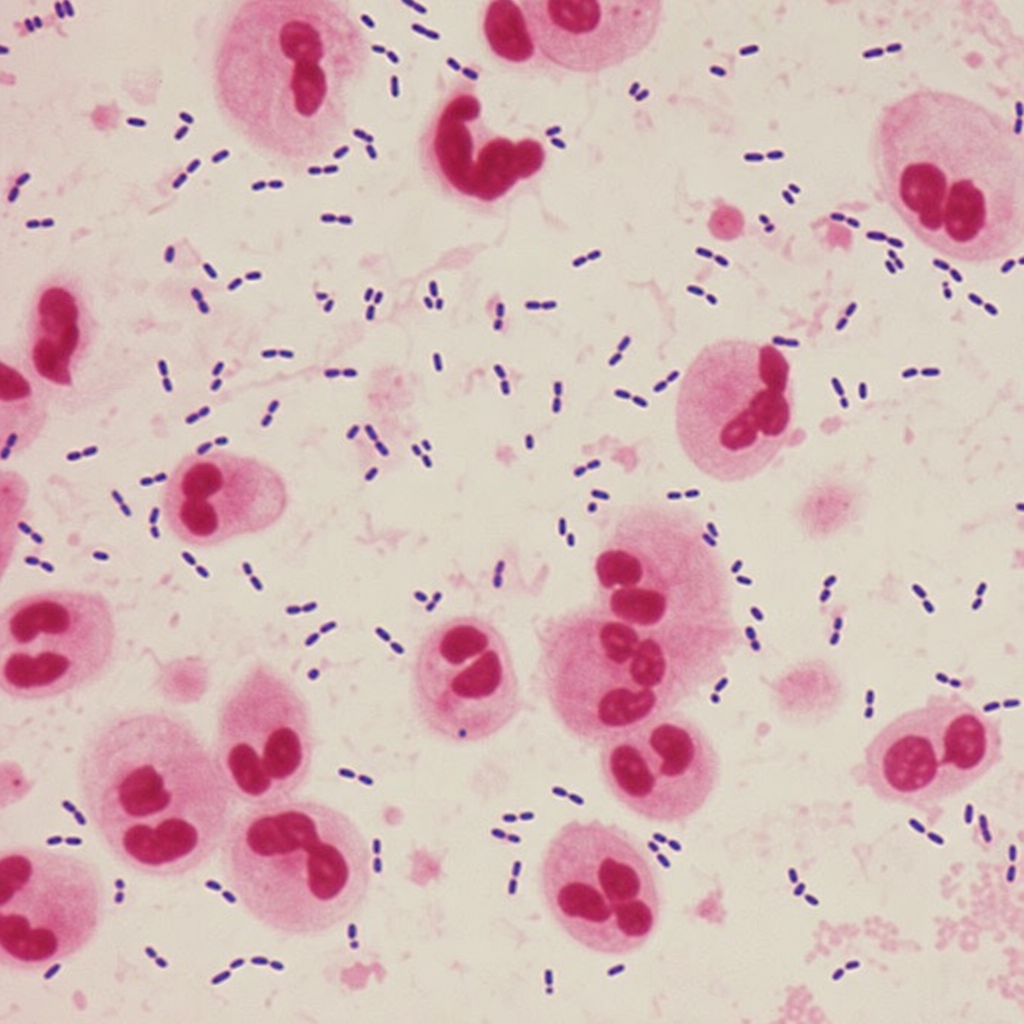
A 60-year-old man presents with fever and cough productive of rust-colored sputum and is diagnosed with community acquired pneumonia. The causative organism is isolated, and a Gram stain is shown in Figure 1. Which of the following most correctly describes additional features of the most likely causative organism?
A 24-year-old man presents with a painless genital ulcer for the past 2 weeks. He reports that he recently has been having unprotected sex with multiple partners. Past medical history is unremarkable. On physical examination, a single ulcer is present on the dorsal shaft of the penis which is circumscribed, indurated, and partially healed. There is moderate inguinal lymphadenopathy but no buboes. Which of the following tests would confirm the most likely diagnosis in this patient?
A 23-year-old G1P0 female presents to her OB/GYN for her routine 36-week visit. Her current complaints include increased fatigue at the end of the day, and edema in her ankles. The patient’s physical examination is unremarkable except for inguinal adenopathy. Upon pelvic examination for cervical changes, the OB/GYN notices a vaginal chancre. The patient states that it is not painful when touched. Which of the following is the most likely diagnosis?
A 21-year-old man comes to the physician's office due to a 3-week history of fatigue and a rash, along with the recent development of joint pain that has moved from his knee to his elbows. The patient reports going camping last month but denies having been bitten by a tick. His past medical history is significant for asthma treated with an albuterol inhaler. His pulse is 54/min and blood pressure is 110/72. Physical examination reveals multiple circular red rings with central clearings on the right arm and chest. There is a normal range of motion in all joints and 5/5 strength bilaterally in the upper and lower extremities. Without proper treatment, the patient is at highest risk for which of the following complications?
A 25-year-old professional surfer presents to the emergency room with leg pain and a headache. He recently returned from a surf competition in Hawaii and has been feeling unwell for several days. He regularly smokes marijuana and drinks 6-7 beers during the weekend. He is otherwise healthy and does not take any medications. His temperature is 102.2°F (39°C), blood pressure is 121/78 mmHg, pulse is 120/min, and respirations are 18/min saturating 99% on room air. He is sitting in a dim room as the lights bother his eyes and you notice scleral icterus on physical exam. Cardiopulmonary exam is unremarkable. Which of the following findings would most likely be seen in this patient?
A previously healthy 25-year-old male comes to his primary care physician with a painless solitary lesion on his penis that developed 4 days ago. He has not experienced anything like this before. He is currently sexually active with multiple partners and uses condoms inconsistently. His temperature is 37.0°C (98.7°F), pulse is 67/min, respirations are 17/min, and blood pressure is 110/70 mm Hg. Genitourinary examination shows a shallow, nontender, firm ulcer with a smooth base along the shaft of the penis. There is nontender inguinal adenopathy bilaterally. Which of the following is the most appropriate next step to confirm the diagnosis?
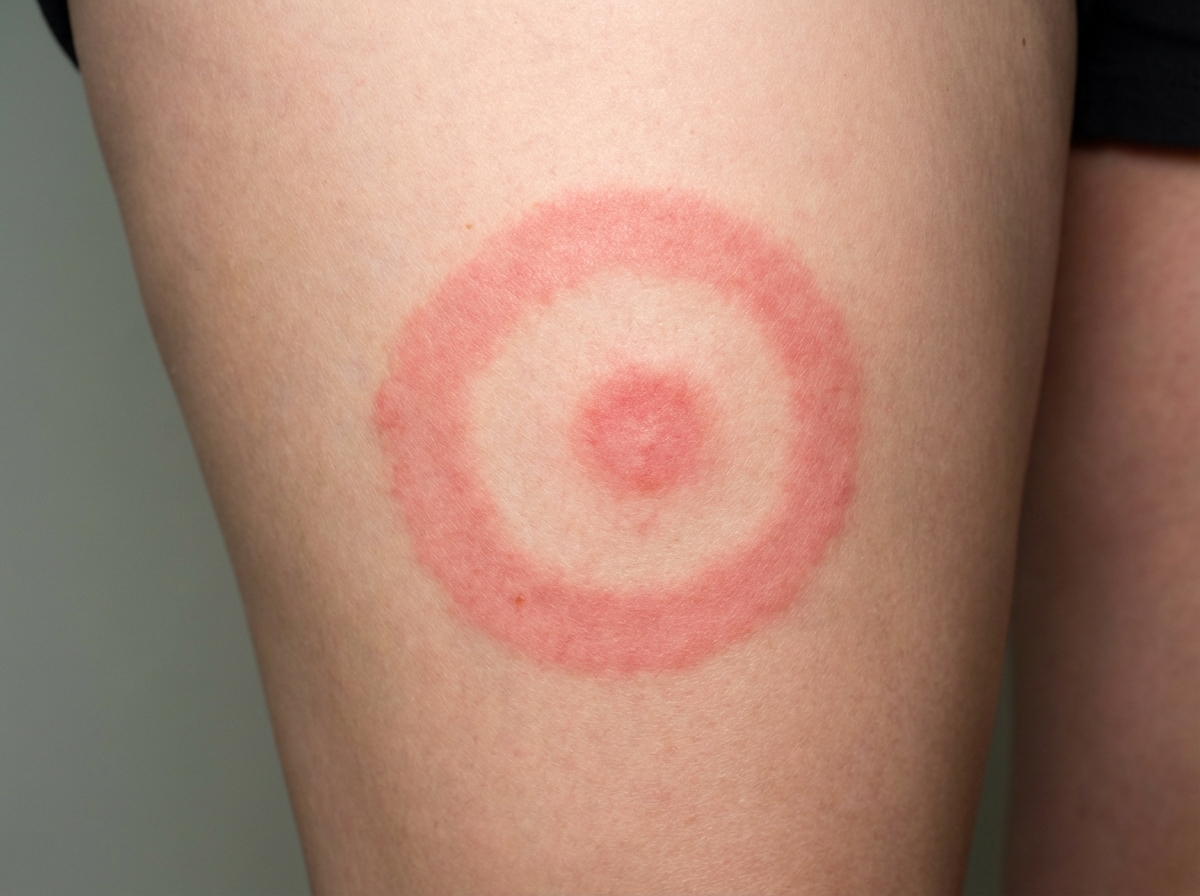
A 14-year-old girl presents with fever, headache, and muscle aches that have lasted for 2 days. She also complains of malaise and pain in her joints. She says she just returned from a camping trip in Delaware. Her past medical history is not significant. The patient denies any recent sick contacts. Her temperature is 38.3°C (101.0°F), pulse is 87/min, respirations are 17/min, and blood pressure is 120/78 mm Hg. On physical examination, there is a 3-inch-diameter, red, erythematous, round rash with central clearing on the right leg (see image). Antibodies against Proteus vulgaris OX-19 are absent. Which of the following is the most likely cause of this patient’s symptoms?
A 42-year-old man comes to his physician with a history of fever, non-bloody diarrhea, and headache for 10 days. He also complains of anorexia and abdominal pain. He returned from a trip to India 3 weeks ago. His temperature is 40.0°C (104.0°F), pulse is 65/min, respirations are 15/min, and blood pressure is 135/80 mm Hg. He has developed a blanchable rash on his chest and trunk. A photograph of the rash is shown. Examination of the heart, lungs, and abdomen show no abnormalities. Laboratory studies show: Hemoglobin 15 g/dL Mean corpuscular volume 95 μm3 White blood cell count 3400/mm3 Percent segmented neutrophils 40% Which of the following is the most likely diagnosis?
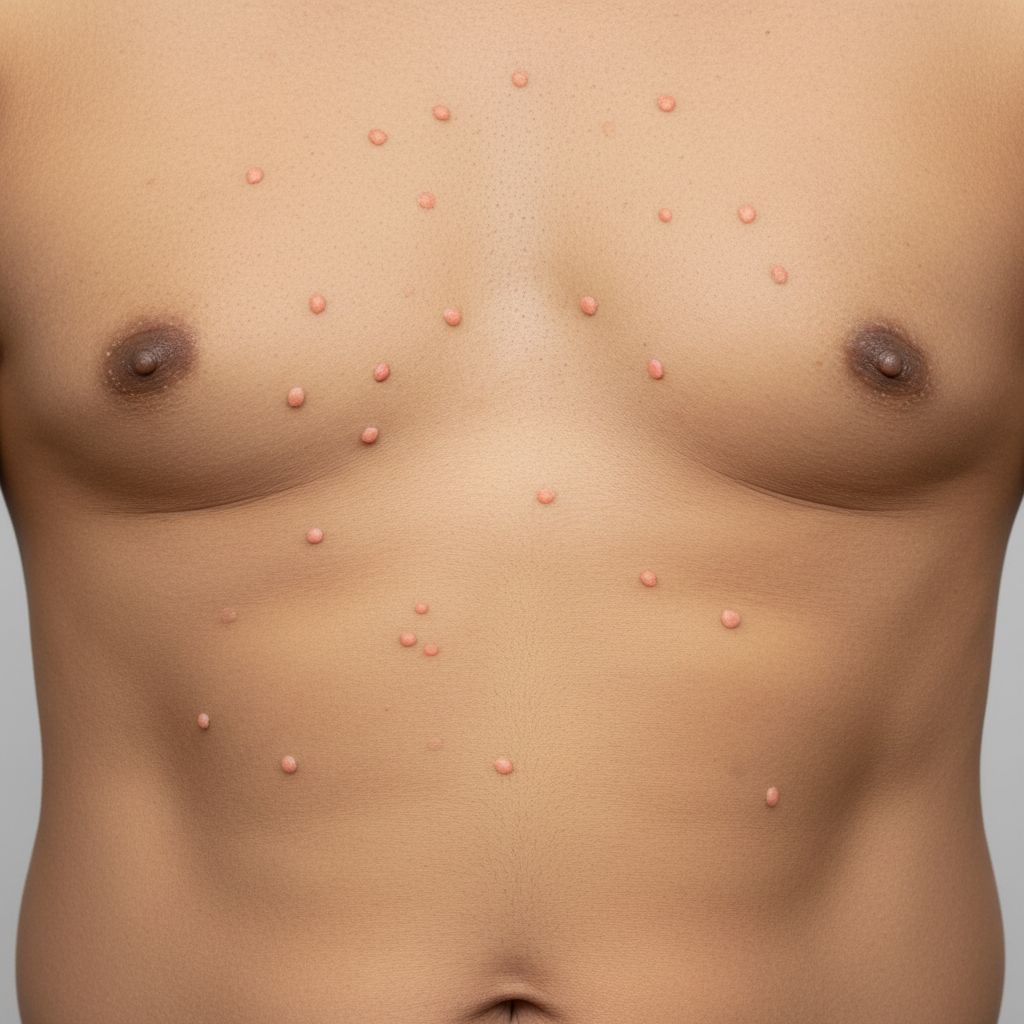
A 24-year-old female comes to the physician because of flu-like symptoms and a new rash for 2 days. She denies contacts with sick individuals or recent travel abroad, but recently went camping in Vermont. Vital signs are within normal limits. Examination of the lateral right thigh shows a circular red ring with central clearing. Which of the following is the natural reservoir of the pathogen responsible for this patient's symptoms?
A 29-year-old man comes to the physician because of a 3-day history of a swollen right knee. Over the past several weeks, he has had similar episodes affecting the right knee and sometimes also the left elbow, in which the swelling lasted an average of 5 days. He has a history of a rash that subsided 2 months ago. He lives in Connecticut with his wife and works as a landscaper. His temperature is 37.8°C (100°F), pulse is 90/min, respirations are 12/min, and blood pressure is 110/75 mm Hg. Physical examination shows a tender and warm right knee; range of motion is limited by pain. The remainder of the examination shows no abnormalities. His hematocrit is 44%, leukocyte count is 10,300/mm3, and platelet count is 145,000/mm3. Serum electrolyte concentrations are within normal limits. Arthrocentesis is performed and the synovial fluid is cloudy. Gram stain is negative. Analysis of the synovial fluid shows a leukocyte count of 70,000/mm3 and 80% neutrophils. Serologic testing confirms the diagnosis. Which of the following is the most likely cause?
Want unlimited practice?
Get full access to all questions, explanations, and performance tracking.
Scan to download app