
Ehrlichia and Anaplasma — MCQs

A 24-year-old woman complains of intermittent fever and joint pain. She says that these symptoms have been present for the past month. Before that, she had no signs or symptoms and was completely healthy. She has also lost her appetite and some weight. A complete blood count (CBC) showed severe pancytopenia. What is the next best step in evaluating this patient?
A 33-year-old man presents to the emergency department with a fever and fatigue. He states that he has not felt well since he returned from a hiking trip in Alabama. He is generally healthy and has no other medical conditions. His temperature is 101°F (38.3°C), blood pressure is 127/85 mmHg, pulse is 108/min, respirations are 14/min, and oxygen saturation is 99% on room air. Physical exam including a full dermatologic inspection is unremarkable. Laboratory studies are ordered as seen below. Hemoglobin: 13 g/dL Hematocrit: 39% Leukocyte count: 2,200/mm^3 with normal differential Platelet count: 77,000/mm^3 Serum: Na+: 139 mEq/L Cl-: 100 mEq/L K+: 4.3 mEq/L HCO3-: 24 mEq/L BUN: 19 mg/dL Glucose: 98 mg/dL Creatinine: 1.3 mg/dL Ca2+: 10.2 mg/dL AST: 92 U/L ALT: 100 U/L Which of the following is the most likely diagnosis?
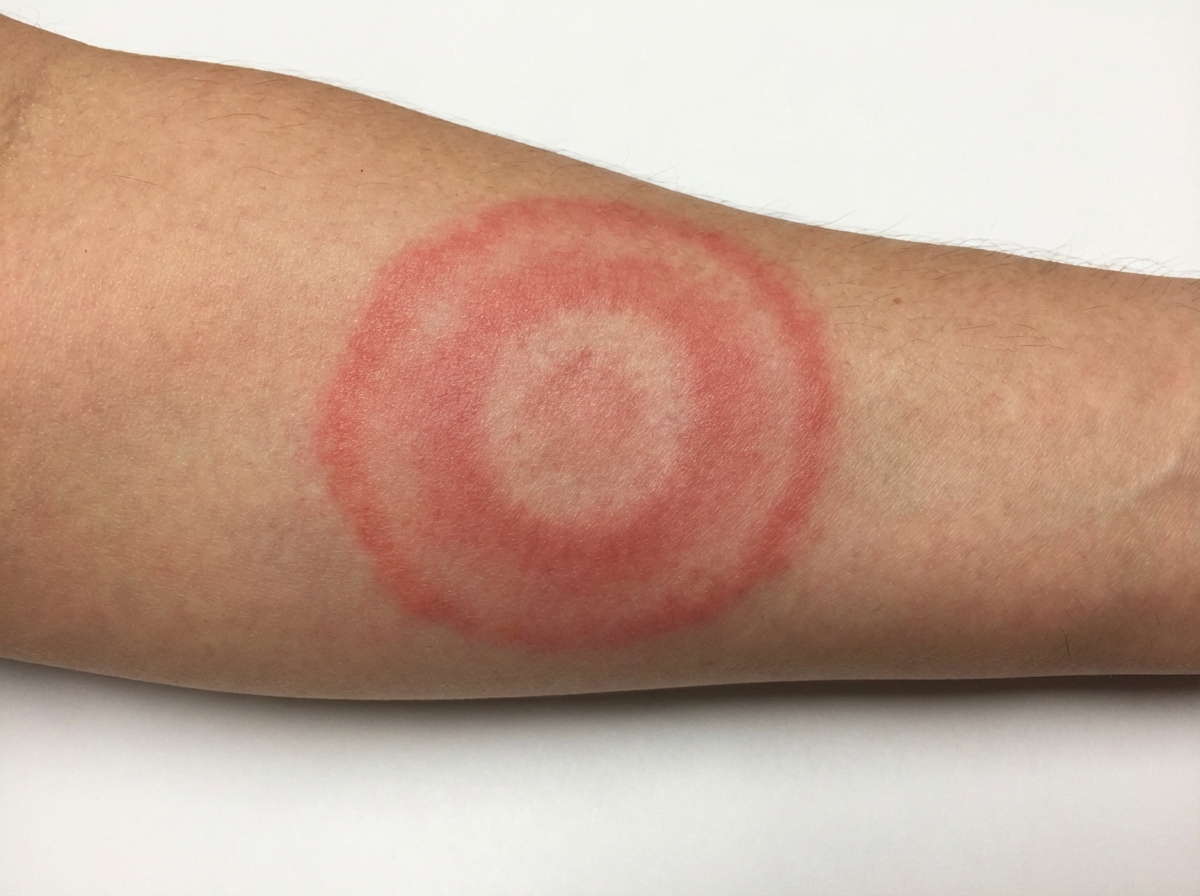
A 45-year-old woman presents to the emergency department with a headache, fevers with chills, rigors, and generalized joint pain for the past week. She also complains of a progressive rash on her left arm. She says that a few days ago she noticed a small, slightly raised lesion resembling an insect bite mark, which had a burning sensation. The medical and surgical histories are unremarkable. She recalls walking in the woods 2 weeks prior to the onset of symptoms, but does not recall finding a tick on her body. On examination, the temperature is 40.2°C (104.4°F). A circular red rash measuring 10 cm x 5 cm in diameter is noted on the left arm, as shown in the accompanying image. The remainder of her physical examination is unremarkable. The tick causing her disease is also responsible for the transmission of which of the following pathogens?
A 32-year-old man is brought to the physician by his wife for a 3-day history of fever, headaches, and myalgias. He returned from a camping trip in Oklahoma 10 days ago. He works as a computer salesman. His temperature is 38.1°C (100.6°F). Neurologic examination shows a sustained clonus of the right ankle following sudden passive dorsiflexion. He is disoriented to place and time but recognizes his wife. Laboratory studies show a leukocyte count of 1,700/mm3 and a platelet count of 46,000/mm3. A peripheral blood smear shows monocytes with intracytoplasmic morulae. Which of the following is the most likely causal organism?
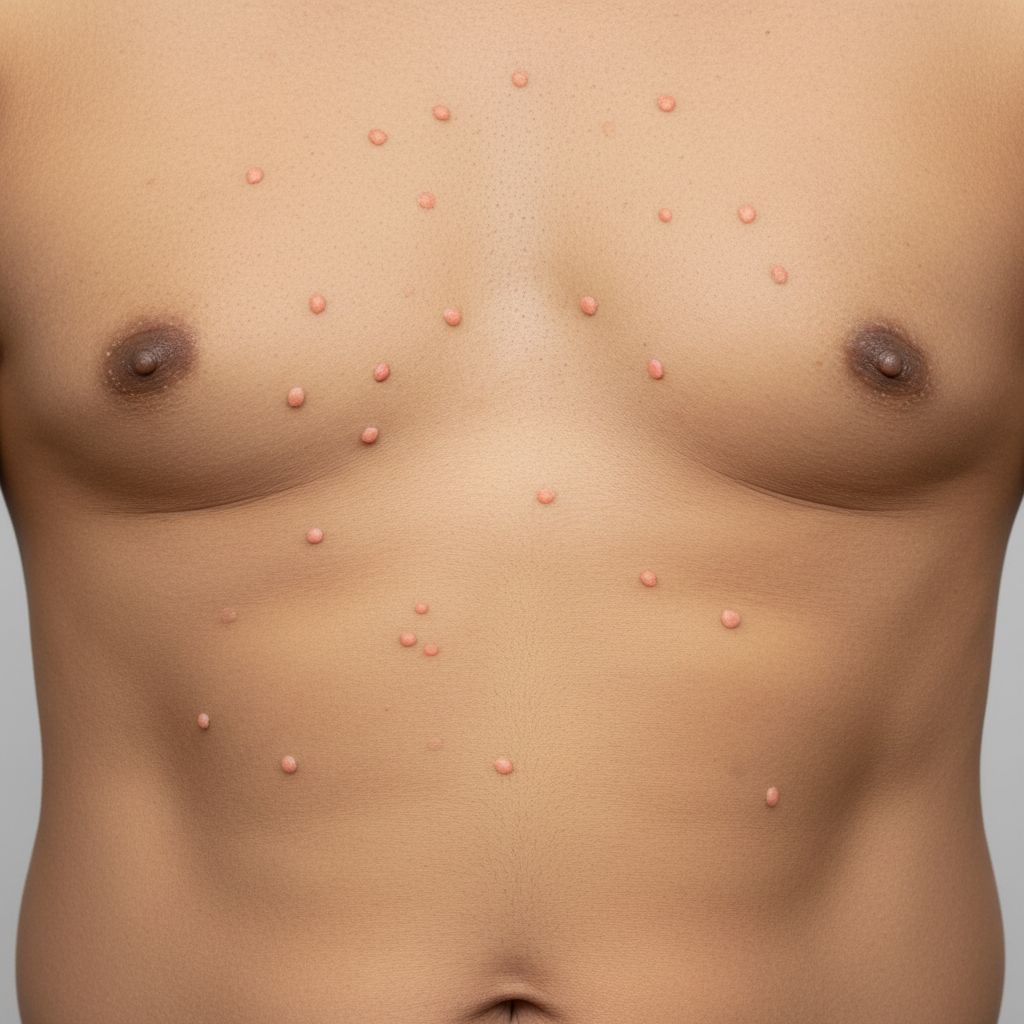
A 42-year-old man comes to his physician with a history of fever, non-bloody diarrhea, and headache for 10 days. He also complains of anorexia and abdominal pain. He returned from a trip to India 3 weeks ago. His temperature is 40.0°C (104.0°F), pulse is 65/min, respirations are 15/min, and blood pressure is 135/80 mm Hg. He has developed a blanchable rash on his chest and trunk. A photograph of the rash is shown. Examination of the heart, lungs, and abdomen show no abnormalities. Laboratory studies show: Hemoglobin 15 g/dL Mean corpuscular volume 95 μm3 White blood cell count 3400/mm3 Percent segmented neutrophils 40% Which of the following is the most likely diagnosis?
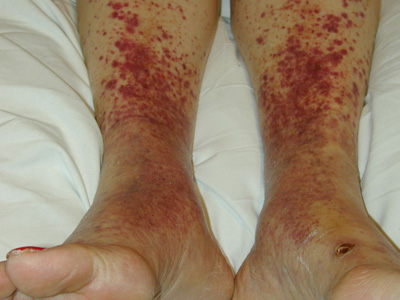
A 26-year-old male with no significant past medical history goes camping with several friends in Virginia. Several days after returning, he begins to experience fevers, headaches, myalgias, and malaise. He also notices a rash on his wrists and ankles (Figure A). Which of following should be initiated for treatment of his condition?
A 24-year-old female comes to the physician because of flu-like symptoms and a new rash for 2 days. She denies contacts with sick individuals or recent travel abroad, but recently went camping in Vermont. Vital signs are within normal limits. Examination of the lateral right thigh shows a circular red ring with central clearing. Which of the following is the natural reservoir of the pathogen responsible for this patient's symptoms?
A 29-year-old man comes to the physician because of a 3-day history of a swollen right knee. Over the past several weeks, he has had similar episodes affecting the right knee and sometimes also the left elbow, in which the swelling lasted an average of 5 days. He has a history of a rash that subsided 2 months ago. He lives in Connecticut with his wife and works as a landscaper. His temperature is 37.8°C (100°F), pulse is 90/min, respirations are 12/min, and blood pressure is 110/75 mm Hg. Physical examination shows a tender and warm right knee; range of motion is limited by pain. The remainder of the examination shows no abnormalities. His hematocrit is 44%, leukocyte count is 10,300/mm3, and platelet count is 145,000/mm3. Serum electrolyte concentrations are within normal limits. Arthrocentesis is performed and the synovial fluid is cloudy. Gram stain is negative. Analysis of the synovial fluid shows a leukocyte count of 70,000/mm3 and 80% neutrophils. Serologic testing confirms the diagnosis. Which of the following is the most likely cause?
A 54-year-old woman comes to the physician because of lower back pain, night sweats, and a 5-kg (11-lb) weight loss during the past 4 weeks. She has rheumatoid arthritis treated with adalimumab. Her temperature is 38°C (100.4°F). Physical examination shows tenderness over the T10 and L1 spinous processes. Passive extension of the right hip causes pain in the right lower quadrant. The patient's symptoms are most likely caused by an organism with which of the following virulence factors?
A 27-year-old man comes to the physician with throbbing right scrotal pain for 1 day. He has also had a burning sensation on urination during the last 4 days. He is sexually active with multiple female partners and does not use condoms. Physical examination shows a tender, palpable swelling on the upper pole of the right testicle; lifting the testicle relieves the pain. A Gram stain of urethral secretions shows numerous polymorphonuclear leukocytes but no organisms. Which of the following is the most likely causal pathogen of this patient's symptoms?
Want unlimited practice?
Get full access to all questions, explanations, and performance tracking.
Scan to download app