
Chlamydia psittaci — MCQs

A 16-year-old male with no significant past medical, surgical, or family history presents to his pediatrician with new symptoms following a recent camping trip. He notes that he went with a group of friends and 1 other group member is experiencing similar symptoms. Over the past 5 days, he endorses significant flatulence, nausea, and greasy, foul-smelling diarrhea. He denies tenesmus, urgency, and bloody diarrhea. The blood pressure is 118/74 mm Hg, heart rate is 88/min, respiratory rate is 14/min, and temperature is 37.0°C (98.6°F). Physical examination is notable for mild, diffuse abdominal tenderness. He has no blood in the rectal vault. What is the patient most likely to report about his camping activities?
An 18-year-old male in his first year of college presents to the emergency room with a fever and a severe headache. He reports having unprotected sex with several partners over the past few weeks. Upon examination, the male demonstrates nuchal rigidity and photophobia. His past medical history is notable for a lack of vaccinations beginning from infancy due to his parents' belief that vaccinations may cause autism. The bacteria causing these symptoms would most likely demonstrate which of the following?
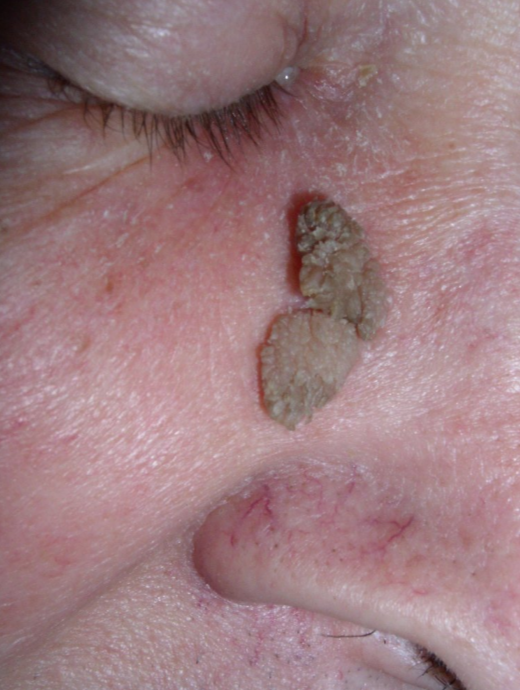
A 58-year-old woman visits a physician because of fever, chills, dry cough, and a few enlarging masses on her cheeks and neck. Wart-like lesions are present on the nose as shown in the photograph. She reports that she visited the Mississippi area a few months before on a business trip. Her temperature is 38.1°C (100.6°F), the pulse is 80/min, and the blood pressure is 121/78 mm Hg. A fine needle aspirate of the lymph node is sent for pathological investigation. Culture growth shows white colonies on Sabouraud glucose agar (SGA). Which of the following is the most likely causal organism?
A 23-year-old woman presents to the emergency department with abnormal vaginal discharge and itchiness. She states it started a few days ago and has been worsening. The patient has a past medical history of a medical abortion completed 1 year ago. Her temperature is 98.6°F (37.0°C), blood pressure is 129/68 mmHg, pulse is 80/min, respirations are 14/min, and oxygen saturation is 99% on room air. Physical exam demonstrates an anxious woman. Pelvic exam reveals yellow cervical discharge. Nucleic acid amplification test is negative for Neisseria species. Which of the following is the best next step in management?
An investigator is studying the growth of an organism in different media. The organism is inoculated on a petri dish that contains heated sheep blood, vancomycin, nystatin, trimethoprim, and colistin. The resulting growth medium is incubated at 37°C. Numerous small, white colonies are seen after incubation for 48 hours. This organism is most likely to cause which of the following conditions?
A 27-year-old woman visits your office with a 3-day complaint of fever, malaise, myalgias, and headaches associated with vulvar itching, vulvar soreness, dysuria, and urethral discharge. The pain when urinating is so severe that she has attempted to avoid the use of the toilet. She just returned from a spring break in the tropics and explains that she had multiple unprotected sexual encounters with men and women. Upon physical examination, the temperature was 38.7°C (101.6°F) and the heart rate was 90/min. The pelvic examination revealed vulvar ulcers, vulvar excoriations, erythema, vaginal mucosa edema, and ulcerative cervicitis. Which of the following will best aid you in the identification of the specific organism causing the above symptoms?
A 28-year-old male presents to his primary care physician with complaints of intermittent abdominal pain and alternating bouts of constipation and diarrhea. His medical chart is not significant for any past medical problems or prior surgeries. He is not prescribed any current medications. Which of the following questions would be the most useful next question in eliciting further history from this patient?
A previously healthy 24-year-old woman comes to the physician because of fever, headache, myalgia, photophobia, and a nonproductive cough for 2 days. Three weeks ago, she received a parrot as a birthday present. Her temperature is 38.5°C (101.3°F). Pulmonary examination shows crackles at both lung bases. Her leukocyte count is 8,000/mm3. An x-ray of the chest shows diffuse patchy infiltrates that are most prominent in the lower lobes. Which of the following is the most likely causal organism?
A 32-year-old man comes to the physician because of severe burning with urination for the past 3 days. During this period, he has had clear urethral discharge early in the morning. He has no history of serious illness, except for a rash following treatment with erythromycin 20 years ago. The patient takes no medications. He is sexually active with one male and one female partner; they use condoms inconsistently. His younger brother was diagnosed with Crohn disease at the age of 24 years. The patient does not smoke. He drinks one to two beers on weekends. He appears well. Temperature is 36.8°C (98°F), pulse is 75/min, and blood pressure is 135/78 mm Hg. Physical examination shows no abnormalities. Gram stain of a urethral swab shows neutrophils but no organisms. Which of the following is the most likely causal pathogen?
A 27-year-old man comes to the physician with throbbing right scrotal pain for 1 day. He has also had a burning sensation on urination during the last 4 days. He is sexually active with multiple female partners and does not use condoms. Physical examination shows a tender, palpable swelling on the upper pole of the right testicle; lifting the testicle relieves the pain. A Gram stain of urethral secretions shows numerous polymorphonuclear leukocytes but no organisms. Which of the following is the most likely causal pathogen of this patient's symptoms?
Want unlimited practice?
Get full access to all questions, explanations, and performance tracking.
Scan to download app