
Secondary stroke prevention — MCQs

A 71-year-old man comes to the physician for a routine health maintenance examination. He feels well. He goes for a 30-minute walk three times a week and does not experience any shortness of breath or chest or leg pain on exertion. He has not had any weakness, numbness, or vision disturbance. He has diabetes that is well controlled with insulin injections. He had smoked one pack of cigarettes every day for 40 years but quit 5 years ago. He appears healthy and well nourished. His temperature is 36.3°C (97.3°F), pulse is 75/min, and blood pressure is 136/78 mm Hg. Physical examination shows normal heart sounds. There are systolic bruits over the neck bilaterally. Physical and neurologic examinations show no other abnormalities. Fasting serum studies show: Total cholesterol 210 mg/dL HDL cholesterol 28 mg/dL LDL cholesterol 154 mg/dL Triglycerides 140 mg/dL Glucose 102 mg/dL Duplex ultrasonography of the carotid arteries shows a 85% stenosis on the left and a 55% stenosis on the right side. Which of the following is the most appropriate next step in management?
An obese 37-year-old woman is brought to the emergency department 2 hours after the onset of weakness in her left arm and leg. She fell from the stairs the day prior but did not have any loss of consciousness or nausea after the fall. She travels to Asia regularly on business; her last trip was 4 days ago. She has no history of serious illness. Her only medication is an oral contraceptive. Her temperature is 37.8°C (100°F), pulse is 113/min and regular, and blood pressure is 162/90 mm Hg. Examination shows decreased muscle strength on the left side. Deep tendon reflexes are 4+ on the left. Babinski sign is present on the left. The right lower leg is swollen, erythematous, and tender to palpation. Further evaluation is most likely to show which of the following?
A 20-year-old man presents to the doctor's office for advice on improving his health. He admits to eating mostly junk food, and he knows that he should lose some weight. His daily physical activity is limited to walking around the college campus between classes. Except for an occasional headache for which he takes acetaminophen, he has no health concerns and takes no other medications. He denies smoking and illicit drug use, but admits to occasional beer binge drinking on weekends. He is sexually active with his current girlfriend and regularly uses condoms. His mother has type 2 diabetes mellitus and obesity, while his father has hypertension and hypercholesterolemia. The pulse is 74/min, the respiratory rate is 16/min, and the blood pressure is 130/76 mm Hg. The body mass index (BMI) is 29 kg/m2. Physical examination reveals an overweight young male, and the rest is otherwise unremarkable. The routine lab test results are as follows: Serum Glucose (fasting) 100 mg/dL Serum Electrolytes: Sodium 141 mEq/L Potassium 4.0 mEq/L Chloride 100 mEq/L Cholesterol, total 190 mg/dL HDL-cholesterol 42 mg/dL LDL-cholesterol 70 mg/dL Triglycerides 184 mg/dL Urinalysis: Glucose Negative Ketones Negative Leukocytes Negative Nitrites Negative RBCs Negative Casts Negative Which of the following lifestyle changes would most likely benefit this patient the most?
A 71-year-old woman presents with a transient episode of right arm and hand weakness that resolved in approximately one hour. Her symptoms started while she was gardening. Her past medical history is notable for hypertension, diabetes, anxiety, and dyslipidemia. Her current medications include insulin, metformin, and fluoxetine. Examination reveals a left carotid bruit. Ultrasound duplex of her carotid arteries demonstrates right and left carotid stenosis of 35% and 50%, respectively. Which of the following is the best next step in management?
A 58-year-old man presents to the clinic concerned about his health after his elder brother recently became bed-bound due to a brain condition. He has also brought a head CT scan of his brother to reference, as shown in the picture. The patient has type 2 diabetes mellitus, hypertension, osteoarthritis, and hypercholesterolemia. His medication list includes aspirin, diclofenac sodium, metformin, and ramipril. He leads a sedentary lifestyle and smokes one pack of cigarettes daily. He also drinks 4–5 cups of red wine every weekend. His BMI is 33.2 kg/m2. His blood pressure is 164/96 mm Hg, the heart rate is 84/min, and the respiratory rate is 16/min. Which of the following interventions will be most beneficial for reducing the risk of developing the disease that his brother has?
A 50-year-old man comes to the physician for his annual health maintenance examination. The patient feels well. He has a history of hypertension, for which he currently takes lisinopril. He has smoked a pack of cigarettes daily for 20 years. He drinks 5–6 beers on weekends. He is 181 cm tall (5 ft 11 in), weighs 80 kg (176.4 lbs); BMI is 24.6 kg/m2. His pulse is 75/min, blood pressure is 140/85 mm Hg, and respirations are 18/min. Physical examination is unremarkable. Laboratory studies show: Total cholesterol 263 mg/dL High-density lipoprotein cholesterol 36 mg/dL Triglycerides 180 mg/dL In addition to dietary and lifestyle modification, administration of which of the following agents is the most appropriate next step in management?
A 68-year-old man is brought to the emergency department because of right-sided weakness for 2 hours. He has hypertension, dyslipidemia, and type 2 diabetes. Current medications include hydrochlorothiazide, metoprolol, amlodipine, pravastatin, and metformin. His pulse is 87/min and blood pressure is 164/98 mm Hg. Neurological examination shows right-sided weakness, facial droop, and hyperreflexia. Sensation is intact. Which of the following is the most likely cause of these findings?
A 78-year-old man is brought in to the emergency department by ambulance after his wife noticed that he began slurring his speech and had developed facial asymmetry during dinner approximately 30 minutes ago. His past medical history is remarkable for hypertension and diabetes. His temperature is 99.1°F (37.3°C), blood pressure is 154/99 mmHg, pulse is 89/min, respirations are 12/min, and oxygen saturation is 98% on room air. Neurologic exam reveals right upper and lower extremity weakness and an asymmetric smile. Which of the following is the next best step in management?
Drug A is an experimental compound being investigated for potential use as a protectant against venous thrombosis. Binding assays reveal that the drug’s primary mechanism of action is to block carboxylation of glutamic acid residues in certain serum proteins. Drug A is most similar to which of the following:
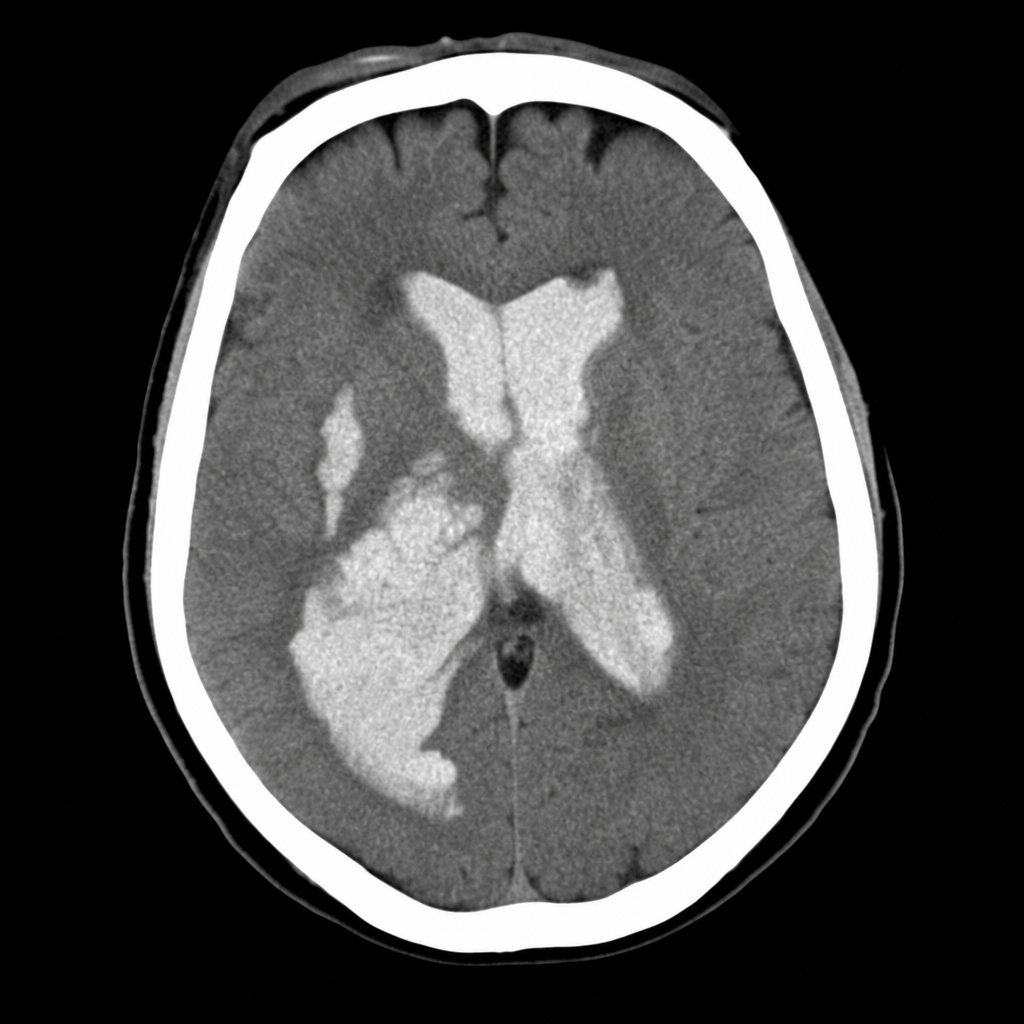
A 58-year-old woman is brought to the emergency department after sudden onset of the worst headache of her life followed by loss of consciousness. She is now obtunded with a GCS of 10. Vital signs: BP 192/110 mmHg, HR 96 bpm, SpO2 94% on room air. The emergency physician reviews the CT head image shown. Based on the imaging finding, which of the following is the most appropriate immediate management decision?
Want unlimited practice?
Get full access to all questions, explanations, and performance tracking.
Scan to download app