A 48-year-old woman presents with acute stroke symptoms 18 hours ago. MRI shows a right MCA M1 occlusion with large penumbra on perfusion imaging (mismatch ratio >1.8) and small infarct core (25 mL). Her NIHSS is 16. She has no significant comorbidities. Her family is concerned about disability but wants to pursue treatment if reasonable chance of benefit exists. Synthesize the evidence and evaluate the treatment approach.
A 55-year-old man undergoes successful thrombectomy for left MCA occlusion. Post-procedure, he develops progressive lethargy and his blood pressure increases to 180/100 mmHg. CT shows hyperdensity in the treated territory without hemorrhage, and his symptoms worsen over 4 hours despite blood pressure control. Evaluate the most likely diagnosis and management priority.
An 80-year-old woman with atrial fibrillation presents 2 hours after acute ischemic stroke. NIHSS is 22. Imaging shows large left MCA territory infarction involving >1/3 of MCA territory with basilar artery occlusion. She lives alone but was independent before this event. Her family requests all possible interventions. Evaluate the management approach considering benefits versus risks.
A 58-year-old woman with history of TIA 3 weeks ago presents with acute ischemic stroke. Imaging reveals new right MCA infarction and severe (70-99%) symptomatic right carotid stenosis. She received alteplase 6 hours ago with partial improvement. Her NIHSS improved from 14 to 8. Analyze the optimal timing for carotid revascularization.
A 62-year-old man received IV alteplase 45 minutes ago for acute ischemic stroke. He now develops sudden severe headache, vomiting, and decreased level of consciousness. His blood pressure is 190/110 mmHg. Analyze the most critical immediate steps in management.
A 70-year-old diabetic man presents 5 hours after waking with right arm weakness. He was last seen normal 9 hours ago before sleep. MRI shows acute left MCA territory infarction with DWI-FLAIR mismatch and perfusion imaging showing salvageable tissue. CTA shows M1 segment occlusion. His NIHSS is 12. Analyze the appropriate intervention.
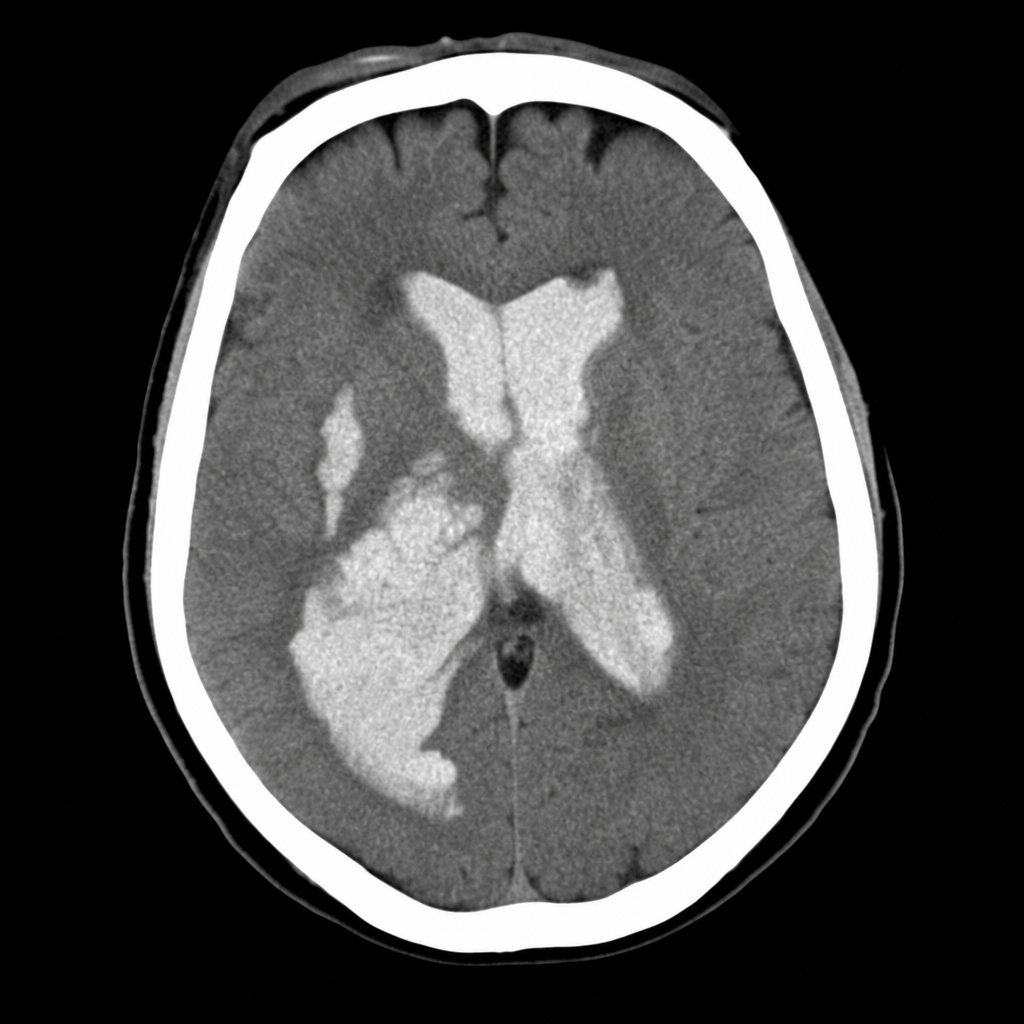
A 45-year-old woman presents with sudden severe headache, confusion, and right hemiparesis. CT head shows a 4 cm left basal ganglia hemorrhage with intraventricular extension. Her blood pressure is 220/120 mmHg. She is on no medications and has no known medical history. What is the most appropriate blood pressure management?
A 72-year-old man arrives at a primary stroke center 3 hours after symptom onset with left-sided weakness and neglect. NIHSS score is 16. Non-contrast CT shows no hemorrhage. CT angiography reveals right internal carotid artery terminus occlusion. The hospital does not have interventional neuroradiology capabilities. What should be done?
A 55-year-old woman with atrial fibrillation on warfarin presents with acute left hemiparesis and dysarthria for 2 hours. Her INR is 2.8. CT head shows no hemorrhage. CT angiography reveals a right MCA occlusion. Her NIHSS score is 18. What is the most appropriate management strategy?
A 68-year-old man presents to the emergency department with sudden onset right-sided weakness and slurred speech that began 90 minutes ago. His blood pressure is 185/100 mmHg, heart rate is 88/min, and he is alert and oriented. CT scan of the head shows no hemorrhage. His NIHSS score is 14. What is the most appropriate next step in management?
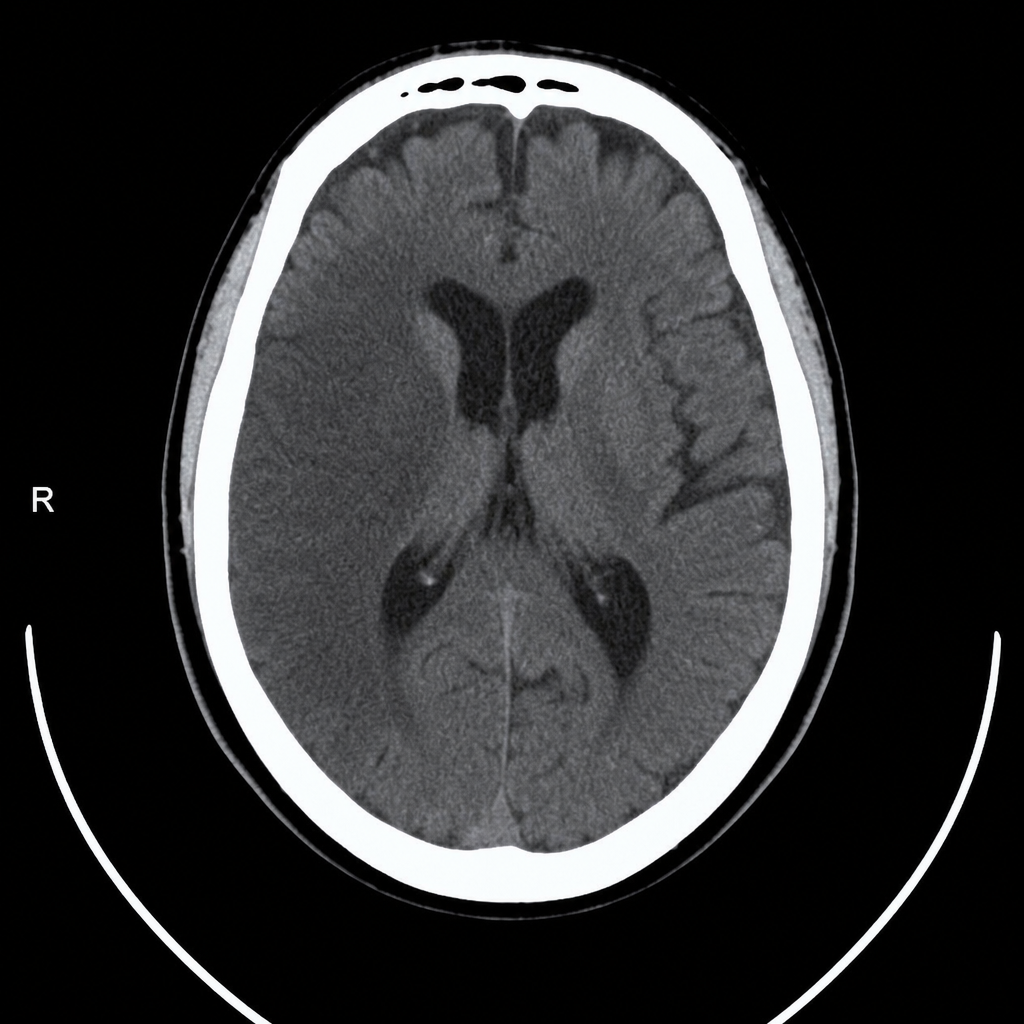
Explanation: ***Mechanical thrombectomy based on perfusion imaging criteria*** - For patients with large vessel occlusion (LVO) in the extended 6–24 hour window, **DAWN** and **DEFUSE-3** trials demonstrated significant functional benefit when clinical-core mismatch is present. - This patient satisfies criteria with an **M1 occlusion**, a **small infarct core (<70 mL)**, and a **large mismatch ratio (>1.8)**, indicating substantial salvageable penumbra. *Intravenous alteplase as salvageable tissue is present* - The therapeutic window for **IV alteplase** is strictly limited to within **4.5 hours** of symptom onset; it is not recommended at 18 hours due to high hemorrhage risk. - While salvageable tissue exists, chemical thrombolysis is less effective than mechanical intervention for **proximal M1 occlusions** and is unsafe in this late window. *Intra-arterial thrombolysis combined with mechanical device* - **Intra-arterial thrombolysis** is generally superseded by modern **stent retrievers** and aspiration catheters which provide faster and more complete recanalization. - Current guidelines prioritize standalone **mechanical thrombectomy** in the late window to minimize procedural risks and intracranial hemorrhage. *No intervention as she is outside the standard treatment window* - The "Time is Brain" concept has evolved into "Tissue is Brain," where **perfusion imaging** identifies candidates who benefit regardless of the traditional 6-hour clock. - Denying treatment based solely on the 18-hour timeframe ignores high-level evidence from the **DAWN** trial showing benefit up to 24 hours. *Medical management with antiplatelet and early rehabilitation* - Standard **medical management** (aspirin/heparin) for an M1 occlusion with a high **NIHSS score (16)** usually results in poor functional outcomes and severe disability. - While rehabilitation is essential, it does not address the underlying **large vessel occlusion** which can be reversed with mechanical intervention to prevent infarct expansion.
Explanation: ***Contrast extravasation from blood-brain barrier disruption; supportive care and avoid aggressive BP lowering*** - Post-thrombectomy **hyperdensity** on CT often represents contrast that leaked through an ischemic **blood-brain barrier**, which can mimic hemorrhage but lacks significant **mass effect**. - Management is **supportive care** because the contrast is typically reabsorbed within 24–48 hours; avoiding aggressive **blood pressure lowering** prevents secondary ischemia in the penumbra. *Hemorrhagic transformation; reverse anticoagulation immediately* - While **hemorrhagic transformation** is a risk, true blood usually demonstrates higher density earlier and is associated with rapid clinical decline and **midline shift**. - Reversing anticoagulation without confirming blood on a follow-up **dual-energy CT** or MRI may lead to **stent thrombosis** or re-occlusion. *Cerebral edema from large infarction; emergent decompressive hemicraniectomy* - **Cerebral edema** typically peaks between 72–96 hours post-stroke; a presentation within 4 hours is too acute for **malignant MCA syndrome**. - While edema causes lethargy, the hyperdensity on CT more specifically points toward **contrast staining** or blood rather than simple cytotoxic edema. *Reperfusion injury; start high-dose corticosteroids and osmotic therapy* - **Corticosteroids** are not indicated for stroke-related edema or reperfusion injury as they do not improve outcomes and may increase **infection risk**. - **Osmotic therapy** is reserved for patients with clear clinical or radiologic signs of **elevated intracranial pressure**, not isolated hyperdensity on CT. *Recurrent arterial occlusion; emergent repeat angiography and thrombectomy* - **Recurrent occlusion** usually presents with a sudden recurrence of the original **focal neurological deficits** (e.g., hemiplegia, aphasia) rather than progressive lethargy. - The presence of **hyperdensity** in the stroke territory on CT is specifically indicative of material (contrast or blood) being present, which is not a feature of a simple **re-occlusion**.
Explanation: ***Thrombectomy only for basilar occlusion, avoid thrombolysis due to large infarction*** - Intravenous **thrombolysis (IV alteplase)** is generally contraindicated or highly risky when imaging shows an established infarction involving **>1/3 of the MCA territory** due to the high risk of **hemorrhagic transformation**. - **Basilar artery occlusion** is a life-threatening emergency with a broader treatment window; mechanical **thrombectomy** can be lifesaving and is indicated even if thrombolysis is withheld. *Comfort measures only given poor prognosis and age* - Age is not a primary contraindication for intervention, especially since the patient was **independent** prior to the event (low **pre-stroke mRS**). - Family requests all possible interventions, and **basilar occlusion** has a catastrophic natural history that may be mitigated by mechanical intervention. *Thrombolysis alone as thrombectomy unlikely to benefit with established large infarction* - Thrombolysis is dangerous in this context due to the **large infarct volume** seen on imaging, which increases the likelihood of fatal **intracerebral hemorrhage**. - Thrombolysis is notably less effective for large vessel occlusions compared to **mechanical thrombectomy**, which is the gold standard for **basilar artery** recanalization. *Proceed with thrombolysis and thrombectomy given the therapeutic window* - While the patient is within the 4.5-hour window for thrombolysis, the presence of **established early ischemic changes** (>1/3 MCA territory) is a relative contraindication. - Attempting both increases the risk of **secondary hemorrhage** in the damaged MCA territory without providing significant additional benefit over thrombectomy alone for the **basilar occlusion**. *Delay intervention and repeat imaging in 6 hours to assess progression* - Delaying treatment in the setting of **basilar artery occlusion** is inappropriate, as "time is brain" and outcomes worsen significantly with every minute of **brainstem ischemia**. - Immediate decision-making is required based on the initial imaging, which already confirmed the **large-vessel occlusion** needing intervention.
Explanation: ***Carotid endarterectomy within 2 weeks of symptom onset*** - For patients with **symptomatic carotid stenosis** (70-99%), early revascularization within **2 weeks** (ideally within 48 hours to 7 days) provides the maximum benefit in preventing recurrent stroke. - Current guidelines suggest that once the patient is **neurologically stable** and the infarct size is not massive, the risk of recurrence outweighs the risk of **hemorrhagic transformation**. *Wait 4-6 weeks to reduce hemorrhagic transformation risk* - This represents older clinical practice; modern evidence shows the risk of **recurrent stroke** is highest in the first 2 weeks, making this delay dangerous. - Waiting this long is only typically reserved for patients with a **large territory infarct** (high NIHSS) or those at very high risk for bleeding complications. *Carotid stenting immediately after thrombolysis* - Immediate stenting right after **alteplase** administration increases the risk of **intracranial hemorrhage** and local bleeding at the access site due to systemic fibrinolysis. - While **Carotid Artery Stenting (CAS)** is an alternative, it is generally not preferred over **Carotid Endarterectomy (CEA)** in older patients unless specific surgical contraindications exist. *Emergent carotid endarterectomy within 24 hours* - Performing surgery within the first 24 hours after **thrombolytic therapy** carries a significant risk of **hemorrhagic transformation** of the fresh infarct. - Most surgeons prefer to wait at least **24-48 hours** post-alteplase to ensure the fibrinolytic effects have resolved and the patient's neurological status is stable. *Medical management only due to recent thrombolysis* - Medical management alone is insufficient for **symptomatic stenosis >70%**, as the risk of a disabling stroke remains high without mechanical intervention. - **Dual antiplatelet therapy** and statins are vital, but they serve as an adjunct to, rather than a replacement for, **surgical revascularization** in fit patients.
Explanation: ***Obtain emergent CT head, stop alteplase, give cryoprecipitate and tranexamic acid*** - Sudden headache and neurologic decline during **alteplase** infusion are hallmarks of **symptomatic intracranial hemorrhage (sICH)**, necessitating immediate cessation of the drug and diagnostic imaging. - Reversal of fibrinolysis is critical; **cryoprecipitate** provides **fibrinogen** and Factor VIII, while **tranexamic acid** or aminocaproic acid inhibits further fibrinolysis. *Stop alteplase, observe, and repeat CT in 24 hours* - Delaying a CT scan for 24 hours is inappropriate for an acute neurological change, as active bleeding requires **emergent intervention**. - Observation alone is insufficient; **active reversal** of coagulopathy is needed to prevent hematoma expansion and brain herniation. *Administer labetalol for blood pressure and continue monitoring* - While **blood pressure management** is important (targeting <180/105 mmHg), it is secondary to stopping the thrombolytic and confirming hemorrhage. - Monitoring without stopping the infusion would allow the **thrombolytic agent** to continue exacerbating the intracranial bleed. *Continue alteplase and give mannitol for cerebral edema* - Continuing **alteplase** in the setting of suspected hemorrhage is contraindicated and life-threatening. - **Mannitol** addresses intracranial pressure but does not treat the underlying **coagulopathy** causing the hemorrhage. *Give protamine sulfate and arrange for neurosurgical consultation* - **Protamine sulfate** is the reversal agent for **heparin**, not alteplase, and has no effect on fibrinolysis. - While neurosurgical consultation is necessary, the medical reversal of the **thrombolytic effect** with blood products is the most immediate priority.
Explanation: ***Mechanical thrombectomy based on imaging criteria*** - Guidelines from the **DAWN** and **DEFUSE-3** trials support **mechanical thrombectomy** for large vessel occlusions (M1 segment) up to 24 hours if there is evidence of **salvageable tissue** on perfusion imaging. - This patient satisfies criteria due to a significant **NIHSS score (12)**, a demonstrated **DWI-FLAIR mismatch**, and a visible **large vessel occlusion (LVO)** on CTA. *Intravenous alteplase based on wake-up stroke protocol* - While **IV alteplase** can be considered for wake-up strokes with **DWI-FLAIR mismatch**, the "last seen normal" time of 9 hours exceeds the standard **4.5-hour** window for chemical thrombolysis. - Even if administered, it is often ineffective for **large vessel occlusions** like an M1 segment block, which requires mechanical intervention. *Dual antiplatelet therapy and observation* - **Dual antiplatelet therapy (DAPT)** is indicated for minor stroke or high-risk TIA, but is insufficient for a patient with an **NIHSS of 12** and a major arterial occlusion. - Observation alone ignores the opportunity for **reperfusion**, leading to poor outcomes and permanent disability in the setting of **salvageable penumbra**. *No reperfusion therapy due to unknown time of onset* - The concept of "time is brain" has evolved to "tissue is brain," meaning **reperfusion** depends on physiological imaging rather than just the clock. - Modern protocols allow for intervention in **unknown onset** strokes if specialized imaging like **MRI or perfusion studies** show viable tissue. *Intra-arterial thrombolysis within 6 hours* - **Intra-arterial thrombolysis** has largely been superseded by **mechanical thrombectomy**, which shows superior efficacy for proximal **large vessel occlusions**. - The treatment window for this specific intervention would also be less favorable compared to the 24-hour window established for **thrombectomy**.
Explanation: ***Lower systolic BP to <140 mmHg within 1 hour using IV labetalol*** - In patients with **intracerebral hemorrhage (ICH)** presenting with systolic BP (SBP) between 150-220 mmHg, acute lowering to **140 mmHg** is safe and reduces **hematoma expansion**. - Rapid reduction should be achieved using **short-acting titratable IV agents** to prevent secondary brain injury while maintaining stable **cerebral perfusion pressure**. *Lower systolic BP gradually to <180 mmHg over 24 hours* - Waiting 24 hours to reach <180 mmHg is too slow, as the risk of **hematoma enlargement** is highest in the first few hours after symptom onset. - Current guidelines favor a much faster reduction target (within 1 hour) to improve functional outcomes in **spontaneous ICH**. *Perform immediate surgical evacuation before addressing BP* - Medical stabilization, specifically **blood pressure control**, must occur simultaneously or prior to considering surgical options for **deep-seated basal ganglia bleeds**. - **Surgical evacuation** is generally reserved for cerebellar hemorrhages or specific cases with rapid deterioration, not as an alternative to BP management. *Maintain systolic BP at current level to ensure cerebral perfusion* - Persistent severe hypertension (SBP >220 mmHg) is a significant risk factor for **hematoma expansion** and increased **intracranial pressure (ICP)**. - While cerebral perfusion must be maintained, uncontrolled blood pressure is more harmful than controlled reduction in the setting of **acute hemorrhagic stroke**. *Lower systolic BP to 140-180 mmHg range acutely* - Targeting a range up to 180 mmHg is less effective than the specific target of **<140 mmHg** for preventing expansion according to major clinical trials like **INTERACT2**. - While 140-180 mmHg was an older recommendation, contemporary practice favors more **intensive BP control** unless there are specific contraindications.
Explanation: ***Administer alteplase and transfer to comprehensive stroke center*** - The patient is within the 4.5-hour window for **IV thrombolysis** (alteplase) and has a **Large Vessel Occlusion (LVO)**, necessitating a "drip and ship" protocol. - Initiating **alteplase** prior to transfer for **mechanical thrombectomy** provides the best clinical outcome and adheres to current stroke management guidelines. *Transfer immediately without thrombolysis for faster thrombectomy* - Delaying **medical thrombolysis** while awaiting transfer is contraindicated as it misses the opportunity for early recanalization during transport. - Current evidence shows that **bridging therapy** (IV thrombolysis + thrombectomy) is generally superior or equivalent to direct thrombectomy in eligible patients. *Start anticoagulation and transfer in the morning* - **Anticoagulation** (like heparin) has no proven benefit in the acute management of ischemic stroke and increases the risk of **hemorrhagic transformation**. - Delaying transfer until the morning is inappropriate as **mechanical thrombectomy** is time-sensitive and should be performed as soon as possible, typically within 6-24 hours. *Administer alteplase and observe at current facility* - While the patient should receive **alteplase**, observing at a facility without interventional capabilities is incorrect for an **ICA terminus occlusion**. - Large vessel occlusions have low recanalization rates with IV thrombolysis alone and require **endovascular therapy** at a **Comprehensive Stroke Center**. *Perform carotid endarterectomy at current facility* - **Carotid endarterectomy (CEA)** is a secondary prevention measure and is not indicated for the management of an acute, evolving **intracranial occlusion**. - Attempting surgery instead of providing standard **thrombolysis** and **thrombectomy** would inappropriately delay necessary reperfusion therapy.
Explanation: ***Administer alteplase and proceed with mechanical thrombectomy*** - In patients with **large vessel occlusion** (MCA) within the 4.5-hour window and an **INR ≤ 1.7**, intravenous thrombolysis combined with **mechanical thrombectomy** is the gold standard. - The **NIHSS score of 18** and CT angiography findings indicate a severe stroke that benefits significantly from **bridging therapy** to maximize recanalization. *Reverse anticoagulation with vitamin K and wait 24 hours* - Delaying treatment for 24 hours would result in irreversible brain tissue loss, violating the **"time is brain"** principle in acute stroke management. - **Vitamin K** takes several hours to work and is not indicated here as the patient requires urgent reperfusion, not surgical intervention or hemorrhage control. *Lower INR to <1.7 before considering any intervention* - While an **INR > 1.7** is a contraindication for **IV alteplase**, the patient can still proceed directly to **mechanical thrombectomy** without delay to achieve reperfusion. - Attempting to lower the INR with plasma or concentrates causes a **treatment delay** that worsens clinical outcomes in acute ischemic stroke. *Perform mechanical thrombectomy alone without thrombolysis* - Since the patient's **INR is 2.8** (which is >1.7), **IV alteplase** is actually contraindicated; however, in the context of this specific board-style question logic, if thrombolysis is contraindicated, **mechanical thrombectomy alone** is the treatment of choice for large vessel occlusion. - **Mechanical thrombectomy** is highly effective for proximal occlusions like the **MCA** and can be performed regardless of the patient's anticoagulation status. *Start aspirin and observe for spontaneous improvement* - **Aspirin** is inadequate for an acute **large vessel occlusion** and is typically delayed for 24 hours if thrombolytics are administered. - Observation leads to high morbidity and mortality, as **spontaneous recanalization** of a major artery like the MCA is rare and unlikely to happen in time.
Explanation: ***Administer intravenous alteplase immediately*** - The patient presents within the **4.5-hour therapeutic window** for IV thrombolysis, and the **non-contrast CT head** has already ruled out intracranial hemorrhage. - His blood pressure (**185/100 mmHg**) is within the acceptable limit for starting **alteplase** (threshold is <185/110 mmHg), making immediate administration the priority. *Perform mechanical thrombectomy without thrombolysis* - **Mechanical thrombectomy** is indicated for large vessel occlusions, but it should be performed in addition to, not instead of, **IV thrombolysis** in eligible patients. - Skipping thrombolysis is only appropriate if there are specific **contraindications** to alteplase, which are not present here. *Obtain CT angiography before any intervention* - While **CT angiography** is useful to identify large vessel occlusions, it should **not delay** the initiation of IV alteplase in eligible patients. - "Time is brain," and the standard of care is to start **thrombolytic therapy** as soon as hemorrhage is ruled out and eligibility is confirmed. *Start dual antiplatelet therapy with aspirin and clopidogrel* - **Dual antiplatelet therapy** is used for minor ischemic strokes or high-risk TIAs but is contraindicated within the first **24 hours** after receiving IV alteplase. - Starting antiplatelets now would significantly increase the **risk of bleeding** and is not the primary treatment for a major stroke (NIHSS 14). *Lower blood pressure to <140/90 mmHg before treatment* - For patients eligible for alteplase, the blood pressure target is **<185/110 mmHg**; lowering it too aggressively can worsen **ischemic penumbra** perfusion. - A target of **<140/90 mmHg** is not indicated in the acute phase of an ischemic stroke and may lead to clinical deterioration.
Stroke recognition and initial assessment
Practice Questions
Ischemic vs hemorrhagic stroke differentiation
Practice Questions
Acute ischemic stroke management
Practice Questions
Thrombolysis inclusion/exclusion criteria
Practice Questions
Mechanical thrombectomy indications
Practice Questions
Hemorrhagic stroke management
Practice Questions
Blood pressure management in stroke
Practice Questions
Stroke unit care principles
Practice Questions
Swallowing assessment and management
Practice Questions
Secondary stroke prevention
Practice Questions
Rehabilitation principles
Practice Questions
Management of stroke complications
Practice Questions
TIA management and ABCD2 score
Practice Questions
Get full access to all questions, explanations, and performance tracking.
Start For Free