
SIRS and sepsis definitions — MCQs

A 22-year-old man is brought to the emergency department by ambulance 1 hour after a motor vehicle accident. He did not require any circulatory resuscitation at the scene, but he was intubated because he was unresponsive. He has no history of serious illnesses. He is on mechanical ventilation with no sedation. His blood pressure is 121/62 mm Hg, the pulse is 68/min, and the temperature is 36.5°C (97.7°F). His Glasgow coma scale (GCS) is 3. Early laboratory studies show no abnormalities. A search of the state donor registry shows that he has registered as an organ donor. Which of the following is the most appropriate next step in evaluation?
A 53-year-old diabetic man with cellulitis of the right lower limb presents to the emergency department because of symptoms of fever and chills. His pulse is 122/min, the blood pressure is 76/50 mm Hg, the respirations are 26/min, and the temperature is 40.0°C (104.0°F). His urine output is < 0.5mL/kg/h. He has warm peripheral extremities. The hemodynamic status of the patient is not improving in spite of the initiation of adequate fluid resuscitation. He is admitted to the hospital. Which of the following is the most likely laboratory profile?
A 24-year-old man presents to the emergency department after a motor vehicle collision. He was in the front seat and unrestrained driver in a head on collision. His temperature is 99.2°F (37.3°C), blood pressure is 90/65 mmHg, pulse is 152/min, respirations are 16/min, and oxygen saturation is 100% on room air. Physical exam is notable for a young man who opens his eyes spontaneously and is looking around. He answers questions with inappropriate responses but discernible words. He withdraws from pain but does not have purposeful movement. Which of the following is this patient's Glasgow coma scale?
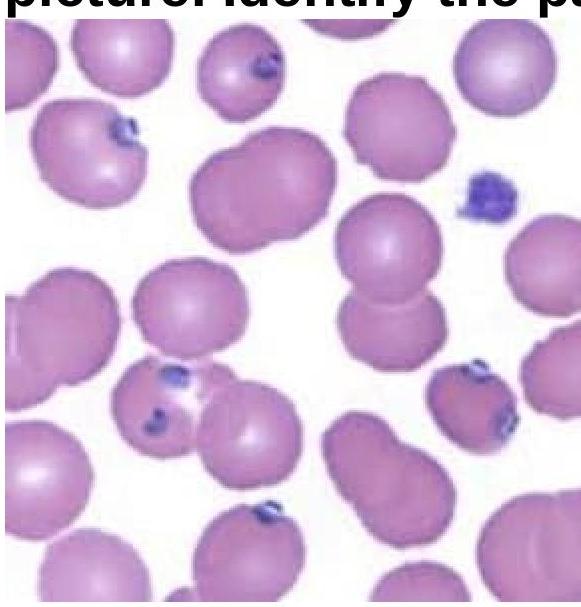
A 30-year-old man is brought to the emergency department with complaints of fevers to 39.0℃ (102.2℉) and diarrhea for the past 12 hours. There is no history of headaches, vomiting, or loss of consciousness. The past medical history is unobtainable because the patient recently immigrated from abroad and has a language barrier, but his wife says that her husband had a motor vehicle accident when he was a teenager that required emergent surgery. He is transferred to the ICU after a few hours in the ED due to dyspnea, cyanosis, and hemodynamic collapse. There are no signs of a meningeal infection. The blood pressure is 70/30 mm Hg at the time of transfer. A chest X-ray at the time of admission shows interstitial infiltrates without homogeneous opacities. The initial laboratory results reveal metabolic acidosis, leukopenia with a count of 2000/mm3, thrombocytopenia (15,000/mm3), and a coagulation profile suggesting disseminated intravascular coagulation. A peripheral smear is performed as shown in the accompanying image. Despite ventilatory support, administration of intravenous fluids, antibiotics, and vasopressor agents, the patient dies the next day. The gram stain from the autopsy specimen of his lungs reveals gram-positive, lancet-shaped diplococci occurring singly and in chains. Which of the following organisms is the most likely cause for the patient’s condition?
A 72-year-old man presents to the emergency department after a fall. The patient was found lying down on the floor in his room in his retirement community. The patient has a past medical history of Alzheimer dementia and a prosthetic valve. His current medications include donepezil and warfarin. His temperature is 97.7°F (36.5°C), blood pressure is 85/50 mmHg, pulse is 160/min, respirations are 13/min, and oxygen saturation is 97% on room air. The patient is started on IV fluids and a type and screen is performed. Laboratory values are ordered as seen below. Hemoglobin: 13 g/dL Hematocrit: 39% Leukocyte count: 5,500 cells/mm^3 with normal differential Platelet count: 225,000/mm^3 INR: 2.5 AST: 10 U/L ALT: 12 U/L A chest radiograph and EKG are performed and are within normal limits. A full physical exam is within normal limits. The patient's vitals are repeated. His temperature is 99.5°F (37.5°C), blood pressure is 110/70 mmHg, pulse is 90/min, respirations are 10/min, and oxygen saturation is 98% on room air. Which of the following is the best next step in management?
A 59-year-old man comes to the clinic for an annual well-exam. He was lost to follow-up for the past 3 years due to marital issues but reports that he feels fine. The patient reports, “I feel tired but it is probably because I am getting old. I do feel a little feverish today - I think I got a cold.” His past medical history is significant for hypertension that is controlled with hydrochlorothiazide. He reports fatigue, congestion, cough, and night sweats. He denies any sick contacts, recent travel, weight changes, chest pain, or dizziness. His temperature is 101°F (38.3°C), blood pressure is 151/98 mmHg, pulse is 97/min, and respirations are 15/min. His laboratory values are shown below: Hemoglobin: 13.5 g/dL Hematocrit: 41% Leukocyte count: 25,000/mm^3 Segmented neutrophils: 73% Bands: 8% Eosinophils: 1% Basophils: 2% Lymphocytes: 15% Monocytes: 2% Platelet count: 200,000/mm^3 What diagnostic test would be helpful in distinguishing this patient’s condition from pneumonia?
A 28-year-old male presents to his primary care physician with complaints of intermittent abdominal pain and alternating bouts of constipation and diarrhea. His medical chart is not significant for any past medical problems or prior surgeries. He is not prescribed any current medications. Which of the following questions would be the most useful next question in eliciting further history from this patient?
A 12-year-old boy admitted to the intensive care unit 1 day ago for severe pneumonia suddenly develops hypotension. He was started on empiric antibiotics and his blood culture reports are pending. According to the nurse, the patient was doing fine until his blood pressure suddenly dropped. Vital signs include: blood pressure is 88/58 mm Hg, temperature is 39.4°C (103.0°F), pulse is 120/min, and respiratory rate is 24/min. His limbs feel warm. The resident physician decides to start him on intravenous vasopressors, as the blood pressure is not responding to intravenous fluids. The on-call intensivist suspects shock due to a bacterial toxin. What is the primary mechanism responsible for the pathogenesis of this patient's condition?
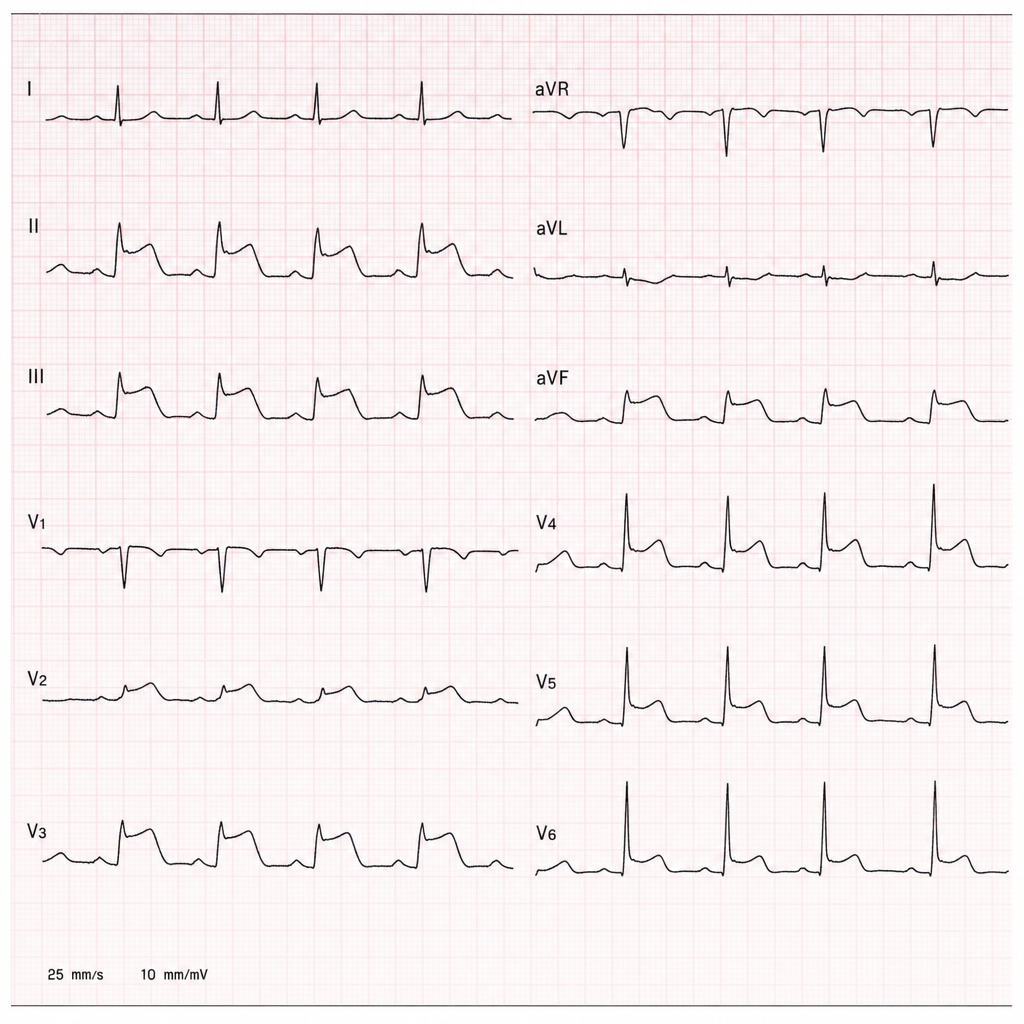
A 58-year-old man with hypertension and hyperlipidemia is brought to the emergency department by ambulance after collapsing at home. His wife states he complained of sudden severe chest pain radiating to the left arm 40 minutes ago, then became diaphoretic and lost consciousness briefly. On arrival, BP is 88/60 mmHg, HR 112 bpm, RR 22/min, SpO2 94% on room air. The ECG shown demonstrates 4 mm ST-segment elevation in leads II, III, and aVF with reciprocal changes in I and aVL. IV access is established, aspirin 325 mg has been given, and oxygen is being administered. The nearest percutaneous coronary intervention-capable facility is 25 minutes away. Which of the following is the most appropriate next step?
A 38-year-old previously healthy woman develops septic shock from necrotizing fasciitis of the lower extremity. Despite three debridements, broad-spectrum antibiotics (vancomycin, meropenem, clindamycin), IVIG, and aggressive critical care support, she develops refractory shock requiring norepinephrine 1.2 mcg/kg/min, vasopressin 0.04 units/min, and epinephrine 0.1 mcg/kg/min. Lactate is 15 mmol/L. Surgical team recommends hemipelvectomy as last option for source control. Family is devastated. ICU team notes SOFA score of 18. Synthesize an approach to management and decision-making.
Want unlimited practice?
Get full access to all questions, explanations, and performance tracking.
Scan to download app