
Mechanical complications management — MCQs

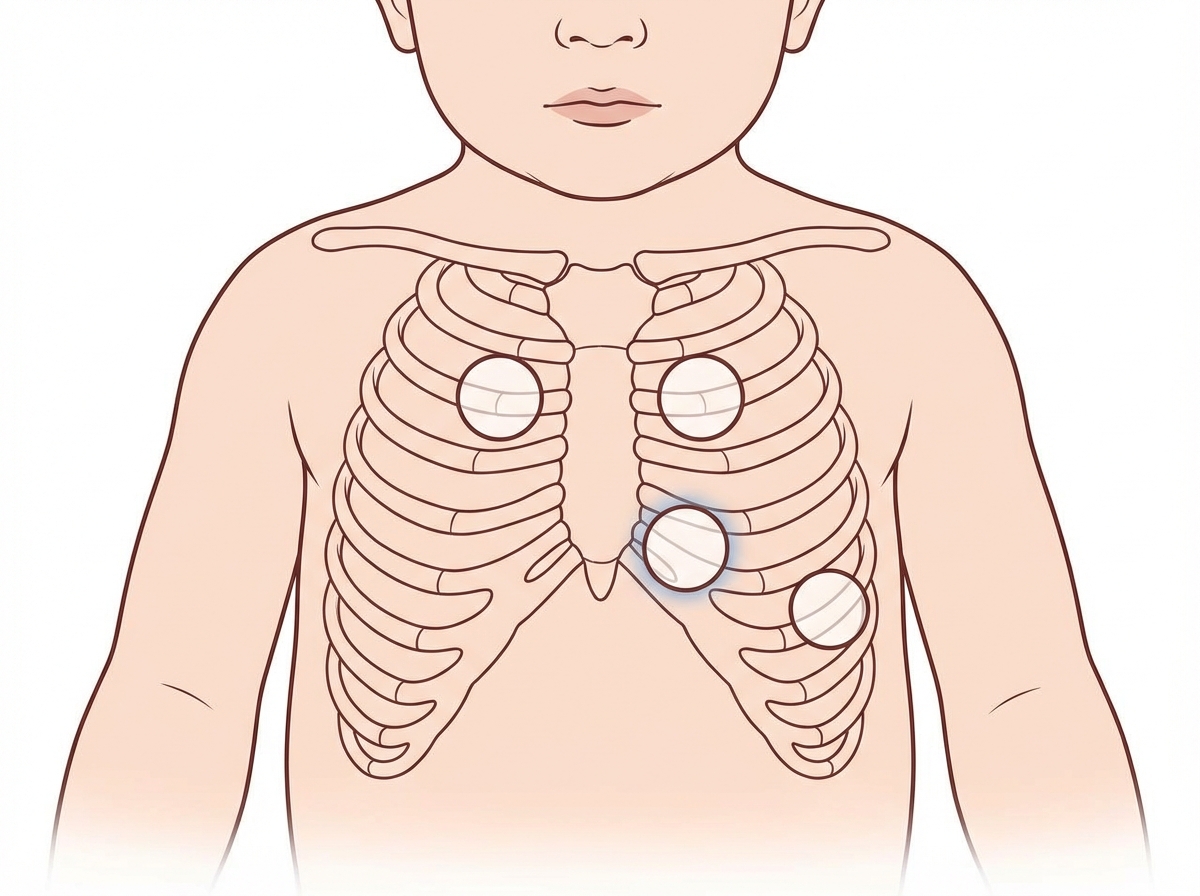
A 2-year-old girl is brought to the physician by her mother for a well-child examination. Cardiac auscultation is shown. When she clenches her fist forcefully for a sustained time, the intensity of the murmur increases. Which of the following is the most likely cause of this patient's auscultation findings?
A 59-year-old male presents to the emergency room with shortness of breath. Ten days ago, he was in the cardiac critical care unit after receiving a balloon angioplasty and a bare metal stent for an ST-elevation myocardial infarction (STEMI). On physical examination, a holosystolic murmur is heard at the cardiac apex radiating to the axilla. You also detect an S3 and bilateral crackles in the lung bases. What is the most likely etiology of this patient's acute decompensated heart failure?
A 35-year-old man is brought to the emergency department 20 minutes after being involved in a motor vehicle collision in which he was a restrained passenger. The patient is confused. His pulse is 140/min and blood pressure is 85/60 mm Hg. Examination shows a hand-sized hematoma on the anterior chest wall. An ECG shows sinus tachycardia. Which of the following structures is most likely injured in this patient?
A 67-year-old man presents to the emergency department with a 1-hour history of nausea and upper abdominal and substernal chest pain radiating to his lower jaw. He vomited several times before arriving at the hospital. His last visit to the primary care physician was 6 months ago during which he complained of fatigue, ‘slowing down’ on his morning walks, and abdominal pain that exacerbated by eating spicy food. His current medications include atorvastatin, metformin, insulin, omeprazole, aspirin, enalapril, nitroglycerin, and metoprolol. Today, his blood pressure is 95/72 mm Hg in his right arm and 94/73 in his left arm, heart rate is 110/min, temperature is 37.6°C (99.6°F), and respiratory rate is 30/min. On physical examination, he is diaphoretic and his skin is cool and clammy. His cardiac enzymes were elevated. He is treated appropriately and is admitted to the hospital. On day 5 of his hospital stay, he suddenly develops breathlessness. His blood pressure drops to 80/42 mm Hg. On examination, bibasilar crackles are heard. Cardiac auscultatory reveals a high pitched holosystolic murmur over the apex. Which of the following most likely lead to the deterioration of this patient’s condition?
An 80-year-old woman died due to the respiratory complications of lung cancer. She had been a heavy smoker, and battled COPD and adenocarcinoma of the lungs for the last 20 years. The autopsy also revealed a pathological finding in the mitral valve. Which of the following was most likely seen?
A 66-year-old female with hypertension and a recent history of acute ST-elevation myocardial infarction (STEMI) 6 days previous, treated with percutaneous transluminal angioplasty (PTA), presents with sudden onset chest pain, shortness of breath, diaphoresis, and syncope. Vitals are temperature 37°C (98.6°F), blood pressure 80/50 mm Hg, pulse 125/min, respirations 12/min, and oxygen saturation 92% on room air. On physical examination, the patient is pale and unresponsive. Cardiac exam reveals tachycardia and a pronounced holosystolic murmur loudest at the apex and radiates to the back. Lungs are clear to auscultation. Chest X-ray shows cardiomegaly with clear lung fields. ECG is significant for ST elevations in the precordial leads (V2-V4) and low-voltage QRS complexes. Emergency transthoracic echocardiography shows a left ventricular wall motion abnormality along with a significant pericardial effusion. The patient is intubated, and aggressive fluid resuscitation is initiated. What is the next best step in management?
Two days after being admitted for acute myocardial infarction, a 61-year-old man has sharp, substernal chest pain that worsens with inspiration and improves when leaning forward. Cardiac examination shows a scratchy sound best heard over the left sternal border. Histopathological examination of the infarcted myocardial tissue is most likely to show which of the following findings?
A 7-year-old boy is brought to the pediatrician by his parents for a routine checkup. The parents note that the patient recently joined a baseball team and has had trouble keeping up with his teammates and gets short of breath with exertion. The patient has otherwise been healthy and has no known history of asthma or allergic reaction. Today, the patient’s temperature is 98.2°F (36.8°C), blood pressure is 112/72 mmHg, pulse is 70/min, and respirations are 12/min. The physical exam is notable for a heart murmur that decreases when the patient bears down. Additionally, the hand grip and rapid squatting maneuvers increase the severity of the murmur. Which of the following is likely heard on auscultation?
A 50-year-old man presents the emergency department for intense chest pain, profuse sweating, and shortness of breath. The onset of these symptoms was 3 hours ago. The chest pain began after a heated discussion with a colleague at the community college where he is employed. Upon arrival, he is found conscious and responsive; the vital signs include a blood pressure of 130/80 mm Hg, a heart rate at 90/min, a respiratory rate at 20/min, and a body temperature of 36.4°C (97.5°F). His medical history is significant for hypertension diagnosed 7 years ago, which is well-controlled with a calcium channel blocker. The initial electrocardiogram (ECG) shows ST-segment depression in multiple consecutive leads, an elevated cardiac troponin T level, and normal kidney function. Which of the following would you expect to find in this patient?
An 80-year-old man presents to the emergency department because of gnawing substernal chest pain that started an hour ago and radiates to his neck and left jaw. A 12-lead ECG is obtained and shows ST-segment elevation with newly developing Q waves. He is admitted for treatment. 4 days after hospitalization he suddenly develops altered mental status, and his blood pressure falls from 115/75 mm Hg to 80/40 mm Hg. Physical examination shows jugular venous distention, pulsus paradoxus, and distant heart sounds. What is the most likely cause of this patient's condition?
Want unlimited practice?
Get full access to all questions, explanations, and performance tracking.
Scan to download app