
Systemic sclerosis (scleroderma) — MCQs

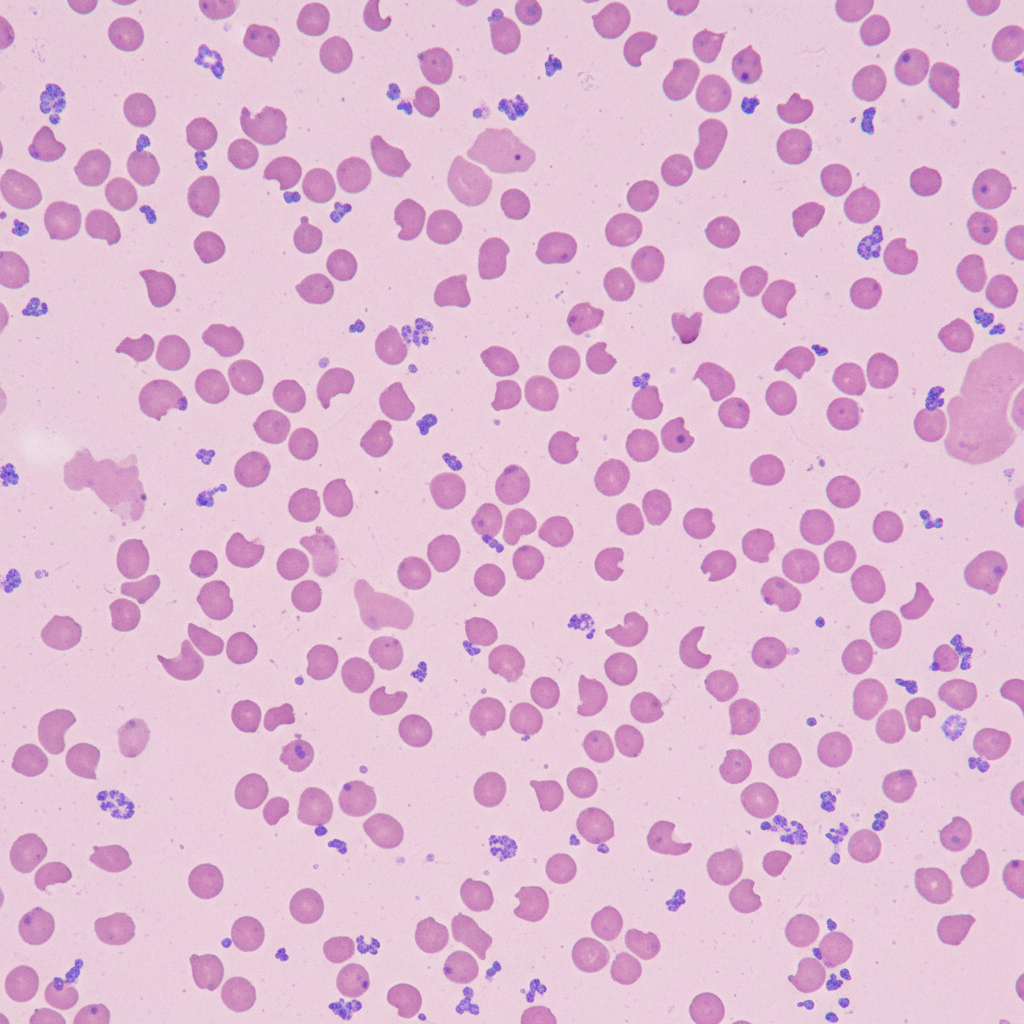
A 51-year-old woman is brought to the emergency department after not being able to urinate for the past 12 hours. She also complains of a headache that is sharp in nature, 9/10, without radiation, and associated with nausea and vomiting. She neither smokes cigarettes nor drinks alcohol. She complains that her fingers have become numb and very painful on exposure to cold weather during the last few months. She has also noticed her fingers change color from blue to pale to red on cold exposure. Her face looks shiny with thickened, wrinkle-free skin. She has had joint pain and stiffness for the last 20 years. She takes over-the-counter omeprazole for heartburn, which she says improves her symptoms. She has unintentionally lost 9 kg (20 lb) in the last 6 months. She has no previous history of diabetes, hypertension, chest pain, orthopnea, or paroxysmal nocturnal dyspnea. Her mother has rheumatoid arthritis for which she takes methotrexate, and her father takes medications for hypertension and hypercholesterolemia. Her temperature is 37°C (98.6°F), blood pressure is 210/120 mm Hg, pulse is 102/min, respiratory rate is 18/min, and BMI is 22 kg/m2. Laboratory test Complete blood count: Hemoglobin 9.5 g/dL Leukocytes 15,500/mm3 Platelets 90,000/mm3 Serum haptoglobin 20 mg/dL (30–200 mg/dL) Serum creatinine 2.3 mg/dL Blood urea nitrogen 83.5 mg/dL The peripheral blood film of the patient shows the following. Which of the following would be the most appropriate treatment for this patient?
A 60-year-old African American woman presents to her family physician with shortness of breath on exertion. She also describes shortness of breath when she lies down to go to bed at night, as well as recent swelling in her ankles. Past medical history is significant for long-standing hypertension, for which she takes amlodipine and lisinopril. Her temperature is 36.8°C (98.2°F), the heart rate is 90/min, the respiratory rate is 15/min, and the blood pressure is 135/80 mm Hg. The physical exam is significant for JVD, lower extremity pitting edema, laterally displaced PMI, left ventricular heave, bilateral pulmonary crackles, and an S4 heart sound. Chest X-ray demonstrates pulmonary vascular congestion, Kerley B lines, and cardiomegaly. Echocardiogram demonstrates a preserved ejection fraction. Kidney biopsy would likely demonstrate which of the following?
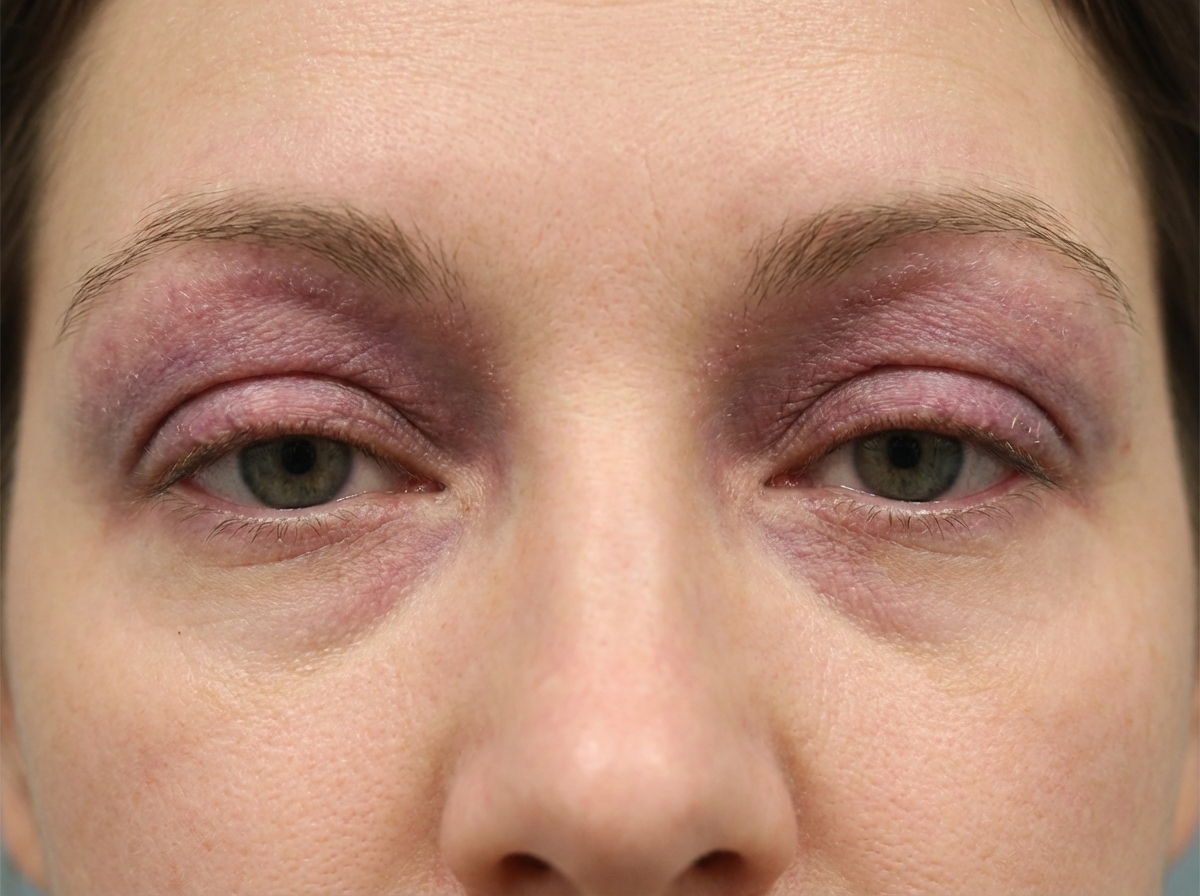
A 47-year-old woman comes to the physician because of a 1-month history of progressive weakness. She has had increased difficulty climbing stairs and standing from a seated position. She takes no medications. Neurologic examination shows weakness of the proximal muscles. Skin examination shows diffuse erythema of the upper back, posterior neck, and shoulders. A photograph of the patient's eye is shown. Antibodies against which of the following are most likely to be present in this patient?
A 45-year-old woman presents to the clinic with a variety of complaints on different areas of her body, including telangiectasias on both the upper and lower extremities, bluish discoloration of the fingertips when exposed to cold, and burning midsternal chest pain. She is a tobacco smoker and works as a school teacher. After evaluation, an anti-centromere antibody test is ordered, and returns with an elevated titer. Which of the following symptoms are least likely to be seen in this patient's condition?
A 52-year-old African-American woman presents to the office complaining of difficulty swallowing for 1 week, and described it as "food getting stuck in her throat". Her discomfort is mainly for solid foods, and she does not have any problem with liquids. She further adds that she has frequent heartburn and lost 5 pounds in the last month because of this discomfort. She sometimes takes antacids to relieve her heartburn. Her past medical history is insignificant. She is an occasional drinker and smokes a half pack of cigarettes a day. On examination, her skin is shiny and taut especially around her lips and fingertips. A barium swallow study is ordered. Which of the following is the most likely diagnosis?
A 45-year-old woman comes to the physician's office with her 17-year-old daughter. She tells the physician that she developed Sjögren's syndrome when she was her daughter's age, and that she is concerned about her daughter developing the same condition. The girl appears to be in good health, with no signs or symptoms of the disease or pathology. Which of the following antibodies will most likely be positive if the woman's daughter were to develop Sjögren's syndrome?
A 27-year-old woman presents with a history of repeated episodes of discoloration of the fingers over the last 3 years. She mentions that the episodes are usually triggered by exposure to cold, which leads to a sequential white, blue, and red discoloration of her fingers, followed by resolution of the symptoms. During an episode, she experiences pain and numbness in the affected fingers. The episodes are usually of short duration and do not interfere with her life, so she did not seek medical advice till now. Which of the following additional clinical features in this patient would most likely support the most likely diagnosis?
A 35-year-old woman comes to the clinic with complaints of joint pain and stiffness for the past few months. Her hands, lower back, and left knee are involved and associated with morning stiffness that improves throughout the day with activities. She also complains that her fingers change color upon exposure to cold. She has also noticed a tightening of the skin on her face and thinning of her lips. She feels tired throughout the day and has taken over-the-counter multivitamins that do not seem to help her much. The patient does not smoke cigarettes and drinks alcohol socially. She was diagnosed with hypertension 1 year ago and has been taking hydralazine for the past year. She lost her parents in a road traffic accident 3 years ago. Temperature is 36.7°C (98°F), blood pressure is 140/85 mm Hg, pulse is 72/min, respirations are 12/min, and BMI is 25 kg/m2. Her skin appears shiny and slightly thickened, especially her face and hands. Laboratory investigation: Complete blood count Hemoglobin 9.5 g/dl Leucocytes 5,500/mm3 Platelets 150,000/mm3 ANA positive Anti-centromere Antibody negative Anti Scl-70 positive Anti Jo-1 negative Anti-histone negative Anti DsDNA negative What is the most likely diagnosis in this patient?
A 29-year-old woman presents to the emergency department with joint pain and a notable rash. She has had joint pain for the past 12 months but noticed the rash recently as well as generalized malaise. She states her joint pain is symmetric, in her upper extremities, and is worse in the morning. Her temperature is 97.6°F (36.4°C), blood pressure is 111/74 mmHg, pulse is 83/min, respirations are 14/min, and oxygen saturation is 98% on room air. Laboratory studies are ordered as seen below. Hemoglobin: 10 g/dL Hematocrit: 30% Leukocyte count: 6,800/mm^3 with normal differential Platelet count: 207,000/mm^3 Serum: Na+: 140 mEq/L Cl-: 101 mEq/L K+: 4.9 mEq/L HCO3-: 21 mEq/L BUN: 30 mg/dL Glucose: 120 mg/dL Creatinine: 1.8 mg/dL The patient is ultimately admitted to the hospital. Which of the following is the most appropriate test to monitor her disease progression?
A 32-year-old woman presents with a 3-month history of intermittent blurred vision and problems walking. The patient states that she often feels “pins and needles” in her legs that cause her problems when she’s walking. The patient is afebrile, and her vital signs are within normal limits. An autoimmune disorder is suspected. Which of the following findings would most likely be present in this patient?
Want unlimited practice?
Get full access to all questions, explanations, and performance tracking.
Scan to download app