
Osteoarthritis — MCQs

A previously healthy 61-year-old man comes to the physician because of bilateral knee pain for the past year. The pain is worse with movement and is relieved with rest. Physical examination shows crepitus, pain, and decreased range of motion with complete flexion and extension of both knees. There is no warmth, redness, or swelling. X-rays of both knees show irregular joint space narrowing, osteophytes, and subchondral cysts. Which of the following is the most appropriate pharmacotherapy?
A 58-year-old woman comes to the physician because of a 2-year history of progressively worsening pain in her knees and fingers. The knee pain is worse when she walks for longer than 30 minutes. When she wakes up in the morning, her fingers and knees are stiff for about 15 minutes. She cannot recall any trauma to the joints. She was treated with amoxicillin following a tick bite 2 years ago. She is otherwise healthy and only takes a multivitamin and occasionally acetaminophen for the pain. She drinks 1–2 glasses of wine daily. She is 160 cm (5 ft 3 in) tall and weighs 79 kg (174 lb); BMI is 31 kg/m2. Her temperature is 36.9°C (98.4°F), pulse is 70/min, and blood pressure is 133/78 mm Hg. Examination of the lower extremities reveals mild genu varum. Range of motion of both knees is limited; there is palpable crepitus. Complete flexion and extension elicit pain. Tender nodules are present on the proximal and distal interphalangeal joints of the index, ring, and little fingers bilaterally. Which of the following is the most likely diagnosis?
A 57-year-old woman presents to her primary care physician with a concern for joint pain. She states that she often feels minor joint pain and morning stiffness in both of her hands every day, particularly in the joints of her fingers. Her symptoms tend to improve as the day goes on and she states they are not impacting the quality of her life. She lives alone as her partner recently died. She smokes 1 pack of cigarettes per day and drinks 2-3 alcoholic drinks per day. Her last menses was at age 45 and she works at a library. The patient has a history of diabetes and chronic kidney disease with her last GFR at 45 mL/min. Her temperature is 97.5°F (36.4°C), blood pressure is 117/58 mmHg, pulse is 90/min, respirations are 14/min, and oxygen saturation is 98% on room air. Physical examination is within normal limits. Which of the following interventions is appropriate management of future complications in this patient?
A 56-year-old woman with rheumatoid arthritis comes to the physician for a follow-up examination. She has no other history of serious illness. Menopause occurred 1 year ago. Current medications include antirheumatic drugs and hormone replacement therapy. She exercises regularly. A DEXA scan shows a T-score of -1.80, indicating decreased bone density. Which of the following drugs is most likely involved in the pathogenesis of this finding?
A 55-year-old man with a BMI of 34 kg/m² presents to his primary care physician for knee pain. The patient has had left knee pain, which has been steadily worsening for the past year. He states that ice and rest has led to minor improvement in his symptoms. He recently bumped his knee; however, he says that it has not altered his baseline pain when ambulating. The patient is a butcher and lives with his wife. His current medications include insulin, metformin, hydrochlorothiazide, and lisinopril. He is attending Alcoholics Anonymous with little success. Physical exam reveals a left knee that is mildly erythematous with some bruising. There is no pain upon palpation of the joint or with passive range of motion. The patient exhibits a mildly antalgic gait. Which of the following is the best initial step in management?
A 72-year-old man presents to his primary care physician for his annual exam. He has a very stoic personality and says that he is generally very healthy and has "the normal aches and pains of old age." On further probing, you learn that he does have pretty significant back and hip pain that worsens throughout the day. On physical exam you note bony enlargement of the distal interphalangeal joints bilaterally. Which of the following is the likely cause of his symptoms?
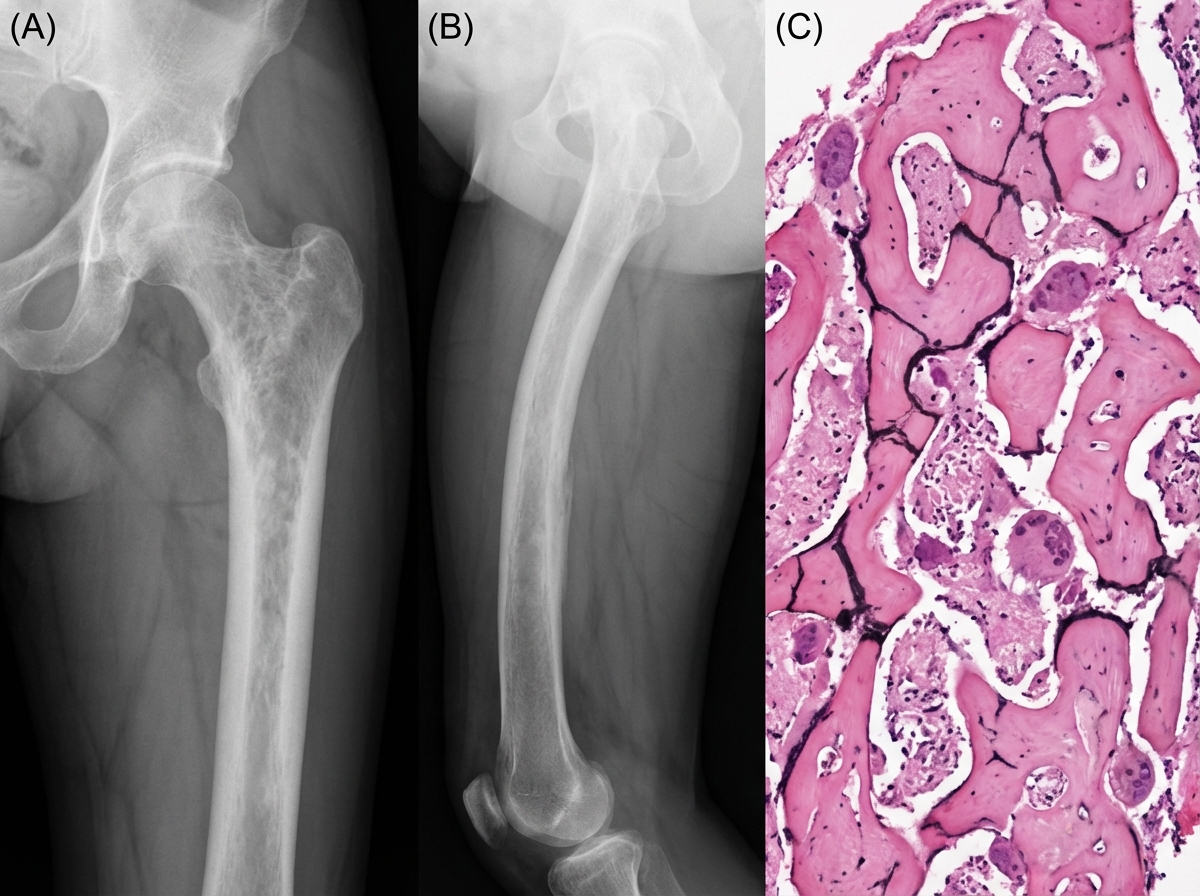
A 55-year-old male presents with left hip pain and stiffness. Radiographs are shown in Figures A and B. Serum alkaline phosphatase levels are elevated. A biopsy of the left femur is performed and shown in Figure C. Which of the following cells are initially responsible for this condition?
A 28-year-old male presents to his primary care physician with complaints of intermittent abdominal pain and alternating bouts of constipation and diarrhea. His medical chart is not significant for any past medical problems or prior surgeries. He is not prescribed any current medications. Which of the following questions would be the most useful next question in eliciting further history from this patient?
A 69-year-old woman presents with pain in her hip and groin. She states that the pain is present in the morning, and by the end of the day it is nearly unbearable. Her past medical history is notable for a treated episode of acute renal failure, diabetes mellitus, obesity, and hypertension. Her current medications include losartan, metformin, insulin, and ibuprofen. The patient recently started taking high doses of vitamin D as she believes that it could help her symptoms. She also states that she recently fell off the treadmill while exercising at the gym. On physical exam you note an obese woman. There is pain, decreased range of motion, and crepitus on physical exam of her right hip. The patient points to the areas that cause her pain stating that it is mostly over the groin. The patient's skin turgor reveals tenting. Radiography is ordered. Which of the following is most likely to be found on radiography?
A 70-year-old woman presents to her primary care doctor complaining of left knee pain. She states that she has noticed this more during the past several months after a fall at home. Previously, she was without pain and has no history of trauma to her knees. The patient states that the majority of her pain starts in the afternoon after she has been active for some time, and that the pain resolves with rest and over-the-counter analgesics. Aside from the left knee, she has no other symptoms and no other joint findings. On exam, her temperature is 98.8°F (37.1°C), blood pressure is 124/76 mmHg, pulse is 70/min, and respirations are 12/min. The patient has no limitations in her range of motion and no changes in strength on motor testing. However, there is tenderness along the medial joint line. What finding is most likely seen in this patient?
Want unlimited practice?
Get full access to all questions, explanations, and performance tracking.
Scan to download app