
Crystal arthropathies (gout, pseudogout) — MCQs

A 60-year-old man has had intermittent pain in his right great toe for the past 2 years. Joint aspiration and crystal analysis shows thin, tapered, needle shaped intracellular crystals that are strongly negatively birefringent. Radiograph demonstrates joint space narrowing of the 1st metatarsophalangeal (MTP) joint with medial soft tissue swelling. What is the most likely cause of this condition?
A 62-year-old man comes to the physician because of a 1-day history of dull pain and stiffness of the right knee. He takes chlorthalidone for hypertension. Physical examination of the right knee shows a large effusion and mild erythema; range of motion is limited by pain. Arthrocentesis of right knee yields a cloudy aspirate. Gram stain is negative. Analysis of the synovial fluid shows a leukocyte count of 15,000/mm3 and 55% neutrophils. Microscopic examination of the synovial fluid under polarized light shows positively birefringent rhomboid crystals. Further evaluation of this patient is most likely to show which of the following findings?
A 65-year-old man with chronic myelogenous leukemia comes to the physician because of severe pain and swelling in both knees for the past day. He finished a cycle of chemotherapy 1 week ago. His temperature is 37.4°C (99.4°F). Physical examination shows swelling and erythema of both knees and the base of his left big toe. Laboratory studies show: Leukocyte count 13,000/mm3 Serum Creatinine 2.2 mg/dL Calcium 8.2 mg/dL Phosphorus 7.2 mg/dL Arthrocentesis of the involved joints is most likely to show which of the following?
A 30-year-old man with a BMI of 33.7 kg/m2 presents with severe pain in his right great toe that began this morning. He had a few beers last night at a friend's party but otherwise has had no recent dietary changes. On examination, the right great toe appears swollen, warm, red, and tender to touch. Joint aspiration is performed. What will examination of the fluid most likely reveal?
A 69-year-old man presents to his primary care physician for pain when he walks. He states that the pain is the worst in his left great toe but is also present in his hips and knees. He says that his symptoms are worse with activity and tend to improve with rest. His symptoms have progressively worsened over the past several years. He has a past medical history of obesity, type II diabetes mellitus, smoking, and hypertension. He drinks roughly ten beers per day. His current medications include metformin, insulin, lisinopril, and hydrochlorothiazide. The patient has a recent travel history to Bangkok where he admits to having unprotected sex. On physical exam, examination of the lower extremity results in pain. There is crepitus of the patient's hip when his thigh is flexed and extended. Which of the following is the most likely diagnosis?
A 45-year-old woman presents to the clinic for a routine examination. She has a chronic history of systemic lupus erythematosus, diagnosed at age 27. Medications include hydroxychloroquine and low-dose prednisone. She has had no recent flare-ups and is compliant with her medication. Anticardiolipin and anti-beta-2 glycoprotein-1 antibodies are negative, and she has had no history of thrombi or emboli. Physical examination is normal except for mild bilateral tenderness and swelling of the knees. Creatinine and GFR are normal. Which of the following is the next best step in management to monitor disease activity?
A 53-year-old man comes to the emergency department for severe left knee pain for the past 8 hours. He describes it as an unbearable, burning pain that woke him up from his sleep. He has been unable to walk since. He has not had any trauma to the knee. Ten months ago, he had an episode of acute pain and swelling of the right great toe that subsided after treatment with indomethacin. He has hypertension, type 2 diabetes mellitus, psoriasis, and hyperlipidemia. Current medications include topical betamethasone, metformin, glipizide, losartan, and simvastatin. Two weeks ago, hydrochlorothiazide was added to his medication regimen to improve blood pressure control. He drinks 1–2 beers daily. He is 170 cm (5 ft 7 in) tall and weighs 110 kg (242 lb); BMI is 38.1 kg/m2. His temperature is 38.4°C (101.1°F). Examination shows multiple scaly plaques over his palms and soles. The left knee is erythematous, swollen, and tender; range of motion is limited by pain. Which of the following is the most appropriate next step in management?
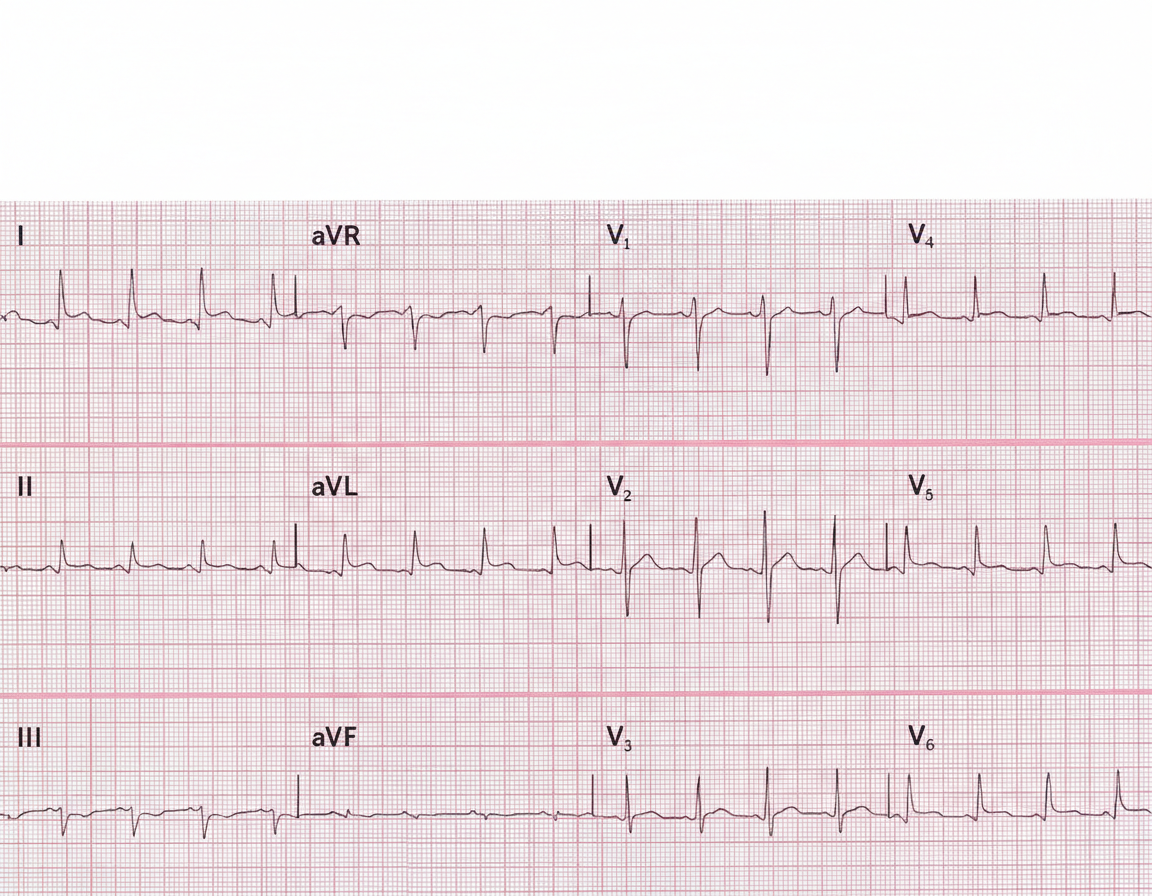
A 29-year-old man presents to the emergency department with a sharp pain in the center of his chest. The pain is knife-like and constant. Sitting alleviates the pain and lying supine aggravates it. He denies the use of nicotine, alcohol or illicit drugs. Vital signs include: temperature 37.0°C (98.6°F), blood pressure 135/92 mm Hg, and pulse 97/min. On examination, a friction rub is heard at the left sternal border while the patient is leaning forward. His ECG is shown in the image. Which of the following can prevent recurrence of this patient’s condition?
A 33-year-old woman presents to her primary care physician for gradually worsening pain in both wrists that began several months ago. The pain originally did not bother her, but it has recently begun to affect her daily functioning. She states that the early morning stiffness in her hands is severe and has made it difficult to tend to her rose garden. She occasionally takes ibuprofen for the pain, but she says this does not really help. Her medical history is significant for diabetes mellitus and major depressive disorder. She is currently taking insulin, sertraline, and a daily multivitamin. The vital signs include: blood pressure 126/84 mm Hg, heart rate 82/min, and temperature 37.0°C (98.6°F). On physical exam, her wrists and metacarpophalangeal joints are swollen, tender, erythematous, and warm to the touch. There are no nodules or vasculitic lesions. Which of the following antibodies would be most specific to this patient’s condition?
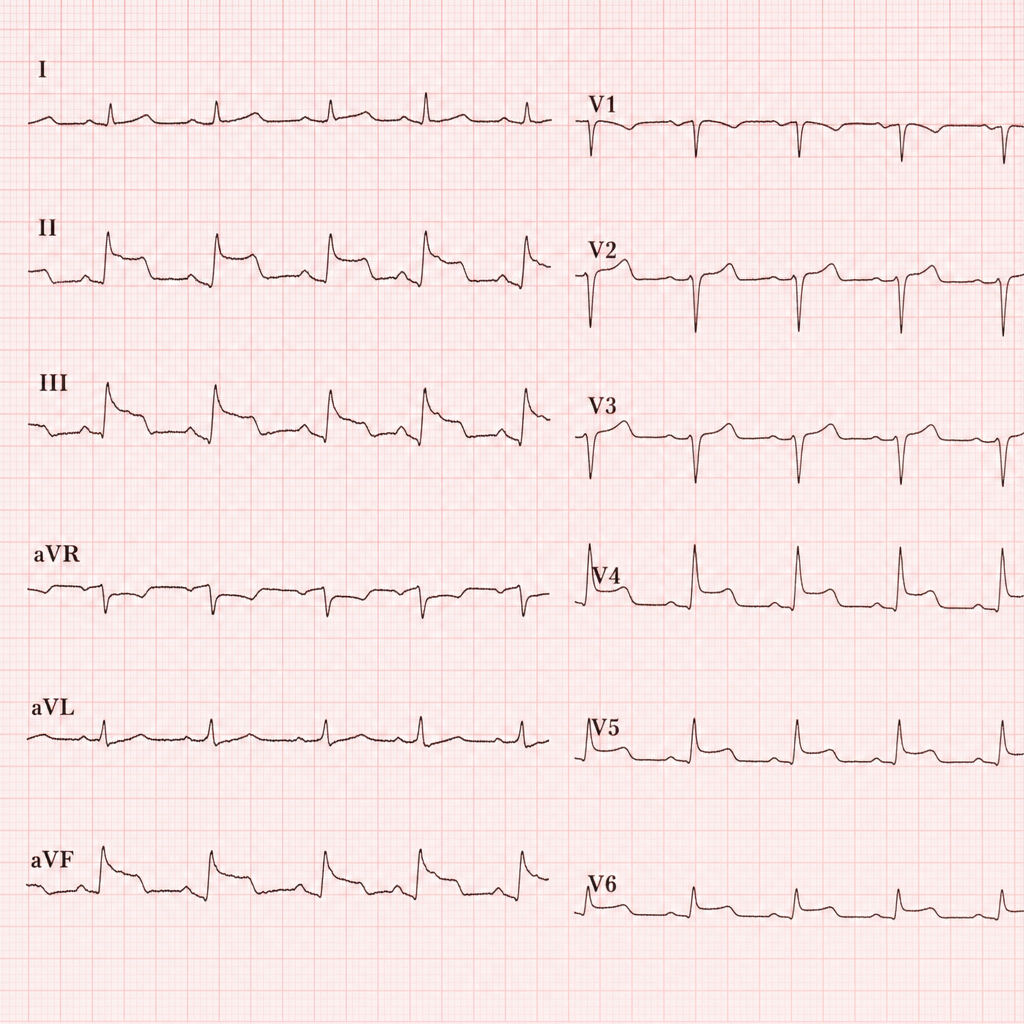
A 68-year-old woman with a history of type 2 diabetes and hypertension presents to the emergency department with 3 hours of epigastric discomfort, nausea, and diaphoresis. She denies chest pain. Her blood pressure is 148/92 mmHg, heart rate is 96 bpm, and oxygen saturation is 97% on room air. An ECG is obtained showing 2–3 mm ST-segment elevation in leads II, III, and aVF with reciprocal ST-segment depression in leads I and aVL. Physical examination reveals mild epigastric tenderness without guarding. Troponin I is pending. Which of the following is the most appropriate immediate next step in management?
Want unlimited practice?
Get full access to all questions, explanations, and performance tracking.
Scan to download app