
Sarcoidosis — MCQs

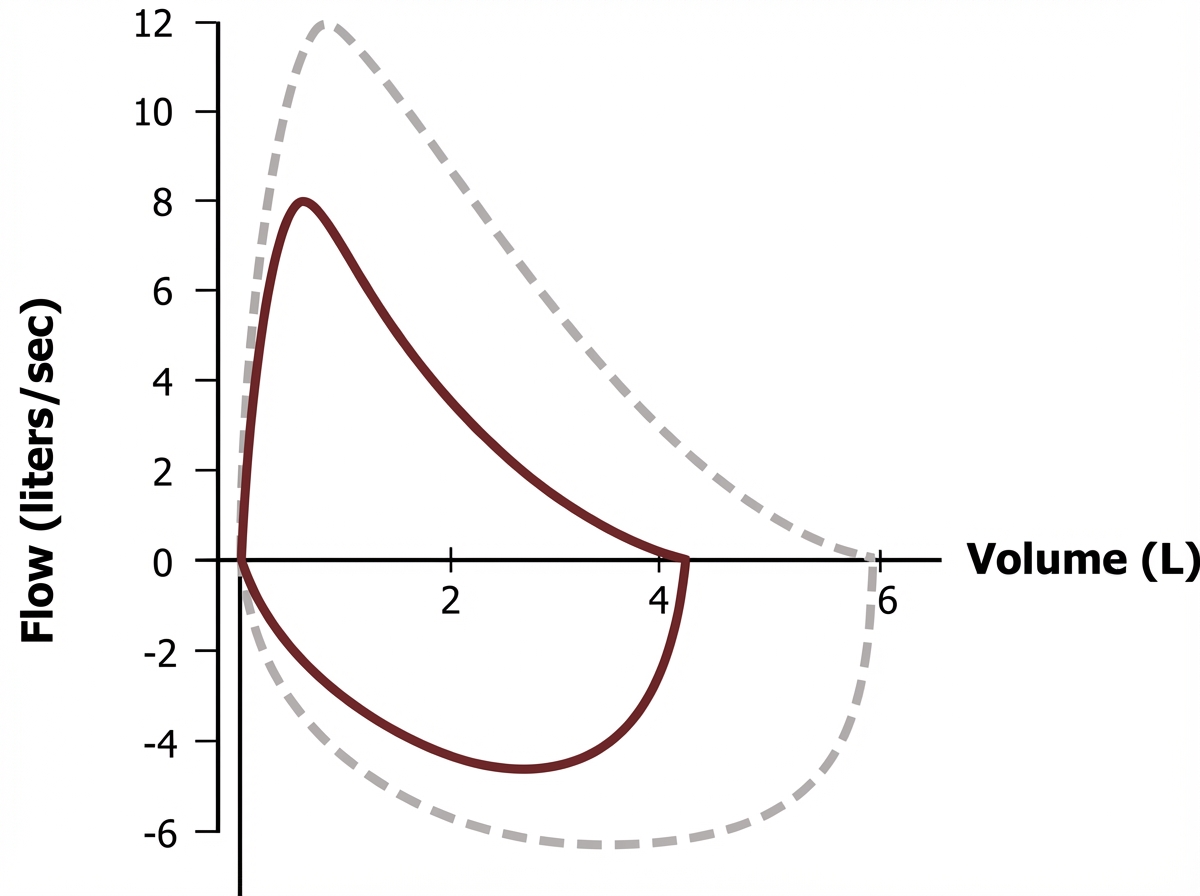
A 47-year-old woman comes to the physician because of a 3-week history of a dry cough. She does not smoke or use illicit drugs. Physical examination shows mild conjunctival hyperemia. Chest auscultation shows fine crackles in both lung fields. Laboratory studies show a total calcium concentration of 10.8 mg/dL. The results of spirometry are shown (dashed loop shows normal for comparison). Further evaluation of this patient is most likely to show an increase in which of the following?
A 35-year-old African-American female presents to the emergency room complaining of chest pain. She also complains of recent onset arthritis and increased photosensitivity. Physical examination reveals bilateral facial rash. Which of the following is most likely to be observed in this patient?
A 27-year-old Asian woman presents to her primary care physician with joint pain and a headache. She has had intermittent joint and muscle pain for the past several months in the setting of a chronic headache. She states that the pain seems to migrate from joint to joint, and her muscles typically ache making it hard for her to sleep. The patient's past medical history is non-contributory, and she is currently taking ibuprofen for joint pain. Physical exam is notable for an asymmetrical pulse in the upper extremities. The patient has lost 10 pounds since her previous visit 2 months ago. Laboratory values are notable for an elevated C-reactive protein and erythrocyte sedimentation rate. Which of the following is the best next step in management?
A 32-year-old man comes to the physician for a 1-month history of fever, chest pain with deep breathing, and a 4-kg (9 lb) weight loss. His temperature is 38°C (100.4°F). An x-ray of the chest shows a subpleural nodule in the right lower lobe with right hilar lymphadenopathy. Histological examination of a right hilar lymph node biopsy specimen shows several granulomas with acellular cores. Which of the following is the most likely diagnosis?
A 34-year-old woman comes to the physician because of a 6-week history of fever and productive cough with blood-tinged sputum. She has also had a 4-kg (8.8-lb) weight loss during the same time period. Examination shows enlarged cervical lymph nodes. An x-ray of the chest shows a 2.5-cm pulmonary nodule in the right upper lobe. A biopsy specimen of the lung nodule shows caseating granulomas with surrounding multinucleated giant cells. Which of the following is the most likely underlying cause of this patient's pulmonary nodule?
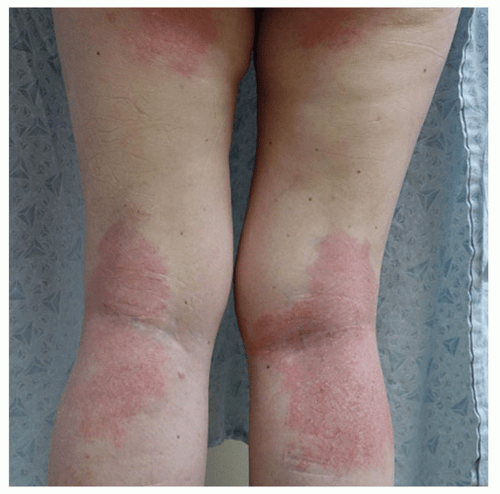
An otherwise healthy 27-year-old man presents to his dermatologist because of a rash over his knees. The rash has been present for 5 weeks and is moderately itchy. Physical examination reveals erythematous plaques covered with silvery scales over the extensor surface of the knees as shown in the image. Which of the following is the best initial step in the management of this patient’s condition?
A 61-year-old construction worker comes to the physician because of a 3-month history of progressively worsening cough and shortness of breath. He has had a 7.5-kg (16.5-lb) weight loss during this period. He smokes occasionally and does not drink alcohol. Physical examination shows clubbing of the fingers. End-inspiratory crackles are heard in both lower lung fields. X-ray of the chest shows bilateral reticulonodular densities with interstitial fibrosis. Histologic examination of a lung biopsy specimen shows noncaseating granulomas in the interstitium. Which of the following is the most likely underlying mechanism of this patient's condition?
A 49-year-old man comes to the physician because of tender, red nodules that appeared on his chest 3 days ago. Three weeks ago, he had similar symptoms in his right lower limb and another episode in his left foot; both episodes resolved spontaneously. He also has diarrhea and has had a poor appetite for 1 month. He has a history of dry cough and joint pain, for which he takes albuterol and aspirin as needed. He has smoked 2 packs of cigarettes daily for 15 years. He does not drink alcohol. Physical examination shows a linear, erythematous lesion on the right anterior chest wall, through which a cord-like structure can be palpated. The lungs are clear to auscultation. The abdomen is soft, nontender, and non-distended. Examination of the legs is normal. An ultrasound of the legs shows no abnormalities. Which of the following is the most appropriate next step in diagnosis of the underlying condition?
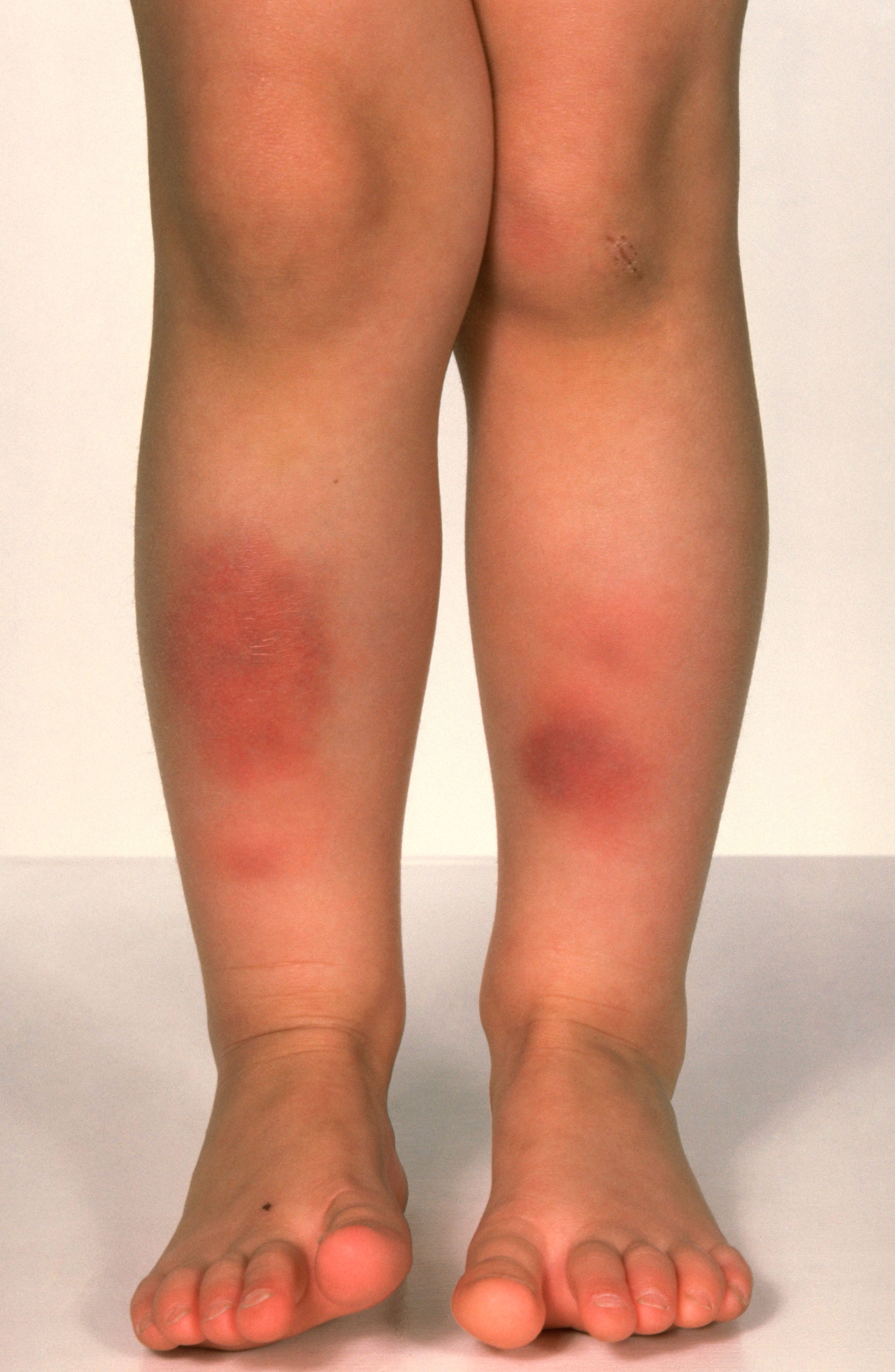
A 33-year-old African-American female presents to her physician with complaints of a persistent, dry cough. She states that the cough has gone on for some time now. Three weeks ago, during her last general checkup, she was started on lisinopril and metformin for concerns regarding an elevated blood pressure and fasting blood glucose. Past medical history is notable for eczema, asthma, and seasonal allergies. At this visit the patient has other non-specific complaints such as fatigue and joint pain as well as a burning sensation in her sternum when she eats large meals. Her physical exam is only notable for painful bumps on her lower extremities (figure A) which the patient attributes to "bumping her shins," during exercise, and an obese habitus. Which of the following is most likely true for this patient's chief concern?
A previously healthy 65-year-old man comes to the physician for chronic left-sided abdominal discomfort. About 3 months ago, he started experiencing early satiety and eating less. He has lost 7 kg (15.4 lb) during this period. He also occasionally has left shoulder pain. He recently retired from his job on a production line at a shoe factory. His pulse is 72/min, blood pressure is 130/70 mm Hg, and temperature is 37.8°C (100.1°F). Physical examination shows nontender, bilateral axillary and right-sided inguinal lymphadenopathy. The spleen is palpated 7 cm below the costal margin. Which of the following is the strongest indicator of a poor prognosis for this patient's condition?
Want unlimited practice?
Get full access to all questions, explanations, and performance tracking.
Scan to download app