
Pain management in chronic pancreatitis — MCQs

A 49-year-old man being treated for Helicobacter pylori infection presents to his primary care physician complaining of lower back pain. His physician determines that a non-steroidal anti-inflammatory drug (NSAID) would be the most appropriate initial treatment. Which of the following is the most appropriate NSAID for this patient?
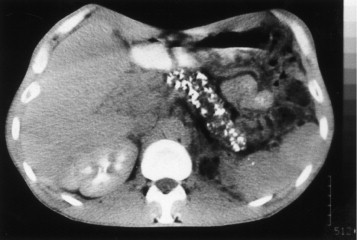
A 42-year-old man comes to the physician because of severe epigastric pain for a week. The pain is constant and he describes it as 6 out of 10 in intensity. The pain radiates to his back and is worse after meals. He has had several episodes of nausea and vomiting during this period. He has taken ibuprofen for multiple similar episodes of pain during the past 6 months. He also has had a 5.4-kg (12-lb) weight loss over the past 4 months. He has a 12-year history of drinking 3 to 4 pints of rum daily. He has been hospitalized three times for severe abdominal pain in the past 3 years. He appears ill. His temperature is 37°C (98.6°F), pulse is 87/min, and blood pressure is 110/70 mm Hg. There is severe epigastric tenderness to palpation. Bowel sounds are normal. Cardiopulmonary examination shows no abnormalities. Laboratory studies show: Hemoglobin 13.6 g/dL Leukocyte count 7,800/mm3 Serum Glucose 106 mg/dL Creatinine 1.1 mg/dL Amylase 150 U/L A CT of the abdomen is shown. Which of the following is the most appropriate long-term management for this patient?
A 72-year-old woman comes to the emergency department because of upper abdominal pain and nausea for the past hour. The patient rates the pain as an 8 to 9 on a 10-point scale. She has had an episode of nonbloody vomiting since the pain started. She has a history of type 2 diabetes mellitus, hypertension, and osteoporosis. The patient has smoked 2 packs of cigarettes daily for 40 years. She drinks 5–6 alcoholic beverages daily. Current medications include glyburide, lisinopril, and oral vitamin D supplements. Her temperature is 38.5°C (101.3°F), pulse is 110/min, and blood pressure is 138/86 mm Hg. Examination shows severe epigastric tenderness to palpation with guarding but no rebound. Ultrasonography of the abdomen shows diffuse enlargement of the pancreas; no gallstones are visualized. The patient is admitted to the hospital for pain control and intravenous hydration. Which of the following is the most appropriate next step in the management of this patient’s pain?
A 45-year-old obese woman presents to the office complaining of intermittent chest pain for the past 3 days. She states that the pain worsens when she lays down and after she eats her meals. She thinks that she has experienced similar pain before but does not remember it lasting this long. She also complains of a bitter taste in her mouth but is otherwise in no apparent distress. She has a history of asthma, a partial hysterectomy 4 years ago, and hypothyroidism that was diagnosed 7 years ago. She admits to drinking 5–6 cans of beer on weekend nights. Her blood pressure is 130/90 mm Hg, and her heart rate is 105/min. An ECG is performed that shows no abnormal findings. Which of the following is the most likely cause of her pain?
A 49-year-old man comes to the emergency department because of recurrent abdominal pain for 1 week. The pain is worse after eating and he has vomited twice during this period. He was hospitalized twice for acute pancreatitis during the past year; the latest being 2 months ago. There is no family history of serious illness. His only medication is a vitamin supplement. He has a history of drinking five beers a day for several years but quit 1 month ago. His temperature is 37.1°C (98.8°F), pulse is 98/min and blood pressure 110/70 mm Hg. He appears uncomfortable. Examination shows epigastric tenderness to palpation; there is no guarding or rebound. A CT scan of the abdomen shows a 6-cm low attenuation oval collection with a well-defined wall contiguous with the body of the pancreas. Which of the following is the most appropriate next step in management?
A 46-year-old man is brought to the emergency department because of severe epigastric pain and vomiting for the past 4 hours. The pain is constant, radiates to his back, and is worse on lying down. He has had 3–4 episodes of greenish-colored vomit. He was treated for H. pylori infection around 2 months ago with triple-regimen therapy. He has atrial fibrillation and hypertension. He owns a distillery on the outskirts of a town. The patient drinks 4–5 alcoholic beverages daily. Current medications include dabigatran and metoprolol. He appears uncomfortable. His temperature is 37.8°C (100°F), pulse is 102/min, and blood pressure is 138/86 mm Hg. Examination shows severe epigastric tenderness to palpation with guarding but no rebound. Bowel sounds are hypoactive. Rectal examination shows no abnormalities. Laboratory studies show: Hematocrit 53% Leukocyte count 11,300/mm3 Serum Na+ 133 mEq/L Cl- 98 mEq/L K+ 3.1 mEq/L Calcium 7.8 mg/dL Urea nitrogen 43 mg/dL Glucose 271 mg/dL Creatinine 2.0 mg/dL Total bilirubin 0.7 mg/dL Alkaline phosphatase 61 U/L AST 19 U/L ALT 17 U/L γ-glutamyl transferase (GGT) 88 u/L (N=5–50 U/L) Lipase 900 U/L (N=14–280 U/L) Which of the following is the most appropriate next step in management?
A 28-year-old male presents to his primary care physician with complaints of intermittent abdominal pain and alternating bouts of constipation and diarrhea. His medical chart is not significant for any past medical problems or prior surgeries. He is not prescribed any current medications. Which of the following questions would be the most useful next question in eliciting further history from this patient?
A 42-year-old man comes to the emergency department because of tingling in his hands and legs and palpitations for 1 week. He has also had severe cramping in his hands, feet, and abdomen during this period. Three months ago, he was hospitalized for acute pancreatitis. He discharged himself against medical advice at that time. There is no family history of illness. He does not smoke. He drinks 2–3 beers and a pint of vodka daily. He has a history of using intravenous heroin. He has not had a stable job for a year. He is only oriented to place and person. His temperature is 37.1°C (98.8°F), pulse is 90/min, and blood pressure is 110/96 mm Hg. There is a carpopedal spasm while measuring his blood pressure. Cardiopulmonary examination shows no abnormalities. Deep tendon reflexes are 4+ bilaterally. Neurologic examination shows no focal findings. Which of the following is the most appropriate pharmacotherapy?
A 52-year-old woman presents to the urgent care center with several hours of worsening abdominal discomfort with radiation to the back. The patient also complains of malaise, chills, nausea, and vomiting. Social history is notable for alcoholism. On physical exam, she is febrile to 39.5°C (103.1°F), and she is diffusely tender to abdominal palpation. Complete blood count is notable for 13,500 white blood cells, bilirubin 2.1, lipase 842, and amylase 3,210. Given the following options, what is the most likely diagnosis?
A 21-year-old college student comes to the emergency department because of a two-day history of vomiting and epigastric pain that radiates to the back. He has a history of atopic dermatitis and Hashimoto thyroiditis. His only medication is levothyroxine. He has not received any routine vaccinations. He drinks 1–2 beers on the weekends and occasionally smokes marijuana. The patient appears distressed and is diaphoretic. His temperature is 37.9°C (100.3°F), pulse is 105/min, respirations are 16/min, and blood pressure is 130/78 mm Hg. Physical examination shows abdominal distention with tenderness to palpation in the epigastrium. There is no guarding or rebound tenderness. Skin examination shows several clusters of yellow plaques over the trunk and extensor surfaces of the extremities. Hemoglobin concentration is 15.2 g/dL and serum calcium concentration is 7.9 mg/dL. Which of the following is the most appropriate next step in evaluation?
Want unlimited practice?
Get full access to all questions, explanations, and performance tracking.
Scan to download app