A 36-year-old man is brought to the emergency department 3 hours after the onset of progressively worsening upper abdominal pain and 4 episodes of vomiting. His father had a myocardial infarction at the age of 40 years. Physical examination shows tenderness and guarding in the epigastrium. Bowel sounds are decreased. His serum amylase is 400 U/L. Symptomatic treatment and therapy with fenofibrate are initiated. Further evaluation of this patient is most likely to show which of the following findings?
Q22
A 29-year-old female is hospitalized 1 day after an endoscopic retrograde cholangiopancreatography (ERCP) because of vomiting, weakness, and severe abdominal pain. Physical examination findings include abdominal tenderness and diminished bowel sounds. A CT scan demonstrates fluid around the pancreas. Serum levels of which of the following are likely to be low in this patient?
Q23
A 65-year-old woman comes to the physician because of a 1-month history of persistent epigastric abdominal pain. She reports dull, aching pain that is worse after meals and wakes her up at night. She is afraid to eat, as it worsens the pain, and has had a 2-kg (4.4-lb) weight loss during this time. She has smoked a pack of cigarettes daily for the past 40 years. Her only medication is a calcium supplement. Her vital signs are within normal limits. She appears thin. Examination shows yellow discoloration of the sclera. The remainder of the examination shows no abnormalities. Laboratory studies show a total bilirubin of 9.8 mg/dL, direct bilirubin of 8.6 mg/dL, and an alkaline phosphatase of 120 IU/L. Abdominal ultrasonography shows dilation of the biliary and pancreatic ducts but no pancreatic or extrahepatic biliary lesions. Which of the following is the most appropriate next step in management?
Q24
A 54-year-old woman presents to the emergency room after falling on her right side at a bar and breaking her clavicle and 2 ribs. Her husband reports that she has had a 6-month history of diarrhea and has lost 6.8 kg (15 lb) over the last year without dieting or exercising. She has a family history of type I diabetes. On physical exam, ecchymosis is noted over her entire right shoulder, extending to her sternum and over her broken ribs. She also has other bruises in various stages of healing. Her abdomen is diffusely tender, radiating to her back, and there is a palpable midepigastric mass. The woman has a positive Romberg test, but the rest of her examination is normal. She is admitted for further evaluation. Her labs and pancreas biopsy histology are as follows:
Laboratory tests
Serum chemistries
Albumin 5.1 g/dL
Amylase 124 U/L
Lipase 146 U/L
Blood glucose (fasting) 180 mg/dL
Triglycerides 140 mg/dL
Cholesterol, total 210 mg/dL
HDL 25 mg/dL
LDL 165 mg/dL
Serum electrolytes
Sodium 137 mEq/L
Potassium 3.5 mEq/L
Chloride 90 mEq/L
International normalized ratio 2.5
Activated partial thromboplastin time 30 s
Complete blood count
Hemoglobin 12.5 g/dL
Mean corpuscular volume 102 µm3
Platelets 150,000/mm3
Leukocytes 6000/mm3
Stool analysis
Elastase low
Occult blood absent
Which of the following is the best way to manage her condition in the long term?
Q25
A 45-year-old woman has painless abdominal distension 2 days after admission for acute pancreatitis. Her initial abdominal pain has resolved. Enteral nutrition has been initiated. She has not passed any stool since being admitted to the hospital. She has nausea but no vomiting. Her temperature is 36.7°C (98.1°F), pulse is 95/min, respiratory rate is 17/min, and blood pressure is 100/70 mm Hg. The lungs are clear to auscultation. Abdominal examination shows symmetric distention, absent bowel sounds, and tympanic percussion without tenderness. Laboratory studies show:
Serum
Na+ 137 mEq/L
K+ 3.2 mEq/L
Cl− 104 mEq/L
HCO3− 23 mEq/L
Urea nitrogen 22 mg/dL
Creatinine 0.8 mg/dL
A supine abdominal X-ray is shown. Which of the following best explains these findings?
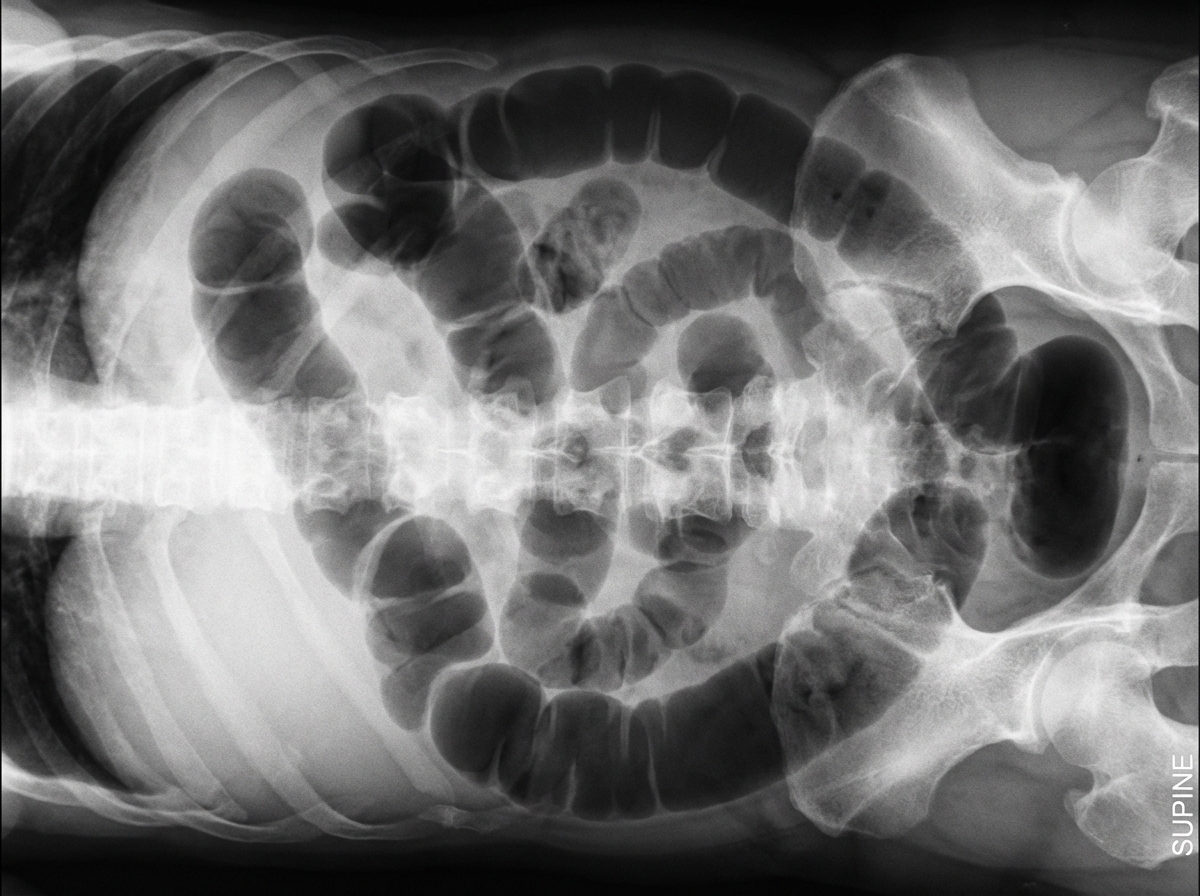
Q26
A 72-year-old woman comes to the emergency department because of upper abdominal pain and nausea for the past hour. The patient rates the pain as an 8 to 9 on a 10-point scale. She has had an episode of nonbloody vomiting since the pain started. She has a history of type 2 diabetes mellitus, hypertension, and osteoporosis. The patient has smoked 2 packs of cigarettes daily for 40 years. She drinks 5–6 alcoholic beverages daily. Current medications include glyburide, lisinopril, and oral vitamin D supplements. Her temperature is 38.5°C (101.3°F), pulse is 110/min, and blood pressure is 138/86 mm Hg. Examination shows severe epigastric tenderness to palpation with guarding but no rebound. Ultrasonography of the abdomen shows diffuse enlargement of the pancreas; no gallstones are visualized. The patient is admitted to the hospital for pain control and intravenous hydration. Which of the following is the most appropriate next step in the management of this patient’s pain?
Q27
A 49-year-old woman comes to the physician because of difficulty walking and dizziness for the past 2 weeks. She has also had fatigue, heartburn, and diarrhea for 4 months. The stools are foul-smelling and do not flush easily. Over the past 4 months, she has had a 2.2-kg (5-lb) weight loss. Her only medication is an over-the-counter antacid. Her mother has autoimmune thyroid disease and Crohn disease. She is 150 cm (4 ft 11 in) tall and weighs 43 kg (95 lb); BMI is 19.1 kg/m2. Vital signs are within normal limits. Examination shows a wide-based gait. Muscle strength and tone are normal in all extremities. Rapid alternating movement of the hands is impaired. The abdomen is soft and there is mild tenderness to palpation in the epigastric area. Her hemoglobin concentration is 11.1 mg/dL, and levels of vitamin E and vitamin D are decreased. Upper endoscopy shows several ulcers in the gastric antrum and the descending duodenum. Which of the following is the most likely underlying mechanism of this patient's symptoms?
Q28
A 72-year-old man is brought to the physician by his son because of gradually progressive yellow discoloration of his skin and generalized pruritus for the past 2 weeks. During this period, his appetite has decreased and he has had a 6.3-kg (14-lb) weight loss. He reports that his stool appears pale and his urine is very dark. Three years ago, he had an episode of acute upper abdominal pain that was treated with IV fluids, NSAIDs, and dietary modification. He has stopped drinking alcohol since then; he used to drink 1–2 beers daily for 40 years. He has smoked a pack of cigarettes daily for the past 50 years. His vital signs are within normal limits. Physical examination shows yellowing of the conjunctivae and skin. The abdomen is soft and nontender; a soft, cystic mass is palpated in the right upper quadrant. Serum studies show:
Bilirubin, total 5.6 mg/dL
Direct 4.8 mg/dL
Alkaline phosphatase 192 U/L
AST 32 U/L
ALT 34 U/L
Abdominal ultrasonography shows an anechoic cystic mass in the subhepatic region and dilation of the intrahepatic and extrahepatic bile ducts. Which of the following is the most likely diagnosis?
Q29
A 50-year-old woman comes to the physician because of multiple, ulcerative skin lesions that occur over various parts of her body. She reports that these rashes first appeared 6 months ago. They occur episodically and usually start as reddish spots, which then expand in size and ulcerate over the next ten days. They resolve spontaneously and reappear at another location a few days later. Over the past 6 months, she has had multiple episodes of diarrhea. She has lost 8 kg weight over this period and feels tired constantly. She has not had fever. She was treated for deep venous thrombosis 3 years ago, and took medication for it for 6 months after the episode. Her vital signs are within normal limits. She appears pale and has multiple, tender, ulcerative skin lesions on her legs and buttocks. Her hemoglobin is 9.6 mg/dL, mean corpuscular volume is 82 μm3, and fingerstick blood glucose concentration is 154 mg/dL. Her serum glucagon is elevated. Abdominal ultrasonography reveals a 5.6 cm, well-demarcated, hypoechoic mass in the pancreatic body and multiple, small masses in the liver of variable echogenicity. Which of the following is the most appropriate next step in management of this patient?
Q30
A 61-year-old diabetic woman is brought to the emergency department with the complaint of multiple bouts of abdominal pain in the last 24 hours. She says that the pain is dull aching in nature, radiates to the back, and worsens with meals. She also complains of nausea and occasional vomiting. She has been hospitalized repeatedly in the past with similar complaints. Her temperature is 37° C (98.6° F), respiratory rate is 16/min, pulse is 77/min, and blood pressure is 120/89 mm Hg. On physical exam, dark hyperpigmentation of the axillary skin is noted. Her blood test report from last month is given below:
Glycated hemoglobin (HbA1c): 9.1%
Triglyceride: 675 mg/dL
LDL-Cholesterol: 102 mg/dL
HDL-Cholesterol: 35 mg/dL
Total Cholesterol: 250 mg/dL
Serum Creatinine: 1.2 mg/dL
BUN: 12 mg/dL
Alkaline phosphatase: 100 U/L
Alanine aminotransferase: 36 U/L
Aspartate aminotransferase: 28 U/L
What is the most likely diagnosis in this case?
Pancreatitis US Medical PG Practice Questions and MCQs
Question 21: A 36-year-old man is brought to the emergency department 3 hours after the onset of progressively worsening upper abdominal pain and 4 episodes of vomiting. His father had a myocardial infarction at the age of 40 years. Physical examination shows tenderness and guarding in the epigastrium. Bowel sounds are decreased. His serum amylase is 400 U/L. Symptomatic treatment and therapy with fenofibrate are initiated. Further evaluation of this patient is most likely to show which of the following findings?
A. Elevated serum IgG4 levels
B. Salt and pepper skull
C. Separate dorsal and ventral pancreatic ducts
D. Decreased serum ACTH levels
E. Eruptive xanthomas (Correct Answer)
Explanation: ***Eruptive xanthomas***
- The patient presents with **acute pancreatitis** (abdominal pain, vomiting, elevated amylase) and a strong family history of early **myocardial infarction**, suggesting a genetic predisposition to **hypertriglyceridemia**.
- **Fenofibrate** is prescribed to lower **triglyceride levels**, and **eruptive xanthomas** are a classic cutaneous manifestation of severe **hypertriglyceridemia**, often leading to pancreatitis.
*Elevated serum IgG4 levels*
- Elevated **IgG4 levels** are characteristic of **autoimmune pancreatitis**, which can mimic acute pancreatitis but is typically treated with steroids and not primarily fenofibrate.
- While IgG4-related disease can affect the pancreas, the patient's family history and fenofibrate treatment point away from this diagnosis.
*Salt and pepper skull*
- A **salt and pepper skull** is a classic radiographic finding in **hyperparathyroidism**, indicating bone demineralization and resorption.
- This finding is unrelated to the patient's presentation of acute pancreatitis and hyperlipidemia.
*Separate dorsal and ventral pancreatic ducts*
- **Pancreas divisum** refers to the failure of fusion of the **dorsal and ventral pancreatic ducts**, which can predispose individuals to recurrent pancreatitis due to impaired drainage.
- While a possibility for recurrent pancreatitis, it does not explain the patient's family history of early cardiac events or the specific treatment with fenofibrate, which targets hypertriglyceridemia.
*Decreased serum ACTH levels*
- **Decreased serum ACTH levels** are typically associated with **exogenous corticosteroid use** or **adrenal tumors** producing cortisol, leading to Cushing's syndrome.
- This finding is unrelated to acute pancreatitis or hypertriglyceridemia and does not fit the clinical picture.
Question 22: A 29-year-old female is hospitalized 1 day after an endoscopic retrograde cholangiopancreatography (ERCP) because of vomiting, weakness, and severe abdominal pain. Physical examination findings include abdominal tenderness and diminished bowel sounds. A CT scan demonstrates fluid around the pancreas. Serum levels of which of the following are likely to be low in this patient?
A. Amylase
B. Triglycerides
C. Calcium (Correct Answer)
D. Glucose
E. Lipase
Explanation: ***Calcium***
- In **acute pancreatitis**, systemic inflammation can lead to **saponification** of perinecrotic fat, binding calcium and causing **hypocalcemia**.
- Additionally, glucagon release and hypomagnesemia can contribute to decreased parathyroid hormone (PTH) secretion and end-organ resistance, further lowering calcium levels.
*Amylase*
- **Amylase** levels are typically **elevated** in acute pancreatitis due to the release of pancreatic enzymes into the bloodstream.
- An elevated amylase, along with lipase, is a key diagnostic marker for pancreatitis.
*Triglycerides*
- **Hypertriglyceridemia** can cause acute pancreatitis, and triglyceride levels would be expected to be **elevated** in such cases.
- Triglycerides themselves are not directly lowered by the pancreatitis process in the way calcium is.
*Glucose*
- **Glucose** levels often become **elevated** in acute pancreatitis due to impaired insulin secretion and increased glucagon release.
- Pancreatic damage can affect the endocrine function of the pancreas, leading to hyperglycemia.
*Lipase*
- **Lipase** levels are also typically **elevated** in acute pancreatitis, often staying elevated longer than amylase.
- It is a more specific marker for pancreatic injury than amylase.
Question 23: A 65-year-old woman comes to the physician because of a 1-month history of persistent epigastric abdominal pain. She reports dull, aching pain that is worse after meals and wakes her up at night. She is afraid to eat, as it worsens the pain, and has had a 2-kg (4.4-lb) weight loss during this time. She has smoked a pack of cigarettes daily for the past 40 years. Her only medication is a calcium supplement. Her vital signs are within normal limits. She appears thin. Examination shows yellow discoloration of the sclera. The remainder of the examination shows no abnormalities. Laboratory studies show a total bilirubin of 9.8 mg/dL, direct bilirubin of 8.6 mg/dL, and an alkaline phosphatase of 120 IU/L. Abdominal ultrasonography shows dilation of the biliary and pancreatic ducts but no pancreatic or extrahepatic biliary lesions. Which of the following is the most appropriate next step in management?
A. Colonoscopy
B. Contrast-enhanced abdominal CT (Correct Answer)
C. Endoscopic ultrasonography
D. Plain abdominal CT
E. Endoscopic retrograde cholangiopancreatography
Explanation: ***Contrast-enhanced abdominal CT***
- The patient presents with **obstructive jaundice** (elevated total and direct bilirubin, elevated alkaline phosphatase, yellow sclera), **epigastric pain worsening with meals**, **weight loss**, and significant **smoking history**, which are all highly concerning for **pancreatic head malignancy**.
- **Contrast-enhanced CT** is the most appropriate initial imaging study to evaluate the pancreas and surrounding structures for a mass and to assess for **metastasis**, which helps in staging and surgical planning.
*Colonoscopy*
- This procedure is primarily used to screen for or investigate **colorectal pathology** such as polyps, cancer, or inflammatory bowel disease.
- While weight loss can be a symptom of colorectal cancer, the patient's symptoms of **obstructive jaundice** and **epigastric pain** are not typical presentations for colon cancer.
*Endoscopic ultrasonography*
- **EUS** is a highly sensitive test for evaluating small pancreatic lesions and can also be used for **biopsy**; however, it is generally performed *after* initial cross-sectional imaging (CT or MRI) has identified a suspicious lesion or to further characterize findings from non-invasive imaging.
- It is not the most appropriate *initial* step to rule out a pancreatic mass, especially given the rapid weight loss and obstructive jaundice.
*Plain abdominal CT*
- A **plain CT** scan lacks the necessary detail and resolution provided by a contrast-enhanced study to adequately visualize soft tissue structures like the pancreas and to detect subtle masses or metastatic disease.
- It would be insufficient for diagnosing or staging a **pancreatic malignancy**.
*Endoscopic retrograde cholangiopancreatography*
- **ERCP** is primarily a **therapeutic procedure** used to relieve biliary obstruction (e.g., by placing stents) or to remove stones, and it also allows for biopsy of ductal lesions.
- Due to its **invasive nature** and associated risks (e.g., pancreatitis), it is typically performed after a diagnosis is suspected or confirmed by less invasive imaging, and when therapeutic intervention is immediately indicated.
Question 24: A 54-year-old woman presents to the emergency room after falling on her right side at a bar and breaking her clavicle and 2 ribs. Her husband reports that she has had a 6-month history of diarrhea and has lost 6.8 kg (15 lb) over the last year without dieting or exercising. She has a family history of type I diabetes. On physical exam, ecchymosis is noted over her entire right shoulder, extending to her sternum and over her broken ribs. She also has other bruises in various stages of healing. Her abdomen is diffusely tender, radiating to her back, and there is a palpable midepigastric mass. The woman has a positive Romberg test, but the rest of her examination is normal. She is admitted for further evaluation. Her labs and pancreas biopsy histology are as follows:
Laboratory tests
Serum chemistries
Albumin 5.1 g/dL
Amylase 124 U/L
Lipase 146 U/L
Blood glucose (fasting) 180 mg/dL
Triglycerides 140 mg/dL
Cholesterol, total 210 mg/dL
HDL 25 mg/dL
LDL 165 mg/dL
Serum electrolytes
Sodium 137 mEq/L
Potassium 3.5 mEq/L
Chloride 90 mEq/L
International normalized ratio 2.5
Activated partial thromboplastin time 30 s
Complete blood count
Hemoglobin 12.5 g/dL
Mean corpuscular volume 102 µm3
Platelets 150,000/mm3
Leukocytes 6000/mm3
Stool analysis
Elastase low
Occult blood absent
Which of the following is the best way to manage her condition in the long term?
A. Pancreatic resection followed by 5-fluorouracil with leucovorin
B. Thiamine and 50% dextrose
C. Gemcitabine alone
D. Insulin aspart and glargine
E. Insulin aspart and glargine with pancreatic enzyme replacement therapy (Correct Answer)
Explanation: ***Insulin aspart and glargine with pancreatic enzyme replacement therapy***
- The patient's presentation with **new-onset diabetes mellitus** (fasting glucose 180 mg/dL), **severe malabsorption** (chronic diarrhea, 6.8 kg weight loss, low stool elastase), **coagulopathy** (INR 2.5 from vitamin K deficiency), and **chronic abdominal pain with midepigastric mass** is highly indicative of **chronic pancreatitis** with both endocrine and exocrine pancreatic insufficiency.
- The history of alcohol use (fell at a bar, multiple bruises) and **macrocytic anemia** (MCV 102 from B12 malabsorption) further support chronic pancreatic disease.
- **Pancreatic enzyme replacement therapy (PERT)** is essential to address the malabsorption caused by exocrine pancreatic insufficiency (corrects steatorrhea, improves vitamin absorption including fat-soluble vitamin K to normalize INR, and promotes weight gain).
- **Insulin therapy** with both short-acting (aspart for mealtime coverage) and long-acting (glargine for basal control) insulin is necessary to manage the new-onset diabetes resulting from endocrine pancreatic dysfunction.
- This comprehensive approach addresses both major complications of advanced chronic pancreatitis and represents the cornerstone of long-term management.
*Pancreatic resection followed by 5-fluorouracil with leucovorin*
- This regimen is appropriate for **pancreatic adenocarcinoma** requiring surgical resection followed by adjuvant chemotherapy.
- While a pancreatic mass is present, the clinical picture (chronic diarrhea, malabsorption, alcohol use, both endocrine and exocrine insufficiency) is more consistent with **chronic pancreatitis** rather than malignancy.
- Surgical resection does not address the ongoing metabolic and malabsorptive complications that require medical management.
*Thiamine and 50% dextrose*
- This treatment is used for **acute Wernicke encephalopathy** or severe hypoglycemia, not long-term management.
- While the patient has a **positive Romberg test** (suggesting posterior column dysfunction from B12 deficiency due to pancreatic insufficiency), and likely has some thiamine deficiency from alcohol use and malabsorption, this does not address the underlying **pancreatic insufficiency**, **diabetes**, or **malabsorption**.
- The patient is hyperglycemic (glucose 180 mg/dL), not hypoglycemic, so dextrose is inappropriate.
*Gemcitabine alone*
- **Gemcitabine** is a chemotherapy agent used primarily for **advanced pancreatic adenocarcinoma**.
- This patient's presentation is most consistent with **chronic pancreatitis**, not malignancy.
- Even if malignancy were present, gemcitabine alone does not address the **diabetes** and **severe malabsorption** that dominate her clinical picture and require specific management.
*Insulin aspart and glargine*
- This option appropriately addresses the **new-onset diabetes** with both basal (glargine) and prandial (aspart) insulin coverage.
- However, it **completely fails to address the severe exocrine pancreatic insufficiency** manifested by chronic diarrhea, significant weight loss (6.8 kg over 1 year), low stool elastase, coagulopathy (INR 2.5 from vitamin K malabsorption), and vitamin B12 deficiency (MCV 102).
- Without pancreatic enzyme replacement therapy, the malabsorption will continue unchecked, leading to progressive nutritional deficiency, worsening coagulopathy, and continued weight loss.
Question 25: A 45-year-old woman has painless abdominal distension 2 days after admission for acute pancreatitis. Her initial abdominal pain has resolved. Enteral nutrition has been initiated. She has not passed any stool since being admitted to the hospital. She has nausea but no vomiting. Her temperature is 36.7°C (98.1°F), pulse is 95/min, respiratory rate is 17/min, and blood pressure is 100/70 mm Hg. The lungs are clear to auscultation. Abdominal examination shows symmetric distention, absent bowel sounds, and tympanic percussion without tenderness. Laboratory studies show:
Serum
Na+ 137 mEq/L
K+ 3.2 mEq/L
Cl− 104 mEq/L
HCO3− 23 mEq/L
Urea nitrogen 22 mg/dL
Creatinine 0.8 mg/dL
A supine abdominal X-ray is shown. Which of the following best explains these findings?
A. Pancreatic pseudocyst
B. Ascites
C. Pancreatic fluid collection
D. Ileus (Correct Answer)
E. Necrotizing pancreatitis
Explanation: ***Ileus***
- The patient presents with abdominal distension, absent bowel sounds, tympanic percussion, and dilated loops of small and large bowel on X-ray, which are all classic signs of an **ileus** (paralytic ileus).
- An ileus is a common complication of **acute pancreatitis** due to inflammation and systemic effects, leading to temporary cessation of intestinal peristalsis.
*Pancreatic pseudocyst*
- A pancreatic pseudocyst typically presents weeks after an acute pancreatitis episode, usually manifesting as a **palpable abdominal mass** and persistent abdominal pain, which are not described here.
- While it can cause abdominal distension, the X-ray findings of diffuse bowel dilation and absent bowel sounds are more consistent with an ileus.
*Ascites*
- Ascites would present with **shifting dullness** on percussion and a fluid-filled abdomen, not tympanic percussion or dilated bowel loops on X-ray.
- While pancreatitis can cause ascites, the X-ray image clearly shows dilated bowel, not free fluid.
*Pancreatic fluid collection*
- An acute peripancreatic fluid collection is a common early complication of pancreatitis, but it generally does not explain **diffuse bowel distension** and absent bowel sounds as seen in an ileus.
- **Abdominal CT scan** would be more diagnostic for a fluid collection, and these collections often resolve spontaneously.
*Necrotizing pancreatitis*
- Necrotizing pancreatitis is a severe complication characterized by systemic signs of infection or inflammation such as **fever**, **leukocytosis**, and organ failure, which are not prominently featured in this patient's presentation (afebrile, stable vitals).
- While necrotizing pancreatitis can cause an ileus, an ileus itself does not indicate necrosis, and the patient's stable condition makes severe necrotizing pancreatitis less likely as the primary explanation for these findings.
Question 26: A 72-year-old woman comes to the emergency department because of upper abdominal pain and nausea for the past hour. The patient rates the pain as an 8 to 9 on a 10-point scale. She has had an episode of nonbloody vomiting since the pain started. She has a history of type 2 diabetes mellitus, hypertension, and osteoporosis. The patient has smoked 2 packs of cigarettes daily for 40 years. She drinks 5–6 alcoholic beverages daily. Current medications include glyburide, lisinopril, and oral vitamin D supplements. Her temperature is 38.5°C (101.3°F), pulse is 110/min, and blood pressure is 138/86 mm Hg. Examination shows severe epigastric tenderness to palpation with guarding but no rebound. Ultrasonography of the abdomen shows diffuse enlargement of the pancreas; no gallstones are visualized. The patient is admitted to the hospital for pain control and intravenous hydration. Which of the following is the most appropriate next step in the management of this patient’s pain?
A. Oral gabapentin every 24 hours
B. Transdermal fentanyl every 72 hours
C. Oral acetaminophen every 6 hours
D. Patient-controlled intravenous hydromorphone (Correct Answer)
E. Transdermal bupivacaine on request
Explanation: ***Patient-controlled intravenous hydromorphone***
- This patient presents with **acute pancreatitis**, characterized by severe epigastric pain, nausea, vomiting, fever, and findings indicative of pancreatic inflammation (enlarged pancreas on ultrasound, guarding without rebound). **Opioids**, such as hydromorphone, are the mainstay for **severe pain relief** in acute pancreatitis.
- **Patient-controlled analgesia (PCA)** with intravenous opioids allows the patient to self-administer small, frequent doses, providing optimal pain control while minimizing the risk of over-sedation, making it suitable for managing **acute severe pain**.
*Oral gabapentin every 24 hours*
- **Gabapentin** is primarily used for **neuropathic pain** or as an adjunct for chronic pain, not typically for acute severe visceral pain like that seen in acute pancreatitis.
- Its **oral route** and every 24-hour dosing schedule are too slow and infrequent for rapid pain control in an emergency setting with severe pain.
*Transdermal fentanyl every 72 hours*
- **Transdermal fentanyl** is indicated for **chronic severe pain** that requires continuous opioid administration and is not suitable for the rapid onset and fluctuating intensity of acute pancreatitis pain.
- The **transdermal route** and long dosing interval mean it would not provide immediate or adequate pain relief for a patient experiencing pain rated 8-9/10.
*Oral acetaminophen every 6 hours*
- **Acetaminophen** is a non-opioid analgesic generally used for **mild to moderate pain** and fever control. It is insufficient for the severe pain experienced in acute pancreatitis.
- The **oral route** takes longer to achieve therapeutic levels and may be limited by the patient's nausea and vomiting.
*Transdermal bupivacaine on request*
- **Bupivacaine** is a **local anesthetic** typically used for regional anesthesia or nerve blocks, not for systemic management of acute visceral pain like pancreatitis.
- **Transdermal application** of bupivacaine is not a standard or effective method for managing widespread, severe abdominal pain and would not provide adequate relief.
Question 27: A 49-year-old woman comes to the physician because of difficulty walking and dizziness for the past 2 weeks. She has also had fatigue, heartburn, and diarrhea for 4 months. The stools are foul-smelling and do not flush easily. Over the past 4 months, she has had a 2.2-kg (5-lb) weight loss. Her only medication is an over-the-counter antacid. Her mother has autoimmune thyroid disease and Crohn disease. She is 150 cm (4 ft 11 in) tall and weighs 43 kg (95 lb); BMI is 19.1 kg/m2. Vital signs are within normal limits. Examination shows a wide-based gait. Muscle strength and tone are normal in all extremities. Rapid alternating movement of the hands is impaired. The abdomen is soft and there is mild tenderness to palpation in the epigastric area. Her hemoglobin concentration is 11.1 mg/dL, and levels of vitamin E and vitamin D are decreased. Upper endoscopy shows several ulcers in the gastric antrum and the descending duodenum. Which of the following is the most likely underlying mechanism of this patient's symptoms?
A. Autoantibodies against the intestinal mucosa
B. Intestinal inflammatory reaction to gluten
C. T. whipplei infiltration of intestinal villi
D. Inactivation of pancreatic enzymes (Correct Answer)
E. Small intestine bacterial overgrowth
Explanation: ***Inactivation of pancreatic enzymes***
- The constellation of **steatorrhea** (foul-smelling, difficult-to-flush stools), **weight loss**, epigastric tenderness, and **gastric/duodenal ulcers** suggests **Zollinger-Ellison syndrome (ZES)** due to a gastrinoma.
- The excessive **gastric acid production** in ZES **inactivates pancreatic enzymes** (lipases) in the duodenum, leading to **fat malabsorption**, hence the deficiency in **fat-soluble vitamins** (D and E) and steatorrhea.
- The **cerebellar signs** (wide-based gait, dizziness, impaired rapid alternating movements) are due to **vitamin E deficiency**, a direct consequence of fat malabsorption from pancreatic enzyme inactivation.
*Autoantibodies against the intestinal mucosa*
- This mechanism is characteristic of **autoimmune enteropathy**, which causes severe diarrhea and malabsorption, but is typically associated with **immune dysregulation** in infants or young children and less commonly with ulcers.
- While malabsorption is present, the specific ulcers and neurological symptoms point away from primary autoimmune enteropathy as the sole mechanism.
*T. whipplei infiltration of intestinal villi*
- This describes **Whipple disease**, which can cause malabsorption, weight loss, diarrhea, and neurological symptoms.
- However, Whipple disease typically presents with **lymphadenopathy**, **hyperpigmentation**, and **arthralgia** and does not typically cause gastric or duodenal ulcers.
*Intestinal inflammatory reaction to gluten*
- This describes **celiac disease**, which causes malabsorption, diarrhea, and weight loss due to **villous atrophy** in the small intestine, leading to deficiencies in fat-soluble vitamins.
- Celiac disease does not typically cause **gastric or duodenal ulcers** and neurological symptoms like impaired rapid alternating movements are less characteristic than in ZES or other conditions.
*Small intestine bacterial overgrowth*
- **SIBO** can cause diarrhea, malabsorption, and weight loss due to bacterial consumption of nutrients and damage to the intestinal mucosa.
- While SIBO can be a consequence of conditions like ZES due to reduced acid, it is less likely to be the primary cause of ulcers and the overall clinical picture without a predisposing anatomical reason or motility disorder.
Question 28: A 72-year-old man is brought to the physician by his son because of gradually progressive yellow discoloration of his skin and generalized pruritus for the past 2 weeks. During this period, his appetite has decreased and he has had a 6.3-kg (14-lb) weight loss. He reports that his stool appears pale and his urine is very dark. Three years ago, he had an episode of acute upper abdominal pain that was treated with IV fluids, NSAIDs, and dietary modification. He has stopped drinking alcohol since then; he used to drink 1–2 beers daily for 40 years. He has smoked a pack of cigarettes daily for the past 50 years. His vital signs are within normal limits. Physical examination shows yellowing of the conjunctivae and skin. The abdomen is soft and nontender; a soft, cystic mass is palpated in the right upper quadrant. Serum studies show:
Bilirubin, total 5.6 mg/dL
Direct 4.8 mg/dL
Alkaline phosphatase 192 U/L
AST 32 U/L
ALT 34 U/L
Abdominal ultrasonography shows an anechoic cystic mass in the subhepatic region and dilation of the intrahepatic and extrahepatic bile ducts. Which of the following is the most likely diagnosis?
A. Choledocholithiasis
B. Budd-Chiari syndrome
C. Alcoholic hepatitis
D. Pancreatic adenocarcinoma (Correct Answer)
E. Cholecystitis
Explanation: ***Pancreatic adenocarcinoma***
- The constellation of **painless jaundice**, significant **weight loss**, **pale stools**, **dark urine**, an RUQ mass (Courvoisier sign), and dilated bile ducts (on ultrasound) is highly suggestive of **pancreatic head adenocarcinoma** causing biliary obstruction.
- The patient's history of heavy smoking is a significant risk factor for pancreatic cancer. Elevated **direct bilirubin** and **alkaline phosphatase** with normal AST/ALT confirms an obstructive jaundice pattern.
*Choledocholithiasis*
- While it causes obstructive jaundice, significant **weight loss** and the presence of a **palpable soft, cystic mass (Courvoisier sign)** are not typical features.
- Choledocholithiasis often presents with **biliary colic** or **cholangitis**, which are not described.
*Budd-Chiari syndrome*
- This syndrome involves **hepatic vein outflow obstruction**, presenting with hepatomegaly, ascites, and abdominal pain.
- It does not typically cause **painless obstructive jaundice** or a palpable RUQ mass.
*Alcoholic hepatitis*
- This condition is associated with acute alcohol intake and generally presents with **jaundice**, fever, and liver tenderness, with elevated AST/ALT (AST:ALT > 2:1).
- The patient stopped drinking alcohol **3 years ago**, and there is no evidence of liver parenchymal damage or the specific symptoms of alcoholic hepatitis.
*Cholecystitis*
- Acute cholecystitis typically presents with **right upper quadrant pain**, fever, and leukocytosis, often without jaundice unless a concomitant bile duct obstruction (e.g., from gallstones) is present.
- It does not explain the significant **weight loss**, palpable mass, or the specific pattern of progressive obstructive jaundice.
Question 29: A 50-year-old woman comes to the physician because of multiple, ulcerative skin lesions that occur over various parts of her body. She reports that these rashes first appeared 6 months ago. They occur episodically and usually start as reddish spots, which then expand in size and ulcerate over the next ten days. They resolve spontaneously and reappear at another location a few days later. Over the past 6 months, she has had multiple episodes of diarrhea. She has lost 8 kg weight over this period and feels tired constantly. She has not had fever. She was treated for deep venous thrombosis 3 years ago, and took medication for it for 6 months after the episode. Her vital signs are within normal limits. She appears pale and has multiple, tender, ulcerative skin lesions on her legs and buttocks. Her hemoglobin is 9.6 mg/dL, mean corpuscular volume is 82 μm3, and fingerstick blood glucose concentration is 154 mg/dL. Her serum glucagon is elevated. Abdominal ultrasonography reveals a 5.6 cm, well-demarcated, hypoechoic mass in the pancreatic body and multiple, small masses in the liver of variable echogenicity. Which of the following is the most appropriate next step in management of this patient?
A. Obtaining cancer antigen 19-9 levels
B. Endoscopic ultrasonography
C. Measurement of glycated hemoglobin
D. Administration of octreotide (Correct Answer)
E. Measurement of serum zinc levels
Explanation: ***Administration of octreotide***
- The patient's presentation with **necrolytic migratory erythema** (ulcerative skin lesions, "reddish spots which expand"), **weight loss**, **diarrhea**, **anemia**, **elevated blood glucose**, and an **abdominal mass** with **elevated glucagon levels** are highly suggestive of a **glucagonoma**.
- **Octreotide**, a somatostatin analog, is the most appropriate initial management step as it effectively **reduces glucagon secretion** from the tumor, thereby alleviating the systemic symptoms such as diarrhea and skin lesions.
*Obtaining cancer antigen 19-9 levels*
- **CA 19-9** is a tumor marker primarily associated with **pancreatic adenocarcinoma**, a different type of pancreatic tumor.
- While pancreatic cancer is a differential for a pancreatic mass, the specific constellation of symptoms (necrolytic migratory erythema, diabetes, diarrhea, elevated glucagon) points strongly to a **glucagonoma**, for which CA 19-9 is not a primary diagnostic or monitoring marker.
*Endoscopic ultrasonography*
- While **endoscopic ultrasonography (EUS)** is an excellent imaging modality for characterizing pancreatic masses and guiding biopsies, the immediate priority in a patient with severe systemic symptoms due to a functional tumor like a glucagonoma is to **control the hormonal overproduction**.
- EUS would be considered later for staging or biopsy if the diagnosis were less clear or if surgical resection was being planned, but it is not the *most appropriate next step* for symptom management.
*Measurement of glycated hemoglobin*
- The patient already has a **fingerstick blood glucose of 154 mg/dL** and symptoms consistent with **new-onset diabetes**, which is a known complication of glucagonoma.
- While **HbA1c** provides a long-term average of blood glucose, it would not change the immediate management plan of controlling glucagon secretion and addressing the underlying tumor. The elevated blood glucose is already sufficiently established to be addressed.
*Measurement of serum zinc levels*
- **Zinc deficiency** can cause a skin rash known as **acrodermatitis enteropathica**, which can sometimes mimic necrolytic migratory erythema.
- However, the patient's comprehensive clinical picture, including the **pancreatic mass**, **elevated glucagon**, **diabetes**, and **diarrhea**, points overwhelmingly to a **glucagonoma**, making zinc deficiency a very unlikely primary diagnosis.
Question 30: A 61-year-old diabetic woman is brought to the emergency department with the complaint of multiple bouts of abdominal pain in the last 24 hours. She says that the pain is dull aching in nature, radiates to the back, and worsens with meals. She also complains of nausea and occasional vomiting. She has been hospitalized repeatedly in the past with similar complaints. Her temperature is 37° C (98.6° F), respiratory rate is 16/min, pulse is 77/min, and blood pressure is 120/89 mm Hg. On physical exam, dark hyperpigmentation of the axillary skin is noted. Her blood test report from last month is given below:
Glycated hemoglobin (HbA1c): 9.1%
Triglyceride: 675 mg/dL
LDL-Cholesterol: 102 mg/dL
HDL-Cholesterol: 35 mg/dL
Total Cholesterol: 250 mg/dL
Serum Creatinine: 1.2 mg/dL
BUN: 12 mg/dL
Alkaline phosphatase: 100 U/L
Alanine aminotransferase: 36 U/L
Aspartate aminotransferase: 28 U/L
What is the most likely diagnosis in this case?
A. Choledocholithiasis
B. Duodenal peptic ulcer
C. Pancreatitis (Correct Answer)
D. Gallbladder cancer
E. Cholecystitis
Explanation: ***Pancreatitis***
- The patient's history of **recurrent abdominal pain radiating to the back**, worsening with meals, nausea, and vomiting, along with a significantly elevated **triglyceride level (675 mg/dL)**, strongly points towards **hypertriglyceridemia-induced pancreatitis**.
- **Triglyceride levels >500 mg/dL** are a well-established cause of acute pancreatitis, and levels >1000 mg/dL carry even higher risk.
- The presence of **hyperpigmentation of the axillary skin** (acanthosis nigricans) suggests chronic **insulin resistance** and poorly controlled diabetes (HbA1c 9.1%), a known risk factor for severe hypertriglyceridemia and subsequent pancreatitis.
*Choledocholithiasis*
- This condition involves **gallstones in the common bile duct**, which would typically present with **biliary colic**, jaundice, and elevated **alkaline phosphatase and bilirubin**, none of which are present.
- While choledocholithiasis can cause pancreatitis, the primary driver here is severe **hypertriglyceridemia**, not bile duct obstruction.
*Duodenal peptic ulcer*
- While a **duodenal ulcer** can cause abdominal pain that worsens with meals, it typically presents with a **burning epigastric pain** and may be relieved by food or antacids.
- It would not explain the pain radiating to the back or the exceptionally high **triglyceride levels**.
*Gallbladder cancer*
- **Gallbladder cancer** often presents with vague symptoms like chronic abdominal pain, weight loss, and potentially jaundice in advanced stages.
- It is **less likely to cause acute, recurrent attacks** of severe, radiating pain and would not be directly linked to **hypertriglyceridemia**.
*Cholecystitis*
- **Cholecystitis** (inflammation of the gallbladder) typically causes **right upper quadrant pain** that may radiate to the right shoulder, often precipitated by fatty meals.
- It is usually associated with **gallstones** and **Murphy's sign** on examination, and does not explain the patient's elevated **triglyceride levels** or pain radiating to the back.