
Renal replacement therapy — MCQs

A 23-year-old man comes to his primary care provider after having severe abdominal cramping and diarrhea beginning the previous night. He denies any fevers or vomiting. Of note, he reports that he works in a nursing home and that several residents of the nursing home exhibited similar symptoms this morning. On exam, his temperature is 99.7°F (37.6°C), blood pressure is 116/80 mmHg, pulse is 88/min, and respirations are 13/min. His stool is cultured on blood agar and it is notable for a double zone of hemolysis. Which of the following organisms is the most likely cause?
A 19-year-old man presents to the emergency department after a motor vehicle accident. The patient reports left shoulder pain that worsens with deep inspiration. Medical history is significant for a recent diagnosis of infectious mononucleosis. His temperature is 99°F (37.2°C), blood pressure is 80/55 mmHg, pulse is 115/min, and respiratory rate is 22/min. On physical exam, there is abdominal guarding, abdominal tenderness in the left upper quadrant, and rebound tenderness. The patient’s mucous membranes are dry and skin turgor is reduced. Which of the following most likely represents the acute changes in renal plasma flow (RPF) and glomerular filtration rate (GFR) in this patient?
A 33-year-old man presents to the emergency department because of an episode of bloody emesis. He has had increasing dyspnea over the past 2 days. He was diagnosed with peptic ulcer disease last year. He has been on regular hemodialysis for the past 2 years because of end-stage renal disease. He skipped his last dialysis session because of an unexpected business trip. He has no history of liver disease. His supine blood pressure is 110/80 mm Hg and upright is 90/70, pulse is 110/min, respirations are 22/min, and temperature is 36.2°C (97.2°F). The distal extremities are cold to touch, and the outstretched hand shows flapping tremor. A bloody nasogastric lavage is also noted, which eventually clears after saline irrigation. Intravenous isotonic saline and high-dose proton pump inhibitors are initiated, and the patient is admitted into the intensive care unit. Which of the following is the most appropriate next step in the management of this patient?
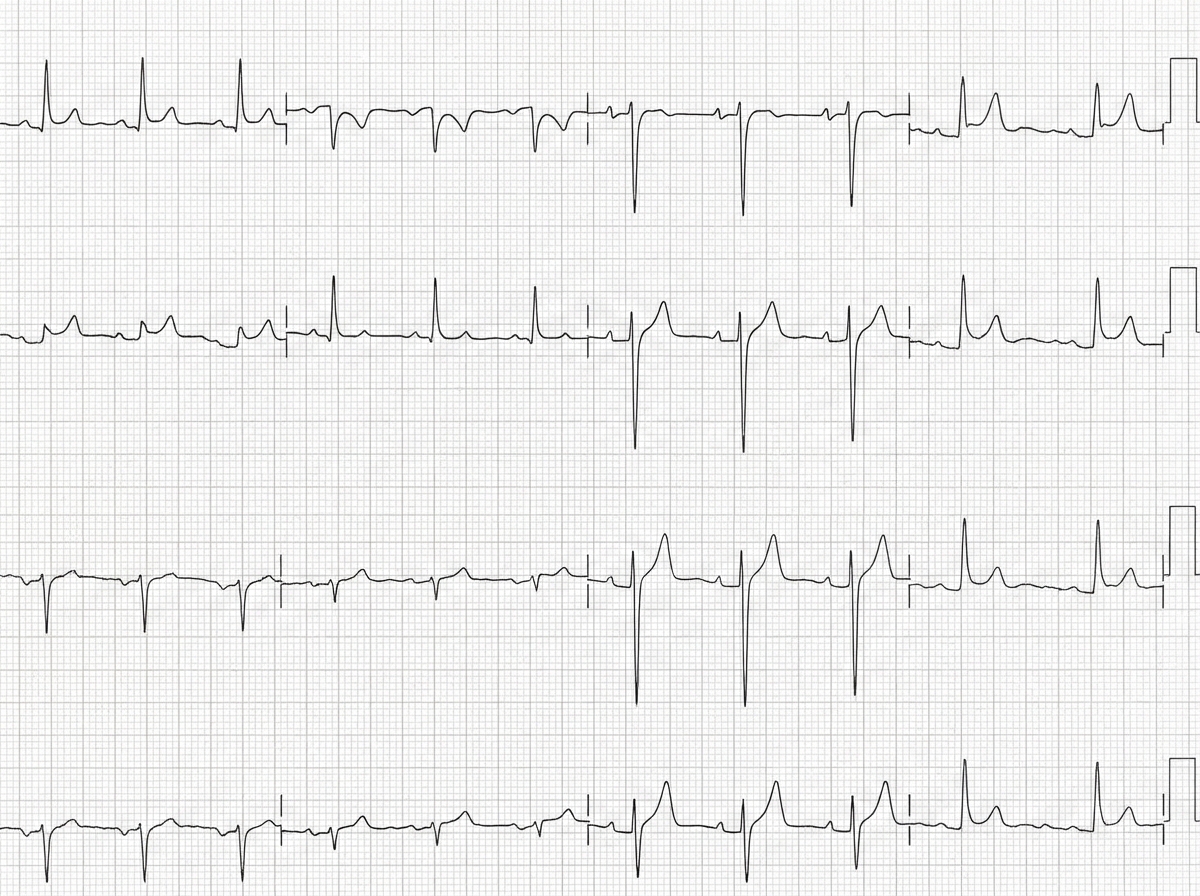
A 50-year-old man with a history of stage 4 kidney disease was admitted to the hospital for an elective hemicolectomy. His past medical history is significant for severe diverticulitis. After the procedure he becomes septic and was placed on broad spectrum antibiotics. On morning rounds, he appear weak and complains of fatigue and nausea. His words are soft and he has difficulty answering questions. His temperature is 38.9°C (102.1°F), heart rate is 110/min, respiratory rate is 15/min, blood pressure 90/65 mm Hg, and saturation is 89% on room air. On physical exam, his mental status appears altered. He has a bruise on his left arm that spontaneously appeared overnight. His cardiac exam is positive for a weak friction rub. Blood specimens are collected and sent for evaluation. An ECG is performed (see image). What therapy will this patient most likely receive next?
A 63-year-old woman comes to the physician for a routine health maintenance examination. She reports feeling tired sometimes and having itchy skin. Over the past 2 years, the amount of urine she passes has been slowly decreasing. She has hypertension and type 2 diabetes mellitus complicated with diabetic nephropathy. Her current medications include insulin, furosemide, amlodipine, and a multivitamin. Her nephrologist recently added erythropoietin to her medication regimen. She follows a diet low in salt, protein, potassium, and phosphorus. Her temperature is 37°C (98.6°F), pulse is 80/min, and blood pressure is 145/87 mm Hg. Physical examination shows 1+ edema around the ankles bilaterally. Laboratory studies show: Hemoglobin 9.8 g/dL Serum Glucose 98 mg/dL Albumin 4 g/dL Na+ 145 mEq/L Cl– 100 mEq/L K+ 5.1 mEq/L Urea nitrogen 46 mg/dL Creatinine 3.1 mg/dL Which of the following complications is the most common cause of death in patients receiving long-term treatment for this patient's renal condition?
A 56-year-old woman presents to the emergency department with muscle weakness. She reports her symptoms have progressively worsened over the course of 2 weeks and are most significant in her lower extremities. She also notices increased urinary frequency. Approximately 1 month ago she was diagnosed with a calcium phosphate nephrolithiasis. Medical history is significant for rheumatoid arthritis diagnosed approximately 10 years ago treated with methotrexate, and type II diabetes mellitus treated with metformin. Her temperature is 98.6°F (37°C), blood pressure is 138/92 mmHg, pulse is 92/min, and respirations are 17/min. On physical exam, there is mild tenderness to palpation of the metacarpophalangeal and proximal interphalangeal joints. There is 4/5 power throughout the lower extremity. Laboratory testing is shown. Serum: Na+: 137 mEq/L Cl-: 106 mEq/L K+: 2.9 mEq/L HCO3-: 18 mEq/L Glucose: 115 mg/dL Creatinine: 1.0 mg/dL Urine pH: 5.6 Which of the following is the best next step in management?
A 60-year-old man with a long-standing history of type 2 diabetes and hypertension managed with lisinopril and metformin presents with itchy skin. He also describes moderate nausea, vomiting, muscle weakness, and fatigue. The vital signs include: temperature 36.8°C (98.2°F), heart rate 98/min, respiratory rate 15/min, blood pressure 135/85 mm Hg, oxygen saturation 100% on room air. Physical exam is notable for pale conjunctivae, pitting edema, and ascites. Laboratory findings are shown below: BUN 78 mg/dL pCO2 25 mm Hg Creatinine 7.2 mg/dL Glucose 125 mg/dL Serum chloride 102 mmol/L Serum potassium 6.3 mEq/L Serum sodium 130 mEq/L Total calcium 1.3 mmol/L Magnesium 1.2 mEq/L Phosphate 1.9 mmol/L Hemoglobin 9.5 g/dL MCV 86 μm3 Bicarbonate (HCO3) 10 mmol/L Shrunken kidneys are identified on renal ultrasound. The doctor explains to the patient that he will likely need dialysis due to his significant renal failure until a renal transplant can be performed. The patient is concerned because he is very busy and traveling a lot for work. Given his lifestyle requirements, what is a potential complication of the most appropriate dialysis modality for this patient?
A 58-year-old man is brought to the Emergency Department after 2 days of shortness of breath, orthopnea, and lower limb edema. His past medical history is significant for hypertension and a myocardial infarction 3 years ago that required a coronary arterial bypass graft. He has not been able to take prescribed medicine in several months due to recent unemployment and issues with insurance. On admission, his blood pressure is 155/92 mmHg, heart rate is 102/min, respiratory rate is 24/min, and temperature is 36.4°C (97.5°F). On physical examination there are fine rales in both lungs, regular and rhythmic cardiac sounds with an S3 gallop and a grade II/VI holosystolic murmur. Initial laboratory tests are shown below: Na+ 140 mEq/L K+ 4.2 mEq/L Cl- 105 mEq/L BUN 20 mg/dL Creatinine 0.8 mg/dL The patient is stabilized and admitted to the hospital. The next day his blood pressure is 110/60 mmHg, heart rate is 110/min, respiratory rate is 18/min, and temperature is 36.4°C (97.5°F). This morning's laboratory tests are shown below: Na+ 135 mEq/L K+ 3.2 mEq/L Cl- 102 mEq/L BUN 45 mg/dL Creatinine 1.7 mg/dL Which of the following best explains the changes seen in this patient?
You are called to a hemodialysis suite. The patient is a 61-year-old man with a history of hypertension, hypercholesterolemia, and type-2 diabetes mellitus-induced end-stage renal disease who has required hemodialysis for the past year. His current hemodialysis session is nearing the end when the nurse notices that his blood pressure has dropped to 88/60 mm Hg from his normal of 142/90 mm Hg. The patient denies any shortness of breath or chest pain. He took his daily bisoprolol, metformin, and insulin this morning before coming to the hospital. On examination, the patient’s blood pressure is 92/60 mm Hg, and his heart rate is 119/min. Chest auscultation is unremarkable. What is the most appropriate next management step?
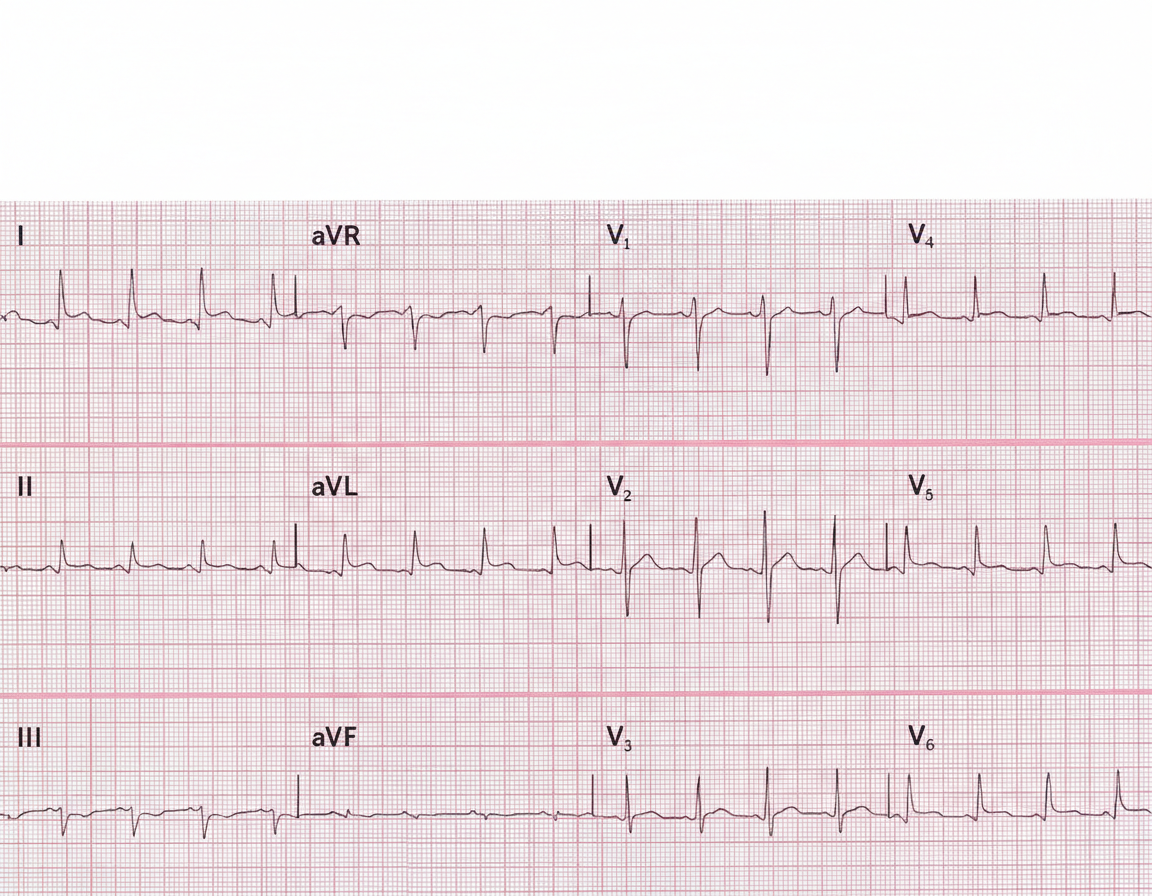
A 29-year-old man presents to the emergency department with a sharp pain in the center of his chest. The pain is knife-like and constant. Sitting alleviates the pain and lying supine aggravates it. He denies the use of nicotine, alcohol or illicit drugs. Vital signs include: temperature 37.0°C (98.6°F), blood pressure 135/92 mm Hg, and pulse 97/min. On examination, a friction rub is heard at the left sternal border while the patient is leaning forward. His ECG is shown in the image. Which of the following can prevent recurrence of this patient’s condition?
Want unlimited practice?
Get full access to all questions, explanations, and performance tracking.
Scan to download app