
Nephrotic syndrome — MCQs

A 43-year-old man comes to the physician for a 1-week history of swelling around his eyes and decreased urination. His pulse is 87/min, and blood pressure is 152/95 mm Hg. Physical examination shows 1+ periorbital and pretibial edema. Serum studies show a urea nitrogen concentration of 21 mg/dL and a creatinine concentration of 1.4 mg/dL. Urinalysis shows 3+ blood and 1+ protein. Further evaluation of this patient is most likely to show which of the following?
A 44-year-old man comes to the physician because of a 2-week history of lower extremity swelling and frothy urine. He has a history of chronic hepatitis C infection. Physical examination shows 3+ pitting edema of the lower legs and ankles. Further evaluation of this patient is most likely to show which of the following?
A 57-year-old immigrant from Nigeria presents to the emergency department for sudden, severe pain and swelling in her lower extremity. She was at a rehabilitation hospital when her symptoms became apparent. The patient has a past medical history of obesity, diabetes, bipolar disorder, and tonic-clonic seizures. Her current medications include metformin, insulin, lisinopril, and valproic acid. The patient is a prominent IV drug and alcohol user who has presented to the ED many times for intoxication. On physical exam you note anasarca and asymmetric lower extremity swelling. Based on the results of a doppler ultrasound of her swollen lower extremity, heparin is started. The patient is then transferred to the general medicine floor for continued management. Laboratory studies are shown below. Serum: Na+: 137 mEq/L K+: 5.5 mEq/L Cl-: 100 mEq/L HCO3-: 24 mEq/L Urea nitrogen: 22 mg/dL Ca2+: 5.7 mg/dL Creatinine: 1.7 mg/dL Glucose: 70 mg/dL The patient's presentation includes generalized edema (anasarca) along with laboratory abnormalities. What is the most likely underlying diagnosis that explains her overall clinical presentation?
A 62-year-old man comes to the physician because of fatigue and decreased urine output for 2 weeks. He has not been to the physician for many years and takes no medications. Serum studies show a urea nitrogen concentration of 42 mg/dL and a creatinine concentration of 2.3 mg/dL. Urinalysis shows heavy proteinuria. A photomicrograph of a section of a kidney biopsy specimen is shown. Which of the following is the most likely underlying cause of this patient's symptoms?
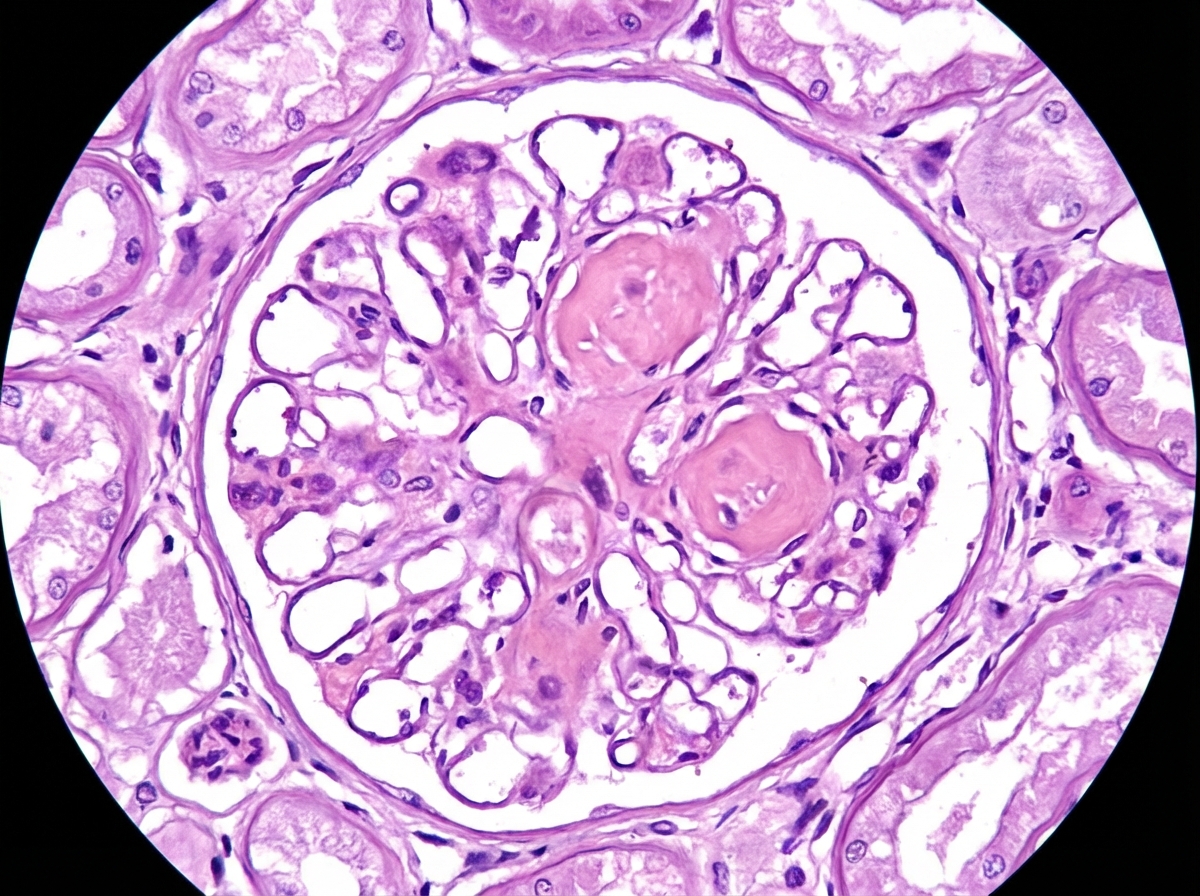
A 36-year-old man comes to the physician for a 4-week history of swollen legs. He has difficulty putting on socks because of the swelling. Two years ago, he was diagnosed with sleep apnea. He takes no medications. He emigrated from Guatemala with his family when he was a child. He is 171 cm (5 ft 6 in) tall and weighs 115 kg (253 lb); BMI is 39 kg/m2. His pulse is 91/min and blood pressure is 135/82 mm Hg. Examination shows periorbital and bilateral lower extremity edema. Serum Albumin 3.1 g/dL Total cholesterol 312 mg/dL Urine Blood negative Protein +4 RBC 1-2/hpf RBC cast negative Fatty casts numerous A renal biopsy is obtained. Which of the following is most likely to be seen under light microscopy of the patient's renal biopsy specimen?
A 12-year-old boy is brought to the physician for a well-child examination. He feels well. He has no history of serious illness. He has received all age-appropriate screenings and immunizations. His 7-year-old brother was treated for nephrotic syndrome 1 year ago. He is at 50th percentile for height and 60th percentile for weight. His temperature is 37°C (98.6°F), pulse is 90/min, and blood pressure is 96/54 mm Hg. Physical examination shows no abnormalities. Urine dipstick shows 1+ protein. A subsequent urinalysis of an early morning sample shows: Blood negative Glucose negative Protein trace Leukocyte esterase negative Nitrite negative RBC none WBC 0–1/hpf Protein/creatinine ratio 0.2 (N ≤ 0.2) Which of the following is the most appropriate next step in management?
A 65-year-old man comes to the physician because of increasing swelling of the legs and face over the past 2 months. He has a history of diastolic heart dysfunction. The liver and spleen are palpable 4 cm below the costal margin. On physical examination, both lower limbs show significant pitting edema extending above the knees and to the pelvic area. Laboratory studies show: Serum Cholesterol 350 mg/dL (<200 mg/dL) Triglycerides 290 mg/dL (35–160 mg/dL) Calcium 8 mg/dL Albumin 2.8 g/dL Urea nitrogen 54 mg/dL Creatinine 2.5 mg/dL Urine Blood 3+ Protein 4+ RBC 15–17/hpf WBC 1–2/hpf RBC casts Many Echocardiography shows concentrically thickened ventricles with diastolic dysfunction. Skeletal survey shows no osteolytic lesions. Which of the following best explains these findings?
A 48-year-old man comes to the emergency department because of sudden right flank pain that began 3 hours ago. He also noticed blood in his urine. Over the past two weeks, he has developed progressive lower extremity swelling and a 4-kg (9-lb) weight gain. Examination shows bilateral 2+ pitting edema of the lower extremities. Urinalysis with dipstick shows 4+ protein, positive glucose, and multiple red cell and fatty casts. Abdominal CT shows a large right kidney with abundant collateral vessels and a filling defect in the right renal vein. Which of the following is the most likely underlying cause of this patient's symptoms?
A 10-year-old boy presents to your office with puffy eyes. The patient's mother states that his eyes seem abnormally puffy and thinks he may have an eye infection. Additionally, he had a sore throat a week ago which resolved with over the counter medications. The mother also thought that his urine was darker than usual and is concerned that blood may be present. His temperature is 99.5°F (37.5°C), blood pressure is 107/62 mmHg, pulse is 100/min, respirations are 17/min, and oxygen saturation is 98% on room air. Physical exam is notable for bilateral periorbital edema. Cranial nerves are grossly intact bilaterally. Which of the following is the most likely finding on renal biopsy for this patient?
A 43-year-old man is referred by his family physician because his urine dipstick reveals 3+ protein and urinalysis reveals 1-2 red cells/high power field, but is otherwise negative. He does not have any current complaints. His family history is irrelevant. He denies smoking and alcohol use. His temperature is 36.7°C (98.06°F), blood pressure is 130/82 mm Hg, and pulse is 78/min. Physical examination is unremarkable. Which of the following is the best next step in the management of this patient’s condition?
Want unlimited practice?
Get full access to all questions, explanations, and performance tracking.
Scan to download app