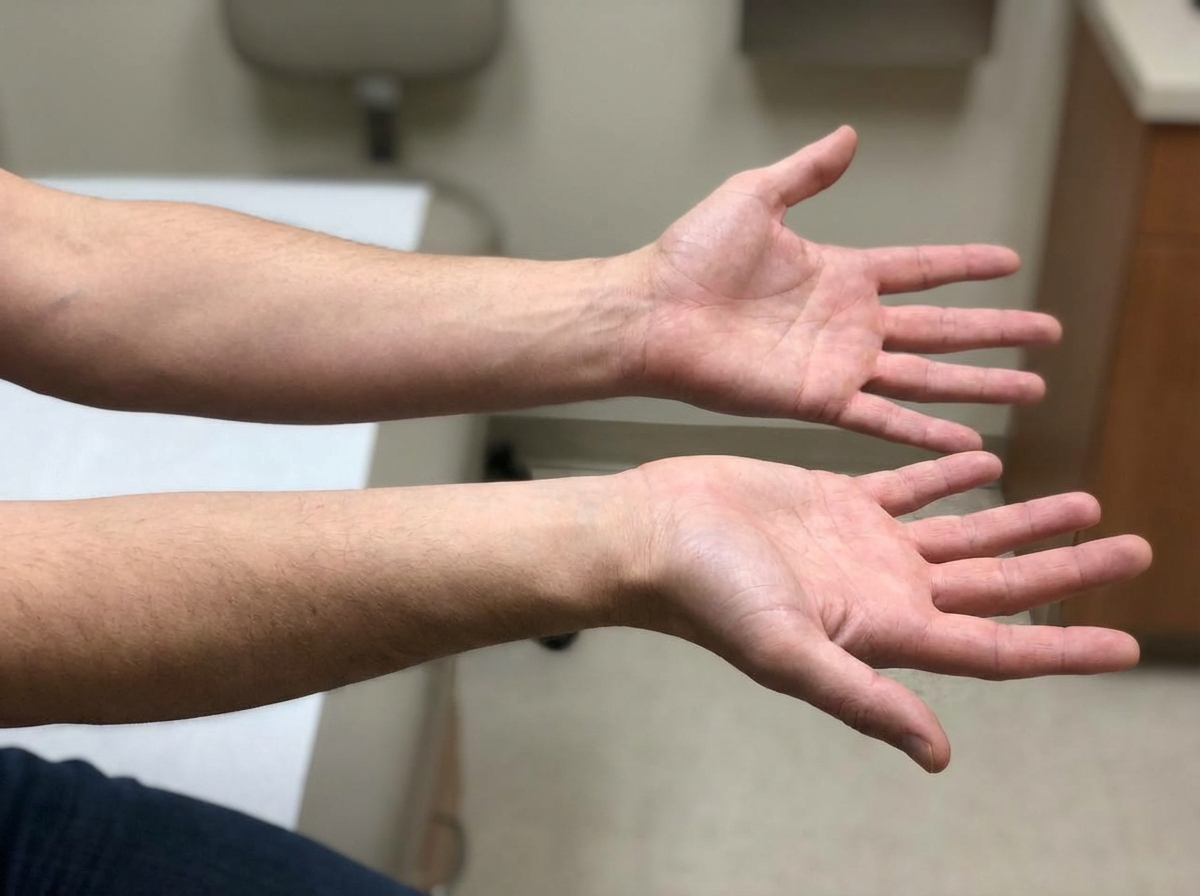
A 56-year-old male with a history of hepatitis C cirrhosis status post TIPS procedure is brought in by his wife to the emergency department because he has been acting disoriented, slurring his speech, and sleeping throughout the day. On arrival the patient is afebrile and his vital signs are pulse is 87/min, blood pressure is 137/93 mmHg, and respirations are 12/min with shallow breaths. Examination reveals a jaundiced male who appears older than stated age. Abdominal exam is positive for a fluid wave and shifting dullness to percussion. You note enlarged breasts, decreased facial hair, 3+ patellar reflexes bilaterally, and the following in the upper extremity (Image A). Paracentesis reveals ascitic fluid with neutrophil counts of < 100 cells/mcL. Serum creatinine is 1.0 and BUN is 15. Which of the following is the next best step in management?
Q72
A 52-year-old unconscious man is brought to the emergency department. He was found unresponsive on the sidewalk in the snow. He is recognized by the staff as a local homeless man and IV drug user. Rapid warming procedures are initiated. At physical examination, he is dirty and disheveled and unrousable with a blood pressure of 100/76 mm Hg and a temperature of 37.2°C (99°F). He is thin with apparent weight loss. Both arms have indications of recent IV injection stigmata. A head MRI reveals multiple hyperintense signals in the meninges with multiple tiny contrast-enhancing lesions in the cerebellum and cerebral cortex. A chest X-ray is within normal limits. Mild dilatation of the ventricles is also appreciated. Cerebrospinal fluid (CSF) analysis reveals:
CSF opening pressure 25 cm H20
CSF total leukocyte count 580/mm3
Lymphocytes 90%
Neutrophils 10%
CSF protein 176 mg/dL
CSF glucose 21 mg/dL
A specimen stains are positive for acid-fast bacilli. CSF culture is pending. Appropriate antibacterial medication is initiated. Which of the following is true regarding the immediate future management of this patient?
Q73
A 58-year-old man with liver cirrhosis presents to his primary care physician complaining of increased abdominal girth and early satiety. He drinks 2–4 glasses of wine with dinner and recalls having had abnormal liver enzymes in the past. Vital signs include a temperature of 37.1°C (98.7°F), blood pressure of 110/70 mm Hg, and a pulse of 75/min. Physical examination reveals telangiectasias, mild splenomegaly, palpable firm liver, and shifting dullness. Liver function is shown:
Total bilirubin 3 mg/dL
Aspartate aminotransferase (AST) 150 U/L
Alanine aminotransferase (ALT) 70 U/L
Total albumin 2.5 g/dL
Abdominal ultrasonography confirms the presence of ascites. Diagnostic paracentesis is performed and its results are shown:
Polymorphonuclear cell count 10 cells/mm
Ascitic protein 1 g/dL
Which of the following best represents the mechanism of ascites in this patient?
Q74
A 49-year-old man is brought to the emergency department by his wife because he is vomiting blood. His wife reports that he has been nauseous for the past day and that he has had 2 episodes of vomiting bright red blood over the past 2 hours. He has never experienced this before. He has not had any bloody stool, melena, or abdominal pain. He was diagnosed with alcoholic cirrhosis 6 months ago. He drank approximately 1 liter of vodka over the past day, which is typical for him. He takes no medications. He is confused and disoriented to place and time. Physical examination shows ascites. Vital signs are within normal limits. His hemoglobin concentration is 9.5 g/dL. Intravenous fluid resuscitation is begun. He starts to vomit bright red blood again intermittently, which continues for 10 minutes. When vital signs are measured again, his pulse is 95/min and blood pressure is 109/80 mm/Hg. Which of the following is the most appropriate initial step in management?
Q75
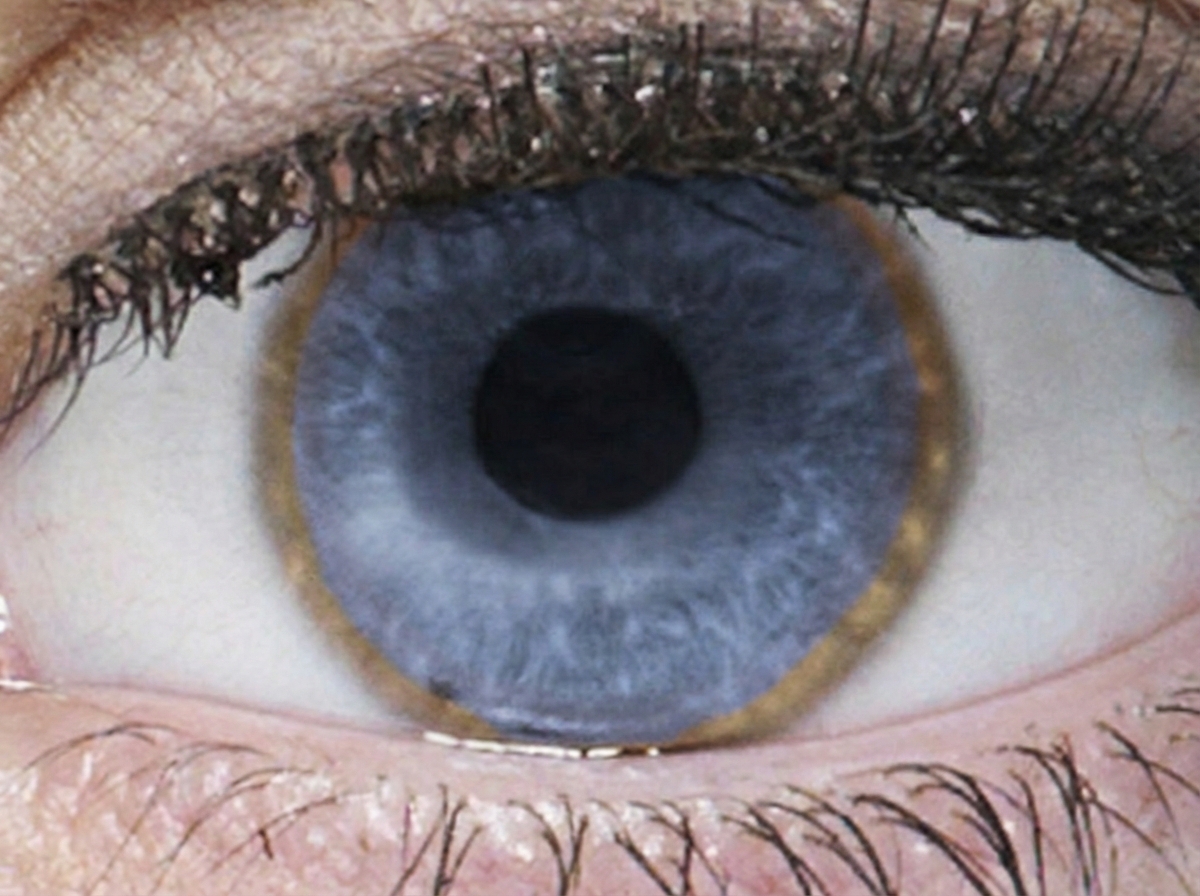
A 28-year-old woman is brought to the physician because of progressive difficulty walking, slowed speech, and a tremor for the past 5 months. Her grandfather died of bleeding esophageal varices at the age of 42 years. She does not drink alcohol. She is alert and oriented but has a flat affect. Her speech is slurred and monotonous. Examination shows a broad-based gait and a low-frequency tremor of her left hand. Abdominal examination shows hepatosplenomegaly. A photograph of the patient's right eye is shown. Further evaluation of this patient is most likely to show which of the following findings?
Q76
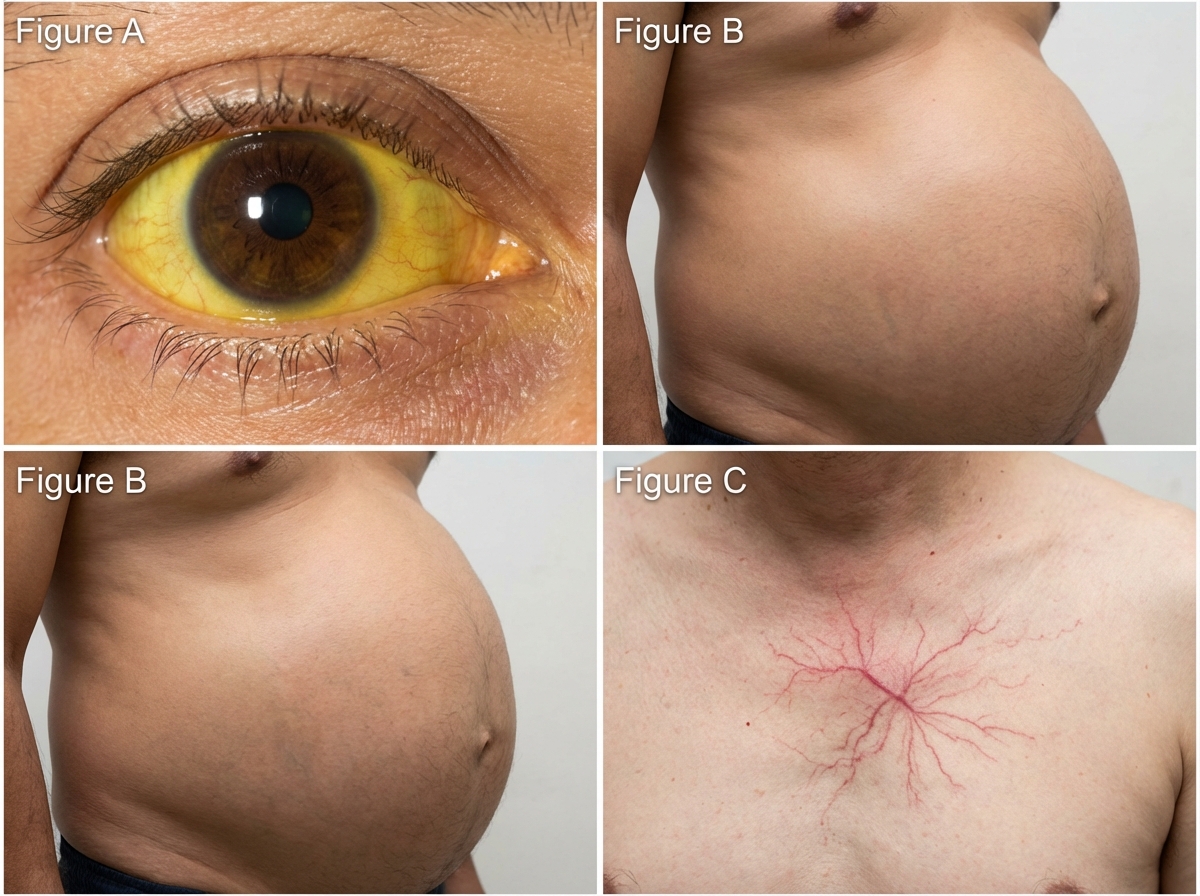
A 64-year-old man who has not seen a physician in over 20 years presents to your office complaining of recently worsening fatigue and weakness, a decreased appetite, distended abdomen, and easy bruising. His family history is notable for a mother with Hashimoto's thyroiditis, a sister with lupus and a brother with type II diabetes. On further questioning, the patient discloses a history of prior alcoholism as well as intravenous drug use, though he currently only smokes a pack per day of cigarettes. On physical exam, you note the following findings (see Figures A-C) as well as several ecchymoses and telangiectasias. As the patient has not seen a physician in many years, you obtain the following laboratory studies:
Leukocyte count: 4,100/mm^3
Hemoglobin: 9.6 g/dL
Platelet count: 87,000/mm^3
Prothrombin time (PT): 21.0 seconds
International Normalized Ratio (INR): 1.8
Serum:
Creatinine: 1.7 mg/dL
Total bilirubin: 3.2 mg/dL
Aspartate aminotransferase (AST): 225 U/L
Alanine aminotransferase (ALT): 103 U/L
Alkaline phosphatase: 162 U/L
Albumin: 2.6 g/dL
Serum thyroxine (T4): 3.1 µg/dL
Thyroid-stimulating hormone (TSH): 3.4 µU/mL
What is the cause of this patient’s low serum thyroxine?
Q77
A 57-year-old woman comes to the physician for a routine health maintenance examination. She has well-controlled type 2 diabetes mellitus, for which she takes metformin. She is 163 cm (5 ft 4 in) tall and weighs 84 kg (185 lb); BMI is 31.6 kg/m2. Her blood pressure is 140/92 mm Hg. Physical examination shows central obesity, with a waist circumference of 90 cm. Laboratory studies show:
Fasting glucose 94 mg/dl
Total cholesterol 200 mg/dL
High-density lipoprotein cholesterol 36 mg/dL
Triglycerides 170 mg/dL
Without treatment, this patient is at greatest risk for which of the following conditions?
Q78
A 27-year-old man with an unknown past medical history is brought to the emergency department acutely intoxicated. The patient was found passed out in a park covered in vomit and urine. His temperature is 99.0°F (37.2°C), blood pressure is 107/68 mm Hg, pulse is 120/min, respiratory rate is 13/min, and oxygen saturation is 95% on room air. Physical exam is notable for wheezing in all lung fields without any crackles. The patient is started on 2L/min nasal cannula oxygen and IV fluids. His laboratory values are notable for an AST of 200 U/L and an ALT of 100 U/L. An initial chest radiograph is unremarkable. Which of the following is the most likely explanation for this patient's pulmonary symptoms?
Q79
A 48-year-old woman comes to the physician because of a 6-month history of excessive fatigue and a 1-month history of progressively increasing generalized pruritus. She has hypothyroidism, for which she receives thyroid replacement therapy. Physical examination shows jaundice. The liver is palpated 4 cm below the right costal margin. Serum studies show a direct bilirubin concentration of 2.9 mg/dL, alkaline phosphatase activity of 580 U/L, and increased titers of antimitochondrial antibodies and anti-thyroid peroxidase antibodies. Which of the following is the most likely cause of this patient's condition?
Q80
A 53-year-old man comes to the physician because of a 3-month history of a nonpruritic rash, fatigue, and decreased urination. Physical examination shows multiple erythematous, purpuric papules on his trunk and extremities that do not blanch when pressed. Serum creatinine is elevated and urinalysis shows red blood cell casts and protein. Serum complement levels are decreased. Renal biopsy shows subendothelial immune complex deposits with granular immunofluorescence and tram-track basement membrane splitting. Further laboratory evaluation of this patient is most likely to show the presence of which of the following antibodies?
Liver disease US Medical PG Practice Questions and MCQs
Question 71: A 56-year-old male with a history of hepatitis C cirrhosis status post TIPS procedure is brought in by his wife to the emergency department because he has been acting disoriented, slurring his speech, and sleeping throughout the day. On arrival the patient is afebrile and his vital signs are pulse is 87/min, blood pressure is 137/93 mmHg, and respirations are 12/min with shallow breaths. Examination reveals a jaundiced male who appears older than stated age. Abdominal exam is positive for a fluid wave and shifting dullness to percussion. You note enlarged breasts, decreased facial hair, 3+ patellar reflexes bilaterally, and the following in the upper extremity (Image A). Paracentesis reveals ascitic fluid with neutrophil counts of < 100 cells/mcL. Serum creatinine is 1.0 and BUN is 15. Which of the following is the next best step in management?
A. Administer neomycin and glucose
B. IV albumin and antibiotic therapy with cefotaxime
C. Administer rifaximin and glucose
D. Administer lactulose (Correct Answer)
E. Liver transplantation
Explanation: ***Administer lactulose***
- The patient exhibits classic symptoms of **hepatic encephalopathy** (disorientation, slurred speech, somnolence, asterixis as demonstrated by Image A), combined with findings consistent with **cirrhosis** (jaundice, ascites, gynecomastia, decreased facial hair, history of hepatitis C and TIPS).
- **Lactulose** is the first-line treatment for hepatic encephalopathy as it acidifies the colon, promoting the conversion of ammonia (a neurotoxin) to ammonium, which is then trapped and excreted in the feces.
*Administer neomycin and glucose*
- **Neomycin** is an antibiotic that can reduce ammonia-producing bacteria in the gut but is generally considered a second-line agent due to potential side effects like **ototoxicity** and **nephrotoxicity**.
- **Glucose** administration is not a primary treatment for hepatic encephalopathy; it would only be indicated if the patient were hypoglycemic, which is not suggested by the clinical picture.
*IV albumin and antibiotic therapy with cefotaxime*
- **IV albumin** is primarily used in **spontaneous bacterial peritonitis (SBP)** to prevent hepatorenal syndrome, and the paracentesis finding of < 100 cells/mcL neutrophils suggests SBP is unlikely.
- **Cefotaxime** is an appropriate antibiotic for **SBP**, but the patient's presentation is more consistent with hepatic encephalopathy, not an active infection.
*Administer rifaximin and glucose*
- **Rifaximin** is a non-absorbable antibiotic used to reduce ammonia-producing bacteria in the gut, often as an add-on or alternative to lactulose for maintenance therapy or in cases unresponsive to lactulose alone. It is not generally the initial monotherapy for an acute, severe encephalopathy episode.
- As mentioned, **glucose** is not a primary treatment for hepatic encephalopathy.
*Liver transplantation*
- **Liver transplantation** is a definitive treatment for end-stage liver disease, but it is not the **next best step** for acute management of hepatic encephalopathy.
- The immediate priority is to address the acute encephalopathy episode pharmacologically before considering long-term solutions like transplantation, which has a complex workup and waiting list.
Question 72: A 52-year-old unconscious man is brought to the emergency department. He was found unresponsive on the sidewalk in the snow. He is recognized by the staff as a local homeless man and IV drug user. Rapid warming procedures are initiated. At physical examination, he is dirty and disheveled and unrousable with a blood pressure of 100/76 mm Hg and a temperature of 37.2°C (99°F). He is thin with apparent weight loss. Both arms have indications of recent IV injection stigmata. A head MRI reveals multiple hyperintense signals in the meninges with multiple tiny contrast-enhancing lesions in the cerebellum and cerebral cortex. A chest X-ray is within normal limits. Mild dilatation of the ventricles is also appreciated. Cerebrospinal fluid (CSF) analysis reveals:
CSF opening pressure 25 cm H20
CSF total leukocyte count 580/mm3
Lymphocytes 90%
Neutrophils 10%
CSF protein 176 mg/dL
CSF glucose 21 mg/dL
A specimen stains are positive for acid-fast bacilli. CSF culture is pending. Appropriate antibacterial medication is initiated. Which of the following is true regarding the immediate future management of this patient?
A. Treatment should only be started after CSF culture results
B. Check liver enzymes regularly
C. Verify response to antibiotic therapy
D. Acyclovir should be started empirically as well
E. Steroids should be considered (Correct Answer)
Explanation: ***Steroids should be considered***
- The patient has **tuberculous meningitis**, evidenced by the presence of **acid-fast bacilli** in the CSF, lymphocytic pleocytosis, high protein, and low glucose. **Corticosteroids** (e.g., dexamethasone) are recommended in conjunction with anti-TB drugs for tuberculous meningitis to reduce inflammation, cerebral edema, and improve outcomes, especially in severe cases.
- The MRI findings of **meningeal enhancement** and **hydrocephalus**, along with the patient's unconscious state, indicate severe inflammation, making steroid use crucial to mitigate neurological sequelae.
*Treatment should only be started after CSF culture results*
- This is incorrect because **tuberculous meningitis** is a severe and rapidly progressive condition where delaying treatment can lead to significant morbidity and mortality.
- The **acid-fast bacilli stain** is a strong indicator, and empirical anti-TB therapy should be initiated immediately based on clinical suspicion and direct microscopy findings, without waiting for culture results which can take weeks.
*Check liver enzymes regularly*
- While it is important to monitor liver enzymes due to the potential **hepatotoxicity** of anti-tuberculous drugs (especially isoniazid and rifampin), this is a routine monitoring measure rather than an immediate management decision regarding treatment initiation or adjunctive therapies in this acute setting.
- It is an important part of the overall management plan but does not address the immediate, critical decisions about the patient's current severe neurological infection.
*Verify response to antibiotic therapy*
- This is an important long-term aspect of management, but it is not an immediate action. Verifying response typically involves clinical improvement, repeat CSF analysis, and sometimes imaging, which occurs after the initial treatment has been commenced and had time to act.
- The immediate concern is to initiate the most effective and comprehensive treatment upfront, including adjunctive steroids, given the severity of the condition.
*Acyclovir should be started empirically as well*
- This is incorrect because the CSF analysis with **acid-fast bacilli** staining has already strongly pointed towards a bacterial (specifically mycobacterial) infection, making **viral encephalitis** less likely as the primary diagnosis.
- There are no specific clinical or laboratory findings (e.g., temporal lobe involvement on MRI, absence of AFB) that would merit empirical antiviral therapy with acyclovir in this context, especially when a clear bacterial pathogen has been identified.
Question 73: A 58-year-old man with liver cirrhosis presents to his primary care physician complaining of increased abdominal girth and early satiety. He drinks 2–4 glasses of wine with dinner and recalls having had abnormal liver enzymes in the past. Vital signs include a temperature of 37.1°C (98.7°F), blood pressure of 110/70 mm Hg, and a pulse of 75/min. Physical examination reveals telangiectasias, mild splenomegaly, palpable firm liver, and shifting dullness. Liver function is shown:
Total bilirubin 3 mg/dL
Aspartate aminotransferase (AST) 150 U/L
Alanine aminotransferase (ALT) 70 U/L
Total albumin 2.5 g/dL
Abdominal ultrasonography confirms the presence of ascites. Diagnostic paracentesis is performed and its results are shown:
Polymorphonuclear cell count 10 cells/mm
Ascitic protein 1 g/dL
Which of the following best represents the mechanism of ascites in this patient?
A. Peritoneal tuberculosis
B. High sinusoidal pressure (Correct Answer)
C. Pancreatic disease
D. Serositis
E. Peritoneal carcinomatosis
Explanation: ***High sinusoidal pressure***
- In **liver cirrhosis**, the fibrotic changes and regenerating nodules increase resistance to blood flow, leading to **portal hypertension** and increased pressure in the hepatic sinusoids.
- This elevated pressure drives fluid from the sinusoids into the abdominal cavity, forming **ascites**.
*Peritoneal tuberculosis*
- This condition typically presents with **ascitic fluid protein levels above 2.5 g/dL** and a significantly elevated **lymphocytic cell count** in the ascitic fluid.
- The patient's ascitic protein level is 1 g/dL, and the polymorphonuclear cell count is low, making this diagnosis less likely.
*Pancreatic disease*
- Pancreatic ascites results from a leaking **pancreatic duct or pseudocyst**, leading to ascitic fluid with very high **amylase levels** and often a high protein content.
- While the patient has alcohol use, the clinical presentation and paracentesis results point more strongly towards liver-related ascites rather than pancreatic.
*Serositis*
- **Serositis** involves inflammation of serous membranes, often seen in autoimmune diseases, and can cause ascites with a higher protein content and inflammatory cells.
- The patient's primary symptoms and signs are consistent with advanced liver disease, not systemic inflammatory serositis.
*Peritoneal carcinomatosis*
- **Peritoneal carcinomatosis** usually leads to ascites with a **high protein content** (>2.5 g/dL), sometimes with **malignant cells** present in the ascitic fluid cytology.
- The low ascitic fluid protein and absence of other signs of malignancy make this an unlikely cause.
Question 74: A 49-year-old man is brought to the emergency department by his wife because he is vomiting blood. His wife reports that he has been nauseous for the past day and that he has had 2 episodes of vomiting bright red blood over the past 2 hours. He has never experienced this before. He has not had any bloody stool, melena, or abdominal pain. He was diagnosed with alcoholic cirrhosis 6 months ago. He drank approximately 1 liter of vodka over the past day, which is typical for him. He takes no medications. He is confused and disoriented to place and time. Physical examination shows ascites. Vital signs are within normal limits. His hemoglobin concentration is 9.5 g/dL. Intravenous fluid resuscitation is begun. He starts to vomit bright red blood again intermittently, which continues for 10 minutes. When vital signs are measured again, his pulse is 95/min and blood pressure is 109/80 mm/Hg. Which of the following is the most appropriate initial step in management?
A. Administer cryoprecipitate
B. Administer intravenous octreotide
C. Place nasogastric tube
D. Perform upper endoscopy
E. Perform endotracheal intubation (Correct Answer)
Explanation: ***Perform endotracheal intubation***
- This patient is actively vomiting large amounts of blood and is **confused and disoriented**, placing him at high risk for **aspiration**.
- **Endotracheal intubation** is crucial in this scenario to protect the airway and prevent aspiration pneumonia, which can be life-threatening.
*Administer cryoprecipitate*
- **Cryoprecipitate** contains factors VIII, XIII, von Willebrand factor, and fibrinogen and is used to treat bleeding in patients with severe **hypofibrinogenemia** or **uremic platelet dysfunction**.
- While patients with cirrhosis may have coagulopathy, there's no indication of severe hypofibrinogenemia or uremic platelet dysfunction here, and intubation takes precedence due to the risk of aspiration.
*Administer intravenous octreotide*
- **Octreotide** is a somatostatin analog that reduces portal hypertension and splanchnic blood flow, making it useful in the management of **esophageal variceal bleeding**.
- Although the patient has features consistent with variceal bleeding (cirrhosis, hematemesis, ascites), **airway protection** is the most immediate life-saving intervention given his altered mental status and active vomiting.
*Place nasogastric tube*
- A **nasogastric tube** can be useful for aspiration of gastric contents to assess bleeding activity and prepare for endoscopy, but it carries risks of further trauma in actively bleeding varices.
- Furthermore, placing an NG tube in a patient with active hematemesis and altered mental status without first securing the airway significantly increases the risk of aspiration.
*Perform upper endoscopy*
- **Upper endoscopy** is the definitive diagnostic and therapeutic procedure for upper gastrointestinal bleeding, especially in suspected variceal hemorrhage.
- However, performing an endoscopy on an actively vomiting, confused patient without prior **airway protection** is unsafe and would delay the most critical initial step.
Question 75: A 28-year-old woman is brought to the physician because of progressive difficulty walking, slowed speech, and a tremor for the past 5 months. Her grandfather died of bleeding esophageal varices at the age of 42 years. She does not drink alcohol. She is alert and oriented but has a flat affect. Her speech is slurred and monotonous. Examination shows a broad-based gait and a low-frequency tremor of her left hand. Abdominal examination shows hepatosplenomegaly. A photograph of the patient's right eye is shown. Further evaluation of this patient is most likely to show which of the following findings?
A. Increased number of CAG repeats
B. Low serum ceruloplasmin concentration (Correct Answer)
C. Positive anti-hepatitis B virus IgG antibodies
D. Skin deposits of lipid-laden macrophages
E. Destruction of lobular bile ducts on liver biopsy
Explanation: ***Low serum ceruloplasmin concentration***
- This patient presents with a classic triad of **neurological symptoms** (difficulty walking, slowed speech, tremor), **psychiatric symptoms** (flat affect), and **hepatic involvement** (hepatosplenomegaly, grandfather's early death from esophageal varices), strongly suggesting **Wilson's disease**.
- A photograph of the eye likely shows a **Kayser-Fleischer ring**, a hallmark of Wilson's disease, caused by copper deposition, and the disease is characterized by **low serum ceruloplasmin**, the primary copper-carrying protein in the blood.
*Increased number of CAG repeats*
- An increased number of **CAG repeats** is characteristic of **Huntington's disease**, which typically presents with chorea, dementia, and psychiatric symptoms.
- While there are neurological and psychiatric symptoms, the presence of hepatosplenomegaly and the likely Kayser-Fleischer rings point away from Huntington's disease.
*Positive anti-hepatitis B virus IgG antibodies*
- **Positive anti-hepatitis B virus IgG antibodies** would indicate past exposure to or vaccination against **Hepatitis B**, which can cause liver disease.
- However, the complex neurological and psychiatric symptoms, along with the specific family history and eye findings, are not typical for chronic Hepatitis B infection.
*Skin deposits of lipid-laden macrophages*
- **Skin deposits of lipid-laden macrophages** (xanthomas) are characteristic of various **lipid storage disorders** or severe hyperlipidemia.
- This finding is not associated with the constellation of neurological, psychiatric, and hepatic symptoms and the family history presented here.
*Destruction of lobular bile ducts on liver biopsy*
- The **destruction of lobular bile ducts** is a hallmark of **primary biliary cholangitis (PBC)**, an autoimmune liver disease.
- PBC predominantly affects middle-aged women and causes cholestasis and cirrhosis, but the prominent neurological and psychiatric symptoms seen here are not typical features of PBC.
Question 76: A 64-year-old man who has not seen a physician in over 20 years presents to your office complaining of recently worsening fatigue and weakness, a decreased appetite, distended abdomen, and easy bruising. His family history is notable for a mother with Hashimoto's thyroiditis, a sister with lupus and a brother with type II diabetes. On further questioning, the patient discloses a history of prior alcoholism as well as intravenous drug use, though he currently only smokes a pack per day of cigarettes. On physical exam, you note the following findings (see Figures A-C) as well as several ecchymoses and telangiectasias. As the patient has not seen a physician in many years, you obtain the following laboratory studies:
Leukocyte count: 4,100/mm^3
Hemoglobin: 9.6 g/dL
Platelet count: 87,000/mm^3
Prothrombin time (PT): 21.0 seconds
International Normalized Ratio (INR): 1.8
Serum:
Creatinine: 1.7 mg/dL
Total bilirubin: 3.2 mg/dL
Aspartate aminotransferase (AST): 225 U/L
Alanine aminotransferase (ALT): 103 U/L
Alkaline phosphatase: 162 U/L
Albumin: 2.6 g/dL
Serum thyroxine (T4): 3.1 µg/dL
Thyroid-stimulating hormone (TSH): 3.4 µU/mL
What is the cause of this patient’s low serum thyroxine?
A. Transient central hypothyroidism (sick euthyroid syndrome)
B. Autoimmune thyroiditis
C. Decreased liver synthetic function (Correct Answer)
D. Acute hepatitis causing an elevation in thyroxine-binding globulin
E. Urinary loss of thyroxine-binding globulin due to nephrotic syndrome
Explanation: ***Decreased liver synthetic function***
- A low **serum albumin** (2.6 g/dL) is a direct measure of decreased liver synthetic function, which impairs the liver's ability to produce **thyroxine-binding globulins (TBGs)**. Reduced TBGs lead to lower total serum thyroxine (T4) because less T4 is bound and transported in the blood.
- The patient's history of **alcoholism**, current **cirrhosis** (ascites, easy bruising, thrombocytopenia, coagulopathy), and elevated liver enzymes further support severe liver dysfunction as the cause of reduced TBG synthesis and, consequently, low total T4.
*Transient central hypothyroidism (sick euthyroid syndrome)*
- **Sick euthyroid syndrome** typically presents with low total T4, but also often low T3 and TSH that can be normal, low, or slightly elevated, reflecting hypothalamic-pituitary axis dysfunction in the context of severe illness. However, the primary driver here is the severe liver synthetic dysfunction.
- While this patient is severely ill, the pronounced **hypoalbuminemia** directly points to a significant **hepatic synthetic defect** as the more direct cause of the low total T4.
*Autoimmune thyroiditis*
- **Autoimmune thyroiditis**, such as **Hashimoto's thyroiditis**, causes hypothyroidism by destroying thyroid tissue, leading to high TSH and low T4. This patient's TSH is normal (3.4 µU/mL), effectively ruling out primary hypothyroidism.
- While there is a family history of Hashimoto's, the patient's normal TSH level indicates that his low T4 is not due to primary thyroid failure.
*Acute hepatitis causing an elevation in thyroxine-binding globulin*
- **Acute hepatitis** can cause elevated transaminases, but it typically does not lead to an increase in **thyroxine-binding globulin (TBG)**. Liver inflammation acutely, if severe, might impair synthesis or function, but would not elevate TBG to cause low T4.
- **Elevated TBG** would actually *increase* total T4 levels, not decrease them, as more T4 would be bound. This option contradicts the observed findings.
*Urinary loss of thyroxine-binding globulin due to nephrotic syndrome*
- **Nephrotic syndrome** can cause significant proteinuria, leading to urinary loss of proteins, including **thyroxine-binding globulin (TBG)**, which would result in low total T4.
- However, there are no clinical signs or laboratory findings suggestive of **nephrotic syndrome** (e.g., massive proteinuria, peripheral edema from low albumin not liver disease), and this patient's liver disease is a more direct and evident cause of low TBG.
Question 77: A 57-year-old woman comes to the physician for a routine health maintenance examination. She has well-controlled type 2 diabetes mellitus, for which she takes metformin. She is 163 cm (5 ft 4 in) tall and weighs 84 kg (185 lb); BMI is 31.6 kg/m2. Her blood pressure is 140/92 mm Hg. Physical examination shows central obesity, with a waist circumference of 90 cm. Laboratory studies show:
Fasting glucose 94 mg/dl
Total cholesterol 200 mg/dL
High-density lipoprotein cholesterol 36 mg/dL
Triglycerides 170 mg/dL
Without treatment, this patient is at greatest risk for which of the following conditions?
A. Osteoporosis
B. Rheumatoid arthritis
C. Subarachnoid hemorrhage
D. Central sleep apnea
E. Liver cirrhosis (Correct Answer)
Explanation: ***Liver cirrhosis***
* This patient has **metabolic syndrome**, characterized by **central obesity** (waist >88 cm in women), **hypertension** (≥130/85 mm Hg), **low HDL cholesterol** (<50 mg/dL in women), **elevated triglycerides** (≥150 mg/dL), and **type 2 diabetes mellitus**.
* Metabolic syndrome is strongly associated with **non-alcoholic fatty liver disease (NAFLD)**, which affects **70-90% of patients** with this condition.
* NAFLD can progress to **non-alcoholic steatohepatitis (NASH)**, then to **hepatic fibrosis**, and ultimately **cirrhosis**—making this patient's greatest long-term risk without intervention.
* NAFLD is now the **leading cause of chronic liver disease** in developed countries, and the combination of obesity, insulin resistance, and dyslipidemia directly promotes hepatic lipid accumulation and inflammation.
*Incorrect: Osteoporosis*
* While common in post-menopausal women, **obesity is generally protective against osteoporosis** due to increased weight-bearing stress on bones and higher estrogen levels from adipose tissue aromatization.
* No specific risk factors for osteoporosis (e.g., corticosteroid use, smoking, low calcium intake) are present.
*Incorrect: Rheumatoid arthritis*
* This is an **autoimmune condition** not associated with metabolic syndrome.
* The patient has no symptoms of joint pain, morning stiffness, or synovitis that would suggest rheumatoid arthritis.
* Metabolic factors do not increase the risk of developing rheumatoid arthritis.
*Incorrect: Subarachnoid hemorrhage*
* While **hypertension** is a risk factor for hemorrhagic stroke, subarachnoid hemorrhage is more specifically associated with **ruptured aneurysms** or **arteriovenous malformations**.
* The patient's moderately elevated blood pressure poses some cardiovascular risk, but this is not the greatest risk compared to the progressive liver disease associated with metabolic syndrome.
*Incorrect: Central sleep apnea*
* **Central sleep apnea** (cessation of respiratory effort) is primarily associated with **heart failure**, **stroke**, or **opioid use**—not metabolic syndrome.
* **Obstructive sleep apnea** (OSA) is what's associated with obesity and metabolic syndrome, but that is not an option here.
* While this patient may be at risk for OSA, central sleep apnea is not the primary concern in metabolic syndrome.
Question 78: A 27-year-old man with an unknown past medical history is brought to the emergency department acutely intoxicated. The patient was found passed out in a park covered in vomit and urine. His temperature is 99.0°F (37.2°C), blood pressure is 107/68 mm Hg, pulse is 120/min, respiratory rate is 13/min, and oxygen saturation is 95% on room air. Physical exam is notable for wheezing in all lung fields without any crackles. The patient is started on 2L/min nasal cannula oxygen and IV fluids. His laboratory values are notable for an AST of 200 U/L and an ALT of 100 U/L. An initial chest radiograph is unremarkable. Which of the following is the most likely explanation for this patient's pulmonary symptoms?
A. Bacterial infection
B. Environmental antigen
C. Aspiration event (Correct Answer)
D. Elastic tissue destruction
E. Clot in pulmonary vasculature
Explanation: ***Aspiration event***
- This patient's presentation is **classic for aspiration**: found **covered in vomit**, acutely **intoxicated** with altered mental status, and now presenting with **wheezing**.
- **Aspiration of gastric contents** causes chemical irritation and **bronchospasm**, which manifests as diffuse wheezing without crackles.
- The **chest X-ray can be initially normal** in aspiration - radiographic changes (infiltrates, consolidation) may not appear for **6-24 hours** after the event.
- The **AST:ALT ratio of 2:1** (200:100) suggests chronic alcohol use, further increasing aspiration risk.
- Treatment includes supportive care, bronchodilators for bronchospasm, and monitoring for development of aspiration pneumonitis or pneumonia.
*Environmental antigen*
- While **environmental allergens** can trigger asthma exacerbations with wheezing, this doesn't explain the patient being **covered in vomit and urine**.
- The clinical context strongly points toward aspiration rather than an allergic trigger.
- No history of asthma is mentioned, and the transaminase elevation suggests chronic alcohol use as the primary issue.
*Bacterial infection*
- **Bacterial pneumonia** typically presents with **fever**, productive cough, crackles on exam, and infiltrates on chest X-ray.
- This patient is **afebrile**, has **no crackles**, and an **unremarkable chest X-ray**, making bacterial infection unlikely at this time.
- Aspiration can lead to secondary bacterial pneumonia, but this develops over 24-48 hours.
*Elastic tissue destruction*
- **Emphysema** (elastic tissue destruction) is a chronic condition presenting with **progressive dyspnea** and hyperinflation, typically in patients with long smoking history.
- This is an **acute presentation** in a young patient, and emphysema doesn't cause acute wheezing episodes as the primary manifestation.
*Clot in pulmonary vasculature*
- **Pulmonary embolism** presents with sudden dyspnea, pleuritic chest pain, and hypoxemia, but **wheezing is not a typical feature**.
- The prominent diffuse wheezing and clinical context of intoxication with vomiting make PE unlikely.
Question 79: A 48-year-old woman comes to the physician because of a 6-month history of excessive fatigue and a 1-month history of progressively increasing generalized pruritus. She has hypothyroidism, for which she receives thyroid replacement therapy. Physical examination shows jaundice. The liver is palpated 4 cm below the right costal margin. Serum studies show a direct bilirubin concentration of 2.9 mg/dL, alkaline phosphatase activity of 580 U/L, and increased titers of antimitochondrial antibodies and anti-thyroid peroxidase antibodies. Which of the following is the most likely cause of this patient's condition?
A. Destruction of intrahepatic bile ducts (Correct Answer)
B. Inflammation and fibrosis of the biliary tree
C. Autoimmune-mediated destruction of hepatocytes
D. Idiopathic hepatocellular accumulation of fat
E. Neoplasia of the ampulla of Vater
Explanation: ***Destruction of intrahepatic bile ducts***
- The constellation of **fatigue**, **pruritus**, **jaundice**, markedly elevated **alkaline phosphatase**, and positive **antimitochondrial antibodies (AMA)** in a middle-aged woman strongly indicates **primary biliary cholangitis (PBC)**.
- PBC is a **chronic autoimmune liver disease** characterized by the progressive, immune-mediated destruction of **small intrahepatic bile ducts**. It is also associated with other autoimmune diseases, such as the patient's **hypothyroidism** (indicated by elevated anti-thyroid peroxidase antibodies).
*Inflammation and fibrosis of the biliary tree*
- This description is more characteristic of **primary sclerosing cholangitis (PSC)**, which typically affects **larger intrahepatic and extrahepatic bile ducts**, often associated with **inflammatory bowel disease** (especially ulcerative colitis) and **p-ANCA** positivity.
- Unlike PBC, PSC is more common in men and is not typically associated with high titers of **antimitochondrial antibodies**.
*Autoimmune-mediated destruction of hepatocytes*
- This describes **autoimmune hepatitis (AIH)**, which primarily targets **hepatocytes** rather than bile ducts.
- AIH presents with elevated **aminotransferases (AST/ALT)**, positive **antinuclear antibodies (ANA)**, and sometimes **anti-smooth muscle antibodies (ASMA)**, which are not characteristic findings in this patient.
*Idiopathic hepatocellular accumulation of fat*
- This describes **non-alcoholic fatty liver disease (NAFLD)**, which is associated with metabolic syndrome risk factors such as obesity, type 2 diabetes, and hyperlipidemia.
- While it can cause fatigue, the prominent **pruritus**, high **alkaline phosphatase**, **jaundice**, and positive **AMA** are not typical features of NAFLD.
*Neoplasia of the ampulla of Vater*
- This is an **obstructive cause** of jaundice, typically presenting with progressive jaundice, weight loss, and potentially **Courvoisier's sign** (palpable gallbladder).
- While it would explain direct hyperbilirubinemia and elevated alkaline phosphatase, it would not explain the high titers of **antimitochondrial antibodies** or the strong association with autoimmune thyroid disease.
Question 80: A 53-year-old man comes to the physician because of a 3-month history of a nonpruritic rash, fatigue, and decreased urination. Physical examination shows multiple erythematous, purpuric papules on his trunk and extremities that do not blanch when pressed. Serum creatinine is elevated and urinalysis shows red blood cell casts and protein. Serum complement levels are decreased. Renal biopsy shows subendothelial immune complex deposits with granular immunofluorescence and tram-track basement membrane splitting. Further laboratory evaluation of this patient is most likely to show the presence of which of the following antibodies?
A. Antineutrophil cytoplasmic antibodies
B. Anti-DNA topoisomerase antibodies
C. Anti-desmoglein antibodies
D. Anticardiolipin antibodies
E. Anti-hepatitis C antibodies (Correct Answer)
Explanation: ***Anti-hepatitis C antibodies***
- The patient's presentation with **purpuric rash**, **fatigue**, **renal failure** (elevated creatinine, RBC casts, proteinuria), **decreased serum complement**, and **subendothelial immune complex deposits with tram-track splitting on renal biopsy** are classic features of **Type I membranoproliferative glomerulonephritis (MPGN)**, which is strongly associated with **cryoglobulinemia**.
- **Cryoglobulinemia**, particularly Type II or III, often occurs in the setting of **chronic hepatitis C virus (HCV) infection**.
*Antineutrophil cytoplasmic antibodies*
- These antibodies are characteristic of **ANCA-associated vasculitides** such as granulomatosis with polyangiitis, microscopic polyangiitis, and eosinophilic granulomatosis with polyangiitis.
- While these can cause rapidly progressive glomerulonephritis, the renal biopsy findings of **subendothelial immune complex deposits** and **decreased complement levels** are not typical for ANCA vasculitis, which is usually **pauci-immune**.
*Anti-DNA topoisomerase antibodies*
- Also known as **anti-Scl-70 antibodies**, these are specific for **systemic sclerosis (scleroderma)**.
- This patient's symptoms (rash, renal involvement) are not typical for systemic sclerosis, which usually involves skin tightening, Raynaud's phenomenon, and interstitial lung disease.
*Anti-desmoglein antibodies*
- These antibodies are found in **pemphigus vulgaris**, an autoimmune blistering skin disease.
- The patient's rash is described as purpuric papules, not blisters, and the systemic and renal involvement is inconsistent with pemphigus vulgaris.
*Anticardiolipin antibodies*
- These are associated with **antiphospholipid syndrome**, which can cause vascular thrombosis and recurrent pregnancy loss.
- While antiphospholipid syndrome can cause renal involvement (e.g., thrombotic microangiopathy), the specific renal biopsy findings (subendothelial immune complex deposits, tram-track splitting) and the purpuric rash are less consistent with primary antiphospholipid syndrome.