A 30-year-old woman presents to the office with chief complaints of skin pigmentation and fragility of the extensor sides of both hands for a month. The lesions are progressive and are not directly sensitive to light. The patient is otherwise healthy and only uses an oral contraceptive. There is no skin disease or similar skin symptoms in family members. She consumes 1 glass of wine twice a week. Dermatological examination reveals erosions, erythematous macules, pigmentation, and atrophic scarring. Blood analysis reveals elevated CRP (34 mg/L), AST (91 U/L), ALT (141 U/L), and serum ferritin (786 ng/mL compared to the normal value of 350 ng/mL). Her BMI is 21 kg/m2. Urine porphyrin test results are negative. Autoimmune laboratory analysis, hepatic panel, and HIV serology are negative with a normal liver ultrasound. Genetic analysis shows a homozygous missense mutation of the HFE gene. What could be the long-term effect of her condition to her liver?
Q52
A 28-year-old man presents to the office with complaints of malaise, anorexia, and vomiting for the past 2 weeks. He also says that his urine is dark. The past medical history is unremarkable. The temperature is 36.8°C (98.2°F), the pulse is 72/min, the blood pressure is 118/63 mm Hg, and the respiratory rate is 15/min. The physical examination reveals a slightly enlarged, tender liver. No edema or spider angiomata are noted. Laboratory testing showed the following:
HBsAg Positive
IgM anti-HBc < 1:1,000
Anti-HBs Negative
HBeAg Positive
Anti-HBe Negative
HBV DNA 2.65 × 10⁹ IU/L
Alpha-fetoprotein 125 ng/mL
What is the most likely cause of this patient's condition?
Q53
A 44-year-old man with HIV comes to the physician for a routine follow-up examination. He has been noncompliant with his antiretroviral medication regimen for several years. He appears chronically ill and fatigued. CD4+ T-lymphocyte count is 180/mm³ (N ≥ 500). Further evaluation of this patient is most likely to show which of the following findings?
Q54
A 55-year-old man presents to the emergency department with hematemesis that started 1 hour ago but has subsided. His past medical history is significant for cirrhosis with known esophageal varices which have been previously banded. His temperature is 97.5°F (36.4°C), blood pressure is 114/64 mmHg, pulse is 130/min, respirations are 12/min, and oxygen saturation is 98% on room air. During the patient's physical exam, he begins vomiting again and his heart rate increases with a worsening blood pressure. He develops mental status changes and on exam he opens his eyes and flexes his arms only to sternal rub and is muttering incoherent words. Which of the following is the most appropriate next step in management?
Q55
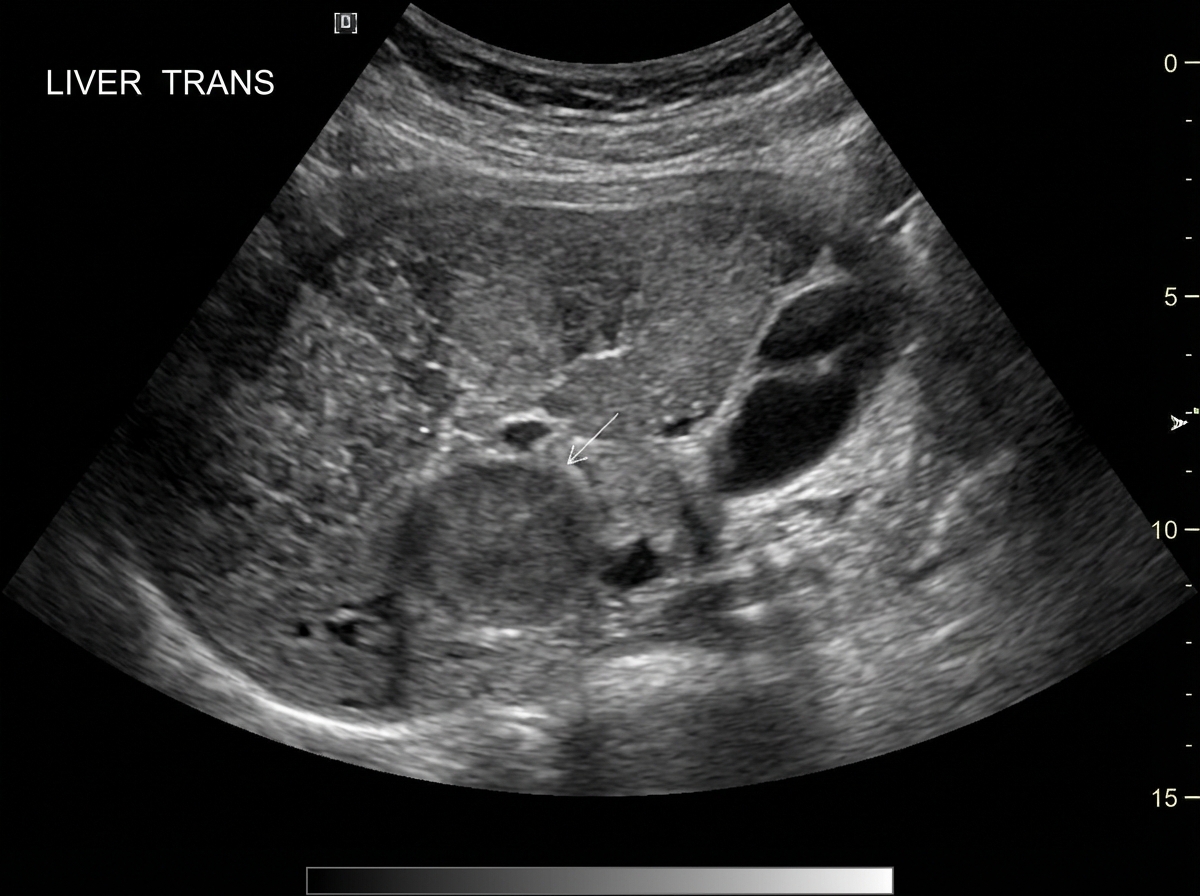
A 61-year-old man comes to the physician because of fatigue and a 5-kg (11-lb) weight loss over the past 6 months. He experimented with intravenous drugs during his 20s and has hepatitis C. His father died of colon cancer. He has smoked one pack of cigarettes daily for 35 years. Physical examination shows scleral icterus and several telangiectasias on the abdomen. The liver is firm and nodular. Laboratory studies show:
Hemoglobin 10.9 g/dL
Mean corpuscular volume 88 μm3
Leukocyte count 10,400/mm3
Platelet count 260,000/mm3
Ultrasonography of the liver is shown. Which of the following additional findings is most likely?
Q56
A 45-year-old man comes to the physician for a routine health maintenance examination. He feels well. He has type 2 diabetes mellitus. There is no family history of serious illness. He works as an engineer at a local company. He does not smoke. He drinks one glass of red wine every other day. He does not use illicit drugs. His only medication is metformin. He is 180 cm (5 ft 11 in) tall and weighs 100 kg (220 lb); BMI is 31 kg/m2. His vital signs are within normal limits. Examination shows a soft, nontender abdomen. The liver is palpated 2 to 3 cm below the right costal margin. Laboratory studies show an aspartate aminotransferase concentration of 100 U/L and an alanine aminotransferase concentration of 130 U/L. Liver biopsy shows hepatocyte ballooning degeneration, as well as inflammatory infiltrates with scattered lymphocytes, neutrophils, and Kupffer cells. Which of the following is the most likely diagnosis?
Q57
A 45-year-old man comes to the physician because of a 6-month history of increasing fatigue and reduced libido. He also complains of joint pain in both of his hands. He has a history of hypertension that is controlled with enalapril. He does not smoke or use illicit drugs. He drinks 2–3 beers on the weekends. His vital signs are within normal limits. Physical examination shows a strongly-tanned patient and decreased size of the testes. The second and third metacarpophalangeal joints of both hands are tender to palpation and range of motion is limited. The liver is palpated 2 to 3 cm below the right costal margin. Laboratory studies show:
Ferritin 2500 μg/L
Aspartate aminotransferase 70 U/L
Alanine aminotransferase 80 U/L
Glucose 250 mg/dL
This patient is at greatest risk for developing which of the following complications?
Q58
A 59-year-old man with chronic hepatitis C infection comes to the physician because of a 2-week history of ankle pain and nonpruritic skin lesions on his legs. He does not recall recent trauma or injury. He has not received treatment for hepatitis. Examination shows diffuse, violaceous lesions on both lower extremities. The lesions are 4–7 mm in size, slightly raised, and do not blanch with pressure. These skin lesions are best classified as which of the following?
Q59
A 45-year-old man comes to the physician because of bright red blood in his stool for 5 days. He has had no pain during defecation and no abdominal pain. One year ago, he was diagnosed with cirrhosis after being admitted to the emergency department for upper gastrointestinal bleeding. He has since cut down on his drinking and consumes around 5 bottles of beer daily. Examination shows scleral icterus and mild ankle swelling. Palpation of the abdomen shows a fluid wave and shifting dullness. Anoscopy shows enlarged bluish vessels above the dentate line. Which of the following is the most likely source of bleeding in this patient?
Q60
A 52-year-old man comes to the physician because of progressive abdominal distention and weight gain over the last 2 months. He was diagnosed with alcoholic liver cirrhosis with large ascites 1 year ago. He has congestive heart failure with a depressed ejection fraction related to his alcohol use. For the last 6 months, he has abstained from alcohol and has followed a low-sodium diet. His current medications include propranolol, spironolactone, and furosemide. His temperature is 36.7°C (98°F), pulse is 90/min, and blood pressure is 109/56 mm Hg. Physical examination shows reddening of the palms, telangiectasias on the face and trunk, and prominent blood vessels around the umbilicus. The abdomen is tense and distended; there is no abdominal tenderness. On percussion of the abdomen, there is dullness that shifts when the patient moves from the supine to the right lateral decubitus position. When the patient stretches out his arms with the wrists extended, a jerky, flapping motion of the hands is seen. Mental status examination shows a decreased attention span. Serum studies show:
Sodium 136 mEq/L
Creatinine 0.9 mg/dL
Albumin 3.6 mg/dL
Total bilirubin 1.9 mg/dL
INR 1.0
Which of the following is the most appropriate next step in treatment?
Liver disease US Medical PG Practice Questions and MCQs
Question 51: A 30-year-old woman presents to the office with chief complaints of skin pigmentation and fragility of the extensor sides of both hands for a month. The lesions are progressive and are not directly sensitive to light. The patient is otherwise healthy and only uses an oral contraceptive. There is no skin disease or similar skin symptoms in family members. She consumes 1 glass of wine twice a week. Dermatological examination reveals erosions, erythematous macules, pigmentation, and atrophic scarring. Blood analysis reveals elevated CRP (34 mg/L), AST (91 U/L), ALT (141 U/L), and serum ferritin (786 ng/mL compared to the normal value of 350 ng/mL). Her BMI is 21 kg/m2. Urine porphyrin test results are negative. Autoimmune laboratory analysis, hepatic panel, and HIV serology are negative with a normal liver ultrasound. Genetic analysis shows a homozygous missense mutation of the HFE gene. What could be the long-term effect of her condition to her liver?
A. OCP related hepatitis
B. Copper accumulation
C. Hepatocellular carcinoma (Correct Answer)
D. Alcoholic cirrhosis
E. Fatty liver
Explanation: ***Hepatocellular carcinoma***
- This patient presents with **hemochromatosis** due to a homozygous missense mutation in the **HFE gene**, which leads to excessive iron accumulation.
- Chronic iron overload in the liver is a significant risk factor for advanced **fibrosis** and eventually **hepatocellular carcinoma**.
*OCP related hepatitis*
- While oral contraceptive pills (OCPs) can rarely cause liver dysfunction, the patient's presentation with **skin pigmentation**, **elevated ferritin**, and a **genetic mutation** points away from simple OCP-induced hepatitis.
- OCP-related liver issues typically resolve upon discontinuation of the medication and do not typically involve progressive iron accumulation or such high ferritin levels.
*Copper accumulation*
- **Copper accumulation** is characteristic of **Wilson's disease**, which is ruled out by the normal autoimmune lab analysis, hepatic panel, and HIV serology, and no mention of Kayser-Fleischer rings.
- The elevated ferritin and AST/ALT, along with the specific HFE gene mutation, indicate **iron overload**, not copper.
*Alcoholic cirrhosis*
- The patient reports only consuming **1 glass of wine twice a week**, which is a very modest amount and unlikely to cause **alcoholic cirrhosis**, especially with a normal BMI and no history of heavy drinking.
- The extensive skin findings and **HFE gene mutation** are not typical features of alcoholic liver disease.
*Fatty liver*
- The patient has a **normal BMI (21 kg/m2)** and does not have typical risk factors for **non-alcoholic fatty liver disease (NAFLD)**.
- While elevated liver enzymes can occur in fatty liver, the distinct **skin findings, elevated ferritin**, and **genetic mutation** strongly point to hemochromatosis.
Question 52: A 28-year-old man presents to the office with complaints of malaise, anorexia, and vomiting for the past 2 weeks. He also says that his urine is dark. The past medical history is unremarkable. The temperature is 36.8°C (98.2°F), the pulse is 72/min, the blood pressure is 118/63 mm Hg, and the respiratory rate is 15/min. The physical examination reveals a slightly enlarged, tender liver. No edema or spider angiomata are noted. Laboratory testing showed the following:
HBsAg Positive
IgM anti-HBc < 1:1,000
Anti-HBs Negative
HBeAg Positive
Anti-HBe Negative
HBV DNA 2.65 × 10⁹ IU/L
Alpha-fetoprotein 125 ng/mL
What is the most likely cause of this patient's condition?
A. Acute HBV infection
B. Passive immunity
C. Acute resolving infection
D. Resolved HBV infection (innate immunity)
E. Acute exacerbation of chronic HBV infection (Correct Answer)
Explanation: ***Acute exacerbation of chronic HBV infection***
- The combination of **HBsAg positive** (indicating extant infection) and **IgM anti-HBc < 1:1,000** (a low titer consistent with chronic infection, not acute) points towards a pre-existing chronic hepatitis B infection.
- The elevated **HBV DNA (2.65 × 10⁹ IU/L)**, along with clinical symptoms like malaise, anorexia, vomiting, dark urine, and a tender liver, suggests an **acute exacerbation** of this chronic condition.
*Acute HBV infection*
- An acute HBV infection would typically present with a **high titer of IgM anti-HBc** and often **HBeAg positive** initially, but this patient's low IgM anti-HBc titer rules out a new acute infection.
- While symptoms align with acute hepatitis, the serology (low IgM anti-HBc) is not characteristic of primary acute infection.
*Passive immunity*
- Passive immunity would be characterized by the presence of **Anti-HBs without HBsAg**, which is not seen here.
- This scenario usually occurs after receiving hepatitis B immunoglobulin or transplacental transfer of antibodies.
*Acute resolving infection*
- A resolving acute infection would typically show a **decrease in HBsAg** and the **presence of Anti-HBs**, neither of which are observed in this patient.
- The **high viral load (HBV DNA)** and persistent HBsAg also contradict a resolving infection.
*Resolved HBV infection (innate immunity)*
- A resolved HBV infection is defined by the **absence of HBsAg** and the **presence of Anti-HBs**, along with anti-HBc.
- This patient still has **HBsAg present** and **Anti-HBs negative**, ruling out a resolved infection.
Question 53: A 44-year-old man with HIV comes to the physician for a routine follow-up examination. He has been noncompliant with his antiretroviral medication regimen for several years. He appears chronically ill and fatigued. CD4+ T-lymphocyte count is 180/mm³ (N ≥ 500). Further evaluation of this patient is most likely to show which of the following findings?
A. Multifocal demyelination on brain MRI
B. Violaceous lesions on skin exam (Correct Answer)
C. Ring-enhancing lesions on brain MRI
D. Cotton-wool spots on fundoscopy
E. Ground-glass opacities on chest CT
Explanation: ***Violaceous lesions on skin exam***
- A CD4 count of 180/mm³ indicates severe **immunosuppression**, making the patient highly susceptible to **opportunistic infections** and cancers, such as Kaposi sarcoma.
- **Kaposi sarcoma** typically presents with violaceous (purple-blue) cutaneous lesions, which are often the initial manifestation of the disease in HIV-positive patients.
*Multifocal demyelination on brain MRI*
- This finding is characteristic of **progressive multifocal leukoencephalopathy (PML)**, caused by the **JC virus**.
- PML typically occurs at **CD4 counts below 100/mm³**, lower than the patient's current count, although still possible with severe immunosuppression.
*Ring-enhancing lesions on brain MRI*
- **Ring-enhancing lesions** on brain MRI are often seen in cerebral **toxoplasmosis** or CNS **lymphoma** in HIV patients.
- Toxoplasmosis usually presents with focal neurological deficits and seizures, and is more common with CD4 counts below 100/mm³.
*Cotton-wool spots on fundoscopy*
- **Cotton-wool spots** are a common finding in **HIV retinopathy** due to retinal ischemia.
- While possible, they are non-specific and are usually asymptomatic, whereas the patient's presentation suggests a more prominent and diagnosable condition.
*Ground-glass opacities on chest CT*
- **Ground-glass opacities** on chest CT are characteristic of **Pneumocystis jirovecii pneumonia (PJP)**, a common opportunistic infection in HIV patients.
- While PJP is a strong possibility with a CD4 count <200/mm³, the question asks for a finding that is *most likely* given the patient's general appearance and the option of Kaposi sarcoma, which manifests directly on examination.
Question 54: A 55-year-old man presents to the emergency department with hematemesis that started 1 hour ago but has subsided. His past medical history is significant for cirrhosis with known esophageal varices which have been previously banded. His temperature is 97.5°F (36.4°C), blood pressure is 114/64 mmHg, pulse is 130/min, respirations are 12/min, and oxygen saturation is 98% on room air. During the patient's physical exam, he begins vomiting again and his heart rate increases with a worsening blood pressure. He develops mental status changes and on exam he opens his eyes and flexes his arms only to sternal rub and is muttering incoherent words. Which of the following is the most appropriate next step in management?
A. Transfuse blood products
B. Intubation (Correct Answer)
C. Emergency surgery
D. IV fluids and fresh frozen plasma
E. Emergency variceal banding
Explanation: ***Intubation***
- The patient exhibits signs of **airway compromise** and hypoxemic respiratory failure due to continuous vomiting and worsening mental status, indicated by a GCS score consistent with severe neurological impairment (GCS < 8).
- **Securing the airway via intubation** is the priority to prevent aspiration and ensure adequate ventilation and oxygenation in a patient with active hematemesis and altered mental status.
*Transfuse blood products*
- While transfusion is often necessary for significant bleeding in variceal hemorrhage, the immediate priority in this deteriorating patient is **airway protection and stabilization**.
- Transfusion alone will not address the immediate risk of **aspiration** or progressive respiratory compromise.
*Emergency surgery*
- Emergency surgery (e.g., portosystemic shunt) for variceal bleeding is typically considered only after **endoscopic and pharmacological therapies have failed** to control hemorrhage.
- It is a **more invasive** and higher-risk procedure that is not the immediate first-line intervention for acute variceal bleeding.
*IV fluids and fresh frozen plasma*
- **IV fluids** are crucial for initial resuscitation in hypovolemic shock, and **fresh frozen plasma (FFP)** can help correct coagulopathy in cirrhotic patients.
- However, these interventions do not address the immediate and critical need for **airway protection** in a patient with active vomiting and declining mental status.
*Emergency variceal banding*
- **Endoscopic variceal banding** is a primary treatment for acute variceal bleeding but requires a **secured airway** and patient cooperation.
- Given the patient's deteriorating mental status and ongoing hematemesis, performing endoscopy immediately without prior intubation carries a high risk of **aspiration**.
Question 55: A 61-year-old man comes to the physician because of fatigue and a 5-kg (11-lb) weight loss over the past 6 months. He experimented with intravenous drugs during his 20s and has hepatitis C. His father died of colon cancer. He has smoked one pack of cigarettes daily for 35 years. Physical examination shows scleral icterus and several telangiectasias on the abdomen. The liver is firm and nodular. Laboratory studies show:
Hemoglobin 10.9 g/dL
Mean corpuscular volume 88 μm3
Leukocyte count 10,400/mm3
Platelet count 260,000/mm3
Ultrasonography of the liver is shown. Which of the following additional findings is most likely?
A. Elevated antimitochondrial antibodies
B. Lesion with eccentric calcification on chest CT
C. Elevated α-fetoprotein (Correct Answer)
D. Elevated carcinoembryonic antigen
E. Bacteremia
Explanation: ***Elevated α-fetoprotein***
- The patient has a history of **hepatitis C**, which is a significant risk factor for **hepatocellular carcinoma (HCC)**. The physical exam findings of **scleral icterus**, **telangiectasias**, a **firm and nodular liver**, and symptoms like fatigue and weight loss are highly suggestive of **liver cirrhosis** and potentially HCC.
- **α-fetoprotein (AFP)** is a tumor marker commonly elevated in patients with **hepatocellular carcinoma**, especially in the context of chronic liver disease.
*Elevated antimitochondrial antibodies*
- **Antimitochondrial antibodies (AMAs)** are the serological hallmark of **primary biliary cholangitis (PBC)**, a chronic cholestatic liver disease.
- While PBC is a liver condition, the patient's history of **hepatitis C** and the ultrasound findings point away from PBC as the primary diagnosis.
*Lesion with eccentric calcification on chest CT*
- A lesion with **eccentric calcification** on chest CT could suggest a **lung granuloma** or a **malignant nodule**, particularly in a patient with a heavy smoking history.
- However, given the strong evidence pointing to liver pathology (hepatitis C, icterus, telangiectasias, nodular liver), and symptoms of liver failure, a primary pulmonary finding is less likely to be the *most likely* additional finding in this context.
*Elevated carcinoembryonic antigen*
- **Carcinoembryonic antigen (CEA)** is a tumor marker primarily associated with **colorectal cancer**, although it can be elevated in other cancers (e.g., gastric, pancreatic, lung) and some benign conditions.
- While the patient's father died of colon cancer, his current clinical presentation (specifically liver signs and hepatitis C history) makes HCC a much stronger immediate concern than primary colon cancer.
*Bacteremia*
- **Bacteremia** (bacterial infection in the blood) can cause fatigue and weight loss, but it doesn't explain the specific physical findings of **scleral icterus**, **telangiectasias**, or a **firm, nodular liver**, which are classic signs of advanced liver disease.
- While patients with cirrhosis can be prone to infections, there is no direct evidence here to suggest active bacteremia as the most likely primary pathology.
Question 56: A 45-year-old man comes to the physician for a routine health maintenance examination. He feels well. He has type 2 diabetes mellitus. There is no family history of serious illness. He works as an engineer at a local company. He does not smoke. He drinks one glass of red wine every other day. He does not use illicit drugs. His only medication is metformin. He is 180 cm (5 ft 11 in) tall and weighs 100 kg (220 lb); BMI is 31 kg/m2. His vital signs are within normal limits. Examination shows a soft, nontender abdomen. The liver is palpated 2 to 3 cm below the right costal margin. Laboratory studies show an aspartate aminotransferase concentration of 100 U/L and an alanine aminotransferase concentration of 130 U/L. Liver biopsy shows hepatocyte ballooning degeneration, as well as inflammatory infiltrates with scattered lymphocytes, neutrophils, and Kupffer cells. Which of the following is the most likely diagnosis?
A. Nonalcoholic steatohepatitis (Correct Answer)
B. Autoimmune hepatitis
C. Viral hepatitis
D. Primary biliary cholangitis
E. Alcoholic fatty liver disease
Explanation: ***Nonalcoholic steatohepatitis***
- The patient's **obesity (BMI 31)**, **type 2 diabetes mellitus**, and elevated liver enzymes (ALT > AST) in the absence of significant alcohol intake or other causes of liver disease are highly suggestive of **nonalcoholic fatty liver disease (NAFLD)**, with the biopsy findings of **hepatocyte ballooning degeneration** and **inflammatory infiltrates** confirming progression to **nonalcoholic steatohepatitis (NASH)**.
- **NASH** is a severe form of NAFLD characterized by **steatosis**, **inflammation**, and hepatocyte injury (ballooning degeneration), which can progress to cirrhosis and liver failure.
*Autoimmune hepatitis*
- This condition is typically characterized by high levels of **autoantibodies** (e.g., ANA, anti-smooth muscle antibodies), which are not mentioned and would be an important diagnostic clue.
- Although it can cause elevated transaminases and inflammatory infiltrates, the biopsy typically shows **interface hepatitis** and prominent plasma cell infiltrates, rather than significant steatosis and ballooning degeneration.
*Viral hepatitis*
- While viral hepatitis (e.g., hepatitis B or C) causes elevated transaminases and inflammatory changes, the biopsy findings of **hepatocyte ballooning** are not characteristic.
- The patient's presentation does not include risk factors or symptoms typically associated with acute or chronic viral hepatitis, and serological markers would be required for diagnosis.
*Primary biliary cholangitis*
- This is a chronic autoimmune cholestatic liver disease primarily affecting **interlobular bile ducts**, usually seen in middle-aged women.
- It is characterized by elevated **alkaline phosphatase** levels and positive **antimitochondrial antibodies (AMA)**, which are not described in this patient, and the biopsy would show granulomatous destruction of bile ducts.
*Alcoholic fatty liver disease*
- Although the biopsy findings of **steatosis**, **hepatocyte ballooning**, and **inflammation** can be seen in alcoholic liver disease, the patient's reported alcohol consumption of "one glass of red wine every other day" is well below the threshold for causing significant alcoholic liver damage.
- **Alcoholic hepatitis** typically involves an AST:ALT ratio of >2 and a history of heavy, prolonged alcohol use.
Question 57: A 45-year-old man comes to the physician because of a 6-month history of increasing fatigue and reduced libido. He also complains of joint pain in both of his hands. He has a history of hypertension that is controlled with enalapril. He does not smoke or use illicit drugs. He drinks 2–3 beers on the weekends. His vital signs are within normal limits. Physical examination shows a strongly-tanned patient and decreased size of the testes. The second and third metacarpophalangeal joints of both hands are tender to palpation and range of motion is limited. The liver is palpated 2 to 3 cm below the right costal margin. Laboratory studies show:
Ferritin 2500 μg/L
Aspartate aminotransferase 70 U/L
Alanine aminotransferase 80 U/L
Glucose 250 mg/dL
This patient is at greatest risk for developing which of the following complications?
A. Pancreatic carcinoma
B. Progressive central obesity
C. Adrenal crisis
D. Hepatocellular carcinoma (Correct Answer)
E. Non-Hodgkin lymphoma
Explanation: ***Hepatocellular carcinoma***
- This patient presents with classic signs and symptoms of **hereditary hemochromatosis**, including fatigue, reduced libido, joint pain, bronzed skin (strongly-tanned), testicular atrophy, hepatomegaly, elevated liver enzymes, diabetes (glucose 250 mg/dL), and slightly elevated ferritin.
- **Chronic iron overload** leading to cirrhosis is a major risk factor for developing **hepatocellular carcinoma**.
*Pancreatic carcinoma*
- While **diabetes mellitus** can increase the risk of pancreatic carcinoma, it is not the most direct or highest risk complication in a patient with hereditary hemochromatosis, where **iron deposition in the liver** is the primary concern for malignancy.
- Hereditary hemochromatosis primarily affects organs involved in iron storage, with the liver being paramount.
*Progressive central obesity*
- **Central obesity** is typically associated with **metabolic syndrome** and **insulin resistance**, but it is not a direct complication of hereditary hemochromatosis itself.
- The patient's diabetes is due to iron deposition in the pancreas, not primarily obesity.
*Adrenal crisis*
- **Adrenal crisis** is a complication of **adrenal insufficiency** (e.g., Addison's disease), which can be caused by iron deposition in the adrenal glands in hemochromatosis.
- However, it is a less common and usually later complication compared to the risk of hepatocellular carcinoma due to progressive liver damage.
*Non-Hodgkin lymphoma*
- There is no strong direct association between **hereditary hemochromatosis** and an increased risk of **Non-Hodgkin lymphoma**.
- Lymphomas are typically associated with immune dysfunction or specific viral infections, not primary iron overload.
Question 58: A 59-year-old man with chronic hepatitis C infection comes to the physician because of a 2-week history of ankle pain and nonpruritic skin lesions on his legs. He does not recall recent trauma or injury. He has not received treatment for hepatitis. Examination shows diffuse, violaceous lesions on both lower extremities. The lesions are 4–7 mm in size, slightly raised, and do not blanch with pressure. These skin lesions are best classified as which of the following?
A. Ecchymoses
B. Petechiae
C. Hemangioma
D. Spider angioma
E. Purpura (Correct Answer)
Explanation: **Purpura**
- **Purpura** are skin lesions caused by **extravasation of red blood cells** into the skin, appearing as violaceous, non-blanching spots that are typically 2 mm to 1 cm in size. The patient's lesions, measuring 4–7 mm and being non-blanching, fit this description.
- In a patient with **chronic hepatitis C**, purpura, especially when accompanied by **arthralgia** (ankle pain), is highly suggestive of **cryoglobulinemic vasculitis**, which is a common extrahepatic manifestation of hepatitis C.
*Ecchymoses*
- **Ecchymoses** are larger areas of superficial bleeding into the skin, typically greater than 1 cm in diameter, commonly known as **bruises**.
- While they are violaceous and non-blanching, the described lesions are smaller (4–7 mm) and appear as diffuse, slightly raised spots rather than typical bruises from trauma.
*Petechiae*
- **Petechiae** are very small, pinpoint (typically <2 mm) red or purple spots caused by minute hemorrhages into the skin.
- The patient's lesions are larger (4–7 mm) than petechiae, making this option less likely.
*Hemangioma*
- A **hemangioma** is a benign tumor of blood vessels, often appearing as a raised, red or bluish lesion that typically does not resolve spontaneously in adults.
- These lesions are usually permanent vascular malformations, whereas the patient's presentation suggests a more acute onset of extravascular bleeding.
*Spider angioma*
- A **spider angioma** is a cluster of dilated capillaries radiating from a central arteriole, resembling a spider. They **blanch with pressure** and are often associated with liver disease (due to estrogen excess).
- The patient's lesions are described as **non-blanching** and diffuse, not resembling the characteristic "spider" appearance, and are indicative of extravasated blood rather than dilated vessels.
Question 59: A 45-year-old man comes to the physician because of bright red blood in his stool for 5 days. He has had no pain during defecation and no abdominal pain. One year ago, he was diagnosed with cirrhosis after being admitted to the emergency department for upper gastrointestinal bleeding. He has since cut down on his drinking and consumes around 5 bottles of beer daily. Examination shows scleral icterus and mild ankle swelling. Palpation of the abdomen shows a fluid wave and shifting dullness. Anoscopy shows enlarged bluish vessels above the dentate line. Which of the following is the most likely source of bleeding in this patient?
A. Middle rectal artery
B. Inferior rectal vein
C. Inferior mesenteric artery
D. Internal iliac vein
E. Superior rectal vein (Correct Answer)
Explanation: ***Superior rectal vein***
- The presence of **cirrhosis** and **portal hypertension** leads to dilated **superior rectal veins**, forming **internal hemorrhoids** above the dentate line.
- The description of **enlarged bluish vessels above the dentate line** along with painless, bright red blood in stool, is characteristic of bleeding from internal hemorrhoids caused by portal hypertension.
*Middle rectal artery*
- The middle rectal artery supplies the rectum but is not typically a source of **internal hemorrhoidal bleeding**, which originates from the venous plexuses.
- Arterial bleeding would likely be more profuse and pulsatile, and the associated symptoms point towards venous congestion.
*Inferior rectal vein*
- The inferior rectal vein drains into the **systemic circulation** (internal pudendal vein), not the portal system, so it is not directly affected by portal hypertension.
- Bleeding from the inferior rectal vein would typically be associated with **external hemorrhoids**, which present below the dentate line and are often painful.
*Inferior mesenteric artery*
- The inferior mesenteric artery supplies the **distal colon and upper rectum**, but bleeding from this artery itself would be unrelated to hemorrhoids.
- Furthermore, isolated arterial bleeding without other symptoms or signs of a specific arterial lesion is less likely in this context.
*Internal iliac vein*
- The internal iliac vein is a large systemic vein that drains the pelvic organs, including the rectum via the middle and inferior rectal veins.
- However, direct bleeding from the internal iliac vein itself is rare and would typically occur in the context of **trauma** or specific vascular lesions, not common hemorrhoidal bleeding.
Question 60: A 52-year-old man comes to the physician because of progressive abdominal distention and weight gain over the last 2 months. He was diagnosed with alcoholic liver cirrhosis with large ascites 1 year ago. He has congestive heart failure with a depressed ejection fraction related to his alcohol use. For the last 6 months, he has abstained from alcohol and has followed a low-sodium diet. His current medications include propranolol, spironolactone, and furosemide. His temperature is 36.7°C (98°F), pulse is 90/min, and blood pressure is 109/56 mm Hg. Physical examination shows reddening of the palms, telangiectasias on the face and trunk, and prominent blood vessels around the umbilicus. The abdomen is tense and distended; there is no abdominal tenderness. On percussion of the abdomen, there is dullness that shifts when the patient moves from the supine to the right lateral decubitus position. When the patient stretches out his arms with the wrists extended, a jerky, flapping motion of the hands is seen. Mental status examination shows a decreased attention span. Serum studies show:
Sodium 136 mEq/L
Creatinine 0.9 mg/dL
Albumin 3.6 mg/dL
Total bilirubin 1.9 mg/dL
INR 1.0
Which of the following is the most appropriate next step in treatment?
A. Refer for liver transplantation
B. Perform large-volume paracentesis (Correct Answer)
C. Refer for peritoneovenous shunt
D. Change propranolol to carvedilol
E. Refer for transjugular intrahepatic portosystemic shunt
Explanation: ***Perform large-volume paracentesis***
- The patient presents with **tense, distended ascites** refractory to diuretics and a low-sodium diet, evidenced by progressive abdominal distention and weight gain despite current management. **Large-volume paracentesis** is the most effective approach for immediate symptomatic relief
- The patient's clinical picture includes signs of **hepatic encephalopathy** (decreased attention span, asterixis) and **decompensated cirrhosis** (ascites, portal hypertension signs), but the immediate priority is to relieve the discomfort and respiratory compromise associated with large ascites.
*Refer for liver transplantation*
- While ultimately this patient may be a candidate for a **liver transplant** due to decompensated cirrhosis, it is not the immediate next step for managing **symptomatic tense ascites**.
- Liver transplantation involves extensive evaluation and a waiting period, and the acute issue needs to be addressed first.
*Refer for peritoneovenous shunt*
- **Peritoneovenous shunts** are rarely used due to high complication rates, including shunt thrombosis, infection, and disseminated intravascular coagulation.
- They are considered only in cases of **refractory ascites** where paracentesis is not feasible or effective long-term, which is not the case here as paracentesis has not been attempted for the current increase in ascites.
*Change propranolol to carvedilol*
- Both **propranolol** and **carvedilol** are non-selective beta-blockers used to reduce portal pressure, but **carvedilol** has additional alpha-1 blocking properties that may offer slightly more hemodynamic effects.
- However, switching beta-blockers will not directly address the immediate issue of **tense ascites** and could potentially worsen **hypotension** given the current blood pressure of 109/56 mm Hg.
*Refer for transjugular intrahepatic portosystemic shunt*
- A **TIPS** procedure is considered for **refractory ascites** that does not respond to repeated large-volume paracentesis and aggressive diuretic therapy.
- Given that a large-volume paracentesis has not been performed for the current exacerbation, **TIPS** would be a premature intervention and is associated with risks such as worsening hepatic encephalopathy.