
Sepsis and septic shock — MCQs

A 7-year-old boy is brought to the emergency room because of severe, acute diarrhea. He is drowsy with a dull, lethargic appearance. He has sunken eyes, poor skin turgor, and dry oral mucous membranes and tongue. He has a rapid, thready pulse with a systolic blood pressure of 60 mm Hg and his respirations are 33/min. His capillary refill time is 6 sec. He has had no urine output for the past 24 hours. Which of the following is the most appropriate next step in treatment?
A 57-year-old man is admitted to the burn unit after he was brought to the emergency room following an accidental fire in his house. His past medical history is unknown due to his current clinical condition. Currently, his blood pressure is 75/40 mmHg, pulse rate is 140/min, and respiratory rate is 17/min. The patient is subsequently intubated and started on aggressive fluid resuscitation. A Swan-Ganz catheter is inserted to clarify his volume status. Which of the following hemodynamic parameters would you expect to see in this patient?
A 37-year-old man presents to the emergency department for a persistent fever. The patient states he has felt unwell for the past week and has felt subjectively febrile. The patient has a past medical history of a suicide attempt and alcohol abuse. He is not currently taking any medications. The patient admits to using heroin and cocaine and drinking 5-8 alcoholic drinks per day. His temperature is 103°F (39.4°C), blood pressure is 92/59 mmHg, pulse is 110/min, respirations are 20/min, and oxygen saturation is 96% on room air. Cardiopulmonary exam is notable for a systolic murmur heard best along the left sternal border. Dermatologic exam reveals scarring in the antecubital fossa. Which of the following is the next best step in management?
A 72-year-old male is brought from his nursing home to the emergency department for fever, chills, dyspnea, productive cough, and oliguria over the past 72 hours. He was in his normal state of health and slowly developed breathing problems and fever. His past medical history is significant for hepatitis C, hypertension, and hypercholesterolemia. His medications include bisoprolol, hydrochlorothiazide, and atorvastatin. Upon arrival to the ED, his blood pressure is 80/48 mm Hg, pulse is 120/min, a respiratory rate of 28/min, and body temperature of 39.0°C (102.2°F). Physical examination reveals decreased breathing sounds in the base of the left lung, along with increased vocal resonance, and pan-inspiratory crackles. The abdomen is mildly distended with a positive fluid wave. The patient's level of consciousness ranges from disoriented to drowsiness. He is transferred immediately to the ICU where vasoactive support is initiated. Laboratory tests show leukocytosis, neutrophilia with bands. Since admission 6 hours ago, the patient has remained anuric. Which of the following additional findings would you expect in this patient?
A 55-year-old woman with type 2 diabetes mellitus is admitted to the hospital because of a 2-day history of fever, breathlessness, and cough productive of large quantities of green sputum. She drinks 8 beers daily. Her temperature is 39°C (102.2°F), pulse is 110/min, respirations are 28/min, and blood pressure is 100/60 mm Hg. Blood and sputum cultures grow gram-negative, catalase-positive, capsulated bacilli. Which of the following components of the causal organism is the most likely cause of this patient's hypotension?
A 68-year-old woman is brought to the emergency department by ambulance after she was found down by her daughter. She lives alone in her apartment so it is unclear when she began to develop symptoms. Her medical history is significant for cardiac arrhythmias, diabetes, pericarditis, and a stroke 2 years ago. On presentation her temperature is 98.1°F (36.7°C), blood pressure is 88/51 mmHg, pulse is 137/min, and respirations are 18/min. On physical exam her skin is cold and clammy. If special tests were obtained, they would reveal dramatically decreased pulmonary capillary wedge pressure, increased systemic vascular resistance, and mildly decreased cardiac output. Which of the following treatments would most directly target the cause of this patient's low blood pressure?
A 27-year-old man is brought to the emergency department by emergency medical services. The patient was an unrestrained passenger in a head-on collision that occurred 15 minutes ago and is currently unresponsive. His temperature is 99.5°F (37.5°C), blood pressure is 60/33 mmHg, pulse is 180/min, respirations are 17/min, and oxygen saturation is 95% on room air. A FAST exam demonstrates fluid in Morrison’s pouch. Laboratory values are drawn upon presentation to the ED and sent off. The patient is started on IV fluids and an initial trauma survey is started. Twenty minutes later, his blood pressure is 95/65 mmHg, and his pulse is 110/min. The patient is further stabilized and is scheduled for emergency surgery. Which of the following best represents this patient’s most likely initial laboratory values?
A 55-year-old man with a history of IV drug abuse presents to the emergency department with an altered mental status. He was found unconscious in the park by police. His temperature is 100.0°F (37.8°C), blood pressure is 87/48 mmHg, pulse is 150/min, respirations are 17/min, and oxygen saturation is 98% on room air. Physical exam is notable for multiple scars and abscesses in the antecubital fossa. His laboratory studies are ordered as seen below. Serum: Na+: 139 mEq/L Cl-: 105 mEq/L K+: 4.3 mEq/L HCO3-: 19 mEq/L BUN: 20 mg/dL Glucose: 95 mg/dL Creatinine: 1.5 mg/dL Ca2+: 10.2 mg/dL Which of the following is the most appropriate treatment for this patient’s blood pressure and acid-base status?
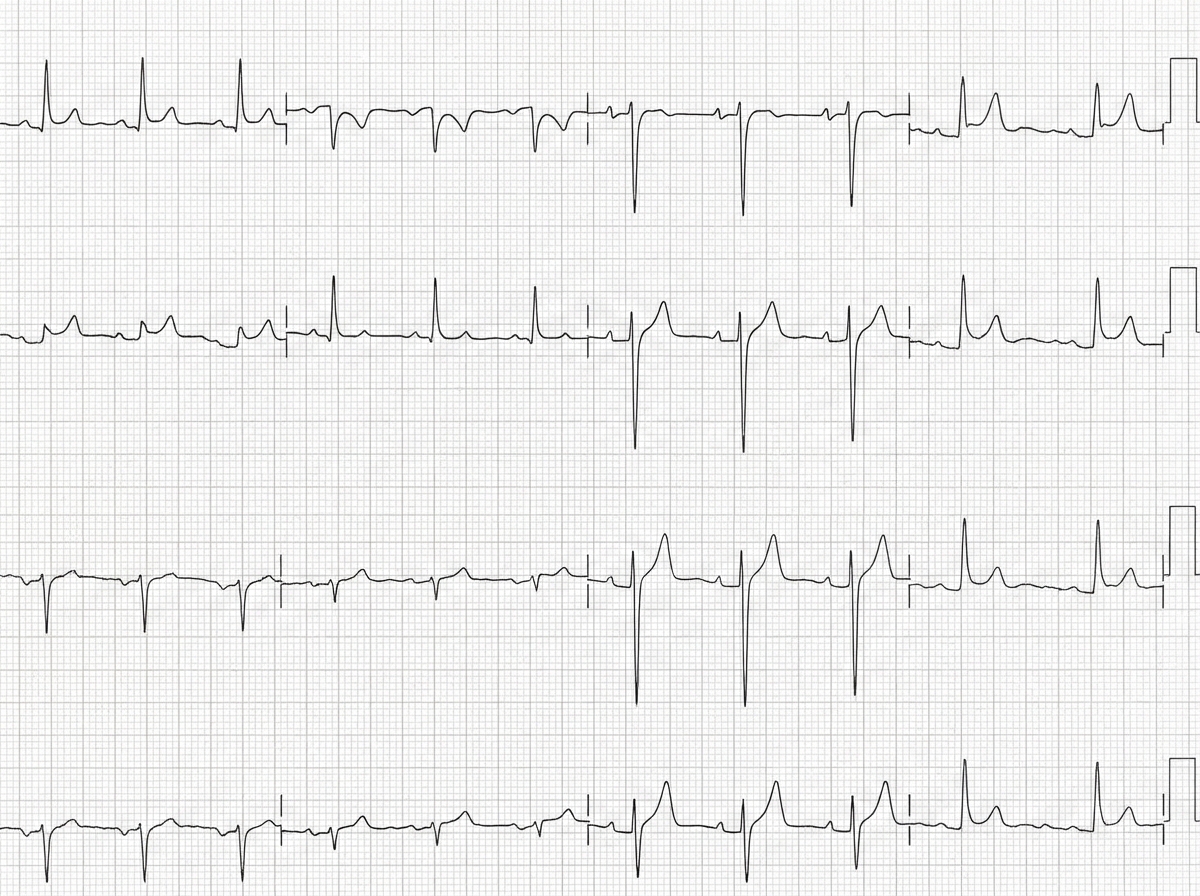
A 50-year-old man with a history of stage 4 kidney disease was admitted to the hospital for an elective hemicolectomy. His past medical history is significant for severe diverticulitis. After the procedure he becomes septic and was placed on broad spectrum antibiotics. On morning rounds, he appear weak and complains of fatigue and nausea. His words are soft and he has difficulty answering questions. His temperature is 38.9°C (102.1°F), heart rate is 110/min, respiratory rate is 15/min, blood pressure 90/65 mm Hg, and saturation is 89% on room air. On physical exam, his mental status appears altered. He has a bruise on his left arm that spontaneously appeared overnight. His cardiac exam is positive for a weak friction rub. Blood specimens are collected and sent for evaluation. An ECG is performed (see image). What therapy will this patient most likely receive next?
Five days after admission into the ICU for drug-induced acute kidney injury, a 27-year-old woman develops fever. She is currently on a ventilator and sedatives. Hemodialysis is performed via a catheter placed in the right internal jugular vein. Feeding is via a nasogastric tube. An indwelling urinary catheter shows minimum output. Her blood pressure is 85/45 mm Hg, the pulse is 112/min, the respirations are 32/min, and the temperature is 39.6°C (103.3°F). The examination of the central catheter shows erythema around the insertion site with no discharge. Lung auscultation shows rhonchi. Cardiac examination shows no new findings. A chest CT scan shows bilateral pleural effusions with no lung infiltration. Empirical antibiotic therapy is initiated. Blood cultures obtained from peripheral blood and the catheter tip show S. aureus with a similar antibiogram. Urinary culture obtained from the indwelling catheter shows polymicrobial growth. Which of the following best explains this patient’s recent findings?
Want unlimited practice?
Get full access to all questions, explanations, and performance tracking.
Scan to download app